

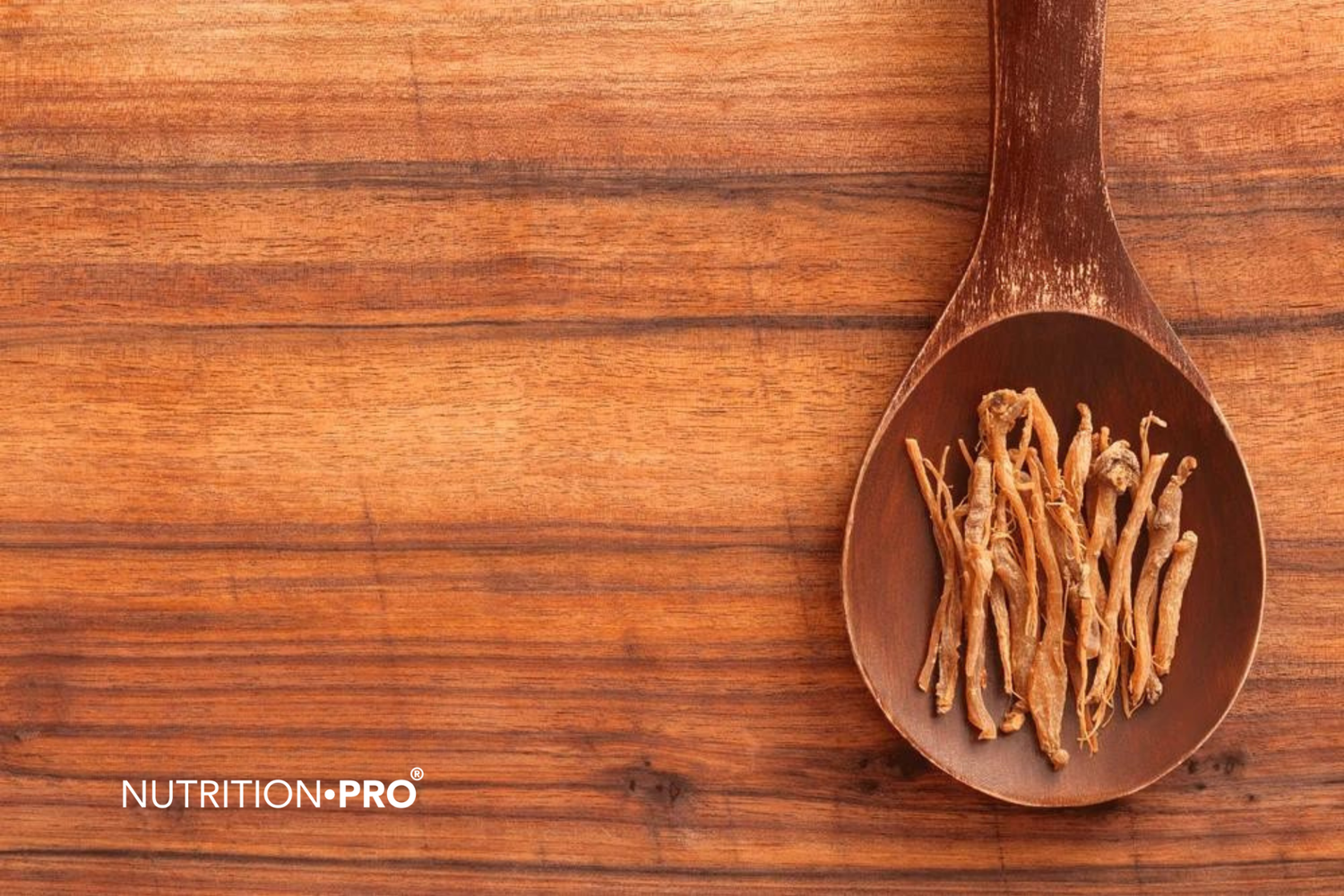
Ginseng has long carried a reputation as a cure-all. But tradition aside, how well do its benefits really stand up to scientific scrutiny? We took a close look at the seven effects most often credited to Panax ginseng root, drawing a clear line between what is solid and what remains modest or has yet to be confirmed.
This article is part of our ginseng series: for the full picture (types, detailed dosage, precautions), see our complete guide to ginseng.

Panax ginseng root, as an organic powder or in organic capsules, to take in the morning as a vitality course.
Ginseng's best-recognized benefit is fighting fatigue: the WHO and ESCOP accept its use for exhaustion and convalescence, and a meta-analysis confirms a reduction in cancer-related fatigue (Luo, Cancer Nursing, 2022). Studies also support a modest effect on memory and attention (Bell, Eur J Nutr, 2021), immune support (Allan, CMAJ, 2014), an improvement in erectile function backed by low-certainty evidence (Lee, Cochrane, 2021) and a modest reduction in fasting blood glucose (Shishtar, PLoS One, 2014). Add to that an antioxidant action (shown mainly in the laboratory) and an adaptogen profile. These effects are real but often moderate, and belong within a healthy lifestyle.
Ginseng in brief
Before going into detail: ginseng is an adaptogen, meaning a plant thought to help the body cope better with physical and mental stress. Its signature compounds, ginsenosides, vary with the species and the preparation (dried white ginseng or steamed red ginseng), which is why effects differ slightly from one product to the next. Now let's look at the seven benefits, from the best established to the least clear-cut.
The 7 proven benefits of ginseng
1. It fights fatigue and supports energy
This is ginseng's flagship benefit, and the best recognized. The World Health Organization considers the use of ginseng clinically established for improving physical and mental capacity in cases of fatigue, exhaustion and convalescence, a position shared by ESCOP.
In patients with cancer-related fatigue, ginseng significantly reduced fatigue and improved physical and emotional well-being.
Luo WT, Huang TW. Cancer Nurs 2022;46(2):120-127. DOI: 10.1097/NCC.0000000000001068
The effect is moderate and is no substitute for sleep or a healthy lifestyle. For fatigue that has set in, see our guide to chronic fatigue.
2. It supports memory and concentration
Ginseng, and American ginseng in particular, has shown encouraging cognitive effects. In a controlled trial, an extract improved working memory and attention in healthy young adults, with stronger effects after two weeks (Bell, Eur J Nutr, 2021). These benefits are seen mainly in the short term and remain modest: a boost to mental sharpness, not a treatment for memory disorders.
3. It supports the immune system
Traditionally associated with immune support, ginseng is one of the supplements studied for preventing the common cold, with modest evidence (Allan, CMAJ, 2014). Think of it as winter support, mainly preventive, that replaces neither a healthy lifestyle nor vaccination. See also our guide to zinc.
4. It improves erectile function
Long reputed to be an aphrodisiac, ginseng has been the subject of a high-quality evidence review on the question.
Ginseng appears to improve erectile function compared with placebo, but the evidence is of low certainty.
Lee HW, et al. World J Mens Health 2021;40(2):264-269. DOI: 10.5534/wjmh.210071
A promising option for mild to moderate difficulties, though not to be mistaken for a medicine. Persistent erectile problems call for a visit to the doctor. Our guides to testosterone and fertility are worth reading alongside.
5. It helps regulate blood sugar
Ginseng has long been studied for its role in sugar metabolism. A meta-analysis of 16 trials showed a modest but significant reduction in fasting blood glucose in people with and without diabetes (Shishtar, PLoS One, 2014). The effect remains modest and ginseng is no substitute for treatment: if you have diabetes, medical advice is essential, as it can enhance the effect of antidiabetic drugs.
6. It has antioxidant and anti-inflammatory effects
Ginsenosides have antioxidant and anti-inflammatory properties that are well documented in the laboratory and in animals. In humans, these mechanisms probably contribute to the plant's tonic profile, even though they are less clearly established clinically. This is an underlying mechanism, not a specific health promise.
7. It supports well-being and resistance to stress
As an adaptogen, ginseng is thought to help the body cope better with stress rather than “dope” it. Some data point to an improvement in mental fatigue and mood (Bell, 2021). That makes it useful for staying on course through demanding periods, but it is not a treatment for anxiety or depression, which call for appropriate care.
As a powder or in capsules, to take in the morning as a course, as part of an overall approach to vitality.
Discover red ginseng →How to get these benefits
In practice: choose the form that suits you. Red ginseng powder is easy to measure into a drink, while red ginseng capsules are convenient and spare you the distinctive taste: both deliver the same root. Aim for the equivalent of 1 to 2 g per day, preferably in the morning (the stimulating effect can interfere with sleep if taken in the evening), in courses of a few weeks followed by a break. Full details on doses, forms and combinations are in our complete guide to ginseng.
Precautions and contraindications
Ginseng is not recommended during pregnancy or breastfeeding. Take care if you have high blood pressure or a clotting disorder, or if you take anticoagulants or antidiabetic drugs; it is also advisable to stop taking it one to two weeks before surgery. At high doses, it can cause insomnia, nervousness or digestive upset. If you are on medication or have a medical condition, seek medical advice. More details in our complete guide.
Frequently asked questions
What are the 7 benefits of ginseng?
The most widely studied benefits of ginseng are: fighting fatigue and supporting energy (its best-recognized use), supporting memory and concentration, supporting the immune system, improving erectile function, helping to regulate blood sugar, an antioxidant and anti-inflammatory action, and supporting resistance to stress as an adaptogen. Several of these effects remain modest or have yet to be confirmed.
Is ginseng really effective against fatigue?
This is its best-recognized use: the WHO and ESCOP accept it for fatigue, exhaustion and convalescence. A meta-analysis has also shown a reduction in cancer-related fatigue (Luo, Cancer Nursing, 2022). The effect is real but moderate, and belongs within a healthy lifestyle.
Does ginseng improve memory?
A few trials suggest so, especially with American ginseng, which improved working memory and attention in healthy young adults (Bell, Eur J Nutr, 2021). The effects are mainly short-term and remain modest.
Does ginseng boost immunity?
Ginseng is one of the plants studied for the common cold, with modest results (Allan, CMAJ, 2014). It can support the body's defenses, especially as a preventive measure, but it does not replace a healthy lifestyle or vaccination.
Does ginseng help with erections and libido?
A Cochrane review concludes that ginseng may improve erectile function, but with low certainty (Lee, World J Mens Health, 2021). It is an option for mild to moderate difficulties, not a medicine; if the problem persists, see a doctor.
Does ginseng lower blood sugar?
A meta-analysis shows a modest but significant reduction in fasting blood glucose in people with or without diabetes (Shishtar, PLoS One, 2014). Ginseng does not replace treatment and can interact with antidiabetic drugs: medical advice is recommended if you have diabetes.
Is ginseng an antioxidant?
Ginsenosides have antioxidant and anti-inflammatory properties, demonstrated mainly in the laboratory and in animals. In humans, these effects probably contribute to the plant's tonic profile, but they are less clearly established clinically.
How long does it take to feel the effects of ginseng?
Some effects on attention come quickly, but for vitality, ginseng is taken as a course over a few weeks. Taking it regularly in the morning works better than an occasional dose, and it is best to take breaks between courses.
Which ginseng should you choose to get these benefits?
Red ginseng (steamed Panax ginseng) is the most invigorating and the most widely available; American ginseng has been studied more for cognition. Whether as a powder or in capsules, what matters is a stated ginsenoside content and a quality source, ideally organic.
Does ginseng have side effects?
At high doses, it can cause insomnia, nervousness, headaches or digestive upset. It is not recommended during pregnancy or breastfeeding, and calls for caution if you have high blood pressure or a clotting disorder, or take anticoagulants or antidiabetic drugs.
- Panax ginseng
- Asian ginseng (Korean, Chinese), known for its invigorating effect; the main medicinal species.
- Panax quinquefolius
- American ginseng, more calming, studied for cognition.
- Ginsenosides
- Active compounds specific to ginseng, behind most of its effects.
- Adaptogen
- A plant thought to help the body cope better with physical and mental stress.
- Red ginseng
- Panax ginseng root that is steamed and then dried, more concentrated and more invigorating.
- Convalescence
- The recovery period after an illness, one of the recognized uses of ginseng.
- Luo WT, Huang TW. Effects of ginseng on cancer-related fatigue: a systematic review and meta-analysis of randomized controlled trials. Cancer Nurs 2022;46(2):120-127. DOI: 10.1097/NCC.0000000000001068
- Bell L, Whyte A, Duysburgh C, et al. American ginseng (Cereboost) on mood and cognition in healthy young adults: a randomized, placebo-controlled trial. Eur J Nutr 2021;61(1):413-428. DOI: 10.1007/s00394-021-02654-5
- Lee HW, Lee MS, Kim TH, et al. Ginseng for erectile dysfunction: a Cochrane systematic review. World J Mens Health 2021;40(2):264-269. DOI: 10.5534/wjmh.210071
- Shishtar E, Sievenpiper JL, Djedovic V, et al. The effect of ginseng (the genus Panax) on glycemic control: a systematic review and meta-analysis of randomized controlled clinical trials. PLoS One 2014;9(9):e107391. DOI: 10.1371/journal.pone.0107391
- Allan GM, Arroll B. Prevention and treatment of the common cold: making sense of the evidence. CMAJ 2014;186(3):190-199. DOI: 10.1503/cmaj.121442


