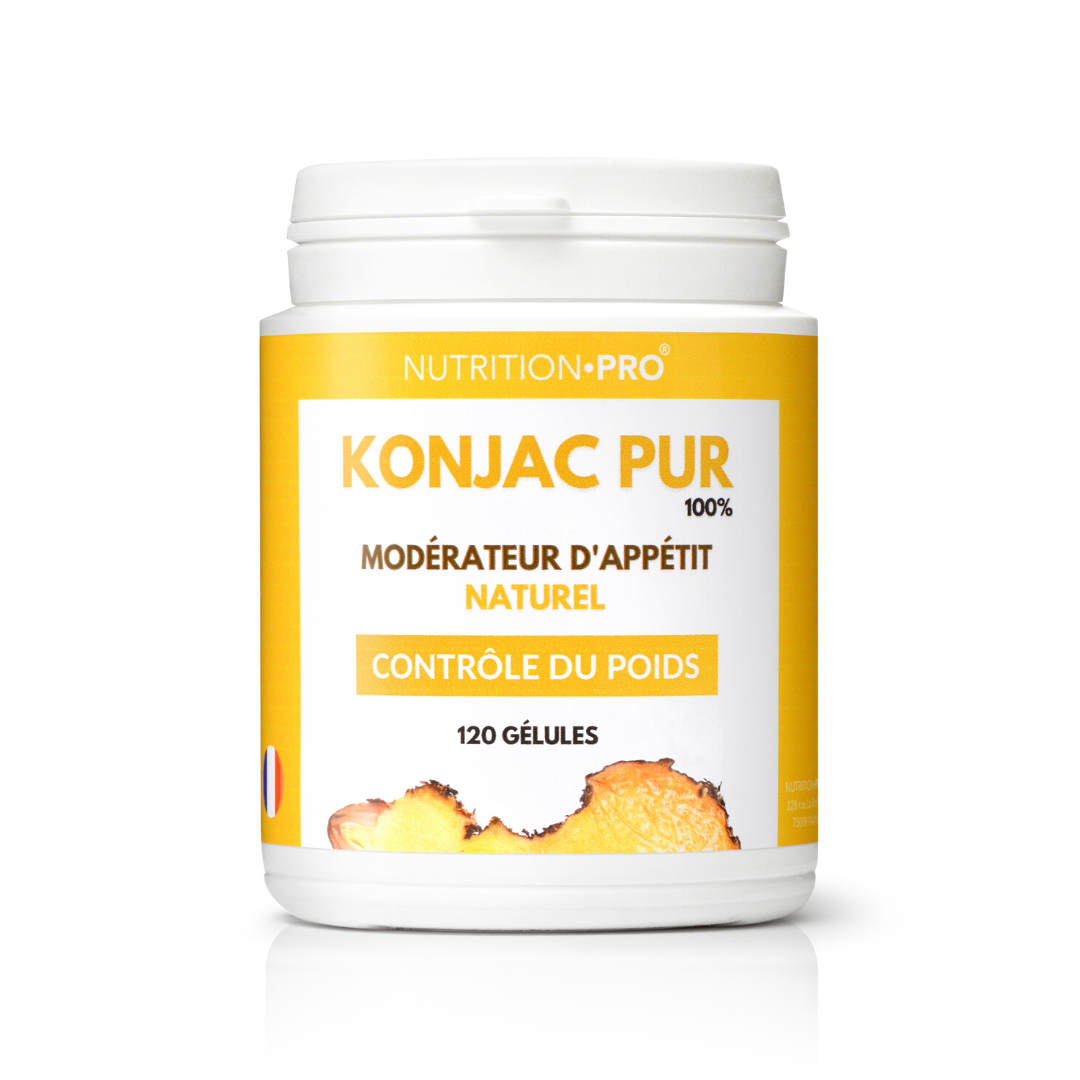
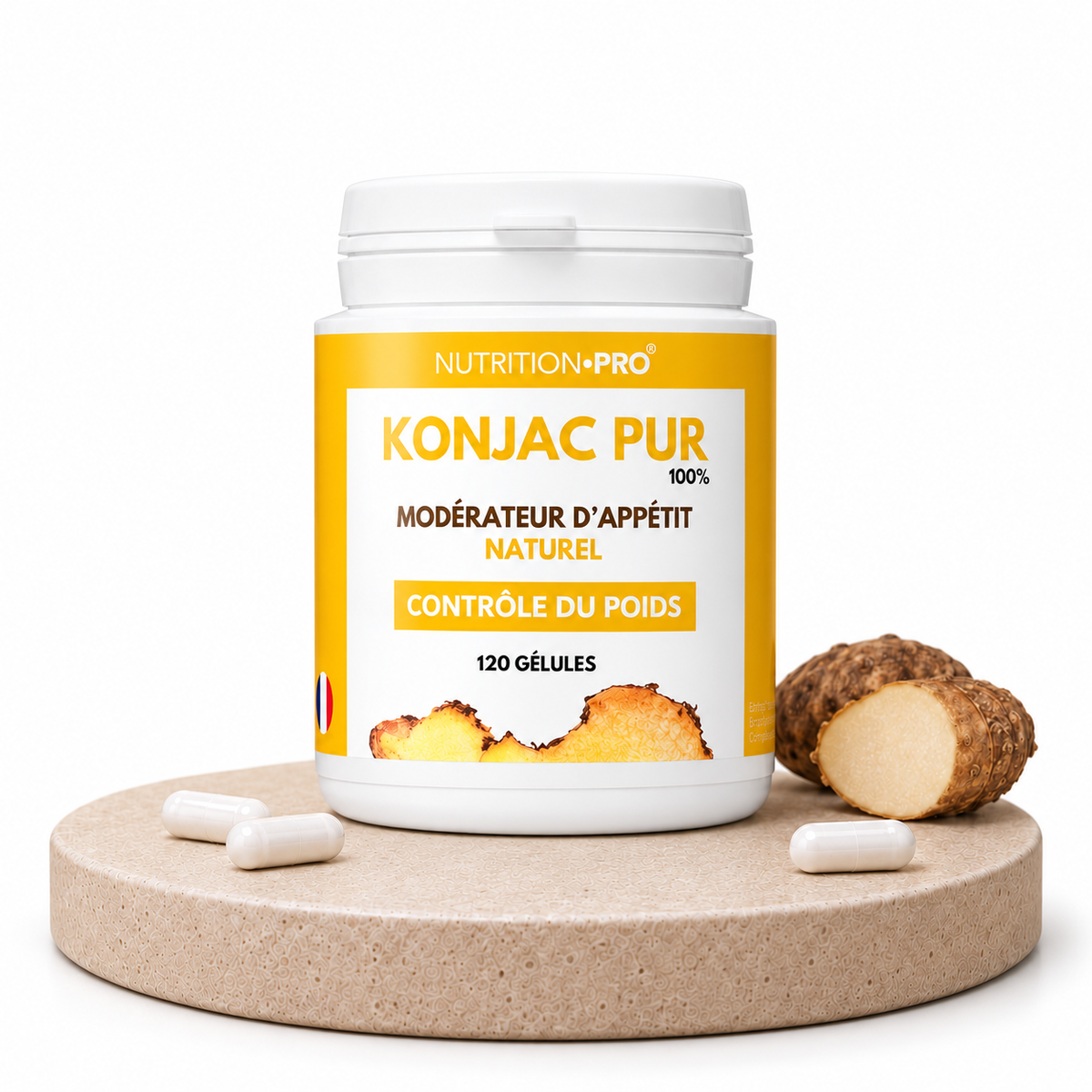
Description
A NATURALLY EFFECTIVE APPETITE SUPPRESSANT
Konjac is a plant that grows in certain regions of Asia.
Also used in traditional Chinese medicine, konjac is widely consumed as a 100% natural food supplement for appetite reduction, weight loss and cholesterol management.
By taking our konjac-based food supplement, you will feel full throughout the day thanks to its content of glucomannans, which gives it a very powerful satiating effect.
You will therefore be much less likely to eat in too large quantities or to snack between meals.
How to use
Nutritional information
Ingredients per day (3 capsules):
| Ingredients | Composition |
|---|---|
| Amorphophallus konjac | 1.44 g |
Precautions
A NATURALLY EFFECTIVE APPETITE SUPPRESSANT
Konjac is a plant that grows in certain regions of Asia.
Also used in traditional Chinese medicine, konjac is widely consumed as a 100% natural food supplement for appetite reduction, weight loss and cholesterol management.
By taking our konjac-based food supplement, you will feel full throughout the day thanks to its content of glucomannans, which gives it a very powerful satiating effect.
You will therefore be much less likely to eat in too large quantities or to snack between meals.
Ingredients per day (3 capsules):
| Ingredients | Composition |
|---|---|
| Amorphophallus konjac | 1.44 g |
THE BENEFITS OFPURE KONJAC
- Reduces cholesterol
- Contributes to weight loss
- Reduces triglyceride levels
- Helps stabilize blood sugar
- Effectively reduces appetite
- Regulates intestinal transit
Efficacy proven by several clinical studies
Cures associated with Konjac:
Frequently asked questions
What is konjac and how does it work for weight loss?
Konjac (Amorphophallus konjac) is a plant native to Asia, whose tuber is traditionally used for its digestive and slimming properties.
Its exceptional richness in glucomannan, a natural soluble fiber, makes it one of the most studied and scientifically recognized slimming supplements for promoting satiety, weight regulation and digestion.
1. Konjac: a root naturally rich in fiber
The heart of konjac is composed of glucomannan, a plant fiber capable of absorbing up to 100 times its weight in water.
On contact with liquids in the stomach, it swells and forms a viscous gel which:
- partially fills the stomach,
- slows gastric emptying,
- and prolongs the feeling of satiety after the meal.
This mechanical phenomenon leads to a natural reduction in appetite, without any feeling of deprivation or frustration.
2. A scientifically recognized natural appetite suppressant
Konjac glucomannan is today the only appetite-suppressing ingredient whose efficacy on weight loss has been validated by EFSA (European Food Safety Authority).
According to its official conclusions, a daily intake of at least 3 g of glucomannan, divided before meals, contributes to weight loss as part of a low-calorie diet.
Konjac's action is based on three complementary mechanisms:
- satiety effect: reduces hunger and snacking,
- metabolic effect: regulates the absorption of fats and sugars,
- digestive effect: improves transit and promotes a balanced intestinal flora.
Thus, konjac acts upstream and downstream of digestion, helping the body better manage the calories and sugars consumed.
3. A global action on metabolism
By combining with water, glucomannan forms a non-digestible gelled substance that partially captures:
- dietary fats (lipids),
- fast sugars (glucose, fructose),
- and certain intestinal toxins.
This process contributes to reducing total caloric absorption and regulating blood sugar, while supporting intestinal health.
In the long term, it contributes to:
- better weight control,
- a decrease in blood cholesterol,
- and better energy stability between meals.
4. A natural, safe and effective alternative
Unlike many chemical or thermogenic appetite suppressants, konjac acts without stimulating the nervous system or causing heart rate acceleration.
It is a natural, gentle and progressive solution, perfectly adapted for people:
- wishing to reduce their food portions,
- having difficulty controlling cravings,
- or seeking to lose weight without fatigue or stress.
In addition, konjac is low in calories, sugar-free, gluten-free and compatible with vegetarian and keto diets.
5. In summary
Pure Konjac Nutrition•pro:
- acts as a natural and physiological appetite suppressant,
- promotes lasting satiety and reduction of caloric intake,
- supports digestion and blood sugar balance,
- and contributes to scientifically validated weight loss by EFSA.
It is a 100% natural slimming ally, ideal for those who want to lose weight effectively, without stimulants or constraints.
Does konjac really help with weight loss?
Yes, konjac is one of the most popular allies in weight management, and this is no coincidence.
This success is mainly based on glucomannan, a natural fiber present in the konjac root, whose unique properties make it a valuable asset for those who wish to lose weight or control their appetite.
How does konjac act on weight loss?
Glucomannan, when consumed with water, has the ability to swell in the stomach, forming a kind of viscous gel.
This gel slows the digestion process, which has several beneficial effects:
- Prolonged feeling of satiety: By taking up volume in the stomach, konjac helps limit hunger between meals. This can reduce snacking cravings and facilitate the maintenance of a controlled caloric intake.
- Reduction of caloric absorption: The gel formed by glucomannan can slow the absorption of carbohydrates and fats in the intestine, thus contributing to better control of energy intake.
- Appetite control: By promoting slow digestion, it helps stabilize blood sugar, thus avoiding insulin peaks responsible for cravings.
Scientific studies in support
Several clinical studies have demonstrated the efficacy of glucomannan in weight loss, particularly when integrated into a balanced diet. For example:
- A study published in the American Journal of Clinical Nutrition showed that participants who consumed glucomannan as part of a low-calorie diet lost more weight than those following the diet alone.
- Another study confirmed that glucomannan helps reduce body mass index (BMI) and improve cholesterol levels in participants.
In conclusion
Konjac is indeed a valuable ally for weight loss, thanks to its unique properties linked to glucomannan. By helping to reduce appetite, stabilize blood sugar and limit caloric absorption, it plays a key role in weight management.
However, its effectiveness depends largely on how it is integrated into an overall healthy lifestyle. With judicious use, konjac can be an excellent companion in your slimming journey!
How does konjac act as a natural appetite suppressant?
Pure Konjac Nutrition•pro acts as a powerful natural appetite suppressant thanks to the presence of glucomannan, a plant fiber capable of absorbing an exceptional quantity of water and forming a viscous gel in the stomach.
This natural mechanism triggers a rapid and lasting feeling of satiety, while contributing to reducing daily caloric intake.
1. The exceptional satiety power of glucomannan
Glucomannan is the most hydrophilic fiber known to date:
it can swell up to 100 times its initial volume when in contact with a liquid.
In the stomach, this expansion creates a gelled volume that exerts gentle pressure on the gastric walls, signaling to the brain that the stomach is full.
This message activates the satiety receptors located in the hypothalamus, which naturally leads to a reduction in appetite and a decrease in food portions at the next meal.
2. A progressive and prolonged effect over time
Once formed, the konjac gel slows gastric emptying, which allows you to:
- eat less,
- last longer between meals,
- and avoid cravings or emotional snacking.
This satiety effect generally manifests 20 to 30 minutes after intake, hence the importance of consuming Pure Konjac Nutrition•pro before meals, accompanied by a large glass of water.
3. Natural regulation of blood sugar and fat absorption
By slowing digestive transit, the konjac gel moderates the absorption of glucose and fats at the intestinal level.
It thus allows:
- a slower diffusion of sugar into the blood,
- a reduction in glycemic peaks responsible for cravings,
- and better energy management throughout the day.
This dual appetite-suppressing and blood sugar-regulating effect makes it an effective tool for sustainable weight loss, particularly for people prone to sugar cravings or hunger crises at the end of the day.
4. Why konjac is more effective than other fibers
Not all fibers are equal.
Those of konjac (glucomannan) have superior viscosity and water retention capacity compared to classic fibers (psyllium, inulin, oats).
Result:
- a more pronounced satiety,
- a better digestive tolerance,
- and a faster slimming effect when taken regularly before meals.
This specificity explains why glucomannan is the only appetite suppressant recognized by EFSA for its proven effect on weight loss.
5. The importance of hydration for maximum efficacy
For konjac to deploy its full potential, it must be taken with a large glass of water (minimum 200 to 250 ml per intake).
Without sufficient hydration, the gel does not form correctly, which reduces its efficacy.
Good hydration ensures optimal expansion of glucomannan in the stomach and ensures a lasting feeling of satiety without digestive discomfort.
6. In summary
Pure Konjac Nutrition•pro acts as a natural appetite suppressant thanks to:
- its exceptional ability to absorb water and swell in the stomach,
- its mechanical action on satiety receptors,
- the regulation of appetite and blood sugar,
- and a prolonged action without stimulant or constraint.
It is a natural, effective and safe solution to help eat less, control hunger and promote long-term weight loss.
Is konjac useful in a diet?
Konjac, thanks to its unique properties, is increasingly popular in diets, particularly for those seeking to lose weight or maintain a healthy weight.
Here is why konjac proves to be a valuable ally as part of a controlled diet:
Low in calories: Konjac is exceptionally low in calories, offering a solution for those who wish to reduce their daily caloric intake without sacrificing satiety. A serving of konjac contains significantly fewer calories than traditional alternatives such as pasta or rice, making it ideal for a low-calorie diet.
Rich in fiber: The high fiber content of konjac, mainly in the form of glucomannan, helps not only to prolong the feeling of satiety after meals but also contributes to good digestive health. By facilitating intestinal transit and promoting healthy digestion, konjac can help prevent constipation, which is common in people following a restrictive diet.
Appetite management: As mentioned above, the glucomannan present in konjac has the ability to absorb water and swell in the stomach. This unique property limits cravings and controls appetite, making following a diet less restrictive and more satisfying.
Stabilization of glucose levels: Konjac can have a beneficial effect on regulating blood glucose levels, which is particularly important for people with diabetes or those at risk. By slowing the absorption of carbohydrates, konjac helps maintain more stable blood sugar levels, thus avoiding glycemic peaks that can lead to sugar cravings.
Culinary versatility: Konjac is extremely versatile and can be incorporated into many dishes, from soups to stir-fries, including pasta and rice substitutes. This adaptability makes it an excellent addition to any diet, allowing variety while respecting nutritional goals.
In summary, konjac proves to be a useful and effective complement for anyone seeking to optimize their diet, whether for weight loss, maintaining a healthy weight or managing diabetes. Its low caloric content, fiber richness, ability to regulate appetite and stabilize glucose levels make it a wise choice for a balanced and satisfying diet.
Can konjac help regulate blood sugar levels?
Konjac is particularly recognized for its beneficial role in regulating blood glucose levels, making it a food of choice for diabetics or those wishing to control their blood sugar.
This effect is mainly due to the high content of glucomannan, a soluble dietary fiber, in konjac.
Mechanism of action:
Glucomannan has the ability to absorb several times its weight in water, forming a viscous gel in the stomach. This gel slows gastric emptying and, consequently, the digestion and absorption of nutrients, including carbohydrates. This process helps avoid the glycemic peaks that can occur after a meal, thus offering a more stable and progressive release of glucose into the blood.
Studies and research:
Clinical studies have shown that konjac consumption can significantly reduce postprandial glucose levels (after meals) as well as fasting blood sugar levels in people with type 2 diabetes. These beneficial effects contribute to better diabetes management and reduced risk of associated complications.
In summary, konjac can be an excellent dietary supplement to help regulate blood sugar levels, thanks to its glucomannan content. Its ability to moderate the glycemic response and contribute to better diabetes management makes konjac a wise choice for those seeking to maintain stable blood sugar levels.
What are the benefits of konjac for the digestive system?
Konjac offers several significant advantages for the digestive system. These benefits contribute to improving gastrointestinal health naturally.
- Improvement of intestinal transit: The soluble fiber in konjac can absorb water, thus increasing stool volume and facilitating their passage through the colon. This can help prevent and relieve constipation, making konjac a valuable ally for maintaining regular intestinal transit.
- Prebiotic effect: Glucomannan acts as a prebiotic in the intestine. Prebiotics nourish the beneficial bacteria of the intestinal microbiota, thus supporting digestive health. A balanced intestinal microbiota is crucial for digestion, nutrient absorption and the immune system.
- Reduced risk of digestive disorders: By facilitating digestion and transit, konjac can help reduce the risk of various digestive disorders, including hemorrhoids, diverticulitis and certain forms of intestinal inflammation.
- Appetite control and weight management: Through its water absorption power and expansion in the stomach, konjac increases the feeling of satiety. This mechanism can help reduce overall caloric intake and avoid weight gain, risk factors for several digestive diseases, including gastroesophageal reflux disease (GERD).
- Reduction of fat and sugar absorption: Konjac can also reduce the absorption of fats and sugars in the intestine, thus contributing to better metabolic regulation and prevention of fat accumulation, beneficial for the liver and overall metabolic health.
In conclusion, konjac stands out for its multiple benefits for the digestive system, particularly thanks to its ability to improve intestinal transit, act as a prebiotic, and help with weight management. Its incorporation into a balanced diet can thus play a key role in maintaining good digestive health.
What is the impact of konjac on metabolism and cholesterol levels?
Konjac has been the subject of numerous studies aimed at understanding its impact on metabolism and cholesterol levels.
Its beneficial effects on these two aspects are significant, making konjac an ally of choice for metabolic and cardiovascular health.
- On metabolism:
Konjac can positively influence metabolism in several ways. First, glucomannan fiber helps regulate blood glucose levels by slowing the absorption of sugars, which can be particularly advantageous for people suffering from type 2 diabetes or those at risk. This modulation of carbohydrate absorption contributes to better insulin management, a key factor in energy metabolism. - On cholesterol levels:
Konjac has also demonstrated its ability to significantly reduce total cholesterol and LDL (the "bad" cholesterol) levels in the blood. The mechanism behind this effect involves the ability of glucomannan to bind to bile acids and other substances in the intestine, facilitating their elimination rather than their reabsorption. This forces the body to use the cholesterol present in the blood to produce more bile acids, thus reducing cholesterol levels. - Additional effects:
In addition to its effects on metabolism and cholesterol, konjac contributes to cardiovascular health through other mechanisms. For example, by promoting satiety and helping with weight management, konjac can reduce the risks associated with obesity, including hypertension and coronary heart disease.
In summary, konjac proves to be a beneficial dietary supplement for metabolism and cholesterol control, thanks to its effects on glucose regulation and the reduction of blood lipids. Its incorporation into the diet can therefore contribute to improving metabolic health and preventing cardiovascular diseases.
Is konjac effective without diet or physical activity?
Pure Konjac Nutrition•pro can contribute to weight loss, even without strict diet or intense sports practice, thanks to its appetite-suppressing and metabolism-regulating effect.
However, its maximum efficacy is observed when integrated into a balanced lifestyle, including healthy eating and a minimum of physical activity.
1. A measurable effect even without major dietary change
Glucomannan, the active fiber of konjac, acts independently of energy metabolism:
it mechanically reduces caloric intake by causing rapid satiety before and during meals.
Thus, even without a specific diet:
- you eat less effortlessly,
- you decrease spontaneous snacking,
- and you naturally stabilize caloric intake.
Clinical studies have shown that the daily intake of 3 g of glucomannan could lead to an average loss of 1.5 to 2.5 kg in 4 to 6 weeks, without major modification of the diet.
2. Why the effect is stronger with a balanced lifestyle
Konjac acts as a natural lever, but it is not magic.
To amplify its effects:
- a diet rich in fiber and low in fast sugars helps strengthen satiety,
- good hydration promotes the swelling of glucomannan and therefore its efficacy,
- and regular physical activity, even light (walking, cycling, swimming), accelerates the use of stored fats.
These simple habits transform konjac into a natural weight loss accelerator.
3. Konjac helps regulate eating behavior
Beyond the caloric aspect, konjac acts on the behavioral component of hunger:
- it reduces the frequency of emotional cravings,
- helps restructure meals (less snacking),
- and supports long-term motivation, without constraint or frustration.
This is what makes it a valuable ally for people who have difficulty following a classic diet.
4. Effective help in maintaining weight after loss
Even after reaching a slimming goal, konjac remains useful for stabilizing weight.
By naturally reducing intake and improving digestion, it helps to:
- avoid the rebound effect,
- control occasional dietary deviations,
- and maintain stable satiety throughout the day.
It thus acts as a natural weight regulation tool, ideal for maintenance phases or prevention of regain.
5. In summary
- Yes, Pure Konjac Nutrition•pro can cause weight loss without strict diet, thanks to its proven satiety effect.
- But its results are significantly amplified when the cure is accompanied by a balanced diet and a minimum of physical activity.
- It is a solid and natural support to reduce caloric intake, regulate hunger and sustainably stabilize weight.
How long does it take to see the effects of konjac on weight?
The effects of Pure Konjac Nutrition•pro appear progressively, generally from the first weeks of use, and strengthen over time.
The speed of results depends on each person's metabolism, on respect for the dosage, and on the associated lifestyle (hydration, diet, physical activity).
1. The first effects: from the first 3 to 7 days
From the first days of the cure, glucomannan begins to act on satiety and digestion.
One often observes:
- a decrease in appetite between meals,
- a natural reduction in portions,
- a better digestive regularity.
This first phase corresponds to a body adaptation: konjac settles into intestinal transit, promoting a spontaneous dietary balance.
2. Visible effects on weight: from 2 to 3 weeks
Between the 2nd and 3rd week, most users feel:
- a progressive decrease in body weight,
- a reduction in waist size,
- and an improvement in digestive comfort.
Clinical studies conducted on glucomannan show that a daily consumption of 3 g, associated with a low-calorie diet, allows an average loss of 1.5 to 2.5 kg after 4 to 6 weeks.
This evolution remains natural and stable, without muscle loss or fatigue, because konjac acts on the regulation of intake, not on the acceleration of metabolism.
3. Lasting results: after 6 to 12 weeks
Beyond 6 weeks, konjac acts on dietary re-education.
The user learns to:
- eat more slowly,
- listen to their satiety signals,
- and reduce excesses without constraint.
It is at this stage that weight loss becomes visibly stable, often accompanied by better energy and better intestinal comfort.
A 3-month cure is therefore ideal to obtain a lasting and consolidated result.
4. Why regularity is decisive
Konjac does not act in a single intake.
To be effective, it must be:
- taken before each main meal,
- accompanied by a large glass of water (200 to 250 ml),
- and consumed every day without interruption.
The regularity of intake is the key to efficacy: it allows the gel to form at each meal, creating a cumulative satiety effect and a continuous caloric reduction.
5. Factors that influence the speed of results
Results may vary depending on:
- the amount of water consumed (more hydration = better gel expansion),
- the type of diet (less sugars and saturated fats = faster loss),
- the level of physical activity, even moderate,
- and the total duration of the cure (minimum 1 month recommended, 3 months for a complete effect).
The effect of konjac is progressive, cumulative and natural, which guarantees weight loss without stress or rebound.
6. In summary
- The first effects (satiety, digestion, reduced hunger): from 3 to 7 days.
- The visible results on the scale: from 2 to 3 weeks.
- The lasting and stabilized weight loss: between 6 and 12 weeks.
Pure Konjac Nutrition•pro offers natural, progressive and stable weight loss, ideal for those who want to regain control of their appetite without restrictive diet or stimulant.
Does konjac have side effects or contraindications?
Konjac is safe and well tolerated when consumed according to recommendations.
However, like any fiber-rich supplement, it requires good hydration to avoid any digestive discomfort.