

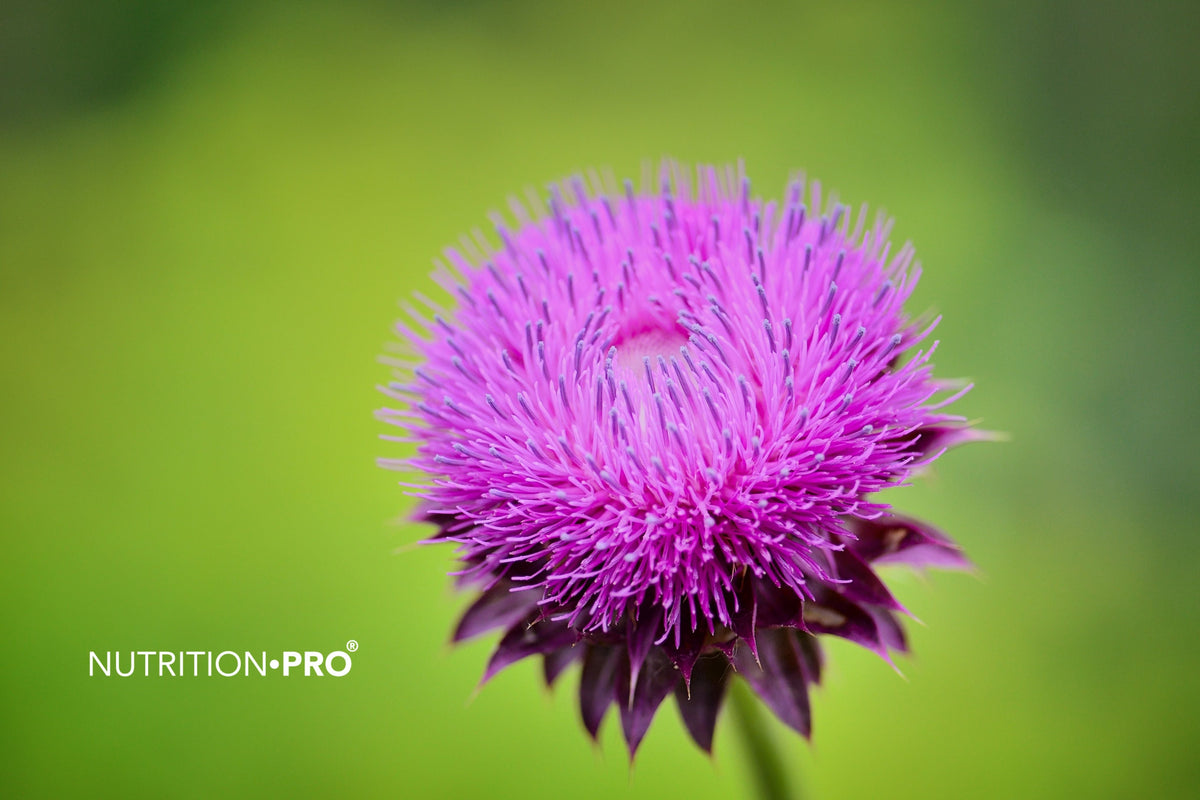
The milk thistle has been the liver plant for two thousand years. Dioscorides already mentioned it in the first century, monks in the Middle Ages cultivated it for "liver diseases," and it has never left herbalist shops. Such a long history should produce clear science. The opposite happened, and that's what makes the subject fascinating: when modern medicine tested the plant where tradition intended it, viral hepatitis and alcoholic cirrhosis, it failed, including in a major trial published in JAMA. And when it tested it on a disease that barely existed in the Middle Ages, metabolic fatty liver, the results proved to be good, across thousands of patients. metabolic fatty liver, the results proved to be good, across thousands of patients.
This guide tells the story of this shift and draws out what is useful: what silymarin is and why standardization changes everything, how it acts on liver cells, what the 26 trials devoted to hepatic steatosis show, the unexpected effect on diabetes, why trials on hepatitis C failed, the story of injectable silibinin against death cap mushroom, what the word "detox" is really worth, why herbal tea has almost no benefit, and how to read a label to avoid paying for powder at the price of an extract.

With this plant, standardization makes all the difference: a seed contains 1.5 to 3% silymarin, our extract contains 75%. One capsule provides 300 mg of extract containing 225 mg of silymarin, within the range used by clinical trials.
Milk thistle owes its effects to silymarin, a complex of flavonolignans concentrated in the seeds. Its scientific territory has shifted: in non-alcoholic hepatic steatosis, a meta-analysis of 26 trials and 2,375 patients finds a decrease in transaminases, an improvement in cholesterol, triglycerides and insulin resistance, and an improvement in steatosis on tissue examination. In type 2 diabetics, five trials show a decrease in fasting blood glucose of nearly 27 milligrams per deciliter and in glycated hemoglobin of more than one point, with a weak level of evidence. Conversely, in hepatitis C and advanced alcoholic diseases, major trials failed: neither transaminases, viral load, nor mortality changed. Injectable silibinin retains a place in hospital settings for death cap mushroom poisoning, unrelated to capsules. Finally, the word detox covers nothing measurable: the liver doesn't clean itself, it works constantly. What matters on the label is the silymarin content, 200 to 400 milligrams per day, and herbal tea doesn't achieve this, as the molecule is very poorly soluble in water.
- Milk thistle, silymarin, silybin: why standardization changes everything
- How silymarin acts on liver cells
- Non-alcoholic fatty liver: the plant's true territory
- Transaminases: what a decrease really means
- Diabetes and metabolic syndrome: the unexpected effect
- Cholesterol and triglycerides
- Viral hepatitis and alcohol: instructive failures
- Death cap mushroom: a story not to be transposed
- Protection against drug-induced liver damage
- The word detox: what the liver really does
- Bioavailability, herbal tea, seeds and phytosomes
- Dosage, duration and timing of intake
- Choosing milk thistle wisely
- Frequently asked questions
1. Milk thistle, silymarin, silibinin: why standardization changes everything
Silybum marianum is a large Mediterranean thistle with white-marbled leaves, which legend attributes to the Virgin Mary's milk, hence its name. What interests us is neither the leaf nor the flower but the seed, where the active compounds concentrate. These compounds form silymarin, a mixture of which silibinin alone represents 50 to 70% and concentrates the bulk of the studied activity.
This chemistry has a practical consequence that determines everything: the seed contains only 1.5 to 3% silymarin. To reach the 200 to 400 mg used in clinical trials, one would need to consume between 10 and 25 grams of seeds per day, which makes no practical sense. Effective preparations are therefore necessarily concentrated extracts, obtained by solvent extraction, and standardized to 70, 75 or 80% silymarin.
| Preparation | Silymarin provided | What this is worth |
|---|---|---|
| Whole seeds or powder, 1 g | 15 to 30 mg | Far short of studied doses; marginal nutritional interest |
| Herbal tea, one cup | A few milligrams at best | Silymarin has very low solubility in water (section 11) |
| Extract standardized to 75%, 300 mg | 225 mg | Within the range of clinical trials |
| Extract standardized to 80%, 2 capsules of 250 mg | 400 mg | Upper range of studied doses |
| Injectable silibinin (hospital) | In a class of its own | Emergency medication, no comparison to a supplement (section 8) |
This is why the first thing to look at on a box is not the amount of plant displayed, often chosen to impress, but the line "of which silymarin". A product that announces "1,000 mg of milk thistle" without specifying the standardization can deliver ten times fewer active ingredients than a properly standardized 300 mg extract. We return to this in section 13.
2. How silymarin acts on liver cells
Understanding the mechanism prevents misunderstandings about what the plant can or cannot do.
To these three mechanisms are added effects described on liver regeneration and, outside the liver, neuroprotective properties studied in the laboratory in models of neurodegenerative diseases and cerebral ischemia, with no clinical translation to date (Devi, Curr Drug Targets, 2017). Let us retain the essential: silymarin protects cells that are suffering. It eliminates nothing, drains nothing, and does not replace any treatment.
3. Non-alcoholic fatty liver: the plant's true territory
Non-alcoholic liver steatosis affects approximately one quarter of the world's population and progresses with obesity and diabetes. It is most often silent, discovered by ultrasound or elevated transaminases, and can progress to inflammation, fibrosis and cirrhosis. No medication was available until very recently, which explains the interest in nutritional approaches.
Administration of silymarin significantly reduced total cholesterol, triglycerides, and LDL-cholesterol levels, as well as fasting insulinemia and HOMA insulin resistance index, and increased HDL-cholesterol. Furthermore, silymarin attenuated liver damage, as indicated by reduced ALT (mean difference of −12.39) and AST (−10.97) levels. Steatosis indices also decreased. Histological examination of the liver in the intervention group revealed significant improvement in hepatic steatosis (odds ratio of 3.25). Silymarin can regulate energy metabolism, attenuate liver injury, and improve liver histology in patients with non-alcoholic fatty liver disease, but these effects will need to be confirmed by further research.
Li S, Duan F, Li S, Lu B. Ann Hepatol 2024;29(2):101174. DOI: 10.1016/j.aohep.2023.101174
This result deserves our attention, because it is of a different nature than usual studies on plants. The improvement concerns not only blood markers, which are easy to obtain, buthistology, that is, the appearance of liver tissue observed under a microscope after biopsy. Seeing steatosis recede on liver sections is the most stringent criterion in this disease.
A systematic review devoted to polyphenols in hepatic steatosis reaches a convergent and cautious conclusion: among eight polyphenols evaluated, silymarin stands out as effective for improving ALT and AST and for reducing fat accumulation and liver stiffness, alongside curcumin (Yang, Front Immunol, 2022). Two independent sources that converge on the same ground—that's what distinguishes a real signal from an impression.
The included trials are predominantly small size and unequal quality, many conducted in Iran, China, and Egypt, with heterogeneous extracts, doses, and durations. None measured what truly matters in the long term: the number of patients who avoid cirrhosis or liver cancer. And above all, silymarin does not replace what actually works in this disease, namely weight loss, reduction of simple sugars, and physical activity, whose effectiveness on fatty liver disease is established and superior to that of any supplement. The plant supports treatment, it does not replace it.
4. Transaminases: what a decrease really means
It is the parameter that everyone looks at, and the one most misinterpreted. The transaminases do not measure liver function but the suffering of its cells: they are intracellular enzymes that pass into the blood when hepatocytes are damaged. A high value signals an ongoing attack, without indicating its cause.
In the meta-analysis cited above, the average decrease is approximately 12 units for ALT and 11 for AST compared to the control group. For a patient whose ALT was at 70, this brings it near normal; for a patient at 300, this does not significantly change the problem. The magnitude is that of a real but modest effect, consistent with a cellular protection role.
5. Diabetes and metabolic syndrome: the unexpected effect
No one expected milk thistle in this area, yet it is one of its most striking results. The logic lies in the close link between fatty liver and insulin resistance: a liver laden with fat produces excess glucose and responds poorly to insulin, so improving one tends to improve the other.
In a systematic review and meta-analysis including five randomized controlled trials and 270 patients, silymarin administration resulted in a significant reduction in fasting blood glucose (minus 26.86 milligrams per deciliter) and glycated hemoglobin levels (minus 1.07), and had no effect on the lipid profile. Benefits on proteinuria and progression of chronic kidney disease were reported in only one small study and remain uncertain. Aware of the low quality of available evidence and the high heterogeneity of these studies, the authors specify that no recommendation can be made and that further studies are needed.
Voroneanu L, Nistor I, Dumea R, Apetrii M, Covic A. J Diabetes Res 2016;2016:5147468. DOI: 10.1155/2016/5147468
A one-point decrease in glycated hemoglobin is the magnitude expected from an antidiabetic medication, not a plant. This is precisely what should prompt caution: when a result seems too good for the nature of the intervention, one must look at the quality of the studies, and the authors themselves describe it as low, with high heterogeneity between trials. This meta-analysis therefore allows no recommendations, which its authors state clearly.
Two practical consequences nonetheless. If you are diabetic and under treatment, the potential effect on blood glucose is not a minor detail: adding milk thistle to a blood sugar-lowering treatment without discussing it with your doctor exposes you to hypoglycemia. And if you have metabolic syndrome without diabetes, this signal, added to results on fatty liver and lipids, draws a coherence: the plant appears to act on the metabolic terrain as a whole rather than on the liver in isolation.
Our Milk Thistle is a seed extract standardized to 75%, or 300 mg of extract containing 225 mg of silymarin per capsule: the range used in clinical trials on fatty liver disease and metabolism. One capsule daily, with a meal, in a course of two to three months.
Discover Milk Thistle →Looking for a broader approach? See our Organic Detox (milk thistle, dandelion, artichoke, black radish) and our detoxification collection.
6. Cholesterol and triglycerides
The two meta-analyses cited appear to contradict each other on lipids: the first, in patients with fatty liver, finds significant improvements in total cholesterol, triglycerides, LDL and HDL; the second, in diabetics, finds no effect on the lipid profile. This contradiction is actually instructive.
The liver is the body's lipoprotein factory: it manufactures and exports blood cholesterol and triglycerides. When it is loaded with fat, this production becomes dysregulated, and an improvement in fatty liver is mechanically reflected in a better blood profile. Where there is no fatty liver to correct, there is no lipid effect to expect: silymarin is not a lipid-lowering agent, it is a hepatic protector whose liver improvement impacts lipids.
The practical consequence is clear. If your cholesterol is elevated without liver damage, the solution will not come from this plant, and our article on the failures of niacin on cholesterol reminds us why we must be wary of markers that change without clinical benefit. If, on the other hand, your blood work combines fatty liver on ultrasound, elevated triglycerides and increased waist circumference, you are exactly in the profile of the trials.
7. Viral hepatitis and alcohol: instructive failures
This is the paradox of this topic: the traditional indications of milk thistle are precisely those where science has put it to the test and failed. It would be dishonest not to say it, and pointless, because these results strengthen the credibility of what works elsewhere.
Participants with chronic hepatitis C virus infection with ALT levels ≥65 units per liter and failed interferon treatment were randomly assigned to receive 420 mg of silymarin, 700 mg of silymarin, or placebo, three times daily for 24 weeks. After 24 weeks of treatment, only two participants in each group reached the primary endpoint. The mean decrease in ALT at the end of treatment did not differ significantly between the three groups, nor did viral RNA levels or quality of life measures. Silymarin doses higher than usual doses did not reduce ALT more than placebo.
Fried MW, Navarro VJ, Afdhal N, et al. JAMA 2012;308(3):274-282. DOI: 10.1001/jama.2012.8265
The trial is well-designed: multicenter, double-blind, with doses three to five times higher than those in common supplements. The result is clear, and it is explained: silymarin protects liver cells from oxidative stress, it has no antiviral action. Where it is a virus destroying the liver, protecting the membrane is not enough.
The Cochrane review dedicated to alcoholic and viral diseases reaches the same conclusion on a larger body of evidence: on 18 trials and 1,088 patients, silymarin has no significant effect on mortality, on complications of liver disease or on histology. Liver-related mortality appears reduced when including all trials, but this effect disappears when only retaining high-quality methodological trials, which is the classic sign of bias. The authors conclude that the results question the supposed benefits and highlight the lack of solid evidence (Rambaldi, Cochrane, 2007). A more favorable meta-analysis still retains a signal on liver mortality in early-stage alcoholic cirrhosis, while judging evidence scarce in toxic liver diseases and absent in viral hepatitis (Saller, Forsch Komplementmed, 2008).
If you consume excessive alcohol, no plant will protect your liver: only reduction in consumption does, and its effect is incomparably superior to anything in this article. Believing that a capsule makes up for it is the worst possible use of milk thistle, and probably the most widespread. Our article on alcohol elimination details what actually happens in the liver, and our vitamin B1 guide what is lacking first in the regular drinker.
8. Death cap mushroom: a story not to transpose
This is the argument that all milk thistle sellers brandish, and it rests on a medical reality. The death cap mushroom contains amatoxins, responsible for more than 90% of deaths from mushroom poisoning. They enter liver cells through specific transporters, block protein synthesis and cause hepatitis that can lead to transplantation or death.
Silibinin intervenes precisely here: it occupies these transporters and prevents the toxin from entering, while interrupting its recycling between the liver and intestine. The French guidelines on the management of these poisonings indicate that in the absence of a true antidote, early hospital management is essential and that a combined therapy associating silibinin and N-acetylcysteine is recommended, with mortality now below 10% (Caré, Rev Med Interne, 2024). International reviews describe silibinin as the most promising medical treatment in this indication (Smith, Gastroenterol Rep, 2016).
The route : hospital silibinin is administered by intravenous infusion, which bypasses the very poor digestive absorption of the molecule. The dose : several tens of milligrams per kilogram per day, continuously, which is an order of magnitude that bears no relation to a capsule. The context : intensive care, with digestive decontamination, correction of losses and monitoring of liver function. Taking milk thistle thinking you are protecting yourself from a toxic fungus has no scientific basis, and delaying a call to the poison control center based on this belief would be catastrophic. In case of suspected poisoning, the only useful reflex is to call emergency services (15) or a poison control center, while preserving if possible a sample of the fungus.
9. Protection against medication-induced liver damage
Medications are one of the leading causes of acute liver damage in Western countries, and the idea of accompanying them with a cellular protector is longstanding. The most comprehensive systematic review of randomized trials in this field provides an honest assessment: of 22 trials identified, 12 for prevention and 10 for management, silymarin is the most frequently tested agent silymarin is the most frequently tested agent, present in eight of them, ahead of bicyclol and N-acetylcysteine. The authors conclude that, given the small number of available trials, the tested agents showed limited efficacy in the prevention and management of medication-induced liver damage, with a favorable safety profile (Niu, Pharmacol Res, 2020).
A more specific area has received more attention: prevention of liver damage related to antituberculosis treatments, which are frequent and complicate management, with dedicated systematic reviews (Shi, Medicine, 2020). Again, this is a medical use, decided and monitored by the prescriber.
The practical rule is therefore simple and worth repeating: if you are taking a long-term treatment with hepatic metabolism, do not add milk thistle on your own initiative. Not because the plant would be dangerous, but because the decision belongs to the doctor monitoring your results, and because silymarin interacts with certain liver enzymes responsible for metabolizing medications, a point we will detail in our article devoted to precautions and contraindications.
10. The word detox: what the liver really does
We sell a product whose name itself contains the word detox, and we are going to say it anyway: this word does not cover any measurable physiological reality. There is no medical definition of detox, no marker that would allow us to say that a liver is "clogged" and then "cleansed," and no claims of this type are permitted in Europe.
What the liver really does is more interesting than the metaphor of a clogged filter. It works in two stages. In phase I, enzymes from the cytochrome group modify foreign molecules, medications, alcohol, pollutants, spent hormones, to make them chemically reactive. In phase II, it attaches a group to them, often glutathione, a sulfate or a glucuronide, which makes them water-soluble and eliminable through bile or urine. This work never stops, does not accumulate, and does not wait for January to happen.
There is therefore nothing to unclog. On the other hand, this process consumes resources, particularly glutathione, and it can be impaired by excessive alcohol, fat accumulation, or certain medications. This is precisely where silymarin intervenes, by supporting the antioxidant defenses of cells and limiting their damage. The difference between the two narratives is not cosmetic: one promises a cleaning that does not exist, the other describes a cellular protection that studies document.
Concretely, what truly relieves a liver: reduce alcohol, lose weight if overweight, limit fast sugars and ultra-processed products, move more, and avoid repeated self-medication. A plant can support this; nothing replaces it. Regarding oxidative stress and glutathione, our article on natural antioxidants puts the subject in its proper context.
11. Bioavailability, herbal tea, seeds and phytosomes
The entire practical question about milk thistle comes down to one word: bioavailability. The flavonolignans of silymarin are molecules poorly soluble in water, poorly absorbed by the intestine, and rapidly transformed by the liver before even reaching the general circulation. Only a fraction of what you swallow actually works, and this is why the trial doses are high.
| Form | What it provides | Verdict |
|---|---|---|
| Herbal tea from seeds | A few milligrams of silymarin at best, the compound dissolving poorly in hot water | Pleasant, unrelated to the studied doses |
| Whole or ground seeds | 15 to 30 mg of silymarin per gram, or 10 to 25 g daily to reach the doses used in trials | Unrealistic on a daily basis |
| Extract standardized to 70-80% | 200 to 400 mg of silymarin per day in one to three capsules | The form used in clinical trials, the best balance between simplicity and evidence |
| Phytosome (silibinin-phosphatidylcholine) | Silibinin bound to a phospholipid, absorption significantly higher at equal dose | Interesting, more expensive, and tested in only some of the trials |
| Injectable silibinin | Completely bypasses the absorption issue | Emergency hospital medication (section 8) |
Two simple recommendations follow from this chemistry. Take your extract with a meal containing a little fat : lipophilic compounds are absorbed better this way, which is moreover the very logic behind phytosomal forms. And don't be seduced by "organic milk thistle seeds" sold by the kilogram as an economical alternative: they are excellent in salads and pointless for reproducing the results of studies.
12. Dose, duration and timing
A word on what you should not expect: no feeling of lightness, no energy regained in three days, no transformed digestion. Milk thistle has no immediate perceptible effect, and a product promising you one is selling you something other than what science describes. The documented effects are biological, slow, and silent.
13. Choosing your milk thistle well
- Silymarin in milligrams. This is the only line that matters. A product displaying "1,000 mg milk thistle" without specifying silymarin may contain ten times less than a 300 mg extract standardized to 75%. If this information is missing, move on to the next product.
- The extract standardization. 70, 75, or 80% distinguish a concentrated extract from a plant powder. Some premium products go higher on silibinin alone, which is consistent but more costly.
- The plant part. It must be the seed, or the fruit depending on nomenclature. Leaves and aerial parts contain virtually no silymarin, and their presence on a label signals a low-quality product.
- Formula coherence. A reasoned combination with artichoke, dandelion, or black radish makes sense for digestive comfort and bile secretion; a list of fifteen plants at homeopathic doses makes none.
- The claims. No health claims are permitted for this plant in Europe: a product claiming it "detoxifies the liver" or "protects against excess" falls outside the regulatory framework, which says a lot about the rest of its marketing.
Our Milk Thistle announces what matters: 300 mg seed extract containing 225 mg silymarin per capsule, within the range of clinical trials. One capsule per day with a meal, in a course of two to three months.
Discover Milk Thistle →Also discover our Organic Detox and our entire collection digestion and transit.
Choose the situation that best describes you: the answer will appear just below.
You fit the profile of the 2,375 patients in the meta-analysis: decreased liver enzymes, improvement in lipid profile and insulin resistance, and improvement in fatty liver on tissue examination. A standardized extract providing 200 to 400 mg of silymarin per day, for two to three months, matches the studied framework, and our Milk thistle provides 225 per capsule. Two conditions for this to make sense: have your liver enzymes checked before and after, because nothing is felt, and don't forget that weight loss, reduction of refined sugars, and physical activity have a greater effect than any supplement in this disease.
Let's be frank about it: the liver doesn't store toxins that a cleanse would flush out. It continuously transforms undesirable molecules, this work never stops and doesn't wait for January. No marker can indicate that a liver is clogged and then cleansed, and no detox claim is permitted in Europe. What milk thistle can do is more modest and better proven: support the antioxidant defenses of liver cells. If the desire to start fresh is there, it happens first on your plate, with alcohol, and in your sleep. A two to three-month treatment can support this shift, provided you don't believe it replaces it.
The intention is legitimate and the lead is real: silymarin is the most tested agent in preventing drug-induced liver injury, with eight trials out of twenty-two reviewed, limited efficacy and good safety. But two reasons require discussing this with the doctor prescribing your medication. First because silymarin interacts with liver enzymes responsible for metabolizing drugs, which can alter their concentration. Second because it's the doctor who monitors your liver function and will know if protection makes sense in your case. The right approach is to ask the question, not to start quietly on your own.
Nous vendons cette plante et nous allons quand même être clairs : dans les maladies hépatiques liées à l'alcool, la revue Cochrane portant sur 18 essais et 1 088 patients ne retrouve aucun effet sur la mortalité ni sur l'histologie du foie. Le seul levier dont l'efficacité est établie est la réduction de la consommation, et son effet dépasse de très loin tout ce qui figure dans cet article. Prendre une gélule en continuant à boire revient à se donner bonne conscience, et c'est probablement l'usage le plus répandu et le plus inutile du chardon-marie. Si la question de réduire se pose, elle se parle avec un médecin, sans jugement : notre article sur alcohol elimination explains what actually happens in the liver.
This test provides guidance; it does not replace a blood test or the opinion of a healthcare professional.
Frequently asked questions about milk thistle
What is milk thistle and what is silymarin?
Milk thistle (Silybum marianum) is a Mediterranean plant whose seeds have been used since antiquity for liver disorders. Silymarin is not a single molecule but a complex of about half a dozen related compounds, flavonolignans, of which silibinin is the most studied and active. A seed contains approximately 1.5 to 3% silymarin, which explains why useful preparations are concentrated extracts: standardized extracts used in clinical trials are standardized to 70 or 80% silymarin, sometimes more.
Is milk thistle really good for the liver?
It depends on what liver condition we're talking about, and this is where science has surprised. In non-alcoholic fatty liver disease, metabolic fatty liver, a meta-analysis of 26 randomized trials involving 2,375 patients shows a significant decrease in liver enzymes, an improvement in lipid profile and insulin resistance, and an improvement in fatty liver on tissue examination. However, in viral hepatitis and advanced alcoholic liver disease, large trials failed. In other words, the plant works mainly in an indication for which no one originally intended it.
Does milk thistle lower liver enzymes?
In non-alcoholic fatty liver disease, yes: the reference meta-analysis finds average decreases of approximately 12 units for ALT and 11 units for AST compared to the control group. However, you need to understand what this means. Liver enzymes are proteins that escape from liver cells when they're suffering: lowering them reflects less suffering, which is a good sign, but an improving number is not always a disease that heals. An abnormal liver panel must be explored by a doctor, never treated alone by a plant.
Does milk thistle help in case of diabetes?
Data exist and are fairly good, but fragile. A meta-analysis of five randomized trials totaling 270 type 2 diabetic patients finds an average decrease in fasting blood glucose of nearly 27 milligrams per deciliter and a decrease in glycated hemoglobin of 1.07 points, which is considerable for a supplement. However, the authors emphasize the low quality of studies and their high heterogeneity, and refuse to draw a recommendation from it. If you are diabetic and treated, the potential effect on blood glucose requires discussing it with your doctor before taking anything.
Why did the viral hepatitis trials fail?
Because silymarin acts on the suffering of liver cells, not on the virus. The landmark trial published in JAMA tested higher than usual doses in 154 patients with hepatitis C: no difference from placebo on liver enzymes, viral load, or quality of life. A Cochrane review of 18 trials and 1,088 patients with alcoholic or viral liver disease concludes in the same way that there is no effect on mortality and histology. These failures don't disqualify the plant: they define its territory.
What is the connection between milk thistle and poisoning by death cap mushrooms?
Silibinin, the main compound of silymarin, is used in hospitals intravenously as part of the treatment for poisoning by amatoxin mushrooms, combined with N-acetylcysteine. It prevents the toxin from entering liver cells and stops its recycling. It's a spectacular medical use, but it doesn't translate to capsules: the route is different, the dose incomparable, and the context is that of intensive care. No dietary supplement protects against mushroom poisoning.
Does milk thistle protect the liver from medications?
This is the most studied lead after fatty liver, but it remains uncertain. A systematic review of trials devoted to the prevention and management of drug-induced liver injury shows that silymarin is the most frequently tested agent, with eight trials out of twenty-two reviewed, limited efficacy and a good safety profile. More specific work focuses on preventing liver injuries related to antituberculous treatments. In practice, this doesn't justify adding milk thistle to a treatment on your own initiative: discuss it first with the doctor prescribing it.
Does milk thistle really detoxify the liver?
The word detox has no medical definition and corresponds to nothing measurable. The liver doesn't accumulate toxins that a plant would flush out: it continuously transforms undesirable molecules into compounds that can be eliminated through urine and bile, and this work never stops. What silymarin can do, according to available data, is reduce the suffering of liver cells and improve certain parameters in metabolic fatty liver. It's more modest than a cleansing cure, but it's real, whereas cleansing is not.
What dose of milk thistle should you take?
Clinical trials most often use 200 to 400 milligrams of silymarin per day, sometimes more, in one to three doses. It's the amount of silymarin that counts, not the amount of extract: a 300 milligram extract standardized to 75% provides 225 milligrams of silymarin, whereas an unconcentrated seed powder would provide less than ten. Always check the silymarin content on the label, not just the amount of plant. Take it preferably with a meal containing some fat, which improves absorption.
Is milk thistle tea effective?
Little, and for a simple chemical reason: silymarin is very poorly soluble in water. An infusion of seeds extracts only a minimal fraction, far from the 200 to 400 milligrams used in trials. Herbal tea retains value for digestive comfort and ritual, but it does not reproduce what clinical studies show. The same reasoning applies to whole seeds consumed as-is: their natural silymarin content, around 1.5 to 3%, would require consuming unreasonable quantities.
How long does a milk thistle treatment course last?
Trials typically last from eight weeks to six months, and improvements in liver parameters are measured from two to three months onward. A two to three-month course, possibly repeated after a break, thus corresponds to the studied framework. Nothing indicates that continuous use over years provides additional benefit, and long-term data is lacking. If your goal is to address abnormal liver function, evaluation is done with your doctor through blood work, not by subjective feeling.
Does milk thistle promote weight loss?
No, no study shows weight loss under milk thistle, and that is not what the plant does. The confusion stems from two things: its frequent association with detox cleanses at the start of the year, and the fact that hepatic steatosis, where silymarin acts, often accompanies overweight. Improving a fatty liver is useful, but weight loss depends on diet and physical activity. No supplement replaces these two levers, and no weight-loss claims are authorized for this plant.
How to choose a milk thistle supplement?
Three criteria. The silymarin content, expressed in milligrams and not as a percentage alone, must appear clearly: aim for 200 to 400 milligrams per day. The standardization of the extract, ideally 70 to 80% or higher, distinguishes a concentrated extract from simple seed powder. And the part of the plant used must be the seed, as silymarin is found practically nowhere in the leaves. Be wary of formulas that display impressive milligrams of plant without ever specifying the corresponding silymarin.
- Milk thistle (Silybum marianum)
- Mediterranean thistle whose seeds contain silymarin. Used since Antiquity for liver disorders; no health claims are currently authorized in Europe.
- Silymarin
- Complex of six to seven flavonolignans extracted from seeds, not a single molecule. Represents 1.5 to 3% of the seed, compared to 70 to 80% of a standardized extract.
- Silybine (silibinin)
- Main component of silymarin, 50 to 70% of the complex, and the most active. Its injectable form is used in hospital settings for poisoning by amatoxins.
- Standardization
- Percentage of active ingredient guaranteed in an extract. This is what distinguishes a concentrated extract from plant powder, and what determines the dose actually provided.
- Non-alcoholic fatty liver disease
- Accumulation of fat in liver cells unrelated to alcohol, associated with overweight, diabetes, and metabolic syndrome. May progress to inflammation, fibrosis, and cirrhosis.
- Transaminases (ALT, AST)
- Intracellular enzymes that pass into the blood when liver cells are damaged. They measure damage, not liver function.
- Amatoxins
- Toxins from death cap mushrooms that block protein synthesis in hepatocytes. Responsible for over 90% of deaths from mushroom poisoning.
- Phytosome
- Complex combining a plant extract with a phospholipid to improve its absorption. Used to compensate for the naturally poor bioavailability of silymarin.
- Li S, Duan F, Li S, Lu B. Administration of silymarin in NAFLD/NASH: a systematic review and meta-analysis. Ann Hepatol. 2024;29(2):101174. doi:10.1016/j.aohep.2023.101174
- Yang K, Chen J, Zhang T, et al. Efficacy and safety of dietary polyphenol supplementation in the treatment of non-alcoholic fatty liver disease: a systematic review and meta-analysis. Front Immunol. 2022;13:949746. doi:10.3389/fimmu.2022.949746
- Voroneanu L, Nistor I, Dumea R, Apetrii M, Covic A. Silymarin in type 2 diabetes mellitus: a systematic review and meta-analysis of randomized controlled trials. J Diabetes Res. 2016;2016:5147468. doi:10.1155/2016/5147468
- Rambaldi A, Jacobs BP, Gluud C. Milk thistle for alcoholic and/or hepatitis B or C virus liver diseases. Cochrane Database Syst Rev. 2007;(4):CD003620. doi:10.1002/14651858.CD003620.pub3
- Fried MW, Navarro VJ, Afdhal N, et al. Effect of silymarin (milk thistle) on liver disease in patients with chronic hepatitis C unsuccessfully treated with interferon therapy: a randomized controlled trial. JAMA. 2012;308(3):274-282. doi:10.1001/jama.2012.8265
- Saller R, Brignoli R, Melzer J, Meier R. An updated systematic review with meta-analysis for the clinical evidence of silymarin. Forsch Komplementmed. 2008;15(1):9-20. doi:10.1159/000113648
- Niu H, Sanabria-Cabrera J, Alvarez-Alvarez I, et al. Prevention and management of idiosyncratic drug-induced liver injury: systematic review and meta-analysis of randomised clinical trials. Pharmacol Res. 2021;164:105404. doi:10.1016/j.phrs.2020.105404
- Caré W, Bruneau C, Rapior S, Langrand J, Le Roux G, Vodovar D. Amatoxin mushroom poisoning: an update. Rev Med Interne. 2024;45(7):423-430. doi:10.1016/j.revmed.2023.10.459
- Smith MR, Davis RL. Mycetismus: a review. Gastroenterol Rep (Oxf). 2016;4(2):107-112. doi:10.1093/gastro/gov062
- Iskander P, Marzouk D, Iskander A, Oza F. Malicious mushrooms. Gastro Hep Adv. 2023;2(4):544-546. doi:10.1016/j.gastha.2023.01.012
- Shi Z, Wu J, Yang Q, Xia H, Deng M, Yang Y. Efficacy and safety of milk thistle preventive treatment of anti-tuberculosis drug-induced liver injury. Medicine (Baltimore). 2020;99(52):e23674. doi:10.1097/MD.0000000000023674
- Devi KP, Malar DS, Braidy N, Nabavi SM, Nabavi SF. A mini review on the chemistry and neuroprotective effects of silymarin. Curr Drug Targets. 2017;18(13):1529-1536. doi:10.2174/1389450117666161227125121


