

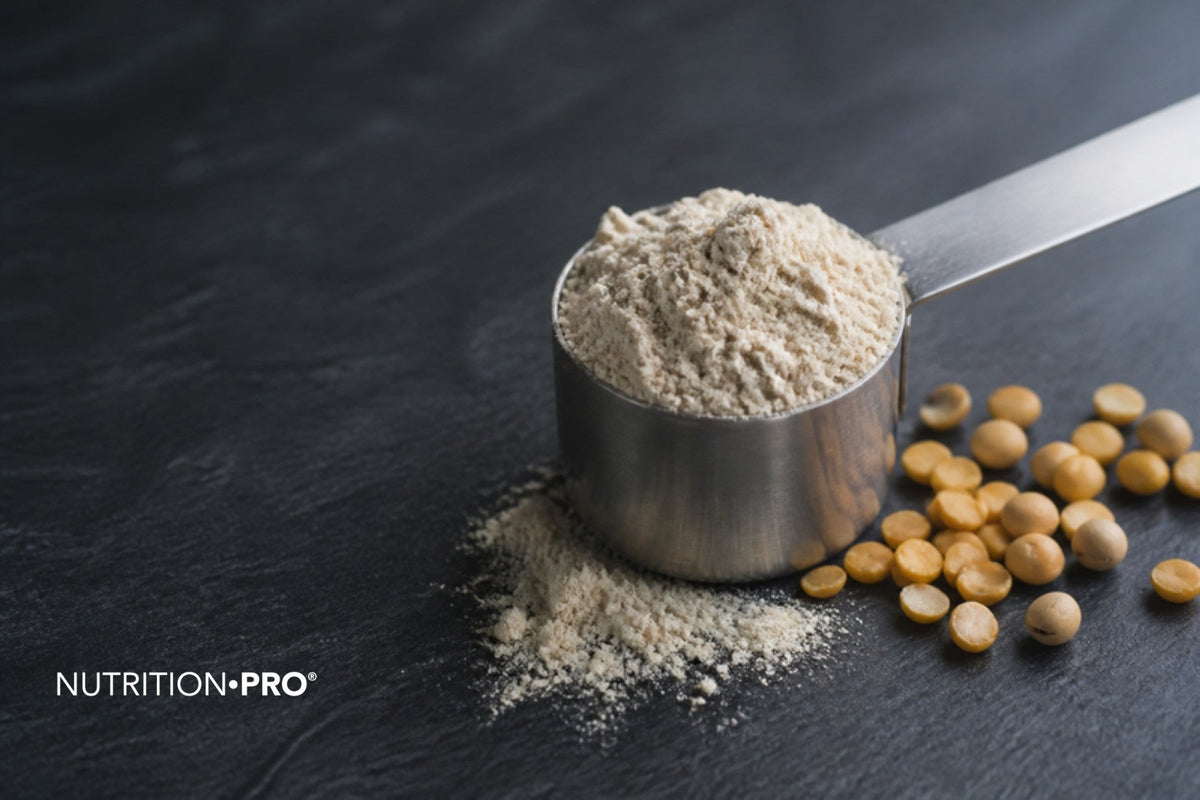
In an analysis of 30 sports protein powders sold in China, each sample contained at least one heavy metal, and plant-based powders showed on average more lead and cadmium than dairy powders. Yet, at 30 g per day, the risk index calculated by the authors remained 0.45, below the threshold of 1 that signals a risk. Both pieces of information are true at the same time.
This guide reviews, based on studies identified via PubMed, the documented side effects of plant-based protein powders: digestion, allergies, measured contaminants, soy and hormones, thyroid, kidneys, uric acid, children and pregnancy. Each point is classified: established, rare, theoretical or misconception. A protocol for cautious use and warning signs that require stopping conclude the article.

What is established : pea protein is well tolerated in the two available trials, with very few digestive side effects. Allergies exist but remain rare (0.3% of Europeans for soy, confirmed by testing), with a real concern for people allergic to peanuts, often sensitized to peas and lupine. Heavy metals are detected in most analyzed powders; in a Chinese study, plant-based ones contained on average more than dairy ones. Calculated risks remain below levels of concern at usual doses.
What qualifies as misconception : soy does not alter testosterone in men (41 studies) nor thyroid hormones T3 and T4 (only TSH increases very slightly), and does not increase uric acid long-term; high protein intakes do not damage healthy kidneys. Two practical precautions: space soy and levothyroxine apart, and no powder for a child without medical advice.
- Plant-based protein powders: what are we talking about?
- Bloating and gas: digestive tolerance in trials
- Allergies: soy, peas, lupine and peanuts
- Heavy metals: what analyses measured
- Mycotoxins, microplastics, THC: other contaminants
- Soy, hormones and thyroid
- Kidneys and high protein intake
- Uric acid, gout and sweeteners
- Common misconceptions versus the data
- Building muscle without excessive protein
- Children, pregnancy and safety guidelines
- Frequently Asked Questions
Plant-based protein powders: what are we talking about?
A plant-based protein powder bears little resemblance to the original food. Cooked peas contain approximately 8% protein; pea concentrates contain 60 to 70%, isolates 70 to 95%, according to a review published in Nutrients, whose authors are employees of a nutrition group. This transformation eliminates most antinutritional factors and makes proteins more digestible (96% or higher for a soy isolate, compared to 84% for soy flour), but it also concentrates proteins, including allergens.
Common sources are pea, soy, rice, hemp, more rarely fava bean or lupin, and many powders blend several of these. Flavored versions add flavorings, sweeteners, sometimes gums or polyols. It is also necessary to distinguish two audiences: the lacto-ovo vegetarian consumes milk and eggs and can choose a plant-based or dairy protein; the vegan excludes all animal products, and plant-based protein is then often their only possible supplement, sometimes for years.
Several cited trials count employees of manufacturers among their authors, which we note. Many last 8 to 12 weeks and are conducted on young men: their conclusions do not automatically apply to women, seniors, or use over several years.
Bloating and gas: digestive tolerance in trials
Bloating and gas are the most cited effects, but the two available controlled trials, conducted with pea protein, report very few.
In 161 men aged 18 to 35 receiving 25 g twice daily of pea protein, concentrated whey, or placebo for 12 weeks during strength training, only one participant in the pea group experienced an adverse effect (1 out of 53), compared to 3 on whey and 4 on placebo, with no significant difference. The only two digestive disorders, diarrhea, occurred under placebo. Three co-authors worked for the manufacturer of the tested pea protein.
Babault N, Païzis C, Deley G, et al. J Int Soc Sports Nutr 2015;12(1):3. DOI: 10.1186/s12970-014-0064-5
A second trial, conducted in sedentary adults aged 30 to 59 years (100 included in four groups, two reported here), compared 20 to 22.5 g per day of pea protein and an equivalent dose of whey isolate over 84 days. Digestive symptoms, measured by a 12-item questionnaire, remained low in intensity and decreased over the course of the study, by 30.5% with pea and 43.1% with whey, with no difference between groups; none of the adverse events were deemed related to the product. Again, manufacturer employees were among the authors, and vegan individuals were excluded.
Why so many reports of bloating? Whole legumes are a major source of FODMAP, short fermentable sugars that draw water into the intestine and produce gas; in people with sensitive intestines, this distension is enough to trigger symptoms, according to a review dedicated to the low-FODMAP diet. Isolation removes much of it: a Swedish team showed that ultrafiltration separates oligosaccharides from pea protein, which should reduce flatulence, a hypothesis not tested in humans. Classification: discomfort rare in the two trials conducted with a pea isolate, plausible with concentrates, powders containing polyols, or in people sensitive to FODMAPs.
If a powder causes bloating, start with half a dose for a week, read the ingredient list (polyols, added fibers), and if needed, switch sources, from pea to rice for example. This advice is based on usage, not on trial results.
Allergies: soy, pea, lupin, and peanut
Allergy is the best-documented risk of plant proteins, and the only one that can be serious. For soy, a European meta-analysis of 93 studies provides precise figures: 0.5% of people report a soy allergy during their lifetime, but allergy confirmed by an oral provocation test only affects 0.3% of the population, the same as cow's milk allergy (0.3%) and compared to 0.1% for peanut confirmed by test.
Pea and lupin are less studied. A 2024 review on legume allergens emphasizes that severe reactions have been described particularly with these two foods, that most reactions come from cross-allergies between similar proteins, for example between peanut and lupin, and that data are mostly based on isolated cases. Study of six groups of allergic patients, Frontiers in Allergy 2023
Smits M, Verhoeckx K, Knulst A, et al. Front Allergy 2023;4:1115022.
Peanut allergy: caution with pea and lupin
Heavy metals: what analyses have measured
Present in almost all tested powders, below risk thresholds at usual doses.
Analysis of 30 powders and risk modeling, Environmental Research 2026
Chen M, Dong R, Lai W. Environ Res 2026;295:123988.
DOI: 10.1016/j.envres.2026.123988 A risk index below 1 means that estimated exposure remains below the toxicological reference doses retained by the authors: risk depends mainly on quantity, one dose per day remains far from the threshold, three doses approach it.
In Europe, the authors report for 56 plant-based protein supplements of European origin levels of 0.07 mg/kg of lead and 0.09 mg/kg of cadmium (overall values, without detail by product in the summary): at 30 g per day, no reference value was exceeded, neither for toxic elements nor for minerals; at 100 g per day, certain minerals exceeded reference intakes, such as molybdenum (250.16% of adequate intake) and iron (120.53%) in men and postmenopausal women, copper and magnesium in women. In the United States, an evaluation based on analyses of 15 then 133 powders published by two consumer organizations finds a risk index below 1, except for one product heavily loaded with cadmium taken three times per day, and suggests, relying on one of these organizations, that plant-based powders could contain more arsenic and cadmium.
Study and country
| What was measured | Authors' conclusion | China, 30 sports powders |
|---|---|---|
| , Chen 2026Lead 0.18 and cadmium 0.05 mg/kg on average in plant-based, compared to 0.06 and 0.01 in dairy | Index 0.45 at 30 g per day, 0.90 at 90 g, 1.28 at the 95th percentile of a high consumption simulation | Europe, 56 plant-based powders |
| , Bethencourt-Barbuzano 2025Lead 0.07 mg/kg, cadmium 0.09 mg/kg (overall values reported) | Plomb 0,07 mg/kg, cadmium 0,09 mg/kg (valeurs globales rapportées) | No reference value exceeded at 30 g per day |
| United States, 15 and 133 powders, Bandara 2020 | Arsenic, cadmium, mercury and lead, according to published analyses | Index below 1, except one product heavily loaded with cadmium at 3 doses per day |
American perspective: for the 15 products analyzed in 2010, three daily doses provided on average 5.9 µg of arsenic, compared to approximately 9.9 µg from typical diet of an adult male, and 3.52 µg of lead, compared to approximately 83 µg estimated from diet. Powders add to this exposure, in proportion to the number of doses.
These analyses are based on samples purchased in a given country and at a given date. They do not allow judgment of either a brand, a protein source as a whole, or an unanalyzed product, including ours.
Mycotoxins, microplastics, THC: other contaminants
Mycotoxins. A Prague team searched for 57 mycotoxins and 48 plant alkaloids in 101 samples of plant proteins and meat substitutes. Twenty-five mycotoxins and eight alkaloids were quantified, with up to 2,800 µg/kg of tenuazonic acid and 890 µg/kg of deoxynivalenol. Extruded soy products, burger mixes and rice protein contributed most to exposure, with risks judged high, particularly in children, for aflatoxin B1, Alternaria toxins and atropine or scopolamine. Only one study: a signal to confirm.
Microplastics. In the Chinese study, all samples, both plant-based and dairy, contained plastic particles: 2 to 19 per 30 g dose, 8 on average. The study counted them without measuring health effects.
THC and hemp. German monitoring of 511 hemp foods between 2008 and 2021 shows that hemp seeds and hemp beverages generally do not contain enough THC to exceed toxicological thresholds, unlike certain CBD-type supplements. Hemp protein powders did not form a separate category: risk theoretical, not measured for them.
Bisphenol A. We identified no studies in PubMed measuring bisphenol A in plant-based protein powders.
Soy, hormones and thyroid
Soy contains isoflavones, whose structure resembles that of estrogens: a soy isolate provides 88 to 164 mg per 100 g, according to the Nutrients review.
In adult men consuming soy foods, soy protein or isoflavone extracts, total testosterone was measured in 1,753 men, free testosterone in 752, estradiol in 1,000. No significant effect was found, regardless of statistical model, isoflavone dose or study duration.
Reed KE, Camargo J, Hamilton-Reeves J, et al. Reprod Toxicol 2021;100:60-67. DOI: 10.1016/j.reprotox.2020.12.019
In women, a meta-analysis of 47 trials observes modest effects before menopause: a decrease of approximately 20% in FSH and LH and a cycle lengthened by 1.05 days, with no effect on estradiol; after menopause, no significant effect, with a non-significant trend toward increased estradiol (approximately 14%). Their clinical significance remains undetermined.
Thyroid. A meta-analysis of 18 randomized trials finds no change in free T3 and T4 hormones, and a very slight increase in TSH, of 0.248 mIU/L, at the limit of significance and of uncertain clinical relevance. The Nutrients review adds that an adverse effect cannot be excluded in case of low iodine intake or early hypothyroidism.
Levothyroxine. This is the most concrete precaution. A 45-year-old patient, treated after thyroid removal, required unusually high doses of levothyroxine: she was taking a soy protein drink right after her tablet, and spacing the two doses apart allowed doses to be reduced. A 2023 review moderates: the data are based mainly on isolated cases, the only randomized trial showed no reduction in absorption with isoflavones, and the clinical impact appears low. Classification: rare, documented by cases, easy to avoid by spacing doses, in agreement with your doctor.
Kidneys and high protein intake
A meta-analysis of 28 randomized trials, 1,358 participants without kidney disease, compared high-protein diets (at least 1.5 g per kilogram per day, 20% of calories or 100 g per day) to normal intake. Kidney filtration was slightly elevated at the end of the study with high-protein diets, but its progression did not differ: these intakes do not impair kidney function in healthy adults, with a caveat about inadequately assessed bias risk.
The picture changes when kidneys are fragile. In a cohort of 1,624 American nurses aged 42 to 68 followed for 11 years, protein intake was not associated with kidney decline in women with normal function; in those with mild kidney insufficiency, each additional 10 g of protein was associated with a 1.69 mL/min per 1.73 m² decrease in filtration. These are associations, not proof of causality. A nephrology review explains the mechanism: high intake increases pressure and filtration in the kidney, which can worsen existing damage. In cases of kidney disease, total protein quantity is determined with the nephrologist, regardless of source.
Uric acid, gout and sweeteners
Uric acid and gout. Soy contains purines, hence the frequent advice to avoid it in case of gout. A meta-analysis of 17 studies nuances this: three acute studies showed a temporary rise in uric acid after soy consumption, but five long-term studies found no effect of soy protein or isoflavones. A meta-analysis of 19 observational studies even associates soy with lower risk of gout (odds ratio 0.85) and hyperuricemia (0.70), an association that does not prove causation. In cases of confirmed gout, medical advice remains necessary, but the concern about soy's effect on uric acid is mostly a matter ofmisconception.
Intense sweeteners. Flavored powders may contain them. In a randomized trial of 120 healthy adults, two weeks of saccharin, sucralose, aspartame or stevia, at modest doses, modified the microbiota, and saccharin as well as sucralose altered glycemic response, in highly variable ways from person to person; clinical consequences remain to be evaluated. Rating: measured effect, uncertain scope, which argues for a natural version if you consume it heavily.
Polyols. In a crossover trial with 12 volunteers, the threshold dose (diarrhea or severe symptom) was on average 92 to 93 g of maltitol per day, versus 106 to 113 g of sugar, and diarrhea was more frequent than with sugar (8 volunteers versus 3 with regular consumption), at doses the authors considered far above typical use. Polyols do add up throughout the day, however (bars, chewing gums).
Misconceptions versus data
"Plant proteins are incomplete." Partly true. An analysis of commercial isolates shows fewer essential amino acids in certain plant isolates: 21% for oat and lupin, 22% for wheat, versus 43% for whey and 39% for milk. Leucine varies from 5.1% for hemp to 13.5% for corn, versus 9.0% for milk, and methionine as well as lysine are lower. But the authors conclude that blends of plant proteins can replicate the profile of animal proteins.
When total intake is sufficient, the difference often disappears. In 19 young vegan men and 19 beginning omnivores, 12 weeks of strength training with 1.6 g of protein per kilogram per day, supplemented with soy isolate for vegans and whey for omnivores, produced the same lean mass gain in the legs, 1.2 kg in both groups. The trial is small and was registered after it started: it shows possible equivalence, not a rule.
"Soy is dangerous for men." The 41 studies cited above find no effect on testosterone, and the Nutrients review reports that a meta-analysis of 15 controlled studies found no changes with up to 60 g of soy protein per day. Rating: misconception.
"A plant protein is necessarily healthier." Not necessarily: each powder has its documented risks, and the choice depends primarily on your diet. If you are vegetarian and consume dairy products, a whey isolate is another option, with its own precaution, milk protein allergy; if you are vegan, a plant protein or a blend remains the solution.
Building muscle without excess protein
A meta-analysis of 49 trials, 1,863 participants, shows that protein supplements increase strength and lean mass during a strength training program, but gains plateau around 1.62 g of protein per kilogram per day, including food. For 70 kg, this represents approximately 113 g per day: the powder only serves to close the gap with meals. This ceiling also applies to contaminants: in the Chinese study, the risk index doubled between one and three daily doses of 30 g.
To progress without excess protein, creatine is one of the best-studied supplements, and it concerns vegetarians in particular. In an 8-week trial of 18 vegetarians and 24 non-vegetarians aged 19 to 55, vegetarians started with lower muscle creatine reserves (117 versus 130 mmol/kg) and increased their reserves, lean mass, and total work more under creatine. The dose was calculated on lean mass, with one week of loading at 0.25 g per kilogram of lean mass per day, then 0.0625 g per kilogram: a protocol different from the 3 g daily in our capsules.

A position statement from a scientific sports nutrition society reports that intakes of up to 30 g per day for 5 years were well tolerated in healthy individuals, and that a habitual intake of approximately 3 g per day could be beneficial. Our Creatine Creapure in vegetable capsules provides 3 g per day, our creatine monohydrate powder 5 g per day; both are not recommended for children, adolescents, and pregnant or nursing women; maintain adequate hydration.
Children, pregnancy and safety guidelines
Children and adolescents. No trial has evaluated these powders in healthy children. Legume allergy, particularly pea, is primarily pediatric, and the study on mycotoxins considers exposure more concerning in children. In a survey of 263 adolescents from Seville, 10.64% consumed protein supplements from all sources, and 18.51% of them reported an adverse effect, with no established cause. In children and adolescents, a powder is justified only on the advice of a pediatrician or dietitian.
Pregnancy and breastfeeding. We found no trial on plant-based protein powders during pregnancy. Nutritional needs are first met through diet; in case of a vegan diet, follow-up by a midwife, physician, or dietitian is recommended, particularly for vitamin B12 and iron.
Long-term vegans. A protein powder does not correct any deficiency: vitamin B12 and iron should be monitored separately, iron by blood test, as explained in our article on iron deficiency. If a deficiency is confirmed, our bisglycinate iron in vegetable capsule provides 14 mg of iron, 80 mg of vitamin C, and 200 µg of vitamin B9 per capsule, one hour before a meal; it is not recommended during pregnancy, breastfeeding, and in case of hemochromatosis.
| Risk | What studies show | Level of evidence |
|---|---|---|
| Digestive discomfort | Very few digestive adverse effects in two pea protein trials | Rare in trials |
| Soy allergy | 0.3% of Europeans, confirmed by test | Established, rare |
| Pea and lupin allergy | Frequent in individuals allergic to peanuts with sensitization, sometimes severe | Established, rare, potentially serious |
| Heavy metals | Detected in most powders, risk indices below 1 at habitual doses | Measured, low risk and dose-dependent |
| Mycotoxins | Quantified in plant-based proteins, single study | Signal to be confirmed |
| Hemp THC | Seeds rarely above thresholds, powders not separately studied | Theoretical |
| Soy and testosterone | No effect in 41 studies | Common misconception |
| Soy and levothyroxine | Reduced absorption reported in isolated cases | Rare, isolated cases |
| Healthy kidneys | No difference in progression across 28 trials | Common misconception |
| Kidney disease | High intake associated with faster decline in a cohort of women | Justified precaution, observational data |
| Uric acid | No long-term effect from soy | Common misconception |
The following guidelines are practical advice based on this data, not trial results.
Emergency (15 or 112): widespread hives, swelling of lips, tongue or throat, difficulty breathing, repeated vomiting or discomfort after taking it, including during physical activity. Stop and consult : itching in the mouth or rash after each dose, persistent abdominal pain, lasting diarrhea or blood in stool, unusual fatigue if you are on levothyroxine treatment, leg swelling or foamy urine if you have kidney disease. In children, any symptom following powder intake requires pediatric consultation.
22.9 g of protein per 30 g serving, in the form of whey protein isolate. A milk protein for vegetarians and athletes who consume dairy products and want to simply supplement their protein intake.
View the Whey IsolateAre you vegan? Our comparison plant or animal proteins details how to meet your needs without animal products.
Frequently Asked Questions
Are powdered plant proteins dangerous?
Not for a healthy adult at studied doses. Documented risks are allergies, rare but sometimes severe, infrequent digestive discomfort in the two pea trials, and heavy metals measured in most powders, with risk indices below the threshold of concern at one dose per day.
What are the side effects of plant proteins?
The most cited are bloating and gas, but trials report few. In one trial, among 53 men taking 50 g of pea protein daily for 12 weeks, only one experienced an adverse effect, non-digestive in nature. More rarely, an allergy can occur.
Is pea protein dangerous?
Not for most people, but it can cause an allergy, sometimes severe. In patients allergic to peas, co-allergy to peanuts affected 64.7% to 77.8% of them. In case of peanut allergy, consult an allergist before taking it.
Is soy protein dangerous for men?
No. A meta-analysis of 41 studies found no effect of soy or isoflavones on testosterone, free testosterone, or estradiol in men, regardless of dose or duration.
Are there heavy metals in plant proteins?
Yes, in most analyzed powders. Among 30 powders sold in China, plant-based ones contained on average 0.18 mg/kg of lead and 0.05 mg/kg of cadmium, compared to 0.06 and 0.01 for dairy-based. The risk index remained 0.45 at 30 g per day, below the threshold of 1.
Is soy bad for the thyroid?
In people with a normal thyroid, a meta-analysis of 18 trials found no effect on T3 and T4 hormones, only a minimal increase in TSH. When taken at the same time as levothyroxine, soy can reduce its absorption, according to isolated cases: the doses must be spaced apart.
Do protein powders damage the kidneys?
Not in healthy adults: in 28 trials, changes in kidney function did not differ between high and normal protein diets. In a cohort of women with mild kidney insufficiency, high intake was associated with faster decline; the amount should be determined with a doctor.
Does soy raise uric acid?
Briefly after intake, sometimes, but five long-term studies found no effect of soy protein on uric acid.
Why does plant protein cause belly bloating?
Legumes contain fermentable sugars, FODMAPs, which produce gas. Isolates contain little of them, but concentrates and powders with polyols can cause bloating, especially in case of irritable bowel. Starting with half a dose often helps.
Can a child take powdered plant protein?
No trials have evaluated these powders in healthy children, and legume allergy, pea allergy in particular, mainly affects children. A powder is only justified on the advice of a pediatrician or dietitian.
Can you take plant protein while pregnant?
No trials have evaluated it during pregnancy. Needs are first covered through diet, and any supplementation during pregnancy or breastfeeding should be discussed with the midwife or doctor.
What amount of plant protein per day is safe?
Tolerance trials used 20 to 50 g per day. Muscle gains plateau around 1.6 g of protein per kilogram of body weight per day, including diet, and the risk index for metals doubled between 30 and 90 g per day in one study.
Sources
The studies cited below were identified via PubMed.
- Chen M, Dong R, Lai W. Exposure to heavy metals and microplastics from sports protein supplements: integrated health risk modeling and scenario analysis. Environmental Research, 2026;295:123988. DOI
- Hertzler SR, Lieblein-Boff JC, Weiler M, Allgeier C. Plant proteins: evaluation of their nutritional quality and their effects on health and physical function. Nutrients, 2020;12(12):3704. DOI
- Babault N, Païzis C, Deley G, et al. Oral supplementation with pea protein promotes muscle thickness gain during strength training: a randomized double-blind placebo-controlled trial versus whey. J Int Soc Sports Nutr, 2015;12(1):3. DOI
- Singh RG, Guérin-Deremaux L, Lefranc-Millot C, et al. Efficacy of pea protein supplementation combined with a strength training program on muscle performance in sedentary adults: a randomized controlled trial with parallel groups. Nutrients, 2024;16(13):2017. DOI
- Iacovou M, Tan V, Muir JG, Gibson PR. The low FODMAP diet and its application in East and Southeast Asia. Journal of Neurogastroenterology and Motility, 2015;21(4):459-470. DOI
- Fredrikson M, Biot P, Alminger ML, et al. Production process for a high-quality pea protein isolate low in oligosaccharides and phytates. Journal of Agricultural and Food Chemistry, 2001;49(3):1208-1212. DOI
- Spolidoro GCI, Ali MM, Amera YT, et al. Prevalence estimates of the eight major food allergies in Europe: updated systematic review and meta-analysis. Allergy, 2023;78(9):2361-2417. DOI
- Abu Risha M, Rick EM, Plum M, Jappe U. Allergens of legumes: peas, chickpeas, lentils, lupins and beyond. Current Allergy and Asthma Reports, 2024;24(9):527-548. DOI
- Smits M, Verhoeckx K, Knulst A, et al. Co-sensitization between legumes is common, but variable and not always clinically relevant. Frontiers in Allergy, 2023;4:1115022. DOI
- Muller T, Luc A, Adam T, et al. Relevance of legume sensitization in children allergic to peanuts. Pediatric Allergy and Immunology, 2022;33(9):e13846. DOI
- Serra B, Barni S, Valleriani C, et al. IgE-mediated legume allergy in children: experience from an Italian center. Nutrients, 2026;18(11):1810. DOI
- Dölle-Bierke S, Grünhagen J, Worm M. Role of vegan diets in food allergies: a risk of food anaphylaxis? Dermatologist, 2022;73(3):208-211. DOI
- Bandara SB, Towle KM, Monnot AD. Health risk assessment related to heavy metal ingestion in powder protein consumers. Toxicology Reports, 2020;7:1255-1262. DOI
- Bethencourt-Barbuzano E, Pyrzynska E, Siedzik K, et al. Plant protein supplements, emerging sources of metal exposure: a risk assessment. Journal of Trace Elements in Medicine and Biology, 2025;91:127703. DOI
- Prusova N, Dolezalova T, Dzuman Z, et al. Mycotoxins and plant alkaloids in plant-based protein foods and meat substitutes: presence, exposure and risk assessment. Food Chemistry, 2026;530:151250. DOI
- Dräger H, Barthlott I, Golombek P, et al. Evolution of THC content in a German national surveillance of hemp foods, 2008 to 2021. Foods, 2022;11(3):486. DOI
- Reed KE, Camargo J, Hamilton-Reeves J, et al. Neither soy nor isoflavones affect male reproductive hormones: expanded and updated meta-analysis of clinical studies. Reproductive Toxicology, 2021;100:60-67. DOI
- Hooper L, Ryder JJ, Kurzer MS, et al. Effects of soy protein and isoflavones on circulating hormones in women before and after menopause: systematic review and meta-analysis. Human Reproduction Update, 2009;15(4):423-440. DOI
- Otun J, Sahebkar A, Östlundh L, et al. Systematic review and meta-analysis of the effect of soy on thyroid function. Scientific Reports, 2019;9(1):3964. DOI
- Bell DS, Ovalle F. Taking a soy protein supplement and need to increase levothyroxine dose. Endocrine Practice, 2001;7(3):193-194. DOI
- Gatta E, Maltese V, Cavadini M, et al. Interference or not between soy and levothyroxine: narrative literature review. Endocrine Practice, 2023;29(11):897-901. DOI
- Devries MC, Sithamparapillai A, Brimble KS, et al. The change in kidney function does not differ between healthy adults following a high-protein diet or a normal diet: systematic review and meta-analysis. The Journal of Nutrition, 2018;148(11):1760-1775. DOI
- Knight EL, Stampfer MJ, Hankinson SE, et al. Effect of protein intake on the decline of kidney function in women with normal or mildly impaired kidney function. Annals of Internal Medicine, 2003;138(6):460-467. DOI
- Ko GJ, Rhee CM, Kalantar-Zadeh K, Joshi S. Effects of high-protein diets on kidney health and longevity. Journal of the American Society of Nephrology, 2020;31(8):1667-1679. DOI
- Duan Y, Qi Q, Liu Z, et al. Soy consumption and serum uric acid: systematic review and meta-analysis. Frontiers in Nutrition, 2022;9:975718. DOI
- Li R, Yu K, Li C. Dietary factors and risk of gout and hyperuricemia: meta-analysis and systematic review. Asia Pacific Journal of Clinical Nutrition, 2018;27(6):1344-1356. DOI
- Suez J, Cohen Y, Valdés-Mas R, et al. Personalized effects of non-nutritive sweeteners on glucose tolerance, microbiome-dependent. Cell, 2022;185(18):3307-3328.e19. DOI
- Ruskoné-Fourmestraux A, Attar A, Chassard D, et al. Study of digestive tolerance of maltitol after occasional and regular consumption in healthy humans. European Journal of Clinical Nutrition, 2003;57(1):26-30. DOI
- Gorissen SHM, Crombag JJR, Senden JMG, et al. Protein content and amino acid composition of commercial plant protein isolates. Amino Acids, 2018;50(12):1685-1695. DOI
- Hevia-Larraín V, Gualano B, Longobardi I, et al. High-protein plant-based diet versus omnivorous diet with equal protein for supporting adaptations to resistance training: vegans and habitual omnivores. Sports Medicine, 2021;51(6):1317-1330. DOI
- Morton RW, Murphy KT, McKellar SR, et al. Systematic review, meta-analysis, and meta-regression of the effect of protein supplementation on muscle mass and strength gains induced by resistance training in healthy adults. British Journal of Sports Medicine, 2018;52(6):376-384. DOI
- Burke DG, Chilibeck PD, Parise G, et al. Effect of creatine and resistance training on muscle creatine and performance in vegetarians. Medicine and Science in Sports and Exercise, 2003;35(11):1946-1955. DOI
- Kreider RB, Kalman DS, Antonio J, et al. Position statement: safety and efficacy of creatine supplementation in exercise, sports, and medicine. J Int Soc Sports Nutr, 2017;14:18. DOI
- Millán-Jiménez A, Fernández-Fontán IM, Sobrino-Toro M, Fernández-Torres B. Consumption of protein supplements in adolescents: prevalence, habits and complications. Anales de Pediatría (English Edition), 2023;99(4):240-251. DOI


