

Chia, flax, pumpkin, psyllium: seeds are credited with weight loss powers that are almost magical. On social media, they've become the stars of "tricks to lose weight fast." But what do the studies really say? Are they effective, or is it mostly marketing?
This article sorts through it, without compromise. We examine, seed by seed, what science has actually measured: what works (a little), what doesn't work, and how to use them intelligently. Honest spoiler: no seed is a fat burner, but some have real value for satiety.

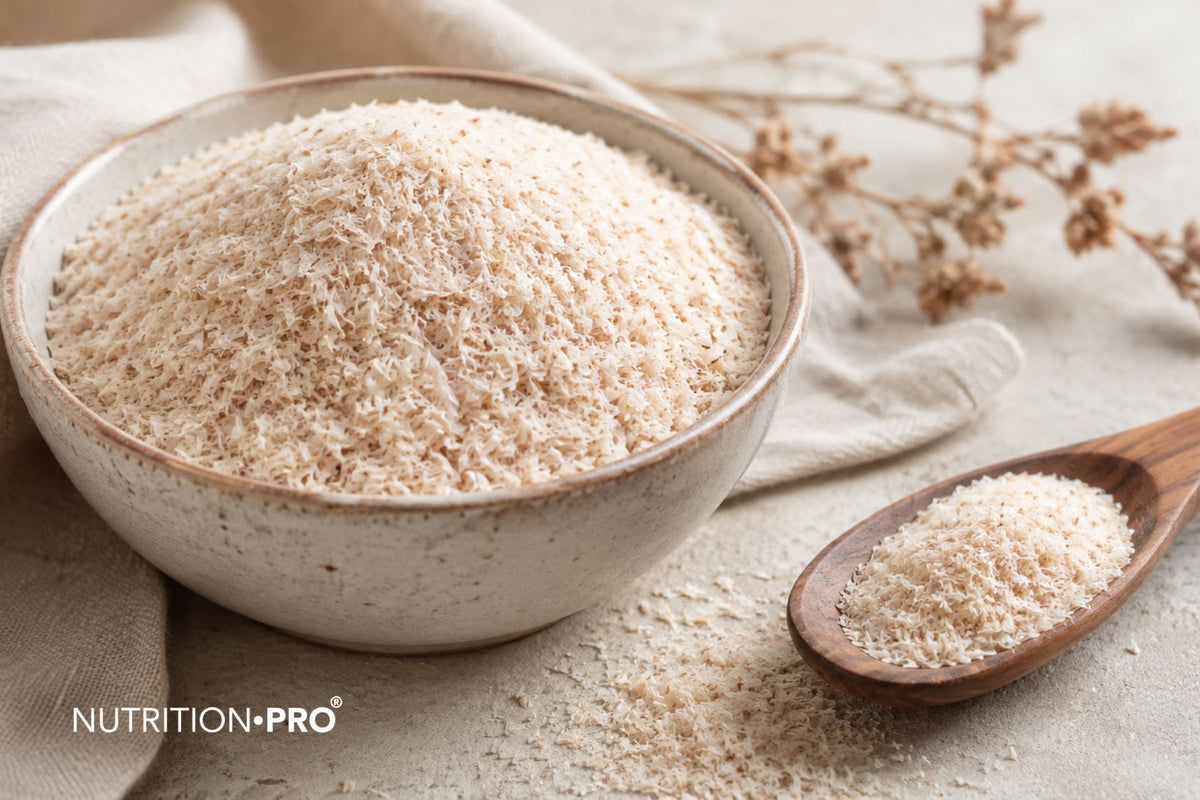
Psyllium is a viscous fiber: it absorbs water and forms a gel that prolongs satiety and supports digestive transit. The most relevant seed to support a weight management approach, as part of a balanced diet.
No seed is a fat burner. Their weight management benefit comes through fiber and satiety. Flax seed has the best demonstrated effect, but modest (approximately -1 kg according to a meta-analysis of 45 trials), especially when ground, at sufficient doses and in overweight individuals. Chia seed, despite its reputation, showed no effect on weight in studies. Psyllium is the most relevant satiety fiber. In all cases: consume with plenty of water, as part of a balanced diet, never as a miracle solution.
1. How seeds affect (or don't affect) weight
Before judging each seed, you must understand the only real lever on which they act. Seeds rich in soluble fiber (flax, chia, psyllium) absorb water and form a viscous gel in the digestive tract. This gel slows stomach emptying and prolongs the feeling of fullness. Possible result: you feel less hungry, so you potentially eat a bit less.
That's it. There is no "fat-busting effect," no magical metabolism acceleration. Seeds also provide interesting nutrients (plant-based omega-3, protein, minerals), excellent for health, but with no direct link to weight loss. Keeping this in mind avoids all the false promises.
2. Seeds put through the test of research
Flax seed
The best supported for weight.
Rich in fiber, plant-based omega-3 (ALA), and lignans. It's the only seed with a weight effect confirmed by a large meta-analysis, even if it remains modest. Must be consumed ground, otherwise it's not absorbed.
Chia seed
The star disappoints on the scale.
Very popular, rich in fiber and plant-based omega-3. But studies have not shown an effect on weight loss. Its gel can help with satiety, and it remains nutritious, but it's not a weight-loss food in itself.
Psyllium (husks)
The satiety fiber par excellence.
Psyllium is a viscous fiber that swells significantly in water. It prolongs satiety, supports digestive transit, and also has a recognized effect on cholesterol. The most relevant of the "seeds" to support a weight management approach.
Pumpkin, sunflower, sesame
Good for health, neutral on weight.
These seeds provide good nutrients (magnesium, zinc, healthy fats), but are also calorie-dense. No evidence of a weight-loss effect: consume them for their nutritional value, with moderation on portions.
Fenugreek
Lead on appetite, limited evidence.
Fenugreek is studied for its possible effect on appetite and blood sugar, but evidence remains limited on weight. A side lead, not a weight-loss pillar.
3. What meta-analyses really say
Here are the numerical data, attributed to their authors. This is what distinguishes this article from pages that promise the moon.
Flax seed supplementation results in a significant reduction in body weight (approximately -1 kg), BMI, and waist circumference. Effects are more pronounced at doses of at least 30 g per day, over 12 weeks or longer, and in overweight or obese individuals.
According to PubMed, Mohammadi-Sartang M et al. 2017, Obesity Reviews (45 randomized controlled trials). DOI: 10.1111/obr.12550
The effect of flax is therefore real, but we must be honest about its magnitude: approximately 1 kg is modest, and achieved at a substantial dose over time. It's a support, not a transformation.
For chia, the contrast is clear. According to PubMed, a randomized controlled trial (Quaresma LS et al. 2022, Journal of the American Nutrition Association) found no effect of chia flour on weight or body composition in obese women (DOI: 10.1080/07315724.2022.2056773). And a reference systematic review (Ulbricht C et al. 2009, Reviews on Recent Clinical Trials) already concluded that no study showed an effect of chia on weight loss (DOI: 10.2174/157488709789957709). Its weight-loss reputation is therefore not supported.
The common mechanism remains: satiety. According to PubMed, a review of intervention studies (Ho IHH et al. 2015, International Journal of Food Sciences and Nutrition) confirms that viscous fibers (such as those in psyllium) reduce appetite and food intake (DOI: 10.3109/09637486.2015.1034252). This is how seeds can truly help: by filling you up, not by burning anything.
4. How to consume them properly
In practice: a spoonful of psyllium in a large glass of water before a meal, ground flaxseed on yogurt or in a smoothie, chia in oatmeal. The idea is never to "replace" a meal with seeds, but to enrich an already balanced diet with satiating fibers.
5. Precautions to know
These precautions are not trivial: excess fiber without water is the leading cause of discomfort. Go gradually, stay hydrated, and listen to your body. Used properly, these seeds are safe and useful; used poorly, they mainly cause bloating and disappointment.
Finally, let's recall the essential point: seeds support an approach, they don't replace it. Weight loss is based on a moderate caloric deficit, sufficient protein, activity, and sleep. For the complete picture, see our guide how to lose weight in one month and our 27 science-backed tips.
Frequently asked questions
Which seed truly causes weight loss?
No single seed causes weight loss on its own. The most solid evidence concerns flaxseed: according to a meta-analysis of 45 trials (Mohammadi-Sartang 2017, Obesity Reviews), it produces a modest weight reduction, especially at high doses and in overweight individuals. For chia seed, studies show no effect on weight. The effect of seeds mainly comes through fibers and satiety, as a complement to a balanced diet.
Does chia seed cause weight loss?
Not directly. According to a randomized trial (Quaresma 2022) and a systematic review (Ulbricht 2009), chia seed showed no effect on weight loss. It remains nutritionally interesting (fiber, plant-based omega-3) and its gel can support satiety, but it's not a fat burner. It supports, but doesn't cause weight loss.
Does flaxseed help with weight loss?
Modestly, yes. According to a meta-analysis of 45 randomized trials (Mohammadi-Sartang 2017, Obesity Reviews), flaxseed supplementation reduces weight by approximately 1 kg on average, BMI, and waist circumference, with better effects at doses of at least 30 g per day, for at least 12 weeks, in overweight individuals. The effect is real but modest: it's a support, not a miracle solution.
Does psyllium cause weight loss?
Psyllium is a viscous fiber: it absorbs water and forms a gel that extends satiety. According to a review of studies (Ho 2015), viscous fibers reduce appetite and food intake. Psyllium doesn't directly cause weight loss, but it can help you eat less and supports digestive transit. It's a satiety support, to be integrated into a comprehensive approach.
How to consume seeds to benefit from their fiber?
Flaxseeds must be ground to be properly absorbed (whole, they pass through the body). Psyllium and chia should be consumed with a large glass of water, as they expand. Start with small amounts to avoid bloating and discomfort, and increase gradually. Drink enough water: fiber needs water to work and prevent constipation.
Do seeds have precautions or contraindications?
Concentrated fibers (psyllium, flax, chia) should always be taken with enough water to avoid the risk of digestive obstruction. Use caution in case of intestinal disorders (obstruction, narrowing), medication use (fibers can reduce their absorption: space out doses) and in case of difficulty swallowing. If in doubt, or if you have a health condition or are taking treatment, consult a healthcare professional.
Do you need to eat seeds to lose weight?
It's not essential. Seeds are a useful complement to a fiber-rich diet, not a mandatory step. What matters for weight loss is a sustainable calorie deficit, enough protein, physical activity, and good sleep. Seeds can help with satiety, but they don't replace these fundamentals.
- Viscous Fiber
- Soluble fiber that forms a gel in the digestive tract, slows digestion, and prolongs satiety (e.g., psyllium, flax).
- Satiety
- A feeling of fullness that reduces the desire to eat.
- Lignans
- Plant compounds found notably in flax, studied for their antioxidant properties.
- ALA (plant-based omega-3)
- Alpha-linolenic acid, a plant-based omega-3 fatty acid found in flax and chia.
- Psyllium
- Husks from seeds of a plant (Plantago), very rich in viscous fibers, used for satiety and digestive transit.
- Calorie Deficit
- Burning more calories than you consume, a necessary condition for weight loss.
Information from PubMed. The data describe the state of research and do not constitute health claims attributed to a product.
- Mohammadi-Sartang M, Mazloom Z, Raeisi-Dehkordi H, et al. The effect of flaxseed supplementation on body weight and body composition: a systematic review and meta-analysis of 45 RCTs. Obes Rev 2017;18(9):1096-1107. DOI : 10.1111/obr.12550
- Quaresma LS, de Oliveira Siais L, Grangeiro ED, Rosado EL. Chia Flour (Salvia hispanica L.) Intake Does Not Affect Weight Loss but Improves Systolic Blood Pressure Control in Obesity. J Am Nutr Assoc 2022;42(4):403-410. DOI : 10.1080/07315724.2022.2056773
- Ulbricht C, Chao W, Nummy K, et al. Chia (Salvia hispanica): a systematic review by the natural standard research collaboration. Rev Recent Clin Trials 2009;4(3):168-74. DOI : 10.2174/157488709789957709
- Ho IHH, Matia-Merino L, Huffman LM. Use of viscous fibres in beverages for appetite control: a review of studies. Int J Food Sci Nutr 2015;66(5):479-90. DOI : 10.3109/09637486.2015.1034252


