

 MADE IN FRANCE
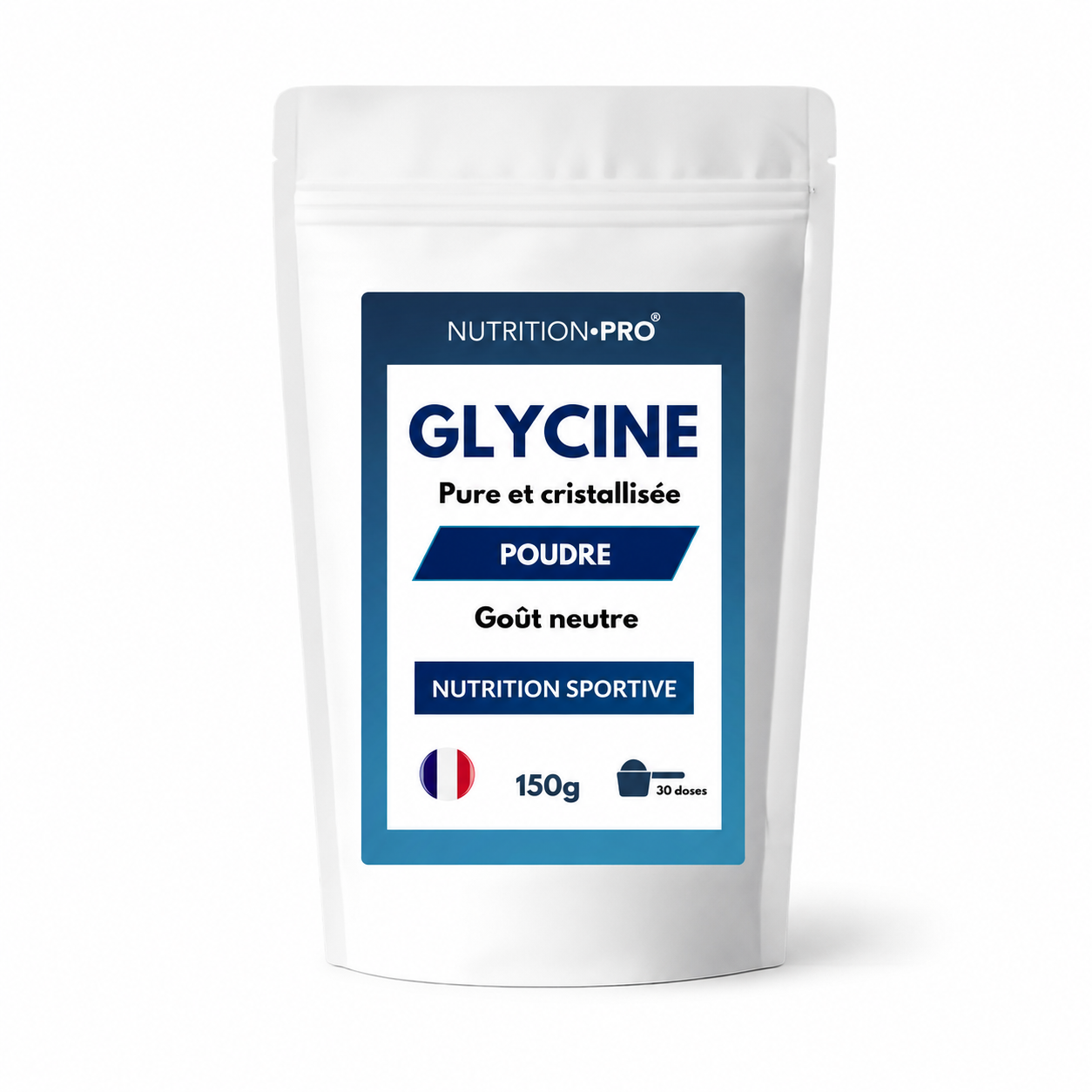
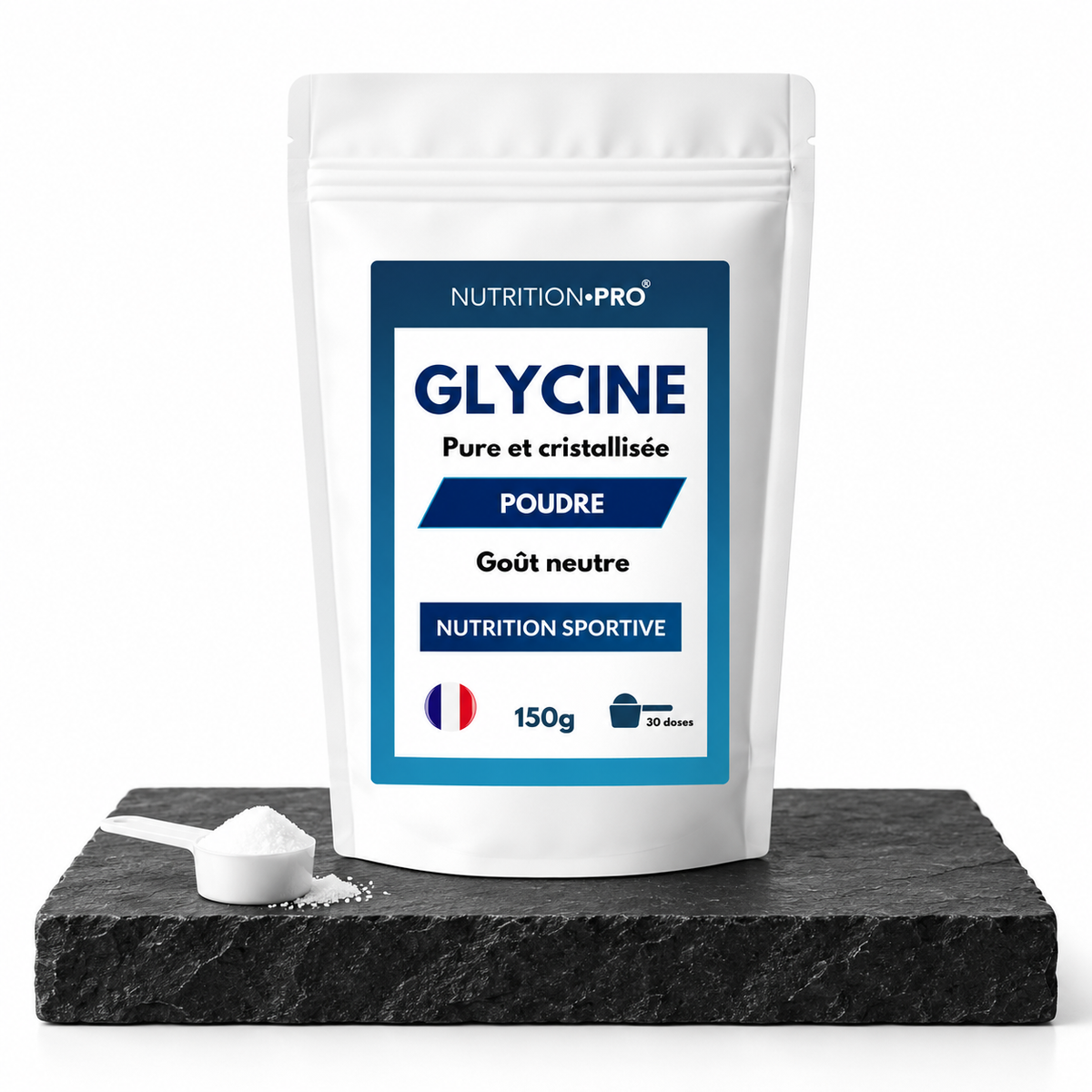
GLYCINE CRISTALLISÉE
- Collagen support
- Antioxidant defences
- Recovery support
- Better-quality sleep


FRANCE
NATURAL
EFFICIENCY
Description
LA GLYCINE SOUS SA MEILLEURE FORME
La glycine est le plus petit des acides aminés. Notre poudre est une glycine cristallisée pure, sans excipient, sans agent anti-agglomérant, sans arôme et sans édulcorant. Un seul ingrédient dans le pot, rien d'autre.
Contrôlée lot par lot
Chaque lot fait l'objet d'un contrôle métaux lourds et microbiologie, et le certificat d'analyse correspondant est mis à disposition sur simple demande. Vous savez exactement ce que vous consommez.
Des cristaux fins qui se dissolvent vraiment
Contrairement aux poudres compactées ou chargées en additifs, nos cristaux se dissolvent intégralement dans l'eau froide comme dans une boisson chaude, sans dépôt au fond du verre et sans amertume. La glycine possède une saveur naturellement sucrée : elle se mélange sans dénaturer le goût de votre boisson.
Un mois de cure, dosé sans approximation
Le pot de 150 g couvre 30 doses de 5 g, cuillère doseuse incluse. Pas de gélule à multiplier, pas de dosage à l'estimation.
En résumé
- Sans additif
- 30 doses de 5 g
- Un mois de cure
- Certificat d'analyse par lot
How to use
Nutritional information
Ingredients for 1 day (1 dose of 5 g):
| Ingredients | Composition | RDA % |
|---|---|---|
| Glycine | 5 g | / |
RDA = Recommended Daily Allowance
Precautions
LA GLYCINE SOUS SA MEILLEURE FORME
La glycine est le plus petit des acides aminés. Notre poudre est une glycine cristallisée pure, sans excipient, sans agent anti-agglomérant, sans arôme et sans édulcorant. Un seul ingrédient dans le pot, rien d'autre.
Contrôlée lot par lot
Chaque lot fait l'objet d'un contrôle métaux lourds et microbiologie, et le certificat d'analyse correspondant est mis à disposition sur simple demande. Vous savez exactement ce que vous consommez.
Des cristaux fins qui se dissolvent vraiment
Contrairement aux poudres compactées ou chargées en additifs, nos cristaux se dissolvent intégralement dans l'eau froide comme dans une boisson chaude, sans dépôt au fond du verre et sans amertume. La glycine possède une saveur naturellement sucrée : elle se mélange sans dénaturer le goût de votre boisson.
Un mois de cure, dosé sans approximation
Le pot de 150 g couvre 30 doses de 5 g, cuillère doseuse incluse. Pas de gélule à multiplier, pas de dosage à l'estimation.
En résumé
- Sans additif
- 30 doses de 5 g
- Un mois de cure
- Certificat d'analyse par lot
Ingredients for 1 day (1 dose of 5 g):
| Ingredients | Composition | RDA % |
|---|---|---|
| Glycine | 5 g | / |
RDA = Recommended Daily Allowance
THE BENEFITS OFGLYCINE
- Supports the nervous system
- Contributes to creatine synthesis
- Supports collagen production
- Promotes better-quality sleep
- Contributes to antioxidant defences
- Digestive comfort support
Une efficacité étudiée par la recherche scientifique
Supplement courses to pair with Glycine:



Frequently asked questions
What is Glycine, and what are its benefits?
Glycine is an amino acid naturally present in the body and dietary proteins. Despite its very simple structure, it contributes to many essential functions: it forms part of collagen and is involved in the synthesis of creatine and glutathione.
Glycine also plays a role in the nervous system, where it acts as a neurotransmitter. As a food supplement, it is particularly sought to support routines focused on sleep, recovery and providing precursors needed for several metabolic pathways.
Our neutral-tasting Glycine powder mixes easily into a drink and offers a simple way to add glycine to your daily routine.
What are the main benefits of Glycine?
Glycine is involved in several important physiological mechanisms in the body:
• Nervous system: it acts as a neurotransmitter and helps regulate nervous activity
• Collagen: approximately one in three amino acids in collagen is glycine
• Creatine: it is one of the amino acids the body uses to make its own creatine
• Glutathione: it contributes to the synthesis of this antioxidant naturally present in cells
• Sleep: small human studies investigated 3 g of glycine before bed and observed improvements in certain sleep parameters
• Metabolism: it is involved in making many essential molecules.
It is important to distinguish these established physiological roles from the specific effects of supplementation, which do not all have the same level of clinical evidence.
Does Glycine help you sleep better?
Glycine and sleep have been investigated in several small human studies. In a trial published in Sleep and Biological Rhythms, taking 3 g of glycine before bed in people reporting unsatisfactory sleep was associated with improved subjective sleep quality and certain parameters measured by polysomnography.
Another study in volunteers subjected to sleep restriction also investigated 3 g of glycine before bed and observed reductions in certain feelings of fatigue and drowsiness the following day.
These results are interesting, but the available studies remain small. Glycine should therefore not be presented as a treatment for insomnia or sleep disorders.
What is the link between Glycine and collagen?
Glycine is one of collagen's main amino acids. It accounts for approximately one third of the amino acid residues in its structure and occurs at every third position in its characteristic chain.
Collagen is the body's most abundant structural protein and forms an important part of skin, cartilage, tendons, ligaments and bones.
Glycine is therefore an essential building block of collagen's structure. However, this does not mean that glycine supplementation alone automatically produces a visible effect on skin or joints.
What is the link between Glycine and creatine?
Glycine contributes to natural creatine synthesis. The body makes creatine from three main components: glycine, arginine and a methyl group from methionine.
Creatine then plays an important role in the energy system of tissues with high energy requirements, particularly muscles.
For athletes, an important distinction is needed: glycine is a physiological precursor of creatine, but it does not necessarily replace direct creatine supplementation, and it has not been established that taking more glycine alone increases sporting performance.
When is the best time to take Glycine?
The best time to take glycine mainly depends on your goal and routine.
In studies focused on sleep, glycine was generally consumed before bed, with a dose of 3 g used in several studies. For daily use without a specific sleep-related goal, it can also be consumed at another time of day.
Thanks to its neutral-tasting powder format, glycine can easily be mixed with water or another drink. For the daily amount, follow the instructions on the product.
How much Glycine should I take per day?
There is no universal dose of glycine suitable for every use. The amount depends on the intended goal, diet and product used.
For sleep, several human studies used a dose of 3 g of glycine before bed. This amount corresponds to a specific research protocol and is not in itself a universal medical recommendation.
When using a food supplement, the simplest approach is to follow the daily dose stated on the label and not exceed it.
How long does it take to feel the effects of Glycine?
The time depends on why you use glycine. For sleep, studies assessed effects after a dose taken before bed and observed differences in certain parameters during the night or the following day.
For its other roles, particularly as a component of collagen or a precursor of creatine and glutathione, do not expect an immediate sensation: these are primarily the body's natural metabolic pathways.
Responses to supplementation remain individual. Regular use in accordance with the product's recommendations is preferable to excessive increases in quantity.
Can I combine Glycine with other food supplements?
Glycine can be incorporated into a routine that includes other food supplements. Depending on your goal, it may, for example, be combined with magnesium in an evening routine, creatine in a sports routine, or products containing collagen.
These combinations are based on complementary functions and do not necessarily mean that a clinically demonstrated synergy exists between all these ingredients.
If you take several supplements or are on medication, it is best to check their compatibility with a healthcare professional.
Is Glycine an antioxidant?
Glycine is not simply an antioxidant that can be directly compared with vitamin C or vitamin E. Nevertheless, it plays an important role in natural antioxidant defences because it is one of the three amino acids required to make glutathione, alongside cysteine and glutamate.
Glutathione is a molecule naturally produced by cells and involved in maintaining cellular redox balance.
It is therefore more accurate to say that glycine contributes to glutathione synthesis than to claim that, on its own, it systematically produces a powerful antioxidant effect in everyone who takes it.
Does Glycine play a role in digestion?
Glycine is involved in digestive metabolism, particularly because the body uses it to conjugate certain bile acids. Bile acids contribute to the digestion and absorption of dietary fats.
This biochemical role is well described, but it should not lead to the conclusion that glycine supplementation treats digestive disorders or systematically improves digestion.
For this reason, wording such as "contributes to metabolic functions related to bile acids" is scientifically more rigorous than a direct promise of digestive relief.
Does Glycine have any contraindications or side effects?
At the amounts studied in small sleep trials, particularly 3 g before bed, glycine was generally well tolerated, and no serious adverse effect related to the protocol was reported in the study by Yamadera and colleagues.
However, data are more limited regarding supplementation at high doses over long periods. As a precaution, pregnant or breastfeeding women, people with kidney or liver conditions, and those taking medication should ask a healthcare professional for advice before use.
Particular attention is also warranted for people treated with clozapine, as clinical studies examined a possible interaction with very high doses of glycine. Do not exceed the recommended daily dose, and keep the product out of reach of children.
THEY TALK ABOUT US


