

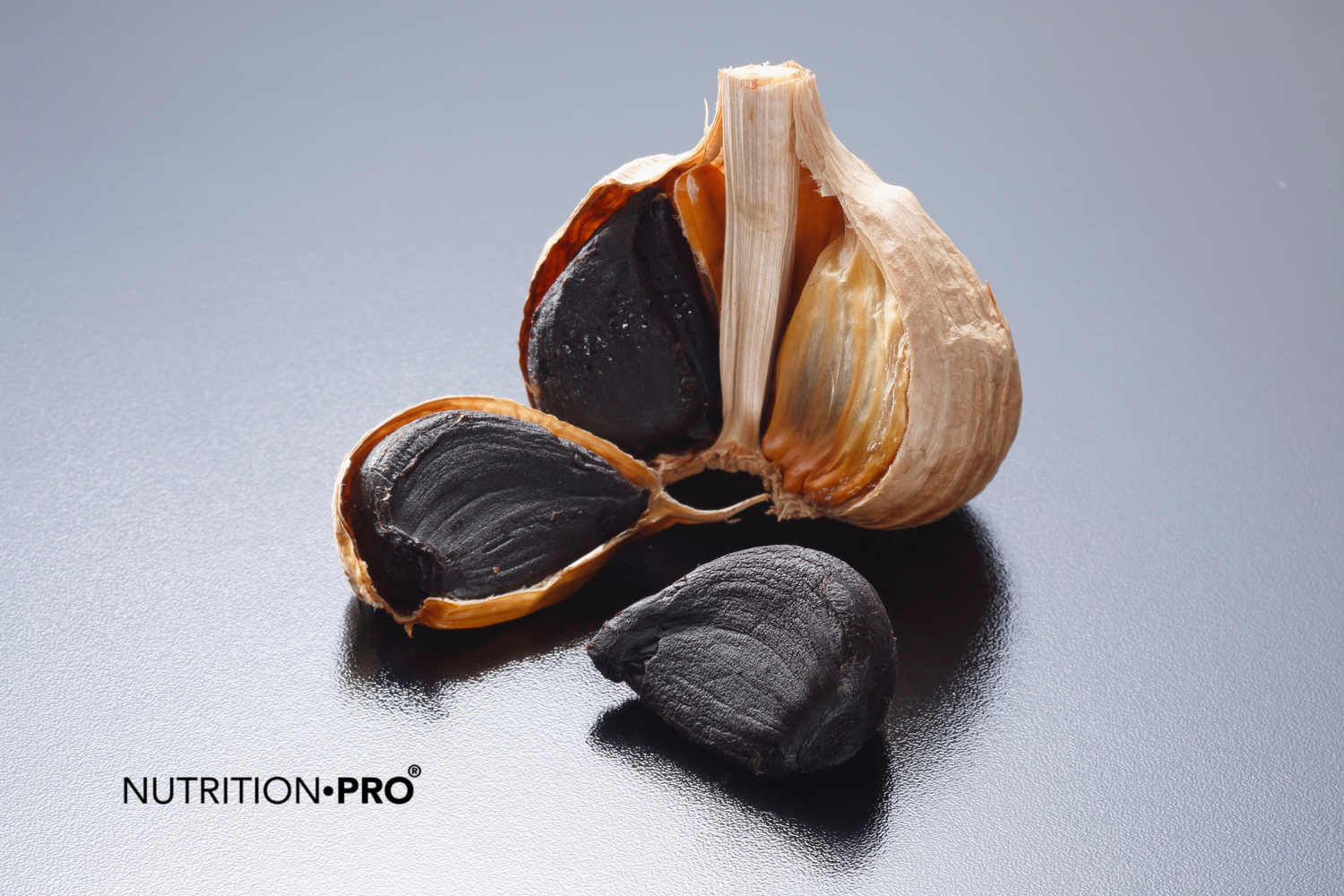
Black garlic is intriguing: black, meltingly soft, with a sweet taste of licorice and balsamic vinegar, it is touted almost everywhere as a miracle “superfood.” The reality is more nuanced, and more interesting. Black garlic is neither a variety nor a GMO: it is ordinary white garlic (Allium sativum) aged under controlled heat and humidity, which profoundly changes its composition.
This complete guide sorts fact from fiction, with the evidence to back it up: what black garlic really is, how it is made, what it contains (and the truth about allicin), its benefits ranked by level of evidence, how to choose it, dose it and eat it, the precautions to take, and how it differs from raw garlic. For details of its effect on blood pressure, see also our dedicated article on black garlic and blood pressure.

Concentrated black garlic extract, rich in S-allyl cysteine and antioxidants, without the smell or bite of garlic. To support cardiovascular health and the body's defenses.
Black garlic is white garlic (Allium sativum) aged through the Maillard reaction, not a conventional microbial fermentation. The process destroys unstable allicin (whose bioavailability in black garlic is only about 5%, Lawson, Nutrients, 2018) in favor of S-allyl cysteine (SAC), which is stable and well absorbed, and of antioxidants roughly twice as concentrated as in fresh garlic. On the health side, the best-established effect is antioxidant; for blood pressure, a controlled trial shows a modest drop (-1.8 mmHg, Serrano, Nutrients, 2023). It is well tolerated, but caution is advised if you take anticoagulant medication.
- What is black garlic? (definition, origin)
- How is black garlic made?
- S-allyl cysteine, allicin and antioxidants
- Black garlic vs white garlic (raw garlic)
- The benefits ranked by level of evidence
- Cardiovascular: blood pressure and cholesterol
- Antioxidant and anti-aging
- Immunity and inflammation
- Liver, cognition, blood sugar: emerging leads
- How to choose your black garlic
- Dosage, course length and how to take it
- Storage and homemade black garlic
- Safety, contraindications and interactions
- Frequently asked questions
1. What is black garlic? Definition and origin
First, a useful clarification, since many websites get this wrong: black garlic really is Allium sativum, the white garlic everyone knows, simply aged. It is not Allium nigrum (an unrelated ornamental plant), nor a particular variety, nor a modified product. It is a process, not a species.
You will often hear it called “fermented garlic” or “aged garlic.” Both terms are in circulation, but the more accurate one is aged garlic: the transformation relies mainly on chemical reactions (the Maillard reaction) and enzymatic ones, not on microbial fermentation in the strict sense, as with yogurt or sauerkraut. More on this below.
As for its history, black garlic comes to us from Asia, where it has long been eaten, particularly in Japan, Korea and China. There it is traditionally prized for its revitalizing qualities and its use in cooking. Only recently, with the craze for superfoods and functional nutrition, has it become known in the West, in the form of cloves, paste, powder or extract in capsules.
2. How is black garlic made?
The principle is simple to grasp but demanding to carry out. White garlic bulbs, ideally organic and of good quality, are placed in maturation chambers where temperature (often 60 to 90°C) and humidity (70 to 90%) are strictly controlled, for two to several weeks, and are then left to mature further. According to a leading review, these conditions trigger a set of reactions that profoundly alter garlic's sugars, sulfur compounds and polyphenols (Qiu, Compr Rev Food Sci Food Saf, 2020).
The main driver is the Maillard reaction, the same one that browns bread or caramelizes an onion. In practice, it brings about three changes:
- Blackening: the cloves gradually darken until they turn deep black.
- Texture: the garlic becomes tender, soft, almost jammy.
- Taste: the pungency gives way to mild notes of licorice, balsamic vinegar and candied fruit, without the lingering odor of raw garlic.
This transformation is also why black garlic is easier on the digestive system and leaves no strong breath: the irritating compounds in raw garlic are largely converted into gentler substances.
3. S-allyl cysteine, allicin and antioxidants: the real composition
This is the most misunderstood point of the whole subject. Raw garlic owes part of its reputation to allicin, a highly reactive but extremely unstable compound. Yet the aging that produces black garlic breaks it down massively: a bioavailability study measured an allicin equivalence of only about 5% for black garlic, well below that of raw garlic (Lawson, Nutrients, 2018). In other words, presenting black garlic as “richer in allicin” is simply wrong.
The value of black garlic lies elsewhere. Aging converts sulfur precursors into S-allyl cysteine (SAC), a stable, water-soluble molecule that the body absorbs well. Researchers have in fact found SAC and its metabolites in the urine of volunteers after they ate black garlic, confirming its bioavailability in humans (Moreno-Ortega, Antioxidants, 2023). Added to this are polyphenols and Maillard reaction products (such as melanoidins) with antioxidant properties.
The bioavailability of allicin from black garlic is only about 5%, which confirms that it acts not through allicin but through other compounds such as S-allyl cysteine.
Lawson LD, Hunsaker SM. Nutrients 2018;10(7):812. DOI: 10.3390/nu10070812
The result of this new chemistry: markedly enhanced antioxidant power. Several analyses rank black garlic among the most antioxidant forms of garlic, with a capacity about twice that of fresh garlic according to reviews (Lu, Molecules, 2023; Ahmed & Wang, Molecules, 2021).
Rather than cooking with cloves every day, a concentrated extract delivers the SAC and antioxidants of black garlic in a simple form, with no odor or taste.
Discover black garlic →4. Black garlic vs white garlic (raw garlic): which should you choose?
Many articles present black garlic as “superior” to raw garlic. That is an oversimplification. Aging is a trade-off: you lose the pungency, the odor and part of the allicin; you gain stability, antioxidants and digestive comfort. One review in fact notes that aged black garlic has weaker anti-inflammatory, immunomodulatory and anti-allergic effects than raw garlic in certain models (Ryu & Kang, Molecules, 2017). The right choice therefore depends on what you are looking for.
| Criterion | White garlic (raw) | Black garlic |
|---|---|---|
| Key compound | Allicin (unstable) | S-allyl cysteine (stable) |
| Taste and odor | Pungent, strong odor | Mild, sweet, odorless |
| Antioxidants | Baseline | About 2× more |
| Digestion | Sometimes irritating | Better tolerated |
| Main strength | Immediate antibacterial | Lasting antioxidant, comfort |
| Ideal use | Raw, everyday cooking | Mellow cooking, supplement |
In practice, the two complement each other. For a regular, odor-free and well-tolerated health effect, black garlic (as cloves or as an extract) is often the most practical option.
5. The benefits of black garlic, ranked by level of evidence
To make things clear, here is an honest ranking of the benefits, from the best documented to the most tentative. A supplement does not cure any disease: it goes hand in hand with a healthy lifestyle.
Antioxidant and cell protection
Robust in vitro data and bioavailability confirmed in humans.
Black garlic is among the most antioxidant forms of garlic, and its sulfur compounds are absorbed by the body (Lu, Molecules, 2023; Moreno-Ortega, Antioxidants, 2023).
Cardiovascular health (blood pressure)
Controlled trial in humans, a real but modest effect.
In people being treated for hypertension, a black garlic extract modestly lowered blood pressure and improved vascular markers (Serrano, Nutrients, 2023).
Lipid balance (cholesterol)
Suggested by several studies, yet to be confirmed.
Lipid-lowering effects (lower LDL, support for HDL) are reported in reviews on black garlic (Ahmed & Wang, Molecules, 2021).
Anti-inflammatory
Solid preclinical data, less potent than raw garlic.
Black garlic reduces markers of inflammation but falls short of raw garlic in some areas (Stępień, Int J Mol Sci, 2024; Ryu & Kang, Molecules, 2017).
Immunity
Mixed data, an important nuance.
Black garlic supports certain functions, but fresh garlic appears to be more immune-stimulating (Matsuse, Molecules, 2024).
Liver, cognition, blood sugar
Mostly animal and preliminary.
Liver protection, neuroprotection and metabolic effects have been suggested but call for human trials (Ahmed & Wang, Molecules, 2021).
6. Black garlic and cardiovascular health: blood pressure and cholesterol
Garlic, in its various forms, has long been studied for heart health. For black garlic specifically, the most telling trial is a randomized, double-blind study: for 12 weeks, an optimized black garlic extract, standardized for S-allyl cysteine, was given to people with grade I hypertension who were already on medication. The result: a modest but significant drop in blood pressure (about -1.8 mmHg systolic), accompanied by an increase in nitric oxide (which helps blood vessels dilate) and in the blood's antioxidant capacity (Serrano, Nutrients, 2023).
A black garlic extract rich in S-allyl cysteine reduced blood pressure by about 1.8 mmHg (systolic) in people being treated for hypertension, with a rise in nitric oxide and antioxidant capacity.
Serrano JCE, et al. Nutrients 2023;15(17):3691. DOI: 10.3390/nu15173691
Two things to keep in mind. First, the effect is modest: black garlic complements a healthy lifestyle and, where applicable, medical treatment; it never replaces them. Second, when it comes to cholesterol, lipid-lowering effects are reported in reviews, but with a lower level of evidence (Ahmed & Wang, Molecules, 2021). To explore further, see our feature on black garlic and blood pressure, our herbs for blood pressure and our guide to high LDL cholesterol, as well as our circulation and blood pressure range.
7. Black garlic, antioxidant and anti-aging
Oxidative stress is one of the underlying mechanisms of aging and of many chronic conditions. This is precisely where black garlic stands out: its higher concentration of polyphenols and Maillard compounds gives it pronounced antioxidant activity, among the highest of the garlic forms tested (Lu, Molecules, 2023; Lu, J Food Drug Anal, 2016).
This “free radical-scavenging” effect is consistent with the traditional use of black garlic as a longevity tonic, and with its value as part of an anti-aging and vitality routine. To see where black garlic stands among other active ingredients, see our selection of the most powerful natural antioxidants.
8. Black garlic, immunity and inflammation
On inflammation, the preclinical data are fairly favorable: black garlic reduces the production of several pro-inflammatory mediators (Stępień, Int J Mol Sci, 2024). On so-called “stimulating” immunity, however, a comparative study shows that fresh garlic activates innate immunity more strongly, whereas black garlic stands out mainly for its anti-inflammatory effect (Matsuse, Molecules, 2024). That is an honest caveat: black garlic is not a spectacular “immune booster.”
In practice, it fits into an overall strategy for the body's defenses (diet, sleep, micronutrients). To go further, see our immunity range and other traditional active ingredients such as black seed oil.
An extract in capsules makes for a regular, convenient course with no garlic breath, so you can enjoy the S-allyl cysteine and antioxidants of black garlic.
Discover black garlic →9. Liver, cognition, blood sugar: the emerging leads
Reviews on black garlic readily list hepatoprotective, neuroprotective and metabolic effects (Ahmed & Wang, Molecules, 2021; Qiu, Compr Rev Food Sci Food Saf, 2020). These signals rest mainly on cell and animal models. They point to a potential that is consistent with black garlic's antioxidant and anti-inflammatory profile, but they do not yet allow us to claim a benefit in humans for the liver, memory or blood sugar. One to watch, with caution and without overinterpreting.
10. How to choose your black garlic
Not all black garlic is created equal: quality depends on the garlic you start with and on how well the aging is controlled (Qiu, Compr Rev Food Sci Food Saf, 2020). A few practical criteria to guide your choice:
- S-allyl cysteine (SAC): this is the marker of efficacy. Opt for a standardized extract (often ≥ 0.1% SAC), which ensures a constant dose of active compounds.
- Concentrated extract vs plain powder: an extract delivers more active compounds per capsule, whereas a plain powder is more dilute.
- Traceability and purity: clear origin, free from contaminants and superfluous additives.
- Convenient form: a capsule does away with the odor and makes a daily course easier.
Our black garlic extract was selected on these criteria: a concentrate designed for a regular intake of SAC, with no garlic taste or odor.
11. Dosage, course length and how to consume black garlic
There is no single “official” dose, since it depends on the concentration of the product. Usage guidelines nevertheless converge:
12. Storing black garlic and making it yourself
Storage. Black garlic cloves keep for several months in an airtight container, in a cool, dry place away from light. Refrigeration extends their shelf life further still. In capsule form, simply follow the date and storage conditions shown on the packaging.
Making it at home? It can be done: heads of white garlic are kept at around 60 to 70°C with some humidity, typically in a rice cooker on its keep-warm setting, for several weeks. Results vary, and the process takes time, patience and a certain tolerance for the smell during aging. For a consistent SAC content with no hassle, a standardized extract remains simpler.
13. Safety, contraindications and interactions
Garlic, in all its forms, has a mild blood-thinning effect. This is generally of no consequence at dietary doses, but it calls for a few precautions at supplement doses.
Anticoagulants and antiplatelet drugs: as a precaution, a course of black garlic is not recommended in combination with these medications (or with other herbs that have the same effect, such as ginkgo) without medical advice. The same caution applies before scheduled surgery (stopping a few days beforehand is recommended).
Pregnancy and breastfeeding: ask a healthcare professional for advice before starting a high-dose course. Allium allergy (garlic, onion): avoid. If in doubt, or if you are on medication, talk to your doctor or pharmacist.
Outside these situations, black garlic is well tolerated, including by people who have trouble digesting raw garlic, and does not cause unpleasant breath.
Select the option that best describes you: your result appears right away. It is a pointer, not medical advice.
Black garlic is ideal for you: an extract in capsules delivers S-allyl cysteine and antioxidants with no odor or bite, as a regular course.
Black garlic can support your cardiovascular health (modest effect, Serrano 2023), alongside a healthy lifestyle. See also black garlic and blood pressure and our circulation range. If you are on medication, seek medical advice.
Because of garlic's blood-thinning effect, talk to your doctor before starting any course: that is the priority in your situation. Do not begin supplementation without this advice.
Frequently asked questions
Is black garlic fermented or aged?
Mostly aged. It is often called “fermented garlic,” but the transformation relies mainly on the Maillard reaction (controlled heat and humidity) and on enzymatic reactions, not on conventional microbial fermentation. The most accurate term is “aged garlic.”
What is the difference between black garlic and white garlic?
It is the same garlic (Allium sativum), but aged. Black garlic is milder, odorless, better tolerated, about twice as antioxidant, and rich in stable S-allyl cysteine rather than unstable allicin. Raw garlic keeps the edge for its immediate antibacterial effect.
Does black garlic contain allicin?
Very little. Aging destroys most of the allicin: its bioavailability in black garlic is about 5% (Lawson, Nutrients, 2018). Black garlic's benefits come from other compounds, chiefly S-allyl cysteine and Maillard antioxidants.
What are the proven benefits of black garlic?
The best established is the antioxidant effect. For blood pressure, a controlled trial shows a modest drop (Serrano, Nutrients, 2023). Effects on cholesterol, inflammation, immunity, the liver or cognition have been suggested but call for more human studies.
Does black garlic lower blood pressure?
A little, and modestly. In people already being treated for hypertension, a black garlic extract reduced blood pressure by about 1.8 mmHg (systolic) over 12 weeks (Serrano, Nutrients, 2023). It is a support, not a treatment: it works alongside a healthy lifestyle and medical follow-up.
How much black garlic per day?
As a supplement, the usual aim is an extract providing the equivalent of about 1 to 1.2 mg of S-allyl cysteine per day, following the product's recommended dosage. In cooking, 1 to 2 cloves a day are enough.
How should you consume black garlic?
Two options: in cooking (cloves as they are, as a paste, in sauces or vinaigrettes, for a mild, umami touch) or as a supplement (extract in capsules, convenient and odorless, for a regular course).
Extract, capsules or cloves: which should you choose?
For the pleasure of taste, cloves. For a consistent, odor-free dose of active compounds, an extract in capsules standardized for S-allyl cysteine (≥ 0.1%) is the most practical and the most reliable.
Does black garlic have side effects or contraindications?
It is well tolerated, but like garlic it has a mild blood-thinning effect. Caution is advised if you are on anticoagulant or antiplatelet medication, before surgery, during pregnancy and breastfeeding, and if you are allergic to alliums. Seek medical advice if in doubt.
Can you make black garlic at home?
Yes: by keeping heads of garlic at around 60 to 70°C with some humidity for several weeks (for example in a rice cooker on its keep-warm setting). It takes a long time, smells during the process and gives variable quality. A standardized extract is simpler and more consistent.
How should you store black garlic?
In an airtight container, in a cool, dry place away from light: it keeps for several months, and longer in the refrigerator. For capsules, simply follow the instructions on the packaging.
- Allium sativum
- Scientific name of common garlic. Black garlic comes from it: it is aged Allium sativum, not a different species.
- Aged garlic
- Garlic transformed by aging under controlled heat and humidity. Black garlic is its best-known form.
- Maillard reaction
- A reaction between sugars and amino acids under the effect of heat, responsible for the browning, texture and taste of black garlic.
- S-allyl cysteine (SAC)
- A stable, well-absorbed sulfur compound, a quality marker for black garlic and the main driver of its antioxidant effects.
- Allicin
- A sulfur compound in raw garlic, responsible for its odor and pungency, but highly unstable and virtually absent from black garlic.
- Antioxidant
- A molecule that neutralizes free radicals and limits the oxidative stress involved in cellular aging.
- Polyphenols
- Plant compounds with antioxidant properties, whose levels rise as garlic ages.
- Serrano JCE, et al. Antihypertensive effects of an optimized aged garlic extract in subjects with grade I hypertension. Nutrients 2023;15(17):3691. DOI: 10.3390/nu15173691
- Lawson LD, Hunsaker SM. Allicin bioavailability and bioequivalence from garlic supplements and garlic foods. Nutrients 2018;10(7):812. DOI: 10.3390/nu10070812
- Ahmed T, Wang CK. Black garlic and its bioactive compounds on human health diseases: a review. Molecules 2021;26(16):5028. DOI: 10.3390/molecules26165028
- Ryu JH, Kang D. Physicochemical properties, biological activity, health benefits, and general limitations of aged black garlic. Molecules 2017;22(6):919. DOI: 10.3390/molecules22060919
- Stępień AE, Trojniak J, Tabarkiewicz J. Anti-cancer and anti-inflammatory properties of black garlic. Int J Mol Sci 2024;25(3):1801. DOI: 10.3390/ijms25031801
- Moreno-Ortega A, et al. Bioavailability of organosulfur compounds after the ingestion of black garlic by healthy humans. Antioxidants 2023;12(4):925. DOI: 10.3390/antiox12040925
- Lu J, et al. Biochemical composition, antioxidant activity and antiproliferative effects of different processed garlic products. Molecules 2023;28(2):804. DOI: 10.3390/molecules28020804
- Lu X, et al. Composition analysis and antioxidant properties of black garlic extract. J Food Drug Anal 2016;25(2):340-349. DOI: 10.1016/j.jfda.2016.05.011
- Qiu Z, et al. Formation, nutritional value, and enhancement of characteristic components in black garlic. Compr Rev Food Sci Food Saf 2020;19(2):801-834. DOI: 10.1111/1541-4337.12529
- Matsuse K, et al. Comparative studies of bioactivities and chemical components in fresh and black garlics. Molecules 2024;29(10):2258. DOI: 10.3390/molecules29102258
- Javed M, Ahmed W. Black garlic: a review of its biological significance. J Food Biochem 2022;46(12):e14394. DOI: 10.1111/jfbc.14394
- Farhat Z, et al. Antioxidant and antiproliferative activities of several garlic forms. Nutrients 2023;15(19):4099. DOI: 10.3390/nu15194099


