

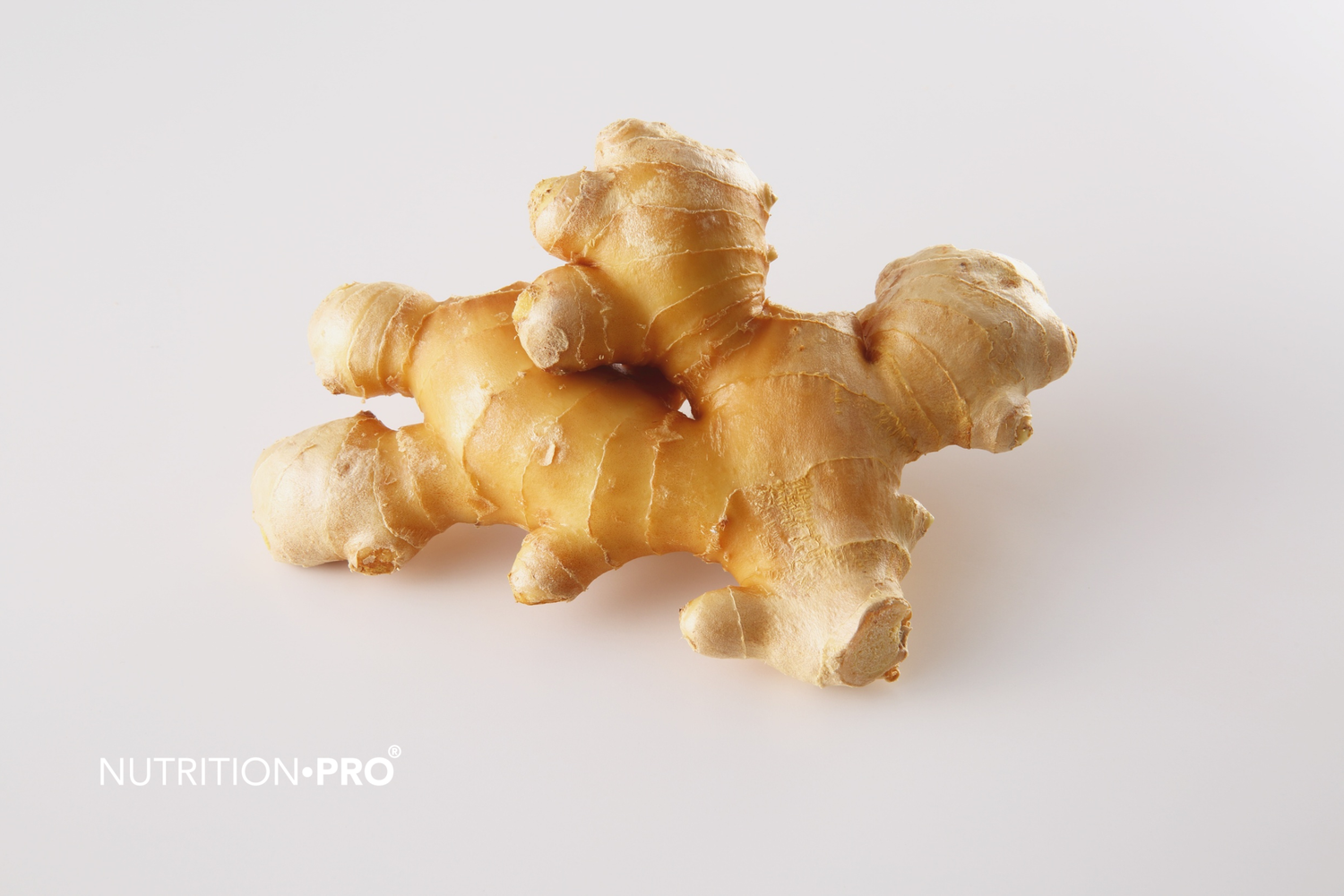
Ginger is probably the most recommended remedy for pregnancy nausea, by midwives, forums, grandmothers and pharmacy shelves. It is also one of the rare ones in this category to have been actually tested against placebo, in pregnant women, on several occasions.
The result is more precise than the reputation. Ginger acts on nausea, not in a demonstrated way on vomiting. Its safety was examined in a cohort of 68,522 women. It was directly compared to vitamin B6. And there is a red line, hyperemesis gravidarum, where none of this data applies. This article details all of this, starting from one principle: in pregnancy, the first conversation takes place with the midwife or doctor who is following you, not with an article.

What the trials show. A meta-analysis of 12 randomized trials and 1,278 women finds a significant improvement in nausea compared to placebo, with perfect homogeneity between trials. On the number of vomiting episodes, only a non-significant trend. Doses below 1,500 mg per day appear to be sufficient. Compared to vitamin B6, a double-blind trial gives a slight advantage to ginger.
What the cohort shows. On 68,522 women Norwegian women, including 1,020 ginger users, no increased risk of birth defects, perinatal death, prematurity, low birth weight, or low Apgar score. The limitations. Low level of evidence according to the authors themselves and the Cochrane review. The red line. Vomiting that prevents drinking, weight loss, dehydration: this is hyperemesis gravidarum, a different condition that requires medical attention.
Nausea and vomiting: two different outcomes
A meta-analysis published in Nutrition Journal gathered 12 randomized trials totaling 1,278 pregnant women, all testing ginger orally against placebo or an active comparator. Its two main results do not say the same thing, and that is where everything hinges.
| Criterion | Result versus placebo | Interpretation |
|---|---|---|
| Nausea symptoms | Significant improvement, mean difference of 1.20 points, p = 0.0002 | Effect established, and homogeneous: 0% heterogeneity between trials |
| Number of vomiting episodes | Trend toward improvement, not significant, p = 0.06 | Not demonstrated, and highly heterogeneous: 71% heterogeneity |
| Dose | Subgroups appear to favor doses below 1,500 mg per day | More is not better |
Theheterogeneity figure is what deserves to be read. On nausea, 0% : all twelve trials, conducted in different countries with different formulations, find the same thing. This is rare, and it is what makes this result solid despite the small size of the studies. On vomiting, 71% : the trials contradict each other, and the average does not mean much.
Concretely, a woman whose main problem is persistent nausea is in the case where the data are favorable. A woman who vomits several times a day is not, and she warrants medical consultation more urgently, for reasons discussed in section 6.
What the Cochrane review says, and why it is cautious
The Cochrane review on interventions for nausea and vomiting in early pregnancy examined 41 trials and 5,449 women, covering acupressure, acupuncture, ginger, chamomile, essential oils, vitamin B6, and several antiemetic medications.
His conclusion on ginger is measured: ginger-based products may be useful, but the evidence of effectiveness is limited and not always consistent, even though three recent studies support ginger against placebo.
The important point is the sentence that follows in the same review: there is a lack of high-quality evidence to support any intervention, including vitamin B6 and medications. The authors clarify that this does not mean these interventions are ineffective, but that none have sufficiently robust evidence.
It is not aimed at ginger in particular. It describes an entire field where trials are small, heterogeneous, with different measurement criteria from one study to another, which prevented the review from pooling results for most criteria. Ginger is not worse off than alternatives; it is as poorly documented as they are.
There is an exception to this heterogeneity, and it is precisely the result on nausea from the previous meta-analysis, with its 0% heterogeneity. On this specific criterion, ginger has something that few interventions in this field have: trials that agree with each other.
Safety: 68,522 women
In pregnancy, the question of effectiveness comes after that of safety. On this point, the most robust data does not come from trials, which are too small to detect rare risks, but from a population cohort.
The Norwegian mother-child cohort followed 68,522 women, of whom 1,020 reported having used ginger during their pregnancy, with questionnaires at weeks 17 and 30 and then six months after birth, and birth data from the national medical registry.
| Criterion examined | Result in ginger users |
|---|---|
| Birth defects | No increased risk |
| Fetal or perinatal death | No increased risk |
| Prematurity | No increased risk |
| Low birth weight | No increased risk |
| Low Apgar score | No increased risk |
The meta-analysis of trials points in the same direction on a criterion it could measure: ginger did not increase the risk ofspontaneous abortion, neither versus placebo, nor versus vitamin B6.
What this allows us to say: at the uses reported by these women, dietary or as a supplement, on the criteria measured, no safety signal appears. The authors themselves describe this result as clinically important for healthcare professionals advising pregnant women.
What this does not allow us to say: that ginger is proven to be risk-free. A declarative cohort provides no information about precise doses, concentrated extracts, or prolonged use at high doses. Absence of signal is not proof of absence of risk, and 1,020 users do not allow us to detect a very rare effect. This is exactly why a conversation with the healthcare professional following you remains the first step.
Ginger versus vitamin B6
Vitamin B6 is the option most often proposed first for pregnancy nausea. A randomized double-blind trial compared the two directly in 126 pregnant women at 16 weeks gestation or less, experiencing nausea and vomiting requiring treatment, without complications and not hospitalized.
- Protocol: 650 mg of ginger or 25 mg of vitamin B6, three times daily, for four days.
- Result: both significantly reduced nausea and vomiting scores. The reduction was greater with ginger, 3.3 points versus 2.6, a significant difference.
- Tolerability: minor side effects in approximately one quarter of women in each group, with no difference between the two, and requiring no treatment: drowsiness, heartburn, palpitations.
Dose, form and duration: what has been studied
| Parameter | What the trials did | What this implies |
|---|---|---|
| Daily dose | Most often between 500 and 1,500 mg, in multiple doses | Sub-groups favor doses under 1,500 mg : more provides nothing measurable |
| Duration | From four days to a few weeks | The effect is measured in days, not weeks. Without change after a few days, persisting has no foundation |
| Form | Capsules of rhizome powder, syrups, biscuits | The measured capsule is the only form that allows you to know what you're taking |
| Term | Women under 16 to 20 weeks | The question arises at first trimester, when nausea is present |
A word aboutinfusion, which is the most common form. It provides a quantity of ginger that is difficult to estimate, generally well below the doses used in trials, and highly variable depending on the amount of rhizome and steeping time. It can be suitable for mild nausea, especially since the hot liquid taken in small sips often helps on its own. It simply does not allow you to know what you're taking. Our article onginger lemon infusion details the preparation.
Regarding side effects, the meta-analysis finds no significant difference with placebo for heartburn or drowsiness. Since reflux is already common during pregnancy, a worsening of heartburn remains the most common sign to monitor. Interactions, particularly with anticoagulants, are detailed in our article on dangers and contraindications of ginger.
The red line: hyperemesis gravidarum
There is a severe form of nausea and vomiting in pregnancy, which affects a minority of women and has a name:hyperemesis gravidarum. Uncontrollable vomiting, weight loss, dehydration, blood imbalances, sometimes requiring hospitalization.
The Cochrane review on early pregnancy nauseaexplicitly excludes it from its scope, because it falls under a different level of care and is the subject of a separate review. Studies on ginger recruited non-hospitalized women, without complications. In other words, none of the information in this article applies to this situation.
Vomiting that prevents normal eating or drinking . Weight loss. Signs of dehydration: infrequent and dark urine, dizziness, dry mouth. Symptoms that worsen instead of improving, or that persist clearly beyond the twelfth week. When faced with any of these signs, the question is no longer about ginger: it's a consultation, without delay.
What to do in practice
Frequently asked questions
Efficacy
Does ginger relieve pregnancy nausea?
For nausea, yes, with weak level of evidence. A meta-analysis of 12 randomized trials and 1,278 women found significant improvement in nausea compared to placebo, with remarkable consistency across trials. For vomiting, however, the reduction in episodes did not reach statistical significance. The Cochrane review on the subject summarizes: ginger may help, but the evidence is limited and not always consistent.
Why distinguish between nausea and vomiting?
Because the data clearly separate them. Ginger's effect applies to the sensation of nausea, measured by symptom scores. On the number of vomiting episodes, there is only a trend, which is not significant and highly heterogeneous across trials. A woman who mainly experiences nausea and a woman who vomits several times a day are not in the same situation, and the latter needs medical advice more urgently.
Is the evidence solid?
It is consistent but of low quality, and that must be said. The meta-analysis authors themselves point out the limited number of studies, variability in reported criteria, and weak quality of evidence. The Cochrane review concludes that no intervention, ginger included, has high-quality evidence for early pregnancy nausea. This is not the same as saying ginger is ineffective: it is saying that certainty is limited.
Why are studies so difficult to compare?
Because they use neither the same forms, nor the same doses, nor the same durations, nor the same measurement scales. The Cochrane review could not pool results for most criteria because of this heterogeneity. For nausea, however, the meta-analysis found perfect consistency across trials, which strengthens this specific result.
How long does it take to feel an effect?
In trials, nausea scores were measured from the first days of use, and the comparative trial with vitamin B6 showed improvement within four days. This is not an effect that takes weeks to develop. If nothing changes after a few days at the studied dose, persisting has no basis in the data.
Safety
Is ginger safe during pregnancy?
The available data are reassuring. The Norwegian mother-child cohort, involving 68,522 women, of whom 1,020 had used ginger during pregnancy, found no increased risk of congenital malformation, fetal or perinatal death, prematurity, low birth weight, or low Apgar score. The meta-analysis of trials also found no increased risk of miscarriage compared to placebo or vitamin B6.
Can we speak of proven safety?
No, and the distinction matters. A cohort shows an absence of increased risk on measured criteria, in women who used ginger at dietary doses or as a supplement based on self-reporting. It says nothing about high doses, concentrated extracts, or prolonged use. Absence of signal is not proof of absence of risk. This is why the first step remains discussing it with the healthcare professional overseeing your pregnancy.
What side effects can ginger cause?
Mainly heartburn and mild drowsiness, with no significant difference from placebo in the meta-analysis. The comparative trial with vitamin B6 reports approximately one quarter of participants with minor effects in each group, with no need for treatment. Since reflux is already frequent in pregnancy, worsening heartburn is the most common sign to monitor.
Are there interactions to be aware of?
Ginger is classically reported for a possible interaction with anticoagulants and antiplatelet agents. In pregnancy, any concurrent use of a treatment warrants discussing it with the healthcare professional following you. Our article on the dangers and contraindications of ginger covers the question completely.
Dose, form and comparisons
What dose was studied?
Trials generally used between 500 and 1,500 mg of ginger per day, divided into several doses, over a few days to a few weeks. Notable point: subgroup analyses seem to favor doses below 1,500 mg per day for nausea relief. More is therefore not better in these data. Dose and duration should be decided with the midwife or doctor following the pregnancy.
Ginger or vitamin B6: which to choose?
A randomized double-blind trial in 126 pregnant women under 16 weeks compared 650 mg of ginger to 25 mg of vitamin B6, three times daily for four days. Both reduced nausea and vomiting scores, and the reduction was greater with ginger. Minor side effects were equivalent. Vitamin B6 remains the first-line option in many guidelines, and the choice between the two is up to the healthcare professional following you.
What form should ginger be taken in?
Trials used capsules of rhizome powder, syrups, and biscuits, making comparisons difficult. Powdered rhizome in capsule form has the advantage of a known and reproducible dose, which fresh grated rhizome does not offer, as its active ingredient content varies. Form matters less than staying within the studied range and having discussed it with the healthcare professional following you.
Is a ginger infusion sufficient?
An infusion provides an amount of ginger difficult to estimate, generally well below trial doses, and highly variable depending on the amount of rhizome and steeping time. It may be suitable for mild nausea, especially since warm liquid and drinking in small sips often help in themselves. It does not allow you to know what you are taking. Our article on ginger lemon infusion details the preparation.
Should one wait until the second trimester?
Pregnancy nausea is mainly a problem of the first trimester, and that is when the trials were conducted, in women under 16 to 20 weeks. Waiting for the second trimester would mean waiting for the symptoms to disappear on their own, which is the case for most women. The question thus arises in the first trimester, with the healthcare professional following you.
Does ginger also act on other types of nausea?
It has been studied in post-operative nausea, chemotherapy-related nausea, and motion sickness, with results of variable quality. These contexts are not the subject of this article and do not carry over to pregnancy, which has its own trials and its own safety constraints.
When to consult
From when should one consult for pregnancy nausea?
As soon as vomiting prevents drinking or eating normally, if there is weight loss, signs of dehydration such as infrequent and dark urine or dizziness, or if symptoms worsen instead of improving after the twelfth week. These situations may correspond to hyperemesis gravidarum, which is a condition in its own right, excluded from ginger trials, and which requires medical management.
What is hyperemesis gravidarum?
A severe form of pregnancy nausea and vomiting, with weight loss, dehydration and blood imbalances, affecting a minority of women and potentially requiring hospitalization. The Cochrane review on early pregnancy nausea explicitly excludes it from its scope, because it falls under a different level of care. No data from this article applies to this situation.
Can ginger replace a prescribed treatment?
No. If a treatment has been prescribed for your nausea, the question of adding to or substituting it with ginger should be discussed with the healthcare professional who prescribed it. The trials tested ginger in non-hospitalized women, without complications, for mild to moderate symptoms. This is not the same context as a treatment put in place for a situation that required it.
What to remember about ginger and pregnancy nausea?
That it improves nausea compared to placebo in a meta-analysis of 1,278 women, with no demonstrated effect on vomiting. That a cohort of 68,522 women finds no increased risk for the child. That doses below 1,500 mg per day seem sufficient. That the level of evidence remains low. And that hyperemesis gravidarum, with intractable vomiting and weight loss, is a different disease that requires a doctor, not a supplement.
Glossary
- Pregnancy nausea and vomiting
- Very common symptoms of the first trimester, most often benign and spontaneously resolving, to be distinguished from hyperemesis gravidarum.
- Hyperemesis gravidarum
- Severe form with intractable vomiting, weight loss and dehydration, requiring medical management.
- Meta-analysis
- Statistical pooling of results from multiple trials to estimate an overall effect.
- Heterogeneity
- Measure of the dispersion of results between trials; at 0%, all trials point in the same direction; when high, they contradict each other.
- Population cohort
- Follow-up of a large number of people in real-world settings, suited to detecting risks that trials, being too small, cannot see.
- Double-blind
- Trial in which neither the participants nor the evaluators know who receives which treatment.
- Apgar Score
- Rapid assessment of the newborn's condition at birth, based on five criteria.
- Vitamin B6
- Pyridoxine, an option often proposed as a first-line treatment against pregnancy nausea.
Sources
The studies cited below were identified via PubMed.
- Viljoen E, Visser J, Koen N, Musekiwa A. Systematic review and meta-analysis of the effect and safety of ginger in the treatment of nausea and vomiting in pregnancy. Nutrition Journal, 2014;13:20. DOI
- Matthews A, Haas DM, O'Mathúna DP, Dowswell T. Interventions for nausea and vomiting in early pregnancy. Cochrane Database of Systematic Reviews, 2015;(9):CD007575. DOI
- Heitmann K, Nordeng H, Holst L. Safety of ginger use during pregnancy: results from a large population cohort. European Journal of Clinical Pharmacology, 2013;69(2):269-277. DOI
- Chittumma P, Kaewkiattikun K, Wiriyasiriwach B. Comparison of the effectiveness of ginger and vitamin B6 in the treatment of nausea and vomiting in early pregnancy: a double-blind randomized controlled trial. Journal of the Medical Association of Thailand, 2007;90(1):15-20. PubMed


