

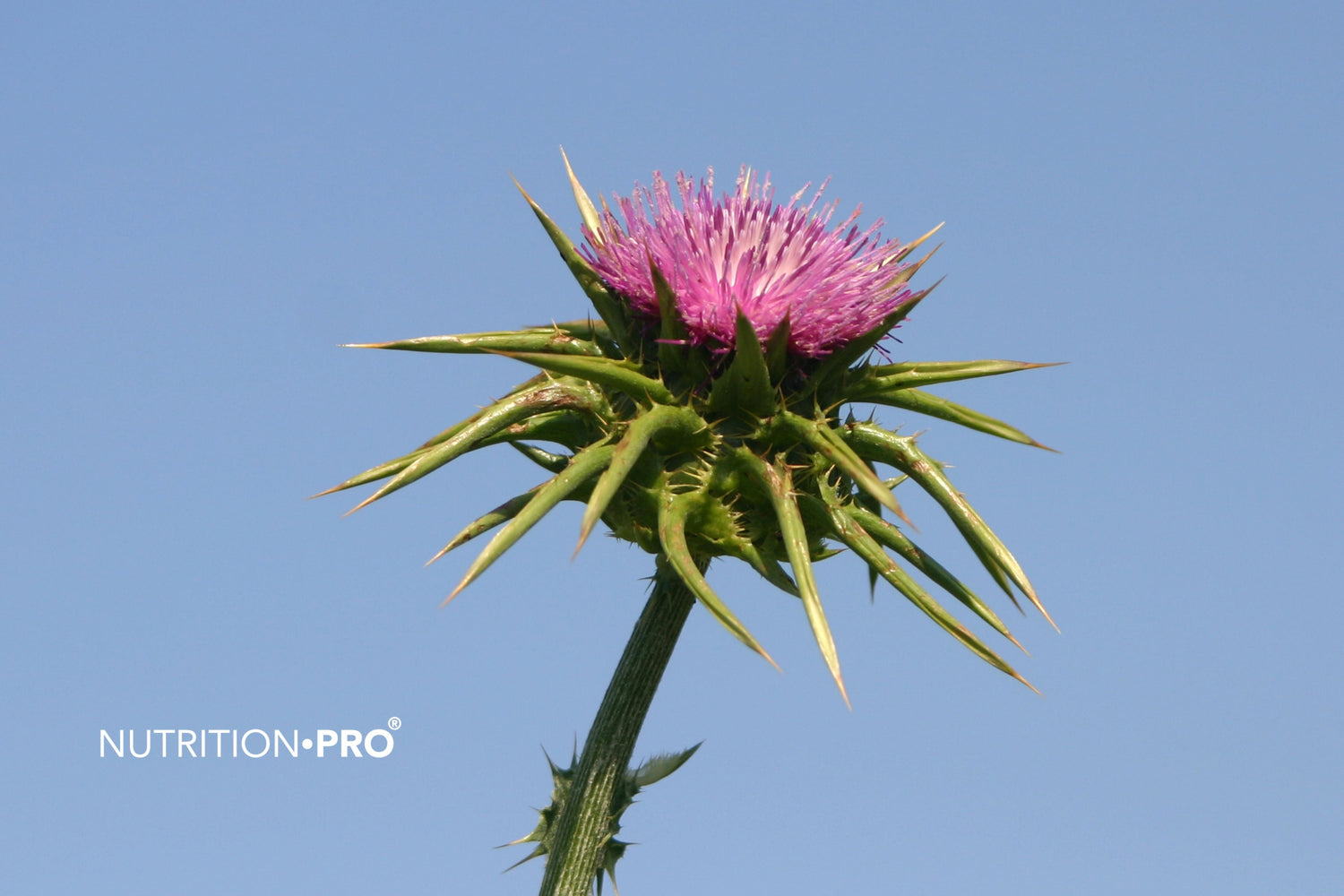
« Milk thistle danger " is searched nearly five thousand times per month in France. The reader who types these words deserves a quantified answer rather than a list of precautions copied from one website to another. Here it is, and it is unusual in the world of plants: milk thistle is one of the rare plants whose tolerance has been measured on thousands of patients in controlled trials, and the result is excellent. A Cochrane review of 1,088 patients found no increase in the risk of adverse effects compared to placebo. An American trial administered up to ten times the usual dose for six months with a profile comparable to that of placebo.
This does not mean that the plant is suitable for everyone. There are four situations where it should not be taken, and they are specific: an allergy to plants in the ragweed family, biliary tract obstruction, pregnancy, and diabetes treated without medical supervision. This article details each one, examines real side effects, reviews drug interactions based on human studies, and answers the most frequently asked question: can a plant reputed to be good for the liver damage it? It complements our comprehensive milk thistle guide, dedicated to its effects.

A single extract rather than a blend: the traceability of a standardized ingredient is the primary safety factor, above all else. 300 mg of seed extract containing 225 mg of silymarin per capsule, within the range of clinical trials.
The tolerance of milk thistle is documented on thousands of patients: the Cochrane review covering 18 trials and 1,088 patients found no significant increase in adverse effects compared to placebo, and a JAMA trial using up to 2,100 milligrams of silymarin per day for 24 weeks reports a profile comparable to that of placebo. Real side effects are mild and mainly digestive, related to bile stimulation. Regarding interactions, a systematic review of 66 human pharmacokinetic studies, including 13 on this plant, concludes that at recommended doses it is neither a significant inhibitor nor inducer of cytochromes, with the exception of weak inhibition of CYP2C9, which justifies informing one's doctor when taking anti-vitamin K anticoagulants. No hepatotoxicity has been demonstrated, which clearly distinguishes it from other popular plants. Four genuine contraindications remain: allergy to Asteraceae, biliary obstruction, pregnancy and breastfeeding without medical advice, and diabetes treated without monitoring, since the plant's hypoglycemic effect may add to the treatment.
- What "danger" covers: tolerance figures
- Real reported side effects
- Asteraceae allergy: the true contraindication
- Can milk thistle damage the liver?
- Drug interactions: what human studies say
- The case of anticoagulants
- Diabetes: the most concrete practical risk
- Gallstones and biliary obstruction
- Hormonal effect: what we know and what we don't
- Pregnancy, breastfeeding and children
- The real risk: product quality
- Signs that should prompt you to stop
- Who should not take it
- Frequently asked questions
1. What "danger" means: tolerance thresholds
Let's start with what no one mentions in articles about the dangers of this plant: its tolerance has been measured, and not in a single isolated study. Trials dedicated to milk thistle systematically collect adverse effects, and two publications provide directly usable figures.
Eighteen randomized clinical trials evaluated milk thistle in 1,088 patients with alcoholic liver disease or disease related to hepatitis B or C viruses. Compared to placebo or no intervention, milk thistle had no significant effect on mortality, complications of liver disease, or liver histology. Milk thistle was not associated with a significant increase in the risk of adverse effects (relative risk 0.83, 95% confidence interval 0.46 to 1.50).
Rambaldi A, Jacobs BP, Gluud C. Cochrane Database Syst Rev 2007;(4):CD003620. DOI: 10.1002/14651858.CD003620.pub3
A relative risk of 0.83 with a confidence interval that includes 1 means that no difference was detected: patients on milk thistle had no more adverse effects than those on placebo, and the numerical trend actually went in the opposite direction. Moreover, this review is negative on efficacy in these diseases, which makes it all the more credible on tolerance: its authors had no reason to favor the plant.
The second set of data comes from a trial we already cited for its failure in hepatitis C. The investigators deliberately tested high doses, 420 or 700 milligrams of silymarin three times daily, or up to 2,100 milligrams daily, for 24 weeks, in 154 patients who already had liver disease. This is approximately ten times what a typical capsule contains, over a long duration, in a vulnerable population. Their conclusion on safety is clear: the adverse effect profile of silymarin was comparable to that of placebo (Fried, JAMA, 2012).
To this data are added the 2,375 patients from the meta-analysis dedicated to hepatic steatosis, where no safety signal emerged, and the systematic review on drug-induced liver injury, which concludes to a favorable safety profile for the tested agents, of which silymarin is the most represented (Niu, Pharmacol Res, 2020). In other words: the word "danger" applied to this plant does not correspond to what the literature shows. It corresponds to particular situations, which the rest of the article details.
2. Actually reported side effects
| Effect | Frequency and mechanism | Management |
|---|---|---|
| Loose stools, accelerated transit | The most common, related to stimulation of bile secretion; bile has a natural laxative effect | Reduce the dose, divide into smaller doses, take with a meal; subsides within a few days |
| Bloating, mild nausea | Occasional, especially on an empty stomach and at the beginning of treatment | Systematic intake with a meal |
| Abdominal pain | Rare; to be distinguished from intense pain under the right rib cage, which suggests something else | Stop if it persists; consult if the pain is severe |
| Headaches | Rare, mechanism unknown, reported in a few trials | Dose reduction or discontinuation |
| Skin reactions, itching | Rare, but to be taken seriously: they suggest an allergy to the Asteraceae family | Immediate discontinuation, medical advice (section 3) |
| Hypoglycemia | Only in individuals with diabetes undergoing treatment, by addition with the treatment | Blood sugar monitoring, medical advice (section 7) |
A useful note on the digestive effect, which is by far the most commonly reported: it is often interpreted as proof that "detox is working" or that "the liver is emptying." This is nothing of the sort. Milk thistle and the plants that often accompany it, artichoke, black radish, dandelion, are choleretic and cholagogue : they increase the production and evacuation of bile, which naturally accelerates transit. The sensation is therefore not a sign of liver effectiveness; it is a common digestive effect with no particular significance.
3. Allergy to Asteraceae: the true contraindication
This is the point that articles on milk thistle dangers mention last when it should be mentioned first. The plant belongs to the Asteraceaefamily, one of the largest in the plant kingdom, which also includes ragweed, mugwort, Roman and German chamomile, arnica, chrysanthemum, dandelion, artichoke, echinacea, and sunflower.
People allergic to any of these plants possess antibodies directed against proteins found in closely related forms in their botanical cousins. This is the principle of cross-reaction, well known to allergists: someone who reacts to ragweed or mugwort pollen, two major allergens in France, particularly in the Rhone Valley, may react to a milk thistle preparation. Manifestations range from hives and itching to more severe reactions, which are exceptional but documented across this entire family.
You are probably at risk if you have hay fever triggered by ragweed or mugwort pollen in late summer, if you have already reacted to chamomile tea, an arnica cream, or echinacea, or if you know you are allergic to Asteraceae.
What to do : avoid milk thistle, or consult an allergist if you wish. A cross-reaction is neither systematic nor predictable, and only a professional can assess your situation.
If a reaction occurs while taking the supplement—hives, diffuse itching, swelling of the lips or face: stop immediately and seek medical attention. In case of breathing difficulty or discomfort, call 15.
4. Can milk thistle damage the liver?
The question seems absurd and yet it is one of the most frequently asked: nearly a thousand monthly searches in France associate milk thistle with liver danger. Two reasons explain this concern, and neither truly targets this plant.
The first is a general climate, largely justified: several popular plants have been implicated in documented liver damage in recent years, to the point that ANSES has issued restrictive opinions on some. Our article on ashwagandha and the liver details a case where the data genuinely exists. This new vigilance is healthy, but it is transferred by association onto all plants, including those with nothing to answer for.
The second stems from multi-plant products. A "detox" supplement commonly contains eight to fifteen ingredients: when an incident occurs, milk thistle appears on the list, without being able to determine which ingredient is responsible. The most rigorous case series systematically exclude compound preparations for this reason.
What do the data specific to milk thistle show? On the points where it would be expected, they go in the opposite direction. In the meta-analysis involving 2,375 patients with hepatic steatosis, silymarin lowers transaminases rather than raising them. In the JAMA trial, at 2,100 milligrams per day for six months in patients with hepatitis C, no liver deterioration is reported. And in the systematic review dedicated to drug-induced liver injury, silymarin is studied as a protector, not as a suspect.
Absence of evidence of toxicity is not proof of absolute absence of risk: unpredictable individual reactions can occur with any substance, and milk thistle is no exception. The right approach is therefore not to worry, but to know the warning signs: yellowing of the skin or whites of the eyes, very dark urine, pale stools, widespread itching, unusual fatigue. If any of these occur, stop all supplements and consult your doctor with the product packaging, regardless of the product's reputation.
5. Drug interactions: what human studies show
This is the subject where French articles are most imprecise, with lists of theoretical interactions copied from American databases without ever specifying their level of evidence. Yet this field has been seriously studied, and in humans.
In total, 66 clinical pharmacokinetic interaction studies falling within the scope of this review were identified. Clinical evidence proved most robust and informative for ginkgo (21 studies) and milk thistle or silymarin (13). Overall, available data indicate that at usually recommended doses, none of these plants acts as a strong or moderate inhibitor or inducer of cytochrome P450 enzymes or P-glycoprotein. Weak effects, in terms of induction or inhibition, were found for ginkgo, for milk thistle or silymarin (CYP2C9 inhibition), for goldenseal and echinacea.
Hermann R, von Richter O. Planta Med 2012;78(13):1458-1477. DOI: 10.1055/s-0032-1315117
This result is both reassuring and precise. Reassuring, because thirteen human studies converge: silymarin does not disrupt drug metabolism. Precise, because a signal is identified, the CYP2C9, a liver enzyme that breaks down notably anticoagulants, vitamin K antagonists, certain oral antidiabetic agents, certain anti-inflammatory drugs and a few antiepileptics. Weak inhibition means that concentrations of these drugs could rise slightly, without necessarily translating into a clinical effect.
Two nuances deserve to be known. First, studies in animals find more marked effects: a recent study in rats shows that silybinin increases exposure to a cancer drug by inhibiting CYP3A4 and CYP2C9, with a recommendation for monitoring in case of combination (Su, Adv Pharmacol Pharm Sci, 2023). Animal models often exaggerate these effects, but they invite caution for drugs with narrow therapeutic windows. Second, the question of cancer treatments is the subject of specific literature: reviews devoted to plant pharmacokinetics in cancer patients emphasize that human data remains limited and call for supervised use (Chen, Curr Med Chem, 2011).
None of this data justifies giving up milk thistle if you take a common medication. It does justify a simple action: show the package to your pharmacist along with a list of your treatments. Two minutes, free, and they have access to interaction databases that no one else consults. This recommendation applies particularly if you take an anticoagulant, an antidiabetic, a cancer treatment, an immunosuppressant after transplant, or any medication whose blood levels must be monitored.
When an incident occurs with a supplement containing twelve plants, no one knows which one is responsible. Our Milk Thistle is a single seed extract standardized to 75%, providing 225 mg of silymarin per capsule: a clear composition, a known dose, and nothing else to identify in case of doubt.
Discover Milk Thistle →For what the plant truly provides, read our complete milk thistle guide.
6. The case of anticoagulants
If you take warfarin, fluindione or acenocoumarol, this section concerns you. These drugs are metabolized by CYP2C9, precisely the enzyme that silymarin weakly inhibits according to human studies. In theory, inhibition of this enzyme slows the drug's breakdown, increases its concentration and thus its anticoagulant effect, which would result in elevated INR and increased bleeding risk.
In practice, the measured effect is weak and no hemorrhagic accident has been documented in clinical literature linked to milk thistle. This does not eliminate the need for caution, for a simple reason: vitamin K antagonists have a narrow therapeutic window, an INR becomes imbalanced for much less than this, and monitoring already exists. Might as well take advantage of it.
The reasonable approach rests on three points. Inform the doctor or pharmacist managing your treatment before starting. Check your INR two to three weeks after beginning the treatment course, in addition to your regular monitoring. And don't make abrupt changes : starting and stopping a treatment course at random disrupts the balance more than regular, planned use. The same reasoning applies to direct oral anticoagulants, which are less dependent on CYP2C9, but for which routine biological monitoring does not exist.
7. Diabetes: the most concrete practical risk
Instructive paradox: the best-identified risk of milk thistle stems not from toxicity but from efficacy. A meta-analysis of five randomized trials in 270 type 2 diabetic patients found a decrease in fasting blood glucose of 26.86 milligrams per deciliter and glycated hemoglobin of 1.07 points (Voroneanu, J Diabetes Res, 2016). These are effect sizes one would expect from a medication, and the authors themselves emphasize the low quality of the studies, which nevertheless warrants practical caution.
The risk is hypoglycemia from additive effects. It primarily concerns treatments that lower blood glucose independently of its level: insulin and sulfonylurea hypoglycemic agents (gliclazide, glimepiride, glibenclamide). The risk is lower with metformin and newer treatments.
Signs to watch for : sweating, trembling, sudden hunger, heart palpitations, blurred vision, difficulty concentrating, unusual irritability. These require immediate glucose intake and, if they recur, stopping the supplement and seeking medical advice.
The proper approach : discuss it with your doctor or endocrinologist before starting, monitor your blood glucose more frequently during the first three weeks, and never adjust your medication doses yourself. With proper medical supervision, use remains possible; attempted without guidance, it is risky.
8. Gallstones and biliary obstruction
This contraindication applies to all plants known as choleretic and cholagogue, those that increase bile production by the liver and its drainage by the gallbladder. Milk thistle is one of them, as are artichoke, black radish, dandelion, and boldo, often combined in the same formulas.
The mechanism of the problem is mechanical. If an obstruction blocks the biliary ducts—a lodged stone, stenosis, compression—stimulating bile production amounts to increasing pressure upstream of a blocked pipe. The result can be intense pain under the right rib cage, radiating toward the shoulder, sometimes accompanied by nausea, fever, or jaundice: this is biliary colic, which requires emergency care if it persists.
In practice: knownbiliary obstruction is an absolute contraindication. Cholelithiasis, meaning gallstones in the gallbladder without obstruction, is common and often asymptomatic: it warrants medical consultation before a treatment course, as stimulation could theoretically mobilize a stone. If you have had your gallbladder removed, however, the question no longer applies. And if sharp pain develops under the right rib cage during a treatment course, stop and consult immediately.
9. Hormonal effect: what we know and what we don't
This point regularly appears in contraindication lists copied from one website to another, and it deserves to be put in proper perspective. Laboratory studies have shown that certain flavonolignans in silymarin can bind to estrogen receptors on cultured cells, with weak activity that is sometimes ambivalent depending on the model, sometimes estrogenic, sometimes anti-estrogenic.
What is missing is the follow-up: no human studies have shown that taking milk thistle modifies circulating hormones, menstrual cycles, or the progression of a hormone-dependent condition. Clinical trials, including those conducted in women, do not report effects of this type. We are therefore in a situation of uncertainty, not demonstrated danger.
The reasonable position is to distinguish between two cases. For a woman without hormonal pathology, there is no reason to be concerned about a laboratory signal never found in clinical practice. For a person being monitored for breast or endometrial cancer, an endometriosis or a uterine fibroid, the rule that applies to any supplement with potentially hormonal activity prevails: you discuss it with the team monitoring you, and they make the decision. This caution is not specific to milk thistle; it applies to soy, hops, red clover, and many others.
10. Pregnancy, breastfeeding, and children
Unlike other plants, milk thistle carries no reputation for being abortive or any safety signal for pregnancy. An experimental study administered silymarin to pregnant and lactating mice at three doses and found no abnormalities in the sensory and motor development of the offspring or in their behavior in adulthood, which the authors interpret as a safety argument (Barbosa, Neurotoxicology, 2020).
This is reassuring, but it is not enough. Animal data never replace human data, and this is practically nonexistent in pregnant women. The position to take is therefore the same as for the vast majority of supplements: no use during pregnancy without the advice of a doctor or midwife, not because a risk is demonstrated, but because no safety is.
Breastfeeding deserves further discussion, because milk thistle has a specific traditional use there: as a galactogogue, that is, a lactation stimulant. The Cochrane review devoted to these substances analyzed 41 randomized trials involving 3,005 mothers, several of which were on silymarin. Its conclusion is cautious: the certainty level of evidence is weak to very weak for all natural galactogogues, heterogeneity between studies is considerable, and reported adverse effects are limited to minor inconveniences (Foong, Cochrane, 2020). In other words: no evidence of efficacy, no safety signal, and a decision that rests with the professional guiding breastfeeding.
Inchildren and adolescents, finally, no data permits recommending use outside of a medical prescription, which is sufficient to settle the question.
11. The real risk: product quality
After reviewing contraindications, we must name what truly poses a problem in real life, and it is not milk thistle itself.
A word on French regulations, which addresses a frequently asked question. Milk thistle is listed among plants permitted in dietary supplements and has not been subject to any restrictive opinion from ANSES comparable to those published on other popular plants. It does, however, haveno authorized health claims in Europe, as plant assessment has been suspended for years: a product therefore cannot legally make any claims about the liver. This absence is a regulatory constraint, not a safety warning, and it explains why serious product sheets remain modest where others promise a cleanse.
12. Warning signs that should prompt you to stop
13. Who should not take it
This list resembles that of any active supplement, and that is precisely the point. A plant that lowers blood sugar by a glycated hemoglobin point, that stimulates bile, and that affects a liver enzyme is not colored water: it has effects, therefore situations where these effects are problematic. Milk thistle is no exception to this rule. What distinguishes it is that its adverse effects have been tallied, and they do not exceed those of placebo.
Our Milk Thistle provides 300 mg of seed extract containing 225 mg of silymarin per capsule, with no blending or unnecessary ingredients. One capsule daily with a meal, in a course of two to three months, after checking your medications with your pharmacist.
Discover Milk Thistle →Also discover our Organic Detox and our detoxification.
Choose the situation that best fits you: the answer appears just below.
You fall within the population where tolerability has been measured: 1,088 patients in a Cochrane review with no excess adverse effects compared to placebo, and a trial at 2,100 mg daily for six months with a profile comparable to placebo. The only anticipated discomforts are digestive and mild, essentially loose stools related to bile stimulation, which resolve by taking the extract with a meal. Respect the clinical trial dose of 200 to 400 mg of silymarin daily, limit the course to two or three months, and know the five warning signs that require stopping. That's all the caution your situation requires.
Milk thistle belongs to the Asteraceae family, like ragweed, wormwood, chamomile, arnica, and chrysanthemum. If you react to any of these pollens or plants, you're at risk of cross-reactivity, with manifestations ranging from hives to more severe reactions. This is neither systematic nor predictable: only an allergist can assess your situation. Until you get that medical opinion, avoid the plant. If you're looking for support for digestive and liver comfort, other options exist outside this botanical family, and your pharmacist can guide you.
Human data is fairly reassuring: among 13 drug interaction studies conducted in humans, milk thistle acts neither as a significant inhibitor nor inducer of cytochromes, with the exception of weak inhibition of CYP2C9. This enzyme metabolizes vitamin K antagonist anticoagulants, certain antidiabetics, and certain anti-inflammatory drugs: this is where vigilance should focus. If taking vitamin K antagonists, inform your doctor and have your INR checked two to three weeks after starting the course. If taking antidiabetics, monitor your blood glucose levels, as the plant's hypoglycemic effect adds to your treatment. And in all cases, show the package to your pharmacist along with your medication list: it's free and the most effective verification available.
First, is it a skin reaction—hives, itching, or swelling? If so, stop immediately and consult: this suggests an allergy to Asteraceae, and if you have breathing difficulty, call emergency services. Next, are these digestive symptoms—loose stools or bloating? This is the most common adverse effect, it's mild, and usually resolves by reducing the dose and taking the extract with a meal. Finally, is there yellowing of the eyes or skin, very dark urine, sharp pain under the right ribs, or repeated low blood sugar episodes? In these cases, stop everything and consult, bringing the package with you. No hepatotoxicity has been demonstrated for this plant, but these signs warrant investigation regardless of the cause.
This test provides guidance; it does not replace professional medical advice.
Frequently asked questions about milk thistle safety
Is milk thistle dangerous?
It is one of the best-tolerated plants in phytotherapy, with unusually solid data on this point. A Cochrane review covering 18 trials and 1,088 patients found no significant increase in adverse effect risk compared to placebo. An American trial administered up to 2,100 milligrams of silymarin daily for 24 weeks—approximately ten times the usual dose—with an adverse effect profile comparable to placebo. This doesn't mean the plant suits everyone: four situations justify avoiding it, detailed in this article.
What are the side effects of milk thistle?
They are infrequent and mild. The most reported are digestive: loose stools or accelerated transit, bloating, mild nausea, and more rarely abdominal pain. This mild laxative effect is explained by stimulation of bile secretion. Next come headaches and, rarely, allergic skin reactions. These effects often appear at the start of treatment, resolve by reducing the dose or taking the extract with a meal, and disappear upon stopping.
Can you be allergic to milk thistle?
Yes, and this is the clearest contraindication. Milk thistle belongs to the Asteraceae family, like ragweed, wormwood, chamomile, arnica, dandelion, artichoke, and chrysanthemum. People allergic to any of these plants face a risk of cross-reactivity, ranging from hives and itching to more severe reactions. If you know you react to ragweed or wormwood, or if you've previously had a reaction to chamomile, avoid milk thistle or seek an allergist's opinion.
Can milk thistle damage the liver?
No hepatotoxicity has been demonstrated for milk thistle, which clearly distinguishes it from other popular plants. In trials where liver enzymes were measured, including at high doses, silymarin did not worsen test results and actually improved them in hepatic steatosis. The confusion stems from two sources: multi-plant supplements where milk thistle is combined with less well-characterized ingredients, and the general belief that "plants can also be toxic to the liver," which is true for some but not this one. This doesn't exempt you from stopping and consulting if you experience any unusual liver-related signs.
Does milk thistle interact with medications?
Minimally, based on available human data. A systematic review of 66 pharmacokinetic drug interaction studies conducted in humans, including 13 specifically on milk thistle, concludes that at usually recommended doses the plant acts neither as a strong nor moderate inhibitor or inducer of cytochrome P450 enzymes or P-glycoprotein. The only retained effect is weak inhibition of CYP2C9, the enzyme that metabolizes notably vitamin K antagonist anticoagulants, certain antidiabetics, and certain anti-inflammatory drugs. Reasonable caution is therefore warranted with these treatments, without alarmism.
Is milk thistle compatible with anticoagulant treatment?
The question is worth asking your doctor or pharmacist. Silymarin weakly inhibits CYP2C9, the enzyme that breaks down warfarin and other vitamin K antagonists, which could theoretically increase their effect and bleeding risk. No clinical incidents have been documented, and the measured effect is described as weak in human studies. The right approach is therefore not to avoid it on principle but to report it: while on vitamin K antagonists, an INR check after a few weeks of treatment eliminates any doubt.
Does milk thistle present a risk in case of diabetes?
This is the most concrete practical risk with this plant, and it stems from its effectiveness. A meta-analysis of five trials in type 2 diabetics found a decrease in fasting blood glucose of nearly 27 milligrams per deciliter and in glycated hemoglobin of more than one point. Added to a blood sugar-lowering treatment, particularly insulin or sulfonylureas, this effect can lower blood glucose too much. If you are diabetic and undergoing treatment, discuss it with your doctor before starting and monitor your blood glucose levels during the first few weeks.
Does milk thistle have a hormonal effect?
Laboratory studies have described estrogenic-type activity for certain silymarin components in cultured cells. No human study has shown clinical consequences of this effect, either on circulating hormones or on tissues. As a precaution, in the absence of data, it is reasonable to seek medical advice in case of hormone-dependent cancer, endometriosis, or uterine fibroids, as with any plant whose hormonal activity is not formally ruled out. This is not an established contraindication, it is an assumed precaution.
Can one take milk thistle while pregnant or breastfeeding?
No during pregnancy, due to insufficient human data. Available studies are experimental: a mouse study found no developmental abnormalities or behavioral changes in offspring after administration during gestation and breastfeeding, which is reassuring but does not replace human data. During breastfeeding, the plant is traditionally used to stimulate lactation, but a Cochrane review of 41 galactagogue trials concludes to a very weak level of evidence. The usual rule applies: no supplement during these periods without the advice of a doctor or midwife.
Is milk thistle advised against in case of gallstones?
Yes, as a precaution. Milk thistle, like artichoke and black radish often used together, stimulates bile secretion and evacuation. In case of biliary tract obstruction or stones likely to migrate, this stimulation can trigger or worsen hepatic colic. The contraindication therefore applies to any known biliary obstruction, and caution to known gallbladder stones that have not been surgically removed: in this case, ask your doctor's advice before any treatment course.
Is there an official unfavorable opinion on milk thistle in France?
No, unlike other popular plants. Milk thistle is listed among plants admitted in dietary supplements and has not been subject to a restrictive opinion from ANSES comparable to that published on ashwagandha in 2024. It does not, however, benefit from any authorized health claim in Europe, as plant evaluation is suspended: a product therefore cannot claim an effect on the liver, which is a regulatory constraint and not a safety signal.
What signs should lead to stopping milk thistle?
A skin reaction, hives, itching or swelling, which suggests an allergy to Asteraceae and requires immediate discontinuation. Persistent diarrhea beyond a few days or marked abdominal pain. Repeated hypoglycemia in a treated diabetic person. Intense pain under the right rib cage, which could suggest hepatic colic. And, although no hepatotoxicity is established for this plant, any yellowing of the skin or whites of the eyes, dark urine, or unusual fatigue justifies discontinuation and a medical consultation.
Who should not take milk thistle?
Four main situations: known allergy to plants in the Asteraceae family (ragweed, mugwort, chamomile, arnica), biliary tract obstruction, pregnancy and breastfeeding without medical advice, and treated diabetes without medical supervision, due to hypoglycemia risk. Additional precautions include: vitamin K antagonist anticoagulant treatment, hormone-dependent cancer or endometriosis, and any long-term treatment with delicate balance, for which the prescriber's opinion prevails. Apart from these cases, documented tolerance is excellent.
- Asteraceae
- Large botanical family grouping ragweed, mugwort, chamomile, arnica, chrysanthemum, dandelion, artichoke, and milk thistle. Cross-allergies between these plants are frequent.
- Choleretic and cholagogue
- Said of a substance that stimulates bile production by the liver (choleretic) or its evacuation by the gallbladder (cholagogue). Explains the slight laxative effect of milk thistle and its contraindication in case of biliary obstruction.
- Hepatic colic
- Intense pain under the right rib cage, radiating toward the shoulder blade, caused by temporary blockage of biliary tracts by a stone. Can be triggered by biliary stimulation.
- CYP2C9
- Liver enzyme that metabolizes notably vitamin K antagonist anticoagulants, certain antidiabetic and anti-inflammatory drugs. Silymarin weakly inhibits it according to human studies.
- P-glycoprotein
- Cellular transporter that expels many drugs from cells and determines their absorption. Milk thistle does not modify it significantly at usual doses.
- Relative risk
- Ratio between the risk in the treated group and that of the control group. A relative risk of 0.83 whose confidence interval includes 1 means that no difference was detected.
- Galactagogue
- Substance supposed to increase breast milk production. Milk thistle has traditional use for this, with a very weak level of evidence according to the Cochrane review.
- Narrow therapeutic margin
- Said of a medication whose effective dose is close to the toxic dose, such as vitamin K antagonists or certain immunosuppressants. Any interaction, even weak, becomes significant in these cases.
- Rambaldi A, Jacobs BP, Gluud C. Milk thistle for alcoholic and/or hepatitis B or C virus liver diseases. Cochrane Database Syst Rev. 2007;(4):CD003620. doi:10.1002/14651858.CD003620.pub3
- Fried MW, Navarro VJ, Afdhal N, et al. Effect of silymarin (milk thistle) on liver disease in patients with chronic hepatitis C unsuccessfully treated with interferon therapy: a randomized controlled trial. JAMA. 2012;308(3):274-282. doi:10.1001/jama.2012.8265
- Hermann R, von Richter O. Clinical evidence of herbal drugs as perpetrators of pharmacokinetic drug interactions. Planta Med. 2012;78(13):1458-1477. doi:10.1055/s-0032-1315117
- Li S, Duan F, Li S, Lu B. Administration of silymarin in NAFLD/NASH: a systematic review and meta-analysis. Ann Hepatol. 2024;29(2):101174. doi:10.1016/j.aohep.2023.101174
- Voroneanu L, Nistor I, Dumea R, Apetrii M, Covic A. Silymarin in type 2 diabetes mellitus: a systematic review and meta-analysis of randomized controlled trials. J Diabetes Res. 2016;2016:5147468. doi:10.1155/2016/5147468
- Niu H, Sanabria-Cabrera J, Alvarez-Alvarez I, et al. Prevention and management of idiosyncratic drug-induced liver injury: systematic review and meta-analysis of randomised clinical trials. Pharmacol Res. 2021;164:105404. doi:10.1016/j.phrs.2020.105404
- Su Y, Wei X, Cheng Q, Qi H, Chen J, Qiu XJ. Exploring the effect of compound glycyrrhizin and silybinin on the metabolism of pexidartinib in rats based on CYP3A4 and CYP2C9. Adv Pharmacol Pharm Sci. 2023;2023:6737062. doi:10.1155/2023/6737062
- Barbosa CC, Nishimura AN, Santos MLD, Junior WD, Andersen ML, Mazaro-Costa R. Silymarin administration during pregnancy and breastfeeding: evaluation of initial development and adult behavior of mice. Neurotoxicology. 2020;78:64-70. doi:10.1016/j.neuro.2020.02.008
- Foong SC, Tan ML, Foong WC, Marasco LA, Ho JJ, Ong JH. Oral galactagogues (natural therapies or drugs) for increasing breast milk production in mothers of non-hospitalised term infants. Cochrane Database Syst Rev. 2020;5:CD011505. doi:10.1002/14651858.CD011505.pub2
- Saller R, Brignoli R, Melzer J, Meier R. An updated systematic review with meta-analysis for the clinical evidence of silymarin. Forsch Komplementmed. 2008;15(1):9-20. doi:10.1159/000113648
- Yang K, Chen J, Zhang T, et al. Efficacy and safety of dietary polyphenol supplementation in the treatment of non-alcoholic fatty liver disease: a systematic review and meta-analysis. Front Immunol. 2022;13:949746. doi:10.3389/fimmu.2022.949746
- Chen XW, Sneed KB, Zhou SF. Pharmacokinetic profiles of anticancer herbal medicines in humans and the clinical implications. Curr Med Chem. 2011;18(21):3190-3210. doi:10.2174/092986711796391624


