

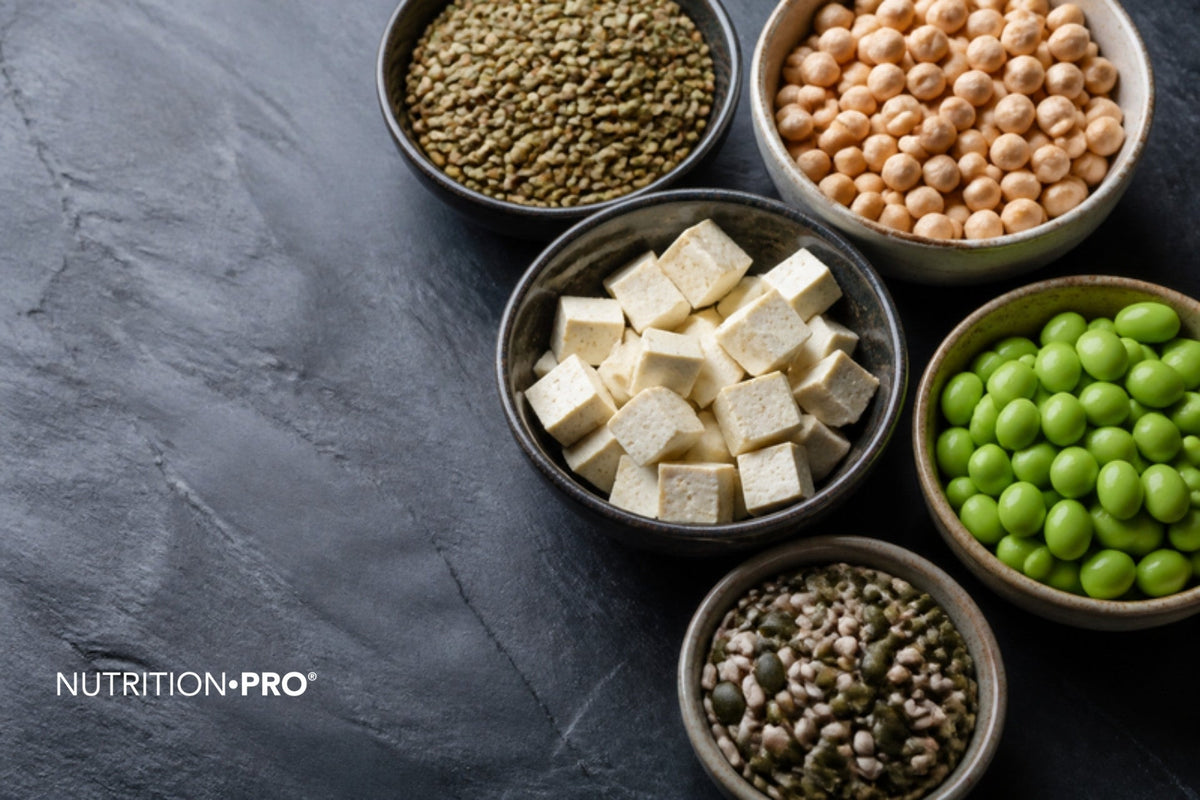
A bowl of cooked red lentils, or 250 mL, provides 18.7 g of protein according to an analysis of cooked legumes published in 2017. The question remains: which plant-based foods are truly protein-rich, per actual serving, and with what quality.
This guide ranks the main sources per 100 g and per serving, then explains PDCAAS and DIAAS, limiting amino acids, the effects of cooking and soaking, complementarity throughout the day, and the case of iron and zinc. It distinguishes vegetarian diet, which includes eggs and dairy products, from vegan diet, which excludes all animal products.

The ranking : per serving, cooked legumes (13 to 19 g per 250 mL bowl across nine varieties), tofu, tempeh, seitan and textured soy protein lead the way. Hemp seeds, pumpkin seeds and almonds provide 6 to 11 g per 30 g handful; spirulina and nutritional yeast remain supplements.
Quality : cereals are especially lacking in lysine, legumes in methionine. Soy achieves the best DIAAS among studied legumes (91), and varying sources throughout the day appears sufficient, according to a review. The real point of concern is iron, absorbed at 5 to 12% in a vegetarian diet versus 14 to 18% in a mixed diet, and zinc.
- How much plant-based protein do you really need?
- Ranking of plant-based protein-rich foods
- Legumes: lentils, chickpeas, beans, fava beans, lupin
- Soy and its derivatives: tofu, tempeh, edamame, textured protein
- Seitan, cereals and pseudocereals
- Nuts and seeds: hemp, pumpkin, peanut, almond
- Nutritional yeast and spirulina: supplements
- PDCAAS and DIAAS: measuring protein quality
- Limiting amino acids and leucine
- Cooking, soaking, sprouting, fermentation
- Complementarity and sample days
- Iron and zinc: the other concern with plant-based proteins
- Frequently Asked Questions
How much plant-based protein do you really need?
According to the review by Mariotti and Gardner (Nutrients, 2019), the average adult requirement is estimated at 0.66 g of protein per kilo per day, and the reference that covers 97.5% of the population at 0.83 g. For 70 kg, this represents approximately 58 g per day (our calculation). The Western population consumes on average about 1.3 g per kilo.
Vegetarian diet is one without meat or fish, most often with eggs and dairy products (lacto-ovo); vegan diet excludes all animal products. In the French NutriNet-Santé cohort, proteins provided approximately 17.5% of energy in meat-eaters versus 13% in vegans. Lacto-ovo vegetarians were around 14%, or approximately 70 g per day.
In the British EPIC-Oxford cohort, vegans consumed an average of 0.99 g of protein per kilo per day, well above the 0.83 g reference. Yet 16.5% of vegan men and 8.1% of vegan women remained below the average requirement of 0.66 g, versus 3% and 1% in meat-eaters. Intakes are sufficient, the authors conclude, except for those who eat too little or avoid legumes, nuts and seeds.
Mariotti F, Gardner CD. Nutrients 2019;11(11):2661. DOI: 10.3390/nu11112661
These surveys tend to overestimate deficiencies, the authors note. The rule is therefore simple: in the adult who eats enough, the issue is the total quantity of protein, far more than a missing amino acid. The situation is more delicate for the elderly person who eats little, as detailed in our article on sarcopenia after age 50.
On the health side, a meta-analysis of 32 cohorts (715,128 adults) associates the highest intakes of plant-based proteins with 8% lower all-cause mortality and 12% lower cardiovascular mortality, with no link to cancer mortality. Each 3% increment of energy from plant-based proteins was associated with 5% lower risk. These are associations, which do not prove a causal link.
A review from the Maastricht team notes that approximately 1.6 g per kilo per day would maximize, according to some authors, muscle gains in strength training. Our guide for building muscle details the calculation.
Ranking of plant-based protein-rich foods
Per 100 g, seeds and powders are favored, cooked legumes, saturated with water, are penalized. The table therefore gives the content per 100 g in the state the food is eaten, and the contribution of a realistic serving (servings and calculations by us). The analyzed values come from studies cited in this guide; the indicative values are rough estimates drawn from general composition tables, approximate and sometimes far from the label, particularly for tofu, seitan and nutritional yeast.
| Food | Protein per 100 g | Serving and intake | Value type |
|---|---|---|---|
| Hulled hemp seeds | 35.9 g | 30 g: approximately 10.8 g | Analyzed (30 Canadian samples) |
| Pumpkin seeds (powder) | 33.25 g | 30 g: approximately 10 g | Analyzed (one study) |
| Seitan | Approximately 20 to 25 g | 100 g: approximately 20 to 25 g | Indicative, highly variable depending on recipe |
| Peanuts | Approximately 25 g | 30 g: approximately 7.5 g | Indicative |
| Almonds | 20.5 to 24.3 g (average 22.8) | 30 g: 6.3 g | Analyzed |
| Tempeh | Approximately 19 g | 100 g: approximately 19 g | Indicative |
| Firm tofu | Approximately 12 to 15 g | 150 g: approximately 18 to 22 g | Indicative, depending on firmness |
| Edamame | Approximately 11 g | 150 g: approximately 16 g | Indicative |
| Cooked white beans | 8.8 g | Bowl of 250 mL: 16.8 g | Analyzed |
| Cooked red lentils | 7.3 g | 250 mL bowl: 18.7 g | Analyzed |
| Cooked red beans | 8.3 g | 250 mL bowl: 15.5 g | Analyzed |
| Cooked split green peas | 7.4 g | 250 mL bowl: 15.3 g | Analyzed |
| Cooked green lentils | 6.7 g | 250 mL bowl: 14.1 g | Analyzed |
| Cooked chickpeas | 7.6 g | 250 mL bowl: 13.1 g | Analyzed |
| Rolled oats | Approximately 13 g | 50 g: approximately 6.5 g | Indicative |
| Cooked quinoa | Approximately 4 to 5 g (raw grain: approximately 15%) | 150 g cooked: approximately 6 to 7 g | Indicative |
| Nutritional yeast | Approximately 40 to 50 g | 10 g: approximately 4 to 5 g | Indicative, depending on product |
| Spirulina powder | Up to 70% of dry matter; 66.28 g for our powder | 3 to 5 g: approximately 2 to 3.3 g | Published review and product label |
A serving of legumes, tofu, tempeh or seitan provides 13 to 25 g of protein: these are the pillars of a plant-based plate. Seeds are highly concentrated but are eaten by the handful and are rich in lipids, approximately 47% for hulled hemp and 49% for almonds in the analyses cited.
The protein content of cooked legumes depends mainly on the water absorbed: 64 to 75% in the source study.
Legumes: lentils, chickpeas, beans, fava beans, lupine
Raw and dried, legumes contain approximately 22 to 24% protein. In the Canadian study that provides our cooked values, the dry matter content ranged from 21.9% for chickpeas to 29.5% for red lentils.
Nine legumes were cooked in the laboratory to a tenderness close to domestic cooking, after 16 hours of soaking for beans and chickpeas. Per 100 g cooked, white beans provided 8.76 g of protein, black beans 8.39 g, red beans 8.27 g, pinto beans 7.85 g, chickpeas 7.57 g, green split peas 7.39 g, red lentils 7.30 g, yellow split peas 6.81 g and green lentils 6.72 g. The true digestibility of proteins, measured in rats, ranged from 70% for black beans to 90.6% for red lentils.
Nosworthy MG, Neufeld J, Frohlich P, et al. Food Sci Nutr 2017;5(4):896-903. DOI: 10.1002/fsn3.473
Lentils, chickpeas, beans, split peas. Red lentils, hulled, cook in 12 minutes and provide the largest portion: 18.7 g per bowl, compared to 14.1 g for green lentils. Beans provide 14.2 to 16.8 g, split peas 14.1 to 15.3 g, chickpeas 13.1 g. White beans achieved the best PDCAAS in the series (0.67); black beans were the least digestible, which the authors link to their phenolic compounds.
Fava beans. In datasets compiled by a 2020 review, dried fava beans contained on average 26.5% protein, with an average DIAAS of 55, limited by sulfur-containing amino acids. These data mainly concern raw materials for animal feed.
Lupin. It is the most protein-rich legume in the group: the Andean species Lupinus mutabilis contains 32 to 52.6 g of protein per 100 g of dry matter, a content close to soy. Its bitter alkaloids, toxic at high doses, require de-bittering before consumption.
Soy and its derivatives: tofu, tempeh, edamame, textured proteins
Soy stands out for its content: 36 to 46% protein in the dry grain according to varieties, according to a review dedicated to soy in vegetarian diets. Its PDCAAS has been reported between 0.91 and 1.00, and its high quality confirmed by nitrogen balance studies in humans, according to this review. Its average DIAAS of 91 is the highest among legumes, ahead of pea (70) and lupin (68).
The tofu is obtained by curdling soy milk with magnesium chloride or calcium sulfate; the tempeh is fermented soy in cake form; theedamame is soy harvested green; the textured proteins are manufactured by extrusion from soy.
With a standardized in vitro digestion model, soy protein digestibility reached 52.1 to 62.7% for cooked whole soy, 84.1 to 90.6% for soy milk and 94.9 to 98.4% for tofu. The in vitro DIAAS score ranged from below 60 for cooked grain to 78 to 88 for soy milk and 79 to 91 for tofu.
Hammer L, Moretti D, Bétrix CA, et al. Food Res Int 2024;178:113947. DOI: 10.1016/j.foodres.2024.113947
These are laboratory measurements, but the trend is clear: processing makes proteins more accessible. In another 2026 in vitro study on fava beans, peas and soy, tofu-style coagulation gave the best digestion, and tempeh-style fermentation greatly reduced phytates, with more iron captured by intestinal cells in culture than with tofu.
A serving of 150 g of firm tofu or 100 g of tempeh provides approximately 18 to 22 g of protein, and 30 g of dry textured proteins at approximately 50% protein, about 15 g (indicative values). Vegans in NutriNet-Santé consumed 73 g of legumes and 63 g of textured soy and vegetable patties per day.
Seitan, grains and pseudo-cereals
Seitan. Made from wheat gluten, it contains approximately 20 to 25 g of protein per 100 g depending on the recipe (indicative value). A wheat protein isolate contains only 1.4% lysine according to Maastricht analysis, for a requirement of 4.5%. Yet, in 36 active young men, 30 g of a wheat protein hydrolysate powder and 30 g of milk proteins increased muscle protein synthesis with no significant difference (0.056 vs 0.053% per hour). This is an isolated protein, not seitan, and the result does not necessarily apply to older adults.
Quinoa. Often presented as complete, the grain contains approximately 15% protein and a good balance of amino acids according to a 2009 review. The Maastricht team qualifies this: 3.3% lysine and 0.6% methionine, below the requirements of 4.5 and 1.6%, and 3.8% leucine, the lowest of the analyzed sources. Cooked, it provides approximately 4 to 5 g per 100 g (indicative value): a supplement, not a staple.
Oats. Approximately 13 g of protein per 100 g of flakes (indicative value), a protein limited in lysine (average DIAAS of 57) and low in methionine.
Buckwheat. Gluten-free, it contains approximately 13 g of protein per 100 g of dry grain (indicative value, without reference analysis retained for this guide).
Oilseeds and seeds: hemp, pumpkin, peanut, almond
From 30 samples of hemp-based products from Western Canada, whole seed contained 24.0% protein and 30.4% lipids, hulled seed 35.9% protein and 46.7% lipids, and seed cake 40.7% protein. PDCAAS ranged from 49 to 53% for whole seed to 63 to 66% for hulled seed, and lysine was the limiting amino acid throughout.
House JD, Neufeld J, Leson G. J Agric Food Chem 2010;58(22):11801-7. DOI: 10.1021/jf102636b
Hemp. 30 g of hulled seeds provide approximately 10.8 g of protein (our calculation), low in leucine and lysine but rich in methionine (2.0%): a good partner for legumes.
Pumpkin. A pumpkin seed powder analyzed in a 2025 study contained 33.25% protein. Its protein resembles that of hemp: 2.7% lysine, 1.9% methionine. A 2026 review also lists them among sources of zinc, iron, and magnesium, an asset in a plant-based diet.
Peanut. A legume consumed as an oilseed, it provides approximately 25 g of protein per 100 g (indicative value).
Almond. Four California varieties analyzed contained 20.5 to 24.3% protein (average 22.8%), and the American reference table 21.2%, or 6.3 g per 30 g. Lysine limits quality: PDCAAS of 44.3 to 47.8. Samples came from the almond supply chain.
Nutritional yeast and spirulina: supplementary sources
Nutritional yeast. These flakes of inactivated yeast contain approximately 40 to 50% protein depending on the product (indicative value), or 4 to 5 g per 10 g. Some are fortified with vitamin B12, as indicated on the label.
Spirulina. This cyanobacterium, Arthrospira platensis, is one of the most protein-concentrated foods: up to 70% of dry matter according to a 2025 review on microalgae proteins. Its protein contains 6.0% leucine, 3.5% lysine, and 1.7% methionine in the sample analyzed by the Maastricht team.
Our organic spirulina powder is 100% organic spirulina powder and contains 66.28 g of protein per 100 g. One teaspoon per day, or 3 to 5 g, provides approximately 2 to 3.3 g of protein (our calculation): a supplement in a smoothie or salad, not a primary source. Our Organic spirulina tablets provide 2 g of spirulina per 4 tablets, or very little protein relative to requirements.
In spirulina tablets, the purified vitamin B12 fraction was composed of 83% pseudovitamin B12, inactive, and only 17% true vitamin B12. A subsequent review by the same team concluded that spirulina is not suitable as a B12 source, particularly for vegetarians.
Watanabe F, Katsura H, Takenaka S, et al. J Agric Food Chem 1999;47(11):4736-41. DOI: 10.1021/jf990541b
Spirulina's vitamin B12 is mainly an inactive form. No unenriched plant food meets requirements: a vegan diet requires a supplement or fortified foods. Our guide on vitamin B12 details reliable sources and signs of deficiency.
PDCAAS and DIAAS: measuring protein quality
The quality of a protein depends on its content of essential amino acids and the proportion actually digested. The PDCAAS multiplies the score of the most limiting amino acid by digestibility measured in rat feces, and caps at 1. The DIAAS, proposed in 2013, measures the digestibility of each amino acid at the end of the small intestine, often in pigs, with no ceiling: 100 or more, no amino acid limits; 75 to 99, high quality; below 75, the protein benefits from being complemented.
Based on data obtained from growing pigs, the average DIAAS (reference for 6 months to 3 years) reached 91 for soy, 70 for peas, 68 for lupine, 57 for oats, 55 for fava beans, 54 for hemp, 48 for wheat and 47 for rice, compared to 85 for whey, 101 for egg and 117 for casein. Lysine was the limiting factor for cereals and hemp, sulfur-containing amino acids limited legumes.
Herreman L, Nommensen P, Pennings B, Laus MC. Food Sci Nutr 2020;8(10):5379-5391. DOI: 10.1002/fsn3.1809
The authors, employees of a potato protein manufacturer, point out that most data are based on raw materials, while processing changes the scores: extruded pea protein increased from 70 to 82 or 86. For actually prepared foods, here are the published values.
| Prepared Food | PDCAAS | DIAAS | Study |
|---|---|---|---|
| Tofu | Not measured | 79 to 91 (in vitro) | Hammer, 2024 |
| Cooked Chickpeas | 0.75 | 0.78 | Nosworthy, 2020 |
| Cooked Split Green Peas | 0.69 | 0.67 | Nosworthy, 2017 |
| Cooked White Beans | 0.67 | 0.65 (fecal digestibility) | Nosworthy, 2017 |
| Hulled Hemp Seeds | 0.63 to 0.66 | Not measured | House, 2010 |
| Cooked Red Lentils | 0.57 | 0.54 on average | Nosworthy, 2017 |
These figures are reference values, varying from one study to another (0.69 then 0.50 for cooked split green peas, 0.54 then 0.57 PDCAAS for cooked red lentils). For Canadian studies, DIAAS is calculated from fecal digestibility measured in rats, not ileal, so not strictly comparable to values obtained in pigs. In humans, the Mariotti and Gardner review reports digestibility of 89 to 92% for soy isolate, pea flour or isolate, wheat and lupine flours, compared to 91% for egg and 90 to 94% for meat.
Limiting Amino Acids and Leucine
All plants contain all 20 amino acids, including the 9 essential ones: referring to "incomplete" proteins is misleading, according to the Mariotti and Gardner review, some are simply less abundant in certain sources. Content measured by the Maastricht team, as a percentage of protein (powder isolates for pea, soy, rice, wheat and hemp):
| Protein Source | Lysine (requirement 4.5%) | Methionine (requirement 1.6%) | Leucine (requirement 5.9%) |
|---|---|---|---|
| Peas | 5.9% | 0.4% (limiting) | 7.2% |
| Soy | 4.6% | 0.4% (limiting) | 6.9% |
| Brown rice | 2.4% (limiting) | 2.5% | 7.4% |
| Wheat | 1.4% (limiting) | 0.9% | 6.1% |
| Quinoa | 3.3% (limiting) | 0.6% (limiting) | 3.8% |
| Hemp | 2.8% (limiting) | 2.0% | 5.1% |
| Spirulina | 3.5% (limiting) | 1.7% | 6.0% |
Leucine is the amino acid that most strongly triggers muscle building. 20 to 25 g of whey provides 2.2 to 2.7 g. To obtain 2.7 g of leucine, an analysis published in 2018 estimates that approximately 37 g of brown rice protein, 38 g of peas, 40 g of soy, 45 g of wheat, 47 g of oats, and 54 g of hemp are needed. These figures are based on isolated protein powders supplied by manufacturers, not whole foods.
In humans, approximately 85 to 95% of proteins from egg white, whole egg, and chicken are absorbed, compared to approximately 50 to 75% for chickpeas, mung beans, and yellow peas. Plant-based protein isolates, on the other hand, reach levels close to animal proteins. The proposed strategies: consume more plant-based proteins or combine complementary sources.
Pinckaers PJM, Trommelen J, Snijders T, van Loon LJC. Sports Med 2021;51(Suppl 1):59-74. DOI: 10.1007/s40279-021-01540-8
The authors put this into perspective: athletes often consume enough protein that small differences in quality have little impact, except when they eat less, during cutting phases or after an injury. Vegetarians who consume dairy products can also rely on 100% Whey Isolate, a milk protein that provides 22.9 g of protein per 30 g; it is not suitable for vegans.
Cooking, soaking, sprouting, fermentation
Seeds contain compounds that slow digestion: trypsin inhibitors, tannins, phytates. The seed coat also plays a role: removing the hull from mung beans increases protein absorption by approximately 10%, according to the Sports Medicine journal.
Cooking reduces trypsin inhibitors and tannins; the digestibility of chickpea goes from approximately 72% raw to 84% cooked, according to the work cited in the Canadian study. The cooking method matters: PDCAAS of chickpea 75.2 boiled in water, 80 baked in the oven and 83.8 extruded.
On black-eyed peas, long soaking for 16 hours in a bicarbonate solution strongly reduced antinutritional factors. Pressure cooking proved more effective than ordinary cooking, and cooking of previously sprouted seeds even more so. Fermentation eliminated the trypsin inhibitor and sugars responsible for bloating and significantly reduced phytic acid, but it increased tannins.
Ibrahim SS, Habiba RA, Shatta AA, Embaby HE. Nahrung 2002;46(2):92-5. DOI : 10.1002/1521-3803(20020301)46:2<92::AID-FOOD92>3.0.CO;2-P
These studies, mostly laboratory-based, show consistent trends without quantifying the benefit for your plate.
These are practical tips derived from these trends, not results from human trials.
Complementarity and typical days
A 1994 review already concluded that mixtures of plant proteins form a complete source of amino acids. That of Mariotti and Gardner clarifies that there is no need to complement a plant protein at the same meal: a variety of sources throughout the day appears appropriate, the body having a reserve of free amino acids, particularly lysine, which partly cushions the discrepancies.
In the EPIC-Oxford cohort, lysine intake was estimated at 58 mg per kilo per day in lacto-ovo vegetarians and 43 mg in vegans, above the average requirement of 30 mg, and a meta-regression of nitrogen balance studies found no difference in requirements between animal, plant-based or mixed diets.
The following two days are examples built on this classification, not menus from studies; the quantities, calculated by us, are approximate. Reference points for 70 kg: approximately 58 g per day at 0.83 g per kilo, approximately 112 g at 1.6 g per kilo.
Vegan version: a soy dessert in place of yogurt and a portion of tofu, seitan or lentils in place of the whey.
Iron and zinc: the other challenge of plant proteins
Plant-based iron, known as non-heme iron, is sensitive to compounds in the meal. According to a review in the American Journal of Clinical Nutrition, its bioavailability is estimated at 14 to 18% in mixed diet and 5 to 12% in vegetarian diet, in people without reserves. Phytates, polyphenols and calcium inhibit it, vitamin C promotes it, and each person's iron status weighs more than the composition of meals.
Small wheat breads enriched with increasing amounts of phytates, marked with radioactive iron, showed an inhibition of iron absorption of 18% from 2 mg of phytic phosphorus, 64% at 25 mg and 82% at 250 mg. The addition of ascorbic acid, vitamin C, significantly counteracted this inhibition.
Hallberg L, Brune M, Rossander L. Am J Clin Nutr 1989;49(1):140-4. DOI: 10.1093/ajcn/49.1.140
A meta-analysis of 24 cross-sectional studies found ferritin, a reflection of iron reserves, 29.7 µg/L lower in adult vegetarians (61.9 µg/L in men, 17.7 µg/L in non-menopausal women). For zinc, a meta-analysis of 26 studies found lower intakes of 0.88 mg per day and blood zinc 0.93 µmol/L lower, especially in women and vegans. These are associations: lower reserves on average, not a deficiency in each individual.
In practice: a source of vitamin C with legume meals (bell pepper, citrus fruits, kiwi), tea and coffee away from meals, fermented, sprouted or soaked foods. Our ranking of iron-rich foods details the content and absorption.
When a blood test confirms iron deficiency, a supplement should be discussed with your doctor. Our Iron bisglycinate provides, for one vegetable capsule per day taken 1 hour before a meal, 14 mg of iron in bisglycinate form, 80 mg of vitamin C and 200 µg of vitamin B9. It is not recommended in case of hemochromatosis or polycythemia, nor for pregnant or nursing women. Our guide on iron deficiency explains how to read your ferritin levels.

For zinc, the 2013 meta-analysis mentions, if intakes or blood zinc are low, fortified foods or low-dose supplementation. Our Zinc provides 14.16 mg of zinc in gluconate form and 2 mg of vitamin B6 per 2 vegetable capsules; it is not recommended during pregnancy and breastfeeding. Our article on the benefits of zinc details its roles and sources.
Iron : never take a supplement without a blood test confirming deficiency; not recommended in case of hemochromatosis or polycythemia, during pregnancy and breastfeeding. Allergies : soy, peanuts and tree nuts are common allergens. Lupin : only non-GMO varieties. Seitan : excluded in case of celiac disease. Dried beans : always well cooked. Vitamin B12 : essential as a supplement or in fortified foods in a vegan diet. Kidney disease : medical advice before increasing protein intake.
100% organic spirulina powder (Arthrospira platensis), with 66.28 g of protein per 100 g. One teaspoon per day, or 3 to 5 g, in a smoothie, juice or salad: an addition of approximately 2 to 3.3 g of protein alongside legumes, soy and seeds.
View organic spirulina powderOur Iron bisglycinate is designed for iron deficiencies confirmed by a blood test.
Frequently asked questions
What are the foods richest in plant-based proteins?
Per 100 g, hulled hemp seeds (35.9% in one analysis), pumpkin seeds, seitan, peanuts, almonds and tempeh. Per serving, cooked legumes (13 to 19 g per 250 mL bowl), tofu, tempeh, seitan and textured soy proteins.
Which legume contains the most protein?
Soy, with 36 to 46% protein in the dry grain, then Andean lupin, with 32 to 52.6% on a dry matter basis. When cooked, red lentils yielded the largest portion in a published analysis: 18.7 g per 250 mL bowl.
How much protein in 100 g of cooked lentils?
In an analysis of cooked legumes, 7.3 g for red lentils and 6.7 g for green lentils. General nutrition tables sometimes give slightly more, depending on the water absorbed during cooking.
What are complete plant proteins?
All plants contain the 9 essential amino acids, in varying proportions. Soy has the best profile among legumes (average DIAAS of 91). Quinoa, often said to be complete, fell short of requirements for lysine, methionine and leucine in the sample analyzed at Maastricht.
Do you need to combine grains and legumes in the same meal?
No. According to a 2019 review, a variety of sources throughout the day appears to be sufficient. Combining them in the same meal remains a practical safeguard when total protein intake is low.
Do vegetarians or vegans lack protein?
Rarely if they eat enough. In the EPIC-Oxford cohort, vegans consumed an average of 0.99 g per kilogram per day, but 16.5% of vegan men and 8.1% of vegan women remained below the average requirement of 0.66 g.
Is spirulina a good source of protein?
It is highly concentrated, up to 70% of dry matter, but 3 to 5 g per day provides only about 2 to 3.3 g of protein: it is a supplement. Its vitamin B12 is mainly an inactive form; it does not meet requirements.
How much plant protein per day to build muscle?
Approximately 1.6 g per kilogram per day would maximize muscle gains according to some authors cited in a review, or about 112 g for 70 kg. About 37 to 40 g of isolated protein from brown rice, peas or soy is needed to provide 2.7 g of leucine.
Is soaking legumes useful?
Yes, especially for beans and chickpeas. On black-eyed peas, soaking for 16 hours in a bicarbonate solution significantly reduced antinutritional factors, and cooking sprouted seeds did even better.
How to better absorb iron from plant foods?
With a source of vitamin C at the meal, tea and coffee consumed separately, and foods that are soaked, sprouted or fermented. In a human trial, phytates reduced iron absorption by up to 82%, and vitamin C counteracted this effect.
Sources
The studies cited below were identified via PubMed.
- Nosworthy MG, Neufeld J, Frohlich P, et al. Determination of protein quality of cooked Canadian legumes. Food Science & Nutrition, 2017;5(4):896-903. DOI
- House JD, Neufeld J, Leson G. Evaluation of protein quality of hemp seed (Cannabis sativa L.) products using the PDCAAS method. Journal of Agricultural and Food Chemistry, 2010;58(22):11801-11807. DOI
- Herreman L, Nommensen P, Pennings B, Laus MC. Overview of plant and animal protein quality according to the DIAAS score. Food Science & Nutrition, 2020;8(10):5379-5391. DOI
- Hammer L, Moretti D, Bétrix CA, et al. In vitro DIAAS of Swiss soy varieties with the INFOGEST model: protein quality increases from grain to soy milk to tofu. Food Research International, 2024;178:113947. DOI
- Mariotti F, Gardner CD. Proteins and amino acids in vegetarian diets: a review. Nutrients, 2019;11(11):2661. DOI
- Hurrell R, Egli I. Iron bioavailability and nutrient reference values. The American Journal of Clinical Nutrition, 2010;91(5):1461S-1467S. DOI
- Naghshi S, Sadeghi O, Willett WC, Esmaillzadeh A. Total, animal, and plant protein intake and risk of all-cause, cardiovascular, and cancer mortality: systematic review and dose-response meta-analysis of prospective cohort studies. BMJ, 2020;370:m2412. DOI
- Pinckaers PJM, Trommelen J, Snijders T, van Loon LJC. The anabolic response to plant protein ingestion. Sports Medicine, 2021;51(Suppl 1):59-74. DOI
- Asaduzzaman M, Akter MS, Rahman M. Improving the nutritional value and quality of cookies enriched with pumpkin skin and seed powder. PLoS One, 2025;20(2):e0307506. DOI
- House JD, Hill K, Neufeld J, et al. Determination of protein quality of almonds using in vitro and in vivo methods. Food Science & Nutrition, 2019;7(9):2932-2938. DOI
- Abugoch James LE. Quinoa (Chenopodium quinoa Willd.): composition, chemistry, nutritional and functional properties. Advances in Food and Nutrition Research, 2009;58:1-31. DOI
- Prates JAM. Unlocking the functional and nutritional potential of microalgae proteins in food systems: a narrative review. Foods, 2025;14(9):1524. DOI
- Carvajal-Larenas FE, Linnemann AR, Nout MJR, et al. Lupinus mutabilis: composition, uses, toxicology and debittering. Critical Reviews in Food Science and Nutrition, 2016;56(9):1454-1487. DOI
- Rizzo G, Baroni L. Soy, soy foods, and their role in vegetarian diets. Nutrients, 2018;10(1):43. DOI
- Auer J, Duivenvoorde L, van der Zande M, et al. Effect of processing on protein digestibility and mineral bioavailability of legumes. Food Research International, 2026;232:118938. DOI
- Gorissen SHM, Crombag JJR, Senden JMG, et al. Protein content and amino acid composition of commercial plant protein isolates. Amino Acids, 2018;50(12):1685-1695. DOI
- Pinckaers PJM, Kouw IWK, Hendriks FK, et al. No difference in muscle protein synthesis after ingestion of wheat protein, milk protein or their blend in young healthy men. The British Journal of Nutrition, 2021;126(12):1832-1842. DOI
- Kassa MG, Teferi DA. Phytochemical composition, health benefits, functional properties and food applications of pumpkin seeds. Food Science & Nutrition, 2026;14(5):e71868. DOI
- Watanabe F, Katsura H, Takenaka S, et al. Pseudovitamin B12 is the predominant cobamide of a health food algae-based product, spirulina tablets. Journal of Agricultural and Food Chemistry, 1999;47(11):4736-4741. DOI
- Watanabe F, Takenaka S, Kittaka-Katsura H, et al. Characterization and bioavailability of vitamin B12 compounds from edible algae. Journal of Nutritional Science and Vitaminology, 2002;48(5):325-331. DOI
- Nosworthy MG, Medina G, Franczyk AJ, et al. Thermal processing methods differently modify the protein quality of chickpea. Food Science & Nutrition, 2020;8(6):2950-2958. DOI
- Nosworthy MG, Franczyk AJ, Medina G, et al. Effect of processing on in vitro and in vivo protein quality of yellow and green split peas (Pisum sativum). Journal of Agricultural and Food Chemistry, 2017;65(35):7790-7796. DOI
- Nosworthy MG, Medina G, Franczyk AJ, et al. Effect of processing on in vitro and in vivo protein quality of red and green lentils (Lens culinaris). Food Chemistry, 2017;240:588-593. DOI
- Nosworthy MG, Medina G, Franczyk AJ, et al. Effect of processing on in vitro and in vivo protein quality of beans (Phaseolus vulgaris and Vicia faba). Nutrients, 2018;10(6):671. DOI
- Ibrahim SS, Habiba RA, Shatta AA, Embaby HE. Effect of soaking, germination, cooking and fermentation on antinutritional factors of cowpea. Food, 2002;46(2):92-95. DOI
- Young VR, Pellett PL. Plant proteins and human nutrition in proteins and amino acids. The American Journal of Clinical Nutrition, 1994;59(5 Suppl):1203S-1212S. DOI
- Hallberg L, Brune M, Rossander L. Iron absorption in humans: ascorbic acid and dose-dependent inhibition by phytates. The American Journal of Clinical Nutrition, 1989;49(1):140-144. DOI
- Haider LM, Schwingshackl L, Hoffmann G, Ekmekcioglu C. Effect of vegetarian diets on iron status in adults: systematic review and meta-analysis. Critical Reviews in Food Science and Nutrition, 2018;58(8):1359-1374. DOI
- Foster M, Chu A, Petocz P, Samman S. Effect of vegetarian diets on zinc status: systematic review and meta-analysis of studies in humans. Journal of the Science of Food and Agriculture, 2013;93(10):2362-2371. DOI


