

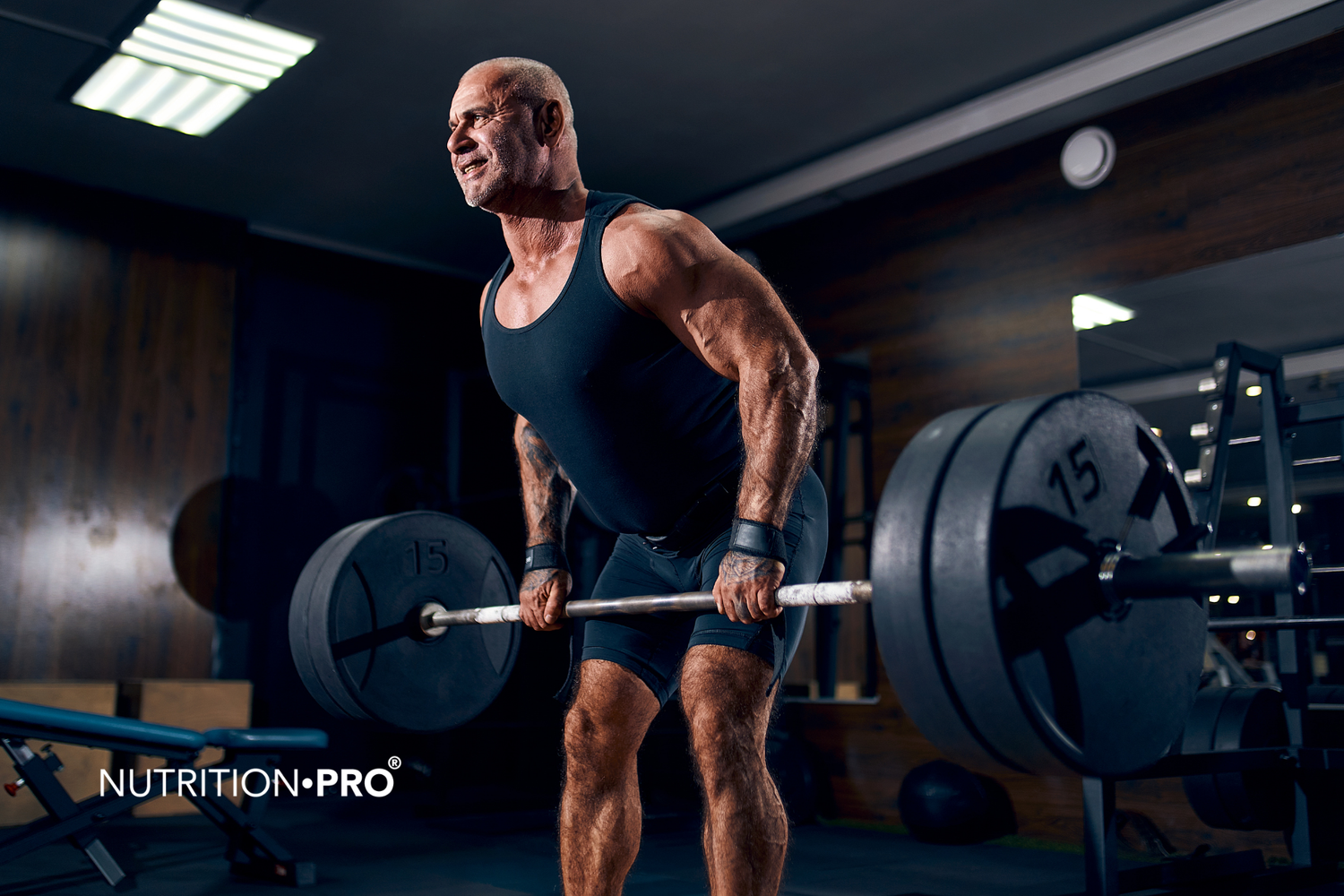
Sarcopenia is the progressive loss of muscle mass and strength related to aging. It advances silently, causes no pain, and often goes unnoticed until climbing stairs or opening a jar becomes a challenge.
Let's be clear about what this article will not do: sell you a powder claiming it solves the problem. The data is clear on one point, and it must be stated from the outset. In postmenopausal women, a meta-analysis showed that protein consumed without resistance training provided no benefit on strength or lean mass. Exercise is the treatment. Nutrition amplifies its effect, and we'll see by how much.

Resistance training is the foundation, not an option. A meta-analysis in postmenopausal women is clear: with training, whey improves bicep strength and lean mass in the lower limbs; without training, it provides no benefit on these criteria. The order of priorities is therefore determined by the data itself.
On this foundation, the protein source matters. A network meta-analysis of 78 trials and 5,272 participants compared six sources and ranked whey first on muscle mass, grip strength, and walking speed. But let's stay measured: in people already sarcopenic, the effects are real and of small magnitude, and the quality of evidence is judged to be low to very low.
What sarcopenia is and how to identify it
Sarcopenia combines loss of muscle mass and loss of strength. The second element is the most important: you can retain adequate muscle volume while losing the strength that goes with it. It is strength, not mass, that best predicts daily difficulties.
| Sign | What it indicates |
|---|---|
| Rising from a chair becomes difficult | Loss of strength in the lower limbs, the most affected muscle group |
| Walking slows down | Walking speed is one of the most widely used functional indicators in research |
| Opening a jar, carrying groceries | Grip strength, measured with a dynamometer, is a standard marker |
| Fatigue on exertion, less steady balance | Functional signs often mistakenly attributed solely to aging |
Sarcopenia is diagnosed with precise measurements: grip strength measured with a dynamometer, walking speed, and body composition. These are simple examinations that your doctor can prescribe or perform.
Above all, muscle loss can have causes other than ordinary aging: malnutrition, chronic disease, thyroid disorder, or side effects of treatment. None of these situations can be resolved with a supplement, and all can be identified during a medical consultation.
The result that sets priorities
Let's start with the most inconvenient result for a supplement brand, because it determines everything else. A systematic review with meta-analysis examined whey in postmenopausal women, separating those who practiced resistance training from those who did not.
| Situation | Effect observed |
|---|---|
| Whey with resistance training | Significant improvement in biceps strength and in lean mass of the lower limbs |
| Whey without training | No significant benefit on muscle strength or lean mass |
| Effect on fat mass or weight | No significant difference, with or without training |
On this foundation, which protein source
With training established as a condition, one can wonder if the protein source makes a difference. A network meta-analysis published in Nutrients compared six sources in middle-aged and older adults practicing resistance training. The method is interesting: it allows interventions to be ranked even when they have not been directly compared to each other.
| Element | Detail |
|---|---|
| Scope | 78 randomized trials, 5,272 participants, in the general population, hospitalized or institutionalized |
| Sources compared | Whey, milk, casein, meat, soy and peanut |
| Muscle mass | Whey comes out on top, standardized mean difference of 1.29 (95% CI 0.96 to 1.62) |
| Grip strength | Whey in the lead again, 1.46 (95% CI 0.92 to 2.00) |
| Walking speed | Whey once again, 0.73 (95% CI 0.39 to 1.07) |
| Factors modulating the effect | Health status, sex and dose significantly influence the results |
The real magnitude of effects, without embellishment
The previous figures concern large populations, often without confirmed sarcopenia. Another meta-analysis focused on people already diagnosed with sarcopenia, aged 60 and over, and its conclusions are considerably more measured.
| Criterion | Result | Interpretation |
|---|---|---|
|
Muscle mass Appendicular muscle index |
Standardized difference of 0.24 (95% CI 0.05 to 0.42), p = 0.01, no heterogeneity | Significant, but small effect size |
| Grip strength | Average difference of +2.31 kg (95% CI 0.01 to 4.6), p = 0.05 | At the threshold of significance, high heterogeneity |
| Physical performance | Discordant results between studies | No conclusion possible |
| Quality of evidence | Rated low to very low according to GRADE | Caution warranted |
The authors of this work specify that the effect sizes are small and that the average difference observed in grip strength does not exceed the minimum clinically relevant threshold. In other words, the difference is statistically detectable but its perceived daily benefit remains uncertain.
They also conclude that the quality of evidence is low to very low and that further research is needed. This is the kind of statement that a product sheet never cites, and it is precisely why we are citing it.
The three nutrients with authorized claims
On many topics, data exist but no claims are authorized, which prohibits discussing them in terms of effects. Here, it's the opposite: three nutrients have authorized European health claims that converge toward aging muscle.
| Nutrient | Authorized claim |
|---|---|
| Protein | Contributes to the maintenance and growth of muscle mass, as well as the maintenance of normal bone structure |
| Vitamin D | Contributes to the maintenance of normal muscle function, calcium absorption and the maintenance of normal bone structure |
| Creatine | A specific claim recognizes that daily intake can enhance the effect of resistance training on muscle strength in adults over 55 years old |
It is one of the rare European claims explicitly targeting a specific age group, that of people over 55, and it is conditional on the practice of resistance training. The regulatory framework therefore states exactly what this article's data shows: the supplement enhances the effect of exercise, it does not replace it.
It is also subject to precise conditions of use, particularly a defined daily dose and regular exercise practice. Creatine is not reserved for young athletes, contrary to a persistent misconception.
The particular case of weight loss treatments
New generation obesity treatments produce significant weight loss. But a notable portion of this loss is not fat.
| Finding | Reported figure |
|---|---|
| Share of non-fat mass in the loss | It would represent 20 to 50% of total weight loss |
| Order of magnitude after 12 to 18 months | Approximately 6 kg of lean mass, or nearly 10% of the total |
| Comparison proposed by the authors | A loss comparable to that ofa decade of aging |
| Identified countermeasures | A protein-rich diet and regular resistance training |
On the source. The journal advancing these figures counts among its authors several individuals affiliated with a company in the weight loss sector. The underlying finding, the loss of non-fat mass, is widely recognized elsewhere, but the exact magnitude is debated, and a second publication notes that part of this loss is obligatory and normally accompanies any reduction in fat mass.
On what course of action to take. This article does not invite anyone to stop or modify a prescribed treatment. If you are concerned, the question of muscle preservation should be discussed with your doctor, as a complement to treatment and not as a replacement. Our articles on weight loss injections and on their side effects address the subject in detail.
In practice
We sell protein, creatine, and vitamin D, and this article places exercise above all three. That's what the data says, and there's no point telling someone something different when they will discover for themselves in six months that powder alone changed nothing.
Sarcopenia is a medical condition. It is diagnosed, it is monitored, and its management requires a care team. Supplements have a supporting role in it, documented but modest.
Frequently asked questions
Understanding Sarcopenia
What exactly is sarcopenia?
It is the combination of muscle mass loss and strength loss related to aging. The second element is the most determining: you can maintain adequate muscle volume while having lost the corresponding strength. It is strength, more than mass, that predicts daily difficulties such as getting up from a chair or climbing stairs.
How do I know if I'm affected?
Through simple measurements performed during a consultation: grip strength using a dynamometer, walking speed, assessment of body composition. Functional signs can raise awareness—difficulty getting up, slowed walking, difficulty opening a jar—but they are not sufficient to make a diagnosis and may point to other causes.
Is it an inevitable part of aging?
Muscle loss accompanies aging, but its rate depends largely on activity level. This is precisely why resistance training is the central intervention: it acts on the mechanism itself, which no supplement does.
Can muscle loss have another cause?
Yes, and this is a major reason to consult a healthcare professional rather than supplement immediately. Malnutrition, chronic disease, thyroid disorder, side effect of treatment: several situations produce muscle loss and none are resolved with a powder. Involuntary weight loss always warrants medical advice.
Exercise and Protein
Are proteins sufficient without exercising?
No, and this is the clearest finding from this review. A meta-analysis conducted in postmenopausal women separated participants based on whether or not they practiced resistance training. With training, whey improved bicep strength and lean mass in the lower limbs. Without training, no significant benefit appeared on these measures.
What type of exercise should be done?
Resistance training, meaning work against load, two to three times per week, engaging the major muscle groups and particularly the lower limbs. Guided machines, resistance bands, or body weight are all suitable: it is the principle of progressive overload that matters, not the equipment. Professional guidance is recommended to begin.
Is walking sufficient?
Walking is excellent for many things, but the trials discussed here involve work against resistance, which is not the same stimulus. One does not replace the other. The ideal combines endurance activity and resistance training.
Choosing the Source
Which protein source is most effective?
A network meta-analysis covering 78 trials and 5,272 participants compared six sources: whey, milk, casein, meat, soy, and peanut. Whey ranks first on all three measured criteria—muscle mass, grip strength, and walking speed. The authors conclude that it represents the optimal option for older adults practicing resistance training.
Are other sources useless?
No. A ranking establishes an order, not exclusivity: other sources also produce effects. The authors further note that dose is a significant modulating factor in results. A well-dosed protein that is actually consumed is better than a better-ranked protein taken in insufficient quantity.
Do I need whey if I'm vegetarian?
Whey is a milk derivative, so it suits vegetarians but not vegans. Soy was among the sources compared in the network meta-analysis and produced effects there, even if it did not rank first. The question of plant-based sources deserves consideration taking into account dose and amino acid profile.
The Magnitude of Effects
How much does supplementation improve things?
In people already with sarcopenia, a meta-analysis reports improved muscle mass with a standardized difference of 0.24, corresponding to a small effect size, and an average difference of 2.31 kg in grip strength, at the threshold of statistical significance. Results on physical performance are inconsistent.
Are these effects clinically important?
The authors themselves clarify that effect sizes are small and that the observed difference in grip strength does not exceed the minimum clinically relevant threshold. In other words, the effect is statistically detectable but its perceived benefit in daily life remains uncertain. They judge the quality of evidence to be low to very low.
Should we conclude it's useless?
Not at all. The effect is real and consistent across meta-analyses, simply modest. Protein supplementation deserves its place in a strategy based primarily on exercise. What would be wrong is to assign it the main role.
Nutrients and Regulatory Framework
Which nutrients have authorized claims here?
Three converge on this topic, which is rare. Proteins contribute to the maintenance and growth of muscle mass. Vitamin D contributes to the maintenance of normal muscle function. And creatine has a recognized claim that daily intake can enhance the effect of resistance training on muscle strength in adults over 55 years old.
Is creatine reserved for young athletes?
No, and the European claim demonstrates this well since it explicitly targets adults over 55 years old. It is, however, conditional on practicing resistance training, which aligns with the central message of this article: the supplement enhances the effect of exercise, it does not replace it.
Are there precautions with creatine?
The claim comes with specific usage conditions, notably a defined daily dose and regular exercise practice. If there is a known kidney problem, ongoing treatment, or chronic condition, the question should be discussed with a healthcare professional before beginning.
Special Situations
What if I'm taking weight-loss medication?
The question of muscle preservation does indeed arise, as lean mass represents according to published research a significant portion of weight loss under these treatments. The identified countermeasures are the same as in the rest of this article: adequate protein intake and resistance training. This should be discussed with your doctor, as a complement to treatment and never as a replacement.
From what age should we be concerned about it?
Muscle loss begins well before the age when it becomes problematic, and the European claim on creatine already targets those over 55. Trials often include middle-aged adults as much as elderly people. Establishing a habit of resistance training before problems appear is simpler than catching up later.
What should you take from this article?
That resistance training is the foundation and nutrition amplifies it without replacing it, with protein supplementation without exercise showing no benefit for strength or lean mass. That whey emerged first among six sources compared across 78 trials. And that in people already sarcopenic, the effects are real but small in size, with evidence of low to very low quality.
Glossary
- Sarcopenia
- Loss of muscle mass and strength related to age, recognized as a condition in its own right.
- Lean mass, fat-free mass
- All tissues excluding fat mass, including muscle, bone, and body water.
- Resistance training
- Muscle work against a load, using machines, resistance bands, or body weight.
- Grip strength
- Hand grip force, measured with a dynamometer, a standard marker of muscle function.
- Appendicular muscle index
- Measure of muscle mass in the arms and legs relative to height, used for diagnosis.
- Network meta-analysis
- Method that allows ranking multiple interventions even when they have not been directly compared to each other.
- Standardized mean difference
- Measure of effect size; below approximately 0.2, the effect is considered small.
- Minimal clinical relevance
- Threshold beyond which a measured difference becomes perceptible to the person concerned.
Sources
The studies cited below were identified via PubMed.
- Liao CD, et al. Comparative efficacy of different protein supplements on muscle mass, strength, and physical indices of sarcopenia in older adults performing resistance training: network meta-analysis of randomized controlled trials. Nutrients, 2024;16(7):941. DOI
- Cuyul-Vásquez I, et al. Efficacy of whey protein supplementation during resistance training on muscle mass and strength in older people with sarcopenia: systematic review and meta-analysis. Nutrients, 2023;15(15):3424. DOI
- Kuo YY, et al. Effect of whey protein supplementation in menopausal women: systematic review and meta-analysis. Nutrients, 2022;14(19):4210. DOI
- Grosicki GJ, et al. The importance of diet and physical activity in preserving skeletal muscle health during weight loss with new-generation anti-obesity medications. Current Developments in Nutrition, 2024;8(11):104486. DOI


