

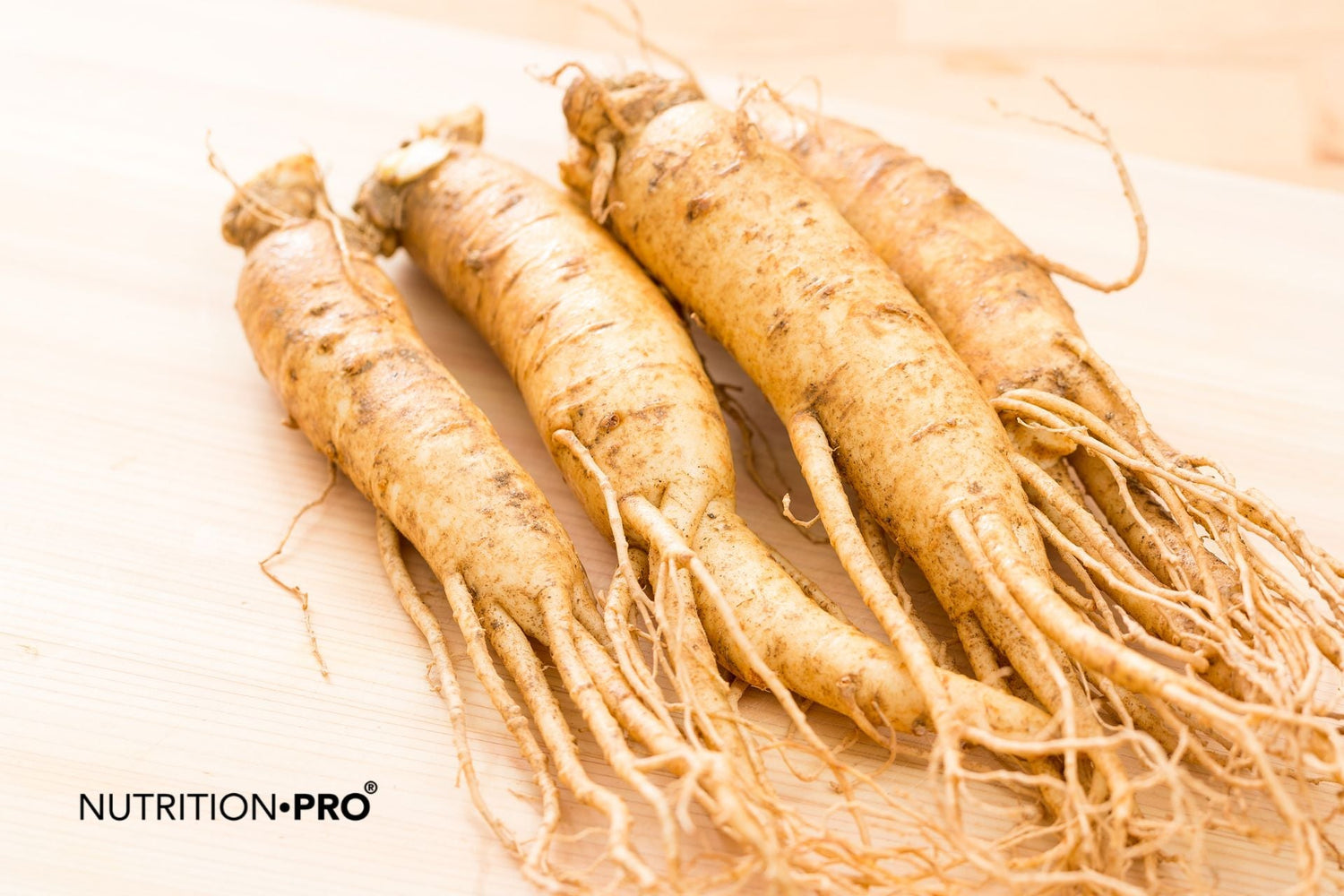
Red ginseng is one of the most widely used plants in the world, and one of the rare "natural tonics" to have been seriously studied in humans. Behind this name lies the root of Panax ginseng, transformed by a steaming process that distinguishes it from white ginseng and concentrates its active compounds, the famous ginsenosides.
But between ancient reputation and scientific reality, what is it really worth? This comprehensive guide takes stock, without exaggerated promises: what red ginseng is, how it works, its benefits classified by level of evidence (energy, fatigue, concentration, libido), the difference between forms, proper dosage and precautions to know, because it is not a harmless plant for everyone.

100% Panax ginseng root, 1.5 g per day, a high dosage. Precise dose, tasteless, for a simple routine.
View capsules →
Whole micronized root, to be diluted in a hot beverage, smoothie or recipe. Free and customizable use.
View powder →Red ginseng is the root of Panax ginseng steamed, which concentrates its active compounds, the ginsenosides. Traditionally used as a tonic, it now benefits from human data: fatigue reduction (Lee, J Altern Complement Med, 2016), better mental performance during sustained intellectual effort (Reay, J Psychopharmacol, 2005), and favorable effect on male sexual function according to a meta-analysis (Jang, Br J Clin Pharmacol, 2008). It is not a stimulant like caffeine, but an adaptogen with progressive action. It is not recommended in case of pregnancy, breastfeeding and under antidiabetic treatment. Available in dosed capsules and flexible powder.
- What is red ginseng?
- Ginsenosides and gintonin: the active compounds
- Benefits classified by level of evidence
- Red ginseng, energy and fatigue
- Red ginseng and mental performance
- Red ginseng, libido and sexual function
- Immunity, blood sugar and antioxidant
- Adaptogen: what does it mean?
- Red, white or American: the differences
- Capsules or powder: which form to choose?
- Dosage and how to do a cure
- Precautions and contraindications
- Frequently asked questions
1. What is red ginseng?
Ginseng is a plant whose root is used, employed for millennia in traditional East Asian medicine. The term " Panax " comes from Greek and evokes the idea of panacea, the universal remedy, which speaks volumes about its historical reputation.
What distinguishes red ginseng is its transformation. The fresh root is steamed and then dried, which gives it its characteristic amber color and, more importantly, modifies the structure of its active compounds. This step is not merely cosmetic: it transforms certain ginsenosides into forms considered more active, which explains why red ginseng is reputed to be more invigorating and more long-lasting than white ginseng.
Our red ginseng comes from 100% organic Panax ginseng root, the noblest and most concentrated part of the plant, without artificial standardization or filler agents.
2. Ginsenosides and ginstonin: the active compounds
If red ginseng interests researchers so much, it's thanks to its richness in active molecules:
- Ginsenosides : these are the most studied compounds in ginseng, a family of saponins responsible for the majority of its physiological effects (energy, cognition, stress modulation). The red ginseng transformation process concentrates certain forms of them.
- Ginstonin : an active compound described more recently, involved in nervous system stimulation and fatigue resistance.
An interesting particularity: ginsenosides are partly transformed by the intestinal microbiota into more absorbable forms after ingestion (Ogawa-Ochiai, Front Nutr, 2019). This explains why the response to ginseng can vary from person to person, and why a whole-root of quality, rich in native ginsenosides, is preferable.
3. Benefits classified by level of evidence
Here is an honest hierarchy of benefits, from best documented to most uncertain. Important clarification: ginseng health claims are not yet settled at the European level, so we are speaking oftraditional use and study data, not validated regulatory claims. A supplement supports good lifestyle habits, it does not treat.
Fatigue and energy
Its historical use, supported by clinical trials.
A randomized trial showed a reduction in fatigue after ginseng extract supplementation (Lee, J Altern Complement Med, 2016).
Mental performance
Concentration, mental fatigue.
A dose of Panax ginseng improved certain cognitive tasks and reduced mental fatigue during sustained intellectual effort (Reay, J Psychopharmacol, 2005).
Male sexual function
The most studied use in men.
A meta-analysis concludes a favorable effect of Korean red ginseng on erectile dysfunction, despite limited quality studies (Jang, Br J Clin Pharmacol, 2008).
Immunity and blood sugar
Interesting avenues, to be confirmed.
Reviews suggest a role in immune function and glucose metabolism, with still heterogeneous data (Ogawa-Ochiai, Front Nutr, 2019).
"Fat burner," miracle effect
Not to be overinterpreted.
Ginseng is not a weight loss product and has no miracle effect. These broad claims are not supported by solid evidence.
4. Red ginseng, energy and fatigue
When we think ginseng, we think energy. And for good reason: it is its oldest traditional use, as a tonic in cases of physical fatigue or overexertion. From a scientific standpoint, a double-blind randomized trial evaluated a ginseng extract in healthy adults over four weeks.
Four weeks of ginseng extract supplementation significantly reduced fatigue severity measured by visual scale, compared to placebo, in healthy adults.
Lee N, et al. J Altern Complement Med 2016;22(11):859-864. DOI: 10.1089/acm.2016.0057
The strength of red ginseng is the nature of this energy. Unlike caffeine, it does not act as a stimulant: no nervousness, no palpitations, no secondary fatigue crash. It supports the body's natural abilities to manage its energy, making it an ally during periods of sustained activity. To place ginseng within a comprehensive approach, see our vitality and energy collections and fatigue.
100% Panax ginseng root, 1.5 g per day in capsules or one teaspoon of powder. To support energy and vitality every day.
Discover red ginseng →5. Red ginseng and mental performance
Beyond physical energy, red ginseng is of interest for the brain. This is an area where research is surprisingly extensive. A study conducted in young adults had them take a battery of demanding mental tests after a dose of Panax ginseng or placebo.
A dose of Panax ginseng improved performance on a mental calculation task and reduced the sensation of mental fatigue during sustained intellectual activity, compared to placebo.
Reay JL, Kennedy DO, Scholey AB. J Psychopharmacol 2005;19(4):357-365. DOI : 10.1177/0269881105053286
A landmark review confirms this potential of ginseng on cognition and mood, while calling for further research on the effects of prolonged use (Kennedy & Scholey, Pharmacol Biochem Behav, 2003). These findings make red ginseng an interesting support during periods of mental stress : exams, intense work, intellectual overexertion. Our article 7 proven benefits of ginseng explores these aspects in depth.
6. Red ginseng, libido and sexual function
Red ginseng has an ancient reputation as a sexual tonic, and it is one of the rare cases where this reputation has been tested rigorously. A meta-analysis brought together seven randomized clinical trials comparing Korean red ginseng to placebo.
Analysis of six placebo-controlled trials shows a favorable effect of Korean red ginseng on erectile dysfunction, though the authors call for more rigorous studies.
Jang DJ, et al. Br J Clin Pharmacol 2008;66(4):444-450. DOI : 10.1111/j.1365-2125.2008.03236.x
Let's be measured: the authors themselves emphasize that the methodological quality of the studies was variable, and that more solid research is needed. Red ginseng can be considered as a support for male vitality, never as a substitute for medical management. To learn more, see our collection on libido and fertility and our article on foods that increase testosterone.
7. Immunity, blood sugar and antioxidant
Beyond its primary uses, ginseng is the subject of research into other, more emerging areas. A broad clinical review notes potential effects on immune function and glucose metabolism, while emphasizing that studies vary in size and quality (Ogawa-Ochiai, Front Nutr, 2019). Notably, the Reay study on cognition also observed a decrease in blood sugar levels after ginseng intake, a mechanism that could be linked to its effects.
Ginseng is also described for its antioxidant properties, which help protect cells against oxidative stress. These avenues are promising but require confirmation, and we do not present them as established benefits. See our collections immunity and blood sugar levels, as well as our guide to natural antioxidants.
8. Adaptogen: what does it mean?
Ginseng is often described as anadaptogen, a term worth understanding clearly. An adaptogen does not work by "pushing" the body as a stimulant would, but by helping it adapt better to challenges: physical exertion, a stressful period, an intense pace.
In practice, this translates to more stable energy and better resistance to fatigue, without the rollercoaster effect of caffeine. It is this logic of underlying support, rather than a quick boost, that explains why ginseng is taken as a course of treatment and reveals its effects progressively. Ginseng naturally appears in our collection plants and adaptogens.
9. Red, white, or American: the differences
The word "ginseng" covers several different realities that are best distinguished to avoid confusion:
| Type | Plant | Characteristic | Reputation |
|---|---|---|---|
| Red ginseng | Panax ginseng | Steamed then dried | The most invigorating, concentrated active compounds |
| White ginseng | Panax ginseng | Simply dried | Milder, less processed |
| American ginseng | Panax quinquefolius | Other species | Profile considered more soothing |
For an objective of tone and vitality, red ginseng is the reference choice, as its processing concentrates ginsenosides in forms considered more active. This is precisely what we offer, in whole organic root.
10. Capsules or powder: which form to choose?
It's a matter of usage preference, neither form being superior to the other:
| Criteria | Capsules | Powder |
|---|---|---|
| Dosage | Precise, 1.5 g/day (3 capsules) | Adjustable, approximately 2 g/day |
| Convenience | Maximum, no taste, portable | To be diluted, requires a beverage |
| Taste | Neutral | Ginseng taste, earthy |
| Use | Simple routine, travel | Drinks, smoothies, recipes |
| Ideal for | Those who want simplicity | Those who like to customize |
In summary: if you want simple and precise dosing, capsules are perfect. If you like to incorporate ginseng into your drinks and preparations, in the traditional way, powder is made for you. Tip for powder: add it at the end of preparation and avoid cooking at too high temperatures, to preserve ginsenosides.
11. Dosage and how to do a course
12. Precautions and contraindications
Red ginseng is generally well tolerated, but it is an active plant, and certain situations require caution:
Pregnancy and breastfeeding : not recommended, due to insufficient data. Antidiabetic medication : ginseng can influence blood sugar levels; medical advice is essential. Anticoagulants, high blood pressure, any other medication : consult your doctor before starting the course, as interactions are possible.
Possible effects : if taken too late in the day, ginseng can disrupt sleep; some people report mild headaches at first. Do not exceed the recommended dose and respect breaks between courses. Keep out of reach of young children.
With these caveats, quality red ginseng remains a valuable natural tonic, to be intelligently integrated into a good lifestyle.
Select what best suits you: your answer will display immediately. This is a guideline, not medical advice.
Precise dose of 1.5 g per day, tasteless, easy to carry. The organic red ginseng capsules, in the morning, as a course.
Flexible and traditional, to be diluted in your beverage. The organic red ginseng powder, added at the end of preparation.
Ginseng is not recommended during pregnancy and breastfeeding, and with antidiabetic treatment. Do not start a course without professional advice.
Frequently Asked Questions
What are the benefits of red ginseng?
Red ginseng (Panax ginseng) is traditionally used as a tonic. The best-supported studies focus on fatigue reduction (Lee, J Altern Complement Med, 2016), mental performance and concentration (Reay, J Psychopharmacol, 2005), and male sexual function (Jang, Br J Clin Pharmacol, 2008). Other areas (immunity, blood sugar, antioxidant) are more emerging. Its main active compounds are ginsenosides.
What is the difference between red ginseng and white ginseng?
Both come from the same plant, Panax ginseng. White ginseng is simply dried, while red ginseng undergoes a steaming process followed by drying. This transformation modifies the structure of ginsenosides and tends to concentrate certain active compounds, which gives red ginseng a reputation for more tonic and longer-lasting action.
Does red ginseng really give energy?
It is traditionally used against fatigue, and a randomized trial observed fatigue reduction in adults after supplementation with ginseng extract (Lee, J Altern Complement Med, 2016). Unlike caffeine, it does not act as a stimulant: its action is gradual, without nervousness or secondary fatigue crash. It is background support, not an immediate stimulant.
Does red ginseng improve concentration and memory?
Several studies suggest an effect on mental performance. One study showed that a single dose of Panax ginseng improved certain cognitive tasks and reduced mental fatigue during sustained intellectual effort (Reay, J Psychopharmacol, 2005). A review confirms this potential for cognition and mood (Kennedy, Pharmacol Biochem Behav, 2003).
Does red ginseng affect libido and sexual function?
It is one of its most studied uses in men. A meta-analysis of clinical trials concluded that Korean red ginseng has a favorable effect on erectile dysfunction, while noting the limited methodological quality of the studies (Jang, Br J Clin Pharmacol, 2008). Ginseng does not replace medical advice in case of persistent dysfunction.
What is the daily dose of red ginseng?
In capsule form, our formula provides 1.5 g of organic red ginseng per day (3 capsules), a high dosage consistent with traditional uses. In powder form, count approximately 2 g per day (one teaspoon) to be diluted in a beverage. It is advisable to take breaks after several weeks or months of treatment.
Should you choose red ginseng in capsules or powder?
Both forms contain the same Panax ginseng root. Capsules offer precise dosing and convenience, ideal for a simple routine. Powder allows great flexibility (hot beverage, smoothie, recipes) and a more traditional approach. The choice depends on your usage preferences, not effectiveness.
Is red ginseng a stimulant like caffeine?
No. Red ginseng is an adaptogen: it helps the body better adapt to stress and fatigue, without the stimulating effect of caffeine. It causes neither nervousness, nor palpitations, nor secondary fatigue crash. Its action develops gradually over a course of treatment.
Does red ginseng have side effects or contraindications?
Well tolerated at recommended doses, it may cause sleep disturbances in some people if taken late, or mild headaches. It is not recommended during pregnancy and breastfeeding, and for people under antidiabetic treatment. In case of high blood pressure, use of anticoagulants, or any medication, medical advice is necessary before starting a course.
Is red ginseng suitable for women?
Yes. Red ginseng is an adaptogen that supports vitality, energy, and mental performance, without specific hormonal action. It is suitable for both men and women, except during pregnancy and breastfeeding where it is not recommended.
How long before feeling the effects of red ginseng?
Some effects (concentration, mental tone) may appear as early as a single dose according to studies, but benefits for fatigue and vitality develop more gradually, over a course of several weeks. Red ginseng is background support, not a stimulant with immediate effect.
- Panax ginseng
- Species of Asian ginseng, the most studied, whose root is used as a tonic. Source of red ginseng and white ginseng.
- Red Ginseng
- Root of Panax ginseng steamed and then dried, which concentrates its active compounds.
- Ginsenosides
- Family of active compounds (saponins) responsible for the majority of ginseng's effects.
- Gintonin
- Ginseng active compound described more recently, involved in nervous system stimulation.
- Adaptogen
- Substance that helps the body better adapt to stress, without harsh stimulant effects.
- Saponin
- Natural plant compound to which ginsenosides belong.
- Gut Microbiota
- Set of microorganisms in the digestive tract that transforms part of the ginsenosides into more easily absorbed forms.
- Jang DJ, Lee MS, Shin BC, Lee YC, Ernst E. Red ginseng for treating erectile dysfunction: a systematic review. Br J Clin Pharmacol 2008;66(4):444-450. DOI: 10.1111/j.1365-2125.2008.03236.x
- Reay JL, Kennedy DO, Scholey AB. Single doses of Panax ginseng (G115) reduce blood glucose levels and improve cognitive performance during sustained mental activity. J Psychopharmacol 2005;19(4):357-365. DOI: 10.1177/0269881105053286
- Kennedy DO, Scholey AB. Ginseng: potential for the enhancement of cognitive performance and mood. Pharmacol Biochem Behav 2003;75(3):687-700. DOI: 10.1016/s0091-3057(03)00126-6
- Lee N, Lee SH, Yoo HR, Yoo HS. Anti-Fatigue Effects of Enzyme-Modified Ginseng Extract: A Randomized, Double-Blind, Placebo-Controlled Trial. J Altern Complement Med 2016;22(11):859-864. DOI: 10.1089/acm.2016.0057
- Ogawa-Ochiai K, Kawasaki K. Panax ginseng for Frailty-Related Disorders: A Review. Front Nutr 2019;5:140. DOI: 10.3389/fnut.2018.00140


