

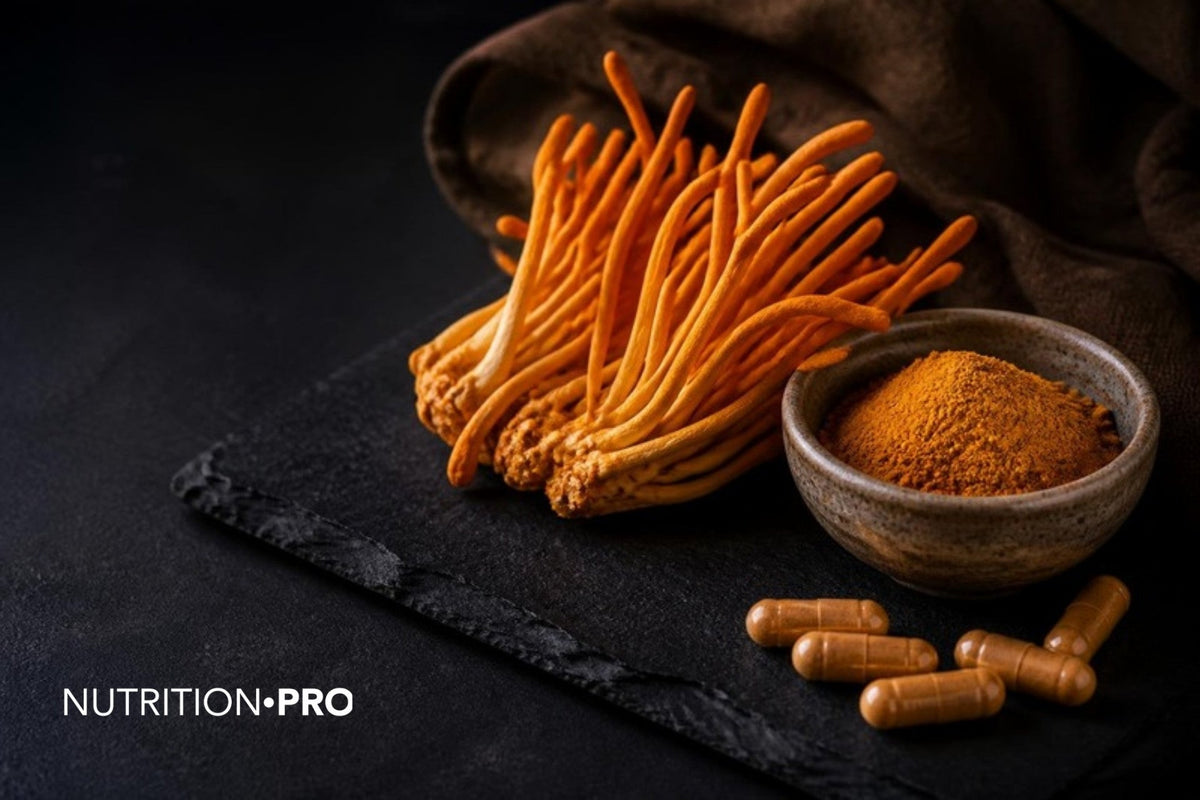
A fungus that grows on a caterpillar at 4,000 meters altitude, trades at a premium price, and is found in the capsules of athletes as well as in Chinese hospitals: cordyceps is like no other supplement. The studies are more measured: in the most cited trial among athletes, three weeks of a Cordyceps militaris mycelium-based blend increased VO2max by 4.8 mL per kilogram per minute, compared to 0.9 under placebo, in ten volunteers.
This guide sorts it out: why "sinensis," "militaris," "Cs-4," and "mycelium" don't refer to the same thing, then the studied benefits domain by domain, the doses from trials, side effects and interactions, and the criteria for a serious product.

: the strongest human data concerns immunity (NK cell activity +38.8% with 1.68 g per day of mycelium extract for 8 weeks, in 79 adults) and, more weakly, exercise tolerance (VO2max improved after 3 weeks of a Cordyceps militaris mycelium-based blend, no effect of Cs-4 in trained cyclists). Kidneys, blood sugar, and cancer come from Chinese trials in patients; testosterone, libido, and sleep are based on animal studies. Dosage and safety
: 1 to 4 g per day of mushroom or mycelium, 1.5 to 1.8 g of extracts, for 3 to 16 weeks in trials. Rare and mild adverse effects; the real dangers lie in counterfeit products (two lead poisoning cases published) and possible interactions with anticoagulants, antidiabetics, and immunosuppressants. Advised against during pregnancy and breastfeeding, due to lack of data. Medical information.
- Cordycepin, adenosine, polysaccharides: what the preparations contain
- Athletic performance and VO2max: what the trials show
- Immunity, recovery, and fatigue
- Kidneys, dialysis, and transplant: Chinese trials
- Blood sugar and lipids
- Sleep, stress, testosterone, and cancer: where research stands
- Cordyceps and women: studied benefits, pregnancy
- Dosage: trial doses and how to take it
- Dangers, side effects, and interactions
- How to choose, and why wild sinensis costs so much
- Frequently asked questions
- Quick answer
Cordyceps: one name, several fungi
The word "cordyceps" covers hundreds of species of fungi that parasitize insects; three types of preparations matter to consumers. Ophiocordyceps sinensis, long called Cordyceps sinensis, is the "caterpillar fungus" of Tibetan and Chinese medicine, the yartsa gunbu. It parasitizes butterfly larvae in high-altitude meadows of the Himalayas and cannot be cultivated in its entirety: manual and seasonal harvesting. In a study published in PNAS in 2018, collectors from four countries report declining production, attributed to habitat degradation, climate and especially overexploitation; the authors view it as one of the most expensive biological commodities in the world, which provides a livelihood for hundreds of thousands of collectors.
Cordyceps militaris is the cultivated species: it produces true orange fruiting bodies in a few weeks on controlled substrate and synthesizes much more cordycepin than sinensis. It is the form of most supplements sold in Europe and that of our Cordyceps, a 4:1 fruiting body extract.
Fermented mycelia form the third group: strains associated with wild fungus, cultivated in tanks, such as Cs-4, extracts of Paecilomyces hepiali and Chinese medical preparations of dried mycelium (Bailing, Jinshuibao, Corbrin). These, and not the wild fungus or militaris, provided most trials in renal, diabetic or cancer patients.
| Preparation | What it is | Where it is found in studies |
|---|---|---|
| Wild Ophiocordyceps sinensis | Fungus and caterpillar hand-harvested in the Himalayas; very low cordycepin (0.029% at most in an analysis of ten samples) | Very few clinical trials; chemical analysis, economics, authentication |
| Cultivated Cordyceps militaris | Cultivated fungus, whose fruiting body is rich in cordycepin (14.43 mg per gram in an analyzed strain) | Immunity (1.5 g of ethanol-treated C. militaris, part not specified, 4 weeks) |
| Cs-4, Paecilomyces hepiali and other mycelia | Fermented mycelia of strains associated with sinensis, in tablets or capsules; mycelium of C. militaris cultivated on grain | Seniors (1 g per day, 12 weeks), trained cyclists (3 g, 5 weeks), immunity (1.68 g, 8 weeks), performance (C. militaris mycelium on oats, blend, 4 g per day, 3 weeks) |
| Bailing, Jinshuibao, Corbrin | Chinese medical preparations of dried mycelium, prescribed at the hospital | Chronic kidney disease, transplant, diabetic nephropathy, lung cancer |
The series and game that popularized the word are inspired by a real species, Ophiocordyceps unilateralis, the "zombie ant fungus": a review published in Advances in Genetics describes how this parasite modifies the behavior of infected carpenter ants, which climb vegetation and fix themselves to it by the jaw before dying. This mechanism is specific to insects; the consumed species are age-old foods and remedies, and no human infection by cordyceps appears in the consulted studies.
Cordycepin, adenosine, polysaccharides: what the preparations contain
Three families of compounds are monitored: cordycepin (3'-deoxyadenosine), an adenosine analog isolated in 1950, with immunomodulatory and antiplatelet effects described in laboratory studies;adenosine and other nucleosides; polysaccharides, of variable structure depending on the strain and extraction method, which carry a large part of the immune activity measured in animals. Added to these are D-mannitol, ergosterol, carotenoids, GABA and ergothioneine (approximately 0.55 mg per gram of dry weight in militaris).
Cordycepin clearly distinguishes the species. In an HPLC-MS/MS analysis of ten samples, five authentic Ophiocordyceps sinensis and five substitute products, it represented only 0.0076 to 0.029% of the weight. A lyophilized fruiting body of C. militaris from a Vietnamese strain contained 14.43 mg per gram, or approximately 1.4%, and its ethanolic extract 69.15 mg per gram. The contents vary from one strain and cultivation method to another, hence the necessary analysis of each batch.
The mycelium of Ophiocordyceps sinensis cultivated in vitro does not synthesize cordycepin, or only in negligible quantities, and contains fewer amino acids and D-mannitol than fruiting bodies harvested in nature. Cultivated Cordyceps militaris displays cordycepin and polysaccharide contents superior to those of Ophiocordyceps sinensis harvested in nature. In the fruiting body, the external parts concentrate the most nucleosides, polysaccharides and carotenoids, and drying above 60°C causes loss of cordycepin and phenolic compounds.
Jędrejko KJ, Lazur J, Muszyńska B. Foods 2021;10(11):2634. DOI: 10.3390/foods10112634
Mycelium on grain or fruiting body? Many inexpensive powders are "mycelium on grain": mushroom cultivated on rice or oats, then ground with its substrate. The most cited performance trial (Hirsch 2017) actually used a C. militaris mycelium cultivated on oats, substrate included, in a mixture of six mushrooms; by design, the cereal substrate, thus starch, is part of this type of product. Conversely, some C. militaris mycelia produced in liquid fermentation are rich in cordycepin. The mushroom part alone guarantees nothing; analysis matters. Our Cordyceps is a 4:1 extract of C. militaris fruiting body, without mycelium or substrate; its fact sheet does not indicate cordycepin or polysaccharide content, so we make no promises about them.
Athletic performance and VO2max: what the trials say
This is the domain where cordyceps sells the most and where trials contradict each other the most: everything depends on the form, duration and level of the participants.
In 28 young active adults, one week of 4 g per day of a mushroom mixture whose main ingredient is a Cordyceps militaris mycelium cultivated on oats produced no significant difference from placebo for VO2max, ventilatory threshold or time to exhaustion (the latter improved by 28.1 s from baseline in the mushroom group). Ten volunteers continued for two more weeks: after 3 weeks, VO2max had increased by 4.8 mL per kilogram per minute, versus 0.9 under placebo; time to exhaustion (+69.8 seconds) and ventilatory threshold (+0.7 L per minute) only improved from baseline in the mushroom group.
Hirsch KR, Smith-Ryan AE, Roelofs EJ, et al. J Diet Suppl 2017;14(1):42-53. DOI: 10.1080/19390211.2016.1203386
This trial is therefore based on ten people and a mixture of six mushrooms. An older trial in seniors goes in the same direction: in 20 adults aged 50 to 75 in good health, 12 weeks of Cs-4 at 333 mg three times daily (1 g per day) increased the metabolic threshold by 10.5% (from 0.83 to 0.93 L per minute) and the ventilatory threshold by 8.5%, with no change under placebo; VO2max did not change in either group. The authors refer to this as a pilot study.
In 22 trained male endurance cyclists, 5 weeks of Cs-4 at 3 g per day modified neither peak VO2 (59.1 before, 57.1 mL per kilogram per minute after, versus 59.9 and 60.1 under placebo), nor ventilatory threshold, nor time trial performance (62.1 minutes versus 61.4): no effect on aerobic capacity or endurance performance in trained cyclists.
Parcell AC, Smith JM, Schulthies SS, et al. Int J Sport Nutr Exerc Metab 2004;14(2):236-242. DOI: 10.1123/ijsnem.14.2.236
In 17 amateur competitive cyclists, two weeks of a commercial formula (1,000 mg of Cs-4 and 300 mg of rhodiola extract per three capsules, after a loading dose of 6 capsules daily for 4 days) modified neither peak VO2 (4.14 versus 4.10 L per minute), nor time to exhaustion, nor maximum power.
A 2026 narrative review examined five intervention studies with Cordyceps militaris in healthy subjects between 2017 and 2024: 321 participants aged 16 to 35, 1 to 12 g per day, 1 to 16 weeks. Its authors judge the results inconsistent: no study at low risk of bias, four out of five not registered, uncharacterized mixtures or preparations. Honest assessment: a favorable signal on exercise tolerance after at least 3 weeks in active non-competitive subjects, nothing demonstrated in endurance athletes. Our article on cordyceps and athletic performance reviews each trial; our analysis of 13 trials on rhodiola sheds light on combined formulas.
Immunity, recovery and fatigue
In 79 healthy adults, 8 weeks of 1.68 g daily of a Paecilomyces hepiali mycelium extract in capsules increased NK cell cytotoxic activity by 38.8% compared to placebo, with inflammation markers trending downward. The trial was registered (NCT02814617).
Jung SJ, Jung ES, Choi EK, et al. BMC Complement Altern Med 2019;19(1):77. DOI: 10.1186/s12906-019-2483-y
Three preparations show agreement in healthy adults. In 79 Korean men, 4 weeks of 1.5 g daily of Cordyceps militaris ethanol-treated, in capsules, increased NK cell activity more than placebo, lymphocyte proliferation and interleukin-2 and interferon gamma secretion, without significant adverse effects. In 40 Thai adults (10 men and 10 women per group), 8 weeks of a fermented C. militaris beverage providing 2.85 mg of cordycepin increased NK activity from baseline in men as early as 4 weeks, and compared to placebo in women at 8 weeks; blood glucose, lipids and safety markers remained unchanged.
These trials measure laboratory markers, not prevented infections: no one counted colds, a common limitation for "immunity" supplements, see our guide on immunity: what really works, alongside other functional mushrooms.
Recovery. In 22 endurance runners, 16 weeks of 1,800 mg daily of a C. militaris mycelium extract in preseason better preserved ferritin, hemoglobin and hematocrit than placebo, and lowered creatine kinase, a marker of muscle damage, at 16 weeks; race distances and times did not differ.
Fatigue. No randomized trial identified in PubMed measured perceived fatigue as a primary endpoint with cordyceps alone: the "anti-fatigue" reputation rests on tradition, animal studies and the indirect markers above. Persistent fatigue: see our guide to plants and nutrients validated against chronic fatigue.
Kidneys, dialysis and transplant: the Chinese trials
In 22 studies totaling 1,746 participants with chronic kidney disease, cordyceps preparations added to conventional treatment lowered serum creatinine by 60.76 µmol/L (14 studies), increased creatinine clearance by 9.22 mL per minute (6 studies) and reduced proteinuria by 0.15 g per 24 hours (4 studies). High risk of bias in 4 studies, uncertain in 18: the authors refuse any definitive conclusion.
Zhang HW, Lin ZX, Tung YS, et al. Cochrane Database Syst Rev 2014;2014(12):CD008353. DOI: 10.1002/14651858.CD008353.pub2
For diabetic nephropathy, a meta-analysis of 51 trials (3,955 patients) compared Jinshuibao added to ACE inhibitors or sartans to these drugs alone: creatinine lowered by an additional 13.84 µmol/L, 24-hour proteinuria reduced, systolic blood pressure by 4.57 mmHg and fasting blood glucose by 0.85 mmol/L. These are intermediate markers, not progression to dialysis.
In kidney transplant recipients, the 2015 Cochrane review (5 studies, 447 recipients) finds, compared to azathioprine, no difference in graft or patient survival, but better graft function and possibly fewer acute rejections, anemia, leukopenia and liver damage; combined with a reduced dose of cyclosporine, cordyceps showed no difference from standard dose. Follow-up of one year maximum, risk of bias uncertain throughout.
They involve patients, Chinese medical preparations at several grams daily, in addition to treatment, under medical supervision. They do not show that a supplement "protects the kidneys" of a healthy person and never justify modifying treatment. For transplant or dialysis patients, cordyceps involves a medical decision, not an online purchase.
Blood glucose and lipids
The blood glucose reductions from renal meta-analyses (fasting blood glucose −0.85 mmol/L, HbA1c −0.52 points, total cholesterol and triglycerides −0.53 mmol/L in the synthesis of 51 trials on Jinshuibao) come from diabetics with nephropathy. The picture changes outside this context.
In 84 Australian patients with type 2 diabetes and metabolic syndrome, 16 weeks of 3 g daily of Ganoderma lucidum, with or without Cordyceps sinensis, had no effect on HbA1c (difference of 0.13 points) nor on fasting blood glucose (0.03 mmol/L), nor on any secondary endpoint, without increased adverse effects.
Klupp NL, Kiat H, Bensoussan A, et al. Sci Rep 2016;6:29540. DOI: 10.1038/srep29540
In the Thai trial of C. militaris drink in healthy adults, blood sugar and lipids also remained stable. High blood sugar: documented options are elsewhere, see our guide to plants and nutrients studied for blood sugar.
Sleep, stress, testosterone and cancer: where does the research stand
Testosterone and sexual function. The aphrodisiac reputation rests on animal studies. In rats made diabetic, 21 days of Cordyceps militaris at 100 mg per kilogram improved sperm, serum testosterone and copulatory behavior, by reducing testicular oxidative stress. No randomized trial in humans has measured testosterone or erectile function with cordyceps alone, and in 21 active young men, a multi-ingredient supplement based on rhodiola and Cordyceps sinensis taken for 14 weeks did not modify the hormonal profile. Our article on natural testosterone boosters explains why these extrapolations warrant caution.
Sleep and stress. Human data practically nonexistent. In ovariectomized and stressed female rats, a menopause model, injected cordycepin reduced sleep latency, increased slow-wave sleep and decreased depressive-like behaviors. In humans, cortisol decreased by 11% over 14 weeks in the combined training trial, equally under placebo as under the multi-ingredient supplement rhodiola and Cordyceps sinensis.
For sleep and nervous fatigue, trials mainly concern reishi (Ganoderma lucidum). In a multicenter double-blind trial in 132 neurasthenic patients, 8 weeks of a polysaccharide extract at 1,800 mg three times daily reduced fatigue sensation by 28.3%, versus 20.1% under placebo, and 51.6% of patients were considered improved versus 24.6%. A short trial, with a specific preparation, detailed along with others in our article on reishi benefits ; its precautions are in reishi: dangers and side effects.

Cordyceps is studied as an adjuvant, never as a treatment. A meta-analysis of 12 Chinese trials (928 patients, lung cancer) reports, as a complement to conventional treatments, a higher tumor response rate (relative risk 1.17), a better Karnofsky score (+8.20 points), less myelosuppression (relative risk 0.38) and radiation pneumonitis (0.74), with a subgroup at 6 g per day of medicinal preparations. In practice: never without the oncologist, never instead of treatment. Sought benefit
| Level of evidence in humans | Form and dose studied | Immunity (NK cells) |
|---|---|---|
| 3 randomized trials in healthy adults, biological markers only | Militaris 1.5 g per day 4 weeks; P. hepiali mycelium 1.68 g 8 weeks; fermented drink 8 weeks | Exercise tolerance, VO2max |
| Positive after 3 weeks in 10 active non-competitive subjects and in 20 seniors; negative in trained cyclists | Mixture based on militaris mycelium on oat 4 g; Cs-4 1 g (seniors) or 3 g (cyclists) | Muscle recovery |
| Markers (ferritin, creatine kinase) in 1 small trial | Militaris mycelium extract 1,800 mg 16 weeks | Kidney function |
| Dozens of trials in patients, low quality according to Cochrane | Chinese medicinal preparations of mycelium, several grams per day | Préparations médicales chinoises de mycélium, plusieurs grammes par jour |
| Blood sugar, lipids | Effect in diabetic kidney patients; no effect in a 16-week Australian trial | Jinshuibao; reishi 3 g with or without Cordyceps sinensis |
| Testosterone, libido | Animal studies only | Militaris 100 mg per kilo in rats |
| Sleep, stress, cognition | Animal studies for sleep; cortisol decreased by 11%, identical to placebo, in 21 men | Injected cordycepin (female rats); multi-ingredient supplement rhodiola and Cordyceps sinensis 14 weeks |
| Cancer (adjuvant) | 12 Chinese trials, lung cancer, in addition to standard treatments | Cordyceps sinensis preparations, 6 g per day |
Cordyceps and women: studied benefits, pregnancy
The search "cordyceps benefits for women" is frequent; the honest answer is brief: no oral trial was designed for women. The Thai trial on fermented C. militaris beverage analyzed the sexes separately: in the 10 women, NK cell activity increased compared to placebo at 8 weeks, with a decrease in interleukin-6. The 2017 trial on the militaris mycelium-based blend included participants of both sexes, without separate analysis. Nothing indicates that the effect differs by sex, although sample sizes do not allow us to confirm this, and the menopause model in female rats (cordycepin, sleep, mood) remains animal-based.
No safety study exists for cordyceps in pregnant or breastfeeding women, and animal studies describe hormonal effects. Due to lack of data, it is not recommended during pregnancy and breastfeeding, as indicated in the precautions for our Cordyceps and our Reishi; if you are planning a pregnancy, this is the time to discuss it with your doctor or midwife.
Dosage: trial doses and how to take it
No official dose; trials provide guidelines, without mixing forms. Cs-4 and fermented mycelia : 1 g per day for 12 weeks in seniors, 3 g per day for 5 weeks in cyclists (no effect), 1.68 g of P. hepiali extract for 8 weeks (immunity). Cordyceps militaris : 1.5 g per day for 4 weeks (immunity), 4 g per day of a C. militaris mycelium blend cultivated on oats for 3 weeks (performance), 1,800 mg per day of mycelium extract for 16 weeks (runners). Chinese medical preparations : several grams per day, up to 6 g in oncology, under medical supervision.
Duration is the clearest parameter: in the 2017 trial, one week produced no significant difference from placebo, three weeks produced the effect on VO2max; immunity trials last 4 to 8 weeks, the one in seniors 12 weeks. A course of at least 30 days therefore makes sense. Timing of intake has not been compared: studies distributed it throughout the day or gave it all at once, often with a meal; nothing requires taking it on an empty stomach or away from coffee, a point not studied. Our Cordyceps is taken at a rate of 2 capsules per day, or 1,800 mg of 4:1 extract from C. militaris fruiting body, in the morning or 30 to 60 minutes before exercise; this amount matches the 1,800 mg of mycelium extract from the runner trial, but the preparation is different (4:1 concentrated fruiting body extract here, unknown ratio for the Japanese trial, 1.5 g mushroom powder for the Korean trial) and no trial has tested our product itself.
Dangers, side effects and interactions
In trials, cordyceps is well tolerated. In 49 adults taking 1.05 g per day of freeze-dried mycelium of Cordyceps cicadae (related species) for 3 months, kidney and liver function, electrolytes and lipids did not change, with no adverse effects reported. In the Korean trial at 1.5 g of militaris, no significant adverse reactions; in the Thai trial, liver, kidney and blood markers remained normal. Mild digestive disturbances remain possible.
Two cases of lead poisoning attributed to cordyceps powder taken as a remedy were identified by a blood lead surveillance program in Taiwan. One patient, with a blood lead level of 130 µg/dL, presented with loss of appetite and signs of anemia; the other, at 46 µg/dL, was asymptomatic. The powder contained up to 20,000 ppm of lead. Stopping the product, with chelation therapy for the symptomatic patient, normalized blood lead levels.
Wu TN, Yang KC, Wang CM, et al. Sci Total Environ 1996;182(1-3):193-195. DOI: 10.1016/0048-9697(96)05054-1
These cases illustrate the main danger: fraud, not the mushroom. Wild sinensis is so expensive that its supply chain is rife with errors of origin, substitutions, counterfeits and artificially "enhanced" products, according to a 2025 review on its traceability; the 2026 review on militaris also recalls supplements where anabolic steroids had replaced the mushroom. A traced product, tested for heavy metals and sold under the name of the cultivated species, escapes most of the risk.
Interactions. They are inferred from mechanisms and trials, not from published accidents. Anticoagulants and antiplatelet agents : an extract of C. militaris enriched in cordycepin inhibits platelet aggregation in rats and thrombus formation in mice, without modifying coagulation time; caution with these treatments and before surgery. Antidiabetic agents : the meta-analysis in renal patients shows reductions in blood glucose, hence monitoring during treatment. Immunosuppressants and autoimmune diseases : in China, cordyceps is used to modulate immunity in transplant recipients, and trials in healthy subjects stimulate NK cells; nothing is decided here without medical advice.
To avoid : pregnancy, breastfeeding, children, mushroom allergy. Medical advice mandatory : anticoagulant or antiplatelet agent, antidiabetic, immunosuppressant, transplant, autoimmune disease, kidney disease, cancer undergoing treatment, scheduled surgery. Athletes subject to testing : cordycepin is not, to our knowledge, on the World Anti-Doping Agency's prohibited list, but contamination of supplements with prohibited substances is documented; verify the composition with your federation and keep the batch, see our guide to prohibited products in sport. Warning signs : unusual bleeding, malaise suggestive of hypoglycemia, persistent digestive disturbances, rash: stop and consult.
How to choose, and why wild sinensis costs so much
Price first. Wild sinensis cannot be fully cultivated, is hand-harvested for only a few weeks per year and its production is declining; its quality varies by region, hence highly variable prices and a counterfeit industry. Cultivated Cordyceps militaris is far less expensive, standardizable and much richer in cordycepin: for a supplement, wild has no documented advantage, but proven fraud risk.
Five criteria for reading a label. 1. The species, in Latin : Cordyceps militaris or Ophiocordyceps sinensis, and for fermented mycelia the strain name; "cordyceps" without species tells you nothing about the content. 2. The part used : fruiting body, pure mycelium or mycelium on grain, in which case the substrate is part of the product. 3. Extract or powder, and the ratio : a 4:1 extract means that 4 kg of raw material yielded 1 kg of extract; it concentrates the extractable compounds, without guaranteeing content by itself alone. 4. Analyzed content levels : cordycepin, adenosine or polysaccharides, with the method and batch number; an absence of figures is assumed, it cannot be compensated by a promise. 5. Origin and quality controls : cultivation location, tests for heavy metals, pesticides, microbiology, and for wild sinensis an authentication, given how frequent substitutions are.
Our Cordyceps is a concentrated 4:1 extract of Cordyceps militaris fruiting body, 1,800 mg per 2 HPMC vegetable capsules, with no cordycepin content displayed: we won't invent any. Our Lion's Mane provides 1,500 mg of 4:1 extract of Hericium erinaceus (fruiting body) per 2 capsules, with the same precautions, and our guide to medicinal mushrooms compares the five best-studied species.
A concentrated 4:1 extract of Cordyceps militaris, derived from the fruiting body and not from mycelium, in HPMC vegetable capsules. Two capsules per day provide 1,800 mg of extract, in the morning or 30 to 60 minutes before exertion, in a course of at least 30 days, as studies measured an effect after 3 to 4 weeks. No GMO, gluten-free, lactose-free, vegan. Reserved for adults, not recommended during pregnancy and breastfeeding.View Cordyceps
OurReishi , extract of Ganoderma lucidum to be taken in the evening, complements cordyceps taken in the morning.Frequently asked questions
What are the benefits of cordyceps according to studies?
In healthy adults, three randomized trials show an increase in NK cell activity, of 38.8% with 1.68 g per day of mycelium extract for 8 weeks in the most clear case. On performance, a mixture based on Cordyceps militaris mycelium at 4 g per day increased VO2max after 3 weeks in 10 subjects; two trials in trained cyclists were negative. Kidneys, blood sugar, and cancer are covered by trials in patients, as a complement to treatment.
Cordyceps sinensis or Cordyceps militaris: what's the difference?
Ophiocordyceps sinensis is the wild Himalayan fungus, harvested from caterpillars, very expensive and very low in cordycepin (0.0076 to 0.029% in ten analyzed samples, five authentic and five substitute products). Cordyceps militaris is cultivated in a few weeks and contains much more cordycepin (14.43 mg per gram in an analyzed strain). Most clinical trials used fermented mycelia such as Cs-4.
Is cordyceps dangerous for humans?
No in the sense of fiction: Ophiocordyceps unilateralis, the fungus that manipulates ants, does not infect humans, and the consumed species are food items. Real risks: contaminated products (two lead poisoning cases published), interactions with anticoagulants, antidiabetics, and immunosuppressants, and lack of data during pregnancy.
What dose of cordyceps should be taken per day?
Trials used 1 g per day of Cs-4, 1.5 g of Cordyceps militaris, 1.68 to 1.8 g of mycelium extracts, and 4 g per day of a mixture based on militaris mycelium, for 3 to 16 weeks. There is no official dose; follow the manufacturer's recommendation for their preparation and expect 3 to 4 weeks before judging.
What are the side effects of cordyceps?
Rare and mild in trials: in 49 adults taking 1.05 g of Cordyceps cicadae mycelium per day for 3 months, no adverse effects or changes in kidney and liver function. Mild digestive troubles remain possible. Precautions mainly concern drug interactions, autoimmune diseases, transplantation, pregnancy, and mushroom allergies.
Does cordyceps really improve VO2max?
In only one trial, on 10 people: after 3 weeks of 4 g per day of a mixture based on Cordyceps militaris mycelium, VO2max increased by 4.8 mL per kilogram per minute compared to 0.9 under placebo; one week showed no significant difference from placebo. In 22 trained cyclists, 5 weeks of Cs-4 at 3 g per day changed nothing.
Does cordyceps increase testosterone?
In rats, yes: 21 days of Cordyceps militaris at 100 mg per kilogram increased testosterone and improved sperm in diabetic rats. In humans, no randomized trial measured testosterone with cordyceps alone, and a multi-ingredient supplement based on rhodiola and Cordyceps sinensis taken for 14 weeks by 21 active young men did not alter the hormonal profile.
Does cordyceps help with sleep?
Human data is lacking. In female rats, in a menopause model, injected cordycepin reduced sleep latency and prolonged slow-wave sleep. For nervous fatigue, trials concern rather reishi: in 132 neurasthenic patients, 8 weeks of Ganoderma lucidum extract reduced fatigue by 28.3% compared to 20.1% under placebo.
Les données humaines manquent. Chez des rates, dans un modèle de ménopause, la cordycépine injectée a réduit la latence d'endormissement et allongé le sommeil lent. Pour la fatigue nerveuse, les essais concernent plutôt le reishi : chez 132 patients neurasthéniques, 8 semaines d'extrait de Ganoderma lucidum ont réduit la fatigue de 28,3 % contre 20,1 % sous placebo.
What are the benefits of cordyceps for women?
No oral trial has been specifically designed for women. In a mixed Thai trial, 8 weeks of a fermented Cordyceps militaris beverage increased NK cell activity in the 10 women in the group compared to placebo. Cordyceps is not recommended during pregnancy and breastfeeding, due to lack of data.
Can you take cordyceps with an anticoagulant or antidiabetic medication?
Not without medical advice. A cordycepin-rich Cordyceps militaris extract inhibits platelet aggregation in animals, and meta-analyses in diabetic renal patients show decreases in fasting blood glucose (0.85 mmol/L) and HbA1c (0.52 points). These effects may add to those of treatments. The same caution applies to immunosuppressants and autoimmune diseases.
Sources
The studies cited below were identified via PubMed.
- Hirsch KR, Smith-Ryan AE, Roelofs EJ, et al. Cordyceps militaris improves high-intensity exercise tolerance after acute and chronic supplementation. Journal of Dietary Supplements, 2017;14(1):42-53. DOI
- Jung SJ, Jung ES, Choi EK, et al. Immunomodulatory effects of a Cordyceps mycelium extract (Paecilomyces hepiali, CBG-CS-2): randomized, double-blind clinical trial. BMC Complementary and Alternative Medicine, 2019;19(1):77. DOI
- Wu TN, Yang KC, Wang CM, et al. Lead intoxication caused by contaminated Cordyceps, a Chinese remedy: two cases. Science of the Total Environment, 1996;182(1-3):193-195. DOI
- Chen S, Li Z, Krochmal R, et al. Effect of Cs-4 (Cordyceps sinensis) on exercise performance in healthy elderly subjects: a double-blind, placebo-controlled trial. Journal of Alternative and Complementary Medicine, 2010;16(5):585-590. DOI
- Hu H, Xiao L, Zheng B, et al. Identification of chemical markers of Cordyceps sinensis by HPLC-MS/MS. Analytical and Bioanalytical Chemistry, 2015;407(26):8059-8066. DOI
- Vu TX, Tran TB, Vu HH, et al. An ethanolic extract of Cordyceps militaris HL8 fruiting bodies exhibits cytotoxic activities against cancer cells, pathogenic skin yeasts and postharvest pathogen Penicillium digitatum. Archives of Microbiology, 2024;206(3):97. DOI
- Hopping KA, Chignell SM, Lambin EF. Decline of the caterpillar fungus in the Himalayan region under climate change and overexploitation. Proceedings of the National Academy of Sciences of the United States of America, 2018;115(45):11489-11494. DOI
- Kang HJ, Baik HW, Kim SJ, et al. Cordyceps militaris enhances cellular immunity in healthy Korean men. Journal of Medicinal Food, 2015;18(10):1164-1172. DOI
- Ontawong A, Pengnet S, Thim-Uam A, et al. Randomized controlled clinical trial on the effects of a Cordyceps militaris beverage on immune response in healthy adults. Scientific Reports, 2024;14(1):7994. DOI
- Parcell AC, Smith JM, Schulthies SS, et al. Cordyceps sinensis (Cs-4) supplementation does not improve endurance performance. International Journal of Sport Nutrition and Exercise Metabolism, 2004;14(2):236-242. DOI
- Hughes DP, Araújo JP, Loreto RG, et al. From such a simple beginning: the evolution of behavioral manipulation by fungi. Advances in Genetics, 2016;94:437-469. DOI
- Jędrejko KJ, Lazur J, Muszyńska B. Cordyceps militaris: an overview of its chemical constituents in relation to biological activity. Foods, 2021;10(11):2634. DOI
- Earnest CP, Morss GM, Wyatt F, et al. Effects of a commercial herbal formula on exercise performance in cyclists. Medicine and Science in Sports and Exercise, 2004;36(3):504-509. DOI
- Jędrejko M, Jędrejko K, Granda D, et al. Current evidence on ergogenic and post-exercise recovery effects of Cordyceps militaris supplementation in humans: a narrative review. Nutrients, 2026;18(5):781. DOI
- Nakamura A, Shinozaki E, Suzuki Y, et al. Effect of Cordyceps militaris mycelium extract administration on blood markers of anemia in long-distance runners. Nutrients, 2024;16(12):1835. DOI
- Zhang HW, Lin ZX, Tung YS, et al. Cordyceps sinensis (traditional Chinese medicine) in the treatment of chronic kidney disease. Cochrane Database of Systematic Reviews, 2014;2014(12):CD008353. DOI
- Li Y, Xu G. Clinical efficacy and safety of Jinshuibao combined with ACE inhibitors/ARBs in the treatment of diabetic nephropathy: a meta-analysis of randomized trials. Journal of Renal Nutrition, 2020;30(2):92-100. DOI
- Hong T, Zhang M, Fan J. Cordyceps sinensis (traditional Chinese medicine) in kidney transplant recipients. Cochrane Database of Systematic Reviews, 2015;2015(10):CD009698. DOI
- Klupp NL, Kiat H, Bensoussan A, et al. Randomized double-blind placebo-controlled trial of Ganoderma lucidum for the treatment of cardiovascular risk factors in metabolic syndrome. Scientific Reports, 2016;6:29540. DOI
- Nguyen TV, Chumnanpuen P, Parunyakul K, et al. Study of aphrodisiac properties of Cordyceps militaris in male rats made diabetic by streptozotocin. Veterinary World, 2021;14(2):537-544. DOI
- Kreipke VC, Moffatt RJ, Tanner CJ, Ormsbee MJ. Effects of combined training and a multi-ingredient supplement containing Rhodiola rosea and Cordyceps sinensis on body composition, performance and health in active men. Journal of Dietary Supplements, 2021;18(6):597-613. DOI
- Ye MS, Lee SC, Kim SK, Shim I. Evaluation of antidepressant and sleep-promoting effects of cordycepin in a menopause-like stress model. Biomedicine and Pharmacotherapy, 2025;193:118766. DOI
- Tang W, Gao Y, Chen G, et al. Randomized double-blind placebo-controlled study of a polysaccharide extract of Ganoderma lucidum in neurasthenia. Journal of Medicinal Food, 2005;8(1):53-58. DOI
- Wang C, Wang J, Qi Y. Adjuvant treatment with Cordyceps sinensis in lung cancer: systematic review and meta-analysis of randomized trials. Journal of Ethnopharmacology, 2024;327:118044. DOI
- Tsai YS, Hsu JH, Lin DP, et al. Safety evaluation of Cordyceps cicadae mycelium enriched in HEA: randomized clinical trial. Journal of the American College of Nutrition, 2021;40(2):127-132. DOI
- Meng G, Wang F, Dong C. Chinese cordyceps products, geographic traceability and authenticity assessment: current state, challenges and perspectives. Critical Reviews in Biotechnology, 2025;45(7):1435-1453. DOI
- Kwon HW, Shin JH, Lim DH, et al. Antiplatelet and antithrombotic effects of WIB-801CE enriched in cordycepin from Cordyceps militaris ex vivo, in vivo and in vitro. BMC Complementary and Alternative Medicine, 2016;16(1):508. DOI


