

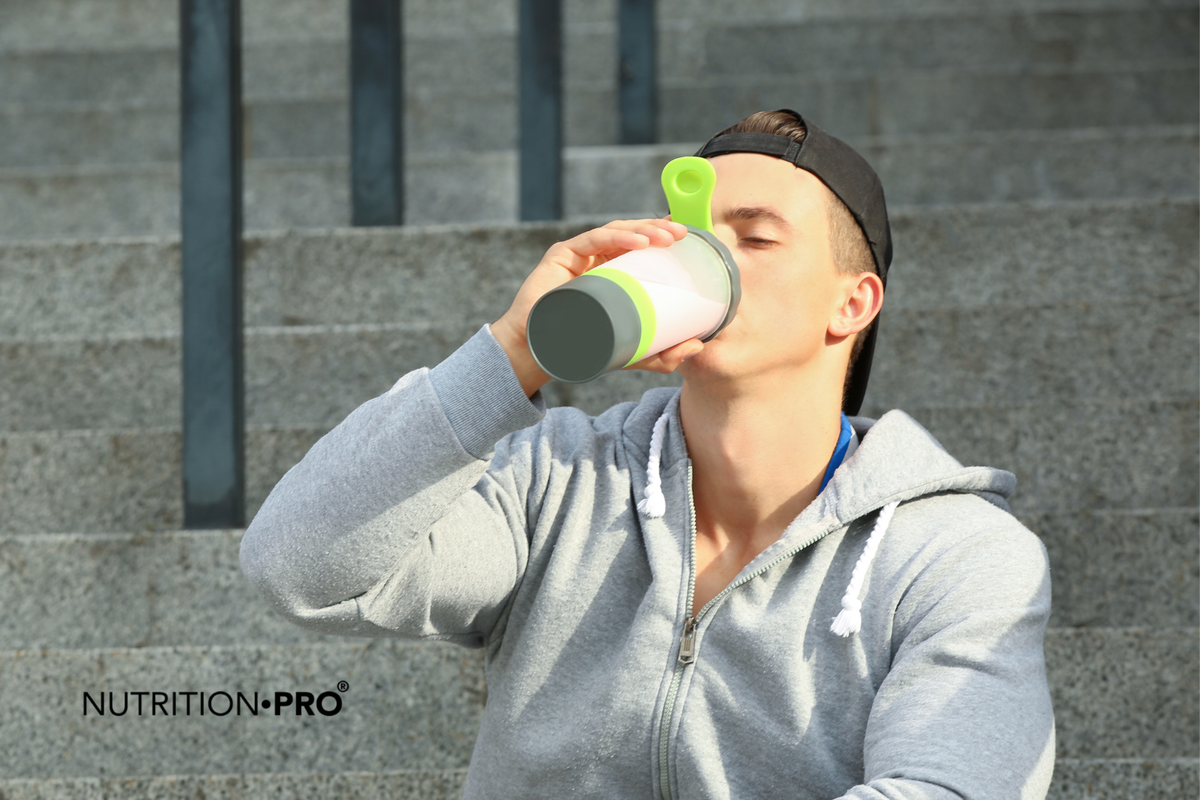
Mass gainers have a bad reputation, and not entirely without reason: it's the product you buy to get results faster, and it's the one with which you most often gain fat. But the question isn't whether mass gainer is good or bad. It's about knowing for whom it makes sense, and under what conditions.
This guide reports what trials show about muscle gain: the only randomized trial that compared a small and large caloric surplus, the meta-analysis that sets the useful protein ceiling, the review that admits the ideal surplus size has never been validated, and the ISSN position on meal frequency. It then deduces the precise profile for whom a gainer is the right tool, and how to dose it by scale rather than by label.

The surplus. The only randomized trial comparing surplus sizes, 21 trained participants over eight weeks, concluded that a surplus of 15% increases mainly skin folds compared to a 5% surplus, without additional muscle thickness gain. A review from the Australian Institute of Sport admits that the ideal surplus size has never been validated. Protein. The meta-analysis of 49 trials sets the useful ceiling at approximately 1.6 g per kilo per day; beyond that, no additional lean mass gain.
The gainer. It provides nothing that builds muscle by itself: it provides calories and protein in an easy format. It makes sense for one type of person : someone who trains, whose weight isn't increasing, and who can't eat more. For them, it should be dosed by scale aiming for slow gains. For everyone else, food is sufficient, and whey if protein is lacking.
What a gainer is, and what it is not
A gainer is a mixture of carbohydrates and protein, with a ratio that typically ranges from two to four parts carbohydrates for one part protein. Its function is quantitative : to provide calories and protein in a liquid volume, easier to consume than an additional meal. It contains no ingredient that builds muscle by itself. It'sresistance training that builds muscle; the gainer supplies part of the energy and materials, just as an extra meal would.
This distinction changes how to evaluate it. You don't ask a gainer if it "works": you ask whether the person taking it needed extra calories, and if so, whether this format was the right way to deliver them. The rest of the article answers these two questions with what the trials have measured.
The surplus: what the only randomized trial shows
Twenty-one trained practitioners performing resistance training three days per week for eight weeks were randomized between energy maintenance, a moderate surplus of 5 percent, and a high surplus of 15 percent, to determine whether skinfolds, maximum squat and bench press, or biceps, triceps, and quadriceps thickness differed between groups. Between-group analysis provided no evidence for a difference in muscle thickness or squat performance. The high surplus increased bench press more than the other two groups, but also increased skinfolds more than maintenance. Regression analysis provided strong evidence that body weight change predicts skinfold change, and weak evidence that it predicts biceps thickness. The authors conclude that faster weight gain, and thus a larger surplus, mainly increases the rate of fat gain rather than strength or muscle thickness.
Helms ER, Spence AJ, Sousa C, et al. Sports Med Open 2023;9(1):102. DOI: 10.1186/s40798-023-00651-y
It's a small trial, as its authors acknowledge, and it involved practitioners trained for only eight weeks. But it's the only one to have compared surplus sizes in a randomized fashion, and its result contradicts the intuition that sells gainers: tripling the surplus did not triple muscle gain. It mainly accelerated fat gain. The only signal in favor of a large surplus concerns the biceps, the muscle most targeted by the program, and it is weak.
A review published in Frontiers in Nutrition by researchers from the Australian Institute of Sport poses the question in its title: is an energy surplus necessary to maximize hypertrophy? Its answer is honest. There is clear evidence of an anabolic stimulus linked to a surplus, even without training. But the precise surplus needed has never been validated in a trained population, and current recommendations are based on the energy theoretically stored in tissue, without accounting for other costs of muscle synthesis or the metabolic adjustments the body makes in response to excess. No one knows the optimal balance point between muscle and fat. What we do know is that faster is not better.
Proteins: the ceiling of 1.6 g per kilogram
Data from 49 studies and 1,863 participants show that dietary protein supplementation significantly increases strength gains, with a maximum of 2.49 kg more on a single repetition, lean mass gains of 0.30 kg more, and muscle size, during prolonged periods of resistance training. The impact of supplementation on lean mass gains decreases with age and is greater in trained individuals. Supplementation beyond a total protein intake of 1.62 g per kilogram per day resulted in no additional training-induced lean mass gains.
Morton RW, Murphy KT, McKellar SR, et al. Br J Sports Med 2018;52(6):376-384. DOI: 10.1136/bjsports-2017-097608
Two consequences for the gainer user. First, proteins matter : supplementation increases strength and lean mass, and more so in trained practitioners. Second, they matter up to a ceiling : approximately 1.6 g per kilogram of body weight per day, combining dietary intake and supplements. Beyond that, no additional gains. A 75 kg man therefore reaches his ceiling at around 120 g of protein per day; what he already eats often approaches this amount, and what the gainer adds must be counted toward it, not in addition to it.
The International Society of Sports Nutrition's position on nutrient timing completes the picture: what matters first is thetotal daily intake, distributed in doses spaced approximately three hoursapart, with 20 to 40 g of quality protein per serving to maximize protein synthesis. The precise timing of intake matters less than this distribution.
Gainer or whey: the only question that matters
The "gainer or whey" question has a simple answer once properly framed. If you eat enough calories but your proteins are below the 1.6 g per kilogram ceiling, your problem is protein-related : a whey isolate provides nearly 23 g of protein for 117 kcal, without excess you don't need. If you can't reach the caloric intake that moves the scale despite proper nutrition, your problem is caloric : a gainer provides calories and protein together, and our Lean Gainer delivers 189 kcal and 12.6 g per serving.
| Per serving | Whey 100% isolate, 30 g | Lean Gainer Mass, 50 g |
|---|---|---|
| Calories | 117 kcal | 189 kcal |
| Proteins | 22.9 g | 12.6 g |
| Carbohydrates | 1.8 g | 32.1 g, of which 16.4 g sugars |
| Fats | 2.0 g | 1.0 g |
| The problem it solves | Insufficient protein, sufficient calories | Insufficient calories despite efforts |
| The classic mistake | Taking it when weight isn't increasing | Taking it when you're already eating enough |
Taking a weight gainer when the problem is protein-related, or when you're already eating enough, adds 190 to 400 kcal per day that your body doesn't need. Helms' study shows what happens to it: fat, and faster. It's not the product that's the issue, it's the diagnosis. A weight gainer is a tool for a specific problem, and most people who buy one don't have that problem.
For whom, and how to dose it
The profile for whom a weight gainer makes sense is specific. Someone who trains seriously in resistance, whose weight stalls or drops despite real dietary efforts, and who physically cannot eat more, due to lack of appetite, time, or volume. The review in Frontiers in Nutrition explicitly names satiety management as a practical problem when seeking to increase energy intake. For this person, a liquid calorie works where a fourth meal does not.
189 kcal, 32 g carbohydrates and 12.6 g protein per 50 g dose in 300 ml water. A 2.5 to 1 ratio, more moderate than classic gainers, designed to add calories in small increments and adjust by the scale week after week. For the athlete whose weight isn't increasing despite their efforts, count it toward your total protein intake.
View the Lean GainerIf the problem is protein rather than calories, whey isolate is the right choice. Not suitable in case of overweight, diabetes, or eating disorder.
Choose what sounds most like you: the answer appears just below.
This is exactly the profile: training in place, already adequate intake, weight that won't increase, and a physical limit to eating more. One dose per day in place of the meal you're skipping, weekly weigh-ins, adjustment by half-dose. Count its 12.6 g protein toward your total of around 1.6 g per kilogram.
Your problem is protein, not calories. A gainer would add calories you don't need, and the Helms study says what they become. A whey isolate provides nearly 23 g protein for 117 kcal: it's what brings you closer to the 1.6 g per kilogram ceiling without unnecessary surplus.
Your surplus is already too large: the fat gain shows it. Adding a gainer would accelerate it. Instead, reduce the surplus until gaining approximately 0.25 to 0.5% of body weight per week, verify your protein is around 1.6 g per kilogram, and let training do the sorting.
Without resistance training, the surplus has no reason to become muscle. A gainer would make you gain weight, but not the kind you're looking for. Start with the training program, two to three sessions per week; the gainer question will come up later, and only if weight doesn't follow.
This test provides guidance; it does not replace professional health advice.
Frequently asked questions
The principle
What is a gainer?
A powder that mixes carbohydrates and protein, typically in a ratio of two to four parts carbohydrates to one part protein, designed to increase daily caloric intake. Its function is purely quantitative: to provide calories and protein in a volume and format that are easy to consume, for people who cannot eat enough solid food. It contains nothing that builds muscle by itself; resistance training builds muscle, and the gainer supplies part of the energy and raw materials.
Do you need a caloric surplus to build muscle?
A surplus helps, but its ideal size is unknown. A review published in Frontiers in Nutrition by researchers from the Australian Institute of Sport notes that there is clear evidence of an anabolic stimulus linked to an energy surplus, even without training, but that the precise surplus needed for hypertrophy has never been validated in a trained population. Current recommendations are based on the energy theoretically stored in tissue, without accounting for other costs of muscle synthesis or metabolic adjustments to a surplus. In other words, no one knows the optimal balance point between muscle gain and fat gain.
Does a large surplus build more muscle?
No, it mostly builds more fat. This is the result of the only randomized trial comparing different surplus sizes: 21 trained practitioners, eight weeks of strength training three times per week, divided between caloric maintenance, a moderate 5% surplus, and a high 15% surplus. Group analysis showed no difference in muscle thickness or maximum squat; the high-surplus group made more progress on bench press, but also increased their skinfolds more. Regression analysis, which is more robust, concludes that faster weight gain, meaning a larger surplus, increases the rate of fat gain more than strength or muscle thickness.
How much protein do you need to build muscle?
The reference meta-analysis, 49 randomized trials and 1,863 participants published in the British Journal of Sports Medicine, shows that protein supplementation increases gains in strength, lean mass, and muscle size during prolonged resistance training. But it sets a ceiling: beyond a total intake of approximately 1.6 g of protein per kilogram of body weight per day, supplementation provides no further lean mass gains. It also shows that the effect is stronger in trained practitioners and decreases with age.
In practice
Gainer or whey: which to choose?
It depends on a single question: is your problem protein or calories? If you eat enough calories but your protein is below 1.6 g per kilogram, whey isolate provides nearly 23 g of protein for 117 kcal, without unnecessary surplus. If you can't reach your caloric intake despite proper nutrition, a gainer provides calories and protein together: our Lean Gainer provides 189 kcal and 12.6 g of protein per serving. Taking a gainer when the problem is protein adds calories you don't need; taking whey when the problem is caloric doesn't solve the problem.
Who benefits from a gainer?
A specific profile: someone who trains seriously, whose weight plateaus or drops despite dietary efforts, and who physically cannot eat more, due to lack of appetite, time, or volume. The Frontiers in Nutrition review explicitly cites satiety management as a practical problem when trying to increase energy intake. For this person, a caloric liquid goes down where an additional meal does not. For everyone else—those who already eat enough or are already gaining fat—the gainer makes no sense.
How do you dose a gainer?
Based on the scale, not the label. The logic of Helms' trial is that slow weight gain beats rapid gain: aiming for approximately 0.25 to 0.5% of body weight per week, or 200 to 400 g for an 80 kg person, is the benchmark practitioners derive from this data. If weight doesn't go up, add half a dose; if it goes up too fast, reduce it. The gainer is an adjustment variable, not a fixed dose. And it counts toward your total protein: the gainer dose and meals together, not one without the other.
When should you take the gainer?
The ISSN's position on nutrient timing is clear: what matters first is total daily protein intake, spread across meals spaced about three hours apart, with 20 to 40 g of quality protein per meal to maximize protein synthesis. The timing of the gainer therefore matters less than its place in this distribution. In practice, it replaces the meal you skip: around your workout if you haven't eaten before or after, or as a snack if the next meal is far away. Never in place of a complete meal you could otherwise eat.
Does gainer make you fat?
It makes you gain weight, that's its function. Whether that weight is muscle or fat depends on three things: resistance training, which gives your body a reason to build muscle; protein intake, around 1.6 g per kilogram; and the size of the surplus, which should remain moderate. The only randomized trial on the question shows that a 15% surplus mostly increases skinfolds compared to a 5% surplus. A gainer taken without training, or on top of already sufficient nutrition, does exactly what it promises: gain weight, but not the kind you wanted.
What to remember about gainer?
That a surplus helps but its ideal size is unknown, and a large surplus mostly builds fat according to the only randomized trial. That the useful ceiling for protein is about 1.6 g per kilogram. That gainer only makes sense for those who cannot eat enough despite their efforts. That it should be dosed on the scale, aiming for slow gains, and that it counts toward your total protein. And that without resistance training, it only builds weight.
Glossary
- Caloric surplus
- Energy intake exceeding expenditure; expressed as a percentage of maintenance needs, 5% and 15% in Helms' trial.
- Skinfolds
- Measurement of the thickness of fat under the skin by calipers; the criterion that increased most with the large surplus.
- Muscle thickness
- Measurement of muscle size by ultrasound; did not differ between small and large surplus.
- Lean mass
- Everything that is not fat; the criterion from the meta-analysis on proteins, capped at around 1.6 g per kilogram.
- Meta-regression
- Analysis that seeks the threshold beyond which a variable, here protein intake, has no further effect; this is what provides the ceiling.
- Carbohydrate-protein ratio
- Ratio of the two macronutrients in a mass gainer; 2.5 to 1 in the Lean Gainer, up to 4 to 1 in standard gainers.
- Muscle protein synthesis
- Production of proteins by muscle, stimulated by training and by 20 to 40 g of protein per serving according to ISSN.
Sources
The studies cited below were identified via PubMed.
- Helms ER, Spence AJ, Sousa C, et al. Effect of small and large energy surpluses on strength, muscle and skinfolds in resistance-trained individuals: a parallel group trial. Sports Medicine - Open, 2023;9(1):102. DOI
- Morton RW, Murphy KT, McKellar SR, et al. Systematic review, meta-analysis and meta-regression of the effect of protein supplementation on gains in muscle mass and strength induced by resistance training in healthy adults. British Journal of Sports Medicine, 2018;52(6):376-384. DOI
- Slater GJ, Dieter BP, Marsh DJ, Helms ER, Shaw G, Iraki J. Is an energy surplus necessary to maximize muscle hypertrophy associated with resistance training? Frontiers in Nutrition, 2019;6:131. DOI
- Kerksick CM, Arent S, Schoenfeld BJ, et al. International Society of Sports Nutrition position statement: nutrient timing. Journal of the International Society of Sports Nutrition, 2017;14:33. DOI


