

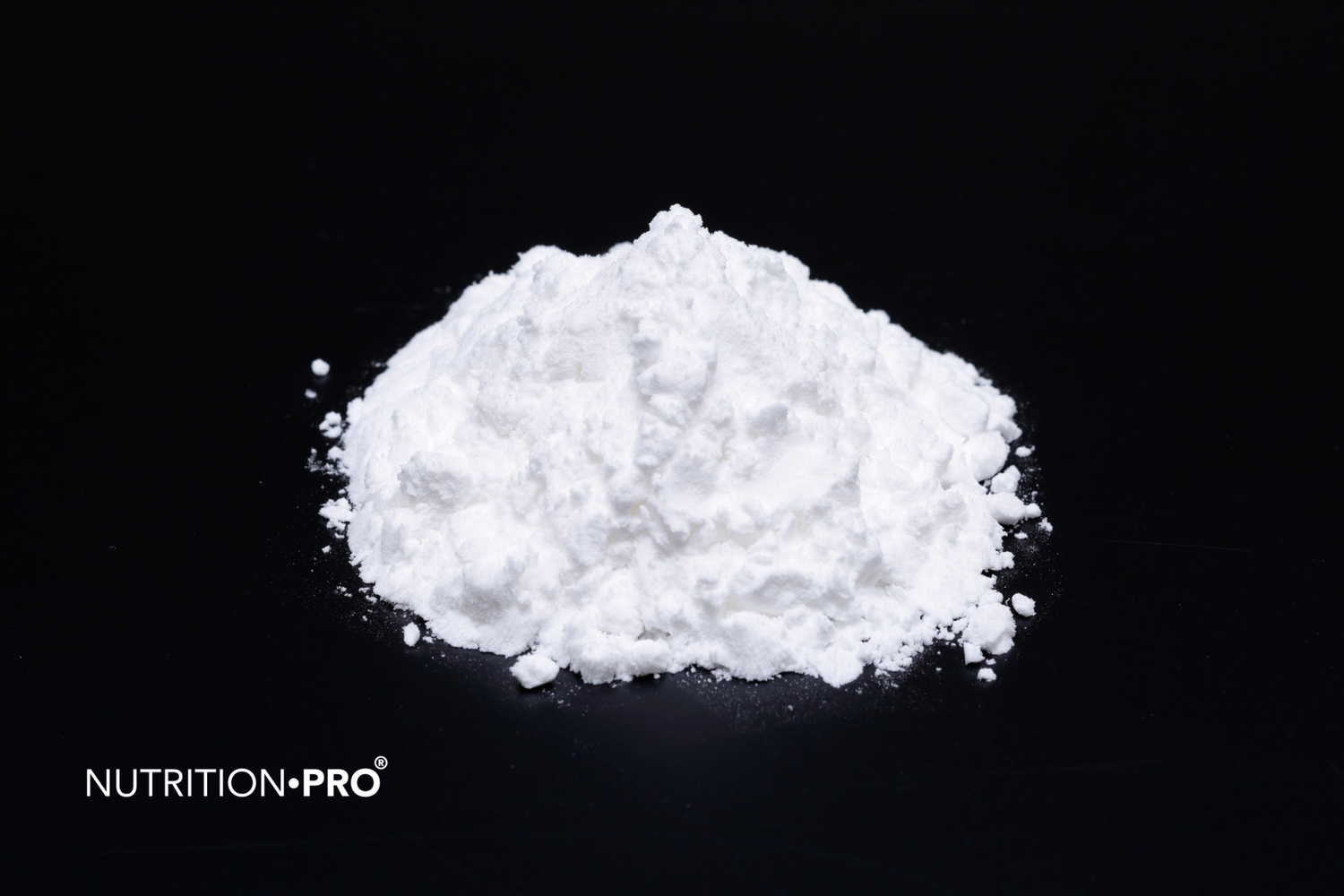
Glycine is probably the most misrepresented supplement on today's market. On one side, pages promising restorative sleep, renewed joints and regenerated skin. On the other, a European regulatory framework that simply prohibits writing any of that. In between, a truly interesting amino acid, truly studied, and whose story no one tells correctly.
This guide sets out to do so. What glycine is and what it does physiologically, what sleep studies show precisely and at what dosage, what the law allows or does not allow to be said about it, how to dose it according to your goal, and how to tell apart two white powders that look alike. We sell glycine, and that's precisely why we stick to what is verifiable. Reference guide, updated August 2026

The smallest of amino acids, which the body knows how to produce. It represents approximately one third of collagen , participates in the synthesis ofglutathione , ofcreatine and of bile salts , and acts as an inhibitory neurotransmitter in the central nervous system. These are facts of physiology.What studies show.
On sleep, several Japanese trials explored intake of 3 g before bedtime : Inagawa in 2006, Yamadera in 2007 and Bannai and Kawai in 2012 report improvements in perceived sleep quality, time to sleep onset, and fatigue upon waking, with some showing polysomnography-observed changes. Level of evidence emerging : small sample sizes, short protocols. : petits effectifs, protocoles courts. What the law permits: Nothing. No health claims are authorized for isolated glycine in the European Union, including sleep.
What is glycine?
<<<36>>> Glycine glycine is the smallest and simplest of the twenty amino acids that make up our proteins. The body can manufacture it, which formally classifies it among non-essential amino acids. We will see later that this classification is currently under debate.
Its name comes from Greek glykys, which means sweet: it has a naturally sweet taste. A seemingly anecdotal detail, but one with a real practical consequence, since glycine requires no sweetener to be pleasant to consume.
From a nutritional standpoint, it is found mainly in connective tissues and what derives from them: bone broths, gelatin, skin, cartilage, cuts of meat rich in collagen. Muscle proteins also provide it, in smaller quantities. This is one of the reasons why the subject is of interest: contemporary diets, which favor lean cuts, generally provide less of it than traditional cuisines where the entire animal was consumed.
Its roles in the body
Glycine is involved in several well-identified processes. These are biochemical data, verifiable, and it is important to clarify from the outset that they do not constitute health claims: describing a biological role and promising a benefit are two different things.
| Role | What this means in practice |
|---|---|
| Collagen constituent | It represents approximately one-third of the amino acids in collagen, the most abundant structural protein in the human body |
| Glutathione precursor | It is one of three amino acids that make up glutathione, an antioxidant produced by the body |
| Creatine synthesis | It participates in the endogenous production of creatine |
| Bile salts | It participates in the conjugation of bile acids, which are involved in fat digestion |
| Inhibitory neurotransmitter | It acts as an inhibitory messenger in the central nervous system |
This last point is what directed research toward sleep. A molecule that acts as an inhibitory neurotransmitter is a logical lead to explore regarding relaxation and falling asleep. Exploring a lead, once again, is not the same as validating it.
"Glycine represents one-third of collagen, so taking it improves skin and joints." This reasoning is everywhere, and it doesn't hold up. Providing one brick does not guarantee construction : the body regulates collagen synthesis according to mechanisms that depend not solely on the availability of an amino acid it already knows how to produce. It is precisely for this kind of shortcut that the European framework requires demonstration before authorizing a claim.
Glycine and sleep: what studies show
This is the most documented use of glycine, and it deserves to be presented with precision rather than enthusiasm.
| Studies | Protocol | What is reported |
|---|---|---|
| Inagawa, 2006 | 3 g before bedtime, people in sleep restriction | Improvement in perceived sleep quality, fatigue, and well-being upon waking |
| Yamadera, 2007 | 3 g before bedtime, with polysomnographic recordings | Observed changes in sleep architecture, improvement in daytime sleepiness and cognitive function |
| Bannai and Kawai, 2012 | 3 g before bedtime, adults dissatisfied with their sleep | Reduced time to fall asleep, improved sleep efficiency, less daytime fatigue |
One mechanism is regularly put forward to explain these observations: glycine would promote a decrease in core body temperature which physiologically accompanies falling asleep. This is a hypothesis consistent with its role as an inhibitory neurotransmitter, and it remains a hypothesis.
What you need to know about the level of evidence
Let's be clear, because this is what distinguishes information from marketing claims:
- Sample sizes are small and study protocols are short. This is emerging literature, not a consolidated body of evidence.
- Some criteria are subjective, based on self-reported sleep quality questionnaires. This is legitimate in sleep research, but it remains self-reported data.
- It is not a sleeping pill. Glycine does not treat insomnia, and persistent sleep disorders warrant medical consultation, not a supplement.
- Effects vary from person to person, and nothing guarantees an individual response.
What is honest to conclude: a serious, documented lead, at a specific dose, whose possible effect is modest and neither replaces sleep nor substitutes for medical management when necessary.
Why no brand is allowed to write it
Here is the paradox of this topic. Studies exist, they are published in scientific journals, and yet no brand can legally write that glycine improves sleep.
The reason lies in the Regulation (EC) 1924/2006, which governs nutritional and health claims in Europe. The principle is simple and strict: only formulations evaluated and then registered in the European registry can be used. A published study is not enough: a claim must have been submitted, evaluated and authorized.
Now, for isolated glycine, no health claim is currently authorized in the European Union. Not on sleep, not on joints, not on skin, nor on anything else.
A brand that displays "improves sleep quality" or "supports joint health" on a jar of glycine is in regulatory violation, even if studies exist elsewhere. This is an excellent indicator for the consumer: on an ingredient with no authorized claim, a seller's language tells you mainly about their relationship with the law. A brand that respects the framework describes the composition, purity and controls, and lets the reader consult the scientific literature themselves. This is exactly what this article does.
Note the distinction, as it is a source of confusion: the sale of glycine is not prohibited. It is an amino acid usable in food supplements in France, unlike ingredients such as NMN or the tongkat ali, which fall under the status of novel foods and cannot be marketed. What is regulated here is not the product, it is the claims.
What dose, and when
Two very different orders of magnitude circulate, presented interchangeably, which makes no sense. Let's put them back in their place.
| Objective | Quantity | What this covers |
|---|---|---|
| Sleep support | 3 g, 30 to 60 minutes before bed | This is the dose and timing used in published studies on the subject. No other has been validated for this use. |
| Amino acid intake | Higher quantities depending on approach | Follows a logic of overall nutritional intake, not sleep research |
Seeing a brand recommend a high dose based on sleep studies should alert you: these studies were conducted at 3 g. Transposing a dose from one objective to another hoping for a stronger effect is not a scientific approach, it is a commercial intuition. If your goal is sleep, stick to what has been studied.
On the question of need, a word of honesty is warranted since it is heavily promoted. Modeling studies have suggested that endogenous synthesis and typical dietary intakes may not cover all metabolic needs, leading some researchers to refer to the amino acid as conditionally essential. Other studies are more cautious. It is an open scientific debate, and the figures circulating in marketing are often presented with far more certainty than they deserve.
Finally, on the method of intake : glycine dissolves easily in water or an infusion, and its naturally sweet taste makes it pleasant without additives. Start with a modest dose to verify your digestive tolerance, then establish regular intake. As often happens, consistency matters more than intensity.
Safety, tolerance and precautions
Glycine is generally well tolerated at the doses used in studies, and reported adverse effects are rare, primarily of a digestive nature. This is consistent with its nature: an amino acid that the body produces and processes continuously.
Some precautions are nevertheless warranted. They do not reflect a demonstrated danger, but rather an absence of sufficient data, which is different and must be stated as such:
- Pregnancy and breastfeeding : specific data are lacking, so caution is advised.
- Severe kidney or liver failure : since glycine is metabolized by the liver and eliminated by the kidneys, medical advice is necessary.
- Children and adolescents : the few available studies are conducted in controlled medical settings.
- Current treatment : as with any supplement, inform your doctor or pharmacist.
One point deserves to be highlighted because it is often misunderstood: glycine is not a sleeping pill, does not belong to this pharmacological family, and no habituation is described in the available literature. This does not dispense with periodically reassessing prolonged use, nor with consulting a healthcare professional if sleep problems develop. Chronic poor sleep has a cause, and that cause deserves to be identified.
How to choose a glycine
This is the practical challenge with this ingredient: visually, all glycines look the same. The difference lies elsewhere, in three verifiable criteria.
| Criteria | To avoid | To prioritize |
|---|---|---|
| Ingredient list | Flavors, sweeteners, anti-caking agents | Single ingredient: glycine only |
| Analysis | None, or vague mention of testing | Batch-by-batch testing, heavy metals and microbiology, accessible certificate |
| Traceability | Batch number absent or illegible | Identifiable batch, analyses linked to that batch |
| Claims | Promises of sleep, joint health, or skin benefits on the label | Description of composition and testing, without prohibited claims |
| Format | Capsules, when you need to take many to reach the dose | Powder, which allows free dosing |
On the format, the reasoning is straightforward: once you're targeting several grams, capsules become impractical and often require excipients for encapsulation. Powder allows for precise dosing, and the usual argument against it—taste—doesn't apply here since glycine is naturally sweet.
Our crystallized glycine contains only glycine : no excipient, no anti-caking agent, no flavor, no sweetener. Each batch is tested for heavy metals and microbiology, and the corresponding certificate of analysis is available upon request. We make no health claims for it, since no claims are permitted: we provide you with the composition, the testing, and the studies, and you decide.
See Crystallized GlycineGlycine is a textbook case: real studies, a real physiological role, and zero authorized claims. That doesn't make it either miraculous or useless, it simply requires talking about it correctly. An honest brand gives you the composition, the controls and the references, and lets you judge. A brand that promises you restorative sleep on its label is mainly telling you that it doesn't respect the regulatory framework.
Frequently Asked Questions
Understanding Glycine
What is glycine?
Glycine is the smallest and simplest of amino acids. The body knows how to produce it, which classifies it among non-essential amino acids, and it is also found in food, particularly in connective tissues, bone broths, and gelatin. It occupies a special place: it represents approximately one-third of collagen composition, the most abundant structural protein in the human body.
What is glycine's role in the body?
It participates in several processes: major constituent of collagen, participation in the synthesis of glutathione, creatine and bile salts, and role as an inhibitory neurotransmitter in the central nervous system. These roles are physiological facts, to be distinguished from health claims, which obey different rules.
What foods contain glycine?
Mainly connective tissues and their derivatives: bone broths, gelatin, skin and cartilage, pieces of meat rich in collagen. Muscle animal proteins also provide some, in smaller quantities. Contemporary diets, which favor lean cuts, generally provide less glycine than traditional diets where the entire animal was consumed.
Glycine and collagen, what's the connection?
Glycine represents approximately one-third of the amino acids in collagen, making it its most abundant constituent. This is a fact of composition, verifiable. However, inferring from this that taking glycine would improve skin or joints would be a logical leap: providing one brick doesn't guarantee construction, and no health claim is authorized in this regard.
Do you need to supplement if the body produces it?
This is a genuine scientific debate. Modeling studies have suggested that endogenous synthesis and typical dietary intake might not cover all metabolic needs, which has led some researchers to speak of a conditionally essential amino acid. Other studies are more cautious. The question remains open, and the figures advanced by marketing are often presented with more certainty than they deserve.
Sleep and Regulation
Does glycine help you sleep better?
It's its most studied use, but precision is needed. Several Japanese trials, notably those by Inagawa in 2006, Yamadera in 2007, and Bannai and Kawai in 2012, explored a 3 g intake before bedtime and reported improvements in perceived sleep quality, sleep onset latency, and waking fatigue, with some showing polysomnography-observed changes. The level of evidence remains emerging: small sample sizes, short protocols. It is not a sleeping pill and does not treat insomnia.
Is there an authorized health claim for glycine?
No. No health claims are authorized in the European Union for isolated glycine, including for sleep. Claims are regulated by Regulation (EC) 1924/2006, which only authorizes formulations that have been evaluated and registered in the European register. A brand displaying "improves sleep quality" on a jar of glycine is in violation, even if studies exist elsewhere.
Is glycine banned or restricted in France?
No, glycine is an amino acid that can be used in food supplements in France, unlike certain ingredients that fall under novel food status and await authorization. What is regulated is not its sale but the claims: in the absence of an authorized claim, no health effects can be attributed to it on labeling or in commercial communication.
Does glycine cause weight loss?
No, and no claims of this type are authorized. Glycine has no demonstrated effect on weight loss, and any communication in this regard falls outside the European regulatory framework. This is a useful signal: the language used by a brand often tells you more about its credibility than the length of its benefits list.
Dosage and Use
What dose of glycine should I take for sleep?
The dose used in sleep studies is 3 g, taken approximately thirty to sixty minutes before bedtime. This is the only dose truly documented for this specific use. Higher amounts appear in other research contexts, but they do not correspond to the protocol of sleep studies: there is no reason to transpose a dose from one objective to another.
Should I take 3 g or 10 g of glycine?
This depends entirely on the objective, and confusion between the two is common in the marketplace. The 3 g corresponds to the protocol of sleep studies. Higher doses refer to other uses, particularly supporting amino acid intake. A brand that recommends a high dose by invoking sleep studies is mixing two different things.
When should you take glycine?
For sleep purposes, approximately thirty to sixty minutes before bedtime, in accordance with study protocols. For other objectives, timing matters less than consistency: glycine has no dramatic immediate effect; its value lies in sustained, regular intake. It dissolves easily in water or herbal tea.
What does glycine taste like?
Naturally sweet-tasting, which is no coincidence: its name derives from the Greek glykys, meaning sweet. This is a genuine practical advantage, as it requires no added sweetener to be pleasant to consume. A flavored or sweetened powder therefore adds ingredients whose benefit is questionable in a product intended for daily use.
Can glycine and magnesium be combined?
There is nothing against it, and the combination is common. A regulatory clarification is necessary: magnesium has authorized health claims, notably regarding the reduction of fatigue, normal muscle function, and normal nervous system function. Glycine has none. Combining the two does not create a guaranteed additional effect, and does not permit attributing magnesium's claims to glycine.
What is the difference between glycine and bisglycinate?
They are two different things. Glycine alone is an amino acid consumed as-is. Bisglycinate is a chelated form, in which a mineral, magnesium or iron for example, is bound to two glycine molecules. This form is sought for its digestive tolerance, but the objective is to deliver the mineral: the amount of glycine provided has nothing to do with pure glycine intake.
Safety and choice
Is glycine safe?
It is generally well tolerated at the doses used in studies, and reported adverse effects are rare, essentially digestive. Some precautions are nonetheless necessary, not because a danger has been demonstrated but because data are lacking: in pregnant or nursing women, and in cases of severe renal or hepatic insufficiency. In case of pathology or treatment, seek advice from a healthcare professional.
Does glycine cause dependence?
No dependence is described in available literature, and glycine does not belong to the sleeping pill family. It is an amino acid that the body produces and uses continuously. That said, the absence of data on very prolonged uses calls for caution, and persistent sleep disturbance warrants medical consultation.
Powder or capsules, which to choose?
Powder is significantly more practical when targeting multiple grams: achieving 3 g in capsules requires swallowing a considerable number, and the container often requires excipients. Powder also allows free dosing. Its only theoretical drawback, taste, is not one here since glycine is naturally sweet.
How to recognize quality glycine?
Three criteria. The ingredient list first: quality glycine contains only glycine, without flavoring, sweetener, or anti-caking agent. Testing next: batch-by-batch controls, at minimum for heavy metals and microbiology, with an accessible certificate of analysis. Traceability finally: an identifiable lot number. On white powders of identical appearance, these elements make the difference.
Glossary
- Glycine
- The smallest of amino acids, a major constituent of collagen and an inhibitory neurotransmitter.
- Non-essential amino acid
- An amino acid that the body can synthesize, as opposed to essential ones, which must be obtained from the diet.
- Conditionally essential
- Refers to a nutrient that the body produces, but whose synthesis may not suffice in certain situations. Status debated for glycine.
- Collagen
- The most abundant structural protein in the body, of which glycine represents approximately one-third of amino acids.
- Glutathione
- An antioxidant produced by the body, composed of three amino acids including glycine.
- Polysomnography
- Instrumental sleep recording, used in certain studies to objectify its architecture.
- Authorized health claim
- A formulation evaluated and then registered in the European registry, the only one legally usable to attribute an effect to a nutrient.
- Certificate of analysis
- A laboratory document attesting, lot by lot, the composition and compliance of a product.
Sources
- Inagawa K, et al. Subjective effects of glycine intake before bedtime on sleep quality. Sleep and Biological Rhythms, 2006.
- Yamadera W, et al. Glycine intake improves subjective sleep quality, correlating with polysomnographic changes. Sleep and Biological Rhythms, 2007.
- Bannai M, Kawai N. New therapeutic strategy in amino acid medicine: glycine improves sleep quality. Journal of Pharmacological Sciences, 2012.
- European Parliament and Council. Regulation (EC) 1924/2006 on nutrition and health claims made on foods. eur-lex.europa.eu
- European Commission. Register of nutrition and health claims authorized. ec.europa.eu


