

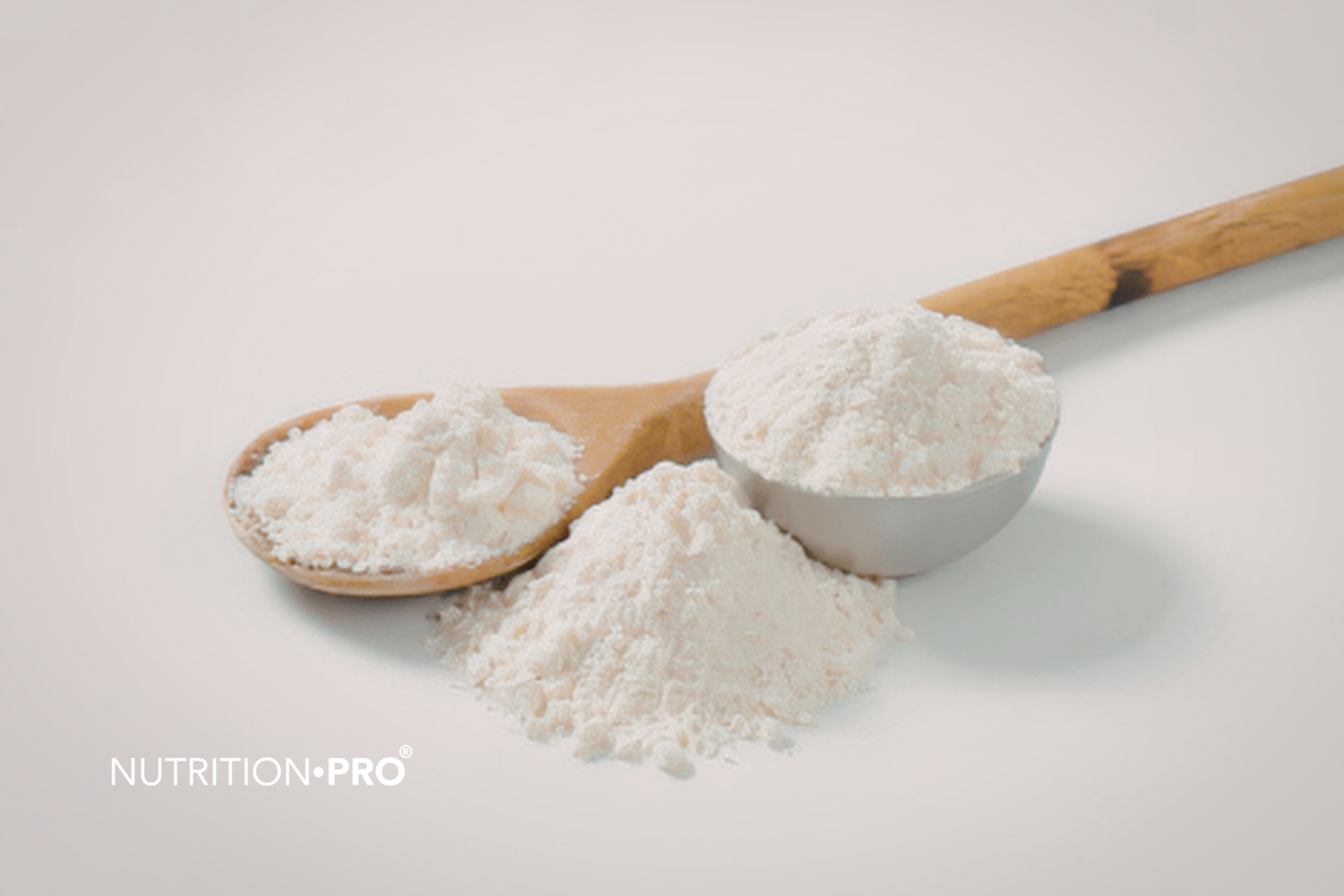
Searching for "glycine danger" in French yields a surprise: a large portion of the results doesn't discuss a dietary supplement at all. In French, the word glycine refers to two completely unrelated things : the amino acid, and an ornamental climbing plant whose seeds are toxic. We therefore begin by clearing up this confusion, because it is the only real source of danger on this subject.
Next, the article honestly addresses the question posed. What studies actually report as side effects, why they are predominantly digestive and how to avoid them, the situations that require medical advice, and a risk that no one looks at even though it is the most concrete: the one that comes not from the molecule, but from the quality of the powder you purchase.

The confusion to clarify. In French, "glycine" also refers to Wisteria, an ornamental climbing plant whose seeds and pods are toxic and cause poisoning, especially in children. No part of this plant should be consumed. It has absolutely nothing to do with the amino acid.
What studies report. Side effects that are rare and mild, essentially digestive : nausea, abdominal discomfort, bloating, loose stools, mainly at high doses or when taken on an empty stomach. Allergic reactions are exceptional. No residual drowsiness has been reported in sleep studies. Situations that require medical advice: Pregnancy and breastfeeding, severe kidney or liver insufficiency, ongoing treatment especially psychotropic medication, children and adolescents. The honest limitation: the safety of prolonged use over years is not documented.
The confusion to clarify: the amino acid and the plant
It is a particularity of the French language, and it has concrete consequences. The word glycine refers to two completely different things:
| The amino acid | The plant | |
|---|---|---|
| What is it | The smallest of amino acids, present in the body and in food | An ornamental climbing plant, Wisteria, with clusters of purple flowers |
| Use | Dietary supplement, in crystallized powder form | Ornamental, on facades, pergolas and gardens |
| Toxicity | Well tolerated at studied doses | Toxic seeds and pods, at the origin of poisonings |
| Key takeaways | Can be consumed under the conditions described in this article | Must not be consumed in any form |
The seeds and pods of the glycine plant are toxic and are at the origin of poisonings, particularly in children attracted to the pods which resemble those of peas. No part of this plant should be consumed. In case of ingestion, immediately contact a poison control center or emergency services. This plant has absolutely nothing to do with the amino acid sold as a dietary supplement, which is the subject of the rest of this article.
This homonymy explains a good part of the alarming results one finds when searching "glycine danger" in French: they often concern the plant, not the supplement. Both topics are legitimate, they simply have nothing in common.
What studies actually report
Let's start with the context, because it clarifies everything else. Glycine is not an exotic molecule: it is an amino acid that your body produces and processes continuously, present in all your proteins and supplied daily through food, particularly through broths, gelatin and connective tissues. Such a molecule has little reason to behave as a foreign substance.
This is consistent with what the literature reports:
| Effect | Frequency | Circumstances |
|---|---|---|
| Nausea, abdominal discomfort | Rare, mild | Especially at high doses or when taken on an empty stomach |
| Bloating, loose stools | Rare, mild | Same context, dose-dependent |
| Allergic reactions | Exceptional | As with any ingredient, may also concern an additive in the product |
| Residual drowsiness upon waking | Not reported | Point that distinguishes glycine from sleeping pills |
Two honest clarifications are necessary. First, this data comes fromsmall-scale and short-duration studies : a rare effect may go unnoticed in such samples. Second, the absence of a reported effect does not equate to a demonstration of absolute safety, but rather to an absence of signal, which remains reassuring without being a guarantee.
Digestive effects: why, and how to avoid them
It is by far the most commonly reported discomfort, and it is most often treated by changing two parameters.
First cause: the dose. Ingesting a significant quantity of a soluble and osmotically active compound can draw water into the intestine and cause discomfort, especially on an empty stomach. The threshold is individual, which explains why some people experience nothing at quantities that bother others. This is also why discomfort is rare at the modest amounts used in sleep studies, and more frequent at high doses.
Second cause, more insidious: additives. A significant portion of the discomfort attributed to "glycine" does not come from glycine. Many powders on the market contain anti-caking agents, sweeteners or flavorings. Certain bulking sweeteners are known to cause bloating and loose stools in sensitive individuals at modest quantities. The consumer then blames the amino acid, when the culprit is actually the excipient.
If you tolerated glycine poorly, check the ingredient list before drawing conclusions. A powder containing only glycine eliminates this variable, and allows you to know if the problem really came from the amino acid. Useful clarification: since glycine has a naturally sweet taste, an added sweetener has no taste-related justification.
Four steps that limit the risk, in order of effectiveness:
- Choose a single-ingredient powder, without additives.
- Start with a modest dose and assess your tolerance before increasing.
- Avoid taking on an empty stomach if you are digestively sensitive.
- Dilute sufficiently, in a glass of water or herbal tea rather than in very small volume.
Situations that require medical advice
This distinction is important and rarely made correctly. The precautions that follow do not signal an established risk: they signal an absence of data in populations where caution is the rule.
| Situation | Why caution | Course of action |
|---|---|---|
| Pregnancy and breastfeeding | Specific data lacking in these populations | No supplement without medical validation |
| Severe kidney or liver failure | Amino acids are metabolized by the liver and their byproducts eliminated by the kidneys | Medical advice essential, as with any protein intake |
| Ongoing treatment, particularly psychotropic medication | Glycine has been researched as an adjuvant in psychiatry, which implies activity on nerve targets | Consult your doctor or pharmacist before use |
| Children and adolescents | The few studies concerning young people are from controlled medical contexts | No self-medication, pediatric advice recommended |
A word about the pharmacist reflex, which remains the most effective and least costly approach. If you're taking any treatment whatsoever, showing the product to your pharmacist takes two minutes and prevents most problems. This applies to glycine as to any supplement.
The risk no one looks at: powder quality
This is the most useful point of this article, and it is systematically absent from "glycine dangers" pages. Glycine as a molecule is well tolerated. What varies considerably from one product to another is what is actually in the container.
| Risk | Origin | How to mitigate it |
|---|---|---|
| Digestive discomfort | Additives, anti-caking agents, sweeteners | Single-ingredient powder |
| Contaminants | Heavy metals depending on raw material and process | Batch-by-batch testing, accessible certificate of analysis |
| Microbial contamination | Production and packaging conditions | Microbiological analysis per batch |
| Non-compliant composition | Opaque sales channels, third-party sellers | Direct brand channel or pharmacy, identifiable batch |
| Anti-doping control | Cross-contamination in production | Products analyzed by independent laboratory |
On the last point, a clarification for athletes: glycine is not a prohibited substance. The risk does not come from the molecule but from the product, through cross-contamination, and the principle of strict liability places the responsibility on the athlete. This topic is developed in our guide on prohibited substances in sport.
On the subject of tolerance, the best guarantee is the simplest: our crystallized glycine contains only glycine, with no anti-caking agent, no flavoring or sweetener—that is, without the additives to which a significant portion of digestive discomfort is actually attributable. Each batch is tested for heavy metals and microbiology, and the corresponding certificate of analysis is available upon simple request.
View Crystallized GlycineWhat is not documented
Three areas of uncertainty remain, and concealing them would be dishonest:
- Safety of prolonged use. Studies cover short periods, from a few days to a few weeks. Daily use over years has not been evaluated. This is not a red flag, it is an absence of data.
- Rare effects. Samples of a few dozen participants do not allow detection of an infrequent adverse effect.
- Certain populations. Pregnant and nursing women, children, people with chronic conditions: they are generally excluded from trials, and therefore absent from the data.
The practical conclusion that follows: consider glycine as a supplement for defined periods, with reassessment, rather than as an indefinite intake that is never questioned. This rule applies moreover to all dietary supplements.
In case of mild digestive discomfort, reducing the dose or stopping intake is generally sufficient. If a symptom persists after stopping, or in case of skin reaction, itching, or breathing difficulty, consult without delay. An adverse effect related to a dietary supplement can moreover be reported within the framework of the national nutrivigilancesystem, which very few consumers are aware of and which contributes to improving collective knowledge.
Frequently asked questions
The fundamental question
Is glycine dangerous?
At the doses used in studies, it is generally well tolerated and reported side effects are rare and mild, essentially digestive. This is unsurprising for an amino acid that the body produces and processes continuously, and that is found naturally in food. This does not mean a complete absence of risk: certain situations require medical advice, and product quality matters as much as the molecule itself.
Is garden glycine the same thing?
No, absolutely not, and this is the most dangerous confusion on the subject. In French, the word glycine refers to two unrelated things: the amino acid used in dietary supplements, and an ornamental climbing plant, Wisteria, whose seeds and pods are toxic and cause poisoning, particularly in children. No part of the plant should be consumed.
Does the real risk come from the molecule or the product?
From the product, in the vast majority of cases. Glycine itself is a well-tolerated amino acid. What varies enormously from one product to another is the purity of the powder, the presence of additives, and the existence of analytical controls. Uncontrolled powder can introduce contaminants, and its additives can cause the digestive discomfort later attributed to glycine.
Side Effects
What are the most common side effects?
They are digestive: nausea, abdominal discomfort, bloating, loose stools. They remain rare and mild, and occur mainly at high doses or when taken on an empty stomach. Allergic reactions have been described, but they are exceptional. In case of discomfort, reducing the dose or spacing the intake away from a meal is generally sufficient.
Why does glycine sometimes cause stomach pain?
Two causes often combine. The first is the dose: beyond a certain threshold, specific to each person, a large amount of an osmotically active compound in the intestine can cause discomfort. The second is more subtle: some of the discomfort attributed to glycine actually comes from additives in powders—anti-caking agents, sweeteners, and flavors. A single-ingredient powder eliminates this variable.
What dose can cause side effects?
There is no universal threshold: digestive tolerance varies greatly from person to person. What we observe is that discomfort appears rather at high doses, and rarely at the modest quantities used in sleep studies. The prudent approach is to start low, assess your tolerance, then adjust.
How can you reduce the risk of digestive discomfort?
Four simple steps. Start with a modest dose rather than a high dose. Avoid taking on an empty stomach if you are sensitive. Dilute sufficiently in a glass of water or herbal tea. And choose a single-ingredient powder, without additives, to eliminate the main source of discomfort that has nothing to do with glycine itself.
Does glycine cause daytime drowsiness?
Sleep studies have not reported residual drowsiness upon waking, which is precisely what distinguishes glycine from hypnotic medications. It has no sedative effect in the pharmacological sense. As a precaution, if you are taking other treatments that affect alertness, discuss this with your doctor or pharmacist before adding a supplement.
Does glycine cause dependence?
No dependence is described in available literature, and there is no known mechanism that would make it likely for an amino acid that the body produces continuously. Data on very prolonged uses remain limited, however, which calls for periodically reassessing any long-term use.
What to do in case of side effects?
Reduce the dose or stop taking it, which is generally sufficient for mild digestive discomfort. If a symptom persists after stopping, or in case of skin reaction, itching, or breathing difficulty, consult without delay. An adverse effect related to a dietary supplement can also be reported as part of the national nutrivigilance system.
Precautions and Populations
Can you take glycine during pregnancy?
Without medical advice, no. Specific data are lacking in pregnant and nursing women, which does not mean a danger is demonstrated but that no safety is established. During these periods, the general rule is to take no supplement without validation by a healthcare professional, who knows your situation and any treatments you may be taking.
Should glycine be avoided in case of kidney or liver problems?
In case of severe kidney or liver insufficiency, medical advice is necessary before any supplementation. The reason is simple: amino acids are metabolized by the liver and their products eliminated by the kidneys, and impaired function alters this management. This is not a demonstrated danger but a logical precaution, which applies to all protein intake in these situations.
Does glycine interact with medications?
Particular vigilance is recommended with psychotropic treatments, as glycine has been researched as an adjuvant in certain psychiatric disorders, which implies activity on nerve targets. More broadly, any ongoing treatment warrants discussing it with your doctor or pharmacist before adding a supplement.
Can glycine be given to children?
No, not as self-medication. The rare studies involving young people are in structured medical contexts, and there is no data allowing recommendation of routine use in children or adolescents. Any question about sleep or fatigue in a child should be addressed by a pediatric evaluation.
Can glycine be combined with other supplements?
Nothing prevents this in principle, but a general principle applies: the higher your stack of supplements, the less you know what produces what, and the greater the risk of redundant intakes. If you are already taking collagen peptides, know that they already provide glycine in quantity. In case of other treatment, a pharmacist's advice remains the simplest approach.
Scope and Limitations
Is long-term safety documented?
Not sufficiently, and this must be stated. Available studies cover short durations, from a few days to a few weeks. Daily use for years has not been evaluated. This is not an alarm signal, it is an absence of data, and it justifies considering glycine as a support over defined periods rather than as indefinite use without reassessment.
Is glycine authorized for sale in France?
Yes. It is an amino acid that can be used in dietary supplements, unlike certain ingredients that fall under novel food status and await authorization. What is regulated is not its sale but the claims: no health effect can be claimed commercially for glycine, which prohibits displaying an effect on labeling or in commercial communications.
Should athletes take particular precautions?
The useful precaution for a competitor does not concern glycine itself, which is not a banned substance, but product quality. The principle of strict liability requires the athlete to answer for what is found in their body, including in case of cross-contamination of a supplement. Prioritizing products analyzed lot by lot by an independent laboratory is the only serious safeguard.
When should you consult rather than self-medicate?
As soon as a symptom develops. Poor sleep lasting several weeks, persistent fatigue, joint pain that does not go away: these are reasons to consult, not reasons to buy. A supplement can complement, it diagnoses nothing and corrects no cause. Delaying medical care through prolonged self-medication is the real risk of this market.
Glossary
- Glycine (amino acid)
- The smallest of the amino acids, present in the body and diet, used as a dietary supplement.
- Glycine (plant)
- Common name for Wisteria, an ornamental climbing plant whose seeds and pods are toxic. Unrelated to the amino acid.
- Excipient
- Ingredient added to a formula without nutritional purpose: anti-caking agent, flavoring, sweetener, bulking agent.
- Certificate of Analysis
- Laboratory document certifying, batch by batch, the composition and compliance of a product.
- Nutrivigilance
- National system allowing the reporting of adverse effects potentially linked to a dietary supplement.
- Strict Liability
- Anti-doping principle whereby an athlete is responsible for the presence of a banned substance in their body, regardless of its origin.
Sources
- The recorded adverse effects (digestive disorders at high doses or when taken on an empty stomach, exceptional allergic reactions) correspond to those reported in the available literature on oral glycine supplementation, including published trials on sleep.
- European Parliament and Council. Regulation (EC) 1924/2006 on nutrition and health claims made on foods. eur-lex.europa.eu
- National Food, Environment and Occupational Health and Safety Agency. Nutrivigilance system, reporting of adverse effects linked to dietary supplements. anses.fr
- Nutrition•pro. Glycine: the complete guide. Read the guide


