

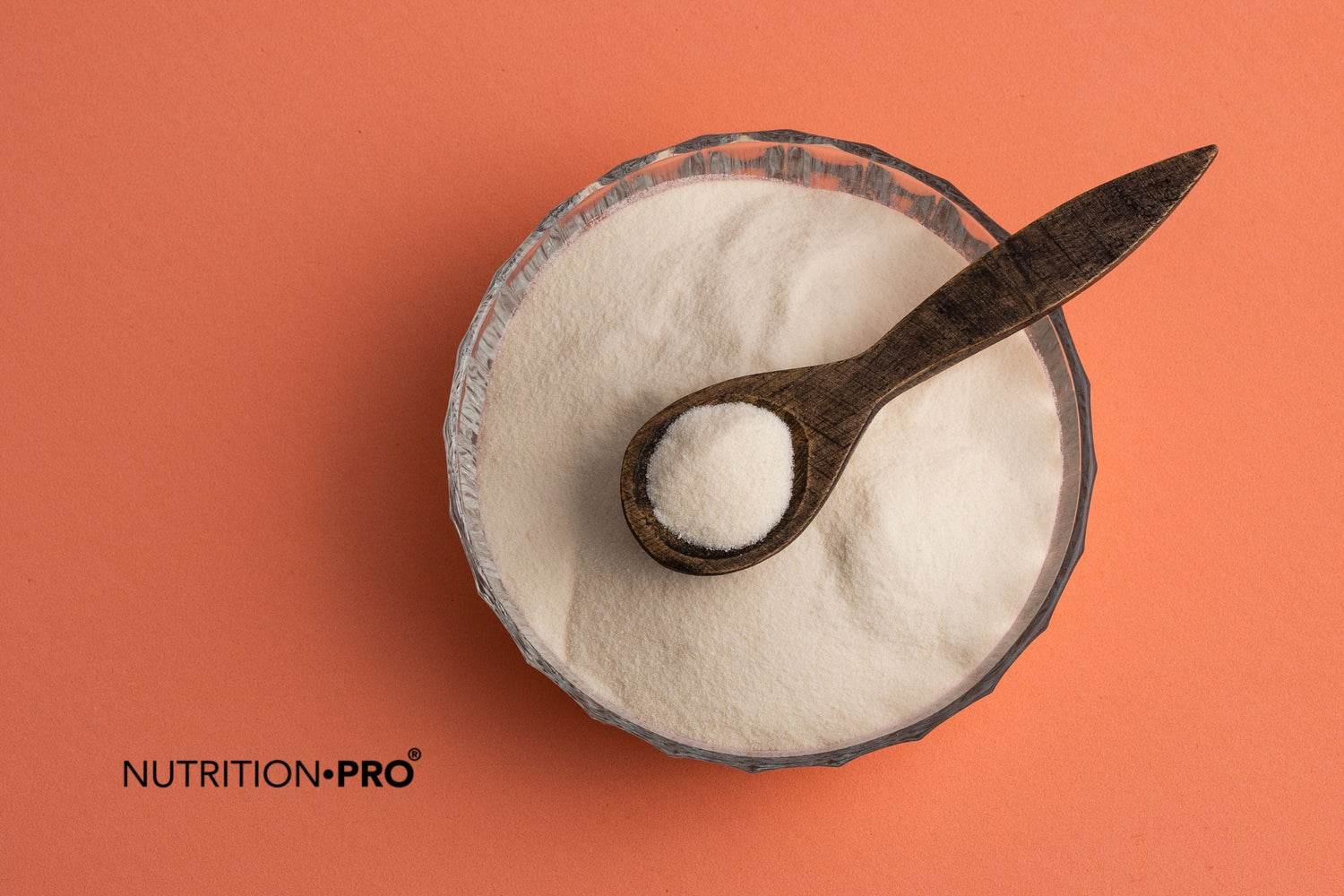
You have your pot of collagen powder, but one question remains: how do you consume it daily without it becoming a chore? Powder has a big advantage—its flexibility—provided you know how to incorporate it.
Here are 5 simple and enjoyable ways to consume marine collagen powder, plus the tips that really matter: the right time, the right dose, useful combinations, and mistakes to avoid. Goal: make the treatment an easy habit to maintain.

Collagen powder can be consumed in 5 simple ways : in coffee or tea, in a smoothie or juice, in yogurt or porridge, in a glass of water, or incorporated into a recipe. It is neutral in taste and dissolves easily. The time of intake matters little : consistency is what counts. Aim for the dose suited to your goal (2.5 to 10 g), avoid boiling it for long periods, and combine it with a source of vitamin C, which helps your body produce collagen.
1. In your morning coffee or tea
It's the preferred method for many, because it attaches to an already daily gesture: morning coffee. Hydrolyzed marine collagen dissolves well in hot beverages and, being neutral, it doesn't alter the taste of your coffee or tea.
Pour your dose into the cup, stir for a few seconds, and it's ready. Tip: add the powder then the hot liquid while stirring, to avoid small lumps. The heat from a coffee or tea doesn't alter the peptides: it's prolonged boiling that's best avoided, not a normally consumed hot drink.
2. In a smoothie or juice
The smoothie is arguably the most indulgent way. The collagen blends completely into the blended fruits, with no perceptible texture or taste, while enriching the drink with protein.
Better: pairing collagen with fruits rich in vitamin C (kiwi, citrus fruits, red berries) makes sense, because vitamin C participates in collagen production by the body. It's the ideal opportunity to combine both in the same glass. Add your dose when blending, with the fruits, a liquid (water, plant-based milk) and possibly oat flakes.
Synergy idea: banana and red berry smoothie with a dose of collagen. Red berries provide vitamin C, collagen provides the protein, for a skin-friendly snack.
3. In yogurt, fromage blanc or porridge
For those who prefer solid to liquid, collagen integrates perfectly into yogurt, fromage blanc, porridge or a bowl of oat flakes. Simply mix it in while stirring.
It's an excellent option for breakfast or a snack, especially if you add fresh fruit. The powder mixes without noticeably altering the texture. For warm porridge, incorporate the collagen once the porridge has cooled slightly rather than during cooking, as a simple precaution.
4. In a simple glass of water
The most minimalist method, and perfect when you have nothing else on hand. Since hydrolyzed marine collagen is soluble, it dissolves in a glass of cold or lukewarm water. Stir well until completely dissolved.
It's convenient at the office, while traveling, or simply when you don't want to wait for coffee. If you find plain water a bit bland with collagen, add a splash of lemon juice: you mask any slight marine taste and add vitamin C in the process. Double benefit.
5. Incorporated into a recipe
Finally, collagen can make its way into your homemade preparations: pancakes, muffins, soups, cream soups, sauces. It's a discreet way to consume it for those who don't enjoy fortified drinks.
One rule of common sense: avoid subjecting it to long and boiling cooking. For a soup or cream soup, incorporate the collagen at the end of cooking, away from boiling, when the dish has slightly cooled. For pastries, use remains occasional and more indulgent than precisely dosed. For a regular and controlled regimen, drinks and yogurt remain simpler.
Timing, dose and combinations: what matters
Beyond the "how," some guidelines to do it right.
| Question | Practical answer |
|---|---|
| Morning or evening? | It doesn't matter. No particular time is proven superior. Choose what's most regular for you. |
| On an empty stomach or during a meal? | Both work. During a meal may limit any potential digestive discomfort. |
| What dose? | 2.5 g for skin, 5 g as standard, up to 10 g for enhanced results. |
| What should you pair it with? | A source of vitamin C (lemon, kiwi, citrus fruits), useful for collagen synthesis. |
| How long? | At least 8 to 12 weeks of regular intake to judge the effects. |
On pairing with vitamin C: according to Cimmino et al. 2018 in Trends in Cell Biology, vitamin C is a cofactor for enzymes (prolyl-hydroxylases) involved in collagen synthesis by the body. See referenceIn other words, good vitamin C status helps your body produce its own collagen. This is why combining them makes sense, though it shouldn't be seen as a magic effect on ingested peptides.
The real secret: consistency. As a reminder, ingested collagen does work on skin (de Miranda 2021), but only if you stick with the treatment over time. The best method is therefore one you can maintain effortlessly every day.
Mistakes to avoid
A few simple missteps to know about so you don't waste your treatment.
- Boiling it for a long time: a hot drink is fine, but avoid prolonged boiling. Add it instead at the end of cooking.
- Under-dosing: below 2 g per day, the effects are limited. Follow the dose suited to your objective.
- Lacking consistency: irregular intake is the leading cause of no results. Better to take a small dose every day than a large dose now and then.
- Expecting results in a few days: collagen works progressively, count on several weeks.
- Confusing it with a miracle product: it supports a healthy lifestyle, it doesn't replace it.
Frequently asked questions
How to consume collagen powder?
In 5 simple ways: in coffee or tea, in a smoothie or juice, in yogurt or porridge, in a glass of water, or incorporated into a recipe. Hydrolyzed marine collagen is neutral in taste and soluble. Choose the method that integrates best into your routine, as consistency is key.
Can you put collagen in a hot drink?
Yes. A hot drink such as coffee or tea does not denature collagen peptides. What you should avoid is prolonged boiling. For a soup or simmered dish, add the collagen at the end of cooking, away from the boil.
Does collagen powder have a taste?
Hydrolyzed marine collagen is generally neutral. Some people perceive a very slight marine taste in pure water: a splash of lemon juice masks it easily, while also adding vitamin C. In a coffee, smoothie, or yogurt, it goes unnoticed.
Should you take collagen in the morning or evening?
The timing matters little: no study has shown morning superiority over evening. Take it when it's most convenient so you don't forget. Collagen has no stimulating effect; taking it in the evening won't affect sleep.
Should you take collagen on an empty stomach?
It's not necessary. On an empty stomach or during a meal, both work. Taking it during a meal can limit any possible minor digestive discomfort at the start of treatment. Again, consistency takes priority over timing.
Should you combine collagen with vitamin C?
It makes sense. According to Cimmino 2018, vitamin C is a cofactor in collagen synthesis enzymes: good vitamin C status helps your body produce its own collagen. Pairing it with a source of vitamin C (lemon, kiwi, citrus) therefore makes sense, though it's not a magic effect.
How long before you see results?
Allow at least 8 to 12 weeks of regular intake. Collagen works progressively: the first signs on skin often appear around 4 weeks, and stabilize around 12 weeks. Consistency is more important than dosage.
Learn more
- Hydrolyzed collagen
- Collagen broken down into small peptides, soluble and easily absorbed by the intestines.
- Peptides
- Small protein fragments from hydrolysis, small enough to be absorbed.
- Vitamin C
- Cofactor of collagen synthesis enzymes in the body. Useful to combine.
- Adjustable dose
- Ability to adjust the quantity, an advantage of powder form over capsules.
- Treatment course
- Regular intake over a sufficient duration (at least 8 to 12 weeks) to observe effects.
Important note: this article is for informational purposes and does not replace individual medical advice. To find out how much to take based on your goals, consult our article on optimal daily dosage.
- Cimmino L, Neel BG, Aifantis I. Vitamin C in Stem Cell Reprogramming and Cancer. Trends Cell Biol. 2018;28(9):698-708. doi:10.1016/j.tcb.2018.04.001
- de Miranda RB, Weimer P, Rossi RC. Effects of hydrolyzed collagen supplementation on skin aging: a systematic review and meta-analysis. Int J Dermatol. 2021;60(12):1449-1461. doi:10.1111/ijd.15518


