

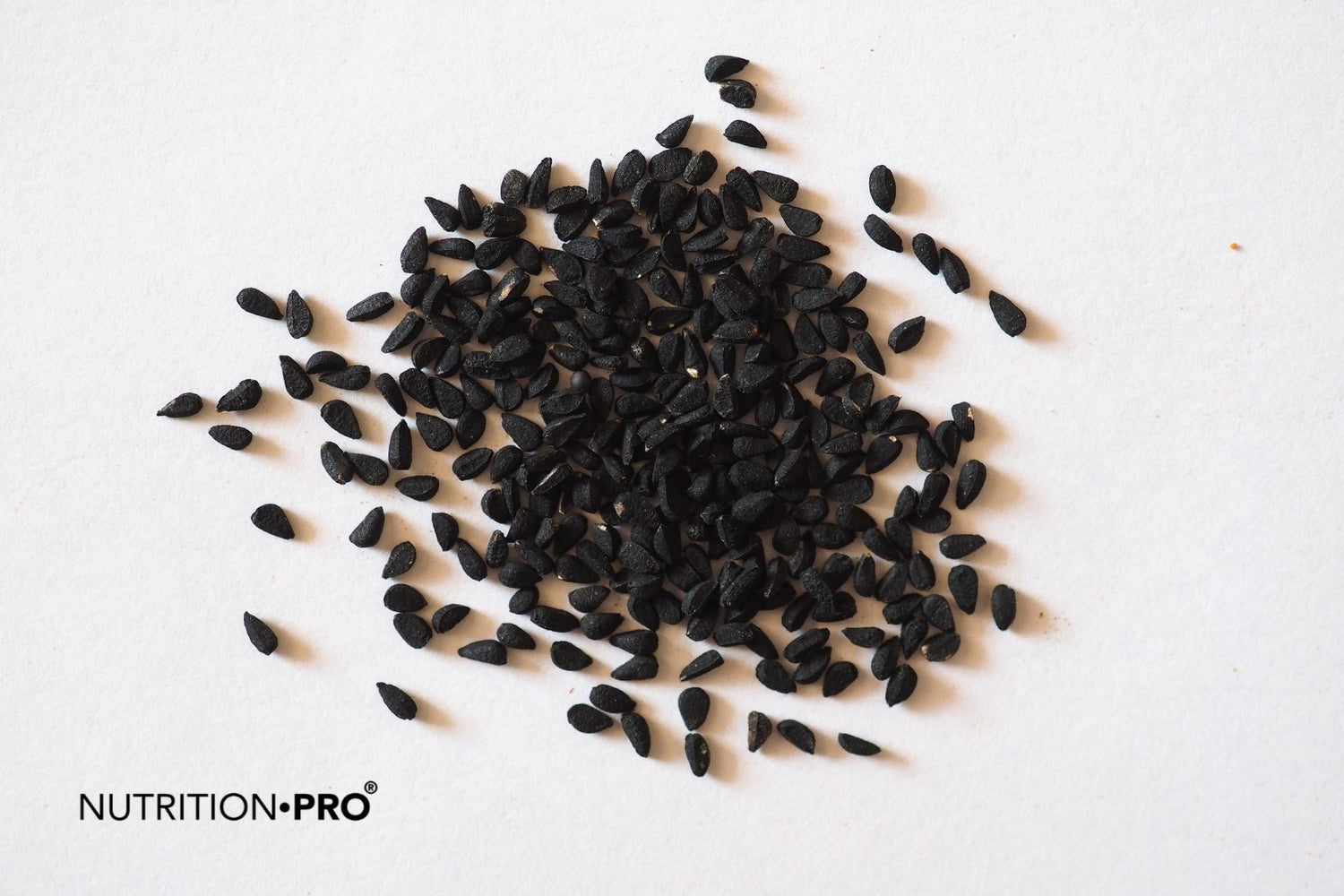
In summary: black nigella seeds (Nigella sativa, or black cumin) can be consumed in multiple ways: whole, ground, with honey, as an infusion, sprinkled on dishes or in yogurt. The usual dose is around 1 to 3 g per day (half to one teaspoon). Grinding them and combining with a fat source helps you benefit better from their compounds. This practical guide details the best methods, the right timing, recipes and precautions.


Usual dose: 1 to 3 g of seeds per day (half to one teaspoon). Grinding them just before use releases the active compounds more effectively, and combining with a fat source (honey, oil, yogurt) promotes absorption. According to Hannan et al. 2021 in Nutrients, the bioavailability of thymoquinone, the flagship compound, is a key issue: preparation matters as much as quantity.
What quantity of seeds per day?
The usual dose is around 1 to 3 g of black cumin seeds per day, or approximately half to one teaspoon. It's best to start small and increase gradually over a week to assess digestive tolerance.
There is no single official dose: traditional uses and studies employ variable quantities. For daily maintenance consumption, half to one teaspoon of seeds is more than sufficient. According to PubMed, the safety review by Mashayekhi-Sardoo et al. 2020 in Asian Biomedicine confirms that black cumin is well tolerated at dietary doses, with adverse effects only appearing at quantities unrelated to culinary use.
The most important thing is not to take a lot, but to take it regularly and consistently over time. To understand what black cumin can offer, see our guide to the benefits of black cumin oil.
The 7 ways to consume black cumin seeds
Black cumin seeds are one of the most versatile ingredients: here are seven simple methods, from the most straightforward to the most indulgent.
Should the seeds be ground?
This is one of the most useful points to know. The active compounds of black cumin, foremost among them thymoquinone, are locked within the seed. When swallowed whole, some seeds may pass through the digestive tract without being fully digested. Grinding or crushing the seeds just before consumption helps release these compounds and promotes better assimilation.
According to Hannan et al. 2021 in Nutrients, the bioavailability of thymoquinone is precisely one of the major challenges with black cumin: the way you consume it influences the amount actually absorbed. Two simple practices follow from this: grind on demand (to prevent oxidation in air) and combine with a fatty substance (honey, oil, yogurt), because black seed compounds are fat-soluble.
The best time and right way to take them
Black seed offers great flexibility, but a few principles optimize its use:
- During a meal : the presence of some fat improves the absorption of fat-soluble compounds and limits any potential digestive discomfort.
- In the morning preferably for those who appreciate its tonic effect, but evening also works.
- Regularly : consistency over several weeks matters more than the exact time of intake.
- In cycles : 2 to 3 months, to be repeated, rather than continuously at high doses.
- Starting gradually : a small amount the first few days to allow digestion to adjust.
For traditional use ideas, see our 10 home remedies with black seed.
Seeds, oil or capsules: which to choose?
All three forms provide the same compounds. The choice depends on your lifestyle and preferences; none is absolutely superior.
| Criteria | Seeds | Oil | Capsules |
|---|---|---|---|
| Culinary use | Excellent | Seasoning | No |
| External use (skin, hair) | No | Yes | No |
| Preparation | To be ground | Ready to use | None |
| Taste | Pronounced | Pronounced | Neutral |
| Precise dosage | Approximate | Teaspoon | Exact |
| Travel convenience | Average | Average | Excellent |
In summary: the seeds for cooking and variety, theoil for concentration and external use, the capsules for simplicity and precision. Many combine seeds in cooking with oil or capsules as a cure.
Precautions to know
Black seed remains an active ingredient to be used with discernment: it is not recommended during pregnancy (potential uterotonic effect) and breastfeeding, as well as in children under 12 years without medical advice. In case of anticoagulant, antidiabetic or antihypertensive treatment anticoagulant, antidiabetic or antihypertensive, consult your doctor, as black seed may potentiate their effects.
At dietary doses, adverse effects are rare and mild (slight digestive upset at the start of a cure). For complete safety details, see our article is black seed oil dangerous?.
Glossary
- Thymoquinone
- The main active compound of black seed, responsible for most of its properties. Sensitive to heat and light.
- Bioavailability
- The proportion of a compound actually absorbed by the body. Grinding the seeds and combining them with a fat improves it.
- Lipid-soluble
- Describes a compound that dissolves in fats: its absorption is enhanced by the presence of dietary fat.
- Cure
- Period of regular intake (often 2 to 3 months) allowing effects to establish progressively.
FAQ: your practical questions
How much black seed per day?
Common usage is around 1 to 3 g per day, or half to one teaspoon. Starting small and increasing gradually helps assess digestive tolerance. Beyond this, the benefit is not established.
Should black seeds be ground?
Grinding or crushing the seeds just before consuming helps release active compounds (including thymoquinone) and facilitates their absorption. Whole seeds remain useful, but some may pass through the digestive tract undigested. Grinding on demand prevents oxidation.
Can you swallow nigella seeds whole?
Yes, you can swallow them whole with a large glass of water or chew them, but ground seeds release their compounds better. Pairing them with a little honey or oil promotes the absorption of fat-soluble compounds.
How to consume nigella seeds to mask the taste?
The taste is pronounced, spicy and slightly bitter. To soften it: mix ground seeds with honey, incorporate them into yogurt or a smoothie, or sprinkle them on hot dishes, salads and breads. As an infusion, they pleasantly flavor a beverage.
What is the best time to take nigella seeds?
Morning or during a meal works well. Taking them during a meal containing some fat improves the absorption of fat-soluble compounds and limits digestive discomfort. Consistency over several weeks matters more than the precise timing.
Nigella seeds, oil or capsules: which to choose?
All three provide the same compounds. Seeds are versatile in cooking but need to be ground and have a strong taste. Oil is concentrated and convenient for internal and external use. Capsules offer precise dosing without taste. The choice depends on your preferences and lifestyle.
To go further
Consuming nigella seeds is simple: half to one teaspoon per day, ground and combined with a fat source, in the preparation of your choice. If grinding or the taste holds you back, oil and capsules are practical alternatives with the same compounds.
To learn more: our complete guide to the benefits of nigella oil, our 10 home remedies with nigella seeds, and our safety information is nigella oil dangerous?. Also discover our organic nigella powder, our nigella oil from Ethiopia 100 ml and our capsules from Egypt.
- Hannan MA, et al. Black Cumin (Nigella sativa): A Comprehensive Review on Phytochemistry, Health Benefits, Molecular Pharmacology, and Safety. Nutrients. 2021;13(6):1784. DOI 10.3390/nu13061784
- Mashayekhi-Sardoo H, Rezaee R, Karimi G. Nigella sativa (black seed) safety: an overview. Asian Biomed (Res Rev News). 2020;14(4):127-137. DOI 10.1515/abm-2020-0020


