

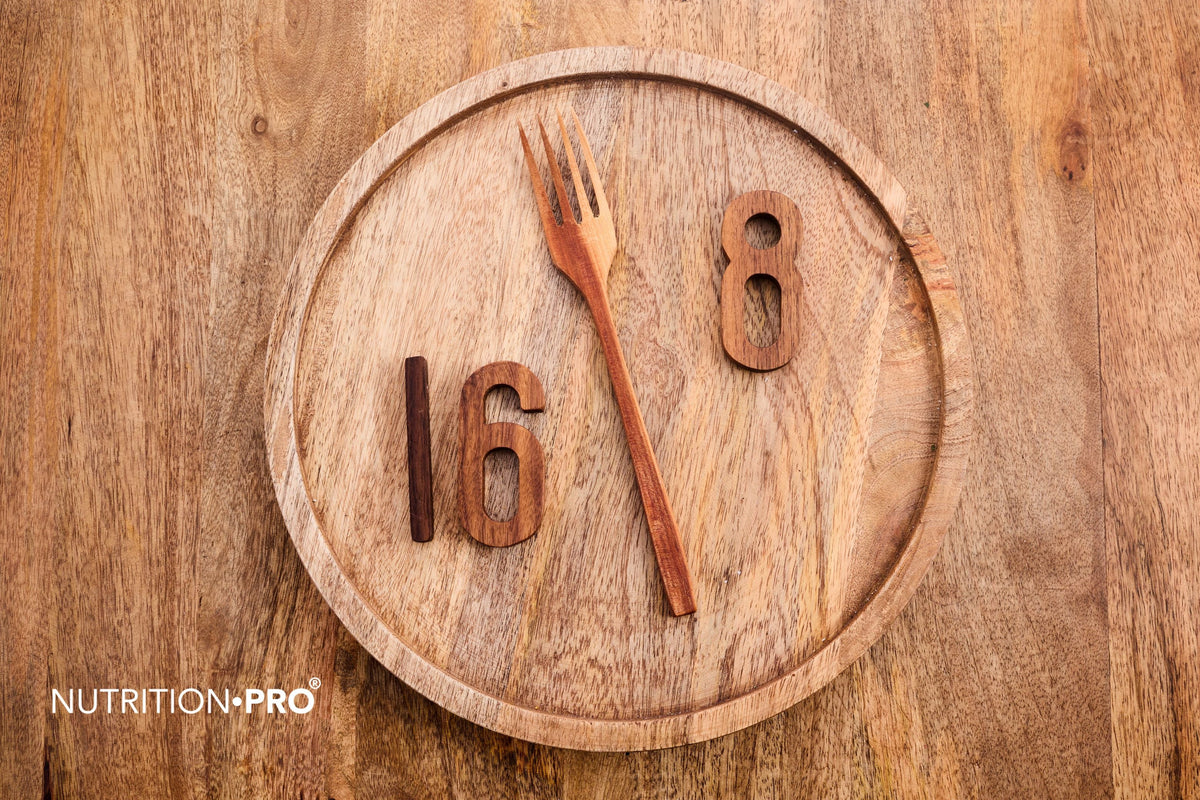
The 16/8 is the most practiced intermittent fasting protocol, and the one that produces the most dropouts after three weeks. Not from lack of willpower: because almost everyone starts it the same way, overnight, with the noon to eight p.m. eating window copied from the internet, without having thought about protein or family dinners. What decides the outcome is not the principle, which is simple, but the application, which is far more complex.
This article is therefore deliberately practical. What fasting protocols are really worth, what studies show and who should not fast—all of this is covered in our intermittent fasting guide. Here, we answer just one question: how do you actually live through a day on 16/8 ? Choosing your eating window according to your schedule, getting through the first three days, two typical days hour by hour, hitting your protein targets over eight hours, timing your workout, managing unexpected situations, and the seven mistakes that cause failure.

16/8 rarely fails on principle and almost always on implementation: poorly timed eating window, insufficient protein, compensating in the evening. Our women's and men's programs establish the progression and distribution guidelines that keep you on track beyond the first month.
16/8 involves concentrating your food intake over eight hours. The 12 p.m. to 8 p.m. window is most common, but nothing requires it: available data actually favor earlier eating windows, and a controlled trial showed improved insulin sensitivity and blood pressure with an early window, with no weight loss. What determines the outcome lies elsewhere: 16/8 practiced without calorie guidelines produced only one kilogram in twelve weeks in the TREAT trial, due to lack of a real deficit, plus a loss of lean mass in the limbs. Three factors change everything: reaching 16/8 gradually, over three weeks rather than one day; hitting your protein targets with a goal per meal of around 0.4 to 0.5 grams per kilogram of body weight, distributed across at least two meals; and choosing an eating window compatible with your social life rather than copied from an online template. Finally, five to six days per week maintained over months beats perfect adherence abandoned after three weeks.
- 16/8 in one minute
- Choosing your eating window according to your schedule
- The first three days: what to expect
- Typical day, 12 p.m. - 8 p.m. eating window
- Typical day, 9 a.m. - 5 p.m. eating window
- Hitting your protein targets over eight hours
- What to drink during the fasting period
- Where to place your workout session
- Family meals, restaurants and unexpected events
- The seven mistakes that cause 16/8 to fail
- Women, 50 years and older: adaptations
- Who should not do it
- The plan for the first four weeks
- Frequently asked questions
1. The 16/8 in one minute
The principle can be summed up in one sentence, which partly explains its success: you consume all your meals within an eight-hour window, and you consume no calories during the remaining sixteen hours. Since sleep already takes up seven to eight of these hours, the actual effort is over eight to nine waking hours.
Two common misconceptions deserve to be addressed right away, as they determine everything else in this article.
| What people believe | What studies show |
|---|---|
| "16/8 makes you lose weight without counting" | In the TREAT trial, 16/8 without caloric guidance produced 0.94 kg in 12 weeks, with no difference from the control group or in energy intake |
| "The 12 p.m. - 8 p.m. window is the right one" | Nothing establishes this. Metabolic benefits have been demonstrated with an early window, and eating in the morning significantly reduces hunger at equal calories |
What remains true, and what justifies the protocol's interest: 16/8 eliminates decisions. For someone who snacks from wake-up to bedtime, closing the kitchen at a fixed time often removes several hundred calories daily without any calculation. It's an organizational tool, not a metabolic mechanism.
2. Choosing your window based on your schedule
| Your situation | Suggested window | Why |
|---|---|---|
| You have dinner with family every evening | 11 a.m. - 7 p.m. | Preserves the shared dinner while advancing the window as much as possible. The most common compromise |
| You have lunch at work, dinner flexible | 9 a.m. - 5 p.m. | The most metabolically favorable: late breakfast, lunch, snack, and nothing after 5 p.m. |
| You're never hungry in the morning | 12 p.m. - 8 p.m. | The simplest to adopt. Still try to move dinner earlier: morning hunger often returns within a few days |
| You train in the evening | 12 p.m. - 8 p.m. or 1 p.m. - 9 p.m. | Allows eating after the session, which matters for muscle mass (section 8) |
| You wake up very early | 8 a.m. - 4 p.m. | Natural early eating window, most aligned with available data |
| You work night shifts or irregular hours | To be adapted individually | No standard protocol applies. The consistency of your schedule matters more than its timing |
The most underestimated criterion is the third one: stability. Shifting your window by three hours from one day to the next cancels out part of the protocol's benefit, which relies precisely on the regularity of eating signals. Better an imperfect but stable window than an ideal window that changes every day.
3. The first three days: what to expect
Going from a fifteen-hour eating window to eight hours overnight is the number one reason for abandonment. The progression described in section 13 takes three weeks and considerably increases your chances of sticking with it beyond the first month. Three weeks of patience for several months of results: the math is simple.
4. Sample day, 12 p.m. - 8 p.m. window
The pitfall of this window is well-documented: the TREAT trial, which tested it as designed, found no difference in energy intake between the 16/8 group and the control group. Participants ate the same amount, just later. If you choose this window, the 4 p.m. snack and properly constructed midday meal are your safeguards against evening compensation.
5. Sample day, 9 a.m. - 5 p.m. window
Why complicate things? Because a controlled feeding trial conducted in prediabetic men fed to maintain their weight showed that an early window improved insulin sensitivity, beta cell response, blood pressure, and oxidative stress, without any weight loss (Sutton, Cell Metabolism, 2018). This is the only result that truly distinguishes fasting from a simple caloric deficit, and it depends on timing.
That said, let's be pragmatic: an early eating window maintained for three days then abandoned is worth less than a late window maintained for six months. If dinner is non-negotiable in your life, adopt the eating window from the previous section without guilt.
6. Meeting your protein targets over eight hours
Let's recall the issue, since it is real. The umbrella review of intermittent fasting trials associates this eating pattern with a reduction in lean mass, and the TREAT trial measured a decrease in appendicular lean mass, that of the arms and legs, in 16/8 participants. The most likely explanation is mechanical: fewer eating occasions means fewer opportunities to consume protein.
Based on studies examining acute muscle protein synthesis responses to protein intake, a target per meal of approximately 0.4 to 0.6 grams of protein per kilogram of body weight per meal is proposed for older adults. Eating habits tend to favor an unbalanced distribution of protein, which does not maximize muscle anabolism. Observational studies show that more even distributions are associated with greater muscle mass and better muscle function.
Phillips SM, Martinson W. Nutr Rev 2019;77(4):216-229. DOI: 10.1093/nutrit/nuy062. Convergent reference of 0.4 to 0.5 g/kg per meal in aging adults: Witard OC, McGlory C, Hamilton DL, Phillips SM. Biogerontology 2016;17(3):529-546. DOI: 10.1007/s10522-016-9637-9
A note of honesty: these two studies address sarcopenia prevention in older adults, not intermittent fasting. We adopt their principle, the dose per meal, and the benefit of even distribution, because it directly illuminates the challenge of 16/8, but this is not an established recommendation for this protocol. In younger adults, standard sports nutrition references typically range around 1.6 to 2 g per kilogram per day.
| Food | Typical serving | Protein provided |
|---|---|---|
| Chicken breast | 120 g | approximately 30 g |
| Salmon, cod, tuna | 130 g | 25 to 30 g |
| Eggs | 3 eggs | approximately 19 g |
| Cottage cheese, skyr | 200 g | 16 to 22 g |
| Cooked lentils | 200 g | approximately 18 g |
| Firm tofu | 150 g | approximately 18 g |
| 5% lean ground beef | 120 g | approximately 25 g |
| Whey powder | 1 serving of 30 g | 22 to 27 g |
Order of magnitude guidelines for building meals, to be adjusted according to products. For a 70 kg person aiming for 30 to 35 g per meal, a portion of meat or fish plus a secondary source is generally sufficient.
Three habits make the practice simple. Start each meal with the protein source, before starches and vegetables: this is the best way to ensure it doesn't get relegated to a minimal portion. Build two anchor meals, one at the opening of the window and one at the closing, rather than relying on snacking. And plan ahead : on a short window, a poorly stocked fridge directly results in a meal without protein.
Over eight hours, meeting your protein needs requires organization. Our BCAA 2.1.1 powder supplement your food intake, and our Fasting programs outline meal distribution and numerical guidelines. Neither one replaces a properly balanced plate.
Discover BCAA powder →Also see our whey and protein guide, the proteins and amino acids collection, and our Fasting programs.
7. What to drink during fasting
| Beverage | During fasting |
|---|---|
| Still or sparkling water | Yes, and in quantity. Sparkling water helps some people get through waves of hunger |
| Black coffee without sugar | Yes. Only a few calories, and caffeine reduces hunger |
| Tea, sugar-free infusions | Yes. Useful for replacing the breakfast ritual |
| Coffee with milk, cappuccino | No. 30 to 150 kcal depending on preparation |
| Fruit juice, smoothies | No, including freshly pressed homemade |
| Diet sodas, sweeteners | Debated. Zero calories, but may stimulate appetite in some people. Worth testing for yourself |
| Defatted vegetable broth | Technically no, but very low calorie. Useful as a transition during the first few days |
| Alcohol | No, and should be limited within the eating window as well |
The most useful point in this section is not the list buthydration. A significant portion of daily water intake comes from food, particularly fruits, vegetables, and soups. By eliminating sixteen hours of food intake, you also eliminate this source, often without realizing it. Headaches on the second day much more often come from this than from fasting itself.
8. Where to schedule your workout
| Type of session | Recommended timing | Precautions |
|---|---|---|
| Walking, easy cycling, light jogging | Anytime, including while fasting | Well tolerated by most people. Bring water |
| Strength training | End of fasting period, just before the eating window | Eat within the hour following, with protein intake. This timing best protects muscle mass |
| Intense session, interval training | Within the eating window, after a meal | Performance drops while fasting and risk of fainting increases. Avoid in the first few weeks |
| Long outing, over 90 minutes | Within the eating window, with refueling | Prolonged fasting and long-duration exercise don't mix well |
| Evening workout | Shift your eating window to 1 p.m. - 9 p.m. | Better to adjust your window than to train without being able to eat afterward |
Three signals require you to stop the session and eat: dizziness, cold sweats, unusual weakness. These are not normal stages of adaptation. And if you train seriously, keep in mind that caloric deficit and short eating window add up: our article on the difference between fatigue and overtraining details the signals to watch for.
9. Family meals, restaurants, and unexpected events
A word on the social dimension, often treated as a detail when it actually determines sustainability. A protocol that makes you decline invitations, eat separately from your family, or explain your schedule at every meal won't work, and there's no reason it should: its benefits are modest and don't justify this cost. Adapt the window to your life, never the other way around.
10. The seven mistakes that cause 16/8 to fail
11. Women, 50 and over: adaptations
In women. Two nuances, already discussed in our main article and worth repeating here. Trials often include fewer women than men and rarely publish separate analyses by sex: the reference trial on early windows included only men. And cycle disturbances are reported when restriction becomes marked or combines with intensive training. The likely mechanism is not fasting but relative energy deficiency, that is, insufficient intake relative to expenditure. A cycle that lengthens, spaces out, or disappears requires widening the window, increasing intake, and consulting a healthcare provider.
After 50. The question is no longer so much about weight loss but what you lose alongside it. Muscle mass naturally declines with age, and a short window makes meeting protein targets more difficult at precisely the moment when per-meal needs increase: research on sarcopenia suggests targets of 0.4 to 0.5 grams per kilogram per meal in aging adults, more than in younger adults. Three adaptations are therefore necessary: a fairly wide window, 14/10 or 16/8 but not beyond; protein at each meal protein at each meal, without exception; and resistance training two to three times per week, non-negotiable. Without these three elements, the benefit-risk ratio deteriorates with age.
12. Who should not do it
You have or have had an eating disorder, or if your relationship with food is a source of distress. A protocol that frames meals by set times can reactivate control and compensation mechanisms. This is the most important and least often cited contraindication.
You are pregnant or breastfeeding, or you are under 18 years old : nutritional needs are continuous and increased.
Your body mass index is below 18.5, or you have lost weight unintentionally.
You are diabetic and treated with insulin or hypoglycemic sulfonylureas : risk of hypoglycemia during fasting phases. The decision rests with your doctor.
You are a frail elderly person, or you are taking a treatment requiring regular food intake.
The warning sign to know: if you feel guilty about eating outside your window, if you skip shared meals to respect a schedule, or if you compensate for a deviation by fasting longer, stop and speak with a health professional. This is not discipline.
13. The four-week plan
Our Fasting programs, in female and male versions, lay out week-by-week progression, meal distribution, and protein benchmarks that separate those who stick with it for six months from those who quit by week three.
Discover the intermittent fasting collection →For intake over short windows: our BCAA powder and the proteins and amino acids collection.
Choose the situation that fits you best: the answer appears just below.
Don't start directly with 16/8, it's the number one cause of abandonment. Week 1, measure your current window then bring it down to twelve hours by moving dinner earlier. Week 2, move to 14/10 and deliberately increase water intake, because a third of your hydration came from food. Week 3, reach 16/8 and set a window compatible with your shared meals. Week 4, build two anchor meals with a protein source first. Then evaluate at six weeks based on waist circumference, energy, sleep, and ease of adherence, not just the scale.
This is the very result of the TREAT trial: 16/8 practiced without calorie guidelines produced less than one kilogram in twelve weeks, and especially no difference in energy intake compared to the control group. Participants ate just as much, simply later. Two concrete approaches. Log your actual intake for three or four days, without judgment: it's often eye-opening. And advance your window rather than narrowing it, because eating in the morning significantly reduces hunger at equal calories. If nothing changes after six weeks, 16/8 isn't your tool, and our article how many calories per day to lose weight offers another approach.
The umbrella review associates intermittent fasting with a reduction in lean mass, and the TREAT trial measured a decrease in lean mass of limbs in 16/8. Three measures correct this. Place your strength training session at the end of your fasting period, just before opening your window, so you can eat within the hour that follows. Aim for a protein target per meal, around 30 to 40 g per 70 kg, across at least two anchor meals. And maintain two to three resistance sessions per week—this is the signal that tells your body to preserve muscle. A 14/10 window is actually more comfortable than 16/8 to achieve this, and equally valid.
A protocol that makes you decline invitations or eat separately from your family won't stick, and its benefits are too modest to justify that cost. Three concrete solutions: shift your window on days with late dinners, for example 1 p.m. - 9 p.m., rather than skipping the event; stick to five or six days out of seven rather than seven out of seven; and if you work night shifts or rotating schedules, know that no standard protocol applies and consistency matters more than timing. If nothing adjusts, 16/8 simply isn't suited to your current situation, and other approaches exist, such as those described in lose weight without dieting.
This test provides guidance; it does not replace professional health advice.
Frequently asked questions about 16/8
How does 16/8 work in practice?
You eat during an eight-hour window and consume no calories during the remaining sixteen hours, including sleep. The most common window runs from 12 p.m. to 8 p.m., which amounts to skipping breakfast. But nothing requires you to choose that one: a window from 9 a.m. to 5 p.m. or 10 a.m. to 6 p.m. respects exactly the same ratio and likely presents superior metabolic advantages, with available data favoring windows placed early in the day. During the fasting phase, water, black coffee, and unsweetened tea are permitted.
Which window should you choose for 16/8?
The one that fits your life, with a preference for placing it early if possible. Three practical guidelines: include the meal that matters socially to you, usually family dinner or a work lunch; end your window at least two hours before bedtime; and keep the same window from day to day, consistency mattering more than exact timing. If you train, arrange for your session to fall at the end of your fasting period or within your window, so you can eat afterward.
What happens in the first three days?
Marked hunger at hours when you normally ate, often in waves lasting twenty minutes that then pass, sometimes headaches, irritability, and a dip in concentration late morning. These symptoms come mainly from habit and dehydration, and they ease noticeably within three to seven days. Two measures truly help: drink more, since part of your daily water normally comes from food, and start with a wider window, 14/10 for example, before narrowing it.
How do you hit your protein targets in just eight hours?
This is the main challenge of 16/8 and the cause of the only unfavorable signal from studies—lean mass loss. Three measures suffice. Aim for a quantity per meal rather than a vague total: work on muscle protein synthesis suggests a range of 0.4 to 0.5 grams of protein per kilogram of body weight at each meal, roughly 30 to 40 grams for a 70-kilogram person. Distribute across at least two substantial meals, a more even distribution being associated with better muscle mass. And start each meal with your protein source.
What can you drink during fasting?
Still or sparkling water, black coffee without sugar or milk, tea and herbal infusions without sugar: these drinks provide virtually no calories and don't break the fast in practical terms. By contrast, coffee with milk, cappuccino, juices, sugary sodas, and any addition of sugar or honey provide calories and break the fasting phase. Artificial sweeteners and diet sodas are debated: calorie-free, they trigger an appetite response in some people that makes late morning more difficult. Test individually.
Can you exercise on 16/8?
Yes, by timing your session wisely. The most comfortable option is to train at the end of your fasting period, just before opening your window, which lets you eat right after and preserve muscle mass. Moderate activities—walking, easy cycling, light jogging—tolerate fasting well. Intense or long sessions while fasting are more questionable: performance tends to decline and the risk of discomfort increases, especially the first few weeks. Dizziness, cold sweats, or unusual weakness require you to stop and eat.
How do you manage a family meal or a late dinner?
By shifting your window that day, not by skipping the event. If a dinner is planned for 9 p.m., simply shift your window to 1 p.m. or 2 p.m. that particular day. You'll maintain sixteen hours of fasting without sacrificing anything socially. And if you exceed it, it's not a failure: 16/8 has no magic virtue that cancels at the slightest deviation, since its effect comes through the week's total calorie count. A rhythm maintained five days out of seven produces more results than a perfect rhythm abandoned after a month.
Does 16/8 really make you lose weight?
It makes you lose weight if it creates a calorie deficit, not by itself. The landmark trial on 16/8 practiced without calorie guidelines measured less than one kilogram of loss in twelve weeks, with no difference from the control group, and no difference in energy intake between groups: participants ate just as much, simply later. Conversely, when 16/8 is paired with calorie restriction, loss reaches eight kilos over twelve months, but with no significant superiority over calorie restriction alone. In other words, the window is a tool; the deficit remains the engine.
Do you have to do 16/8 every day?
No, and it's often counterproductive to aim for it. A rhythm of five to six days per week, with normal eating days on weekends or social occasions, produces the same effects as a strict rhythm while being infinitely more sustainable. Recall that in the longest alternate fasting trial, 38% of participants had quit within a year. Consistency over months matters more than perfection over three weeks, and a pattern that isolates you socially always ends up being abandoned.
What are the mistakes that cause 16/8 to fail?
Seven come back constantly: compensating within the window by eating more than before, neglecting protein, drinking too little, aiming for 16/8 from day one instead of progressing, choosing a window incompatible with your social life or work schedule, training intensely while fasting without transition, and judging results after one week on the scale. None of these mistakes is a matter of willpower: they're method problems, and they all can be corrected.
Is 16/8 suitable for women?
In a healthy woman, there is no contraindication specific to the female sex, but two nuances merit attention. Trials often include fewer women than men and rarely publish separate analyses, so sex-specific data are limited. And menstrual cycle disruptions are reported when restriction is marked or combined with intensive training, which reflects excessive energy deficit rather than an effect of fasting itself. A cycle that becomes irregular, persistent fatigue, or a drop in libido require widening your window and consulting a professional.
How long before you see results?
Count on six weeks to judge seriously, and look at more than the scale. The first days show only water fluctuations. What changes first, usually by the second week, is morning hunger that eases and the sense of having fewer food decisions to make. Changes in body composition take longer and depend mainly on calorie deficit and physical activity. Four useful markers: waist circumference, energy, sleep quality, and ease of maintaining the rhythm.
Who should not practice 16/8?
People with a history of eating disorders, pregnant or breastfeeding women, those under 18, people of low body weight or malnourished, diabetics treated with insulin or sulfonylureas, frail elderly persons, and anyone taking medication requiring regular food intake. An additional signal deserves attention: if you catch yourself feeling guilty about eating outside your window or postponing shared meals to respect a schedule, stop and talk to a health professional.
- 16/8
- A restricted eating window protocol combining sixteen hours without calorie intake and eight hours of eating, with sleep included in the fasting phase.
- Eating window
- Interval between the first and last caloric intake of the day. Most adults spontaneously eat over fourteen to sixteen hours.
- Early eating window
- Eating window placed early in the day, completed by late afternoon. This is the pattern associated with metabolic benefits independent of weight loss.
- Anchor meal
- Structured and planned meal, containing an identified protein source, as opposed to improvised food intake. Two anchor meals are generally sufficient over an eight-hour window.
- Lean mass
- All non-fatty tissues, including muscle. Its preservation during a deficit depends on protein intake and resistance training.
- Relative energy deficit
- Insufficient intake relative to expenditure, even with stable weight. Can disrupt the menstrual cycle, thyroid function, and bone density.
- Muscle protein synthesis
- Process of building muscle proteins, stimulated by protein intake and resistance exercise. Responds to doses per meal rather than a daily total.
- Compensation
- Increase in intake during the eating window that cancels out the deficit created by time-restricted restriction. Main explanation for disappointing results of unstructured 16/8 fasting.
- Lowe DA, Wu N, Rohdin-Bibby L, et al. Effects of time-restricted eating on weight loss and other metabolic parameters in women and men with overweight and obesity: the TREAT randomized clinical trial. JAMA Intern Med. 2020;180(11):1491-1499. doi:10.1001/jamainternmed.2020.4153
- Liu D, Huang Y, Huang C, et al. Calorie restriction with or without time-restricted eating in weight loss. N Engl J Med. 2022;386(16):1495-1504. doi:10.1056/NEJMoa2114833
- Sutton EF, Beyl R, Early KS, Cefalu WT, Ravussin E, Peterson CM. Early time-restricted feeding improves insulin sensitivity, blood pressure, and oxidative stress even without weight loss in men with prediabetes. Cell Metab. 2018;27(6):1212-1221.e3. doi:10.1016/j.cmet.2018.04.010
- Ruddick-Collins LC, Morgan PJ, Fyfe CL, et al. Timing of daily calorie loading affects appetite and hunger responses without changes in energy metabolism in healthy subjects with obesity. Cell Metab. 2022;34(10):1472-1485.e6. doi:10.1016/j.cmet.2022.08.001
- Patikorn C, Roubal K, Veettil SK, et al. Intermittent fasting and obesity-related health outcomes: an umbrella review of meta-analyses of randomized clinical trials. JAMA Netw Open. 2021;4(12):e2139558. doi:10.1001/jamanetworkopen.2021.39558
- Elortegui Pascual P, Rolands MR, Eldridge AL, et al. A meta-analysis comparing the effectiveness of alternate day fasting, the 5:2 diet, and time-restricted eating for weight loss. Obesity (Silver Spring). 2023;31(Suppl 1):9-21. doi:10.1002/oby.23568
- Trepanowski JF, Kroeger CM, Barnosky A, et al. Effect of alternate-day fasting on weight loss, weight maintenance, and cardioprotection among metabolically healthy obese adults: a randomized clinical trial. JAMA Intern Med. 2017;177(7):930-938. doi:10.1001/jamainternmed.2017.0936
- Phillips SM, Martinson W. Nutrient-rich, high-quality, protein-containing dairy foods in combination with exercise in aging persons to mitigate sarcopenia. Nutr Rev. 2019;77(4):216-229. doi:10.1093/nutrit/nuy062
- Witard OC, McGlory C, Hamilton DL, Phillips SM. Growing older with health and vitality: a nexus of physical activity, exercise and nutrition. Biogerontology. 2016;17(3):529-546. doi:10.1007/s10522-016-9637-9


