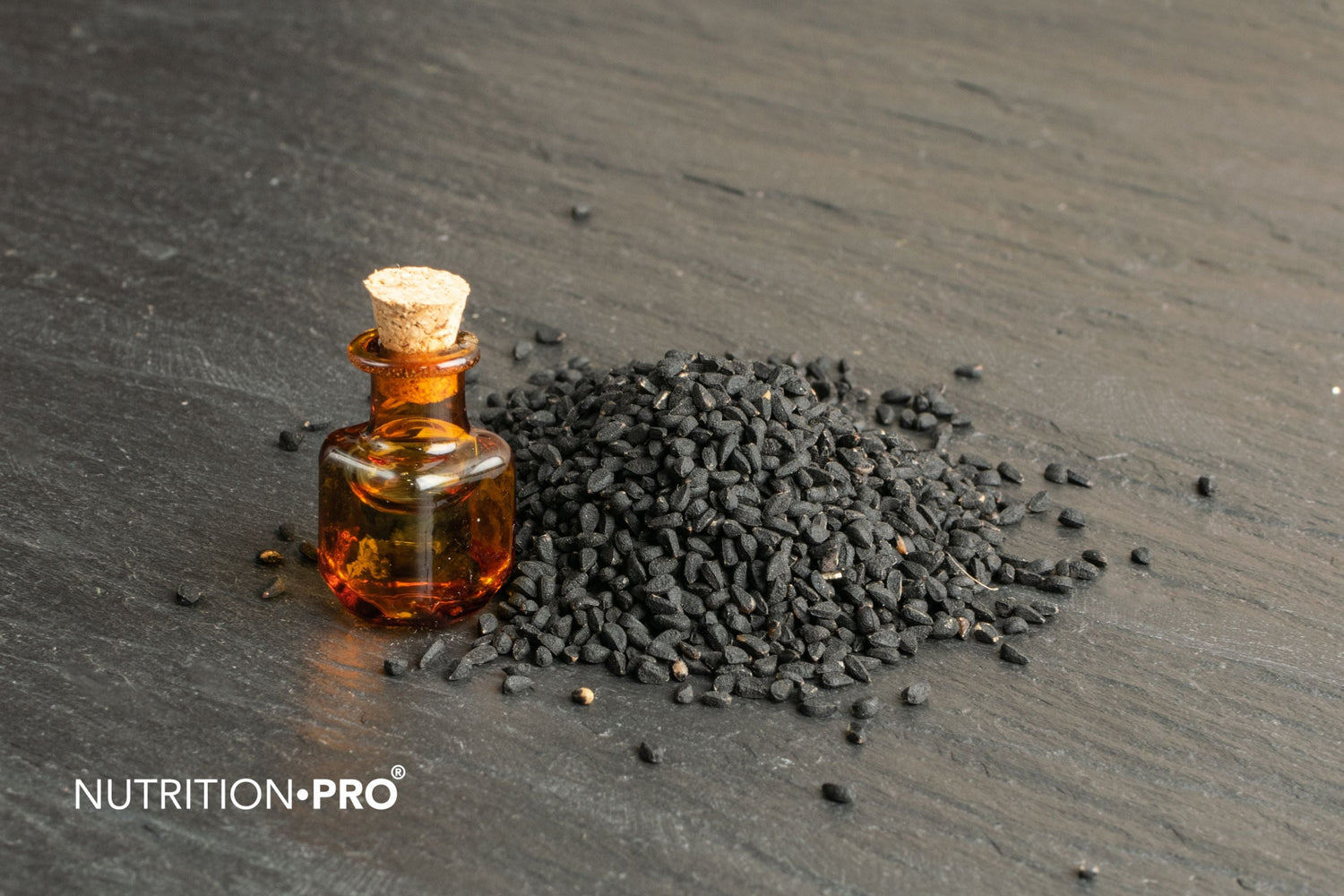
In summary: Blackseed oil (Nigella sativa), also called black cumin oil or "black gold," is the subject of over 1,500 scientific publications on PubMed. Its flagship active molecule, thymoquinone, is documented for its anti-inflammatory, immunomodulatory, hypoglycemic and antioxidant effects. The most clinically validated benefits in humans: blood sugar regulation (type 2 diabetes), improvement of lipid profile, reduction of seasonal allergies, acne improvement (-78% with a topical gel), immune support. A 3-month treatment course is recommended, taken internally (oil or capsules) or applied externally.
Black seed oil is one of the most fascinating treasures of phytotherapy. Nicknamed the " blessed seed " in Islamic tradition and the " healing seed " in Ayurvedic medicine, it has been used for over 3,000 years by Egyptian, Greek and Arab civilizations. Black seeds were even found in the tomb of Pharaoh Tutankhamun, testifying to their importance in ancient culture.
But beyond legend and tradition, what does modern science really say about this mysterious oil? Research has been intensely interested in black seed since the 1990s, and the corpus of scientific publications is now considerable: over 1,500 studies on PubMed, including approximately 80 clinical trials in humans.
This article offers a complete and honest analysis of the 12 best-documented benefits of black seed oil, with their levels of evidence, their biological mechanisms and the clinical studies that support them. You will also find the quality criteria essential for choosing your oil properly, the usage methods (internal, external, culinary), the dosage, and the contraindications to know.
- Black seed oil: 3,000 years of history
- Composition: the exceptional richness of black seed
- Thymoquinone: the star molecule
- The 12 proven benefits of black seed oil
- How to recognize quality oil
- Ethiopia or Egypt: which origin to choose?
- Pure oil or capsules: what to choose?
- The 3 usage methods: internal, external, culinary
- Recommended dosage and treatment duration
- Side effects and contraindications
- Synergies with other natural ingredients
- FAQ: your questions before purchasing
Black seed oil: 3,000 years of history
The use of black cumin dates back to over 3,000 years. The first documented traces come fromancient Egypt, where the pharaohs used it for its therapeutic and embalming properties. Black cumin seeds were found in the tomb of Pharaoh Tutankhamun (1323 B.C.), testifying to their importance for the passage to the afterlife.
Cleopatra and Nefertiti used it in cosmetics for their skin and hair. Hippocrates, the father of Western medicine, prescribed it for digestive disorders. Dioscorides, a Greek physician of the 1st century, recommended it for headaches, snake bites, and menstrual disorders.
In Islamic tradition, black cumin is mentioned in a famous hadith attributed to the Prophet Muhammad, who reportedly said that it "cures everything except death". This sacred status in the Arab world explains its nickname of "blessed seed" (Habba sawda in Arabic, Habbatul Baraka).
In Indian Ayurvedic medicine, where it is called "kalonji," it has been used for over 2,500 years to support immunity, digestion, and treat skin conditions.
Today,black gold is experiencing a spectacular revival thanks to modern science, which is progressively validating numerous traditional uses.
Composition: the exceptional richness of black cumin
Black cumin oil owes its properties to an exceptionally rich biochemical composition. More than 100 active compounds have been identified in Nigella sativa seeds, making it one of the most complete natural supplements known to date.
Lipid profile
Black cumin oil is composed primarily ofbeneficial unsaturated fatty acids :
- Linoleic acid (omega 6) : 50-60% — anti-inflammatory, cardiovascular support
- Oleic acid (omega 9) : 20-25% — cardiovascular protection
- Palmitic acid : 10-15% — saturated, structural
- Stearic and myristic acid : 2-3%
Key bioactive compounds
- Thymoquinone (TQ) : 30-48% of volatile essential oil — the star molecule (see dedicated section)
- Thymoquinone (TQ) : powerful antioxidant
- Carvacrol, p-cymene, α-pinene, limonene : aromatic terpenoids
- Nigellone, nigelline, nigellicine, nigellidine : alkaloids specific to black seed
- Saponins, alpha-hederin : immunomodulatory effects
Vitamins and minerals
- Vitamin E (tocopherols) : major antioxidant, protects fatty acids
- Vitamin A (carotenoids) : skin and immune health
- B Vitamins (B1, B2, B3, B6) : energy and nervous system
- Minerals : zinc, iron, calcium, potassium, magnesium, copper, phosphorus
The secret to efficacy: what makes black seed oil so powerful is not a single compound, but the synergy of over 100 active molecules that work in complementary fashion. This is what is called thematrix effect in phytotherapy: the whole is greater than the sum of its parts.
Thymoquinone: the star molecule
If one had to identify a single molecule from black seed, it would be thymoquinone (TQ). This volatile benzoquinone represents 30 to 48% of the essential oil contained in the seed. By itself, it concentrates the majority of documented pharmacological properties.
- Powerful anti-inflammatory : inhibition of pro-inflammatory mediators (NF-κB, TNF-α, COX-2, IL-6). Effects documented in dozens of studies in vitro and in animal models.
- Exceptional antioxidant : neutralizes free radicals, increases activity of endogenous antioxidant enzymes (SOD, catalase, glutathione).
- Immunomodulator : regulates activity of immune cells (T and B lymphocytes, macrophages, NK), balances Th1/Th2 response.
- Blood sugar regulator : improves insulin sensitivity and beta cell secretion in the pancreas. Effect validated in humans across multiple clinical trials.
- Antimicrobial : documented activity against Staphylococcus aureus, Escherichia coli, Candida albicans, Helicobacter pylori.
Important — Variable concentration: thymoquinone content varies considerably depending on seed origin (Egyptian and Ethiopian terroirs are the most concentrated), extraction method (cold pressing preserves TQ) and storage conditions (heat and light degrade TQ ). This is why not all products are equal. The Nutrition•pro thymoquinone reference Ethiopian black seed oil — rich in thymoquinoneOur Habachiya black seed oil comes from the Ethiopian terroir, one of the world's most concentrated sources of thymoquinone. Cold-pressed, unfiltered, packaged in dark glass bottles to preserve all active compounds. The purist choice for optimal therapeutic use.
by modern science, ranked by level of evidence. For each benefit, you will find the mechanism of action and key studies.
Immune support and natural defenses One of the best-established uses ★★★★★
Mechanism : thymoquinone and saponins stimulate the activity ofimmune cells
(helper T lymphocytes, NK cells, macrophages), while regulating inflammation. It acts as an immunomodulator : it stimulates when immunity is weak and calms when it is excessive (allergies, autoimmunity). 2016 Scientific review Gholamnezhad — Immunomodulatory effects of Nigella sativa This comprehensive review published in the
Cette revue exhaustive publiée dans le Journal of Ethnopharmacology documents the immunomodulatory effects of black seed in over 50 studies. It confirms a stimulation of T helper lymphocytes and NK cells, as well as regulation of the Th1/Th2 balance useful in chronic inflammatory and autoimmune diseases.
This is one of the most clinically validated uses. A systematic review of 17 clinical trials evaluated the effects of black seed on type 2 diabetes control.
Results : significant reduction in fasting blood glucose, improved insulin sensitivity, decrease inHbA1c (glycated hemoglobin) after 8 to 12 weeks of supplementation, at doses of 1 to 3 g of seeds or 500 to 1,000 mg of oil per day.
Mechanism : improved insulin secretion by pancreatic beta cells and reduction of insulin resistance via the antioxidant properties of thymoquinone.
Important: black seed oil does not replace prescribed antidiabetic treatment . It is a useful supplement, but under medical supervision in case of concomitant use of antidiabetics (risk of hypoglycemia).
Several randomized trials reported beneficial effects on blood lipids :
- Reduction in LDL cholesterol ("bad" cholesterol)
- Triglyceride reduction
- Maintenance or slight increase in HDL cholesterol ("good" cholesterol)
- Improvement in total/HDL ratio
These effects are explained by the lipid composition itself (rich in unsaturated omega 6 and 9) and by thymoquinone's action on hepatic cholesterol metabolism.
To learn more, see our complete guide to LDL cholesterol.
Black cumin oil has a natural antihistamine effect that is well-documented. Several clinical studies have confirmed its benefit in managing seasonal allergies.
This clinical study evaluated the effect of black cumin oil standardized to 5% thymoquinone in patients suffering from allergic rhinitis. Results: significant reduction of nasal symptoms (sneezing, rhinorrhea, congestion) and ocular symptoms (tearing, itching) after 6 weeks.
Practical advice : for prevention of seasonal allergies, start the treatment 2 months before pollen season (March for spring pollens), at a dose of 2-3 capsules or 1 teaspoon of oil per day. Continue throughout the allergic season.
Low-grade chronic inflammation is now recognized as a major risk factor for many diseases (cardiovascular disease, diabetes, cancers, neurodegenerative diseases). Thymoquinone acts powerfully against this silent inflammation.
Mechanisms :
- NF-κB inhibition : central transcription factor in inflammation
- Reduction of TNF-α and IL-6 : major pro-inflammatory cytokines
- Decrease in CRP (C-reactive protein): blood marker of inflammation
- COX-2 Inhibition : enzyme involved in pain and inflammation
Several clinical trials have reported a CRP reduction of 15-30% after 8-12 weeks of supplementation.
The topical application of black seed oil is one of the best-validated traditional uses in dermatology.
A clinical study demonstrated that a topical gel based on black seed extract applied twice daily for 60 days reduced acne severity by 78%. Researchers noted a significant improvement in the number of acne lesions compared to the control group, with excellent skin tolerance.
Mechanisms : antibacterial action against Propionibacterium acnes (acne bacteria), anti-inflammatory action on lesions, sebum regulation, and wound-healing properties thanks to thymoquinone.
Instructions for use : apply 2-3 drops of pure oil to affected areas, morning and evening, after cleansing the face. Preliminary skin test recommended.
Black seed oil is traditionally used for chronic skin conditions. Several preliminary studies confirm this use.
Atopic Eczema : topical application reduces inflammation, itching, and improves the skin barrier. Effect attributed to thymoquinone and essential fatty acids (omega 6).
Psoriasis : preliminary animal and human studies show improvement in psoriatic plaques. Research is still limited in humans, but empirical feedback is positive.
Vitiligo : a study conducted on 33 people showed that a cream based on black seed oil applied twice daily for 6 months improved pigmentation of the hands, face, and genital area.
Black seed oil is traditionally used to relieve bloating, digestive heaviness, intestinal disorders. Modern science partially confirms these uses.
Documented Mechanisms :
- Antispasmodic Action : relaxation of intestinal smooth muscles, reduction of spasms
- Anti-Helicobacter pylori Activity (bacteria responsible for gastric ulcers) : promising studies
- Microbiota Support : potential prebiotic effect
- Anti-inflammatory Action on the intestinal lining
Particularly useful in cases of irritable bowel syndrome, functional dyspepsia, or chronic bloating.
Black seed oil is widely acclaimed in hair cosmetics. Thymoquinone and essential fatty acids nourish the scalp and strengthen the hair fiber.
Reported Benefits :
- Growth Stimulation via improved scalp microcirculation
- Reduction of Hair Loss by strengthening the roots
- Fighting Dandruff thanks to antimicrobial and antifungal action
- Soothing Itching
- Shine and Nourishment of the fiber
Hair Application Instructions : scalp massage with a few drops of pure oil, 1-2 times per week, as an oil bath before shampooing. Leave on for 30-60 minutes.
The oxidative stress is one of the drivers of cellular aging and numerous chronic diseases. Black seed oil is one of the most powerful documented natural antioxidants.
Mechanisms :
- Direct neutralization of free radicals by thymoquinone and vitamin E
- Stimulation of endogenous antioxidant enzymes : superoxide dismutase (SOD), catalase, glutathione peroxidase
- Protection of cell membranes against lipid peroxidation
- Chelating action on pro-oxidant heavy metals
This antioxidant action largely explains the benefits of black seed for skin aging, cardiovascular prevention, and cellular protection.
Beyond improving the lipid profile, black seed oil exerts several beneficial cardiovascular effects:
- Slight reduction in systolic blood pressure and diastolic in hypertensive individuals
- Moderate antiplatelet aggregation action (to be monitored in case of anticoagulants)
- Endothelial protection against vessel inflammation
- Reduction of vascular oxidative stress
To learn more, see our guide to plants for blood pressure.
Black seed oil is one of the most studied natural antimicrobials, which earns it the nickname of "natural antibiotic". Documented action against:
- Gram-positive bacteria : Staphylococcus aureus (including antibiotic-resistant MRSA), Streptococcus
- Gram-negative bacteria : Escherichia coli, Pseudomonas aeruginosa, Helicobacter pylori
- Fungi : Candida albicans, dermatophytes
- Viruses : documented action against certain enveloped viruses
Important : black seed oil does not replace antibiotic treatment in cases of confirmed infection, but can serve as preventive and complementary support.
How to recognize quality oil
Not all black seed-based products are equal. The quality of the oil directly determines its effectiveness. Here are the 5 essential criteria to verify before purchasing.
- Cold-pressed (first pressing) : preserves thymoquinone and fatty acids. Oil extracted using heat or solvents loses up to 70% of its active compounds.
- 100% pure and unfiltered : no additives, no blending with other oils. Filtration can eliminate certain active compounds.
- Traceable origin : Egypt or Ethiopia. These two regions have the highest thymoquinone content.
- Packaging in dark glass bottle : light rapidly degrades thymoquinone. Amber or opaque glass is essential.
- Recent expiration date and proper storage : thymoquinone degrades over time. Favor fresh oils and store them away from heat.
Signs of poor quality oil
- Pale yellow color instead of deep brown-black
- Weak or rancid odor (fresh oil has a pronounced and characteristic smell)
- Sweet taste without bitterness (thymoquinone is bitter, its absence indicates low concentration)
- Plastic packaging or transparent glass
- Unspecified origin
- Abnormally low price (quality black seed oil comes at a cost)
The Nutrition•pro commitment: our Ethiopian black seed oil is made from Habachiya seeds rigorously selected (the variety with the highest thymoquinone concentration), cold-pressed without any chemical treatment, unfiltered to preserve the full integrity of its active compounds, and packaged in dark glass bottles. For capsules, we use Egyptian oil with a milder taste but the same benefits.
Ethiopia or Egypt: which origin to choose?
The two main varieties of black seed oil come from Ethiopia and Egypt. Their benefits are identical, but they differ in taste and thymoquinone content.
| Criterion | Ethiopia (Habachiya) | Egypt |
|---|---|---|
| Thymoquinone content | Very high | High |
| Taste | Pronounced, bitter | Milder, more accessible |
| Color | Intense brown-black | Dark brown |
| Traditional reputation | "Black gold" of purists | Ancient Egypt |
| Ideal for | Intensive treatment, therapeutic | Daily use, capsules, cooking |
| Benefits | Identical | Identical |
Conclusion : choose theEthiopia (Habachiya) if you're looking for the most potent version and accept the characteristic taste. Choose theEgypt if you prefer a milder taste or if you opt for capsules (which mask the taste anyway).
Pure oil or capsules: which to choose?
The choice between pure oil and capsules depends on your profile and objectives. Here is an honest comparative analysis.
| Criterion | Pure oil 100ml | Capsules |
|---|---|---|
| Daily convenience | Measuring spoon | Very convenient |
| Taste | Pronounced, bitter | No taste |
| Versatility | Internal + external + cooking | Internal only |
| Dosage precision | Measuring spoon | Exact dosage |
| Travel convenience | Bulky, fragile | Ideal when traveling |
| Storage | Away from light/heat | Stable, long shelf life |
| Ideal for beginners | Taste to acquire | Very easy |
| Efficacy (at equal quality) | Identical | Identical |
Choose the pure 100 ml oil if...
- You want maximum versatility : internal + external use (skin, hair, massages)
- You appreciateauthenticity and the ritual of traditional oil
- You cook with it and use it as a seasoning (vinaigrettes, dishes)
- You tolerate the characteristic taste or mask it with honey
- You want the best value for money for long-term treatments
Choose capsules if...
- You are new to black seed
- You don't like the taste (very common)
- You travel often or have regular professional travel
- You want maximum convenience (no preparation)
- You're looking for precise dosage and standardized
- You take other supplements in capsule form (easy integration)
The 3 modes of use: internal, external, culinary
Black seed oil is one of the rare natural supplements that lends itself to 3 complementary modes of use. Here's how to optimize each use.
Internal use (oral)
This is the most common use and the most scientifically studied. The oil can be taken pure by the spoonful or in capsules.
Treatment dosage :
- Maintenance cure / immunity : 1 teaspoon of pure oil daily OR 2 capsules daily, in the morning on an empty stomach
- Complete cure / fatigue / stress / allergies : 2-3 teaspoons daily OR 4 capsules daily, divided between morning (on an empty stomach), afternoon and evening
- Taste tip : mix the spoonful of oil with a spoonful of honey to sweeten
Duration : minimum 3 months, to be repeated 2-3 times per year.
External use (cosmetic)
Pure 100ml oil is essential for this use. Several possible applications:
- Facial care : 2-3 drops of pure oil or diluted in a cream, in the evening, on cleansed skin. Particularly effective for acne, eczema, dry or mature skin.
- Hair oil treatment : 1 tablespoon of oil on scalp and lengths, massage, leave on for 30-60 minutes, shampoo. 1-2 times per week.
- Body massage : pure or mixed with a neutral vegetable oil (50/50) for painful or inflamed areas (joints, back).
- Nail and cuticle care : 1 drop per nail, massage daily
Mandatory patch test: before any first extended application, perform a test on the inner elbow (1 drop, wait 24 hours). In case of redness or irritation, do not use.
Culinary use
Black seed oil is used as seasoning, never for cooking (heat degrades thymoquinone and polyunsaturated fatty acids).
Usage ideas :
- Vinaigrettes : 1 teaspoon of black seed oil in your regular vinaigrette
- Finishing touch : a few drops on soups, salads, steamed vegetables, after cooking
- Hummus, dips : add 1 teaspoon to flavor
- Bread and spreads : drizzle over fresh bread with a pinch of salt
- Salted yogurts : Levantine style
The taste is distinctive : spicy, slightly bitter and peppery. It becomes more palatable progressively and is even appreciated for its unique character.
Recommended dosage and treatment duration
The dosage of black seed oil depends on your objective, your format and your digestive tolerance. Here are the detailed recommendations.
Dosage by objective
| Objective | Pure oil | Capsules | Duration |
|---|---|---|---|
| Maintenance / immunity | 1 teaspoon/day | 2 capsules/day | 3 months |
| Blood sugar / cholesterol | 2 teaspoons/day | 3-4 capsules/day | 3-6 months |
| Seasonal allergies | 1-2 teaspoons/day | 2-3 capsules/day | 4-6 months |
| Inflammation / pain | 2-3 teaspoons/day | 3-4 capsules/day | 3 months |
| Digestive support | 1 teaspoon/day | 2 capsules/day | 2-3 months |
| Acne, skin, hair | 1 tsp (internal) + topical | 2 capsules/day + topical | 3 months |
Practical tips for taking
- Start progressively : 1/2 tsp or 1 capsule for the first few days, then increase over 1 week to assess digestive tolerance
- Take with meals : improves absorption of fat-soluble compounds (thymoquinone) and limits nausea
- In the morning preferably : to benefit from the tonic stimulating effect throughout the day
- With a little honey or yogurt to mask the taste of pure oil
- Not during anti-inflammatory meals : avoid taking it at the same time as medications (allow 2 hours spacing)
Course duration
Black seed works deeply and progressively. An effective course lasts a minimum of 3 months. For chronic conditions (allergies, blood sugar, cholesterol), 6 months are often necessary.
Renewal : 2-3 courses per year are recommended. Possibility of continuous use at maintenance dose (1 tsp or 2 capsules per day) for regular users.
Side effects and contraindications
Black seed oil is generally well tolerated at recommended doses. However, like any potent active, it requires some precautions.
Possible side effects
At recommended doses, side effects are rare and mild:
- Mild digestive troubles : nausea, bloating, diarrhea at the beginning of treatment (generally transitory)
- Skin irritation with topical application in sensitive skin
- Rare allergic reactions : itching, rash (preliminary skin test essential)
- Slight hypotension or hypoglycemia in sensitive individuals
- Pronounced taste and odor that may linger in the mouth after taking
Absolute contraindications
Black seed oil is not recommended in the following situations:
- Pregnancy : potential uterotonic effect (risk of contractions)
- Breastfeeding : as a precaution, insufficient data
- Children under 12 years old : except on specialist medical advice
- Known allergy to black seed or Ranunculaceae plants
Precautions and drug interactions
Consult a doctor before supplementation if you are taking:
- Antidiabetic medications : risk of additive hypoglycemia (cumulative hypoglycemic effect)
- Antihypertensives : risk of additive hypotension
- Anticoagulants (warfarin, vitamin K antagonists) : potential antiplatelet effect
- Immunosuppressants : possible interaction (immunomodulatory effect)
- Chemotherapy : oncological consultation essential
In case of serious chronic illness (kidney failure, liver disease, major heart disorders), consult your doctor before starting a treatment course.
Synergies with other natural active ingredients
Black seed oil can be combined with other supplements for enhanced effects according to your needs. Here are the most relevant synergies.
For immunity — Black seed + Vitamin D + Zinc
The black seed + plant-based vitamin D3 + zinc combination is one of the most effective for supporting natural defenses, particularly in winter. Three complementary mechanisms: immunomodulation by black seed, activation of immune cells by vitamin D, support of enzymatic functions by zinc.
For chronic inflammation — Black seed + Turmeric + Omega 3
Reference anti-inflammatory trio. The omega 3 EPA/DHA provide structural anti-inflammatory fatty acids, turmeric acts on major inflammatory pathways, and black seed modulates low-grade chronic inflammation. Validated synergy for joints, skin and digestive inflammations.
For blood sugar — Black seed + Berberine + Cinnamon
For type 2 diabetic or pre-diabetic profiles, the combination of black seed + berberine + cinnamon can significantly improve blood sugar balance. See our complete guide on berberine.
For skin (acne, eczema) — Topical black seed + oral Zinc
Topical application of pure black seed oil in the evening + 15 mg/day oral zinc to support healing and skin balance. Synergy particularly effective for inflammatory acne.
For allergies — Black seed + Quercetin
Quercetin is a naturally antihistamine flavonoid. Combined with black seed (effect on Th2 response), it strengthens action against seasonal allergies. Start 2 months before pollen season.
For cholesterol — Black seed + Red rice yeast / Cholestine
For profiles with elevated LDL cholesterol, the combination with our Cholestine can potentiate the lipid-lowering effect. See our complete guide to LDL cholesterol.
FAQ: your questions before buying
What are the benefits of black seed oil?
Black seed oil is documented for 12 main benefits : immune support (thymoquinone), anti-inflammatory action, blood sugar regulation in type 2 diabetics, improvement of lipid profile (LDL, triglycerides), reduction of seasonal allergies, acne treatment (-78% with topical gel), soothing of eczema and psoriasis, digestive support, hair strengthening, powerful antioxidant action, cardiovascular support, antimicrobial properties.
Core treatment of minimum 3 months recommended, via internal (oil or capsules) or external use.
How long before seeing the effects of black seed oil?
Effects manifest progressively depending on the desired benefit:
- Weeks 2-4 : initial effects on digestive comfort and energy
- Weeks 4-6 : skin effects (acne, skin, hair), immune support
- Weeks 6-8 : effects on allergies, first blood sugar results
- Weeks 8-12 : effects on lipid profile, chronic inflammation
Black seed is a core treatment, not an immediate-effect remedy.
Does black seed oil really help against allergies?
Yes, several clinical studies have demonstrated its effectiveness in reduction of allergic rhinitis symptoms. Research has shown that an oil standardized to 5% thymoquinone significantly reduces nasal and ocular symptoms (Nikakhlagh et al. 2011).
The antihistamine effect of thymoquinone explains this benefit. For optimal effectiveness, start the treatment 2 months before pollen season, at a dose of 2-3 capsules or 1 teaspoon of oil per day.
Does black seed oil help with weight loss?
Black seed oil is not a direct fat burner, but it can support a weight management approach through several mechanisms: improved insulin sensitivity (limits storage), anti-inflammatory action (chronic inflammation promotes abdominal storage), slight effect on metabolism.
It does not replace a calorie deficit and physical activity. For a structured weight management approach, see our 4-week program to lose belly fat.
Is black seed oil a natural antibiotic?
Black seed oil has documented antimicrobial properties against many bacteria (including resistant MRSA), fungi and certain viruses. However, the term "natural antibiotic" should be used with caution.
Important : black seed oil does not replace antibiotic treatment in case of confirmed infection. It can be a useful preventive support (immunity) and a complement in cases of mild infections, but consult a doctor for any infection requiring treatment.
What is the difference between Egyptian and Ethiopian black seed oil?
Both varieties have the same benefits, but differ in taste and thymoquinone content:
- Ethiopia (Habachiya) : the purest and most potent, high thymoquinone content, more pronounced and bitter taste
- Egypt : milder and more accessible taste, particularly appreciated in cooking
For capsules, the Egyptian version is often preferred for its taste acceptability. Forpure oil in bottle, the Ethiopian remains the reference for purists.
Should you choose pure oil or capsules?
Both formats deliver the same results. The choice depends on your profile:
- Pure 100 ml oil : if you want versatility (internal + external + culinary), authenticity, best price for long-term use, and can tolerate the taste
- Capsules : if you're a beginner, don't like the taste, travel frequently, or are looking for maximum convenience
Many users combine both: capsules for daily internal intake + pure oil for external care (skin, hair).
How to recognize quality nigella oil?
5 key criteria to check:
- Cold-pressed (preserves thymoquinone)
- 100% pure and unfiltered
- Traceable origin (Ethiopia or Egypt)
- Dark glass bottle packaging
- Deep brown-black color and characteristic bitter taste
Beware of pale yellow oils, low-odor oils, plastic bottles, or abnormally low prices. Our Ethiopian oil meets all these criteria.
Why is nigella oil so expensive?
Quality comes at a cost. Several factors explain the price:
- Low yield : it takes a lot of seeds to produce a small amount of oil
- Cold pressing : a gentle and slow technique that preserves active compounds but limits yield
- Rigorous seed selection (Ethiopian Habachiya, or Egyptian varieties)
- Specific packaging (dark glass, quality capsules)
- Strict quality controls (absence of contaminants, thymoquinone dosage)
Low-priced oil is almost always synonymous with poor quality.
How to take nigella oil?
Pure oil : 1 to 3 teaspoons per day depending on your objective, divided between morning (on an empty stomach), afternoon, and evening. Mix with honey to soften the taste.
Capsules : typically 2 to 4 capsules per day during meals (follow the indicated dosage).
An effective course lasts a minimum of 3 months, to be repeated 2-3 times per year. Taking with meals improves absorption and limits potential digestive discomfort.
Can you take nigella oil every day?
Yes, black seed oil can be consumed daily at moderate doses (1 teaspoon or 2 capsules) over time. Studies have not revealed any toxicity or habituation at recommended doses.
For intensive treatments (3 teaspoons/day), it is recommended to take a 1-month break every 3 months to allow your body to fully benefit from each treatment course.
Can black seed oil be heated?
No, absolutely not. Heat rapidly degrades thymoquinone (a heat-labile compound) and oxidizes polyunsaturated fatty acids.
Black seed oil should be used exclusively cold : as a seasoning (salad dressings), as a finishing touch on already cooked dishes, or taken directly by the spoon. Ideal storage: away from light and heat, preferably refrigerated after opening.
How can you mask the taste of black seed oil?
The strong and bitter taste of pure oil deters some users. Several tricks:
- Mix with honey : 1 teaspoon of oil + 1 teaspoon of honey, swallow in one go
- In plain yogurt : stir the spoon into yogurt
- In a beverage : add to orange juice or a smoothie
- As a finishing touch to dishes : on soups or hummus, the taste blends with other flavors
- Opt for capsules : no taste, precise dosage, radical solution
Does black seed oil have side effects?
At recommended doses, side effects are rare and mild :
- Mild digestive issues at the start of treatment (temporary)
- Skin irritation with topical application in sensitive skin types
- Rare allergic reactions (skin test mandatory before extended topical use)
- Slight hypotension or hypoglycemia in sensitive individuals
Start gradually and increase over 1 week to assess tolerance.
Is black seed oil dangerous during pregnancy?
Yes, it is not recommended during pregnancy. Thymoquinone and certain compounds in black seed may have a uterotonic effect (stimulation of uterine contractions), with a theoretical risk of miscarriage or premature delivery.
As a precaution, it is also not recommended during breastfeeding (insufficient data on passage into breast milk) and in children under 12 years of age without specialist medical advice.
Are there drug interactions with black seed oil?
Several interactions should be noted:
- Antidiabetics : risk of additive hypoglycemia — monitor blood sugar levels
- Antihypertensives : risk of additive hypotension
- Anticoagulants (warfarin) : potential antiplatelet effect — monitor INR
- Immunosuppressants : possible interaction (immunomodulatory effect)
- Chemotherapy : oncologist consultation required
If taking regular medications, consult your doctor before supplementation. Space out the intake of medications and black seed oil by at least 2 hours.
Can black seed oil be given to children?
For safety reasons, black seed oil is not recommended in children under 12 years of age without medical advice. Data on pediatric use are insufficient to guarantee safety at standard doses.
For children over 12 years of age, seek advice from a pediatrician or specialized naturopath who will adjust the dosage according to age and weight.
Can black seed oil be combined with other supplements?
Yes, several synergies are particularly interesting:
- Immunity : black seed + vitamin D3 + zinc
- Inflammation : black seed + turmeric + omega 3
- Blood sugar : black seed + berberine + cinnamon
- Allergies : black seed + quercetin
- Cholesterol : black seed + Cholestine
See our dedicated section above for details.
Does black seed oil replace an antibiotic?
No, never. Although black seed oil has documented antimicrobial properties, it cannot replace antibiotic treatment in case of confirmed bacterial infection.
It can be a useful preventive support to strengthen immunity and limit recurrent infections, or a supplementary aid under medical supervision for minor infections.
Going further
You now have a complete and honest understanding of black seed oil, its scientifically validated benefits, its uses and precautions. If you decide to try this phytotherapy marvel, maximize your chances of success: minimum 3-month course, quality product (cold-pressed, sourced from Egypt or Ethiopia), gradual introduction, and combination with a healthy lifestyle.
Our Ethiopian Black Seed Oil 100 ml is the purist format for internal and external use. For daily convenience and neutral taste, choose our Egyptian black seed oil in 60 capsules — a convenient format to integrate into your daily routine, at 2 capsules per day with meals.
To learn more on related topics: our complete guide to black seed oil use, our guide to the 9 benefits of black seed, our LDL cholesterol guide, and our berberine guide for blood sugar.
Important reminder: this article is for informational and educational purposes. It does not replace individual medical advice. In case of chronic conditions (diabetes, cardiovascular disorders, thyroid disorders, severe allergies), pregnancy, breastfeeding, or medication use, consult your doctor before starting a black seed oil course. Dietary supplements do not replace a varied and balanced diet.
- Salem ML. Immunomodulatory and therapeutic properties of the Nigella sativa L. seed. Int Immunopharmacol. 2005;5(13-14):1749-1770.
- Ahmad A et al. A review on therapeutic potential of Nigella sativa: A miracle herb. Asian Pac J Trop Biomed. 2013;3(5):337-352.
- Gholamnezhad Z et al. Preclinical and clinical effects of Nigella sativa and its constituent, thymoquinone: A review. J Ethnopharmacol. 2016;190:372-386.
- Darakhshan S et al. Thymoquinone and its therapeutic potentials. Pharmacol Res. 2015;95-96:138-158.
- Hamdan A et al. Nigella sativa: a comprehensive review on the therapeutic effects and pharmacological aspects. Front Pharmacol. 2024.
- Nikakhlagh S et al. Herbal treatment of allergic rhinitis: the use of Nigella sativa. Am J Otolaryngol. 2011;32(5):402-407.
- Heshmati J, Namazi N. Effects of black seed (Nigella sativa) on metabolic parameters in diabetes mellitus: A systematic review. Complement Ther Med. 2015;23(2):275-282.
- Sahebkar A et al. Nigella sativa (black seed) effects on plasma lipid concentrations in humans: A systematic review. Pharmacol Res. 2016;106:37-50.
- EFSA. Scientific Opinion on the safety of Nigella sativa as a novel food ingredient. 2017.
- ANSES. Opinion on dietary supplements based on Nigella sativa. 2021.
- French Pharmacopoeia. Monograph Nigella sativa.
- Tavakkoli A et al. Review on Clinical Trials of Black Seed (Nigella sativa) and Its Active Constituent, Thymoquinone. J Pharmacopuncture. 2017;20(3):179-193.