

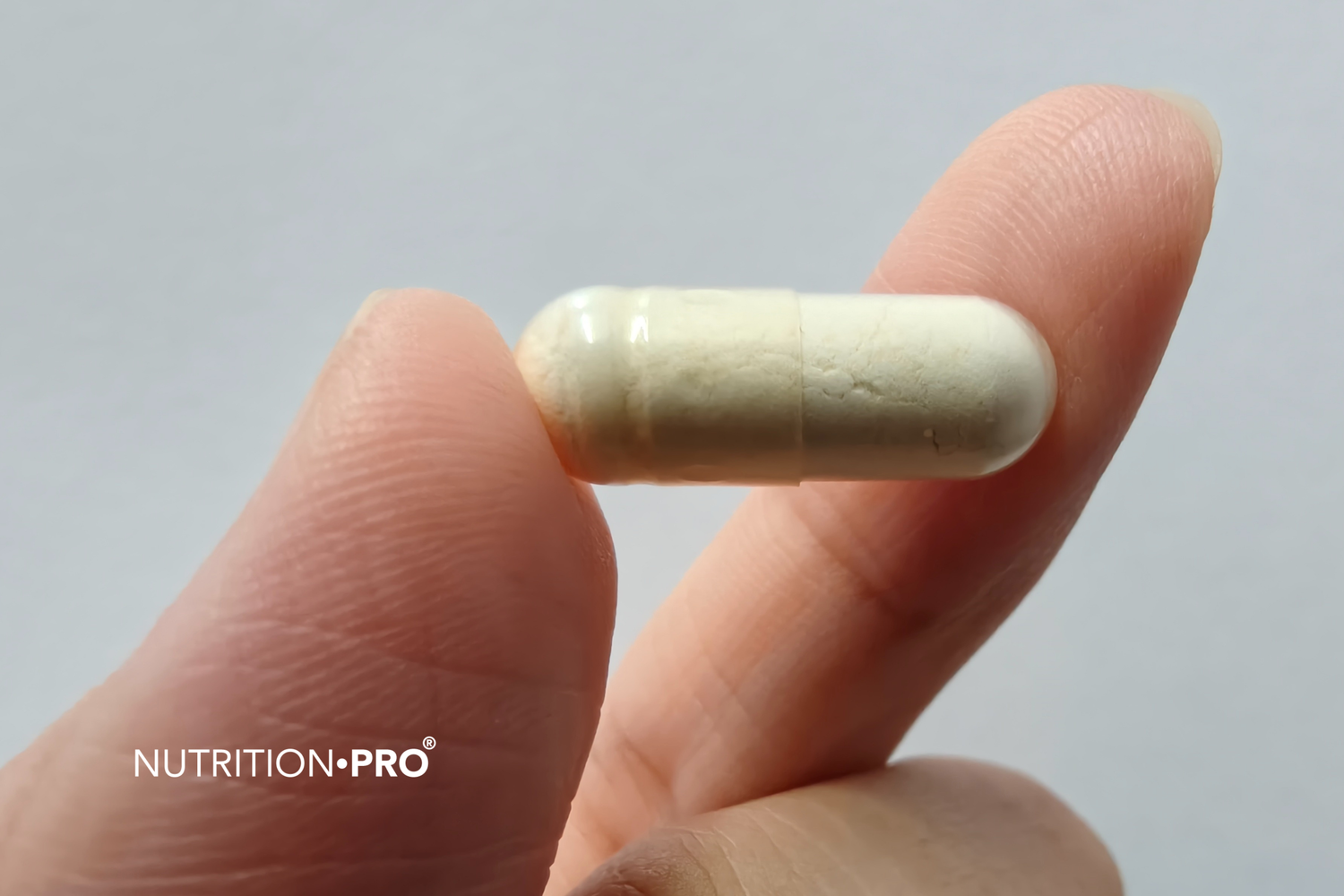
You're looking for NMN and you only find foreign websites, oddly labeled products, or French shops that no longer stock it. This is no accident, and it's not a shortage. The nicotinamide mononucleotide, the star molecule in the longevity field, is simply not authorized for sale as a dietary supplement in France or in the European Union.
But the story has just shifted, and that's what makes this topic interesting right now: in May 2026, the European food safety authority issued a favorable opinion on the safety of synthetic β-NMN. An opinion is not an authorization, and NMN remains unauthorized today, but the door has cracked open. This article provides a complete overview: why this ban exists, what the EFSA opinion specifically says, why a related molecule has been authorized since 2020 and this one hasn't, and what remains legal today.
NMN is not authorized as a dietary supplement in France or in the European Union. The reason: the status of novel food. Due to lack of significant consumption history in the Union before May 15, 1997, regulation (EU) 2015/2283 requires prior authorization before any market placement. It was this mechanism, not a health alert, that caused NMN to disappear from European shelves when national authorities began enforcing the rule.
What changed in May 2026: the EFSA published a favorable safety opinion on synthetic β-NMN, concluding that an intake of up to 300 mg per day is safe in adults, excluding pregnant and nursing women, and evaluating it as a source of niacin, in other words vitamin B3. But authorization is a separate decision by the European Commission, which is still pending. The illuminating contrast: <<<37>>> nicotinamide riboside nicotinamide riboside, another NAD precursor, has been authorized since January 2020, at 300 mg per day in adults. The difference between the two is not biological, it is administrative.
A NAD precursor that has become emblematic of the longevity field.
NMN , short fornicotinamide mononucleotide , is a precursor ofNAD , a coenzyme present in all cells of the body and involved in a very large number of energy metabolism reactions.It is not alone in this family. The
nicotinamide riboside , thenicotinamide nicotinamide and the niacin, that is to say vitamin B3, are also precursors of NAD, using different metabolic pathways. Remember this point: it determines everything that follows, including the way European authorities evaluated NMN.
Its reputation comes from the field of longevity, where these molecules have been abundantly discussed for about ten years. This is where we must draw a clear line, and it applies to the entire subject: the scientific interest in a question says nothing about what a brand is allowed to claim. In Europe, no health claim relating to slowing aging or extending lifespan is authorized, for any ingredient. A seller who uses this vocabulary operates outside the legal framework, regardless of the quality of their molecule.
Is NMN banned in France?
NMN cannot be legally marketed as a food or dietary supplement in the European Union, including France. The reason is not due to a scandal or alert: it is due to an incomplete administrative procedure.
NMN falls under the status of novel food, due to the lack of documented significant consumption history in the Union before May 15, 1997. This status requires prior authorization, which NMN has never obtained. Direct consequence: it cannot be placed on the European market either as a food product or as a dietary supplement ingredient.
This explains a phenomenon that many consumers have experienced without understanding it. NMN initially circulated in Europe through parallel channels, until national food safety authorities enforced the classification. Brands withdrew their stock, and the ingredient disappeared from conventional European commerce almost overnight. Neither a health alert nor a price problem: the application of a 2015 regulation.
The novel food status, explained
The mechanism is based on regulation (EU) 2015/2283 and can be summed up in one sentence: any food or ingredient that was not significantly consumed in the Union before May 15, 1997 is a novel food and must obtain authorization before being placed on the market.
This category is broader than one might imagine. It covers recently developed molecules, ingredients from new processes, and substances whose consumption history in Europe is poorly documented. Traditional use elsewhere in the world is not sufficient: what matters is the history within the Union, and its documentation.
The procedure comprises two clearly distinct steps, and this is the source of most misunderstandings:
| Step | Who decides | What it produces |
|---|---|---|
| 1. Scientific evaluation | EFSA, the European food safety authority | A scientific opinion on safety, favorable or not. This is not an authorization. |
| 2. Regulatory decision | European Commission, with member states | An act published in the Official Journal, which lists the ingredient on the Union list with its conditions of use |
As long as the second step has not taken place, nothing changes for the consumer : the ingredient remains unauthorized. This is exactly the situation of NMN today.
What the EFSA opinion from May 2026 says
It is current events that make this matter interesting. In May 2026, the EFSA published a favorable safety opinion on synthetic β-NMN, following an application filed by an industry player in the sector.
What the opinion concludes, precisely:
- An intake of up to 300 mg per day is considered safe in adults, excluding pregnant and breastfeeding women.
- β-NMN is evaluated as a source of niacin, that is to say, vitamin B3, and the opinion also addresses the bioavailability of nicotinamide from this source.
This framing deserves to be highlighted, because it is counterintuitive for the general public: from a European regulatory perspective, NMN is not evaluated as a longevity molecule, but as a vector for vitamin B3. It is within this framework, and only within this one, that its safety was examined.
A favorable EFSA opinion is not an authorization. This is the scientific step that precedes the decision. Authorization falls to the European Commission, must be published in the Official Journal of the Union and list the ingredient on the Union list with its conditions of use. Until this publication occurs, NMN remains unauthorized. Beware of sellers presenting the May 2026 opinion as a green light: it is not one.
A second technical point, little known and yet decisive for what follows: authorizations for new foods can be accompanied by a data protection period for the benefit of the company that funded the studies and submitted the file. During this period, competitors cannot rely on this data and must submit their own file. In other words, a future authorization of NMN will not automatically make all NMN on the market legal : it may only concern, initially, the applicant's ingredient and its specifications.
Why nicotinamide riboside is authorized, and it isn't
Here is the point that almost no one explains in French, and which makes the subject crystal clear. Two NAD precursors, two evaluations as sources of vitamin B3, two opposite statuses.
The nicotinamide riboside chloride was authorized by Commission Implementing Regulation (EU) 2020/16 of January 10, 2020, for use as a source of niacin in food supplements intended for the adult population. It was subsequently listed among the forms of niacin usable in supplements, and its use was then extended to other categories of foods, in particular meal replacements and foods for special medical purposes.
| Molecule | Status in the Union | Conditions of use |
|---|---|---|
| Nicotinamide riboside (chloride) | Authorized since January 2020 | Source of niacin in supplements; 300 mg/day in adults, 230 mg/day in pregnant or breastfeeding women |
| Nicotinamide mononucleotide (NMN) | Not authorized to date | Favorable EFSA opinion in May 2026 (up to 300 mg/day in adults), Commission decision expected |
| Niacin (vitamin B3) | Recognized vitamin, regulated use | Authorized health claims, approved forms set by regulation |
The conclusion to take away is almost political: the difference between these two molecules is not biological, it is administrative. One completed the procedure several years ago, the other is completing it now. This also says something about the market: a company capable of funding a complete scientific file obtains legal access, and a real competitive advantage, where others wait.
Buying NMN abroad: what are the risks
Since the ingredient is not authorized in Europe, the products found online come from countries where it is authorized, or from sites operating outside any framework. Some even circulate under misleading designations, for example as products intended for laboratory use, which shifts all responsibility onto the buyer.
The concrete consequences:
- No guarantee of composition. Neither verified purity, nor actual dosage controlled, nor analysis of contaminants that is binding.
- No legal claims possible. A seller who promises anti-aging or longevity effects is outside the framework, and the fact that they write it does not make the claim true.
- No real recourse in case of problems, as the purchase is made outside the European regulatory framework.
- An uncertain customs status depending on the case, the importation of an unauthorized ingredient being far from trivial.
We must be honest on one point: the main risk here is not the molecule itself, which the EFSA has just favorably assessed at 300 mg per day. The risk is the product : what it actually contains, and what else it contains. This is exactly the same reasoning as that developed in our article on tongkat ali, also unauthorized in France, with one major difference: in that case, the European opinion was unfavorable on safety.
What is legal today
If the subject interests you, it's worth knowing what is actually regulated. In the field of NAD and vitamin B3, two things are legal in Europe today.
Nicotinamide riboside, authorized since 2020 as a source of niacin in supplements, within the usage limits set by its authorization.
Niacin itself, that is, vitamin B3, which has several authorized health claims in the Union:
| Authorized claim for niacin | What this means |
|---|---|
| Contributes to normal energy metabolism | Role in cellular energy production reactions |
| Contributes to normal functioning of the nervous system | Role in nerve function |
| Contributes to normal psychological functions | Recognized role in psychological functioning |
| Contributes to the maintenance of normal mucous membranes and skin | Role in epithelial tissues |
| Contributes to the reduction of fatigue | Most frequently used claim in practice |
No longevity claim exists. Slowing aging, extending lifespan, rejuvenating cells: none of these formulations is authorized in the European Union, for any ingredient, regardless of its level of scientific evidence. This is a simple and formidable test for the consumer: the vocabulary used by a seller often reveals more about their credibility than their ingredient list. A brand that respects the framework writes "contributes to the reduction of fatigue"; a brand that does not respect it writes "anti-aging".
Finally, NMN is not an isolated case. The same mechanism has affected several ingredients that became popular, including spermidine in concentrated extract form, certain quercetin formulations or even monk fruit. The rule does not change: without significant documented consumption in the Union before 1997, the ingredient falls under the status of novel food and must obtain authorization. Popularity on social media has never advanced a regulatory file.
How to verify if a supplement is authorized
Novel food regulations evolve, and this file in particular is likely to change in the coming months. The only authoritative references are the novel food catalogue and the Union list published by the European Commission, the scientific opinions of the EFSA, and the texts published in the Official Journal of the European Union. A blog article, including this one, does not replace consulting these sources: we indicate its update date precisely for this reason.
Frequently asked questions
Regulatory status
Is NMN banned in France?
NMN is not authorized as a dietary supplement in France or in the European Union. It falls under novel food status, due to lack of significant consumption history in the Union before May 15, 1997, which requires prior authorization before any market release. As long as this authorization has not been granted by the European Commission, NMN cannot be legally marketed, which explains its disappearance from European shelves.
What is novel food status?
A novel food is a food or ingredient that was not consumed significantly in the European Union before May 15, 1997. Regulation (EU) 2015/2283 requires prior authorization before any commercialization, following scientific safety evaluation by the EFSA and then a decision by the European Commission. Without authorization, the ingredient cannot be sold either as a food or as a supplement.
Why did NMN disappear from European shelves?
Because national authorities began enforcing the novel food classification. NMN was sold through parallel channels until regulatory enforcement caught up with the market: brands withdrew their stocks and the ingredient disappeared from conventional European commerce. This was neither a health alert nor a price problem, but the enforcement of a 2015 regulation.
Does European authorization automatically apply in France?
Yes, this is the principle of the novel food regulation: authorization is European and applies to all Member States, with the same usage conditions. This avoids the national differences that existed before harmonization. Market surveillance, however, remains the responsibility of each Member State's authorities, which explains why effective enforcement can vary over time from one country to another.
Does the United Kingdom follow the same rules?
The United Kingdom applies a comparable framework in principle, with its own authority responsible for reviewing applications. The approaches are aligned in substance, but timelines and procedures differ, so an ingredient can be authorized on one side and not the other. A British website selling a product therefore tells us nothing about its status in the European Union.
The EFSA opinion from May 2026
What does the EFSA's May 2026 opinion say about NMN?
In May 2026, the EFSA published a favorable safety opinion on synthetic β-NMN, following an application submitted by a manufacturer. The opinion concludes that an intake of up to 300 mg per day is safe for adults, excluding pregnant and nursing women, and evaluates NMN as a source of niacin, i.e., vitamin B3. This is an important step, but an EFSA opinion is not an authorization.
Is NMN therefore authorized since this opinion?
No, not yet. The opinion concerns safety: it is the prerequisite scientific step. Authorization is a matter of decision by the European Commission, which must be published in the Official Journal and list the ingredient on the Union list with its conditions of use. Until this publication has taken place, NMN remains technically unauthorized in the Union.
What will happen when NMN is authorized?
It will be listed on the Union list with precise conditions of use: target population, maximum daily dose, and food categories. One technical point matters: authorizations may come with a data protection period benefiting the applicant, during which other manufacturers cannot rely on their dossier. An authorization therefore does not necessarily mean that all NMN products on the market become legal.
What is data protection in an authorization?
It is a mechanism provided for in the regulations: the company that funded the studies and submitted the dossier can benefit from an exclusivity period during which its data cannot be used by competitors, who must then submit their own dossier. This explains why an ingredient can be authorized on paper while remaining, in practice, reserved to one or a few suppliers for several years.
NMN, NR, and NAD
Why is nicotinamide riboside authorized and not NMN?
Because it completed the procedure earlier. Nicotinamide riboside chloride was authorized by Implementing Regulation (EU) 2020/16 of January 10, 2020, as a source of niacin in supplements intended for the adult population. Both molecules are NAD precursors evaluated as sources of vitamin B3, but only one has authorization. The difference is not biological, it is administrative.
What are the conditions of use for nicotinamide riboside?
The authorization sets precise conditions that form an integral part of it: use limited to 300 mg per day for the general adult population, and to 230 mg per day for pregnant and nursing women. Its use was subsequently extended to other food categories, particularly meal replacements and foods for special medical purposes. These conditions are listed in the Union list.
What is NAD and why is NMN generating such interest?
NAD is a coenzyme present in all cells, involved in many energy metabolism reactions. NMN is one of its precursors, as is nicotinamide riboside or niacin. Public interest stems from the field of longevity. However, it is important to distinguish the scientific interest in a subject from the claims a brand is entitled to make: in Europe, only authorized claims can be used.
What claims can legally be associated with vitamin B3?
Niacin has several authorized claims: contributing to normal energy metabolism, normal functioning of the nervous system, normal psychological functions, maintenance of normal mucous membranes and skin, and reduction of fatigue. These are the only legally usable formulations. No anti-aging or longevity claims are authorized, for vitamin B3 as for any other nutrient.
Is there an authorized claim about longevity?
No. No claim relating to slowing aging, extending lifespan, or longevity is authorized in the European Union. A brand using this vocabulary falls outside the legal framework, regardless of the ingredient. This is a useful signal: the vocabulary used by a seller often reveals more about its credibility than its ingredient list.
Purchasing and Safety
Can you buy NMN from foreign websites?
It is available, but the purchase is made outside the European legal framework. NMN is still sold in certain countries outside the Union, and products sometimes circulate under disguised designations, including as laboratory chemicals. Consequence: no guarantee regarding purity, actual composition, or absence of contaminants, and no health claims can legally be made.
Is NMN dangerous?
That is not what the regulations say. Lack of authorization does not mean an ingredient is dangerous: it means the evaluation procedure is not complete. In the case of NMN, the opinion issued by the EFSA in May 2026 is even favorable in terms of safety, up to 300 mg per day in adults outside pregnancy and breastfeeding. The real risk today is not the molecule but the uncontrolled quality of products purchased outside the framework.
Should you wait for authorization or buy now from abroad?
Buying outside the European framework exposes you to products whose purity and composition are not controlled, with no recourse in case of problems, and without any claims being guaranteed. Waiting for authorization means eventually having a product whose dose, target population, and specifications will have been evaluated. For daily and prolonged use, the second option is far more reasonable.
How to verify if a supplement is authorized?
First, note the exact name of the molecule on the label, not just the brand name. Then consult the catalog of novel foods published by the European Commission. If the ingredient is authorized, check its conditions of use in the Union list: population, maximum dose, product categories. If in doubt, your pharmacist can help you read a label.
Are other trendy ingredients affected?
Yes, the same mechanism has caught up with several ingredients that have become popular, including spermidine in concentrated extract form, certain quercetin formulations, and monk fruit. The rule is always the same: without documented significant consumption in the Union before 1997, the ingredient falls under novel food status and must obtain authorization. Popularity on social media changes nothing about its status.
Glossary
- NMN (nicotinamide mononucleotide)
- Molecule that is a NAD precursor, evaluated at the European level as a source of niacin. Currently unauthorized in the Union.
- NAD
- Coenzyme present in all cells, involved in many energy metabolism reactions.
- Nicotinamide riboside
- Another NAD precursor, authorized in the Union since January 2020 as a source of niacin in food supplements.
- Niacin (Vitamin B3)
- Vitamin with several authorized health claims, notably on energy metabolism and fatigue reduction.
- Novel food
- Food or ingredient not significantly consumed in the Union before May 15, 1997, subject to prior authorization.
- Union List
- Official register of authorized novel foods, specifying for each its conditions of use and specifications.
- Data protection
- Period of exclusivity granted to the applicant for an authorization, during which its scientific data cannot be used by competitors.
- EFSA
- European Food Safety Authority, responsible for the scientific assessment prior to Commission decisions.
Sources
- EFSA, Scientific Committee on Nutrition, Novel Foods and Food Allergens. Opinion on the safety of β-nicotinamide mononucleotide under Regulation (EU) 2015/2283 and on the bioavailability of nicotinamide from this source, May 2026. EFSA Journal, DOI 10.2903/j.efsa.2026.10007. efsa.europa.eu
- European Commission. Commission Implementing Regulation (EU) 2020/16 of January 10, 2020 authorizing the placing on the market of nicotinamide riboside chloride as a novel food. eur-lex.europa.eu
- European Parliament and Council. Regulation (EU) 2015/2283 on novel foods. eur-lex.europa.eu
- European Commission. Catalog of novel foods and Union list of authorized novel foods. ec.europa.eu
- European Commission. Register of authorized nutritional and health claims, notably for niacin. ec.europa.eu


