

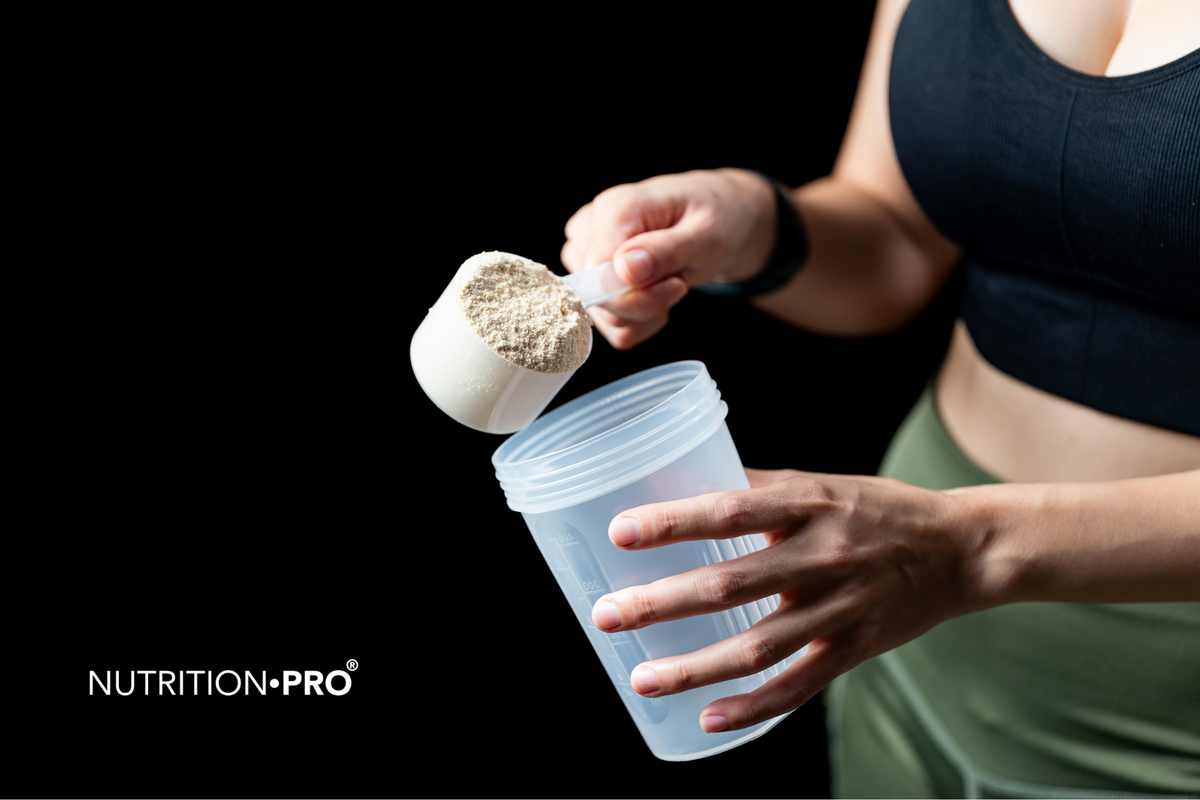
A pre-workout promises energy, focus, muscle pump, and endurance in a colorful sachet thirty minutes before your workout. The market sells millions of them, and a Mayo Clinic team had the good idea of reading the labels of the hundred best-selling products: 18 ingredients on average, of which 44% at hidden doses, and the most frequent ingredient below its effective dose.
This guide flips the question around. Not "which pre-workout," but "which ingredient, at what dose, with what evidence": the International Society of Sports Nutrition positions on caffeine, beta-alanine and creatine, meta-analyses on citrulline, what has nothing, two trials on commercial blends, and what half of users experience. Then how to read a label, and what to do without powder.

Three ingredients have solid data, provided the dose is correct. <<<15>>> Caffeine caféine at 3 to 6 mg per kilo, 60 minutes before, improves strength, muscular endurance, sprint performance and especially aerobic endurance. Beta-alanine at 4 to 6 g per day for at least four weeks improves efforts of one to four minutes by 2.85% median; nothing under 60 seconds. Creatine at 3 to 5 g per day works through saturation, not before your workout. Citrulline at 3 g and above has a small but measurable effect on strength.
The market does the opposite. Of the hundred best sellers: beta-alanine at 2.0 g on average, below the effective dose; caffeine at 254 mg, at the low end of the range; creatine at 2.1 g on training days; tyrosine and taurine everywhere with no performance data; 44% of ingredients at hidden doses. Two pre-workouts tested in trials did nothing. And 54% of regular users report adverse effects.
- What's really in the 100 best-selling pre-workouts
- Caffeine: the acute ingredient that works
- Beta-alanine: effective, but not the way it's marketed
- Creatine: the wrong place for the right ingredient
- Citrulline: the only pump with data to back it up
- What has no data
- Two pre-workouts tested, zero effect
- Safety: what 872 users report
- Reading a label, and doing it without powder
- Frequently asked questions
What's really in the 100 best-selling pre-workouts
The hundred best-selling pre-workouts were analyzed for their ingredients and quantities listed, when available, on the nutrition facts panel. The average number of ingredients per product was 18.4, of which 8.1 were included in a proprietary blend with undisclosed quantity. Prevalence and average quantities of main ingredients: beta-alanine, 87 percent of products, 2.0 g; caffeine, 86 percent, 254 mg; citrulline, 71 percent, 4.0 g; tyrosine, 63 percent, 348 mg; taurine, 51 percent, 1.3 g; creatine, 49 percent, 2.1 g. Nearly half, 44.3 percent, of all ingredients were included in a proprietary blend. The average amount of beta-alanine per serving was below the recommended effective dose. The average caffeine content was near the low end of the effective range for a 70 kg individual, 3 to 6 mg per kilogram.
Jagim AR, Harty PS, Camic CL. Nutrients 2019;11(2):254. DOI: 10.3390/nu11020254
The entire pre-workout problem comes down to these numbers. The three ingredients that have data, caffeine, beta-alanine, creatine, are present, but at doses that don't match the studies. Ingredients without performance data, tyrosine, taurine, are in more than one product out of two. And 44% of ingredients are at unknown doses, which makes any verification impossible by design. The rest of the article gives, for each ingredient, the dose that studies have tested.
Caffeine: the acute ingredient that works
Caffeine supplementation acutely improves various aspects of performance in numerous studies: muscular endurance, movement speed and strength, sprinting, jumping and throwing, and a wide range of aerobic and anaerobic actions. Aerobic endurance is the form of exercise that benefits most consistently, with moderate to large effects. Caffeine consistently improves performance at doses of 3 to 6 mg per kilogram of body weight; the minimum effective dose remains uncertain but could be 2 mg per kilogram. Very high doses, 9 mg per kilogram, are accompanied by a high incidence of adverse effects without being necessary. The most common timing is 60 minutes before exercise. Caffeine improves performance in both trained and untrained individuals. Interindividual differences, as well as effects on sleep or anxiety, may be related to the genetics of caffeine metabolism and habitual consumption. Energy drinks and pre-workouts containing caffeine improve anaerobic and aerobic performance.
Guest NS, VanDusseldorp TA, Nelson MT, et al. J Int Soc Sports Nutr 2021;18(1):1. DOI: 10.1186/s12970-020-00383-4
Caffeine is the only ingredient in a pre-workout whose effect is acute, meaning it's present on the same day, and that's what makes it the heart of the concept. The dose is precise: 3 to 6 mg per kilogram, or 210 to 420 mg for 70 kg, and the average market dose, 254 mg, is at the low end of this range for a 70 kg man and below for heavier builds. Two reservations that the position itself raises: the response varies by genetics and habit, and the sleep can suffer as a result, which matters for an evening session. Our article on sleep reminds you what two short nights cost.
Beta-alanine: effective, but not as it's marketed
Four weeks of beta-alanine supplementation, 4 to 6 g per day, significantly increase muscle carnosine concentration, which acts as an intracellular pH buffer. Beta-alanine appears safe in healthy populations at recommended doses. The only reported adverse effect is paresthesia, a tingling sensation, mitigated by lower divided doses of 1.6 g, or an extended-release formula. Daily supplementation of 4 to 6 g for at least two to four weeks improves performance, with more pronounced effects on tasks lasting one to four minutes. Combination with other supplements can be beneficial if beta-alanine is dosed high enough, 4 to 6 g per day, and for long enough, a minimum of four weeks.
Trexler ET, Smith-Ryan AE, Stout JR, et al. J Int Soc Sports Nutr 2015;12:30. DOI: 10.1186/s12970-015-0090-y
The Nottingham Trent meta-analysis, fifteen studies and 360 participants, quantifies the effect: a median improvement of 2.85% in exercise performance, present on efforts lasting 60 to 240 seconds and beyond, and absent on efforts lasting less than 60 seconds, after a median loading dose of 179 g total. Beta-alanine works, therefore, for efforts lasting one to four minutes—a 400-meter sprint, a 2,000-meter rowing race, a long strength-training set—after weeks of daily loading. It doesn't work for a set of five heavy repetitions, and it doesn't work if taken on the same day.
Average dose of the top hundred best-sellers: 2.0 g, below the 3.2 to 6.4 g per day used in studies. And a pre-workout is taken only on training days, three or four times per week, whereas carnosine loading requires dailydosing. The tingling you feel after the serving packet is real, but it's a side effect, not proof that it works: at 2 g every other day, the muscle doesn't load. Beta-alanine is an excellent ingredient, in the wrong place.
Creatine: the wrong place for the right active
The ISSN position on creatine, signed by Richard Kreider and twenty experts, is the most robust in all sports nutrition: creatine monohydrate is the most effective supplement available for increasing intense exercise capacity and lean mass, backed by hundreds of trials and an established safety profile for up to five years of use. But its mechanism is saturation : 3 to 5 g per day, every day, for three to four weeks, to fill muscle phosphocreatine stores. The timing of intake during the day matters almost not at all; consistency matters everything.
The 2.1 g of creatine in the average pre-workout, taken only on training days, saturates nothing and has no acute effect. It's not that creatine doesn't work; it's that it has no business being in a pre-workout serving packet. It's taken every day, separately, as monohydrate, and our creatine guide and our article on timing of intake detail why.
Citrulline: the only pump with data behind it
Twelve studies, thirteen independent samples, and 198 participants were included, examining citrulline taken alone, at least 3 g, at least 30 minutes before a strength or power test involving repeated actions of large muscle groups. Heterogeneity between studies was null and no publication bias was present. The meta-analysis identifies a significant benefit of citrulline over placebo, with a small standardized mean difference of 0.20. The effect size was small and confidence intervals for each individual study crossed the line of null effect; the results may nevertheless be relevant for elite athletes, where outcomes are decided by small margins.
Trexler ET, Persky AM, Ryan ED, Schwartz TA, Stoner L, Smith-Ryan AE. Sports Med 2019;49(5):707-718. DOI: 10.1007/s40279-019-01091-z
Citrulline is the ingredient for the "pump," muscle congestion through nitric oxide, and it's the only one in this category with a positive meta-analysis. The effect is small, 0.20, on the order of a few extra repetitions over a long set, and no single study demonstrates it; it's their addition that makes it appear. The market dose, 4.0 g on average, is within the tested range; the most conclusive trials use 6 to 8 g of citrulline malate. An honest ingredient, for a modest benefit.
What has no data
| Ingredient | In the top 100 best sellers | Effective dose from studies | Average market dose | Verdict |
|---|---|---|---|---|
| Caffeine | 86% | 3 to 6 mg/kg, 60 min before | 254 mg | Works; at the low end of the range for 70 kg |
| Beta-alanine | 87% | 4 to 6 g/day, every day, 4 weeks | 2.0 g, training days | Works with loading; under-dosed and poorly timed here |
| Creatine | 49% | 3 to 5 g/day, every day | 2.1 g, training days | The best sports ingredient, in the wrong place |
| Citrulline | 71% | 3 g minimum, 6 to 8 g of malate | 4.0 g | Small but real effect, correct dose |
| Tyrosine | 63% | No validated dose for performance | 348 mg | No performance data |
| Taurine | 51% | Limited and heterogeneous data | 1.3 g | Insufficient |
| Arginine, BCAA | Frequent | No demonstrated effect during workout | Variable | No data |
| Proprietary blend | 44% of ingredients | Unverifiable | Hidden dose | Unverifiable by design |
Two pre-workouts tested, zero effect
Few commercial pre-workouts are tested as-is. Two have been tested by the same team. The first, 150 mg of caffeine, 1.6 g of beta-alanine and 1 g of arginine, taken 30 minutes before a 5 km run by twenty trained runners in a crossover double-blind design: no difference in time, 23.62 versus 23.51 minutes, nor in perceived fatigue. The second, a multi-ingredient pre-workout taken daily for seven weeks of weightlifting by nineteen women: same strength gains as placebo, same body composition, same resting metabolic rate.
150 mg of caffeine equals 2 mg per kilogram for a 75 kg runner, below the ISSN range. 1.6 g of beta-alanine on a training day loads nothing. 1 g of arginine has no data. These two trials do not say the concept is flawed; they demonstrate what analysis of the hundred best-sellers predicted: at these doses, nothing happens. A pre-workout dosed at study values is another matter, and it is rare.
Safety: what 872 users report
Eight hundred seventy-two regular users of multi-ingredient pre-workouts, 73 percent men, with an average age of 27.7 years and 8.2 years of training experience, completed an online survey. The majority had been consuming pre-workouts for over one year, four or five training days per week. The three most cited goals: energy and focus, 89 percent, muscular endurance, 37 percent, muscle pump, 37 percent. Although most take one dose per use, 14 percent take two or more, and 18 percent take more than once per day. Over half of respondents, 54 percent, report adverse effects, including skin reactions, heart rhythm abnormalities, and nausea; women report more despite lower doses. The authors recommend not exceeding the stated dose, as caffeine content varies significantly from product to product, and limiting other sources of niacin and caffeine to stay within tolerable limits.
Jagim AR, Camic CL, Harty PS. Nutrients 2019;11(4):855. DOI: 10.3390/nu11040855
One dose, never two : the caffeine from a pre-workout adds to that from coffee, tea, and energy drinks, and 14% of users already double the serving. No combining with other caffeinated products or niacin-rich supplements, whose skin flushing is one of the most commonly reported reactions. And caffeine at sports doses, 200 to 400 mg, is not suitable without medical advice in cases ofhypertension, heart rhythm disorder, or pregnancy, ofanxiety or treatment interacting with caffeine. An evening session under 300 mg of caffeine also means a shorter night.
Reading a label, and doing without powder
Pure creatine monohydrate, Creapure label, 3 g per day, every day. Not in the pre-session dose, where 2 g on training days saturates nothing, but every day, separately, as in the hundreds of trials that make it the best-documented supplement in sports nutrition according to the ISSN.
See CreatineFor caffeine before the session, our mate and our matcha are sources of it; the dose depends on the preparation, and a double espresso works too.
Frequently Asked Questions
What's in a pre-workout?
Many things, and not always in sufficient quantity. A Mayo Clinic team analyzed the labels of the hundred best-selling pre-workouts: 18.4 ingredients per product on average, of which 8.1 in a proprietary blend with undisclosed dosing, or 44% of all ingredients. The most frequent: beta-alanine in 87% of products, 2.0 g on average; caffeine in 86%, 254 mg; citrulline in 71%, 4.0 g; tyrosine in 63%; taurine in 51%; creatine in 49%, 2.1 g. The authors note that average beta-alanine is below the effective dose and that caffeine is at the low end of the effective range for 70 kg.
What caffeine dose before training?
The position of the International Society of Sports Nutrition is clear: 3 to 6 mg per kilo of body weight, or 210 to 420 mg for 70 kg, approximately 60 minutes before exercise, consistently improves performance, muscular endurance, speed, strength, sprint, jump, and especially aerobic endurance, in trained and untrained individuals alike. The minimum effective dose may be 2 mg per kilo. Very high doses, 9 mg per kilo, multiply side effects without gain. The response varies according to the genetics of caffeine metabolism and consumption habits, and sleep can suffer.
Does creatine belong in a pre-workout?
Creatine is the best-documented active ingredient in sports nutrition, according to the ISSN position, but it doesn't work like a pre-workout: it functions through saturation of muscle stores, at 3 to 5 g per day for three to four weeks, not through a pre-session dose. Putting 2 g in a pre-workout, the market average dose, taken only on training days, saturates nothing. It belongs every day, in monohydrate form, independently of the pre-workout. Our creatine guide details everything.
Does beta-alanine work?
Yes, provided adequate dosage and duration. The ISSN position: 4 to 6 g per day for at least two to four weeks increase muscle carnosine, which buffers acidity, and improve performance, especially on efforts of one to four minutes. The meta-analysis of fifteen studies and 360 participants quantifies the effect at 2.85% median, present on efforts of 60 to 240 seconds and beyond, absent on efforts under 60 seconds. Its only side effect is tingling, mitigated by fractional doses of 1.6 g. The average dose in pre-workouts, 2.0 g, is below this; and taken only on training days, it does not load the muscle.
Does citrulline provide pump and strength?
Somewhat. The meta-analysis published in Sports Medicine combined twelve studies and 198 participants on citrulline taken alone, at least 3 g, at least 30 minutes before a strength or power effort. The effect is significant but small, an effect size of 0.20, and the confidence interval of each individual study crosses zero. The authors estimate that this can matter for elite athletes where everything is decided by margins, and call for research on dose and form. It is the only ingredient in the pump category with a positive meta-analysis, and the effect is modest.
Which ingredients have no data?
Tyrosine, present in 63% of products, has no trial showing an effect on physical performance. Taurine, in 51%, has limited and heterogeneous data. Arginine, the predecessor to citrulline for pump, is poorly absorbed and has no demonstrated effect at pre-workout doses. BCAAs have no data on performance during training. And everything found in a proprietary blend, 44% of ingredients, is at unknown dose, therefore unverifiable by design.
Do commercial pre-workouts work?
Those tested in trials often show nothing. A blend with 150 mg caffeine, 1.6 g beta-alanine and 1 g arginine, taken 30 minutes before a 5 km run, changed neither running time nor fatigue in twenty runners. Another pre-workout taken daily for seven weeks of strength training added nothing to strength gains nor body composition in nineteen women. In both cases, doses were below those in studies: 150 mg caffeine is 2 mg per kilo for 75 kg, and 1.6 g beta-alanine every other day does not load the muscle. The problem is not the concept, it's the dose.
Are pre-workouts safe?
At indicated dose, in healthy adults, documented ingredients are. But a survey of 872 regular users shows that 54% report side effects, skin reactions, heart rhythm disorders, nausea, that 14% take two doses or more and 18% take them more than once per day, and that women report more effects despite lower doses. The authors emphasize two points: never exceed the indicated dose, because caffeine content varies greatly from product to product, and avoid combining with other sources of caffeine and niacin. Hypertension, heart rhythm disorder, pregnancy, anxiety: medical advice first.
How to read a pre-workout label?
Four checks. Is caffeine indicated in milligrams and within the 3 to 6 mg per kilo of your weight range? Is beta-alanine at least 3.2 g per dose, and intended daily, or is it 2 g for training days only? Is citrulline at minimum 3 g, preferably 6 to 8 g of malate? Is there a proprietary blend, and if so, what share of ingredients is hidden in it? A product that passes these four points is rare, and that is precisely what the analysis of the hundred best sellers shows.
What to remember about pre-workout?
That three ingredients have solid data provided adequate dose: caffeine at 3 to 6 mg per kilo before training, beta-alanine at 4 to 6 g per day for at least four weeks, creatine at 3 to 5 g per day for loading. That citrulline has a small but real effect at 3 g and above. That tyrosine, taurine, arginine and BCAAs have no performance data. That market pre-workouts are on average underdosed on what matters and rich in what doesn't. And that half of users report side effects, especially when they exceed the dose.
Glossary
- ISSN
- International Society of Sports Nutrition, scholarly society whose positions, signed by dozens of experts, are the reference in sports nutrition.
- Acute effect
- Effect present on the day of intake, in minutes or hours; caffeine and citrulline have one, beta-alanine and creatine do not.
- Loading, saturation
- Mechanism by which a supplement taken daily progressively fills a muscle reserve, carnosine for beta-alanine, phosphocreatine for creatine.
- Carnosine
- Muscle dipeptide that buffers acidity during intense effort; its synthesis is limited by available beta-alanine.
- Paresthesia
- Skin tingling caused by beta-alanine at high single dose; harmless, and unrelated to efficacy.
- Proprietary blend
- Group of ingredients for which only the total quantity is indicated, not that of each; 44% of ingredients in the hundred best sellers.
- Effect size
- Standardized measure of the magnitude of an effect; 0.20 is considered small, 0.50 medium, 0.80 large.
Sources
The studies cited below were identified via PubMed.
- Jagim AR, Harty PS, Camic CL. Common ingredient profiles of multi-ingredient pre-workouts. Nutrients, 2019;11(2):254. DOI
- Guest NS, VanDusseldorp TA, Nelson MT, et al. International Society of Sports Nutrition Position Stand: Caffeine and exercise performance. Journal of the International Society of Sports Nutrition, 2021;18(1):1. DOI
- Trexler ET, Smith-Ryan AE, Stout JR, et al. International Society of Sports Nutrition Position Stand: Beta-alanine. Journal of the International Society of Sports Nutrition, 2015;12:30. DOI
- Hobson RM, Saunders B, Ball G, Harris RC, Sale C. Effects of beta-alanine supplementation on exercise performance: A meta-analysis. Amino Acids, 2012;43(1):25-37. DOI
- Trexler ET, Persky AM, Ryan ED, Schwartz TA, Stoner L, Smith-Ryan AE. Acute effects of citrulline supplementation on high-intensity strength and power performance: A systematic review and meta-analysis. Sports Medicine, 2019;49(5):707-718. DOI
- Kreider RB, Kalman DS, Antonio J, et al. International Society of Sports Nutrition Position Stand: Safety and efficacy of creatine supplementation in exercise, sport, and medicine. Journal of the International Society of Sports Nutrition, 2017;14:18. DOI
- Lutsch DJ, Camic CL, Jagim AR, Johnston NJ, Musgjerd TL. Acute effects of a multi-ingredient pre-workout supplement on 5 km run performance in recreationally trained athletes. International Journal of Exercise Science, 2019;12(2):1045-1056. DOI
- Nelson A, Camic CL, Foster C, et al. Multi-ingredient pre-workout supplementation does not increase training adaptations in resistance-trained women. International Journal of Exercise Science, 2019;12(2):187-202. DOI
- Jagim AR, Camic CL, Harty PS. Common habits, side effects, and opinions regarding pre-workout supplement use among regular consumers. Nutrients, 2019;11(4):855. DOI


