

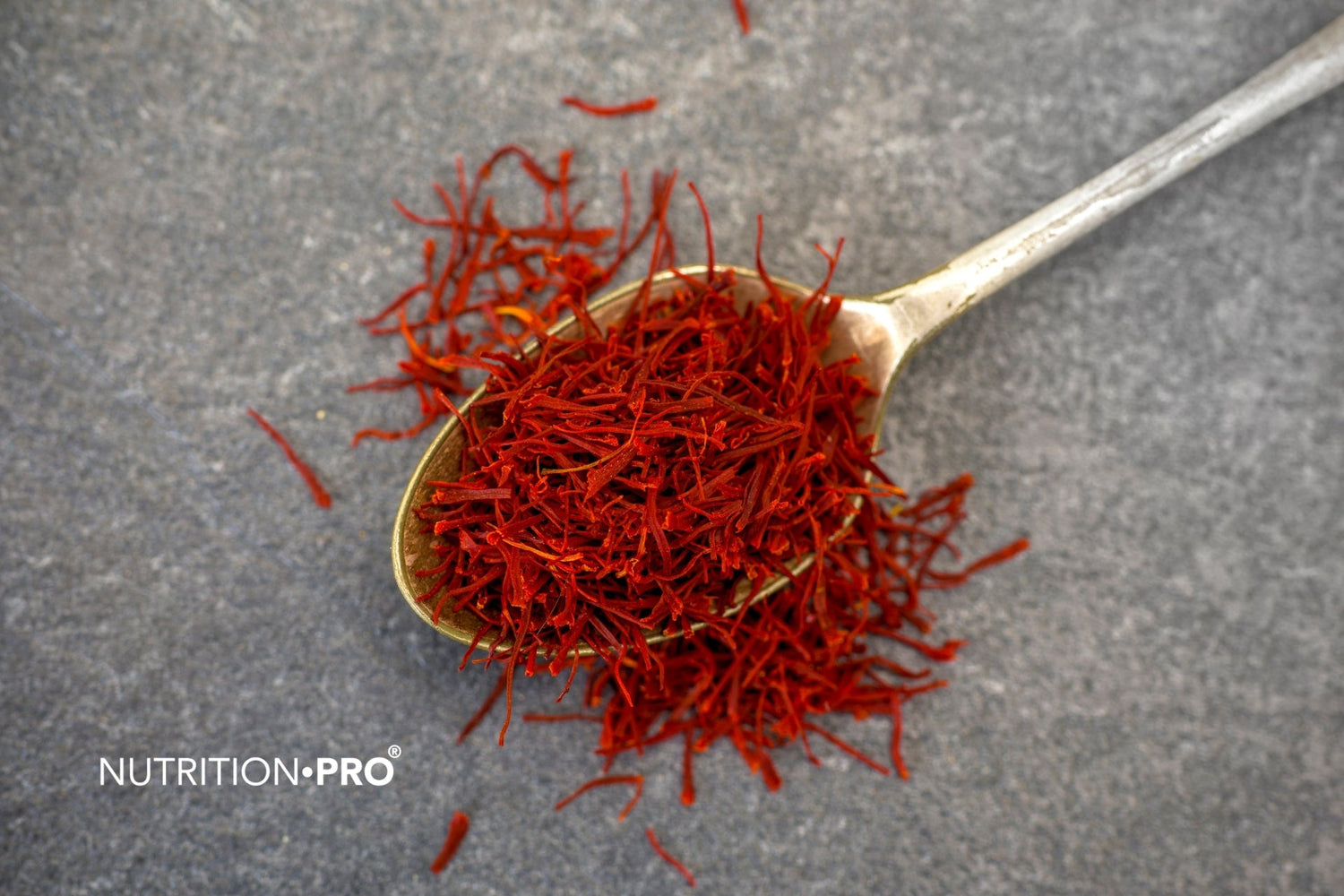
Saffron is today one of the most studied medicinal plants in the world, with benefits solidly demonstrated on mood, anxiety, sleep, and cognition. But no active ingredient is "safe for everyone" . This article provides an honest assessment of what science says:real adverse effects, maximum dose, formal contraindication during pregnancy, drug interactions, and fraudulent market . The objective is not to frighten but toinform correctlybefore any supplementation, so that saffron remains a wellness tool and not an avoidable risk. ★ OUR PREMIUM SAFFRON (RESPONSIBLE USE)

(1) At 30 mg/day , saffron is very well tolerated and causesfewer adverse effects than SSRIs according to Shafiee et al. 2024 in Nutrition Reviews . (2)Formal contraindication during pregnancy : Moallem et al. 2013 in Toxicology and Industrial Health demonstrated fetal malformations in mice (skeleton, mandible, calvaria). (3) Maximum dose : never exceed 100 mg/day. Marked toxicity from 1.5 g/day. (4) Interactions : caution with SSRIs, anticoagulants, antihypertensives, benzodiazepines (medical advice). (5) Fraudulent market : according to Amirvaresi et al. 2020 in Food Chemistry , saffron is often adulterated with calendula, safflower, or madder – traced standardized extract essential. (6)No long-term data >18 months Pas de données long terme >18 mois : prefer an alternating course strategy.
- Is saffron dangerous? The real assessment in 2026
- Documented adverse effects (rare and mild)
- The maximum dose not to exceed
- Pregnancy and breastfeeding: formal contraindication
- Drug interactions to know about
- The counterfeit saffron trap
- Who should not take saffron?
- Why a standardized extract is safer
Is saffron dangerous? The real assessment in 2026
Saffron is among medicinal plants with the best demonstrated benefit/risk ratio in supplementation. This does not mean it is suitable for everyone: like any physiological active ingredient, it has precise limitations that science has documented and that must be respected.
Documented adverse effects (rare and mild)
Mild effects observed
| Effect | Approximate frequency | Recommended action |
|---|---|---|
| Mild drowsiness | 2 to 5% (beginning of treatment) | Take in the evening, disappears within 1 to 2 weeks |
| Mild nausea | 1 to 3% | Take during a meal |
| Dry mouth | 1 to 2% | Hydration, generally transient |
| Appetite changes | 1 to 2% | Monitoring, generally benign |
| Headaches | < 2% | Hydration, spontaneous resolution |
| Skin allergy | Very rare | Discontinue immediately, seek medical advice |
These frequencies are orders of magnitude drawn from published clinical trials. Individual variability exists: what one person tolerates well may be uncomfortable for another. If an adverse effect persists beyond 2 weeks, it is recommended to stop the treatment and consult a healthcare provider.
The maximum dose not to exceed
Dose levels and their effects
| Daily dose | Expected effect | Assessment |
|---|---|---|
| 5 to 15 mg | Under-dosed, uncertain effects | Clinically insufficient |
| 28 to 30 mg | Dose validated by clinical trials | Recommended |
| 30 to 100 mg | No proven additional benefit | Acceptable but unnecessary |
| 100 to 400 mg | Increasing adverse effects | Not recommended without medical advice |
| > 1.5 g | Vomiting, dizziness, agitation | Toxic |
| > 5 g | Marked toxicity | Dangerous |
With one 30 mg capsule per day, you are 50 to 600 times below toxicity thresholds. The risk of overdose with normal use is therefore extremely low. The real risk is not the amount taken, but the contraindications and interactions discussed below.
Pregnancy and breastfeeding: formal contraindication
Pregnancy : no saffron supplementation, at any dose, throughout the entire duration of pregnancy. This also applies to conception attempts (discontinuation recommended during this period). This contraindication concerns supplementation. Occasional culinary use in very small quantities (a few milligrams in a dish) has shown no risk, but regular abundant consumption during pregnancy remains inadvisable.
Breastfeeding : no study has evaluated the passage of active compounds into breast milk. On a precautionary basis, supplementation is inadvisable throughout the entire duration of breastfeeding.
Why this effect?
The exact mechanism of teratogenicity in mice remains to be elucidated. Scientific hypotheses include: (1) a uterotonic action at high doses (uterine contraction), (2) transplacental passage of active compounds with interference on organogenesis, (3) an effect on serotonergic receptors involved in embryonic development. The authors of the Moallem 2013 study themselves call for further research to understand these mechanisms.
The study uses high doses administered intra-peritoneally (200 to 600 mg/kg of crocin). Extrapolating this data to pregnant women using a 30 mg/day oral extract is not a linear calculation, but the precautionary principle must be applied once a teratogenic signal has been observed.
Drug interactions to be aware of
Drug class
| Concrete examples | Theoretical risk | Level of caution | SSRI |
|---|---|---|---|
| Fluoxetine, Sertraline, Citalopram, Paroxetine, Escitalopram | Serotonin syndrome | Medical advice mandatory | SNRI |
| Venlafaxine, Duloxetine, Milnacipran | Potentiation of serotonergic effects | Medical advice mandatory | Oral anticoagulants |
| Warfarin, Acenocoumarol, Fluindione, Apixaban, Rivaroxaban | Potentiation of effect at high dose | Medical advice, INR monitoring | Antihypertensives |
| ACE inhibitors, ARB, beta-blockers, diuretics | Slight blood pressure decrease | Monitor blood pressure for the first 2 weeks | Benzodiazepines |
| Diazepam, Alprazolam, Bromazepam, Lorazepam | Potentiation of sedation | Space out doses, exercise caution | Antidiabetics |
| Metformin, sulfonylureas, insulin | Slight possible blood sugar decrease | Monitor blood sugar in the first weeks | The particular case of SSRI antidepressants |
Le cas particulier des antidépresseurs ISRS
This is the most discussed interaction because saffron itself acts as a mild serotonergic agent. The combination saffron + SSRIs could theoretically potentiate serotonergic effects (with a rare but serious risk of serotonin syndrome at high doses). In clinical practice, several trials have studied this combination without reporting serious events, but caution remains warranted.
NEVER abruptly stop an antidepressant to replace it with saffron. This can cause severe withdrawal syndrome and serious depressive relapse. Any change in antidepressant treatment must be supervised by a physician over several weeks of gradual transition.
The saffron fraud trap
The 4 most common adulterants
| Adulterant | Appearance | Risk |
|---|---|---|
| Saffron style | Yellow/white parts of the flower | No active compounds, but no toxicity |
| Calendula (marigold) | Dried orange petals | Possible allergies, different properties |
| Safflower (safflower) | Dried red-orange flowers | Effects on coagulation distinct from saffron |
| Madder (rubia) | Roots that dye red | Substance suspected of being mutagenic (ruberythric) |
The problem: a consumer cannot detect these adulterations with the naked eye in a capsule product. Only laboratory analysis (spectroscopy, HPLC) allows it. That's why a standardized extract traced with certificates of analysis and identifiable patent (Safr'Inside®, affron®, Satiereal®) is the only true guarantee of taking genuine saffron.
Who should not take saffron?
or planning pregnancy
formal contraindication
as a precautionary principle
insufficient data
SSRI or SNRI
before any use
anticoagulant
coagulation profile assessment
or suicidal thoughts
no self-supplementation
uncontrolled
before any intake
surgery
inform the anesthetist
Self-test: Am I eligible for saffron supplementation?
One or more of your situations require prior medical evaluation. Do not self-supplement in these cases. Consult your doctor or pharmacist, who can assess the relevance of saffron in your specific situation, or recommend an appropriate alternative. If no boxes are checked, saffron supplementation Safr'Inside® saffron at 30 mg per day poses in principle no particular concern.
Why a standardized extract is safer than raw powder
Standardized vs raw powder: what really changes
| Criterion | Patented standardized extract | Raw powder |
|---|---|---|
| Dose of active ingredients | Precise and reproducible | Variable by batch and storage |
| Traceability | Origin + batch + analyses | Variable, often absent |
| Risk of adulteration | Very low | High on the mass market |
| Safranal stability | Preserved by encapsulation | Rapid degradation (light, heat) |
| Cost | Higher | Less expensive |
| Suited for supplementation | Yes, recommended | Culinary use only |
The choice of a patented extract such as Safr'Inside® (Activ'Inside laboratory, France) or other equivalent standardized extracts is therefore not a marketing question: it is a matter of safety and efficacy. A product that does not mention safranal content, origin and patent should be considered with caution.
Frequently asked questions
Is saffron dangerous for health?
At clinical doses (30 mg per day of standardized extract), saffron is very well tolerated. According to Shafiee et al. 2024 in Nutrition Reviews, participants taking saffron had fewer adverse effects than those taking SSRI antidepressants. Toxicity only appears at very high doses (beyond 1.5 grams per day, or 50 times the effective dose). Saffron is therefore not dangerous at normal dose, but has several strict contraindications to be aware of, particularly during pregnancy.
Why is saffron contraindicated during pregnancy?
According to the Moallem et al. 2013 study in Toxicology and Industrial Health, administration of crocin and safranal in pregnant mice caused fetal malformations : minor skeletal malformations, malformations of the mandible and calvaria, growth retardation. Although this is an animal model with high doses administered intraperitoneally, the precautionary principle requires a formal contraindication in pregnant women, at any dose, and throughout the entire pregnancy.
What are the possible side effects of saffron?
At therapeutic doses (28 to 30 mg per day), side effects are rare and mild: slight drowsiness at the start of treatment, transient nausea, dry mouth, changes in appetite, occasional headaches. These effects generally disappear spontaneously or upon discontinuation. No serious cases have been reported at this dose in published clinical trials.
What is the maximum dose of saffron not to exceed?
The validated dose is 30 mg per day. Beyond 100 mg per day, side effects increase without gain in efficacy. From 1.5 g per day (50 times the effective dose), marked symptoms appear: vomiting, dizziness, agitation. Older toxicological literature mentions theoretical lethal doses around 20 g per day in humans, but these levels are completely out of reach with a capsule extract.
What are the drug interactions of saffron?
Four classes of medications require medical advice: (1) SSRI and SNRI antidepressants (theoretical risk of serotonin syndrome), (2) oral anticoagulants (possible potentiation at high dose), (3) antihypertensive agents (slight blood pressure reduction), (4) benzodiazepines (potentiation of sedation). These interactions are mainly theoretical at therapeutic doses but require caution.
Does saffron cause dependence?
No. No dependence or withdrawal syndrome has been documented in the scientific literature on saffron, unlike benzodiazepines and even some SSRI antidepressants that require gradual withdrawal. You can stop saffron abruptly without rebound effects.
Is the saffron market really fraudulent?
Yes, it is a major and documented problem. According to Amirvaresi et al. 2020 in Food Chemistry, four common plant adulterants are found in commercial saffron: saffron style, calendula, safflower and madder. A consumer may purchase a product labeled "saffron" with no actual active ingredient. A patented standardized extract with traceability (such as Safr'Inside®) offers a guarantee that an unanalyzed raw powder does not provide.
Can saffron be taken by children?
No clinical study has evaluated the safety of saffron in children or adolescents under 18 years of age at supplemental doses. As a precautionary measure, saffron supplementation is not recommended before age 18, except with specific medical indication and monitoring.
Is saffron safe for the liver and kidneys?
At therapeutic doses, published clinical trials have not reported significant hepatic or renal toxicity. However, the maximum duration studied is generally 12 to 48 weeks. No long-term studies (beyond 18 months) are available. For people with known hepatic or renal insufficiency, medical advice is recommended before supplementation.
Should saffron be stopped before surgery?
Yes, as a precaution. Saffron may have a slight effect on coagulation at high doses. The recommendation is to stop taking it 7 to 10 days before any scheduled surgery, and to inform the anesthesiologist and surgeon of the consumption of any dietary supplement.
Can saffron worsen bipolar disorder?
Since saffron has a serotonergic action, theoretical caution is warranted in people with uncontrolled bipolar disorders: theoretical risk of manic or hypomanic episode. No clinical study has specifically evaluated saffron in bipolar patients. Supplementation is not recommended without prior psychiatric consultation.
Are there long-term risks?
Published clinical trials on saffron have durations ranging from 4 to 52 weeks, or less than 18 months. No study has evaluated daily intake beyond this duration. The authors themselves, in the Abdian et al. 2024 review in Phytomedicine, call for more trials examining long-term effects. As a precaution, an alternating strategy is recommended: 3 to 4 months of treatment, then a 1 to 2 month break.
Glossary: technical terms explained
- Teratogenic
- Substance or agent capable of causing malformations in the developing embryo or fetus. Crocin and safranal have demonstrated a teratogenic effect in mice (Moallem 2013).
- Serotonin syndrome
- Serious reaction due to excess serotonin, which can occur when several serotonergic substances are combined. Symptoms: agitation, fever, tremors, digestive disturbances. This is the reason for caution with saffron + SSRIs.
- Adulteration
- Falsification of a product by adding a foreign substance for fraudulent purposes. Saffron is one of the most adulterated food products in the world (along with olive oil and honey).
- Crocin
- Red carotenoid pigment of saffron. Antioxidant, neuroprotective. Teratogenic effect demonstrated in mice at high doses.
- Safranal
- Volatile aromatic compound of saffron. Primary action on mood via serotonergic receptors. Teratogenic effect demonstrated in mice at high doses.
- Precautionary principle
- Medical approach that consists of avoiding exposure as long as safety is not formally demonstrated. This principle is what motivates the contraindication for pregnancy and breastfeeding.
- Standardized
- For a plant extract, guarantee of a precise and reproducible concentration of active compounds (e.g., safranal at 2%). In contrast to raw powder whose composition varies.
Scientific sources
- Moallem SA, Afshar M, Etemad L, Razavi BM, Hosseinzadeh H. Evaluation of teratogenic effects of crocin and safranal, active ingredients of saffron, in mice. Toxicol Ind Health 2013;32(2):285-291. DOI: 10.1177/0748233713500818
- Shafiee M, Arekhi S, Omranzadeh A, Sahebkar A. Saffron in the treatment of depression, anxiety and other mental disorders: Current evidence and potential mechanisms of action. J Affect Disord 2017;227:330-337. DOI: 10.1016/j.jad.2017.11.020
- Shafiee A, Jafarabady K, Seighali N, et al. Effect of Saffron Versus Selective Serotonin Reuptake Inhibitors (SSRIs) in Treatment of Depression and Anxiety: A Meta-analysis of Randomized Controlled Trials. Nutr Rev 2024;83(3):e751-e761. DOI: 10.1093/nutrit/nuae076
- Amirvaresi A, Nikounezhad N, Amirahmadi M, Daraei B, Parastar H. Comparison of near-infrared (NIR) and mid-infrared (MIR) spectroscopy based on chemometrics for saffron authentication and adulteration detection. Food Chem 2020;344:128647. DOI: 10.1016/j.foodchem.2020.128647
- Abdian S, Fakhri S, Moradi SZ, Khirehgesh MR, Echeverría J. Saffron and its major constituents against neurodegenerative diseases: A mechanistic review. Phytomedicine 2024;135:156097. DOI: 10.1016/j.phymed.2024.156097


