

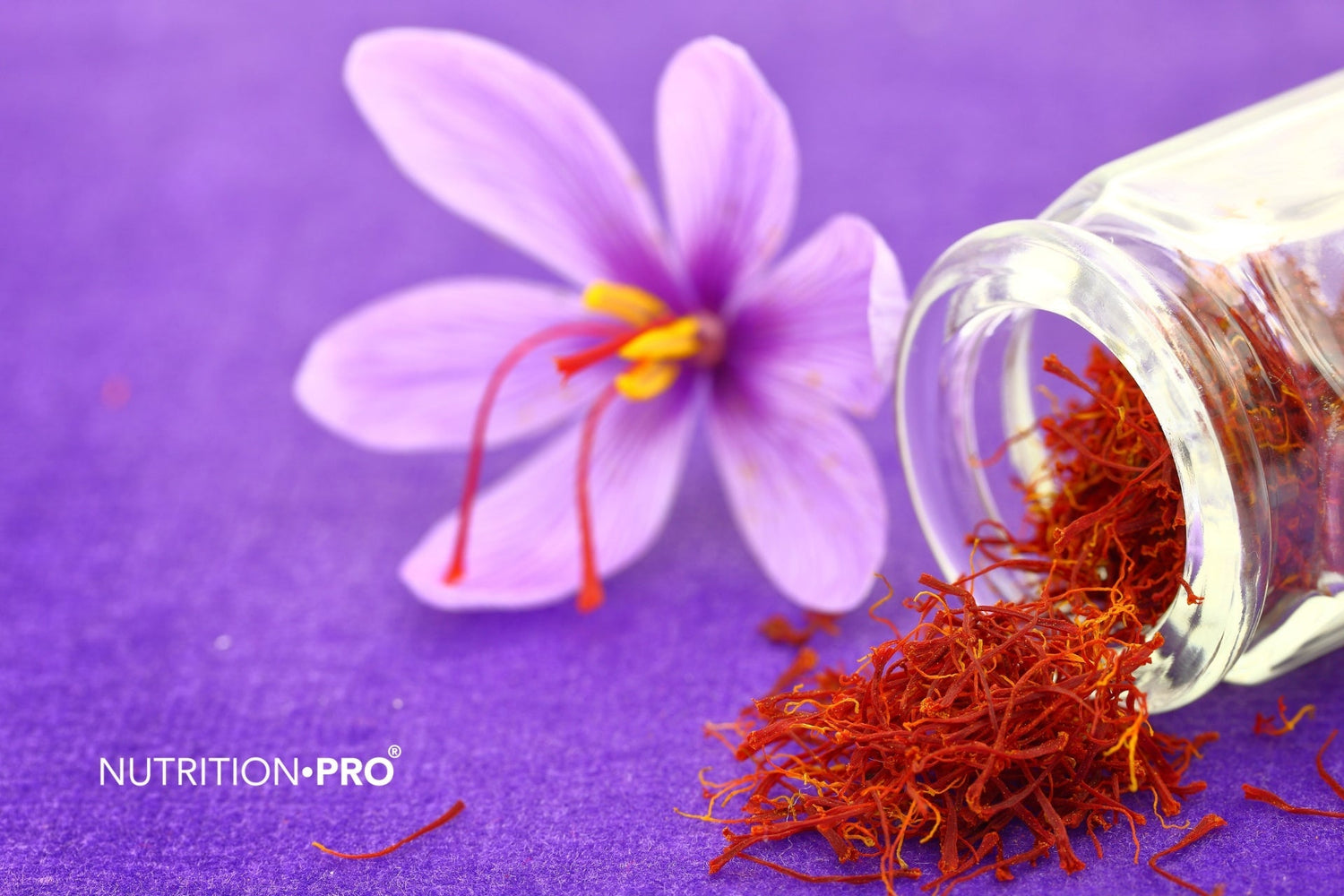
Saffron Saffron (Crocus sativus) is the most expensive spice in the world, but it is also one of the most scientifically studied plants for its effects on mood, stress, and sleep. More than 50 randomized controlled clinical trials published since 2010 have evaluated its action on mild depression, anxiety, sleep quality, and cognition. Good news: at the validated dose (28 to 30 mg/day of standardized extract), saffron has proven to be as effective as SSRI antidepressants for mild to moderate disorders, with significantly fewer adverse effects. This comprehensive 2026 guide covers the 5 validated benefits, proper dosage, choosing a quality extract (Safr'Inside), precautions, and useful combinations.
Three key findings. (1) According to Shafiee et al. 2024 in Nutrition Reviews, saffron is as effective as SSRIs (antidepressants) for mild to moderate depression, with fewer side effects. (2) According to Ghaderi et al. 2019 in Complementary Therapies in Medicine, saffron reduces the BAI anxiety score by 5.29 points and the PSQI sleep quality score by 2.22 points. (3) According to Han et al. 2024 in Phytotherapy Research, analysis of 46 clinical trials confirms significant improvement in depression, anxiety, sleep, and cognition, with excellent tolerability.
Concrete Protocol: Safr'Inside Saffron 30 mg/day in a single dose, 8 to 12-week course, taken in the morning for mood or in the evening for sleep. First effects within 30 minutes (calming) to 2 to 4 weeks (baseline mood improvement).

- Saffron: the timeless red gold of the pharmacopeia
- Crocin, safranal, picrocrocin: the 3 key active compounds
- Benefit 1: Mood and emotional balance
- Benefit 2: Stress and anxiety
- Benefit 3: Sleep quality
- Benefit 4: Cognition and memory
- Benefit 5: Female hormones, PMS, menopause
- How to choose quality saffron
- Optimal dosage and practical protocol
- Precautions, contraindications, interactions
Saffron: the timeless red gold of the pharmacopeia
Saffron comes from the red stigmas dried of the flower of Crocus sativus, an autumn violet crocus cultivated mainly in Iran, Spain, Morocco, and now in France (notably in Quercy and Gâtinais). Harvesting is exclusively manual: it takes 150,000 flowers and 400 hours of labor to obtain one kilogram of dried saffron. This makes it, by weight, a spice more expensive than gold.
In pharaonic Egypt, Cleopatra would pour it into her baths for its soothing properties. Persian physicians of the 10th century prescribed it to "relieve the sorrows of the heart and mind". Ayurvedic medicine used it for seasonal mood disorders. Hippocrates recommended it for "melancholic afflictions".
For a long time, these uses were based on tradition. But since 2010, more than 50 randomized controlled clinical trials (RCT) have scientifically validated the essence of these traditional uses. Saffron is one of the rare plants to have received this quantity of high-quality modern clinical studies.
Crocin, safranal, and picrocrocin: the 3 key active compounds
Crocin, the therapeutic pigment
Crocin is a water-soluble carotenoid (rare in the plant kingdom, as most carotenoids are fat-soluble). It is responsible for the intense red color of saffron. Its validated properties: Powerful antioxidant
- : ability to neutralize free radicals superior to vitamin E in certain in vitro models. Neuroprotective
- : protection of neurons against oxidative stress, action demonstrated in neurodegeneration models. Antidepressant
- : modulation of serotonergic and dopaminergic systems. Cardioprotective and anti-inflammatory
- : reduction of systemic inflammatory markers. Safranal, the anxiolytic active compound
Safranal
is a volatile and aromatic compound, responsible for the characteristic aroma of saffron. It is the most studied active for effects on emotional balanceAnxiolytic actionvia modulation of GABA-A receptors (same receptors as benzodiazepines, but with a gentler mechanism and without habituation). :
- <<<40>>> via la modulation des récepteurs GABA-A (mêmes récepteurs que les benzodiazépines, mais avec un mécanisme plus doux et sans accoutumance).
- Antidepressant action via modulation of serotonin reuptake, a partial mechanism similar to SSRIs.
- Mild sedative action, explaining the effects on sleep quality.
The safranal is extremely volatile and fragile. During conventional extraction processes (heat, air oxidation), a large portion of safranal evaporates or degrades. Result: two saffron extracts displaying the same amount of "total saffron" can contain very different quantities of biologically active safranal. This is the entire challenge of patented extracts like Safr'Inside, which use encapsulation technology to preserve safranal until intestinal absorption.
Picrocrocin, the bitter taste
The picrocrocin is responsible for the bitter flavor of saffron. Less studied than crocin and safranal, it nonetheless possesses stimulating digestive properties (increased biliary and gastric secretions) and likely contributes to the traditional effects of saffron on functional digestive disorders.
During digestion, picrocrocin partially transforms into safranal, which helps enhance the overall bioavailability of the effect.
Benefit 1: Mood and emotional balance
Efficacy comparable to SSRIs for mild to moderate depression
EFFECTS (SAFFRON VS SSRI)
This is one of the most important discoveries in recent saffron research. The Shafiee et al. 2024 meta-analysis, published in Nutrition Reviews, directly compared saffron to SSRIs (selective serotonin reuptake inhibitors) across 8 randomized controlled clinical trials.
Concretely, these 8 trials compared saffron to antidepressants such as fluoxetine (Prozac), sertraline (Zoloft), citalopram (Seropram), orimipramine. In mild to moderate depression, efficacy proved equivalent. But the classic side effects of SSRIs (nausea, weight gain, decreased libido, digestive disorders, REM sleep disturbances) were significantly less pronounced with saffron.
How does saffron act on mood?
The mechanism involves three neurobiological pathways :
Serotonergic pathway. Crocin and safranal exert a partial inhibitory action on serotonin reuptake, similar to the mechanism of SSRIs but gentler and more comprehensive. Result: increased serotonin availability in synapses, which underlies the sensation of well-being and emotional stability.
BDNF pathway. Saffron increases the expression of BDNF (brain-derived neurotrophic factor), a protein essential for brain plasticity. Low BDNF is correlated with chronic depression; effective antidepressants all increase BDNF, and saffron has the same effect.
Inflammatory pathway. Chronic depressions are associated with low-grade systemic inflammation. The antioxidant and anti-inflammatory properties of crocin reduce this inflammatory state and improve neuronal resilience.
Saffron has been validated for mild to moderate depression (Hamilton score below 25). In the case of diagnosed severe depression, with dark thoughts, total loss of vital drive, major functional impairment, or suicidal risk: immediate medical consultation and specialized treatment. Saffron may be offered as a complement, but never as a replacement, and always with psychiatric advice.
Benefit 2: Stress and Anxiety
Reduction in BAI anxiety score by more than 5 points
VS PLACEBO
The BAI score (Beck Anxiety Inventory) is a 21-item questionnaire assessing the intensity of anxiety symptoms experienced over the past week. A reduction of 5 points is considered clinically significant : it corresponds to a measurable return toward a calmer state in daily life.
Three anxiolytic mechanisms
Mechanism 1: GABA modulation. Safranal partially binds to GABA-A receptors, the same receptors targeted by benzodiazepines (Lexomil, Xanax, Valium). But with lower affinity and an indirect mechanism, without dependence or withdrawal syndrome.
Mechanism 2: HPA regulation. Saffron modulates theHPA axis, the primary hormonal stress system, and lowers cortisolpeaks. This hormonal regulation explains the effect on chronic occupational stress.
Mechanism 3: unique rapid action. According to data from manufacturer Activ'Inside, the Safr'Inside extract has a rare feature: a soothing effect felt from 30 minutes after intake. This rapid kinetics makes it a tool for occasional use before a stressful event (interview, exam, public speaking, travel).
Saffron works on both levels. Chronic stress (occupational mental burden, underlying anxiety, prolonged family tensions): daily intake of 30 mg for 8 to 12 weeks, cumulative effect. Acute occasional stress (important interview, exam presentation, public speaking, airplane travel): single intake 30 minutes before the event, rapid soothing effect without drowsiness. Both levels can be combined.
Benefit 3: Sleep quality
Objective improvement in Pittsburgh score (PSQI)
VS PLACEBO
The PSQI (Pittsburgh Sleep Quality Index) evaluates sleep across seven dimensions: subjective quality, sleep onset latency, duration, efficiency, disturbances, hypnotic medications, daytime dysfunction. Total score ranges from 0 (excellent) to 21 (severely disturbed sleep). A reduction of 2.22 points is clinically highly significant: it represents the transition from "disturbed" sleep to "adequate" sleep for many patients.
Saffron vs melatonin: what are the differences?
| Criterion | Saffron | Melatonin |
|---|---|---|
| Primary mechanism | Mental calming, GABA modulation | Biological clock synchronization |
| Target focus | Rumination, bedtime anxiety | Jet lag, delayed sleep onset |
| Effect on sleep onset | Indirect via relaxation | Direct and rapid |
| Effect on overall quality | Excellent (PSQI −2.22) | Moderate |
| Daytime action (anxiety, mood) | Yes, comprehensive benefit | No, strictly nocturnal action |
| Possible synergy | Yes, both can be combined in cases of complex insomnia | |
In practice, saffron is the preferred option for insomnia related to stress, nighttime rumination, underlying anxiety, or mild depression with sleep disturbances. Melatonin remains indicated for circadian rhythm disruptions (jet lag, shift work, delayed sleep phase syndrome).
To learn more about sleep, you can also consult our Optimal Sleep which combines melatonin, valerian and other targeted active ingredients.
Benefit 4: Cognition and Memory
Efficacy comparable to donepezil for mild cognitive decline
Neuroprotective Mechanisms
Crocin and safranal act on three key processes of brain aging:
- Neuronal oxidative stress. Crocin is one of the most powerful plant antioxidants, capable of crossing the blood-brain barrier. It protects neurons from age-related oxidative stress.
- Brain inflammation. Chronic neuroinflammation is a central mechanism in Alzheimer's disease. Saffron reduces pro-inflammatory cytokines in the brain.
- Amyloid plaques. Several preclinical studies show that crocin inhibits beta-amyloid peptide aggregation, a hallmark of Alzheimer's disease.
In individuals over 50 years old with a family history of cognitive decline, or experiencing "memory lapses" and concentration difficulties related to chronic stress, saffron can be taken as a preventive course. Useful synergies: Organic Ginkgo for brain microcirculation, omega-3 EPA/DHA for neuronal membranes, multivitamins including B vitamins for brain energy metabolism.
Benefit 5: Female Hormones, PMS, Menopause
Natural support for feminine cycles
Premenstrual Syndrome (PMS)
PMS affects up to 75% of women of reproductive age, with varying intensities. Typical symptoms of the luteal phase (second half of the cycle): irritability, mood swings, fatigue, breast tenderness, pelvic pain, bloating, rumination, increased emotional sensitivity.
Several randomized clinical trials evaluated saffron at 30 mg/day for PMS. Results: significant reduction in overall PMS severity scores from the 2nd cycle of use onwards, particularly marked for irritability, fatigue, and mood swings. Mechanism: serotonergic action (serotonin drops in the luteal phase are one of the central factors in PMS).
Menopause and hot flashes
At menopause, the drop in estrogen causes hot flashes, night sweats, sleep disturbances, and depressive mood. Saffron has been studied for this indication with promising results on the emotional component (mood, anxiety, sleep), with a more modest effect on direct hot flashes.
How to choose quality saffron
The trap of non-standardized powders
A product displaying "saffron 30 mg" without specification has no clinical value. The concentration of active compounds (crocin, safranal) can vary by a factor of 1 to 10 depending on drying method, storage, and age of the raw material. Without standardized titration, it is impossible to guarantee a biologically active dose.
Clinically validated extracts are all standardized patented extracts. The most studied:
| Extract | Laboratory | Specificity |
|---|---|---|
| Safr'Inside® | Activ'Inside (France) | Encapsulation preserving 10x more safranal |
| affron® | Pharmactive (Spain) | Standardization Lepticrosalides, studies on mood |
| Satiereal® | Inoreal (France) | Studies on appetite and emotional snacking |
Why Safr'Inside stands out
Our Saffron Nutrition•pro uses Safr'Inside®, developed by the French laboratory Activ'Inside near Bordeaux. What makes Safr'Inside unique:
- Proprietary encapsulation technology that protects volatile safranal from heat, oxidation, and premature digestive degradation.
- 10 times more safranal preserved at intestinal delivery compared to standard extracts.
- Rapid action demonstrated : noticeable calming effect within 30 minutes of intake, clinically validated by the laboratory.
- 100% French origin and traceability.
Optimal dosage and concrete protocol
The 5-step protocol
Identify your dominant need profile
Honestly assess your priority symptom. If low baseline mood + irritability: dominant mood axis. If insomnia or nighttime awakenings linked to rumination: sleep axis. If chronic professional stress: anxiety axis. If PMS: cycle axis.
Choose an extract standardized in safranal
Check the label for a named extract (Safr'Inside, affron, Satiereal) and safranal content. Our Saffron uses Safr'Inside at 30 mg per capsule, the exact dose from clinical studies.
Align your intake timing with your objective
Maintain the course for 8 to 12 weeks
Consistency is essential. Missing 2 to 3 doses is not problematic, but stopping a course before 4 weeks does not allow proper evaluation of the real effect.
Evaluate and adjust
Objective evaluation: on a scale of 10, how do you feel compared to the beginning? Which symptoms have notably decreased? Which persist? If clear improvement: 4-week break then new 8-week course (maintenance). If partial effect: consider a synergy.
Useful synergies according to profile
| Profile | Saffron + | Benefit |
|---|---|---|
| Chronic professional stress | Ashwagandha KSM-66 | Cortisol + deep resilience |
| Insomnia + tension | Magnesium bisglycinate | Muscle relaxation + mental calm |
| Low mood + inflammation | Omega 3 EPA/DHA | Global neural support |
| Mild cognitive decline | Organic Ginkgo | Cerebral microcirculation |
| Moderate to severe PMS | Endometrine | Global feminine comfort |
| Menopause discomfort | Organic Menopause | Hot flashes + mood + sleep |
With 4 positive answers or more, your profile matches the validated indications for saffron. Recommended protocol: Safran Safr'Inside 30 mg/day for 8 to 12 weeks, timing of intake adapted to your dominant symptom (morning for mood, evening for sleep). Evaluation at 12 weeks. With 7 positive answers or more, also consider targeted synergy (see table above). If you are taking an antidepressant or anxiolytic treatment: medical advice mandatory before any use.
Precautions, contraindications, interactions
Absolute contraindications
- Pregnancy : saffron at high doses may be uterotonic (stimulates uterine contractions). To be avoided as a precaution throughout pregnancy, even though usual nutritional doses rarely pose a problem.
- Breastfeeding : due to lack of data on passage into breast milk.
- Children under 12 years old : insufficient pediatric studies.
- Known allergy to saffron or Iridaceae.
- Uncontrolled bipolar disorder : theoretical risk of manic episode, as with antidepressants.
Drug interactions to be aware of
Antidepressants (SSRIs, SNRIs, tricyclics, MAOIs) : possible additive effect, theoretical risk of serotonin syndrome at very high doses. Medical advice required before any concurrent use. Never discontinue or reduce an antidepressant on your own initiative. Anxiolytics (benzodiazepines) : possible potentiation of sedative effect, caution advised. Anticoagulants (warfarin, DOACs, antiplatelet agents) : mild antiplatelet effect of saffron, monitoring recommended. Antihypertensives : mild hypotensive effect possible, monitor blood pressure. Before surgery : discontinue 7 to 10 days before as a precaution.
Possible adverse effects
At recommended doses (30 mg/day), adverse effects are rare and mild, generally comparable to placebo: mild dry mouth, daytime drowsiness (rare, if taken in the morning in sensitive individuals), transient headaches at the beginning of treatment, mild digestive disorders. If these effects persist beyond 2 weeks: discontinue.
Toxicity at high doses
Saffron becomes toxic at very high doses. The relevant thresholds:
- 30 to 100 mg/day : validated nutritional dose, very well tolerated.
- 1.5 g/day : threshold for serious adverse effects (nausea, dizziness, vomiting).
- 5 g/day : hepatic and renal toxicity.
- 20 g/day : potential lethal dose.
No risk at the doses of serious dietary supplements, but it is important never to combine multiple sources of saffron without control (capsules + concentrated herbal teas + high-dose cooking).
Frequently Asked Questions
Is saffron effective from the first dose?
For a one-time calming effect, yes: Safr'Inside extract shows noticeable action within 30 minutes after intake according to manufacturer Activ'Inside data. This allows for a single dose before a stressful event. For a long-term effect on mood and sleep, benefits build over 2 to 12 weeks: first signs at 2-4 weeks, maximum effect at 6-12 weeks according to meta-analyses.
Can you take saffron every day for life?
Clinical studies cover treatment courses of 4 to 24 weeks. Safety data beyond that are reassuring but limited in duration. Recommended approach: 8 to 12-week courses followed by 4-week breaks, then new courses. This allows you to assess the real necessity of the supplement and avoid behavioral habituation. For preventive maintenance, 2 eight-week courses per year are often sufficient.
Does saffron make you sleep like a sleeping pill?
No, saffron is not a sleeping pill in the classical sense. It does not induce sleep through sedation. Its effect on sleep works throughmental calming : fewer ruminations at bedtime, less nighttime anxiety, therefore more natural sleep onset and sleep. You will not feel "heaviness" like with a benzodiazepine. For a more pronounced sedative effect, saffron can be combined with valerian or melatonin.
What is the difference between saffron and ashwagandha?
Both are excellent adaptogens/anti-stress agents, but their profiles differ. Saffron : rapid action (30 min), preferentially targets emotional mood and ruminations, serotonergic action. Ashwagandha : progressive action (2 to 8 weeks), preferentially targets cortisol and foundational resilience, action on the HPA axis. For acute chronic stress: saffron. For established chronic stress: ashwagandha. For complex stress: combination of both is validated. To learn more, consult our ashwagandha guide.
Can you cook with saffron and benefit from its properties?
In theory yes, but culinary doses are insufficient for a therapeutic effect. A saffron-based recipe typically uses 0.1 to 0.3 g of stigmas (approximately 0.3 to 1 mg of actives), while clinical studies use the equivalent of 30 mg of standardized extract. Moreover, cooking degrades some of the volatile safranal. Saffron cooking remains a gastronomic pleasure and provides slight antioxidant contribution, but does not replace targeted supplementation.
Is saffron halal, kosher, vegan?
Saffron itself is vegan, halal and kosher. The capsule container may vary: capsules made from animal-derived gelatin (non-vegan), capsules made from vegetable cellulose or pullulan (vegan). Check the labeling of the chosen product. Our Safr'Inside Saffron uses a formulation compatible with vegetarian diets.
Does saffron help with weight loss?
Not directly. Saffron does not burn fat. However, several studies have demonstrated a reduction in emotional snacking and sugar cravings with saffron, especially in people who eat due to stress, boredom, or negative emotions. The Satiereal extract has notably been studied for this indication. If your weight gain is linked to emotional eating patterns, saffron can be a supportive tool. Otherwise, the issue needs to be addressed from other angles.
Can saffron be taken with birth control pills?
There is no known interaction between saffron and oral contraceptives. Saffron does not reduce the effectiveness of the pill. It may instead help relieve the emotional side effects sometimes reported with the pill (depressive mood, irritability). In case of doubt, ask for confirmation from your doctor or pharmacist.
How much does a saffron course cost?
For a standardized quality extract (Safr'Inside, affron, Satiereal) at the validated dose of 30 mg/day, expect between 25 and 40 euros per month depending on the brands. Our Safr'Inside Saffron offers a 30-day course in a single daily dose. Beware of "saffron" products under 15 euros per month: they often contain non-standardized raw powder, without safranal content, and clinical effectiveness is not guaranteed.
Can saffron and 5-HTP be combined?
With caution. 5-HTP (direct precursor of serotonin) and saffron (serotonin reuptake modulator) have complementary mechanisms but both act on the serotonergic system. At reasonable nutritional doses (30 mg saffron + 50 mg 5-HTP), the combination is generally well tolerated. At higher or prolonged doses, medical advice is preferable, particularly if you are taking other supplements or medications that act on serotonin.
Is there a risk of serotonergic "burnout" with saffron?
No, at normal doses. Saffron does not cause serotonergic depletion like some very potent medications. It gently modulates the system rather than forcing it. This is one of the reasons why it does not cause dependency or withdrawal syndrome upon discontinuation, unlike antidepressants.
Is saffron effective in men?
Yes, completely. Clinical studies on saffron involved mixed male/female populations, with equivalent results on mood, anxiety, sleep, and cognition. The idea that saffron is "a supplement for women" is a commercial oversimplification. Men experiencing chronic professional stress, persistently low mood, or insomnia: perfectly validated indication.
Should breaks be taken during use?
Standard recommendation: 8 to 12 weeks of use + 4 weeks off, repeated as needed. This allows for evaluation of the real need for the supplement, avoids behavioral habituation, and respects physiology. For preventive maintenance, 2 courses of 8 weeks per year (for example in autumn and spring, periods of seasonal vulnerability) are sufficient for many people.
Can saffron trigger a manic episode?
Theoretically yes, like all antidepressants, in people with undiagnosed or unstabilized bipolar disorder. This is why bipolar disorder is a contraindication. In practice, at nutritional doses, this risk is very low. Anyone with a history of manic phases, hypomanic episodes, or cyclical mood disorders should consult before taking saffron.
What signs show that saffron is right for me?
After 2 to 4 weeks of use, you should feel: improved overall sense of well-being, reduced irritability, fewer ruminations at bedtime, better sleep quality, greater serenity when facing usual stressors, less emotional snacking. If none of these signs appear at 4 weeks: continue for another 4 weeks (maximum effect at 8-12 weeks). If no effect at 12 weeks: consider a synergistic combination or another active ingredient. Our ashwagandha guide can be a relevant alternative for chronic stress.
Is saffron dangerous for the liver or kidneys?
No, at recommended doses. No hepatic or renal toxicity has been reported in meta-analyses at 30 mg/day. Biological markers (ALT, AST, creatinine) remain stable over 12-week courses. Hepatorenal toxicity appears only at very high doses (beyond 5 g/day of dry stigmas), a dose inaccessible with a standard dietary supplement.
How to verify the quality of a saffron supplement?
Four criteria to check on the label: (1) name of the patented extract (Safr'Inside, affron, Satiereal), not just generic "saffron", (2) precise dose of 28 to 30 mg per capsule, (3) standardization in safranal or active compounds (otherwise, quality not guaranteed), (4) origin and traceability. Supplements under €15 per month are almost always non-standardized powders, with no demonstrated clinical efficacy. Our Saffron uses Safr'Inside, a standardized and patented French extract.
Is saffron reimbursed by Social Security?
No. Like all dietary supplements, saffron is not reimbursed by Social Security. Some supplementary health insurance plans offer a "natural medicine" package that may partially cover supplements prescribed by a healthcare professional. Check with your health insurance provider.
Glossary: technical terms explained
- Crocin
- Water-soluble carotenoid responsible for saffron's red color. Powerful antioxidant, neuroprotective, antidepressant.
- Safranal
- Volatile aromatic compound in saffron, responsible for its aroma. Main active agent for anxiety and sleep via modulation of GABA-A receptors.
- Picrocrocin
- Precursor of safranal, responsible for the bitter taste. Partially transforms into safranal during digestion.
- Safr'Inside®
- Patented saffron extract developed by French laboratory Activ'Inside (Bordeaux). Encapsulation technology preserving 10 times more safranal than standard extracts.
- SSRIs
- Selective serotonin reuptake inhibitors: class of antidepressants (fluoxetine, sertraline, citalopram, escitalopram) that increase serotonin availability in the brain.
- BAI (Beck Anxiety Inventory)
- 21-item scale assessing anxiety symptom intensity. Score 0 to 63. International reference in clinical anxiety research.
- PSQI (Pittsburgh Sleep Quality Index)
- Questionnaire assessing sleep quality across 7 dimensions. Score 0 to 21. International reference tool for sleep studies.
Scientific sources
- Shafiee A, Jafarabady K, Seighali N, et al. Effect of Saffron Versus Selective Serotonin Reuptake Inhibitors (SSRIs) in Treatment of Depression and Anxiety: A Meta-analysis of Randomized Controlled Trials. Nutr Rev 2025;83(3):e751-e761. DOI: 10.1093/nutrit/nuae076
- Han S, Cao Y, Wu X, et al. New horizons for the study of saffron (Crocus sativus L.) and its active ingredients in the management of neurological and psychiatric disorders. Phytother Res 2024;38(5):2276-2302. DOI : 10.1002/ptr.8110
- Ghaderi A, Asbaghi O, Reiner Z, et al. The effects of saffron (Crocus sativus L.) on mental health parameters and C-reactive protein: A meta-analysis of randomized clinical trials. Complement Ther Med 2019;48:102250. DOI : 10.1016/j.ctim.2019.102250
- Ayati Z, Yang G, Ayati MH, Emami SA, Chang D. Saffron for mild cognitive impairment and dementia: a systematic review and meta-analysis of randomised clinical trials. BMC Complement Med Ther 2020;20:333. DOI : 10.1186/s12906-020-03102-3
- Avgerinos KI, Vrysis C, Chaitidis N, Kolotsiou K, Myserlis PG, Kapogiannis D. Effects of saffron (Crocus sativus L.) on cognitive function. A systematic review of RCTs. Neurol Sci 2020;41(10):2747-2754. DOI : 10.1007/s10072-020-04427-0


