

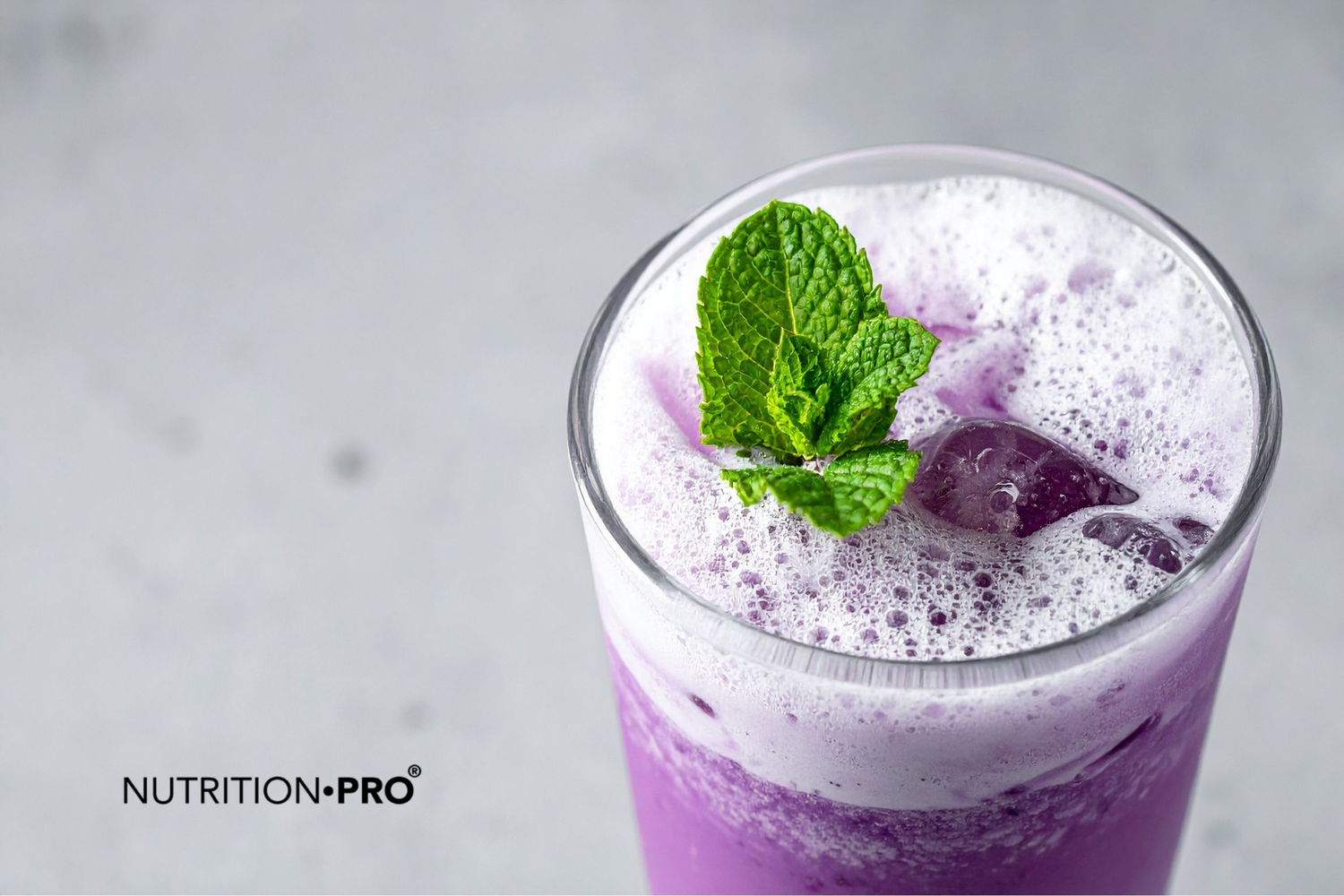
With its striking violet hue, creamy texture, and growing presence in smoothies, ice creams, and colorful bowls, theUbe has established itself as an essential trend in wellness and nutrition. Originating from Southeast Asia, this intriguing tuber is as fascinating as it is appealing. It appears on the cover of health magazines, across social media… and now, in dietary supplements.
But beyond its "Instagrammable" appeal, does ube really deserve its superfood status? Or is it simply a fleeting craze, driven by the wave of exotic and natural products that are "in fashion"? Nutritional richness, supposed benefits, available science, traditional use: a serious, colorful analysis of this tuber is essential.
In this article, we'll disentangle the marketing halo effect from physiological reality. Discover where ube really comes from, what it contains, what research says about it… and whether or not it deserves a lasting place in your dietary routine.

1. What exactly is ube?
Often confused with purple sweet potato or taro, theubé is actually a distinct tuber. Originating from Southeast Asia, it belongs to the Dioscoreaceae family and bears the botanical name Dioscorea alata. It is a variety of yam that is naturally purple to violet in color, cultivated notably in the Philippines, where it holds an important place in traditional culinary culture.
Its dense and creamy flesh develops, once cooked, a slightly floury texture and a subtle, sweet taste, almost vanilla-like. This characteristic flavor is what made it popular in Southeast Asian desserts, beverages, and baked goods, long before its export to Western markets.
Ube, purple sweet potato, taro: beware of confusion
Ube is often confused with other foods with colored flesh, but there are notable differences:
- Purple sweet potato (Ipomoea batatas, Okinawa or Stokes variety) belongs to another botanical family (Convolvulaceae) and is distinguished by a sweeter flavor and higher starch content.
- Taro (Colocasia esculenta), on the other hand, is paler, sometimes spotted, and has a more earthy flavor. It is widely used in Polynesian, Japanese, and Indian cuisines.
Ube, unlike these two cousins, possesses a specific nutritional profile, and a notable concentration of anthocyanins, natural pigments responsible for its violet hue and associated with multiple antioxidant effects.
This distinction is essential: not all purple tubers are equal, neither nutritionally nor functionally. Hence the growing interest from researchers and supplement formulators in this specific variety of yam.
2. Nutritional composition of ube
If ubé generates so much interest beyond its aesthetics, it is largely due to its nutritional richness. This tuber combines complex carbohydrates, a high content of fiber and natural concentration of antioxidants, all with a sweet flavor and naturally appealing color.
A tuber with a moderate glycemic index
Ube, like other yams, is rich in resistant starch, a type of carbohydrate not fully digested by the small intestine. This type of starch acts similarly to soluble fiber, which makes it possible to:
- Slow down digestion
- Promote a slower release of glucose into the bloodstream
- Improve satiety
Its glycemic index is moderate, which makes it an interesting option in a diet aimed at limiting blood sugar spikes, particularly for people sensitive to insulin.
A natural source of fiber
Ube contains approximately 4 to 5g of fiber per 100g, which makes it a potential ally for intestinal transit and blood sugar regulation. The fiber it contains is predominantly of the soluble type, with a beneficial effect on intestinal flora.
Anthocyanins with antioxidant effects
The element that truly distinguishes ube is its concentration in anthocyanins, natural pigments from the flavonoid family. These compounds are known for:
- Their high antioxidant power
- Their role in vascular protection
- Their potential anti-inflammatory and neuroprotective
These are the same pigments found in blueberries, blackberries, and red cabbage. Studies conducted on anthocyanins report that they contribute to the reduction of oxidative stress, to cognitive health status and to the prevention of certain metabolic disorders.
Other micronutrients present
Ube is also a moderate source of:
- Vitamin C (immune system support, antioxidant)
- Vitamin B6 (nervous balance, metabolism)
- Potassium (blood pressure regulation)
- Manganese (enzyme cofactor, cellular protection)
These nutrient levels vary depending on preparation and storage methods, but they contribute to its complete functional food profile.
The natural purple color of ube comes from anthocyanins, pigments also found in blueberries or red cabbage, recognized for their powerful antioxidant effect.
3. Ube and health: what potential benefits?
Growing interest in ube is not solely due to its distinctive color. Several studies are now examining its potential physiological effects, particularly in connection with the phenolic compounds it contains. The nutritional properties of ube suggest they could act favorably on various aspects of health.
Protection against oxidative stress
Thanks to its richness in anthocyanins, ube exhibits strong antioxidant power. These pigments are capable of neutralizing certain free radicals, unstable molecules involved in cellular aging and chronic inflammatory processes.
Studies on other anthocyanin-rich foods (such as blueberry or blackcurrant) have revealed a link between their regular consumption and:
- A reduction in oxidative stress
- An improvement in cardiovascular markers
- Better muscle recovery in athletes
Ube could therefore fit into this protective dynamic, although specific clinical data on Dioscorea alata remains limited to date.
Support for intestinal microbiota
Ube is a source of soluble fiber and resistant starch, two elements known to nourish beneficial gut bacteria. This type of substrate acts as a prebiotic, meaning itpromotes the growth of certain beneficial strains (particularly bifidobacteria).
A balanced microbiota is involved in numerous functions:
- Digestion and nutrient absorption
- Immune modulation
- Mood regulation via the gut-brain axis
Consumed regularly, ube could therefore contribute to this microbial balance.
Anti-inflammatory potential
Anthocyanins also exhibit anti-inflammatory activity indirect. They appear to inhibit certain pro-inflammatory pathways (such as NF-κB or COX-2), which could explain their protective effects on cardiovascular, joint, and digestive systems.
In animal studies, certain ube extracts showed a reduction in systemic inflammatory markers, although these results require confirmation in humans.
Other effects under investigation
- Blood sugar regulation : thanks to slowly digestible starch, ube can help stabilize the postprandial glycemic curve.
- Cardiovascular health : the flavonoids it contains could promote better blood vessel dilation and protect the endothelium.
- Cognitive function : studies are exploring the link between dietary anthocyanins and neuronal performance, particularly in preventing age-related decline.
Research remains at this stage preliminary , but results observed in comparable foods allow ube to be considered as a credible candidate for superfood status , provided it is integrated into a balanced nutritional routine.
4. Trend or genuine superfood?
In recent years, ube has established itself as a recurring figure on social networks and in organic store shelves. Colorful, photogenic, and original, it checks all the boxes of an "instagrammable" food. But this growing popularity raises an essential question: Is ube truly a superfood… or simply another product riding an ephemeral trend?
A traditional food rehabilitated by marketing
Ube has been consumed for centuries in the Philippines, Vietnam, and Indonesia, primarily in sweet preparations. Long confined to local use, it experienced spectacular resurgence in the 2010s thanks to its natural color and photogenic appeal.
Its presence in colorful desserts — ice creams, mochi, donuts, lattes, cheesecakes — captivated a generation of consumers seeking novelty, giving rise to a genuine "ube branding" in culinary and aesthetic spheres.
Solid nutritional foundation
Unlike other ephemeral trends, ube does not rely solely on its image. Its composition — rich in fiber, anthocyanins, and resistant starch — gives it genuine nutritional assets.
Its legitimacy as a superfood is strengthened by the convergence of data from:
- Research on purple pigments (anthocyanins)
- Studies on the effect of tuberous complexes on the microbiome
- Observations in functional nutrition around flavonoids
It is therefore not simply a trendy food, but rather a credible candidate for a lasting place in a balanced diet — provided it is consumed in appropriate forms.
When the trend distorts the product
The main pitfall comes from the industrial processing of ube in certain products. Its popularity has led many brands to develop ube-based product lines… but where ube sometimes represents only a simple food coloring , buried in ultra-processed matrices rich in sugars, fats, or additives.
This is where marketing takes precedence over nutrition, and where consumers must remain vigilant.
Beware of ultra-processed ube-based desserts: ice creams, pastries, and industrial snacks often contain more sugar than actual yam.
5. How to incorporate ube into your diet?
Beyond culinary trends, ube can be integrated coherently into an eating routine focused on prevention, vitality, or nutritional diversity. The key is knowing in what form to consume it, which doses to prioritize, and what to watch out for.
In what form should you consume ube?
Ube is now available in various forms, more or less processed. Here are the main ones:
- Ube puree : often frozen or canned, to be used as a base in smoothies, porridges, or homemade desserts.
- Ube powder : obtained by freeze-drying or slow dehydration, it allows easy use in raw or cooked preparations (beverages, yogurts, crepes, etc.).
- Ube chunks (whole root) : less common outside Asia, but excellent steamed, roasted, or blended.
- Dietary supplements : capsules or standardized extracts, concentrated in anthocyanins or fiber, for functional purposes.
Recommended frequency and quantities
There is currently no official nutritional reference for ube consumption. However, by analogy with other antioxidant-rich sources (such as berries), you can aim for:
- 100 to 150 g of puree or root 2 to 3 times per week, as part of a varied diet,
- or 1 to 2 teaspoons of powder per day in a smoothie or breakfast,
- or even 1 to 2 capsules/day if used as targeted supplementation (following manufacturer's dosage).
Incorporating ube into your routine can support your intake of natural antioxidants, provided you prioritize products without added sugar or artificial colorings.
Interesting food pairings
- With red berries or chia seeds to enhance flavonoid and soluble fiber intake.
- In plant-based preparations rich in healthy fats (coconut oil, almond butter) to optimize the absorption of certain fat-soluble compounds.
- As a partial replacement for regular starches , to diversify intake of complex starches and prebiotics.
6. Precautions, contraindications, product quality
Although natural and generally well-tolerated, ube is not without points of caution. Like any functional food, its quality depends largely on its origin, its processing method, and the way it is incorporated into the diet.
General precautions for use
- Pregnancy and breastfeeding : in the absence of specific studies on ube consumption in capsule or concentrated form, it is better to remain cautious during these sensitive periods.
- People with diabetes : although ube has a moderate glycemic index, certain preparations (pastries, desserts) may contain significant amounts of added sugars.
- Children : no known risk to date, but like any new food, it should be introduced gradually.
- Dietary supplements : be careful with dosages of anthocyanins or over-concentrated polyphenols, which may interact with certain medications (particularly anticoagulants or antihypertensives).
Product quality and traceability
To benefit from ube's nutritional properties, it is essential to choose products that are:
- Non-irradiated , free of artificial colorants or preservatives
- From transparent supply chains (clear geographic origin, possible organic certifications)
- Processed at low temperature (powder or puree obtained by freeze-drying or gentle cooking)
- With simple composition : pure ube or 100% Dioscorea alata, without unnecessary additives (sugar, flavorings, modified starches)
Industrial ube: caution regarding ultra-processing
Industrial ube-based preparations, which are very trendy, may present a nutritional profile very far removed from the original tuber. Ice creams, colored milks, flavored snacks, or ube biscuits often contain:
- Little or no real ube
- Colorants to recreate the purple hue
- High quantities of sugars, fats, or additives
The health impact of these products has nothing to do with that of ube in its natural or minimally processed form. This is why it is important to read labels carefully and remain attentive to the degree of processing.
Conclusion
Long confined to traditional kitchens of Southeast Asia, ube has recently risen to the status of a global phenomenon. Its vibrant color, soft texture, and nutritional potential make it a singular food, capable of awakening both culinary curiosity and scientific interest.
But beyond marketing hype, available data confirm that ube possesses real nutritional value, driven by its richness in fiber, in anthocyanins and in resistant starch. These elements make it a serious candidate among plant-based functional foods.
It remains to distinguish the raw or minimally processed food from its heavily marketed derivatives, often depleted of nutrients and enriched in sugars. Ube, like any superfood, has value only as part of a coherent and diversified diet, supported by informed choices.
In summary: neither a simple visual trend nor a miracle solution, ube deserves to be considered as a relevant functional ingredient, provided it is consumed with discernment and regularity.
Is ube the same food as purple sweet potato?
What are the most well-known health benefits of ube?
How can ube be consumed as a dietary supplement?
Can ube be consumed every day?
Is ube suitable for people with diabetes?
1. Khoo, HE, Azlan, A., Tang, ST, & Lim, SM (2017). Anthocyanidins and anthocyanins: colored pigments used in foods, pharmaceutical ingredients and potential health benefits. *Food & Nutrition Research*, 61(1), 1361779. → Comprehensive review of the bioactive properties of anthocyanins. 2. Wu, X., Beecher, GR, Holden, JM, Haytowitz, DB, Gebhardt, SE and Prior, RL (2006). Concentrations of anthocyanins in common foods in the United States and estimation of typical consumption. *Journal of Agricultural and Food Chemistry*, 54(11), 4069-4075. → Data on anthocyanin content in foods (including purple yams). 3. Ma, H., Johnson, SL and Liu, W. (2022). Purple yam (Dioscorea alata): Nutritional and functional properties, processing and beneficial health uses. *Journal of Food Science and Technology*, 59(3), 755-768. → Review of the functional properties of ube and its food applications. 4. Englyst, HN, Kingman, SM and Cummings, JH (1992). Classification and measurement of nutritionally important starch fractions. *European Journal of Clinical Nutrition*, 46 (Suppl 2), S33–S50. → Foundational study on resistant starch and its metabolic effects. 5. Jennings, A., Welch, AA, Fairweather-Tait, SJ, Kay, C., Minihane, AM, Chowienczyk, P. and Cassidy, A. (2012). Higher anthocyanin intake is associated with lower blood pressure and central blood pressure in women. *The American Journal of Clinical Nutrition*, 96(4), 781-788. → Potential effect of anthocyanins on cardiovascular markers.


