

- 1. Why cook with ube?
- 2. Tips before getting started in the kitchen
- 3. Recipe #1: Ube latte (hot or iced version)
- 4. Recipe #2: Homemade ube halaya (purple jam)
- 5. Recipe #3: Ube pancakes with coconut milk
- 6. Recipe #4: Antioxidant ube smoothie bowl
- 7. Recipe #5: Soft ube cake
- 8. Tips for incorporating ube into your daily eating routine
- 9. FAQ – Ube-based recipes
- 10. Scientific references
What if you added a touch of natural color and sweetness to your everyday dishes?Ube, also known aspurple yam, is far more than a root vegetable with spectacular hue. A star ingredient in Asian desserts, it is now captivating health-conscious and creative cooking enthusiasts around the world. With its sweet taste, subtly vanilla-like notes, and creamy texture, it lends itself to countless preparations, from the simplest to the most daring.
Good news: you don't need to be a chef to incorporate ube into your recipes. Whether you opt for ready-to-use ube puree, powder, or fresh tubers, you'll be able to create dishes that are both nutritious, visually stunning, and easy to prepare.
In this article, discover several accessible recipe ideas for cooking with ube daily, from breakfast to snack time, including indulgent beverages. Latte, jam, pancakes, or smoothie bowl: there's something for every taste... and every skill level in the kitchen.

1. Why cook with ube?
Ube is not just a pleasure for the eyes — its natural purple hue makes it an Instagram star — it's also a nutrient-rich food with surprising versatility in the kitchen. Originally from the Philippines, this purple yam is traditionally used in many Asian desserts, but it's now making its way into more modern and accessible recipes for everyone.
A natural color, without additives.
Ube's color comes from pigments called anthocyanins, naturally present in certain purple-hued vegetables, such as beets or red cabbage. These compounds are antioxidant and help protect cells against oxidative stress. In cooking, they allow you to achieve intense color without resorting to artificial food dyes. A simple ube puree can be enough to transform a smoothie, cake, or beverage into an original and appetizing creation.
A sweet and comforting flavor
Ube stands out for its subtle taste, sweet, slightly vanilla-like and reminiscent of chestnuts or sweet potato. This natural sweetness makes it a perfect ingredient for sweet recipes, particularly lattes, creams, porridges, and pastries. It allows you to reduce the amount of added sugar, while still enjoying genuine indulgence on the palate.
A healthy and nutritious ingredient
Beyond its visual and taste appeal, ube boasts genuine nutritional richness:
- It is source of fiber, promoting digestive comfort and satiety.
- It contains B vitamins, important for energy metabolism.
- It is rich in minerals such as potassium and magnesium, beneficial for nervous and muscular balance.
- Its antioxidant compounds support natural defenses and cellular vitality.
Ideal for varying your diet without complexity
Thanks to its versatility, ube can easily replace certain starches in classic recipes, or enrich existing preparations. It pairs equally well with coconut milk, berries, nuts and seeds, and warm spices such as cinnamon or vanilla. In other words, it adapts to your preferences, your needs… and your cooking skills!
2. Tips Before You Get Started in the Kitchen
Before you begin preparing ube-based recipes, a few simple precautions and tricks can make all the difference. Whether you use the fresh version, puree, or powder, here are the key points to know to succeed with your dishes from the first try.
Where to Find Ube?
Ube is increasingly available in France, even if it remains relatively unknown to the general public. It can be found in different forms:
- Fresh ube : sold in certain Asian grocery stores or specialty shops. It looks like a purple sweet potato, with a rough skin and purple flesh.
- Frozen ube : already peeled and cut, convenient for quick use.
- Ready-to-use ube puree : the most common option for sweet recipes. Be sure to read the composition carefully: some industrial purees contain artificial colorants, or even refined sugar.
- Ube powder : ideal for flavoring smoothies, hot beverages, or cake batters. Simply mix with a little hot water to obtain a creamy base.
How to Prepare Ube?
If you choose to work with fresh or frozen ube, here are the simple steps to follow:
- Peel the root carefully (it can be fibrous).
- Cut into cubes for even cooking.
- Steam or boil in water for approximately 20 minutes, until tender.
- Blend or mash into a purée according to desired texture.
Tip: To preserve a beautiful purple color, prioritize steaming and avoid prolonged cooking over high heat.
Choosing your ube correctly for a successful recipe
Some ready-to-use purées sold commercially (particularly those of Asian origin) are already sweetened and artificially colored. These products are designed for traditional desserts and may distort the texture or color of your creations.
Opt for 100% natural purée, with no added sugar, no additives or preservatives, to maintain control over your recipe and benefit from the authentic properties of ube.
Some industrial ube purées contain artificial food colorings such as E133 (Brilliant Blue FCF) or E129 (Allura Red AC) to enhance their purple color. These additives, often associated with excess refined sugar, may compromise the nutritional quality of preparations and present allergenic risks for sensitive individuals. To fully enjoy the benefits of ube, choose 100% natural purée with no additives or preservatives.
3. Recipe No. 1 – Ube Latte (hot or iced version)
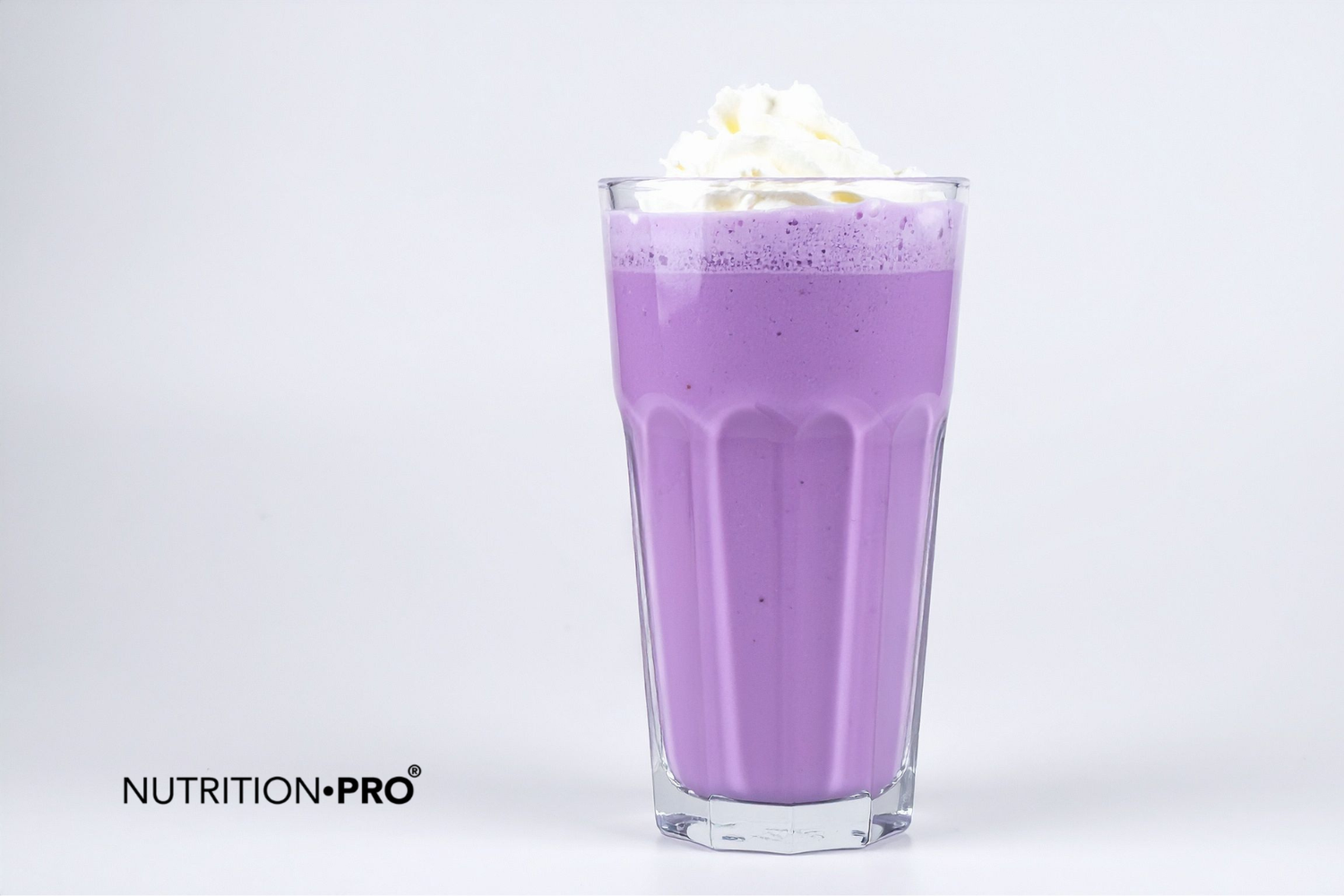
Nothing simpler and more comforting than a good ube latte, to be enjoyed at breakfast or as a sweet treat. This vibrant beverage, naturally sweetened and caffeine-free, combines sweetness, antioxidants and visual appeal.
Ingredients for 1 cup
- 2 tablespoons of natural ube purée (or 1 teaspoon of ube powder diluted in a little hot water)
- 200 ml of plant-based milk (almond, coconut or oat milk)
- 1 teaspoon of maple syrup (or honey, if not vegan)
- 1 pinch of vanilla powder (optional)
- Toppings: whipped coconut cream, coconut flakes, black sesame seeds (optional)
Preparation
Hot version :
- In a small saucepan, mix the ube puree, maple syrup, and vanilla.
- Add the plant-based milk and heat gently while whisking to ensure thorough blending.
- Once hot, pour into a cup and add toppings if desired.
Iced version :
- Prepare the base mixture with half the milk.
- Pour over ice cubes in a large glass.
- Add the remaining cold milk on top for a layered visual effect.
This ube latte makes an excellent caffeine-free alternative for people who are sensitive to caffeine or wish to reduce their stimulant intake. Thanks to the anthocyanins naturally present in purple yam, this beverage provides a touch of antioxidants in a gentle way, perfect for starting your day or for a wellness break.
4. Recipe #2 – Homemade ube halaya (purple jam)
Ubehalaya is a thick and creamy jam, typical of the Philippines, often served as a dessert or as a base for other sweet creations. In this revisited version, the focus is on whole ingredientswith moderate glycemic index, while preserving the creamy texture and traditional sweetness of the recipe.
Ingredients for a 300-350 g jar
- 250 g of natural ube puree
- 200 ml of coconut milk (or creamy plant-based milk)
- 1 to 2 tablespoons of coconut syrup or maple syrup
- 1 tablespoon of arrowroot starch (or cornstarch)
- ½ teaspoon ofvanilla extract
- A pinch of unrefined salt (to balance the sweetness)
Preparation
- In a saucepan, mix the ube puree, coconut milk, and chosen syrup.
- Heat over medium heat, stirring constantly with a spatula to prevent the bottom from sticking.
- Add the starch previously diluted in a little cold water, then incorporate into the preparation.
- Add the vanilla and pinch of salt.
- Continue cooking over low heat for 10 to 15 minutes until thickened. The texture should become smooth, glossy, and slightly pull away from the sides of the pan.
- Pour into a sterilized glass jar. Let cool before closing.
Possible uses
- Spread on a slice of whole wheat bread or sugar-free brioche.
- As a topping for pancakes, porridge, or plant-based yogurt.
- As a base for a plant-based mousse or raw cheesecake.
Traditionally served during year-end celebrations in the Philippines, ube halaya is one of the most popular desserts in Southeast Asia. It is often used as a filling for "halohalo," iced desserts made with fruits, milk, and crushed ice.
5. Recipe #3 – Ube and Coconut Milk Pancakes
Soft, colorful, gluten-free if desired, and made with plant-based ingredients, these ube pancakes are a perfect option for brunch or an indulgent snack. They combine the sweet flavor of purple yam with the richness of coconut milk, for a recipe that is as beautiful as it is delicious.
Ingredients for 6 to 8 small pancakes
- 100 g of oat flour (or rice flour, for a gluten-free version)
- 1 teaspoon of baking powder phosphate-free
- 1 pinch of unrefined salt
- 1 egg (or 1 tablespoon of ground chia seeds + 3 tablespoons of water for vegan version)
- 120 ml of coconut milk fluid
- 80 g of ube puree
- 1 tablespoon of maple syrup
- A little coconut oil for cooking
Preparation
- In a bowl, mix the flour, baking powder, and salt.
- In a second bowl, whisk the egg (or plant-based substitute) with the ube puree, coconut milk, and syrup.
- Incorporate the dry ingredients into the wet ingredients. Mix well without overworking the batter.
- Heat a lightly greased non-stick skillet.
- Pour small amounts of batter, cook for 1 to 2 minutes on each side, until bubbles form on the surface.
- Set aside on a plate and repeat.
Recommended toppings
- Fresh berries (raspberries, blueberries, strawberries)
- Plant-based yogurt plain or vanilla
- Nut pieces, sliced almonds or black sesame seeds
- A drizzle of coconut or maple syrup to enhance it all
To optimize the glycemic index of this recipe, use whole grain flour (oats, buckwheat) and pair the pancakes with healthy fats like nuts or seeds. This promotes slower glucose release, ideal for an energizing and filling breakfast.
6. Recipe #4 – Antioxidant ube smoothie bowl
Looking for a breakfast that combines nutrition, pleasure and aesthetics? This ube smoothie bowl offers a creamy texture, vibrant color and genuine richness in fiber, vitamins and antioxidants. It takes 5 minutes to prepare and can be customized to your taste.
Ingredients for 1 bowl
- 1 very ripe banana (ideally frozen for an icy texture)
- 100 g of natural ube puree
- 100 ml of plant-based milk (almond, coconut or oat)
- 1 handful of frozen red berries (blueberries, raspberries, blackberries)
- 1 teaspoon of chia seeds or ground flax seeds
- A few ice cubes (optional, for a fresher version)
Preparation
- Place all ingredients in a powerful blender.
- Blend until you reach a smooth and thick texture.
- Pour into a bowl and smooth with a spatula.
Recommended toppings
Toppings add crunch, complementary nutrients… and a final visual touch. Here are some ideas:
- Fresh fruit : kiwi slices, mango, fig
- Superfoods : chia seeds, pumpkin seeds, cacao nibs
- Shredded coconut, almond butter, homemade sugar-free granola
- Edible flowers for decoration (pansies, cornflowers, culinary lavender)
Tip: For a "purple ombre" effect, blend some of the red berries separately and drizzle on top of the smoothie in a spiral.
7. Recipe #5 – Soft ube cake
This ube cake is a healthy alternative to classic pastries. Its fluffy texture, vanilla flavor, and purple hue make it a dessert that is as delicious as it is surprising. Butter-free and easily adaptable to a plant-based version, it's perfect for snacks, brunches, or even parties.
Ingredients for an 18 cm round cake pan
- 200 g of ube puree natural
- 180 g of T80 wheat flour (or semi-whole wheat flour)
- 80 g of almond powder
- 60 ml ofcoconut oil melted (or neutral oil)
- 2 eggs (or plant-based substitute: 2 tbsp ground flaxseeds + 6 tbsp water)
- 100 ml of plant-based milk
- 80 g of coconut syrup or maple syrup
- 1 teaspoon of baking soda + 1 tbsp lemon juice (or 1 teaspoon phosphate-free baking powder)
- 1 teaspoon ofvanilla extract
- A pinch of salt
Preparation
- Preheat the oven to 170°C (fan-assisted).
- In a large bowl, whisk the eggs (or flaxseed mixture) with the ube puree, oil, plant-based milk, syrup, and vanilla.
- In a second bowl, mix the dry ingredients: flour, almond powder, baking soda, salt.
- Fold the dry ingredients into the wet ingredients. Add the lemon juice last to activate the baking soda.
- Pour the batter into a greased pan or one lined with parchment paper.
- Bake for 30 to 35 minutes. Check for doneness with the tip of a knife: it should come out slightly moist, but clean.
- Let cool before turning out of the pan.
Serving suggestions
- With a vanilla plant-based yogurt or whipped coconut cream.
- Sprinkled with shredded coconut or coconut flower icing sugar.
- Served chilled or slightly warmed, with a red fruit compote.
8. Tips for incorporating ube into your daily eating routine
Ube is not limited to cakes and colorful lattes. Thanks to its smooth texture and subtle flavor, it can enrich your everyday meals while adding a touch of originality and interesting nutrients. Here are a few ideas to make it a regular nutritional ally, without complexity.
In your breakfasts
- Ube porridge : Add a spoonful of ube puree to an oatmeal porridge with plant-based milk, fresh fruits and nuts.
- Ube toast : Spread a slice of toasted whole grain bread with a thin layer of ube puree, sprinkled with black sesame seeds, with a drizzle of agave syrup or a touch of almond butter.
- Ube bowl express : Mix plant-based yogurt, ube puree and a pinch of cinnamon. Add toppings: seeds, fruits, cacao nibs.
In your healthy snacks
- Ube energy balls : Blend dates, almond powder, some ube puree and oat flakes. Shape into balls and keep chilled.
- Instant plant-based creams : Blend ube puree, silken tofu and coconut syrup for a light dessert cream.
- Purple smoothies : Combine banana, ube, plant-based milk and blueberries for an antioxidant boost.
In savory version (in moderation)
Although ube is mostly used in sweet applications, its texture lends itself to a few original savory uses:
- As purple puree like sweet potato (as an accompaniment to roasted vegetables, for example).
- In a creamy soup made with coconut milk and mild ginger.
- As homemade purple gnocchi, for a visually stunning plate.
Time-saving tip : Prepare plain ube puree in advance, freeze it in small cubes or portions, and use it as desired — just as you would with pumpkin puree or homemade compote.
Conclusion
With its vibrant color, naturally sweet flavor and nutritional richness, ubehas everything to please: easy to use, it transforms the simplest recipes into original and beneficial dishes. Whether in a comforting latte, homemade jam or moist cake, it offers a healthy and delicious alternative to classic ingredients, without requiring complex techniques or special equipment.
Available in puree, powder or even fresh form in some specialty shops, it integrates perfectly into a modern eating routine, focused on pleasure and well-being. Adding ube to your recipesis not only enriching your plates with antioxidants and fiber, but also making each meal a colorful, joyful and nourishing moment.
All that's left is to choose your favorite recipe and get started. One thing is certain: your kitchen will lack neither style… nor flavor.
Can ube powder be used in all recipes?
Is ube the same vegetable as taro or purple sweet potato?
Are these recipes suitable for children?
How should homemade ube puree be stored?
Is ube suitable for a vegan diet?
- Rodriguez-Amaya, D. B. (2019). Carotenoids and health: Emerging evidence. Food Research International, 132, 108849. https://doi.org/10.1016/j.foodres.2020.108849
- Huynh, N., et al. (2021). Antioxidant activity and phenolic content of Dioscorea alata tubers (ube). Journal of Functional Foods, 85, 104650. https://doi.org/10.1016/j.jff.2021.104650
- FAO (2020). Purple yam: Nutrient profile and culinary uses. Food and Agriculture Organization of the United Nations. https://www.fao.org/3/ca8831en/CA8831EN.pdf
- Kays, S. J., & Dias, J. S. (1995). Common Names of Commercially Cultivated Vegetables of the World. Economic Botany, 49(3), 280–292.


