

Important Medical Disclaimer: this article is for educational and informational purposes. Vitiligo is a chronic autoimmune disease that requires regular dermatological monitoring. No information presented here replaces individualized medical advice. Dietary supplements are not treatments and do not cure vitiligo. If white patches appear or you have any doubts, consult a dermatologist.
In summary: vitiligo is a chronic autoimmune disease characterized by the destruction of melanocytes (melanin-producing cells), leading to the appearance of white patches on the skin. It affects approximately 1% of the world's population . Its cause is multifactorial:autoimmunity, oxidative stress, genetics and environmental triggers . Validated medical treatments includeUVB phototherapy , topicalcorticosteroids ,calcineurin inhibitors and, since 2022, JAK inhibitors (ruxolitinib topical application). As a complement, certain nutritional actives have been the subject of clinical studies to support repigmentation (Ginkgo biloba, Polypodium leucotomos, vitamin D, antioxidants, melanin precursors). Management requires patience, consistency and medical monitoring If you are reading this article, it is probably because you or a loved one are affected by.
vitiligo . This skin condition, which affects nearly1% of the world's population , is far more than a simple aesthetic problem: it is achronic autoimmune disease that can deeply affect quality of life, self-esteem and daily life. qui peut profondément affecter la qualité de vie, l'estime de soi et le quotidien.
Our objective with this guide is simple: to inform you honestly. Without miraculous promises, without solutions that sound too good to be true, but with current scientific knowledge about the disease, its mechanisms, validated medical treatments, and complementary nutritional approaches that have been the subject of serious studies.
You will find in this resource the recognized causes of vitiligo, its different types, the reference medical treatments (from phototherapy to JAK inhibitors), the 12 nutritional actives most studied to support repigmentation, reference clinical studies, typical patient profiles and a detailed FAQ. Our approach is factual, scientific and compassionate.

Vitiline — 120 capsules
A dietary supplement formulated with 15 selected active ingredients to naturally support the physiological mechanisms involved in repigmentation: melanin precursors, enzymatic cofactors, antioxidants and scientifically studied plant extracts. To be used as a complement to dermatological care, not as a replacement.
View product →- What is vitiligo?
- The different types of vitiligo
- Causes and mechanisms: what science tells us today
- How is the diagnosis made?
- Validated medical treatments
- Why a nutritional approach can be useful as a complement
- The 12 most studied nutritional active ingredients
- Diet and lifestyle habits
- Typical profiles and adapted support
- The psychological aspect often overlooked
- Having realistic expectations
- FAQ: your questions about vitiligo
What is vitiligo?
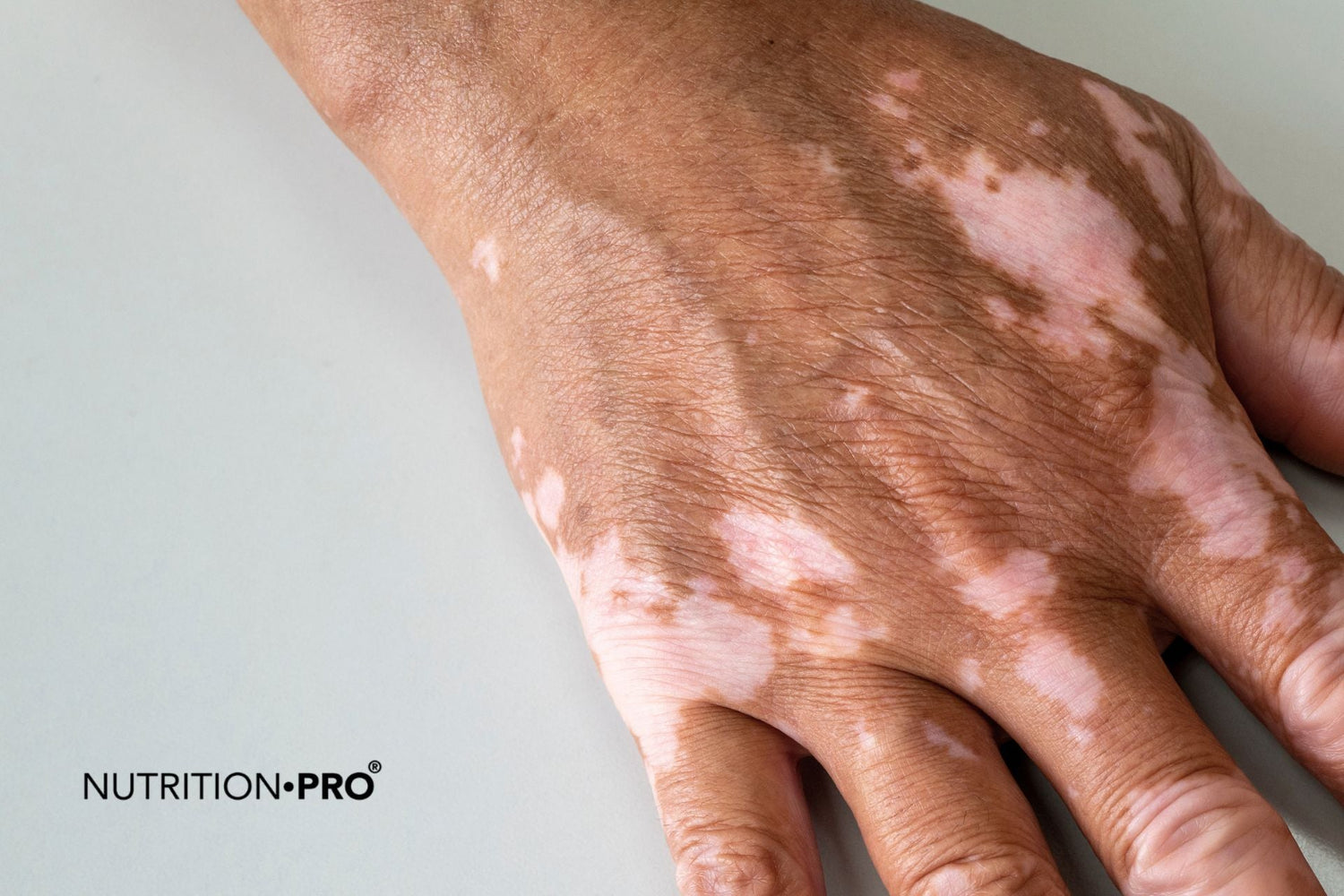
<<<21>>> Vitiligo vitiligo is a chronic skin disease characterized by the loss of the skin's natural pigmentation, which manifests itself through the appearance of white patches (achromic) of varying sizes and shapes. These patches result from the progressive destruction of melanocytes, the cells specialized in the production of melanin, the pigment responsible for the color of the skin, hair and eyes.
A recognized autoimmune disease
Long considered a mere cosmetic concern, vitiligo is now classified by the international scientific community as an autoimmune disease. This means that the patient's immune system mistakenly attacks their own melanocytes, treating them as foreign elements to be eliminated.
This recognition is important because it:
- Legitimizes the disease as a genuine health problem, not merely an aesthetic concern
- Justifies research into immunomodulatory treatments (such as JAK inhibitors approved in 2022)
- Explains thefrequent association with other autoimmune diseases (Hashimoto's thyroiditis, type 1 diabetes, alopecia areata, rheumatoid arthritis)
Some figures
Vitiligo affects approximately 0.5 to 2% of the global population, or nearly 1 person in 100. In France, it is estimated that approximately 500,000 to 1 million people are affected. The disease can appear at any age, but most often begins between 10 and 30 years old. It affects men and women equally, and all ethnic backgrounds, although it is more visible on darker skin tones.
How does it manifest?
Vitiligo patches are characteristic:
- Color : milky white or ivory, contrasting sharply with the surrounding skin
- Edges : generally well-defined, sometimes irregular
- Size : from a few millimeters to several centimeters, sometimes extensive
- Location : extremities (hands, feet), face (around the eyes, mouth), armpits, genital areas, and friction zones
- Progression : unpredictable — stable, progressive, or sometimes spontaneously regressive
The patches are asymptomatic : they do not itch, are not painful, and are not contagious. But their impact on social and psychological life is often considerable.
Different types of vitiligo
There are several forms of vitiligo, classified according to their distribution on the body and their progression. This classification is important because it guides the choice of treatment and helps better estimate the prognosis.
It is the classic and most widespread form. The patches are symmetrical (appearing on both sides of the body simultaneously) and typically affect the extremities, the face (eyelids, lips), the folds (armpits, groin) and friction zones.
Course : generally progressive and unpredictable, in flare-ups. The disease may experience prolonged periods of stability then new patches may appear. This form is strongly associated with family history and other autoimmune diseases.
Subtypes : generalized (spread across the entire body), acrofacial (extremities and face), universal (near complete pigmentation loss, rare), focal onset.
Segmental vitiligo affects one side of the body only and generally follows the distribution of a dermatome (area innervated by a sensory nerve). It often begins inchildhood or adolescence and progresses rapidly for 6 to 24 months, then stabilizes spontaneously.
Characteristics : marked asymmetry, rapid and limited involvement, frequent whitening of hair in the affected area (leukotrichia), little association with other autoimmune diseases.
Good news : its stability once the initial phase has passed makes it a particularly good candidate for melanocyte grafting or surgical repigmentation techniques, which often achieve better results than non-segmental forms.
One or more small localized patches on a very restricted area, with no spread to the rest of the body. This form is sometimes considered a early stage that may progress (toward the generalized form) or remain stable.
Importance : careful dermatological monitoring allows tracking of progression and early intervention if the form becomes generalized. The chances of repigmentation are generally better on recent and localized patches.
Exclusive or predominant involvement of mucous membranes (lips, genital area, sometimes oral cavity). This form is more difficult to treat because phototherapy is less effective there and the areas are sensitive.
Preferred approaches combine gentle topical treatments, medical camouflage tattooing for certain stabilized cases (lips in particular), and complementary support.
Causes and mechanisms: what science tells us today
Understanding of vitiligo has progressed considerably over the past 20 years. Current science describes it as a multifactorial disease where several mechanisms intertwine: autoimmunity, oxidative stress, genetic predisposition, and triggering factors.
1. The autoimmune theory
This is the primary mechanism recognized today. The patient's immune system — particularly CD8+ T lymphocytes and theinterferon gamma (IFN-γ) — attack and destroy melanocytes. Recent research has identified the signaling pathway JAK-STAT as particularly involved, which has led to the development of JAK inhibitors (first specific treatment approved in 2022).
The work of Dr. John Harris and his team (UMass Medical School) demonstrated that interferon gamma released by CD8+ T lymphocytes activates the JAK-STAT pathway in the skin, creating an inflammatory environment that destroys melanocytes. This understanding enabled the development of ruxolitinib (Opzelura®), the first specific treatment for vitiligo approved by the FDA in 2022 and the EMA in 2023.
2. Oxidative Stress
Melanocytes in vitiligo patients present a defect in oxidative stress management. They accumulate reactive oxygen species (ROS) that weaken them and make them vulnerable to immune attack. This particularity partly explains why antioxidants (vitamin C, vitamin E, glutathione, selenium) are being studied for support.
Several studies have also highlighted a catalase deficiency (enzyme that neutralizes hydrogen peroxide) in the skin of vitiligo patients, which aggravates oxidative stress and cell death.
3. Genetic Predisposition
Approximately 30% of patients have at least one close family member with vitiligo. More than 50 susceptibility genes have been identified, primarily related to immune regulation (HLA, NLRP1, PTPN22) and melanocyte metabolism (TYR, MC1R, OCA2). However, transmission is not simple Mendelian : having an affected parent increases the risk but does not mean the disease will develop.
4. Triggering Factors
Against a genetically predisposed background, certain triggering events can precipitate the onset or worsening of vitiligo:
- Intense emotional stress (grief, separation, psychological shock) — particularly frequent
- Skin trauma : phenomenon of Koebner (appearance of spots on friction areas, cuts, burns, tattoos)
- Severe sunburn
- Pregnancy, childbirth, menopause (hormonal fluctuations)
- Viral or bacterial infections
- Certain medications (rare cases of induction by interferons, cancer immunotherapies)
Key takeaway: vitiligo is never "the patient's fault". It is neither a purely psychosomatic disease nor the result of poor lifestyle habits. It is a multifactorial disease where genetic predisposition is central. Do not feel guilty, but also do not underestimate the impact of identifiable triggering factors that can be acted upon (stress, skin protection).
How is diagnosis made?
Vitiligo diagnosis is essentially clinical and must be established by a dermatologist. It is based on several simple but essential steps.
Clinical examination
The dermatologist observes the patches: their color (characteristic milky white), their distribution (symmetrical or not), their borders (sharp or blurred), their size, and the possible presence of whitening of hair (leukotrichia) on affected areas.
Wood's lamp
This simple tool emits ultraviolet light that makes vitiligo patches appear bright white-yellowish fluorescence, contrasting with the surrounding skin. It allows:
- Confirming the diagnosis (differentiating from other white spots)
- Detecting early patches invisible to the naked eye
- Precisely assessing theextent of the disease
Complementary workup
Due to frequent autoimmune associations, the dermatologist often prescribes:
- Thyroid panel (TSH, anti-TPO and anti-Tg antibodies) — Hashimoto's thyroiditis is associated in 15-20% of patients
- Complete blood count and inflammatory markers
- Sometimes: fasting glucose, vitamin B12, vitamin D, specific antibodies depending on the clinical context
- Very rarely: skin biopsy in case of diagnostic uncertainty
Why this matters: early identification of associated autoimmune diseases enables comprehensive management. A poorly controlled thyroiditis, for example, can influence the progression of vitiligo. Never neglect this complementary workup prescribed by your dermatologist.
Validated medical treatments
The medical management of vitiligo has experienced significant advances in recent years. Here are the reference treatments, from most accessible to most specialized. All require strict dermatological monitoring.
1. Narrow-band UVB phototherapy (UVBnb 311 nm)
This is the reference treatment for extensive vitiligo for over 20 years. The patient is exposed to targeted UVB (precise wavelength of 311 nm) several times per week in a treatment booth. These UV rays stimulate residual melanocytes in hair follicles and promote their migration to the skin.
Efficacy : repigmentation observed in 50-70% of patients on responsive areas (face, trunk) after 6-12 months of regular treatment. The extremities (hands, feet) respond less well.
Modalities : 2 to 3 sessions per week for 6 to 24 months depending on response. Side effects: erythema, skin dryness, accelerated skin aging in the long term.
2. Topical corticosteroids
Class II or III topical corticosteroids are indicated for localized and recent vitiligo, especially in children or on the face in short courses. They reduce autoimmune inflammation and sometimes allow partial repigmentation.
Limitations : cannot be used for extended periods (skin atrophy, stretch marks, telangiectasia). Always under medical prescription and supervision.
3. Topical calcineurin inhibitors (tacrolimus, pimecrolimus)
<<<14>>> Tacrolimus 0.1% ointment tacrolimus 0,1 % en pommade (Protopic®) or pimecrolimus are local immunomodulators indicated particularly on the face and sensitive areas where corticosteroids pose a problem. Well tolerated long-term, they can be combined with phototherapy.
4. JAK inhibitors: the recent revolution
The arrival of ruxolitinib cream (Opzelura®), approved in 2022 by the FDA and 2023 by the EMA, represents the first true specific therapeutic innovation for vitiligo in decades.
In the TRuE-V1 and TRuE-V2 trials (674 patients), approximately 30% of patients achieved repigmentation of more than 75% of the face after 52 weeks of treatment (vs ~10% under placebo). Results on the body were also significant. It is the first specific treatment for vitiligo approved by health authorities.
In France : ruxolitinib cream is now accessible on dermatological prescription for non-segmental vitiligo in adults and adolescents. Significant cost not reimbursed for now in several European countries.
5. Surgical techniques (melanocyte grafts)
For stabilized segmental vitiligo (at least 12 months with no new progression), surgical techniques allow grafting melanocytes from a healthy area of the patient:
- Micro-grafting technique (punch grafting)
- Melanocyte cell suspension graft
- Hair follicle graft
These techniques require specialized expertise and are only available in certain dermatology centers.
6. Medical makeup and camouflage
Too often overlooked, corrective medical makeup (Couvrance, Dermablend, Cover Cream) allows forsignificantly improving quality of life while waiting for or during treatments. Specialized consultations in medical socio-aesthetics exist in several hospitals.
| Treatment | Indication | Efficacy (responding areas) | Duration |
|---|---|---|---|
| UVB 311 nm phototherapy | Extensive vitiligo | 50-70% | 6-24 months |
| Topical corticosteroids | Recent localized vitiligo | 30-50% | Short courses |
| Topical tacrolimus | Face, sensitive areas | 30-50% | 3-12 months |
| Ruxolitinib cream (JAK) | Non-segmental vitiligo | ~30% with >75% repig. | 52 weeks |
| Melanocyte graft | Stable segmental vitiligo | 60-90% | 1 intervention |
Essential information: these treatments must be prescribed and monitored by a dermatologist. Do not self-treat. Results vary depending on the type of vitiligo, duration, location, and individual profile. The nutritional approaches presented in the rest of this article never replace these standard treatments.
Why a nutritional approach can be useful as a complement
Once the medical framework is established, the legitimate question is: does the nutritional approach have a role in vitiligo? The answer, based on current scientific literature, is nuanced but positive.
The scientific rationale for a nutritional approach
Several studies have revealed in patients with vitiligo specific nutritional and biological characteristics that justify nutritional support:
- Major oxidative stress in melanocytes: justification for antioxidants (vitamin C, E, glutathione, selenium)
- More frequent deficiencies in vitamin D, vitamin B12, folate and zinc in several studies
- Melanin synthesis dependent on precursors (tyrosine, phenylalanine) and enzymatic cofactors (copper, zinc)
- Documented action of certain plants (Ginkgo biloba, Polypodium leucotomos) in randomized clinical trials
What the nutritional approach does not do
Let's be clear and honest:
- ❌ It does not cure vitiligo
- ❌ It does not replace medical treatments
- ❌ It does not work for all patients
- ❌ Results are not guaranteed
What it can do
- ✅ Support the physiological mechanisms of repigmentation
- ✅ Address nutritional deficiencies commonly found
- ✅ Reduce oxidative stress documented in patients
- ✅ Enhance the efficacy of phototherapy according to several studies
- ✅ Fit into a holistic approach with healthy lifestyle habits and medical follow-up
The nutritional approach is therefore positioned as a complementary tool, never central, but which can have its place in a comprehensive management plan.
The 12 most studied nutritional actives
Here is an overview of the nutritional actives that have been the subject of clinical studies in the context of vitiligo. For each, we present the scientific rationale, the study results and their limitations.
Ginkgo biloba possesses antioxidant and immunomodulatory properties. It has been the subject of specific clinical studies on vitiligo, particularly the 2003 Parsad study which remains a reference.
In this randomized double-blind trial, 47 patients with limited, slowly spreading vitiligo received either Ginkgo biloba (40 mg × 3/day) or placebo for 6 months. The Ginkgo group showed marked to complete repigmentation in 10 out of 22 patients (vs 2 out of 25 under placebo) and a statistically significant halt in the progression of depigmentation (p=0.006). The effect is attributed to the antioxidant and immunomodulatory action of ginkgo.
Limitations : study on a small sample size, to be confirmed. Ginkgo biloba is nevertheless one of the actives better documented in this indication. Available from us in Organic Ginkgo biloba or integrated into the formula Vitiline.
This tropical fern (marketed notably under the name Fernblock®) has systemic photoprotective and antioxidant properties. Several studies have evaluated its usefulness in combination with NB-UVB phototherapy.
In a prospective randomized placebo-controlled study (44 patients with generalized vitiligo), the combination Polypodium leucotomos (480 mg × 2/day) + NB-UVB phototherapy resulted in superior repigmentation compared to NB-UVB alone (47.8% vs 22% responders after 6 months of treatment). The effect is attributed to the reduction of UV-induced oxidative stress.
Practical application : particularly interesting as a complement to prescribed medical phototherapy. To be discussed with your dermatologist.
Several studies have revealed significantly lower vitamin D levels in patients with vitiligo compared to the general population. Vitamin D plays a role in immune regulation and could also stimulate melanocytes.
Practical recommendation : perform Dosing your vitamin D (25-OH-D) through blood tests. In case of deficiency, supplementation until optimal levels are reached (30-50 ng/mL). Our 100% Plant-Based Vitamin D3 derived from boreal lichen is a quality option.
<<<10>>> melanin mélanine is synthesized from tyrosine by the enzyme tyrosinase. Providing these precursors aims to supply the substrate necessary for pigment production. Phenylalanine can be converted to tyrosine in the body.
Studies have evaluated L-phenylalanine in combination with UVA exposure (KUVA, similar to PUVAtherapy) with encouraging results in some patients. However, the evidence remains more limited than for Ginkgo biloba or Polypodium.
<<<28>>> copper cuivre is an essential cofactor of tyrosinase, the key enzyme in melanin synthesis. zinc plays a role in immune regulation and oxidative stress. Several studies have reported decreased plasma zinc levels in vitiligo patients.
In bisglycinate form (amino acid chelate), these minerals have excellent bioavailability and good digestive tolerance. Our Zinc bisglycinate can be used as a supplement.
The landmark study by Juhlin and Olsson (1997) suggested that supplementation with vitamin B12 and folic acid combined with sun exposure could promote repigmentation. Although the results should be interpreted with caution, correcting B12 and folate deficiencies remains relevant, particularly in vegetarian patients or those with absorption disorders.
The recommended active form for B12 is methylcobalamin, which is particularly well absorbed.
<<<16>>> Glutathione glutathion is the most important intracellular antioxidant in the body. Several studies have reported reduced glutathione levels in the skin of vitiligo patients. Liposomal vitamin C (better absorbed than the standard form) regenerates oxidized glutathione and protects melanocytes from oxidative stress.
This synergy of antioxidants forms the basis of several complex formulas designed for vitiligo, including Vitiline.
Selenium is a trace element essential to the activity of glutathione peroxidase, a central antioxidant enzyme. It also plays a role in thyroid regulation, particularly relevant given the frequent association of vitiligo + thyroiditis. Studies have reported lower selenium levels in vitiligo patients.
Caution : do not exceed 200 µg/day, as selenium is toxic at high doses.
<<<40>>> Nigella sativa oilhuile de Nigella sativa (black cumin, habba sawda), traditionally used in Ayurvedic and Arab-Islamic medicine, contains thymoquinone, an active principle with antioxidant, anti-inflammatory and immunomodulatory properties. Recent clinical studies have evaluated its potential in vitiligo through topical application and oral supplementation.
A randomized double-blind clinical trial compared topical (local, on the skin) application of Nigella sativa oil versus fish oil in 52 patients with vitiligo, over 6 months. The Nigella group showed a significantly greater reduction in VASI score (from 4.98 to 3.75) than the fish oil group (from 4.98 to 4.62), particularly on the upper limbs, trunk, head and neck. No adverse effects reported.
Available at Nutrition•pro in 100ml Ethiopian Nigella oil and Nigella oil capsules.
PABA has been used in the nutritional approach to vitiligo since the 1950s-1970s. Although modern evidence is limited, it remains used in several formulas due to its potential role in skin pigmentation and its antioxidant action.
Precautions : use at moderate doses and preferably in a balanced comprehensive formula.
<<<36>>> Curcumin curcumine from turmeric has anti-inflammatory and antioxidant properties that are well documented. A few preliminary studies have evaluated its potential in vitiligo, mainly to reduce underlying autoimmune inflammation. Evidence remains limited but consistent with pathophysiological mechanisms.
The piperine, the active compound in black pepper, has no direct effect on vitiligo but it significantly improves the absorption of many nutrients (curcumin in particular). Furthermore, dermatological studies have suggested that piperine could have a direct stimulating effect on melanocytes when applied topically.
Diet and lifestyle
Beyond supplements, certain dietary recommendations and lifestyle habits can support comprehensive management.
Foods to prioritize
The objective is to provide maximumantioxidants, anti-inflammatory nutrients and cofactors for melanogenesis.
- Copper-rich foods : liver, tree nuts (cashews, walnuts), seeds (sesame, sunflower), dark chocolate, lentils, chickpeas
- Zinc-rich foods : oysters, lean red meat, pumpkin seeds, lentils, eggs
- Tyrosine-rich foods : lean meats, fish, eggs, cheeses, legumes, almonds
- Antioxidants : berries (blueberries, blackberries, raspberries), colorful vegetables (bell pepper, beet, broccoli), green tea, cocoa
- Omega-3 : fatty fish (sardine, mackerel, wild salmon), flax and chia seeds, walnuts
- Vitamin C : citrus fruits, kiwi, bell pepper, parsley, broccoli
Foods to limit or avoid
Without falling into excessive restriction, certain dietary regimens should be avoided according to several observational studies:
- Ultra-processed foods rich in additives, preservatives, flavor enhancers
- Refined sugars in excess that perpetuate chronic inflammation
- Alcohol in significant quantities (major oxidative stress)
- Tobacco (negative impact on skin microcirculation)
For a structured approach, see our detoxification collection and anti-aging collection.
Sun protection and controlled exposure
Sun management is crucial in vitiligo:
- Rigorous photoprotection of depigmented areas (highly sensitive to sunburn and increased risk of skin cancer): SPF 50+ mandatory
- But be careful : avoiding the sun does not mean living in darkness. Moderate and progressive exposure can stimulate residual melanocytes — always discuss with your dermatologist
- Prescribed medical phototherapy to be favored over uncontrolled sun exposure
Stress management
<<<28>>> Emotional stress stress émotionnel is a recognized trigger for vitiligo and its flare-ups. Without being alarmist, integrating stress management tools into your daily routine can be beneficial:
- Meditation, heart rate coherence, yoga (15-20 min/day ideally)
- Quality sleep : 7-9 hours, regular schedules
- Regular physical activity (aerobic 2-3 times/week)
- Supporting supplements : Ashwagandha KSM-66® (validated stress-relieving adaptogen), Magnesium bisglycinate
Typical profiles and tailored support
Vitiligo affects very diverse profiles. Here are some typical cases with adapted support approaches. None is guaranteed but they are based on current scientific logic.
Profile 1 — Young adult (18-30 years old), recent vitiligo
Common context : recent onset (less than 2 years), often post-stress (exams, breakup, bereavement), early non-segmental form. Often significant psychological impact.
Typical support : prompt dermatological consultation for assessment + adapted medical treatment (short-term topical corticosteroids, phototherapy depending on extent), vitamin D and thyroid assessment, global nutritional support with Vitiline in a 6-month course, active stress management, psychological support.
Profile 2 — Postpartum/perimenopausal woman
Context : onset or worsening associated with hormonal upheaval. Often non-segmental form, sometimes with family history.
Typical support : endocrinological follow-up (thyroid in particular), comprehensive assessment, hormonal nutritional support as appropriate (Menopause supplement if relevant), Vitiline in a 6-month course, rigorous photoprotection, anti-stress support.
Profile 3 — Stabilized segmental vitiligo
Context : segmental form (one side of the body) stabilized for over 12 months. Often appeared in childhood or adolescence.
Typical support : specialist opinion to assess the interest of melanocyte grafting (stability being an excellent criterion), maintenance of global nutritional support, photoprotection.
Profile 4 — Longstanding extensive vitiligo
Context : longstanding disease (10+ years), extensive, poor response to previous treatments. Psychological adjustment often ongoing.
Typical support : approach focused on maintenance and quality of life : rigorous photoprotection, medical camouflage, maintenance nutritional support, psychological support. Discuss with the dermatologist the possible total depigmentation in very extensive cases (option to consider as a last resort).
Profile 5 — Patient with associated autoimmune disease
Context : vitiligo + Hashimoto's thyroiditis / type 1 diabetes / others. Very common (15-30% of cases).
Typical support : comprehensive management with coordination of specialists (dermatologist, endocrinologist), priority balancing of the associated condition (thyroid in particular), expanded autoimmunity assessment, adapted nutritional support including Thyroactine if thyroid problem validated by the physician.
Profile 6 — Child or adolescent
Context : vitiligo onset before age 18. Particular sensitivity to school and social perception.
Typical management : pediatric dermatologist follow-up is essential, adapted treatments (prioritizing topical tacrolimus on face), no supplementation without medical advice at this age, early psychological support, school community awareness if needed.
Important: in children and adolescents, dietary supplements such as Vitiline are not indicated without formal medical approval. Pediatric dermatological care is essential. This article does not replace a medical consultation.
The psychological aspect often overlooked
Vitiligo is not just a skin disease. It is a disease thatshows and can profoundly affectself-image, social relationships, professional life and even intimate life. Neglecting it would be a mistake.
Documented impacts
Studies in medical psychology have identified in vitiligo patients significantly higher rates than the general population of:
- Anxiety and depression (up to 30-50% according to studies)
- Social phobia and avoidance of exposing situations (beach, changing rooms, social events)
- Loss of self-esteem particularly in darker skin tones (major contrast)
- Body dysmorphic disorder (excessive focus on patches)
- Intimate difficulties (fear of partner's judgment)
Support resources
Several approaches can help:
- Psychotherapy : CBT (cognitive-behavioral therapy) particularly effective for body image disorders
- Patient associations : AFV (French Vitiligo Association) which offers information, support groups, and assistance
- Online communities : forums and specialized Facebook groups (use with discernment, quality varies)
- Socio-aesthetics : medical makeup workshops, image consulting services in several hospitals
- Media ambassadors : Winnie Harlow (model), Khoudia Diop, can inspire a different perspective
For loved ones
If someone close to you is affected:
- Don't minimize it ("it's nothing", "it's just cosmetic") — that's hurtful
- Don't dramatize it either — the person already knows it's complicated
- Listen without lecturing or offering 50 miracle solutions found online
- Be natural in your gaze and behavior — that's what helps most
- Offer support in medical follow-up without becoming intrusive
Having realistic expectations
This section is probably the most important part of the article. The success of treatment largely depends on expectations aligned with reality.
What you need to know before starting a course of treatment
- Repigmentation is slow : first signs rarely appear before 3 months, often 6 months
- Not all patients respond : it is estimated that 30 to 50% have a modest to insufficient response to standard treatments
- Certain areas respond better : face and trunk > limbs > extremities (hands, feet, lips). On the extremities, the chances of complete repigmentation are low
- Treatments require absolute consistency : skipping phototherapy sessions or supplement doses drastically reduces effectiveness
- The progression can alternate phases of repigmentation and new patches
- Stopping treatment can lead to depigmentation of repigmented areas in certain forms
The right mindset
Rather than aiming for a "cure", the realistic approach consists of:
- Stabilizing the disease (stopping its progression)
- Repigmenting as much as possible the responsive areas
- Adapting to what cannot be repigmented (makeup, acceptance)
- Maintaining the gains over time
- Preserving overall quality of life (psychological, social)
The right words: vitiligo is not a disease you "defeat" as if winning a battle. It is a chronic disease with which you learn to live, that you seek to stabilize and improve, and which takes nothing away from the worth, beauty, or dignity of the person living with it.
FAQ: your questions about vitiligo
Is vitiligo contagious?
No, absolutely not. Vitiligo is in no way contagious. It is an autoimmune disease: your own immune system attacks your melanocytes. There is no transmissible agent involved (neither virus, nor bacteria, nor parasite). You can shake hands, kiss, share belongings with a person who has vitiligo without any risk. This persistent misconception causes much suffering to patients through the rejection it can lead to.
Is vitiligo hereditary?
There is a genetic component but transmission is not simple Mendelian. Approximately 30% of patients have at least one close family member also affected. More than 50 susceptibility genes have been identified. However, having an affected parent does not mean that you will necessarily develop the disease. And conversely, many patients have no family history.
Does vitiligo always appear after stress?
Intense emotional stress is one of the most frequently reported triggers by patients (bereavement, separation, shock). But vitiligo can also appear without an identifiable trigger, or after other events (skin trauma, sunburn, pregnancy, infection). Stress is not the cause of the disease: it acts as a trigger on genetically predisposed terrain.
What is the exact cause of vitiligo?
Vitiligo is today recognized as a complex and multifactorial autoimmune disease. The main identified causes are: (1) an autoimmune reaction against melanocytes, (2) intracellular oxidative stress, (3) genetic factors, (4) environmental or emotional triggers. Recent research particularly highlights the key role ofinterferon gamma and the signaling pathway JAK-STAT.
Is vitiligo associated with other diseases?
Yes, frequently. The most common associated autoimmune diseases are: Hashimoto's thyroiditis (15-20% of patients), type 1 diabetes, Addison's disease,alopecia areata,pernicious anemia, and more rarely rheumatoid arthritis or lupus. This is why a comprehensive autoimmune screening is recommended at diagnosis.
Should I consult a dermatologist?
Yes, absolutely. Any suspicion of vitiligo should warrant a dermatological consultation. The dermatologist will confirm the diagnosis, assess the type and extent, look for any associated autoimmune diseases, and propose an appropriate treatment plan. Early management (within 6-12 months of onset) generally offers better chances of repigmentation. Regular follow-up is then recommended.
Can vitiligo be cured?
To date, No treatment, whether medical or nutritional, can permanently cure vitiligo. This chronic autoimmune disease progresses unpredictably. However, validated medical treatments (UVB phototherapy, topical corticosteroids, calcineurin inhibitors, JAK inhibitors such as ruxolitinib) can enable partial or complete repigmentation in some patients. Complementary nutritional approaches can support management but never replace dermatological follow-up.
Can vitiligo spread?
Yes, it's actually quite common in the non-segmental form. The disease progresses through unpredictable flare-ups, alternating between stable phases and expansion phases. This is why active medical treatment is important: it aims not only at repigmentation but also at stabilization (halting progression). The segmental form, on the other hand, tends to stabilize spontaneously after 6-24 months.
How long does it take to see repigmentation?
Repigmentation is an extremely slowprocess. With conventional medical treatments (phototherapy), the first signs can appear after 3 to 6 months, and significant repigmentation generally requires 12 to 24 months. For nutritional approaches, plan for a minimum of 3 to 6 months of continuous treatment. Certain areas (face, trunk) generally respond better than others (hands, feet, lips).
Can vitiligo disappear on its own?
It's extremely rare but it can happen, mainly in very early and localized forms. More frequently, prolonged stabilization phases are observed without further spread. But complete and spontaneous recovery remains exceptional. This is why active treatment is generally recommended rather than passive waiting.
What are the reference treatments?
Validated medical treatments are:
- Narrow-band UVB phototherapy (311 nm) — the gold standard for extensive vitiligo
- Topical corticosteroids and calcineurin inhibitors (tacrolimus) applied topically
- The JAK inhibitors (ruxolitinib cream) — recent innovation approved in 2022-2023
- Melanocyte grafts for stabilized segmental forms
The choice depends on the type of vitiligo, extent, age, and profile. Always on dermatological prescription.
Is ruxolitinib (Opzelura®) effective?
Ruxolitinib cream, the first JAK inhibitor approved for vitiligo, demonstrated in phase 3 studies (TRuE-V) that approximately 30% of patients achieved repigmentation of more than 75% of the face after 52 weeks. This is major progress. However, it is a recent, costly medication, and its accessibility varies by country. Discuss this with your dermatologist.
Is phototherapy dangerous?
Narrow-band UVB phototherapy prescribed and medically supervised is generally safe within the usual treatment duration. Possible side effects: erythema, dry skin, itching, and in the long term a modest but existing risk of accelerated skin aging and theoretically skin cancer (to be viewed in perspective with the benefits). Dermatological monitoring allows tracking these aspects.
What to think about melanocyte grafts?
Melanocyte grafts are an interesting option for stabilized segmental vitiligo (at least 12 months without new progression). Results can be very satisfactory (60-90% repigmentation in the grafted area). For active non-segmental forms, it is less indicated because new patches may reappear. This technique requires specialized expertise available in certain centers.
Can dietary supplements treat vitiligo?
No, dietary supplements are not vitiligo treatments and cannot in any way replace medical follow-up. Their role is complementary : they can support the body by providing nutrients involved in melanin synthesis, by reducing oxidative stress, and by correcting frequent deficiencies. Several studies have evaluated certain actives (Ginkgo biloba, Polypodium leucotomos) with encouraging but variable results depending on individual profiles.
How does Vitiline work?
Vitiline combines 15 targeted actives that cover the main physiological mechanisms studied in vitiligo: melanin precursors (L-Tyrosine, L-Phenylalanine), enzymatic cofactors (Zinc and Copper bisglycinate), antioxidants (Glutathione, Liposomal Vitamin C, Selenium), vitamins (B9, B12 methylcobalamin, D3, PABA), studied plant extracts (Ginkgo biloba, Polypodium leucotomos, Nigella sativa), and Piperine to optimize absorption. Dosage : 4 capsules per day, ideally spaced throughout the day, in a course of at least 3 to 6 months.
How long should you take Vitiline?
Since repigmentation is a slow process, Vitiline is designed to be taken in a long-term course of at least 3 months, ideally 6 months or longer. A box of 120 capsules lasts 30 days (4 capsules/day). For a 3-month course, you therefore need 3 boxes; for 6 months, 6 boxes. Daily consistency is essential.
Can Vitiline be combined with medical treatments?
Yes, Vitiline is designed as a complement to medical treatments, not as an alternative. The nutritional actives may even potentially enhance certain treatments (such as the combination Polypodium leucotomos + phototherapy which has been the subject of favorable studies). However, it is important to inform your dermatologist of your course so that they can adjust monitoring and verify the absence of interaction with your treatment.
Does Vitiline have side effects?
At the recommended doses (4 capsules/day), Vitiline is generally well tolerated. Rare adverse effects: mild digestive disturbances at the start of treatment (transient), rare headaches. Precautions: not recommended during pregnancy and breastfeeding, in children under 18 years of age except on medical advice, in case of anticoagulant treatment (Ginkgo biloba), severe pathology or known allergy to one of the components. Always consult your doctor if in doubt.
What results can you expect with Vitiline?
Results vary considerably from individual to individual. No dietary supplement can guarantee repigmentation. Vitiline supports studied physiological mechanisms but the outcome remains unpredictable. Some patients observe stabilization of their condition, others slight improvement in pigmentation, others no visible effect. Honesty is our commitment: no miracle promises, just serious support as part of a comprehensive approach including medical monitoring.
Should you avoid the sun with vitiligo?
Not entirely, but you must be careful. Depigmented areas are extremely sensitive to sunburn (increased risk of skin cancer). Rigorous SPF 50+ protection is mandatory. However, moderate and progressive exposure can stimulate residual melanocytes. Medical phototherapy remains preferable to uncontrolled sun exposure. Discuss your sun exposure with your dermatologist.
Is there a special diet to follow?
No miracle diet, but beneficial recommendations : prioritize foods rich in antioxidants (red fruits, colorful vegetables, green tea), in copper and zinc (nuts, legumes, liver), in omega-3 (fatty fish, walnuts), in tyrosine (eggs, lean meats, legumes). Moderate ultra-processed foods, refined sugar,alcohol and tobacco. An overall Mediterranean diet is consistent.
Does stress really worsen vitiligo?
Yes, emotional stress is one of the most commonly reported triggers by patients, both for initial onset and new flare-ups. Integrating active stress management into daily life (meditation, heart rate variability, yoga, quality sleep, physical activity) is an important lever for action. Adaptogenic supplements such asAshwagandha can support this approach.
Why is vitiligo so difficult to live with?
Because it is a disease that is visible. Unlike other invisible conditions, vitiligo visibly alters physical appearance, sometimes in highly exposed areas (face, hands). The impact can be major onself-esteem, social relationships, professional life and intimate life. It is also an unpredictable chronic disease, which adds mental burden. Acknowledging these difficulties is legitimate and essential to allow yourself to seek help.
Should I see a psychologist?
If vitiligo affects your well-being, your social life, or if you experience anxiety or low mood, yes, consulting can be very helpful. Cognitive behavioral therapy (CBT) is particularly effective for body image-related disorders. Seeking help is a sign of strength, not weakness. Several hospitals also offer specialized consultations in dermatopsychology.
Are there patient associations?
Yes, in France theFrench Vitiligo Association (AFV) is the main reference. It offers information, support groups, testimonies, advice, and events. Joining an association allows you to break out of isolation, exchange with people who truly understand what you are experiencing, and access reliable resources. Groups also exist online (to be approached with discernment, variable quality).
To learn more
Vitiligo is a complex condition that requires a comprehensive, patient, and structured approach. Combine regular dermatological monitoring, medical treatments tailored to your profile, targeted nutritional support, favorable lifestyle habits, and psychological support if necessary. No isolated approach is miraculous, but their serious and sustained combination is what gives the best chances for favorable progression.
If you decide to include nutritional support, our Vitiline supplement is specifically designed to support studied physiological mechanisms: 15 scientifically selected active ingredients, complete formula, French manufacturing.
To learn more on related topics:
- Our complete guide on Black Seed oil (Vitiline ingredient)
- Our Ashwagandha KSM-66® guide (stress management)
- Our 100% plant-based Vitamin D3 (deficiency to correct)
- Our Zinc bisglycinate and Antioxidants supplement
- Our Multivitamins & minerals for overall nutritional support
- Our skin care collection and anti-aging collection
- Our immunity collection and detoxification collection
- Our potential deficiency test in 3 minutes
Essential reminder: this article is for informational and educational purposes. Vitiligo is a chronic autoimmune disease that requires regular dermatological monitoring. No dietary supplement, including Vitiline, cures vitiligo. Dietary supplements are nutritional supports that do not replace a balanced diet, a healthy lifestyle, and validated medical treatments. Results vary considerably from person to person. Always consult your doctor or dermatologist before starting any supplementation, particularly in cases of associated conditions, pregnancy, breastfeeding, or regular medication use (especially anticoagulants due to the presence of Ginkgo biloba).
- Rosmarin D et al. Two phase 3, randomized, controlled trials of ruxolitinib cream for vitiligo. N Engl J Med 2022;387(16):1445-1455. DOI: 10.1056/NEJMoa2118828.
- Parsad D et al. Effectiveness of oral Ginkgo biloba in treating limited, slowly spreading vitiligo. Clin Exp Dermatol 2003;28(3):285-287. DOI: 10.1046/j.1365-2230.2003.01207.x.
- Pacifico A et al. NB-UVB plus oral Polypodium leucotomos extract display higher efficacy than NB-UVB alone in patients with vitiligo. Dermatol Ther 2021;34(2):e14776. DOI: 10.1111/dth.14776.
- Ghorbanibirgani A et al. Comparing Nigella sativa oil and fish oil in treatment of vitiligo. Iran Red Crescent Med J 2014;16(6):e4515. DOI: 10.5812/ircmj.4515.
- Ezzedine K et al. Vitiligo. Lancet 2015;386(9988):74-84. DOI: 10.1016/S0140-6736(14)60763-7.
- Bergqvist C, Ezzedine K. Vitiligo: A Review. Dermatology 2020;236(6):571-592. DOI: 10.1159/000506103.
- Frisoli ML, Essien K, Harris JE. Vitiligo: Mechanisms of Pathogenesis and Treatment. Annu Rev Immunol 2020;38:621-648. DOI: 10.1146/annurev-immunol-100919-023531.
- Spritz RA, Andersen GHL. Genetics of Vitiligo. Dermatol Clin 2017;35(2):245-255. DOI: 10.1016/j.det.2016.11.013.
- Picardo M et al. Vitiligo. Nat Rev Dis Primers 2015;1:15011. DOI: 10.1038/nrdp.2015.11.
- Juhlin L, Olsson MJ. Improvement of vitiligo after oral treatment with vitamin B12 and folic acid and the importance of sun exposure. Acta Derm Venereol 1997;77(6):460-462. DOI: 10.2340/000155555577460462.
- Varikasuvu SR et al. Decreased circulatory levels of Vitamin D in Vitiligo: a meta-analysis. An Bras Dermatol 2021;96(3):284-294. DOI: 10.1016/j.abd.2020.10.002.
- Huo J et al. Serum level of antioxidant vitamins and minerals in patients with vitiligo, a systematic review and meta-analysis. J Trace Elem Med Biol 2020;62:126570. DOI: 10.1016/j.jtemb.2020.126570.
- Taieb A et al. Guidelines for the management of vitiligo: the European Dermatology Forum consensus. Br J Dermatol 2013;168(1):5-19. DOI: 10.1111/j.1365-2133.2012.11197.x.
- EFSA Panel on Dietetic Products, Nutrition and Allergies. Scientific opinions on health claims related to vitamin D, zinc, copper and vitamin C. EFSA Journal.
- ANSES. Recommended nutritional intakes for the French population. 2024.
- French Vitiligo Association (AFV). Recommendations and patient support. www.afvitiligo.com.


