

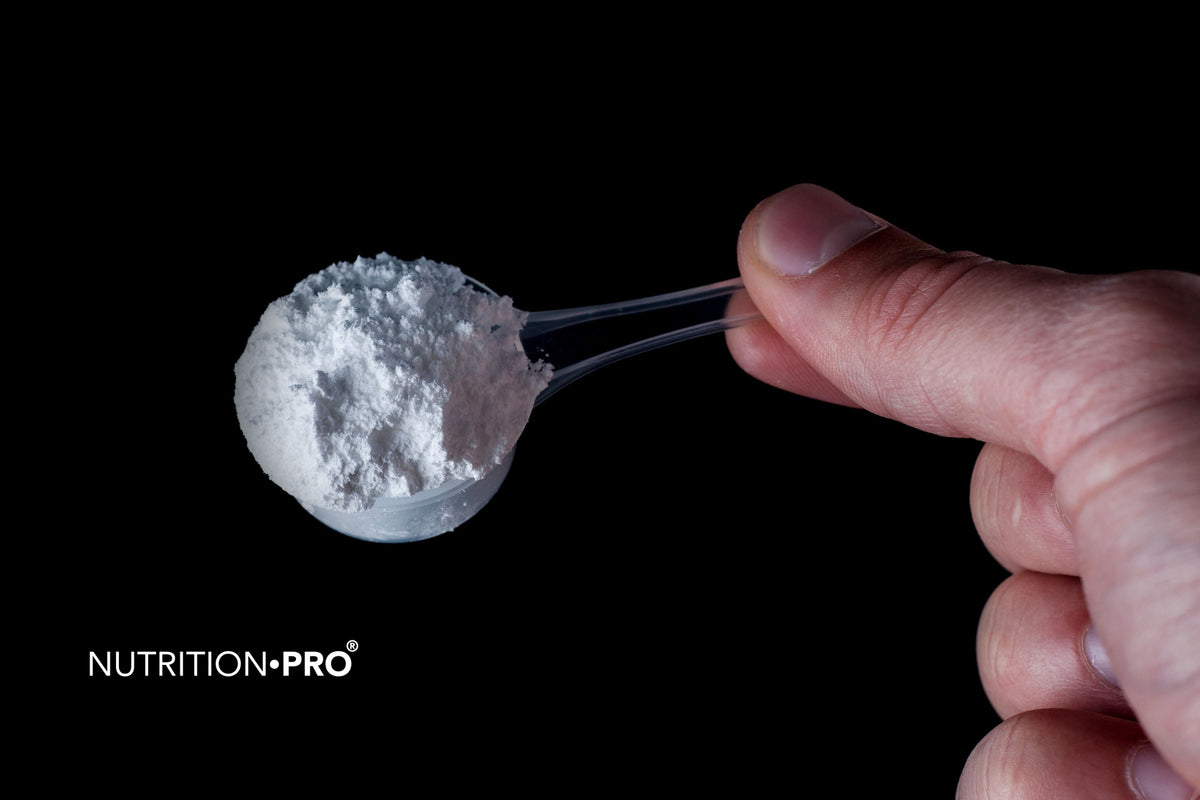
This is probably the most asked question about creatine, and one of the rare ones where the honest answer begins with a nuance: the timing of intake matters far less than you think. Creatine doesn't work like a pre-workout that gives you a boost thirty minutes later. It fills a muscle reservoir that takes three to four weeks to saturate and empties slowly. What determines the result is the level of that reservoir, not the time you swallowed your dose.
That said, answering "it doesn't matter" to someone looking for a precise answer isn't satisfying. There is data, it leans slightly one way, and there are real mistakes to avoid, notably skipping rest days. This article therefore does both: it gives the best possible protocol based on current knowledge, and it clearly states where science ends. For the rest—dosages, forms, effects and myths—our other articles go deeper: the ultimate creatine guide, what science proves and debunks, and creatine and the brain.

Monohydrate remains the only form whose effectiveness is solidly established, and Creapure® is the purity reference standard. Three capsules provide 3 g per day, the maintenance dose recommended by the International Society of Sports Nutrition. Also available in powder.
Creatine gradually saturates the muscle over three to four weeks at a rate of 3 to 5 g per day: it's the saturation level that produces the effect, not the timing of intake. If you want to optimize anyway, the only study directly comparing before and after training leans toward after, without reaching statistical significance, and the dedicated review calls it an encouraging signal but insufficient to conclude. The parameter with the most substantiation is combining it with a meal containing carbohydrates and proteins, as insulin promotes creatine uptake into the muscle. Morning or evening makes no difference, as creatine is not stimulating. However, two mistakes genuinely cost you: skipping rest days, which slows saturation, and cycling with breaks, which has no scientific basis and forces you to restart saturation. The loading phase at 20 g per day for one week is optional: it simply accelerates arrival at the same result.
- The answer in three lines
- Why timing matters so little: the reservoir story
- Before or after training: what the studies say
- Morning or evening?
- Rest days: the most common mistake
- Is the loading phase necessary?
- Take it with: carbohydrates, whey, BCAAs
- How long before you see results?
- Capsules or powder: what changes in practice
- The case of women and menopause
- Should you do cycles or take breaks?
- The five mistakes that really cost you
- The complete protocol
- Frequently asked questions
1. The answer in three lines
There you have it, you have the answer. The rest of this article explains why it's that simple, what studies claiming to provide more detailed answers are worth, and what the real mistakes to avoid are—which almost never involve timing.
If you only have thirty seconds, remember the following three points. Consistency beats timing : taking your creatine every day at any time beats a perfectly timed dose three times a week, hands down. Rest days count just as much as training days, which half of users don't know. And the dose is the same year-round, with no cycles or breaks, as long as you're training.
2. Why timing matters so little: the tank analogy
Understanding this mechanism makes most timing debates pointless. The creatine you swallow is absorbed and then taken up by the muscle, where it converts into phosphocreatine. This phosphocreatine serves as a phosphate reserve: during intense, brief effort, it regenerates ATP in a fraction of a second, allowing you to squeeze out a few more reps or produce a more powerful sprint.
The muscle of someone who doesn't supplement is filled to about 60 to 80% of its maximum capacity, the rest coming from diet, especially meat and fish, and endogenous synthesis. Supplementation aims to bring this reservoir close to 100%. Three consequences follow, and they alone answer the timing question:
- Filling takes time: three to four weeks at 3 to 5 g per day, or about one week with a loading phase. No single dose produces a noticeable effect.
- Emptying also takes time: after stopping, it takes four to six weeks to return to baseline. The muscle doesn't empty between doses.
- What matters is therefore the average filling level over weeks, that is, consistency, not the exact timing of any given dose.
This is the exact opposite of caffeine or a pre-workout, which work within an hour and whose timing is decisive. Confusing these two logics is the source of most questions on the subject, and that's why the answer often disappoints: there is no magic window you can't afford to miss.
3. Before or after training: what the studies say
Contrary to what forums suggest, the literature on this specific question is very limited. The most cited is a 2013 trial.
Nineteen men engaging in recreational resistance training were randomly assigned to take 5 grams of creatine monohydrate either immediately before exercise or immediately after, five days per week for four weeks. Analysis of variance showed a significant effect of time on lean mass and bench press performance, but no significant interaction between groups. Using magnitude-based inference, post-workout supplementation appears possibly more beneficial than pre-workout supplementation regarding lean mass, fat mass, and bench press strength. Mean changes for the pre-workout and post-workout groups were respectively 0.9 versus 2.0 kilos for lean mass, and minus 0.1 versus minus 1.2 kilo for fat mass.
Antonio J, Ciccone V. J Int Soc Sports Nutr 2013;10:36. DOI: 10.1186/1550-2783-10-36
This result must be read for what it is. Nineteen participants, four weeks, and above all no significant difference according to conventional statistical tests: the favorable conclusion regarding post-workout supplementation rests on an alternative analysis method, magnitude-based inference, which has been criticized for its tendency to transform fragile differences into affirmative conclusions. In other words, this is not proof, it's a lead.
The timing of creatine supplementation relative to exercise has recently been proposed as an important factor for optimizing muscle loading and performance gains, although there is currently no consensus on the ideal time for intake. Emerging data suggest superior benefits when creatine is consumed after exercise rather than before, but methodological limitations currently prevent any solid conclusion. Furthermore, physiological and mechanistic data are lacking to support the idea that the timing of supplementation around exercise modifies gains in muscle creatine and performance.
Ribeiro F, Longobardi I, Perim P, et al. Nutrients 2021;13(8):2844. DOI: 10.3390/nu13082844
The practical conclusion is therefore nuanced but usable: if you want to choose, choose after. The mechanistic hypothesis is plausible, the muscle being after exercise in a state of perfusion and insulin sensitivity favorable to creatine transport. But don't sacrifice anything for this: if your schedule is such that your morning dose is the one you'll never forget, take it in the morning. Consistent dosing at the wrong time is infinitely better than optimal dosing forgotten one day out of three.
4. Morning or evening?
The question comes up often, likely by analogy with caffeine or pre-workouts, which should be avoided in the evening. Creatine is nothing like that: it does not act on the central nervous system in a stimulating way, does not alter alertness, and has never been associated with sleep disorders in trials, including at high doses and over years.
Two practical considerations can nonetheless guide your choice. Digestive tolerance first: a few people experience discomfort when taking creatine on an empty stomach, which suggests taking it with a meal, any meal. Andhabit second, and this is the decisive criterion: breakfast and the evening meal are stable reference points, whereas taking it "after your session" gets lost on days when the session doesn't happen. Many regular practitioners eventually adopt a fixed daily dose, independent of training, precisely to stop having to think about it.
5. Rest days: the most common mistake
If you were to remember only one thing from this article, it would be this. Many practitioners mentally associate creatine with training sessions, like an effort drink or a post-workout shake. They therefore take it on training days and forget it on others, which amounts to filling a tank while closing the tap three days out of seven.
The reasoning follows directly from the mechanism described in section 2. The muscle captures creatine and stores it; this store decreases slowly, on the order of 1 to 2 grams per day depending on muscle mass and activity. A daily intake of 3 to 5 grams compensates for this loss and keeps the tank full. Stopping the intake two or three days per week allows the level to drop each time, thus delaying when saturation is reached.
Same logic: if you plan to resume training, continue creatine even without workouts. Maintaining saturation costs 3 to 5 grams per day and saves you starting from scratch. During a period ofimmobilization following injury, the question even has added interest: creatine is being studied to limit muscle mass loss during immobilization and facilitate recovery, and the official position of the international sports nutrition society explicitly mentions its possible role in rehabilitation. Talk to your doctor or physical therapist if you are in this situation.
6. Is the loading phase necessary?
The loading phase is a legacy of research protocols from the 1990s, when the aim was to saturate muscles quickly to measure an effect within days. It consists of taking approximately 0.3 gram per kilogram of body weight per day, or 20 to 25 grams for most people, divided into four doses over five to seven days, then returning to the maintenance dose.
| Protocol | Procedure | For whom |
|---|---|---|
| Without loading phase | 3 to 5 g per day from day one, saturation reached in 3 to 4 weeks | The majority of users: simpler, better tolerated, less product consumed |
| With loading phase | 20 g per day in 4 doses for 5 to 7 days, then 3 to 5 g per day | Approaching deadline, competition, start of cycle where you want results in one week |
| Fractional loading | 10 g per day in 2 doses for 10 to 12 days | Compromise for those who tolerate 20 g poorly but want to speed things up a bit |
The reference review dedicated to creatine misconceptions explicitly addresses this question and concludes that the loading phase is not necessary : the maintenance dose alone achieves the same saturation level, simply more slowly (Antonio, JISSN, 2021). Two practical arguments even speak against it for most people. The digestive discomfort, bloating and loose stools, are much more frequent at 20 grams than at 5, especially if the dose is not divided. And the water weight gain is more sudden, one to two kilos in a few days, which destabilizes those who monitor their weight closely.
7. How to take it: carbohydrates, whey, BCAA
If any detail deserves your attention, it's this one rather than timing. The transport of creatine into the muscle cell depends on a transporter whose activity is stimulated byinsulin. Landmark studies from the 1990s showed that combining creatine with a large amount of carbohydrates significantly increased its muscle retention compared to creatine alone, a principle since adopted in the recommendations of the international sports nutrition society.
In practice, this doesn't mean consuming sugar. The quantities used in these research protocols were considerable, often 90 grams of carbohydrates per dose, which makes no sense in daily life. The reasonable translation boils down to one sentence: take your creatine during a meal rather than on an empty stomach, any meal containing carbohydrates and proteins. The post-workout meal serves this purpose perfectly and also checks the timing box.
| Combinations | What you need to know |
|---|---|
| Whey or protein powder | No negative interactions, practical and consistent combination. Consume the mixture quickly rather than leaving it in solution for hours. See our whey and protein guide |
| BCAA | No interactions. Nothing indicates particular synergy, but nothing opposes it |
| Caffeine | An old study suggested caffeine canceled creatine's effect; subsequent research did not confirm it. No reason to avoid your coffee |
| Beta-alanine, bicarbonate | Additive effects on performance are described with sodium bicarbonate in the official position dedicated to it |
| Fruit juice, hot beverage | Juice provides useful carbohydrates. A lukewarm liquid dissolves powder better than a cold liquid; avoid letting it sit for long in an acidic environment |
Capsules to never forget and take anywhere, powder to adjust the dose to the gram and mix in your shaker. Same molecule, same effectiveness: our Creapure® Creatine provides 3 g per day in three capsules, our powder 5 g per dose.
Discover Creapure® Creatine →Also see our Creatine monohydrate in powder and all our sports nutrition.
8. How long does it take to see results?
The question of timing naturally extends from the question of when to take it, and it calls for a two-part answer.
What you feel first, in the first one to three weeks, is weight gain of one to two kilos, faster and more pronounced after a loading phase. It corresponds to water drawn inside muscle cells by stored creatine. This is not subcutaneous water retention: the article dedicated to myths emphasizes this point, it is intracellular water, which moreover accompanies a real increase in lean mass over the medium term (Antonio, JISSN, 2021).
What you measure next, from the third or fourth week onward, is the desired effect: an increased ability to repeat intense and brief efforts. Concretely, one or two extra repetitions on a heavy set, better endurance on the last sets, faster recovery between sprints. The effect is real but modest at the scale of a single session, and it is its accumulation over months of training that produces the gains in mass and strength observed in studies.
A rarely explained point: between 20 and 30% of people are considered non-responders. These are not mysterious cases, the explanation is mechanical: their muscle reserves are already naturally close to saturation, often because they consume a lot of meat and fish or have a high proportion of fast-twitch fibers. There is nothing to correct, and increasing the dose will change nothing: a full tank cannot be filled further.
9. Capsules or powder: what it changes in practice
| Criterion | Powder | Capsules |
|---|---|---|
| Effectiveness | Identical at equal dose | Identical at equal dose |
| Dose adjustment | To the gram, useful for a loading phase or high body weight | In one-capsule increments |
| Compliance | Requires a shaker and liquid, easier to skip when traveling | Taken anywhere, with a glass of water: the decisive argument for many |
| Cost per gram | Notably lower | Higher, as encapsulation has a cost |
| Drawbacks | Dissolves better in warm liquid; neutral taste but sometimes grainy texture | Number of capsules to swallow to reach 5 g |
On the chemical form, however, the question has been settled for a long time: monohydrate is the most studied form, the most effective and the least expensive, and none of the more expensive variants sold—hydrochloride, ethyl ester, kre-alkalyn, buffered—has demonstrated superiority. The reference journal devotes one of its twelve questions to this topic and concludes unambiguously in favor of monohydrate. The Creapure® label does not designate another molecule but a German manufacturing process guaranteeing purity and the absence of byproducts such as dicyandiamide or creatinine. Our ultimate guide details this comparison of forms.
10. The case of women and menopause
Creatine carries a masculine image that has no physiological basis, and women derive exactly the same benefits from it, with an additional argument: their muscle creatine reserves are on average lower than those of men, which leaves more room for improvement.
Evidence for sex-specific supplementation is lacking due to limited research conducted in women. Caffeine, iron, and creatine have the most solid data in women. Iron and creatine are both highly effective in the female athlete. A creatine supplementation of 3 to 5 grams per day is recommended, in light of mechanistic support regarding muscle protein kinetics, growth factors, satellite cells, myogenic transcription factors, glycogen and calcium regulation, oxidative stress, and inflammation. Postmenopausal women benefit from improvements in bone health, mental health, and skeletal muscle size and function when consuming higher doses of creatine, in the order of 0.3 grams per kilogram per day.
Sims ST, Kerksick CM, Smith-Ryan AE, et al. J Int Soc Sports Nutr 2023;20(1):2204066. DOI: 10.1080/15502783.2023.2204066
Two practical clarifications. The dose of 0.3 grams per kilogram per day mentioned for postmenopausal women represents 18 to 21 grams daily for a person weighing 60 to 70 kilos, or four to six times the standard maintenance dose: this is not a protocol to improvise on your own, and it should be discussed with a doctor, especially since the data concern specific populations and durations. As for the timing of intake, it follows the same rules as for everyone else, and the same remark applies to the water weight gain in the first few weeks, which sometimes causes more concern but remains intracellular and transient.
11. Should you cycle or take breaks?
"Eight weeks on, four weeks off": this scheme has circulated in gyms for thirty years, and it rests on two false ideas. The first is that the body would adapt and creatine would lose its effect, which has never been observed. The second, more insidious one, is that the body would stop producing its own creatine, like a hormonal axis going into standby mode under steroids. Endogenous synthesis does indeed decrease during supplementation, but it resumes normally upon stopping, without rebound effect or dependence, which the reference journal documents explicitly.
The question of long-term safety, which often underlies the cycling reflex, is one of the best documented in all sports nutrition.
These studies show that short-term and long-term supplementation, up to 30 grams per day for 5 years, is safe and well tolerated in healthy individuals as well as in a number of patient populations, from infants to the elderly. Furthermore, significant health benefits could be obtained by ensuring a habitual dietary creatine intake of about 3 grams per day throughout life.
Kreider RB, Kalman DS, Antonio J, et al. J Int Soc Sports Nutr 2017;14:18. DOI: 10.1186/s12970-017-0173-z
On the question of the kidneys, which always comes up in this context, the most cited safety review is clear: in healthy subjects, markers of kidney function, glomerular filtration, urea, and albumin excretion do not change under creatine, even after several months, in both young and older individuals. Its authors do, however, advise against using doses exceeding 3 to 5 grams per day in case of preexisting kidney disease or risk factors such as diabetes, hypertension, or reduced filtration (Kim, Amino Acids, 2011). A useful clarification: creatine slightly raises blood creatinine, not because it damages the kidney but because creatinine is its breakdown product. If you have a blood test, mention that you're taking it, otherwise a slightly elevated creatinine level could be misinterpreted.
12. The five mistakes that really cost you
13. The complete protocol
Three capsules with the meal following your workout, or any meal on rest days. Our Creapure® Creatine uses the reference monohydrate, the only one with solidly established efficacy, in its purest form. Also available in powder to adjust the dose to the gram.
Discover Creapure® Creatine →Also see the 300 g powder, our 100% Isolate Whey and the muscle building collection.
Choose the situation that fits you best: the answer displays right below.
The simplest protocol is also the most effective. Five grams per day, every single day, with a meal: after your workout on training days, with any meal on other days. No loading phase—it provides no additional benefit in the end and often comes with digestive discomfort. Count on three to four weeks before your reserves are full, and assess at six weeks based on your lifts and reps rather than how you feel. The only trap to avoid is skipping rest days: creatine fills a reservoir, it's not taken like a pre-workout.
First, how long have you been taking it? If it's less than four weeks without a loading phase, it's simply too soon: your reserves aren't saturated yet. Next, what's your actual dose? Check the grams, not the number of capsules: below 3 grams per day, saturation never happens. Then, are you taking it on rest days? This is the most common mistake and it's enough to explain a lack of results. Finally, if everything has been in order for eight weeks, you might be a non-responder: 20 to 30% of people have reserves naturally close to saturation, often heavy consumers of meat and fish. In this case, increasing the dose won't help, and your money would be better spent elsewhere.
If your deadline is in ten to fifteen days, a loading phase makes sense: 20 grams per day divided into four 5-gram doses for five to seven days, then back to 3 to 5 grams per day. You'll reach saturation in one week instead of three to four. Two precautions, however. Test your digestive tolerance well before the deadline: bloating and loose stools are much more common at 20 grams, and discovering this the day before a competition would be the worst scenario. And anticipate a weight gain of one to two kilograms from intracellular water, which matters if you compete in a weight-class sport. In that case, talk to your coach before you start.
The kidneys : in healthy subjects, no alteration in kidney function has been observed, even over several months, and the official position of the International Society of Sports Nutrition covers intakes of up to 30 grams per day for five years. Caution is only necessary in case of pre-existing kidney disease, diabetes, or hypertension, and you should mention your intake before a blood test, as creatine raises creatinine without damaging the kidney. Thewater : the one to two kilogram gain in the first weeks is intracellular water, not subcutaneous retention, and it accompanies real lean mass gain. The hair : the myth comes from a single 2009 study in 20 rugby players, which observed an increase in DHT after loading, without ever measuring any hair loss; no study has established a link to baldness since. Our article what science proves and debunks details each of these points.
This test provides guidance; it does not replace professional medical advice.
Frequently asked questions about when to take creatine.
When should you take creatine?
Anytime, every day. Creatine works by progressively saturating muscle over several weeks, not by producing an immediate effect after taking it: the time of day therefore matters far less than consistency. If you want to optimize the details, the only available evidence slightly favors taking it after your workout, preferably with a meal containing carbohydrates and protein. But the difference, if it exists, is small and doesn't justify organizing your day around it.
Should you take creatine before or after your workout?
After, if you want to be specific. A trial conducted in 19 weightlifters over four weeks compared 5 grams of creatine just before versus just after the session: no difference reached classical statistical significance, but magnitude-based inference analysis suggested a possible advantage of post-workout intake for lean mass, fat mass, and bench press. The review dedicated to this question concludes there's a signal favoring post-workout timing, while emphasizing that methodological limitations prevent a firm conclusion.
Creatine in the morning or evening: is there a difference?
No study has directly compared morning intake to evening intake on performance or body composition. Creatine has no stimulating effect and doesn't disrupt sleep, unlike caffeine: taking it in the evening poses no problem. The right choice is therefore whenever you won't forget it, since consistency is the only parameter that really matters. Many take it at breakfast out of habit, which is perfectly fine.
Should you take creatine on rest days?
Yes, and it's actually the most important point about this entire topic. Creatine doesn't work like a stimulant you take before effort: it fills a muscle reservoir that takes several weeks to saturate and empties slowly if intake stops. Skipping non-training days slows saturation and reduces benefits. The dose is the same on rest days, 3 to 5 grams, at any time of day.
Is the loading phase necessary?
No, it's optional. The loading phase consists of taking about 20 grams per day, divided into four doses, for five to seven days, which saturates the muscle quickly. The same saturation is reached with 3 to 5 grams per day, simply in three to four weeks instead of one. Loading is only useful if you have a near deadline, a competition or start of a cycle, and it exposes you more to digestive discomfort. Otherwise, the maintenance dose alone is enough.
Should you take creatine with carbohydrates?
This is the only intake parameter with solid physiological support. Insulin promotes creatine uptake in muscle, and the oldest research shows that combining creatine with carbohydrates increases its muscle retention. In practice, this simply means taking it with a meal rather than on an empty stomach, or with your post-workout snack if it contains carbs and protein. No need to add sugar on purpose: a normal meal does the job.
Can you take creatine with whey or BCAAs?
Yes, without any problem, and it's even convenient. No negative interaction is described between creatine and protein powders, BCAAs, or most sports supplements. Mixing your creatine dose into your post-workout whey shake is a simple way not to forget it, and the protein and carbohydrate content that comes with it actually favors its absorption. The only precaution is to consume the mixture quickly rather than leaving it in solution for hours.
How long does creatine take to work?
Count on three to four weeks with a dose of 3 to 5 grams per day, or about one week if you do a loading phase. This timeframe corresponds to the time needed to saturate muscle reserves. The first noticeable signs are often a slight weight gain from intracellular water, then an ability to do one or two extra reps on heavy sets. If nothing changes after six to eight weeks of regular intake, it's possible you're a non-responder, a known phenomenon affecting people whose reserves are already naturally high.
Capsules or powder: does it change when to take it?
No, the effectiveness is identical at equal doses, and the timing follows the same rules. The difference is practical: powder allows you to adjust the dose to the gram and costs less per gram, but requires dissolving it; capsules are portable everywhere and avoid the taste and texture, at the cost of the number of capsules to swallow to reach your dose. If you choose powder, dissolve it in warm liquid rather than cold, as creatine dissolves better in it.
Should you cycle or take breaks from creatine?
No, cycling has no scientific basis. It comes from confusion with anabolic steroids, which creatine shares neither the nature nor the mechanisms of. Safety data covers continuous intake up to five years, and stopping simply means letting your muscle reserves empty gradually over four to six weeks, then having to start saturation again. If you take creatine, take it continuously while you train.
Does creatine cause water retention?
It increases the water contained within muscle cells, which explains the weight gain of one to two kilos observed in the first few weeks, especially after a loading phase. This is not subcutaneous retention: the muscle does not appear swollen nor the skin less defined, contrary to what is sometimes read. Reviews addressing creatine myths emphasize that this increase in intracellular water is accompanied by a real increase in lean mass over the medium term.
Should women take creatine differently?
The timing of intake and the maintenance dose are the same, 3 to 5 grams per day. The official position of the international sports nutrition society dedicated to the female athlete explicitly recommends creatine within this range, and emphasizes that postmenopausal women gain additional benefit from higher doses, around 0.3 grams per kilogram per day, for bone health, muscle mass, and mental well-being. These higher doses should be discussed with a professional.
What creatine dose per day?
Three to five grams per day for maintenance, or approximately 0.1 grams per kilogram of body weight, which is the dose adopted by the official position of the international sports nutrition society. An optional loading phase of 20 grams per day for five to seven days accelerates saturation. Safety data covers doses up to 30 grams per day for five years in healthy subjects, but nothing suggests that exceeding 5 grams for maintenance provides any additional benefit.
- Creatine monohydrate
- The most studied, most effective, and least expensive form of creatine. No variant has demonstrated superiority to date.
- Creapure®
- German manufacturing label guaranteeing the purity of monohydrate and the absence of by-products such as dicyandiamide or creatinine. It is not a different molecule.
- Phosphocreatine
- Storage form of creatine in the muscle. It regenerates ATP in a fraction of a second during intense and brief efforts, which explains the gains in heavy sets and sprints.
- Saturation
- The state in which muscle creatine stores are filled to maximum capacity. Achieved in three to four weeks at 3 to 5 grams per day, or in one week with a loading phase.
- Loading phase
- Optional protocol of 20 grams per day in four servings for five to seven days, designed to rapidly saturate the muscle before returning to the maintenance dose.
- Non-responder
- A person whose muscle creatine stores are already naturally close to saturation and therefore does not benefit from supplementation. Affects 20 to 30% of individuals.
- Intracellular water
- Water contained within muscle cells, drawn in by stored creatine. To be distinguished from subcutaneous retention, which is not caused by creatine.
- Creatinine
- A creatine degradation product, measured in the blood to assess kidney function. Supplementation elevates it slightly without affecting the kidney: mention it before any blood test.
- Ribeiro F, Longobardi I, Perim P, et al. Timing of creatine supplementation around exercise: a real concern? Nutrients. 2021;13(8):2844. doi:10.3390/nu13082844
- Antonio J, Ciccone V. The effects of pre versus post workout supplementation of creatine monohydrate on body composition and strength. J Int Soc Sports Nutr. 2013;10:36. doi:10.1186/1550-2783-10-36
- Antonio J, Candow DG, Forbes SC, et al. Common questions and misconceptions about creatine supplementation: what does the scientific evidence really show? J Int Soc Sports Nutr. 2021;18(1):13. doi:10.1186/s12970-021-00412-w
- Kreider RB, Kalman DS, Antonio J, et al. International Society of Sports Nutrition position stand: safety and efficacy of creatine supplementation in exercise, sport, and medicine. J Int Soc Sports Nutr. 2017;14:18. doi:10.1186/s12970-017-0173-z
- Sims ST, Kerksick CM, Smith-Ryan AE, et al. International Society of Sports Nutrition position stand: nutritional concerns of the female athlete. J Int Soc Sports Nutr. 2023;20(1):2204066. doi:10.1080/15502783.2023.2204066
- Buford TW, Kreider RB, Stout JR, et al. International Society of Sports Nutrition position stand: creatine supplementation and exercise. J Int Soc Sports Nutr. 2007;4:6. doi:10.1186/1550-2783-4-6
- Kim HJ, Kim CK, Carpentier A, Poortmans JR. Studies on the safety of creatine supplementation. Amino Acids. 2011;40(5):1409-1418. doi:10.1007/s00726-011-0878-2
- van der Merwe J, Brooks NE, Myburgh KH. Three weeks of creatine monohydrate supplementation affects dihydrotestosterone to testosterone ratio in college-aged rugby players. Clin J Sport Med. 2009;19(5):399-404. doi:10.1097/JSM.0b013e3181b8b52f
- Grgic J, Pedisic Z, Saunders B, et al. International Society of Sports Nutrition position stand: sodium bicarbonate and exercise performance. J Int Soc Sports Nutr. 2021;18(1):61. doi:10.1186/s12970-021-00458-w


