

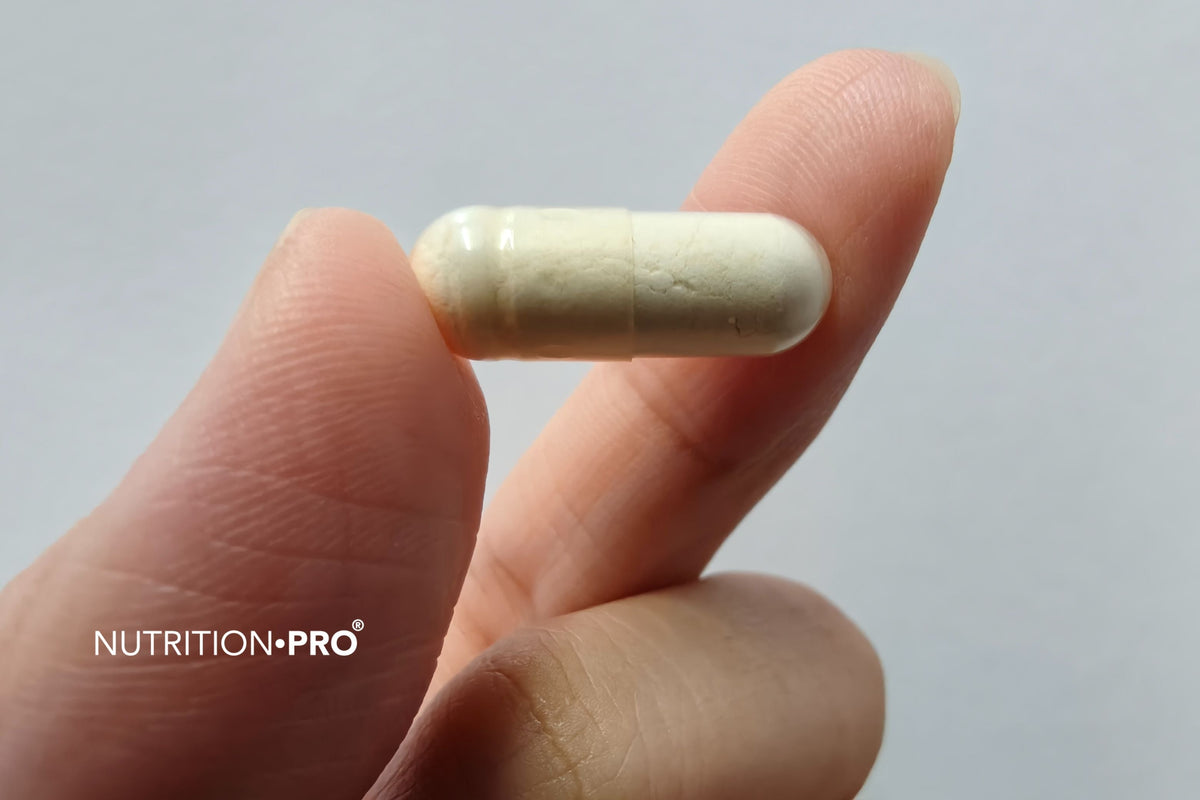
With iron, the timing matters as much as the dose. The same capsule can be absorbed at 20% or at 5% depending on the time of day, what's in your stomach, and what follows within the hour: a coffee, a yogurt, a magnesium tablet. Many people "who don't respond to iron" simply take it at the wrong time.
This article answers the questions everyone asks: morning or evening, on an empty stomach or with meals, every day or every other day, with what and away from what. With study data, the mistakes that cancel out the dose, and a timed instruction manual. To understand why your reserves are low and how much to take, first read our complete guide to iron deficiency.

14 mg of iron chelated with glycine (100% of NRV), 80 mg of vitamin C for absorption and 200 µg of vitamin B9. One vegetable capsule in the morning, with no metallic taste. Made in France.
Take iron in the morning, on an empty stomach, with a glass of water or juice rich in vitamin C, 30 to 60 minutes before breakfast. Space out coffee, tea, milk and dairy products, calcium, magnesium, zinc and antacids by at least 2 hours, levothyroxine by 4 hours. For high doses (60 mg and above), taking every other day increases absorption by one-third, because each dose raises hepcidin for 24 to 48 hours; a well-tolerated nutritional dose of 14 to 30 mg can be taken daily. Do not split into multiple doses, this provides no benefit. And maintain for at least 3 months: ferritin rises slowly.
1. Why the timing of the dose changes everything: hepcidin
Iron absorption occurs in the duodenum, the first few centimeters of the intestine, and is controlled byhepcidin. When hepcidin is high, intestinal cells retain the iron they have captured and eliminate it with their renewal, without passing it into the blood. Three things cause it to rise: full iron stores, inflammation, and recent iron intake. A dose of 60 mg raises hepcidin in the hours that follow, and this peak persists for 24 to 48 hours (Pasricha, Lancet, 2021). It also follows a circadian rhythm: low upon waking, higher in the afternoon.
Second mechanism: iron from supplements is non-heme iron, which must be reduced to soluble ferrous form to cross the intestinal wall, which requires gastric acidity, and which binds to everything passing through the stomach at the same time—tannins, calcium, phytates. Hence the rules that follow.
2. Morning or evening?
Trials that measured actual absorption using labeled iron all administered doses in the morning, and this is the schedule recommended by reference reviews. Waking combines three advantages: hepcidin is at its lowest point in the circadian cycle, the stomach is empty so acidity is available and no inhibitors are present, and breakfast can be delayed by 30 to 60 minutes without difficulty.
Evening is not a mistake. For someone who cannot take iron on an empty stomach in the morning, or whose breakfast is necessarily a café au lait, a dose at bedtime, 2 hours after dinner, is a good alternative. The only rule is consistency: choose a time slot and stick to it, because a missed dose one day in three reduces intake more than a theoretically less optimal schedule.
3. On an empty stomach or with a meal?
Taken on an empty stomach with water, an iron supplement is absorbed at 10 to 20% depending on iron stores; taken in the middle of a mixed meal, absorption often drops by half, because phytates from grains, polyphenols from vegetables, and calcium from dairy trap iron in the intestine (Hurrell and Egli, Am J Clin Nutr, 2010). This justifies the "one hour before the meal" rule.
But fasting doses are also those that cause the most nausea and heartburn, especially with ferrous salts. If that's your case, two options are better than stopping: take iron with a light meal (a slice of white bread, a fruit, an egg) while avoiding milk, yogurt, cheese, tea, and whole grains; or switch to a chelated iron form, whose absorption depends less on stomach contents and which is less irritating (see section 8).
4. Every day or every other day?
For decades, package inserts recommended splitting iron into two or three daily doses "for better absorption." Two Swiss randomized trials, conducted with iron labeled using stable isotopes in women with low stores, showed the opposite:
60 mg of iron taken every other day for 28 days was absorbed at 21.8% on average, compared to 16.3% for the same dose taken daily for 14 days—a third more—with lower hepcidin in the alternating group. Splitting 120 mg into two doses (morning and late afternoon) did not increase absorption compared to a single dose and raised hepcidin. Authors' conclusion: a single dose in the morning, every other day, optimizes absorption.
Stoffel NU, Cercamondi CI, Brittenham G, et al. Lancet Haematol 2017;4(11):e524-e533. DOI: 10.1016/S2352-3026(17)30182-5
This regimen has since been confirmed in anemic women and is adopted by reference reviews (Pasricha, Lancet, 2021). It has a second advantage: twice fewer doses means fewer digestive side effects and better adherence. How do you apply it?
5. What to take iron with
| With | Effect | In practice |
|---|---|---|
| Vitamin C (ascorbic acid) | Reduces iron to absorbable ferrous form and counteracts some inhibitors. Absorption x 2 to 3 from 50 to 100 mg (Hurrell 2010) | A glass of orange juice, a kiwi, a spoonful of acerola powder in water, or a supplement that already contains it (Nutrition•pro Bisglycinate Iron contains 80 mg of vitamin C) |
| Water | Neutral, it's the ideal vehicle | A large glass, to limit gastric irritation |
| Animal proteins (meat, fish, poultry) | The "meat factor" increases the absorption of non-heme iron from the meal | Useful for iron from foods; for capsules, taking on an empty stomach is still preferable |
| Vitamin B9 and B12 | Do not affect absorption, but are necessary with iron to make red blood cells | Can be taken at the same time (see our B vitamins) |
| Fresh fruits and vegetables | Supply of vitamin C and organic acids (citric, malic) that are beneficial | Bell pepper, broccoli, citrus fruits, strawberries, parsley with meals rich in plant-based iron |
6. Keep at a distance from what
| Keep at a distance from | Why | Impact | Time frame |
|---|---|---|---|
| Tea (black, green) | Tannins that form insoluble complexes with iron | Up to -60 to -90% in the same meal | 2 hours |
| Coffee | Polyphenols (chlorogenic acid) | -40 to -80% in the same meal | 1 to 2 hours |
| Milk, yogurt, cheese, fortified plant-based beverages | Calcium, in direct competition | -30 to -50% from 150 to 300 mg of calcium | 2 hours |
| Calcium, magnesium, zinc supplements | Divalent minerals that share the same transporters | Significant reduction at supplement doses | 2 hours (iron in the morning, magnesium and zinc in the evening) |
| Antacids, PPIs (omeprazole and related drugs) | Suppress the acidity necessary for iron solubilization | Strong reduction, especially with long-term use | At least 2 hours; consult your pharmacist if on chronic medication |
| Levothyroxine | Iron reduces the absorption of thyroid hormone | May disrupt TSH levels | 4 hours (levothyroxine upon waking, iron late morning or at bedtime) |
| Tetracyclines, quinolones, bisphosphonates, levodopa | Iron chelates these medications and blocks their absorption | Loss of medication effectiveness | 2 hours; follow prescriber's instructions |
| Whole grains, bran, legumes not soaked | Phytates | -50% or more at the same meal | Avoid at the time of intake; soaking and sprouting reduce phytates |
| Red wine, cocoa, spinach, rhubarb | Polyphenols and oxalates | Moderate to strong | Avoid at the time of intake |
Orders of magnitude from studies on single meals (Hurrell and Egli, 2010); in a varied diet, effects partially offset each other. Time intervals apply to iron capsules, which are more sensitive than food iron.
A note on chelated forms: iron bisglycinate, bound to two glycine molecules, is less exposed to phytates and tannins than ferrous salts, which partly explains its better absorption with meals. The rules above still apply, but an occasional deviation is less costly.
7. The five mistakes that cancel out iron supplementation
Taking the capsule with morning coffee
This is the most common error. Coffee polyphenols can reduce absorption by two to five times. Take iron first with water, coffee at least one hour later.
Dairy breakfast right after
Milk in cereal, yogurt, fromage blanc, milk coffee: calcium traps iron still in the stomach. Delay breakfast by 30 to 60 minutes, or choose a dairy-free breakfast that day.
Taking everything at once
Iron + magnesium + zinc + calcium multivitamin in one gulp: minerals compete with each other. Iron alone in the morning, other minerals at noon or evening.
Splitting into two or three doses
Each dose raises hepcidin and blocks the next one. A single morning dose absorbs as much as a divided dose, with fewer digestive side effects (Stoffel 2017).
Stop as soon as fatigue decreases
Fatigue improves in 4 to 6 weeks, but ferritin takes 3 to 6 months to rebuild. Stopping too early means starting from scratch a few months later. See low ferritin: what to do.
8. Instructions on one page, and side effects
Side effects: what is normal, what can be corrected
Black or dark green stools : normal, it's unabsorbed iron. No cause for concern. Nausea, burning, pain : switch to taking it with a light meal, reduce the dose per intake by taking it every other day, and change the form. A meta-analysis of 43 trials shows that ferrous sulfate multiplies the risk of digestive side effects by 2.3 compared to placebo (Tolkien, PLoS One, 2015), whereas bisglycinate causes nearly three times fewer (Fischer, Nutr Rev, 2023). Constipation : water, soluble fiber (psyllium husk), and again the chelated form. Metallic taste : capsules rather than tablets or syrups. Details on different forms are in our comparison iron bisglycinate vs other forms of iron.
14 mg of iron chelated with glycine, 80 mg of vitamin C already in the capsule, 200 µg of vitamin B9. Absorbed, well-tolerated, with no metallic taste. Manufactured in France.
Discover Bisglycinate Iron →Not recommended in case of hemochromatosis, during pregnancy and breastfeeding without medical advice.
Choose the situation that matches yours: the answer appears just below.
If morning coffee is non-negotiable, move iron to bedtime, 2 hours after dinner, with a glass of water. Proper absorption, no interference with coffee. Alternative option: capsule in the morning, coffee 60 minutes later—the time passes quickly during your shower and commute.
Take the capsule at the beginning of a light breakfast without dairy or whole grain cereals. If nausea persists, the form is probably the cause: switch from ferrous salt to bisglycinate iron, which causes nearly three times fewer digestive side effects. And every other day rather than daily if the dose is high.
Iron alone in the morning on an empty stomach; magnesium and zinc in the evening, where they are actually more beneficial (relaxation, sleep). A multivitamin containing calcium is taken at noon. B vitamins can accompany iron.
Levothyroxine in the morning on an empty stomach, iron 4 hours later (late morning) or at bedtime. Antacids and PPIs: iron at least 2 hours before; if treatment is long-term, iron absorption can remain low and ferritin monitoring is necessary. In both cases, validate the schedule with your pharmacist.
This test provides guidance; it does not replace the advice of a healthcare professional.
Frequently asked questions about taking iron
Should iron be taken in the morning or evening?
In the morning, preferably. Hepcidin, the hormone that slows iron absorption, is at its lowest level upon waking, and the stomach is empty. Evening is not a mistake if it's the only feasible time, provided it's spaced from dinner and dairy products.
Should iron be taken on an empty stomach or with a meal?
On an empty stomach, 30 to 60 minutes before a meal, for maximum absorption. If taking on an empty stomach causes nausea, a light meal without dairy or whole grain cereals is better than skipping it: slightly reduced absorption is still preferable to not taking it at all.
Should iron be taken daily or every other day?
For high doses (60 mg and above), every other day: each dose raises hepcidin for 24 to 48 hours and blocks the next dose, so cumulative absorption is one-third higher with alternate-day dosing (Stoffel, Lancet Haematol, 2017). For a nutritional dose of 14 to 30 mg that is well-tolerated, daily intake remains possible.
Can iron be taken with coffee?
No. Coffee polyphenols can reduce non-heme iron absorption by 40 to 90% when consumed at the same time. Wait at least 1 hour, ideally 2, between the iron capsule and coffee. The same rule applies to tea, which is an even stronger inhibitor.
Should iron be taken with vitamin C?
Yes. Ascorbic acid reduces iron to an absorbable form and partly neutralizes meal inhibitors; it can double or triple non-heme iron absorption. A glass of orange juice, a kiwi, or an acerola powder is sufficient. Some supplements, like Nutrition•pro bisglycinate iron, already include it.
Can iron and magnesium be taken together?
It's better to separate them by 2 hours. Magnesium, like calcium and zinc, competes with iron for absorption. Iron in the morning on an empty stomach, magnesium in the evening: this is the simplest combination.
Are iron and milk compatible?
No. The calcium in milk, yogurts, and cheeses inhibits iron absorption, both heme and non-heme. Avoid dairy products for 2 hours after taking iron. A breakfast with yogurt or milk right after the capsule is the most common mistake.
Which medications should be spaced apart from iron intake?
Levothyroxine (4 hours apart), antibiotics from the tetracycline and quinolone families, bisphosphonates and levodopa (2 hours). Antacids and proton pump inhibitors reduce iron absorption; discuss this with your pharmacist.
Are black stools normal with iron?
Yes. Unabsorbed iron colors stools black or dark green, which is harmless. However, black tarry stools with a foul smell before taking any iron, or red blood, warrant prompt medical consultation.
What to do if experiencing nausea or constipation with iron?
Switch from taking on an empty stomach to taking with a light meal, reduce the dose per intake by taking it every other day, and change the form: ferrous sulfate doubles the risk of digestive issues (Tolkien, 2015) while bisglycinate causes nearly three times fewer (Fischer, 2023). For constipation, hydration and soluble fiber such as psyllium.
- Hepcidin
- A liver hormone that blocks iron absorption for 24 to 48 hours after intake, and in cases of inflammation.
- Non-heme iron
- Iron from plants and all supplements, absorbed at 2 to 20% depending on what accompanies it.
- Phytates, tannins, polyphenols
- Compounds found in whole grains, tea, coffee, and many plants that trap iron in the intestine.
- Iron bisglycinate
- Iron bound to two glycine molecules, less sensitive to inhibitors and better tolerated than ferrous salts.
- Stoffel NU, Cercamondi CI, Brittenham G, et al. Iron absorption from oral iron supplements given on consecutive versus alternate days and as single morning doses versus twice-daily split dosing in iron-depleted women: two open-label, randomised controlled trials. Lancet Haematol. 2017;4(11):e524-e533. doi:10.1016/S2352-3026(17)30182-5
- Hurrell R, Egli I. Iron bioavailability and dietary reference values. Am J Clin Nutr. 2010;91(5):1461S-1467S. doi:10.3945/ajcn.2010.28674F
- Pasricha SR, Tye-Din J, Muckenthaler MU, Swinkels DW. Iron deficiency. Lancet. 2021;397(10270):233-248. doi:10.1016/S0140-6736(20)32594-0
- Tolkien Z, Stecher L, Mander AP, Pereira DI, Powell JJ. Ferrous sulfate supplementation causes significant gastrointestinal side-effects in adults: a systematic review and meta-analysis. PLoS One. 2015;10(2):e0117383. doi:10.1371/journal.pone.0117383
- Fischer JAJ, Cherian AM, Bone JN, Karakochuk CD. The effects of oral ferrous bisglycinate supplementation on hemoglobin and ferritin concentrations in adults and children: a systematic review and meta-analysis. Nutr Rev. 2023;81(8):904-920. doi:10.1093/nutrit/nuac106
- Camaschella C. Iron-deficiency anemia. N Engl J Med. 2015;372(19):1832-1843. doi:10.1056/NEJMra1401038


