

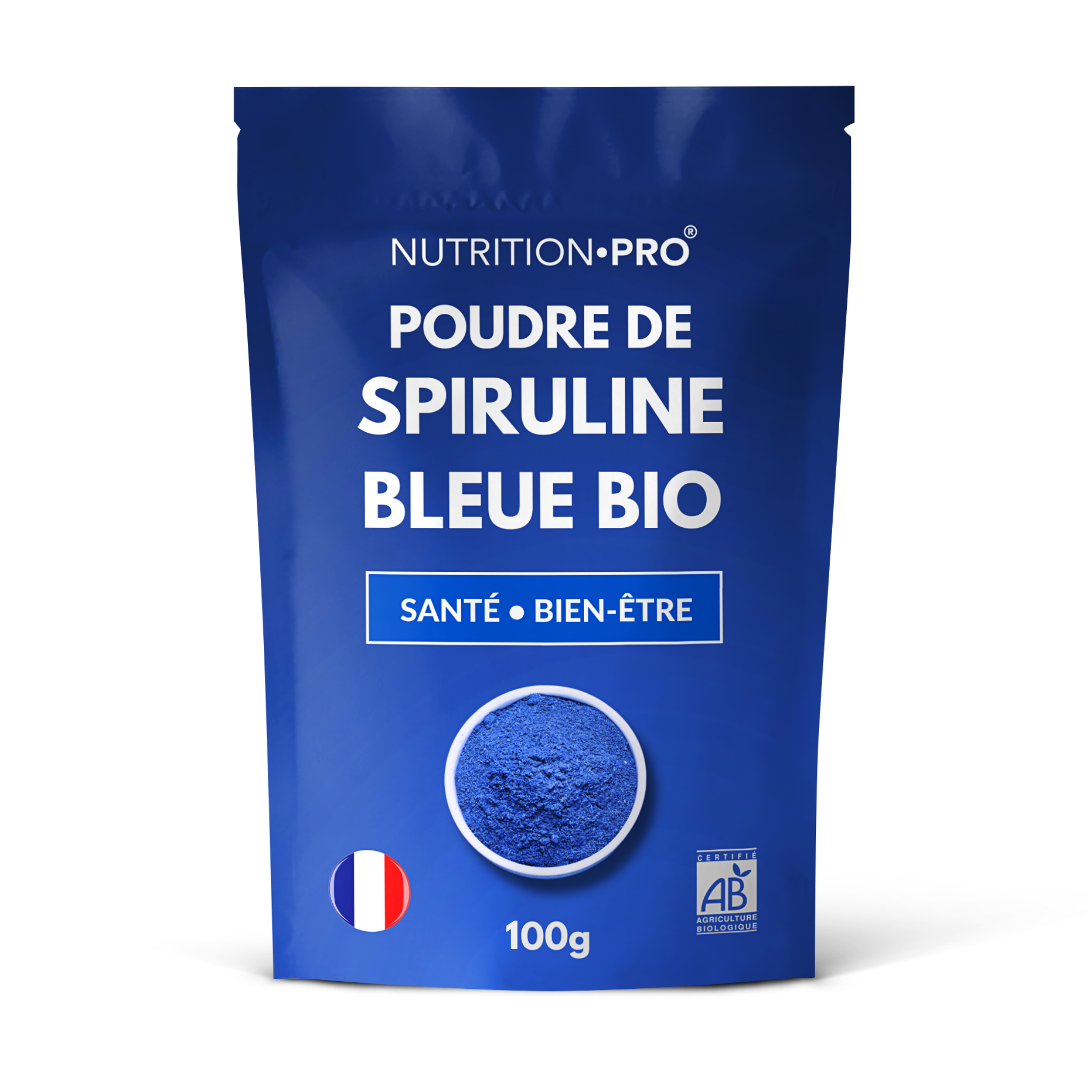
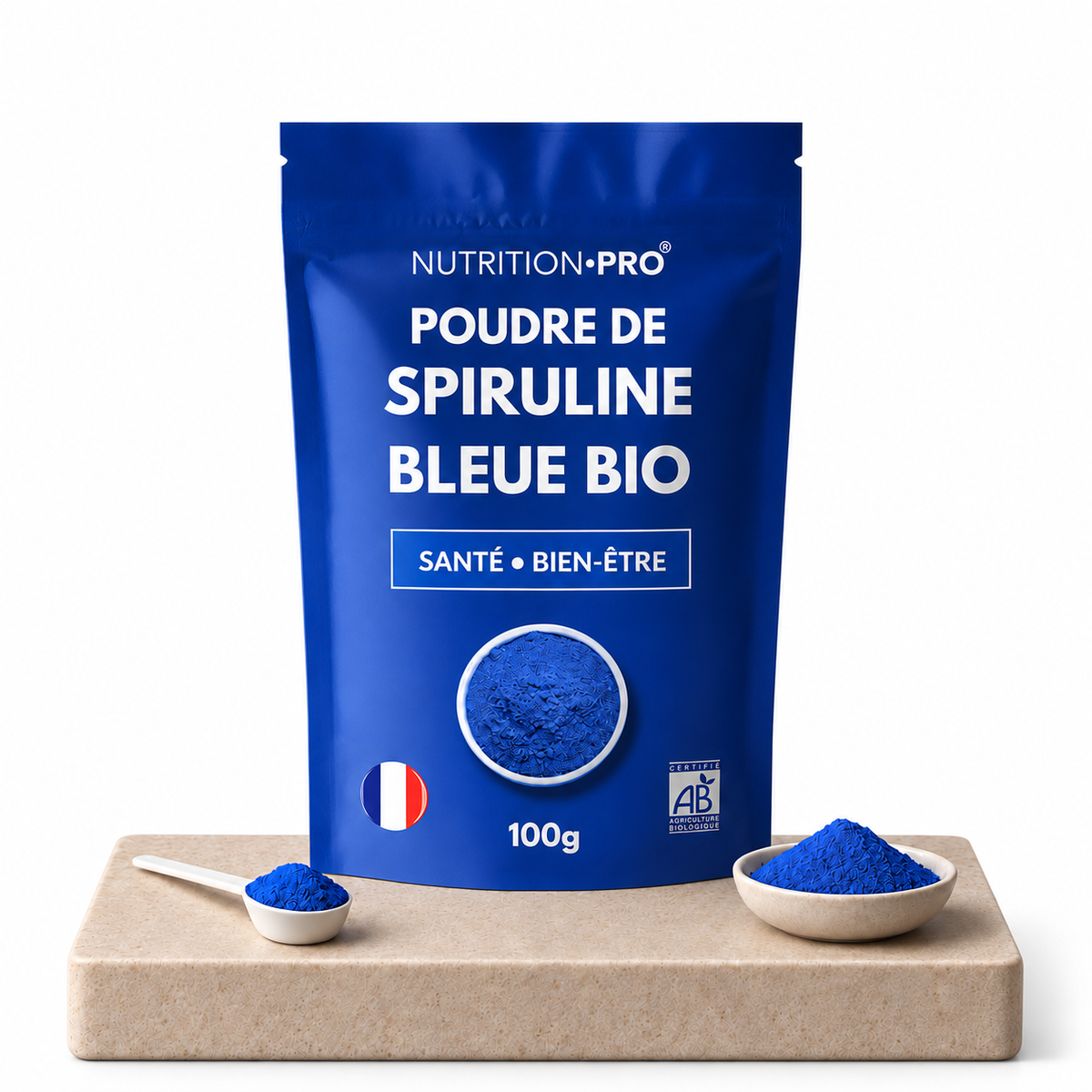
 MADE IN FRANCE
ORGANIC BLUE SPIRULINA (PHYCOCYANIN) POWDER
- Natural energy without stimulants
- Powerful natural antioxidant
- Sustained recovery and endurance
- Highly concentrated phycocyanin


FRANCE
NATURAL
EFFICIENCY

FARMING
Description
Organic blue spirulina, also known as pure phycocyanin, is the most precious jewel of spirulina. Naturally extracted from Arthrospira platensis spirulina, this intensely blue powder concentrates up to 4,000 times more antioxidants than blueberries. Rich in proteins, antioxidant pigments and rare nutrients, it supports energy, recovery, immunity and cellular detox.
Its mild and slightly sweet taste makes it pleasant to incorporate into all your preparations. It is reminiscent of a subtle and fresh note, with a very light vegetal hint, much less pronounced than green spirulina.
At Nutrition•pro, we have selected a 100% organic, vegan, additive-free blue spirulina, obtained through gentle low-temperature extraction to preserve all the power of phycocyanin.
Its spectacular color and exceptional properties make it a complete superfood, ideal for boosting your performance, protecting your cells from oxidative stress, and enhancing your smoothies, juices and healthy recipes.
Nutrition•pro Organic Blue Spirulina offers an exceptional concentration of phycocyanin (>30%) for maximum antioxidant protection. Obtained from 100% organic spirulina, grown without pesticides or GMOs, it benefits from a gentle cold extraction that preserves all its nutrients. A natural source of complete proteins, minerals and vitamins, it effectively supports immunity, energy and muscle recovery.
Its intense blue color enhances smoothies and nutritious recipes. Additive-free, vegan and gluten-free, it combines purity, performance and culinary creativity.
How to use
Nutritional information
Nutritional values per 100 g:
| Composition | Per 100 g |
|---|---|
| Energy | 369 kcal |
| Fat | 0 g |
| Carbohydrates | 77.4 g |
| Protein | 14.6 g |
| Salt | 1.58 g |
Daily dose: 3 g (1 level tsp)
Precautions
Organic blue spirulina, also known as pure phycocyanin, is the most precious jewel of spirulina. Naturally extracted from Arthrospira platensis spirulina, this intensely blue powder concentrates up to 4,000 times more antioxidants than blueberries. Rich in proteins, antioxidant pigments and rare nutrients, it supports energy, recovery, immunity and cellular detox.
Its mild and slightly sweet taste makes it pleasant to incorporate into all your preparations. It is reminiscent of a subtle and fresh note, with a very light vegetal hint, much less pronounced than green spirulina.
At Nutrition•pro, we have selected a 100% organic, vegan, additive-free blue spirulina, obtained through gentle low-temperature extraction to preserve all the power of phycocyanin.
Its spectacular color and exceptional properties make it a complete superfood, ideal for boosting your performance, protecting your cells from oxidative stress, and enhancing your smoothies, juices and healthy recipes.
Nutrition•pro Organic Blue Spirulina offers an exceptional concentration of phycocyanin (>30%) for maximum antioxidant protection. Obtained from 100% organic spirulina, grown without pesticides or GMOs, it benefits from a gentle cold extraction that preserves all its nutrients. A natural source of complete proteins, minerals and vitamins, it effectively supports immunity, energy and muscle recovery.
Its intense blue color enhances smoothies and nutritious recipes. Additive-free, vegan and gluten-free, it combines purity, performance and culinary creativity.
Nutritional values per 100 g:
| Composition | Per 100 g |
|---|---|
| Energy | 369 kcal |
| Fat | 0 g |
| Carbohydrates | 77.4 g |
| Protein | 14.6 g |
| Salt | 1.58 g |
Daily dose: 3 g (1 level tsp)
THE BENEFITS OFBLUE SPIRULINA
- Supports immunity
- Powerful antioxidant
- Natural anti-inflammatory
- Speeds up muscle recovery
- Boosts energy and vitality
- Deeply detoxifies the body
Efficacy supported by scientific data
Cures associated with organic blue spirulina:
Frequently asked questions
What is blue spirulina (phycocyanin)?
Blue spirulina is a concentrated extract of spirulina containing mainly phycocyanin, the natural blue pigment of this microalga. Classic spirulina is a highly nutritious blue-green algae, and phycocyanin is its main active component. It is a pigmented protein that gives spirulina its bright blue color.
Blue spirulina comes in the form of an intensely blue powder, obtained by extracting phycocyanin from Arthrospira platensis spirulina. This pigment is 100% of natural origin (no synthetic coloring is added).
Blue spirulina is therefore a superfood concentrated in active principles, often used as a food supplement for its benefits to the body, but also as a natural food coloring thanks to its exceptional color.
How is blue spirulina different from classic green spirulina?
Green spirulina (classic spirulina) is the entire dried microalga, rich in varied nutrients (proteins, amino acids, vitamins, minerals, chlorophyll, etc.), while blue spirulina is a concentrated phycocyanin extract obtained from spirulina.
This difference in composition explains why the two products do not have exactly the same uses or the same advantages:
- Concentration of active ingredients: Blue spirulina contains the "best" of spirulina – phycocyanin – in concentrated form. It thus provides superior functional efficacy on certain benefits (immunity, tone, sports performance) compared to green spirulina. In other words, gram for gram, blue spirulina provides more active phycocyanin.
- Nutritional profile: Green spirulina offers a complete nutritional profile (proteins, iron, beta-carotene, etc.), useful for filling deficiencies and nourishing the body. On the contrary, blue spirulina, being essentially composed of phycocyanin, contains little or none of certain nutrients present in whole spirulina (for example, it contains practically no iron, beta-carotene or chlorophyll, these elements remaining in the green non-extracted part). Green spirulina will therefore be more suitable for overall nutritional intake, while blue spirulina focuses on targeted functional intake.
- Taste and smell: Green spirulina has a characteristic algae/marine taste that some people dislike. Good news, blue spirulina is almost tasteless and odorless – it has neither the pronounced taste nor the smell of algae, because most of the compounds responsible for these flavors have been removed. This makes it easy to incorporate into drinks or recipes without altering the taste.
- Color and culinary uses: Visually, classic spirulina is dark green, while blue spirulina has a bright blue color due to pure phycocyanin. This intense blue color is highly prized for creating naturally colored foods or drinks. Blue spirulina can be used as a 100% natural blue food coloring, which is not the case with green powder which would give an unappealing green/brown tint.
In summary, phycocyanin blue spirulina is more concentrated and functional, ideal for benefiting from the effects of phycocyanin, while green spirulina is more nutritious overall and provides a wide spectrum of nutrients. The two are not mutually exclusive: you can perfectly consume green spirulina for basic nutrition, and blue spirulina as a supplement to boost certain targeted effects.
What are the health benefits of blue spirulina?
Blue spirulina is renowned for its numerous benefits thanks to the phycocyanin it contains in high concentration. Here are its main beneficial effects:
- Strengthening of the immune system and antioxidant effect: Phycocyanin is a powerful natural antioxidant that helps neutralize free radicals and protect our cells from oxidative stress. It would thus contribute to slowing down cellular aging and reducing the risk of chronic diseases linked to oxidative stress. In addition, it would have an immunomodulatory effect – meaning it could stimulate immune defenses and help the body better defend itself against infections while regulating excessive reactions (allergies). It is sometimes called the "blue gold" of spirulina because of these protective properties.
- Natural anti-inflammatory action: Studies suggest that phycocyanin has notable anti-inflammatory properties by inhibiting certain enzymes and inflammation mediators. This could help relieve joint pain, body aches or inflammatory disorders when consumed regularly, without the side effects of classic anti-inflammatories.
- Energy, vitality and reduction of fatigue: Blue spirulina is often used to combat temporary fatigue and regain tone. Indeed, it helps support energy metabolism and reduce the feeling of fatigue, particularly thanks to its antioxidant action (which fights the oxidative stress contributing to fatigue) and its immune support (fatigue being sometimes linked to a weakened immune system). Many consumers feel a regain of energy and vitality during a course of blue spirulina.
- Sports performance, endurance and recovery: This is an asset particularly appreciated by athletes. Phycocyanin has a positive effect on the blood: its molecular structure is surprisingly close to that of erythropoietin (EPO), the hormone that stimulates the production of red blood cells. Of course, blue spirulina is not a synthetic doping agent, but it naturally promotes better oxygenation of cells and muscles by supporting the production of red blood cells. Result: a possible improvement in endurance and resistance to effort. It also helps with better muscle recovery after exercise by reducing aches and cramps. Athletes use it to speed up recovery and limit muscle pain.
- Detoxification and organ protection: Phycocyanin is studied for its hepatoprotective effect, that is, liver protection. It could support liver functions and the elimination of toxins. In addition, research indicates potential effects to protect the kidneys and the cardiovascular system, as well as an anti-diabetes and anti-obesity role, although these areas require more studies.
In short, blue spirulina (phycocyanin) acts as a general well-being stimulant: it boosts the immune system, provides an energy boost, protects our cells thanks to its antioxidant power and helps the body better resist physical (sport, fatigue) or environmental stress. It is a versatile supplement to support daily vitality, both for active people and for those seeking to strengthen their health foundation.
Who is blue spirulina recommended for?
Thanks to its multiple benefits, blue spirulina is aimed at a wide audience wishing to improve fitness and vitality naturally. It is particularly recommended for:
Athletes and active people – whether you are an endurance athlete, a bodybuilding enthusiast or simply an occasional sportsperson, blue spirulina can help you. It improves endurance and performance, and facilitates recovery after effort by reducing muscle fatigue. In addition, its supply of proteins and amino acids (from phycocyanin which is a protein) contributes to maintaining muscle mass, an important asset for athletes. All this naturally and without doping substance (phycocyanin acts by supporting blood oxygen production in a physiological way, without imbalance).
People prone to fatigue, overwork or convalescence – if you often feel tired, without energy, blue spirulina can give you a boost. By strengthening immunity and fighting oxidative stress, it helps to regain tone and vitality. Many people during periods of overwork, intense stress, or during seasonal changes (winter fatigue, difficult spring) take a course of blue spirulina to recharge their batteries and feel more in shape.
Seniors or elderly people – with age, the immune system and antioxidant defenses weaken. Blue spirulina can be an ally for seniors by helping to stimulate immunity and providing antioxidant support that protects cells from premature aging. In addition, its natural anti-inflammatory effect can help relieve minor joint pain or moderate rheumatism, improving quality of life. It is a gentle supplement that can support the general well-being of the elderly (in addition, of course, to a good diet).
Convalescent or weakened defense people – if you are recovering from an illness, or if you often get sick, blue spirulina, thanks to its immunostimulating properties, can help you rebuild your defenses. It is often recommended in recovery after an infectious episode or a period of intense fatigue, to more quickly regain full potential.
In reality, anyone wishing for a natural energy boost or immune strengthening can try blue spirulina. It is a natural food supplement suitable for students during exam periods, busy parents, as well as people with an occasionally unbalanced diet. There is really no age limitation (it is suitable for young adults as well as seniors), provided of course to respect the recommended doses and any precautions (see below). In case of specific doubt (chronic illness, etc.), it is always good to seek advice from a healthcare professional.
How do you use blue spirulina powder?
Blue spirulina powder is very easy to use and versatile.
It can be consumed in different ways, by integrating it into various preparations. Here are some usage tips:
- Dilution in a liquid: The simplest way is to mix the powder in a glass of water. A teaspoon of blue spirulina (about 3 to 5 g) is enough, to stir in a glass of water (or fruit juice) to obtain a remarkable turquoise blue drink. Since the powder is almost tasteless, drinking it in water will not cause any flavor problem. Otherwise, you can dilute it in fruit juice, a smoothie, plant or animal milk, according to your preferences. For example, a lemon or orange juice + blue spirulina makes an energizing and colorful drink.
- In smoothies, bowls and cold drinks: Blue spirulina is highly prized for making "blue smoothies" or blue açaí bowls. Just add the powder dose to your blender with your usual fruits and milk. It will not change the taste but will give a sky blue or intense blue color to your mixture. You can also add it to a latte (blue latte) or a non-alcoholic cocktail for an original color. The possibilities are endless: banana-coconut-blue spirulina smoothie, blueberry yogurt with blue spirulina, etc.
- In foods and recipes: Thanks to its lack of pronounced taste, blue spirulina can be incorporated into many recipes. It can be used as a "magic" ingredient in pastry or cooking: for example, adding the powder to pancake batter, cakes, crepes, ice cream, chia pudding, sauces, etc., to obtain an original blue color. It is a natural food coloring that allows you to create blue desserts (ice cream, macarons, cupcakes…) or even fun savory dishes (blue fresh pasta, why not!).
- Mixing tip: First pour the powder into a little liquid and mix well (crush any lumps) before adding the rest of the liquid or preparation. Blue spirulina dissolves well, especially if the liquid is at room temperature or lukewarm. Avoid water that is too hot or boiling, as excessive heat can degrade phycocyanin (see cooking section) and reduce its benefits.
- Course or daily: You can consume blue spirulina as a course of a few weeks (for example a 2 to 4 week course during a seasonal change or in anticipation of a sports competition), or more daily if you feel the need. It can be taken in the morning to enjoy a "boost" effect during the day, or split into two doses (morning and noon). Possibly avoid taking it late in the evening if you are very sensitive to its energizing effect (although it is not a caffeine-type stimulant, some prefer not to consume it at the very end of the day).
In summary, simply mix the blue powder into the drink or recipe of your choice. Its great advantage is that it is practical and fun to use: without altering the taste, it brings its benefits and a surprising color to the preparations. Don't hesitate to be culinary creative! (Smoothies, yogurts, pastries… everything can become blue).
Can you cook blue spirulina? (heat and cooking)
It is possible to use blue spirulina in culinary preparations requiring cooking, but with some reservations.
Phycocyanin is sensitive to high heat: above about 40-45°C, its proteins begin to denature and it gradually loses its biological activity (its nutritional/antioxidant properties decrease).
The blue color, however, can resist cooking a little but may fade. Here are our tips:
- Gentle cooking preferably: If possible, add blue spirulina at the end of cooking or in lukewarm/cold dishes. For example, for pancakes or cakes, prefer cooking at moderate temperature and not too prolonged. You can also incorporate the powder into a frosting or topping rather than baking it in the oven, in order to preserve its properties as much as possible.
- Above 60°C: Avoid exposing blue spirulina to very high temperatures (very hot oven, frying, prolonged boiling). For example, do not put it in boiling water or a soup that is cooking. It is better to sprinkle it on a dish after cooking or in a sauce that is just lukewarm. Some users make blue pasta or crepes by adding the powder to the batter: it works, but be aware that there may be a slight loss of pigment power if the crepe is cooked for a long time.
- Use as a coloring vs. nutrient: If your goal is mainly the color (for example blue cookies for a special occasion), you can use it in cooking, knowing that the nutritional benefits will be reduced after going through the oven. If your goal is to obtain the health benefits, then prefer preparations without cooking (drinks, smoothies, etc.) or addition after cooking.
In conclusion, yes, you can cook with blue spirulina, but the golden rule is not to subject it to high heat for too long. Gentle cooking or cold incorporation allows you to preserve both the beautiful blue color and the properties of phycocyanin.
What is the recommended dosage (how much blue spirulina per day)?
The dosage may vary depending on your needs, but generally the recommended daily dose of blue spirulina powder is about 1 teaspoon per day. This corresponds to approximately 3 to 5 grams of powder, depending on the density of the product. This quantity already provides a good dose of phycocyanin.
For example, the standard recommendation from some manufacturers is ~5 g per day diluted in water or juice. Others indicate that a teaspoon (their dosing measure) contains the optimal daily amount of phycocyanin.
Intake tips:
- It is often suggested to start with a half-dose for a few days, then gradually increase to the whole spoon. This progression allows your body to get used to it, especially if you have never taken spirulina before, and to avoid any small digestive inconveniences at the beginning.
- Blue spirulina can be taken in the morning preferably (to enjoy its energizing effect during the day). If you wish, you can split it into two small doses, one in the morning and one at noon. Avoid going beyond late afternoon for consumption if you find that it gives you too much energy in the evening (it remains subtle and individual).
- Do not exceed too high doses without professional advice. Taking much more than 5 g per day will not necessarily bring additional benefits and could unnecessarily strain your body. Stay within a reasonable range (some intensive courses for athletes can go up to 10 g per day, but this should be adapted according to the recommendations of the product and your tolerance).
Duration of a course: You can consume blue spirulina as a course of 2 to 3 months maximum, then possibly take a break, or in shorter courses of 3 to 6 weeks. Some people take it all year round at a maintenance dose (especially if the diet is otherwise low in antioxidants). There is no absolute time limit, but it is good to observe your feelings and take breaks from time to time to see if the benefit is maintained.
In summary, 1 teaspoon per day is the usual recommendation for an adult, which corresponds to the effective daily dose to enjoy the benefits of phycocyanin. Start gently, listen to your body, and you will find the dose that suits you best within this range.
Does blue spirulina have a taste or smell?
No, blue spirulina is practically neutral in taste and smell. This is one of its great advantages over green spirulina. The extraction of phycocyanin removes most of the components that gave classic spirulina its characteristic taste (often described as algae-like or earthy). Blue spirulina powder has no pronounced flavor, no iodized aftertaste. Many people say it is tasteless, which allows it to be mixed with any food or drink without altering the flavor.
Likewise, the smell is almost non-existent – gone is the slightly strong smell of dried algae that can be felt with green spirulina. With blue spirulina, you won't smell much, perhaps a very slight scent if you pay attention, but nothing unpleasant.
Concretely, if you mix the blue powder in a glass of water or juice, you will not perceive any particular taste, except possibly the taste of the juice itself. Same in a yogurt, a smoothie or a dish: blue spirulina goes unnoticed on the palate, while bringing its magnificent blue color and its nutrients.
For this reason, blue spirulina is ideal for people who were put off by the taste of green spirulina. You can thus benefit from the benefits of spirulina without having to "camouflage" the taste in a strong fruit juice. Consuming your blue spirulina will be a pleasure rather than a constraint, especially since the blue color makes the experience visually fun.
Note: If your blue spirulina powder gives off a strong smell or has a pronounced taste, it is not normal – it could indicate a product of lesser quality or poorly preserved. A good blue spirulina, well pure, must really be neutral in taste/smell.
What is the origin of organic blue spirulina powder?
Our organic blue spirulina comes from green spirulina grown in specialized aquaculture farms, then processed to extract phycocyanin.
Here are some details on its origin and manufacture:
Spirulina cultivation: Spirulina is grown in controlled freshwater ponds. It needs heat, sunlight, alkaline water and mineral nutrients to grow. Producers recreate these optimal conditions in farms generally located in sunny climates. The spirulina used for organic blue spirulina comes from organic farming (cultivation without synthetic pesticides or chemical fertilizers, with strict quality controls).
Phycocyanin extraction: Once the spirulina is grown, it is harvested, then two routes are possible: either it is dried as is (to make green spirulina in flakes/powder), or phycocyanin is extracted from it. The extraction of phycocyanin is generally done cold and with water: fresh spirulina is ground in water, filtered to recover the blue pigment in solution, then this pigment is concentrated and dried. This gentle process preserves the properties of phycocyanin without using chemical solvents. This results in a concentrated turquoise blue powder. Often, a little trehalose (a natural sugar) or food stabilizer may be added to protect phycocyanin and prevent it from deteriorating (for example, some blue spirulina powders contain ~5-10% trehalose, which does not affect use, it is just for the conservation of the pigment).
Manufacturing and packaging: Depending on the brands, the final product can be packaged at the production site or imported in bulk and packaged in France. Our Organic Blue Spirulina is checked and packaged in France in a specialized workshop, ensuring compliance with European health and quality standards. Each batch is subject to analyses (purity, absence of contaminants).
In summary, the origin of organic blue spirulina is that of its raw material: green spirulina, generally grown in sunny regions (Asia, but also sometimes America or India depending on suppliers) in organic farming. This spirulina is then processed to extract phycocyanin. The result is a blue powder of natural origin, from an algae grown responsibly.
Is blue spirulina certified Organic and what is its quality?
Yes, the blue spirulina powder we offer is certified Organic Agriculture. This means that the spirulina from which it comes was grown according to organic farming standards: without pesticides, without GMOs, with control of inputs and respect for the environment. The mention "Organic" on a spirulina product generally indicates that the producer has followed specific specifications validated by a certifying body.
You can therefore be assured that it is a product as natural and clean as possible.
In terms of quality: our blue spirulina is subject to strict controls at each stage. Here is how we guarantee its quality:
Purity and concentration: This is a pure spirulina extract, without superfluous mixtures. The powder is composed of 100% spirulina extract (phycocyanin) from organic spirulina. No controversial additives, no artificial colorings – just phycocyanin and possibly a natural support such as a neutral sugar (trehalose) in small quantities for stability. The phycocyanin concentration is very high, which guarantees efficacy. For example, some premium quality blue spirulinas contain more than 50% pure phycocyanin in the powder.
Absence of contaminants: Each batch is tested to verify the absence of heavy metals, microcystins (algae toxins), pathogenic bacteria, etc. Spirulina has the ability to absorb what is in its environment, so it is crucial to ensure that the final product is healthy and safe. Our blue spirulina is free of pesticides and heavy metals, thanks to clean cultivation and rigorous analyses. You thus consume a pure and safe product.
Certified manufacturing: The extraction and drying of phycocyanin respect high-end food quality processes (cold extraction, low temperature drying to preserve nutrients). Our production partner follows ISO/HACCP standards for food safety. In addition, packaging in France is carried out in a workshop meeting European health standards.
Traceability: Thanks to the organic certification, there is complete traceability of the product, from the cultivation pond to the final packaging. You will find on the package the batch number and often the origin of the spirulina. In case of question, we are transparent about the supply chain.
Nutritional quality: Quality blue spirulina provides not only phycocyanin, but also an interesting proportion of protein (up to 80% of the weight in some high-end powders), which is an indicator of pure extract rich in phycocyanin (since phycocyanin is a protein). It is also naturally sugar-free, gluten-free, lactose-free.
In short, we make it a point of honor to provide a top-quality Organic blue spirulina. It is also one of the few phycocyanin extracts on the market to be certified organic (this certification being rare for algae extracts). You can consume this product with full confidence, knowing that it is natural, pure, and that it has been controlled for your safety.
THEY TALK ABOUT US


