

 MADE IN FRANCE
ORGANIC MATCHA TEA
- Rich in natural antioxidants
- Provides gentle, lasting energy
- Promotes calm and inner balance
- Supports focus and mental clarity

NATURAL

JAPAN (UJI)

FARMING
PLANT
ADDITIVES
Description
Discover the essence of a centuries-old Japanese tradition with our exceptional matcha, a heritage of samurai and Buddhist monks who, for centuries, drank its invigorating greenness to sharpen their minds and revitalize their bodies, a ceremony of purity and vigor passed down to you.
Our organic matcha tea, grown in the revered Uji region of Kyoto Prefecture, reflects an 800-year heritage in cultivating premium green tea. In this mountainous environment with fertile soils and clear waters, our matcha is produced without pesticides and cultivated using organic and traditional methods.
Each batch is meticulously controlled and certified compliant with the strict requirements of the Japanese JONA Association as well as the European organic certification, ensuring impeccable ecological purity and quality.
We are honored to offer two varieties of matcha tea, each delivering a unique experience: the Ceremony Matcha, a treasure of rarity and excellence, and the Premium Matcha, reflecting a perfect balance between bitterness and sweetness.
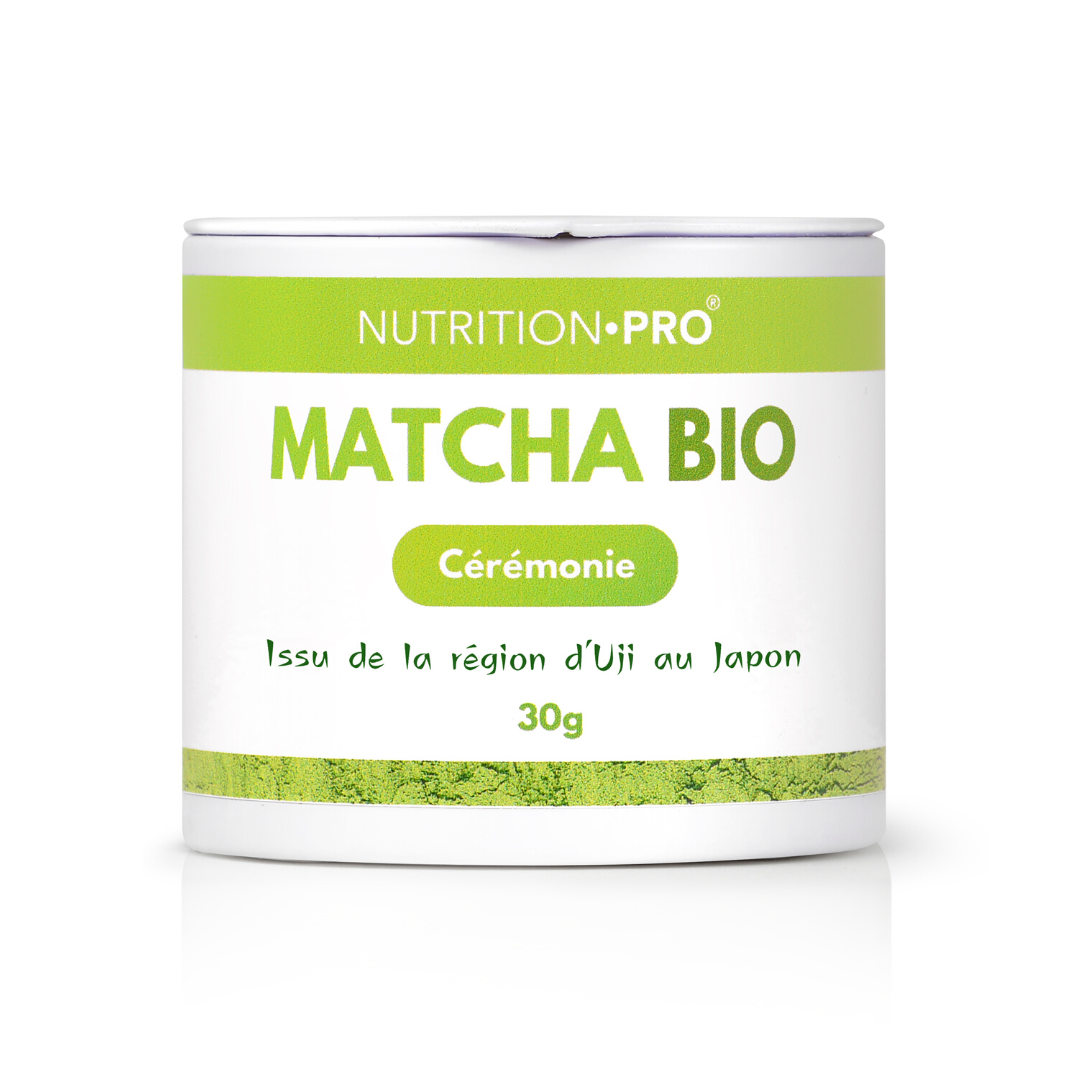
Our Ceremony Matcha stands out as the flagship product of our range, a supreme grade green tea from Japan.
Cultivated with particular care, it is harvested by hand only during the first harvest. The tea plants, shaded to protect them from the sun, produce a premium powder enriched in chlorophyll and L-Theanine, giving it a vibrant green color and an exquisite taste.
This selection is rare and precious, as it comes solely from the freshest harvested leaves, offering a naturally sweet and bitterness-free flavor as well as a deliciously creamy consistency.
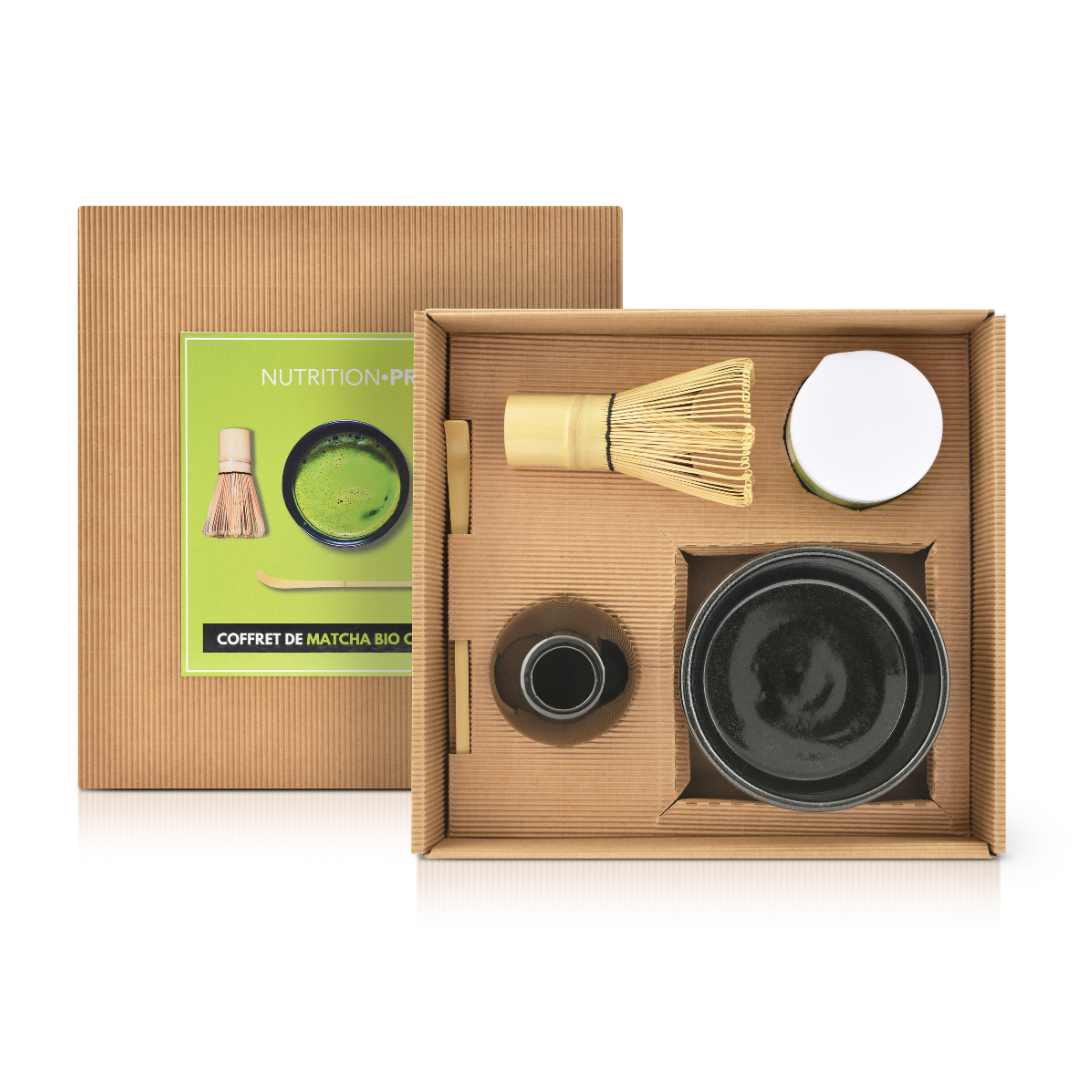
The ceremony set:
We also offer the Ceremony Matcha in a ceremonial set, a carefully selected and complete collection that takes you to the heart of the authentic Japanese ritual of matcha tea.
Each item in this set has been meticulously chosen to guarantee a preparation and tasting experience of matcha tea worthy of the most demanding ceremony masters:
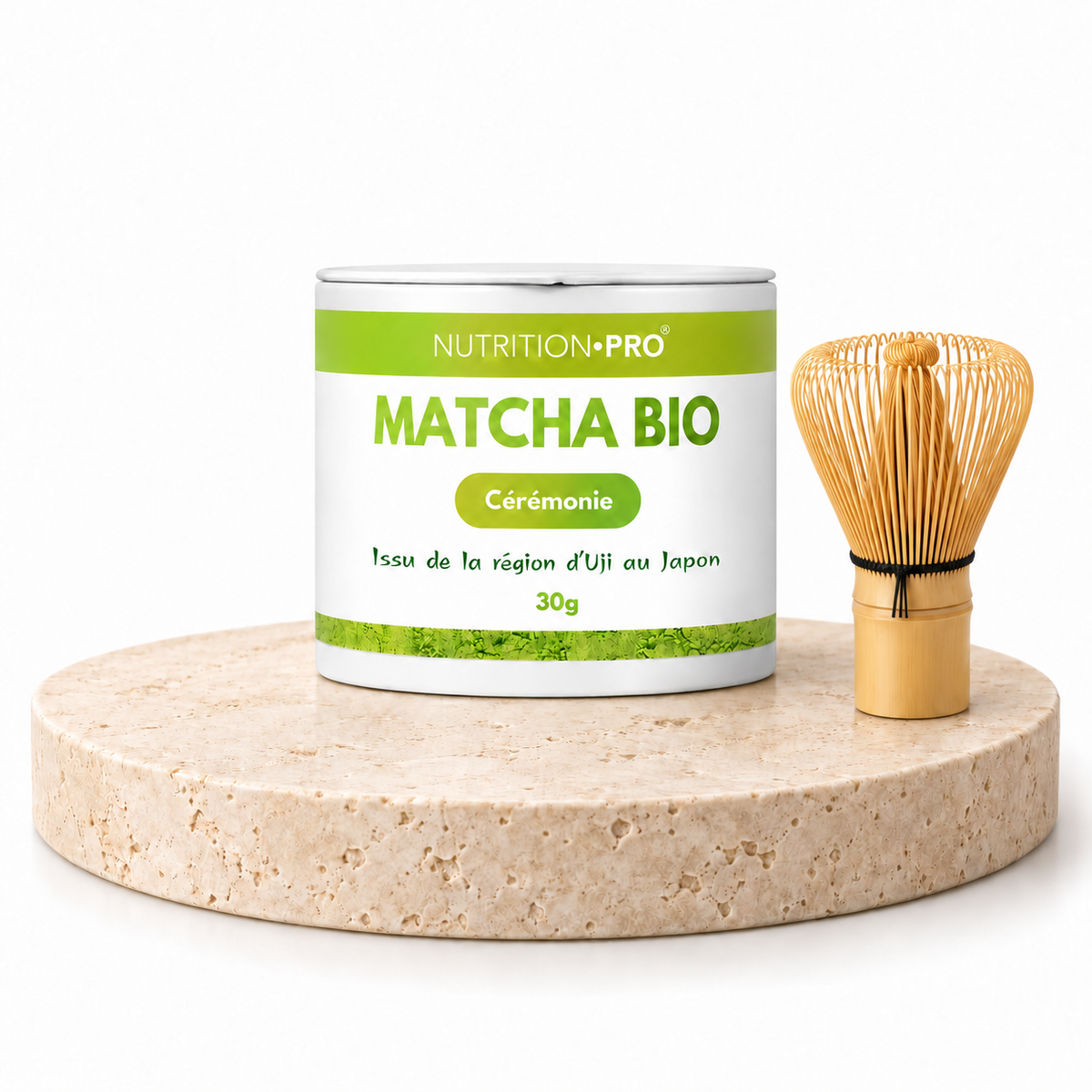
- A box of ceremony matcha tea (30g)
- A Matchawan (handmade ceramic matcha bowl)
- A Chasen (bamboo whisk)
- A Naoshi (whisk holder)
- A Chashaku (bamboo scoop)
How to use
Nutritional information
Precautions
Discover the essence of a centuries-old Japanese tradition with our exceptional matcha, a heritage of samurai and Buddhist monks who, for centuries, drank its invigorating greenness to sharpen their minds and revitalize their bodies, a ceremony of purity and vigor passed down to you.
Our organic matcha tea, grown in the revered Uji region of Kyoto Prefecture, reflects an 800-year heritage in cultivating premium green tea. In this mountainous environment with fertile soils and clear waters, our matcha is produced without pesticides and cultivated using organic and traditional methods.
Each batch is meticulously controlled and certified compliant with the strict requirements of the Japanese JONA Association as well as the European organic certification, ensuring impeccable ecological purity and quality.
We are honored to offer two varieties of matcha tea, each delivering a unique experience: the Ceremony Matcha, a treasure of rarity and excellence, and the Premium Matcha, reflecting a perfect balance between bitterness and sweetness.
Our Ceremony Matcha stands out as the flagship product of our range, a supreme grade green tea from Japan.
Cultivated with particular care, it is harvested by hand only during the first harvest. The tea plants, shaded to protect them from the sun, produce a premium powder enriched in chlorophyll and L-Theanine, giving it a vibrant green color and an exquisite taste.
This selection is rare and precious, as it comes solely from the freshest harvested leaves, offering a naturally sweet and bitterness-free flavor as well as a deliciously creamy consistency.
The ceremony set:
We also offer the Ceremony Matcha in a ceremonial set, a carefully selected and complete collection that takes you to the heart of the authentic Japanese ritual of matcha tea.
Each item in this set has been meticulously chosen to guarantee a preparation and tasting experience of matcha tea worthy of the most demanding ceremony masters:
- A box of ceremony matcha tea (30g)
- A Matchawan (handmade ceramic matcha bowl)
- A Chasen (bamboo whisk)
- A Naoshi (whisk holder)
- A Chashaku (bamboo scoop)
THE BENEFITS OFORGANIC MATCHA TEA
- Helps detoxify the body
- Powerful natural antioxidant
- Promotes gradual, lasting energy
- Supports focus and mental clarity
- Rich in chlorophyll and L-Theanine
- Promotes healthier, more radiant skin
Efficacy supported by scientific data
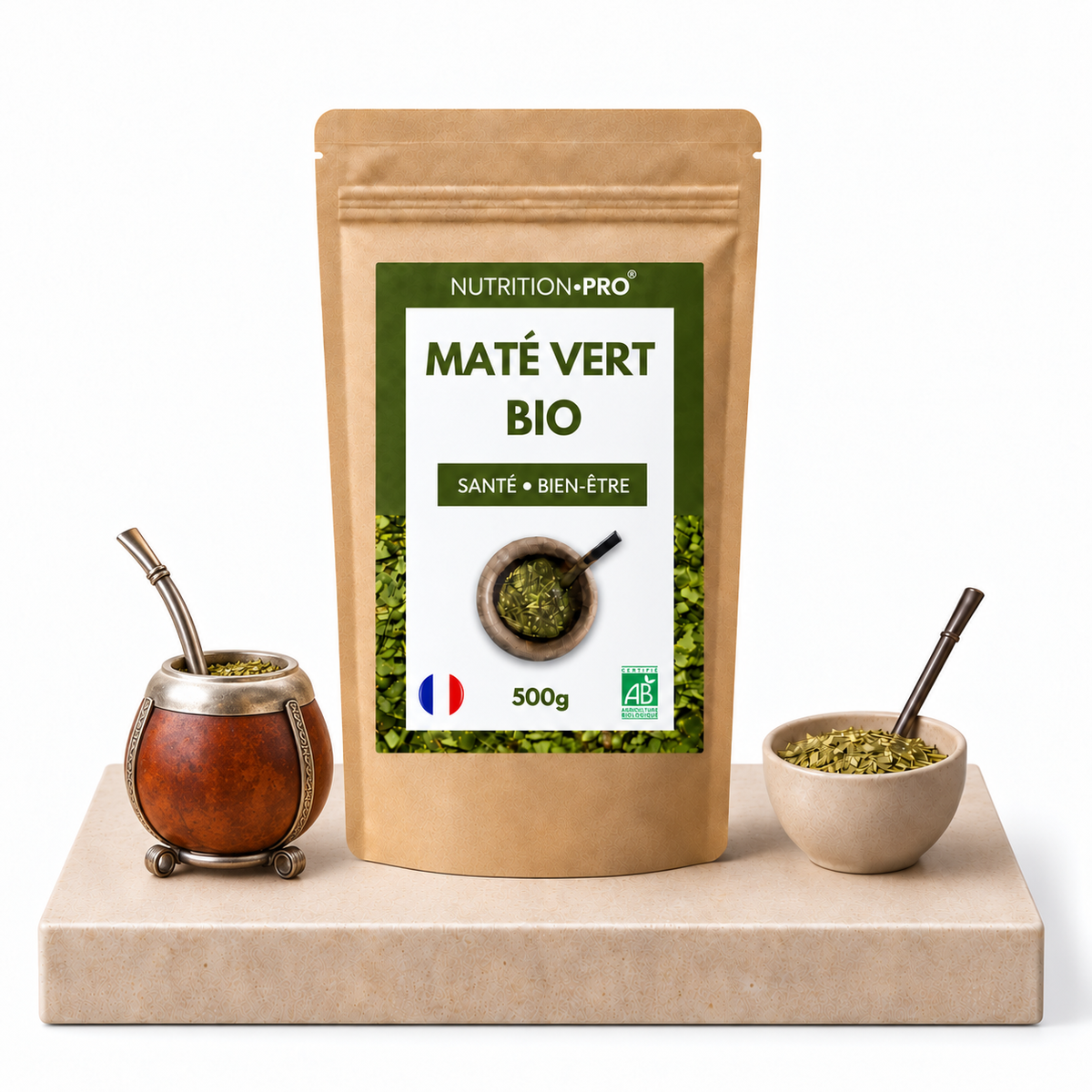
Related cures:
Frequently asked questions
What is the difference between matcha tea and classic green tea?
The difference between matcha tea and classic green tea is profound, both in their cultivation method and in their health benefits.
Although both come from the same plant, Camellia sinensis, matcha tea offers significantly superior benefits thanks to its unique production method and the integral consumption of the leaf.
1. Cultivation and processing:
Matcha tea is grown under shade for several weeks before harvest. This process, called etiolation, increases the production of chlorophyll and L-theanine, an amino acid with relaxing properties. This technique gives matcha its bright green color and enriches its nutrient content. Classic green tea, on the other hand, is grown in full sun and harvested traditionally. After harvest, matcha tea leaves are steamed, dried, then ground into a fine powder, while classic green tea is simply infused.
2. Integral consumption of the leaf:
One of the main reasons why matcha is so beneficial lies in the fact that the entire leaf is consumed in powder form. By drinking matcha tea, you ingest not only the water-soluble antioxidants, as is the case with infused green tea, but also all the fibers, vitamins, minerals and other compounds present in the leaf. In comparison, with classic green tea, many nutrients remain in the leaves and are not consumed.
3. Superior health benefits:
Matcha tea contains about 137 times more catechins, particularly EGCG (epigallocatechin gallate), a powerful antioxidant recognized for its anti-inflammatory and anti-cancer effects, than some classic green teas. This exceptional level of antioxidants helps neutralize free radicals, strengthen the immune system, slow cellular aging, and reduce the risk of chronic diseases such as cancer and heart disease.
In addition, matcha is a natural stimulant thanks to its combination of L-theanine and caffeine. Unlike classic green tea, which contains caffeine but without the moderating effect of L-theanine, matcha offers lasting energy and better mental focus without causing anxiety or a post-caffeine "crash".
4. Weight loss and metabolism:
Matcha is also widely used to support weight loss. Thanks to its high concentration of catechins, it increases thermogenesis, that is, the body's ability to burn calories. Studies show that regular consumption of matcha tea can increase energy expenditure by nearly 10% and promote the reduction of body fat, particularly in the abdominal area. Classic green tea also offers metabolic benefits, but to a much more modest extent.
5. Calming effect and focus:
Thanks to its high content of L-theanine, an amino acid that promotes relaxation without drowsiness, matcha tea is excellent for improving concentration and promoting a state of calm alertness. This compound balances the effects of caffeine by slowing its absorption, thus offering stable and prolonged energy, without the sudden energy peak followed by a crash, often associated with coffee and sometimes even classic green tea.
6. Other nutritional benefits:
In addition to its antioxidants, matcha tea is also an excellent source of vitamins and minerals, including vitamins A, C and E, as well as potassium, calcium and iron. This richness in micronutrients contributes to better overall health, including for the skin, hair, and bones.
Conclusion:
Matcha tea stands out for its nutritional benefits, which are largely superior to those of classic green tea.
Its specific cultivation method, unique processing and integral consumption of the leaf give it a much higher concentration of antioxidants, moderate caffeine and L-theanine. The result is a product that is both energizing, soothing and beneficial for health, with particularly pronounced effects on weight management, focus, and disease prevention.
While classic green tea remains a healthy beverage, matcha clearly surpasses its advantages thanks to its incomparable nutritional power.
Why is the Uji (Kyoto) origin so renowned for matcha?
The Uji region, located in Kyoto Prefecture, is considered the historical cradle of Japanese matcha tea. For more than 800 years, this region has benefited from a unique know-how, passed down from generation to generation.
The misty climate, rich soils and pure mountain water create ideal conditions for cultivating exceptional matcha. Matcha from Uji is generally synonymous with superior quality, traceability and respect for Japanese traditions.
Can matcha be drunk every day?
Yes, matcha can be consumed daily, but it is important to take into account its caffeine content. If you are sensitive to caffeine, it is best to limit your consumption.
Is matcha different from other green teas?
Yes, unlike other green teas, matcha is consumed as a whole powder dissolved in water, which means you ingest the entire leaf and its benefits.
What are the benefits of matcha for calm and focus?
For 800 years, the consumption of matcha tea has been considered by Japanese Zen Buddhist monks as a way to remain calm and keep the mind clear during long hours of meditation.
Today we know that this is the beneficial influence of L-theanine, an amino acid present in concentrated form in the leaves used for matcha production.
L-theanine promotes the emission of Alpha brain waves, which bring calm and improve mood. L-theanine also stimulates focus and memory.
What is the best time to drink matcha?
Matcha tea can be consumed at any time of the day. However, it is often recommended to drink it in the morning or early afternoon due to its caffeine content. Avoid consuming it late in the day if you are sensitive to caffeine.
How does matcha provide energy?
Matcha provides energy mainly thanks to its caffeine content, which is a well-known stimulant. However, the energizing effect of matcha is often considered gentler and more lasting than that of coffee. This is due to the presence of L-theanine, an amino acid that promotes relaxation without drowsiness and moderates the effect of caffeine. Unlike the energy peak followed by a crash that one can feel with coffee, the L-theanine in matcha helps produce a state of calm alertness and a sustained release of energy over a longer period.
Before battle, seeking to develop their energy and endurance, samurai warriors took matcha. Indeed, a cup of matcha contains twice as much caffeine as a cup of coffee, and the presence of L-theanine makes its benefits much more lasting.
Matcha stimulates focus, but does not cause the nervousness sometimes attributed to coffee consumption.
What are the antioxidant virtues of matcha?
Antioxidants are molecules capable of neutralizing the harmful influences exerted by free radicals. Antioxidants restore the body's balance and strengthen the immune system.
They allow you to feel fit and slow down aging. They are found in large quantities in fresh fruits and vegetables, but it is in matcha tea that their concentration is by far the highest, according to the ORAC index (oxygen radical absorbance capacity).
Among the various antioxidants, the catechins found in high concentration in matcha are the most powerful and have exceptional virtues.
They reduce the risk of atherosclerosis, possess antibacterial capacities and lower cholesterol levels in the blood.
The most powerful antioxidant substance present in matcha is EGCg, a polyphenol from the catechin family with remarkable anti-cancer properties. EGCg is an antioxidant 100 times stronger than vitamin C.
A bowl of matcha contains as many antioxidants as 10 bowls of ordinary green tea: matcha is not infused, but diluted in water, which allows you to consume the ground tea leaves in their entirety and fully enjoy the benefits of green tea.
Does matcha contain caffeine?
Yes, matcha contains caffeine, but at levels generally lower than coffee.
L-theanine helps modulate the effects of caffeine, providing a state of calm alertness without the nervousness that coffee can cause.
Can you cook with matcha?
Absolutely! Matcha can be used in a variety of recipes, from smoothies to cakes to ice creams. Its unique flavor and vibrant color make it popular in cooking.
Why is matcha grown in the shade before harvest?
Matcha cultivation relies on a traditional Japanese technique called shading, during which the tea plants are protected from the sun for several weeks before harvest. This method slows the growth of the leaves and stimulates the production of chlorophyll and L-theanine.
It is this shading that gives matcha its intense green color, its sweet umami flavor, and its highly sought-after nutritional profile. Lower-quality matcha, not shaded, often has a duller color and more pronounced bitterness.
What is the difference between matcha and coffee?
Matcha and coffee both contain caffeine, but their mode of action on the body is very different. Coffee provides rapid and intense stimulation, often associated with an immediate energy peak, followed in some people by a brutal crash, sometimes accompanied by nervousness, palpitations or secondary fatigue.
Matcha, for its part, offers gentler, more gradual and longer-lasting energy. This difference is due to the natural presence of L-theanine, an amino acid specific to green tea, which modulates caffeine absorption. The result: matcha promotes a state of calm alertness, often described as stable focus, without excessive agitation.
Nutritionally, matcha also stands out for its richness in antioxidants, particularly catechins like EGCG, absent from coffee. In addition, matcha is consumed as a whole-leaf powder, which allows for the absorption of all its natural compounds, unlike coffee which is simply infused.
In summary, coffee is more suitable for those seeking rapid stimulation, while matcha is for those who want controlled energy, better focus and a more balanced daily experience.
Why is matcha better tolerated than coffee in sensitive people?
The particularity of matcha lies in the natural presence of L-theanine, an amino acid specific to green tea. L-theanine acts as a caffeine modulator, slowing its release in the body.
Unlike coffee, where caffeine is absorbed very quickly, matcha offers a gradual diffusion, which limits the side effects often felt by sensitive people, such as:
- nervousness,
- palpitations,
- agitation,
- feeling of "crash" after the energy peak.
It is this caffeine + L-theanine synergy that makes matcha gentler and more stable.
Why is the first matcha harvest so important?
The first harvest, called Ichibancha in Japan, corresponds to the very first picking of the year, generally carried out in spring. It is considered the most precious, as it concerns the youngest and most tender leaves of the tea plant, which have accumulated all their nutrients during winter.
During the cold months, the plant naturally slows its growth. This phase allows the leaves to concentrate more L-theanine, chlorophyll and other aromatic compounds. When the harvest begins in spring, these leaves offer an exceptional taste and nutritional quality, far superior to subsequent harvests.
The first harvest stands out for its sweeter flavor, naturally sweet and umami, with very little bitterness. It is this aromatic finesse that makes first-harvest matcha particularly suited to pure consumption, according to the tradition of the Japanese tea ceremony.
Visually, the first harvest produces a matcha with a vibrant jade green color, a sign of high chlorophyll content and controlled shading. Its extremely fine texture allows for a dense and silky foam to be obtained during preparation, an essential criterion for ceremony masters.
Finally, the first harvest is rare by nature. It represents a limited share of annual production, which is why ceremony grade matchas from this picking are more precious and sought after. Choosing a first-harvest matcha means choosing excellence, respect for Japanese traditions and an authentic taste experience.
THEY TALK ABOUT US


