

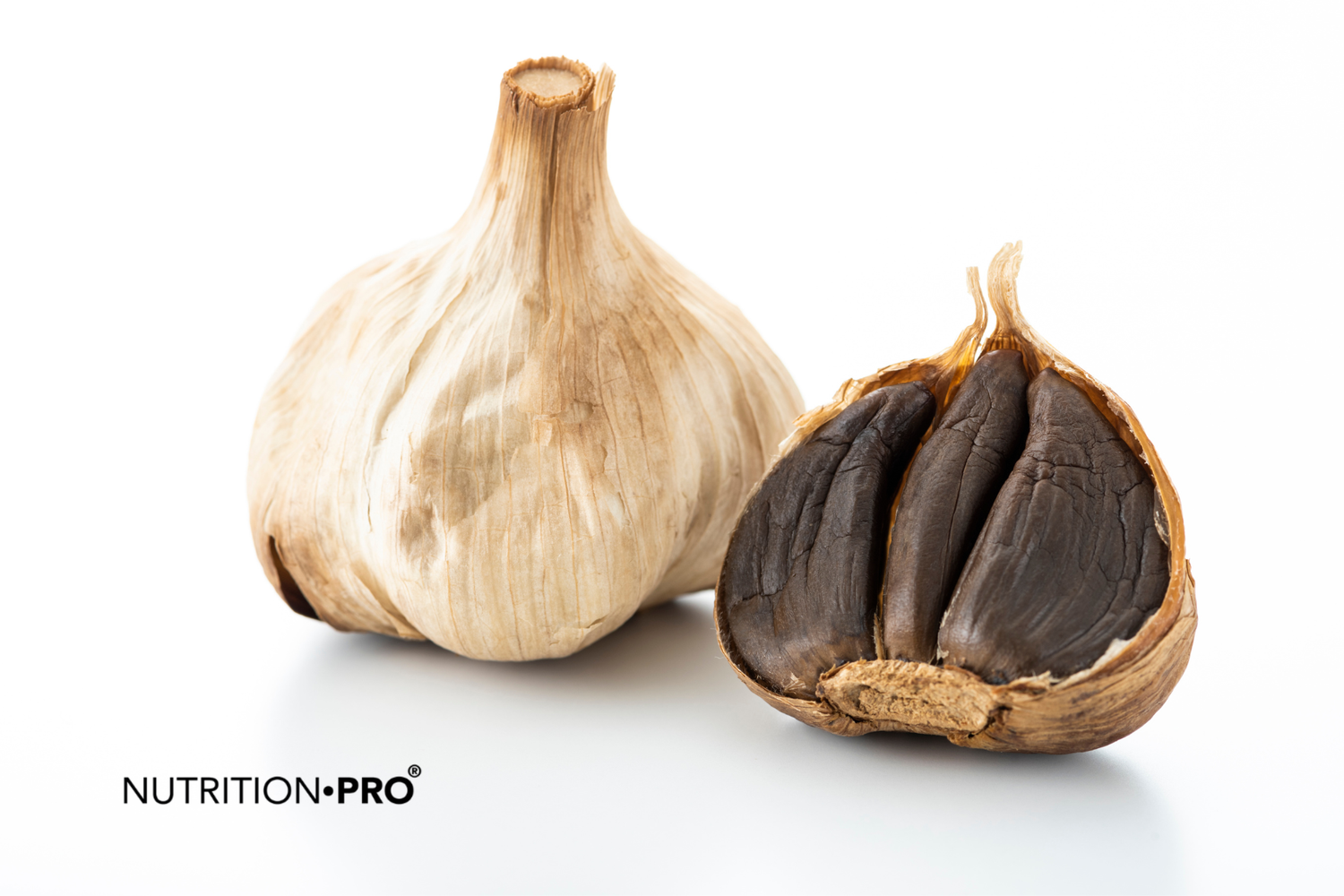
Fermentedblack garlic has transformed the image of garlic as a cardiovascular remedy: odorless, no gastric burning, much better tolerated, and above all, validated by randomized clinical trials. Its flagship molecule, S-allyl-cysteine (SAC), acts primarily on diastolic pressure with remarkable results: −5.85 mmHg in 6 weeks according to Valls et al. 2022 in Nutrients. This comprehensive guide breaks down the 7 scientific truths about black garlic and blood pressure.
In brief: Aged black garlic (Aged Garlic Extract, AGE) is obtained by controlled fermentation of fresh garlic at 60-80°C for 60 to 90 days. The S-allyl-cysteine (SAC), its main molecule, is up to 10 times more bioavailable than allicin from fresh garlic. According to Valls et al. 2022 in Nutrients, 250 mg/day (1.25 mg SAC) reduces diastolic pressure by 5.85 mmHg in 6 weeks. According to Ried et al. 2016 in Integr Blood Press Control, 1.2 g/day reduces systolic pressure by 5.0 mmHg on average and up to 11.5 mmHg in responders.
Concrete action: choose a black garlic extract standardized in SAC, at effective dose (at least 1 mg SAC/day), for a minimum of 12 weeks. Tensioptine Nutrition•pro combines black garlic with olive leaf, hawthorn, rhodiola and royal jelly in synergy for complete blood pressure support. To be combined with 300 mg/day of magnesium bisglycinate for a comprehensive treatment course.


- Black garlic vs fresh garlic: why fermentation changes everything
- S-allyl-cysteine (SAC): the key molecule explained
- −5.85 mmHg diastolic: the Valls 2022 study explained
- Uncontrolled hypertension: the Ried 2016 results
- Dosage and choice of a standardized extract
- The 3 anti-hypertensive mechanisms of black garlic
- Specific profiles (diastolic, cholesterol, senior, athlete)
- Myths and misconceptions about black garlic
- Optimal synergies: black garlic + other blood pressure actives
1. Black garlic vs fresh garlic: why fermentation changes everything
60 to 90 days of fermentation transforms allicin into stable compounds
AT CONTROLLED TEMPERATURE
Blackgarlic is nothing like ordinary fresh garlic. Originating from Korea and Japan, it is obtained through a controlled fermentation process that radically transforms its chemical composition and properties. Fresh garlic (Allium sativum) is placed in a warm chamber (60-80°C) with high humidity (70-90%) for 60 to 90 days. During this time, enzymes and the Maillard reaction progressively transform the garlic.
The result: a garlic with black and shiny flesh, with a soft texture similar to a prune, and a sweet-vinegary taste reminiscent of tamarind or licorice. No more sulfurous odor, no digestive irritation. But most importantly, its chemical composition is radically different.
Comparative table fresh garlic vs black garlic
| Criterion | Fresh garlic | Fermented black garlic |
|---|---|---|
| Major compound | Allicin (unstable) | Stable S-allyl-cysteine (SAC) |
| Bioavailability | Low (×1) | High (×10) |
| Odor | Very strong, persistent | Nearly absent |
| Digestive tolerance | Burns, possible reflux | Excellent (92% according to Ried 2016) |
| Taste | Pungent, sulfurous | Sweet-vinegary, mild |
| Effect on blood pressure | Modest, irregular | Clinically documented |
| Anticoagulant effect | Marked | Light |
2. S-allyl-cysteine (SAC): the key molecule explained
A stable, water-soluble and bioactive sulfur derivative
IN CLINICAL STUDIES
The S-allyl-cysteine (chemical formula C₆H₁₁NO₂S) is a water-soluble sulfur amino acid water-soluble derived from cysteine. Its stable structure allows it to cross the intestinal barrier intact, unlike allicin which is rapidly degraded. Once in the bloodstream, it is transported to thevascular endothelium where it exerts its cardiovascular effects.
According to Miki et al. 2025 in Experimental and Therapeutic Medicine, SAC and its derivatives (S-1-propenylcysteine in particular) are the major compounds responsible for anti-atherosclerotic activity of black garlic. They work at multiple levels: inhibition of LDL-cholesterol oxidation, reduction of macrophage inflammation, blood thinning and support of endothelial function.
3. −5.85 mmHg diastolic: the Valls 2022 study explained
Double-blind crossover RCT on 67 hypercholesterolemic subjects
OVER 6 WEEKS
The reference study on black garlic and blood pressure is that of Valls et al. 2022 in Nutrients. It is a double-blind randomized crossover clinical trial, the highest level of scientific evidence. 67 subjects with moderate hypercholesterolemia (LDL ≥ 115 mg/dL) received either 250 mg/day of aged black garlic (containing 1.25 mg of standardized SAC) or placebo for 6 weeks with a 3-week wash-out period between the two interventions.
Why black garlic targets diastolic pressure
Blood pressure diastolic reflects peripheral resistance of the arteries, that is to say the rigidity of the vascular tree between two heartbeats. When it is elevated, it is often a sign that the arteries are no longer relaxing properly. Black garlic acts precisely at this level: it stimulates endothelial production of nitrogen monoxide (NO), the main natural vasodilator, and improves the function of endothelial cells that line the inside of blood vessels.
This is why its effect is more pronounced on diastolic than on systolic pressure, whereas conversely olive leaf acts more on systolic pressure (effect on ACE and cardiac contractile tone). This is the reason why combining black garlic and olive leaf provides complete coverage of blood pressure, both systolic and diastolic.
4. Uncontrolled hypertension: Ried 2016 results
The AGE at Heart trial: 88 hypertensive patients already under treatment
UP TO −11.5 IN RESPONDERS
The other major study is that of Ried, Travica and Sali, 2016, published in Integrated Blood Pressure Control. It is a randomized, double-blind, placebo-controlled clinical trial conducted on 88 Australian patients suffering from uncontrolled hypertension despite antihypertensive treatment. This situation is common: according to French data, nearly 50% of hypertensive patients on treatment are not controlled.
Complementary cardiovascular effects
The Ried 2016 study also measured complementary cardiovascular effects of black garlic: improvement of central blood pressure (measurement proximal to the heart, more predictive of cardiovascular risk than brachial pressure), reduction of arterial stiffness (pulse wave velocity measurement), and a downward trend in inflammatory markers (TNF-α), LDL-cholesterol and apolipoproteins. All this with 92% tolerability over 12 weeks, which is exceptional for a dietary supplement.
Like many natural supplements, black garlic presents interindividual variability. Approximately 50-60% of people are "responders" with significant decreases (up to −11.5 mmHg), while 40-50% have more modest decreases. The only way to know: test a 12-week course with regular self-monitoring of blood pressure. If significant decrease at 6-8 weeks, you are a responder.
5. Dosage and choice of a standardized extract
Standardized SAC is quality criterion number 1
FOR CLINICAL EFFECT
The black garlic market is exploding, but not all products are equal. The golden rule for choosing an effective extract: it must clearly display its S-allyl-cysteine (SAC) content. Without this information, you cannot know if the dose is effective or symbolic.
Doses validated in clinical trials
| Study | Population | SAC dose/day | Observed effect |
|---|---|---|---|
| Serrano 2023 | Grade 1 hypertension + treatment | 0.25 mg | −1.8 mmHg systolic |
| Valls 2022 | Moderate hypercholesterolemia | 1.25 mg | −5.85 mmHg diastolic |
| Ried 2016 | Uncontrolled treated hypertension | 1.2 mg | −5 to −11.5 mmHg systolic |
| Ried 2010 | Uncontrolled hypertension under treatment | 2.4 mg | −10.2 mmHg systolic |
How to choose a good black garlic extract
Here are the 4 essential criteria for choosing a black garlic supplement that is truly effective: (1) SAC standardization displayed on the label (in mg, not in vague percentage), (2) Controlled documented fermentation process (60-90 days minimum), (3) Traceable origin (Spain, Korea or Japan for the best processes), (4) Daily dose allowing you to reach at least 1 mg SAC/day.
(Tensioptine covers this dose)
+ DASH diet
+ close blood pressure monitoring
+ EPA/DHA omega 3
6. The 3 blood pressure-lowering mechanisms of black garlic
Endothelial NO, ACE inhibition and blood thinning
Mechanism 1: nitric oxide (NO) production
Nitric oxide is the primary natural vasodilator produced by the vascular endothelium. According to Serrano et al. 2023 in Nutrients, 12 weeks of black garlic significantly increase blood NO by 10.3 µM on average. More NO = more relaxed arteries = lower blood pressure. This is the same mechanism targeted by certain antihypertensive medications (NO donors such as nitroglycerin).
Mechanism 2: inhibition of the angiotensin-converting enzyme (ACE)
SAC modestly but significantly inhibits theangiotensin-converting enzyme (ACE), a key enzyme in the renin-angiotensin-aldosterone system. According to Serrano et al. 2023, a reduction in ACE activity of 9.3 U/L over 12 weeks is observed. This is exactly the mechanism targeted by ACE inhibitors (drugs ending in -pril: captopril, ramipril, etc.).
Mechanism 3: blood thinning and anti-atherosclerosis
According to Miki et al. 2025 in Experimental and Therapeutic Medicine, black garlic reducesplatelet aggregation, inhibitsLDL-cholesterol oxidation and modulates macrophage polarization in the arterial wall. These combined actions prevent atherosclerotic plaque formation and improve overall blood circulation, which indirectly reduces blood pressure.
Specific profiles: who benefits most from black garlic?
4 cardiovascular profiles where black garlic is particularly indicated
Profile 1: The hypertensive patient with predominantly diastolic elevation
This is the ideal profile for black garlic. According to clinical trials (notably Valls 2022), black garlic is particularly effective on diastolic pressure (-5.85 mmHg), that is, the "lower pressure" which reflects peripheral resistance of the arteries. Typical profiles: adults aged 40-65 with blood pressure around 130-140/85-95 mmHg, meaning borderline high systolic but especially elevated diastolic. This profile is associated with early arterial stiffness and endothelial dysfunction. Black garlic acts precisely on these two mechanisms via stimulation of endothelial NO. Recommended dose: 1.25 to 1.5 mg of SAC/day for a minimum of 12 weeks. Expected effect: diastolic reduction of 4 to 8 mmHg, slight systolic reduction as a bonus, overall improvement in vascular elasticity.
Profile 2: The hypertensive patient with elevated LDL-cholesterol
Black garlic is the reference active for this very common dual profile . According to Valls et al. 2022 in Nutrients, a study conducted specifically in subjects with moderate hypercholesterolemia, black garlic acts on both diastolic pressure (-5.85 mmHg) and lipid markers. According to Miki et al. 2025, black garlic inhibits LDL-cholesterol oxidation (the key mechanism in atherosclerosis) and improves the HDL/LDL profile. It is one of the rare actives that works on both aspects of cardiovascular risk. Ideally to be combined with Omega 3 EPA/DHA (1 g/day) for more complete lipid coverage. Minimum 3-month course, with lipid panel control at 3 and 6 months.
Profile 3: The senior 65+ in cardiovascular prevention
In seniors, black garlic presents three decisive advantages. (1) Odorless and without digestive side effects of fresh garlic (often poorly tolerated after age 60). (2) Major anti-atherosclerotic effect according to Miki 2025 (LDL oxidation inhibition, macrophage modulation, blood thinning). (3) Benefit on arterial stiffness which naturally increases with age (according to Ried 2016, measurable improvement in pulse wave velocity). In secondary prevention following a cardiovascular event (with strict cardiological approval), black garlic can be integrated into the therapeutic arsenal. Dose for seniors: 1 to 1.2 mg of SAC/day, ideally integrated into a synergistic cardio formula such as Tensioptine.
Profile 4: The endurance athlete in vascular prevention
Endurance athletes (cyclists, long-distance runners, marathoners) have a particular cardiovascular profile : resting blood pressure often low, but aortic stiffness which can paradoxically increase with years of intense training, and increased oxidation of LDL linked to exercise-induced oxidative stress. Black garlic acts precisely on these dimensions: improvement of aortic flexibility (Ried 2016), reduction of LDL oxidation (Miki 2025), support of post-exercise endothelial function. Without excessive anticoagulant effect (unlike fresh garlic at high doses which can be problematic in competition). Recommended dose: 1 mg of SAC/day in a 3-month course renewable, particularly during training load phases.
Profile: Male, 56 years old, business executive, moderate exercise (30 min/day walking). Self-measured blood pressure averaging 142/94 mmHg (mild grade 1 hypertension). LDL-cholesterol at 1.65 g/L (high limit). No current medication, physician recommends dietary and lifestyle monitoring before medication. Family history of stroke in father (at age 68).
Proposed protocol: Black garlic extract standardized to 1.25 mg of SAC/day (Tensioptine, 2 capsules/day) + omega 3 EPA/DHA 1 g/day + magnesium bisglycinate 300 mg/day. Lifestyle: walking increased to 45 min/day, salt reduction to 5 g/day.
Results at 12 weeks (self-measurement + lipid panel): average blood pressure stabilized at 132/85 mmHg (-10/-9 mmHg), LDL-cholesterol decreased to 1.42 g/L (-14%). At 6 months: consolidation of benefits, physician maintains non-pharmacological approach, annual check-up. Course continued as maintenance at reduced dose (1 Tensioptine capsule/day + omega 3).
Myths and misconceptions about black garlic
5 false ideas that prevent you from benefiting from black garlic
Myth 1: "Black garlic and fresh garlic, it's the same thing with different taste"
FALSE. These are two chemically very different products. Fermentation at 60-80 °C for 60-90 days transforms theunstable allicin of fresh garlic into stable and bioactive S-allyl-cysteine (SAC), up to 10 times more bioavailable. It is precisely this transformation that explains themeasurable clinical effectiveness of black garlic on blood pressure, whereas studies on fresh garlic are far less conclusive. The two products do not have the same effects, despite a common origin.
Myth 2: "Black garlic causes bad breath just like fresh garlic"
FALSE, and it's actually one of its major advantages. Fermentation completely destroys allicin (responsible for the sulfurous odor) and irritating volatile compounds. Black garlic has a sweet-vinegary taste reminiscent of tamarind or licorice, with no odor after ingestion. This is why it is acceptable for long-term daily use, unlike fresh garlic which few people tolerate in a 3-month course. It's a socially discreet supplement, perfect for professional use.
Myth 3: "All black garlic supplements are equal"
FALSE. The market has deteriorated with the explosion in demand. Many products display "black garlic" without specifying their S-allyl-cysteine (SAC)content, which is nonetheless the only molecule correlated with clinical efficacy. Without this information, it's impossible to know if the dose is effective or merely symbolic. Golden rule: verify the SAC content in mg on the label (not just "extract at X%"). Aim for at least 1 mg of SAC/day for a blood pressure effect.
Myth 4: "Black garlic causes digestive problems like fresh garlic"
FALSE. According to Ried et al. 2016 in Integr Blood Press Control, the digestive tolerance of aged black garlic is 92% over 12 weeks, one of the best rates for a supplement. Fermentation eliminates volatile sulfur compounds responsible for gastric burning, reflux and flatulence from fresh garlic. This is precisely why people who cannot tolerate fresh garlic can take black garlic without concern.
Myth 5: "Black garlic is dangerous if you take aspirin"
NUANCED: caution but not an absolute contraindication. anticoagulant effect (much less pronounced than fresh garlic or ginkgo). Association with aspirin, warfarin or clopidogrel requires (beaucoup moins marqué que l'ail frais ou le ginkgo). L'association avec aspirine, warfarine ou clopidogrel demande une medical supervision but is not formally contraindicated. Must be discontinued 7 days before any surgery as a precaution. For people on direct oral anticoagulants (Xarelto, Eliquis), consult your physician before supplementation.
Bonus studies: the extended scientific foundation
Beyond the 5 main sources in this article, several publications strengthen the rationale for cardiovascular black garlic. Wang et al. 2018 (meta-analysis of 9 RCTs, 482 participants) confirmed reduction of systolic pressure by 6.1 mmHg and diastolic by 3.3 mmHg in the hypertensive population. Wlosinska et al. 2020 demonstrated regression of coronary calcium in patients with prior calcifications under AGE 2400 mg/day for 12 months (Journal of the International Society of Sports Nutrition). Matsutomo 2020 published a review of molecular mechanisms (Experimental and Therapeutic Medicine) confirming SAC activity on 6 anti-inflammatory pathways and 4 antioxidant pathways. This convergence of studies (meta-analyses, imaging, mechanisms) places black garlic among the most scientifically solid cardiovascular phytotherapeutics currently available.
7. Optimal synergies: black garlic + other blood pressure actives
Black garlic alone is effective, but combined it is exceptional
While black garlic is effective as monotherapy, its full potential is expressed in synergy with other active ingredients with complementary mechanisms. Here are the most relevant combinations to optimize the effect on blood pressure.
Black garlic + olive leaf = diastolic + systolic coverage
This is the most complete combination. Blackgarlic primarily targets the diastolic via endothelial NO, while olive leaf targets the systolic via ACE inhibition and the effect on contractile tone. Both active ingredients are present in Tensioptine, in synergy with hawthorn, rhodiola and royal jelly.
Black garlic + magnesium = complete cardiovascular foundation
Black garlic acts on blood vessels, while magnesium acts on vascular smooth muscle and sodium sensitivity. According to meta-analyses (Zhang 2016, Behers 2024), 300 to 360 mg/day of magnesium for 3 months adds 2 to 3 mmHg of systolic reduction. The black garlic + magnesium combination covers 4 different mechanisms: NO, ACE, vascular muscle relaxation, sodium sensitivity.
Black garlic has a mild anticoagulant effect. If you are taking aspirin, warfarin or another anticoagulant, inform your doctor. Stop taking black garlic 7 days before any surgery. Possible interaction with certain antiretrovirals. In case of already treated blood pressure, close blood pressure monitoring is recommended to avoid excessive hypotension.
Frequently asked questions about black garlic and blood pressure
How long does it take for black garlic to work on blood pressure?
The first measurable effects appear at 4-6 weeks of regular daily use. According to Valls et al. 2022, a 6-week course is sufficient to observe a significant drop in diastolic pressure. For stable and lasting effects, aim for a minimum of 12 weeks. Beyond 3 months, the effects consolidate and maintenance courses can be considered (for example 3 months out of 6).
Does black garlic cause bad breath like fresh garlic?
No. It's even one of its major assets. Fermentation at 60-80 °C for 60-90 days completely degrades allicin, the molecule responsible for the sulfurous odor and bad breath from fresh garlic. Black garlic has a sweet-vinegary taste reminiscent of tamarind or licorice, and leaves no odor after ingestion. This is what makes it an acceptable supplement for long-term daily use.
Can you take black garlic if you already have a blood pressure treatment?
Yes, but with medical approval and close blood pressure monitoring. According to Ried et al. 2016, black garlic is particularly interesting as an adjuvant in hypertensive patients already treated but not controlled (50% of cases in France). It can potentiate the medication's effect and allow, in certain cases, a reduction in dosage under medical supervision. Monitor your blood pressure closely during the first 2-3 weeks.
Does black garlic interact with medications?
Three interactions to know about: (1) Anticoagulants (warfarin, aspirin, clopidogrel): slight additive effect, INR monitoring if warfarin. (2) Antiretrovirals (saquinavir in particular): possible reduction in effectiveness. (3) Antihypertensives : additive effect, blood pressure monitoring to avoid excessive hypotension. Stop 7 days before any surgery or invasive procedure (including dental).
Fresh black garlic to chew or standardized supplement?
Both have their benefits. Freshblack garlic to chew (cloves) is delicious, practical in cooking but the SAC dose is imprecise and variable depending on fermentation. For a measurable therapeutic effect on blood pressure, favor supplements standardized in SAC where the dose is guaranteed and reproducible. This is the case with Tensioptine Nutrition•pro.
What are the side effects of black garlic?
Black garlic is exceptionally well tolerated. According to Ried et al. 2016, the tolerance rate over 12 weeks is 92%, one of the best for a dietary supplement. Very rare adverse effects: very mild digestive disorders at the start (resolve in 1-2 weeks), rare allergic reactions in people allergic to garlic. None of the studies reported any serious adverse effects.
Can black garlic help with other cardiovascular disorders?
Yes, black garlic has global cardiovascular effects that are well documented. Beyond blood pressure, it acts favorably on: LDL cholesterol (moderate reduction), the arterial stiffness (improvement in pulse wave velocity according to Ried 2016), the inflammatory markers (TNF-α), and the prevention of atherosclerosis (Miki 2025 review). It is an interesting support for overall cardiovascular prevention.
How much does an effective black garlic cure cost?
The cost varies depending on quality. A standardized SAC extract at effective dose generally costs €15 to €30 per month. Black Garlic Extract Nutrition•pro at €29.99 offers pure targeted active ingredient. Tensioptine at €29.99 (1 month) offers black garlic in synergy with 4 other blood pressure actives (olive leaf, hawthorn, rhodiola, royal jelly), making it an excellent value for money for a comprehensive approach. A 3-box course is recommended for stable effects.
Black garlic and cholesterol: what dose for both?
For a dual high blood pressure + high LDL cholesterol profile, aim for 1.25 mg of SAC/day (Valls 2022 protocol) for a minimum of 12 weeks. According to the study, this is the dose that demonstrates the best simultaneous effects on both aspects. Ideally combine with omega 3 EPA/DHA at 1 g/day (synergy on endothelial inflammation and membrane fluidity). Follow-up assessment (blood pressure + lipid panel) at 3 and 6 months to adjust.
Black garlic and pregnancy: can you take it?
Not recommended during pregnancy and breastfeeding in the absence of sufficient data. No clinical study has evaluated the safety of aged black garlic concentrated in SAC in pregnant women. As a precautionary principle, avoid supplementation during these periods. Occasional dietary consumption of black garlic (in cooking) remains safe. For blood pressure during pregnancy, prioritize cardiac coherence, magnesium bisglycinate (approved) and strict medical monitoring.
How many fresh black garlic cloves are equivalent to one capsule of extract?
Difficult to compare precisely because fresh black garlic cloves have unpredictable SAC content, which varies depending on the duration and fermentation conditions. An estimate: 2-3 cloves of well-fermented black garlic (~5-10 g) provide approximately 0.5 to 1 mg of SAC. To reach the therapeutic dose of 1.25 mg of SAC/day (Valls 2022 protocol), you would need to consume 4-6 cloves/day, which is impractical over 3 months. Standardized extracts in capsule form guarantee the dose and consistency.
Is black garlic effective if taken occasionally?
No, black garlic is not an active ingredient with immediate effect. Its benefits on blood pressure require an accumulation in the body and a progressive modulation of endothelial function. All clinical trials (Valls 2022 over 6 weeks, Ried 2016 over 12 weeks) used regular daily doses. A single dose will provide no measurable benefit on blood pressure. Consistency over a minimum of 12 weeks is the golden rule.
Can black garlic interact with antidiabetic medications?
Yes, it should be reported to your doctor. Black garlic has a mild hypoglycemic effect that can potentiate antidiabetic medications (metformin, sulfonylureas, insulin). In treated type 2 diabetics, close blood glucose monitoring is recommended during the first 2-3 weeks of treatment. Good news: this effect is often beneficial in hypertensive diabetics (a very common combination), sometimes allowing a downward adjustment of medication doses, always with medical approval.
Glossary
- S-allyl-cysteine (SAC)
- Stable, water-soluble organosulfur compound obtained by fermentation of aged black garlic. Main active molecule in black garlic, up to 10 times more bioavailable than allicin from fresh garlic.
- Aged Garlic Extract (AGE)
- English term for aged black garlic extract. Refers to a standardized extract derived from controlled fermentation of fresh garlic for 60 to 90 days.
- Allicin
- Unstable sulfur compound in fresh garlic, responsible for its strong odor and irritating digestive effects. Destroyed during the black garlic fermentation process.
- Angiotensin-Converting Enzyme (ACE)
- Key enzyme in the renin-angiotensin system that converts angiotensin I to angiotensin II, a potent vasoconstrictor. Therapeutic target of ACE inhibitor medications and several natural active compounds.
- Vascular endothelium
- Layer of cells lining the inside of blood vessels. Produces nitric oxide (NO) which relaxes arteries.
- Atherosclerosis
- Progressive deposit of cholesterol and calcium plaques on the inner wall of arteries, which stiffens and narrows them. Primary factor in cardiovascular disease.
Scientific sources
- Valls RM, Companys J, Calderón-Pérez L, et al. Effects of an Optimized Aged Garlic Extract on Cardiovascular Disease Risk Factors in Moderate Hypercholesterolemic Subjects: A Randomized, Crossover, Double-Blind Study. Nutrients 2022;14(3):405. DOI : 10.3390/nu14030405
- Serrano JCE, Castro-Boqué E, García-Carrasco A, et al. Antihypertensive Effects of an Optimized Aged Garlic Extract in Subjects with Grade I Hypertension and Antihypertensive Drug Therapy: A Randomized, Triple-Blind Controlled Trial. Nutrients 2023;15(17):3691. DOI : 10.3390/nu15173691
- Ried K, Travica N, Sali A. The effect of aged garlic extract on blood pressure and other cardiovascular risk factors in uncontrolled hypertensives: the AGE at Heart trial. Integr Blood Press Control 2016;9:9-21. DOI : 10.2147/IBPC.S93335
- Ried K, Frank OR, Stocks NP. Aged garlic extract lowers blood pressure in patients with treated but uncontrolled hypertension: a randomised controlled trial. Maturitas 2010;67(2):144-150. DOI : 10.1016/j.maturitas.2010.06.001
- Miki S, Takashima M, Suzuki JI. Anti-atherosclerotic effect of aged garlic extract: Mode of action and therapeutic benefits. Exp Ther Med 2025;29(5):104. DOI : 10.3892/etm.2025.12854


