

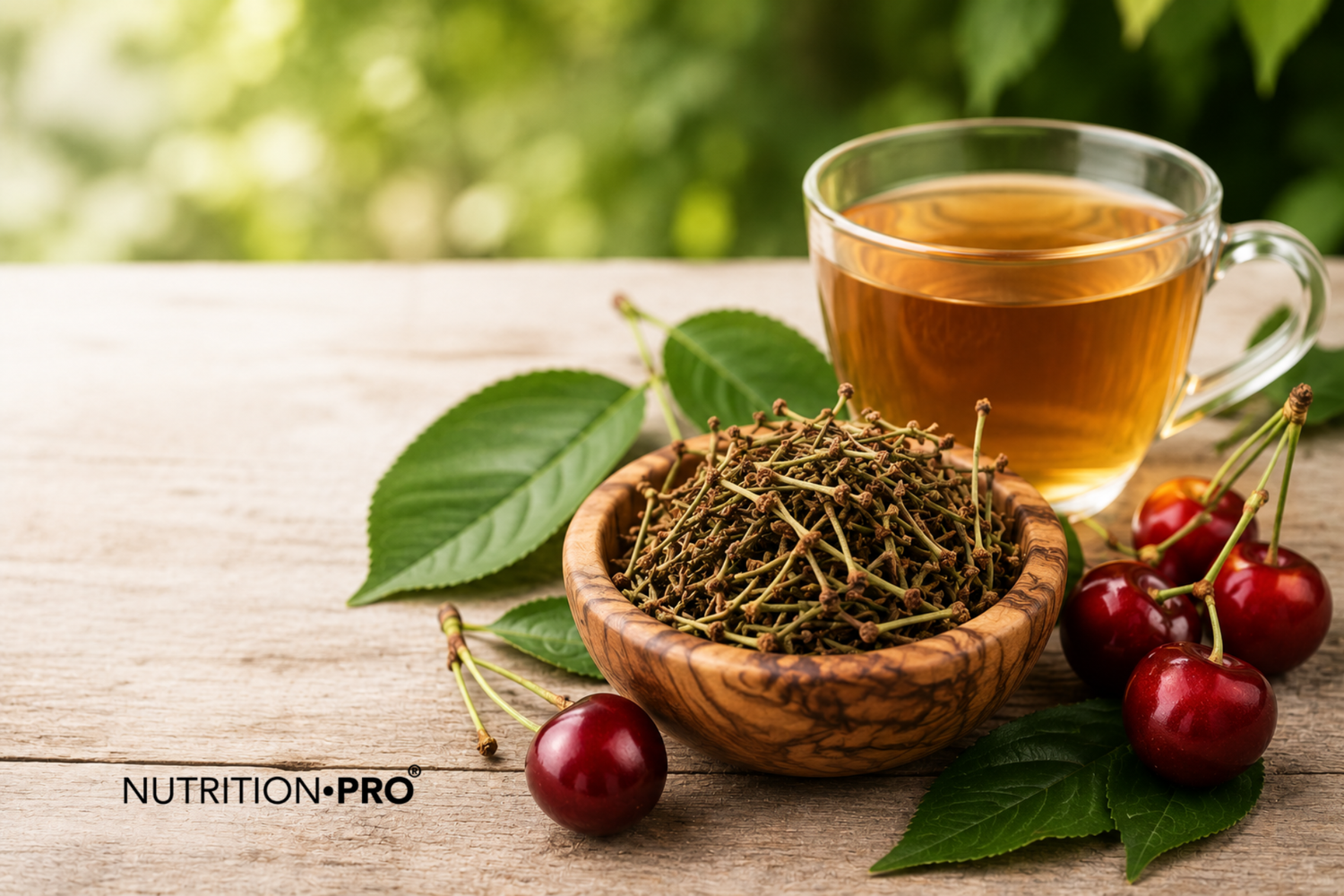
Cherry stems, this grandmother's remedy with diuretic properties consumed for centuries, intrigue modern science. Based on 6 recent studies (Int J Mol Sci, Food & Function, Nutrients), this guide separates fact from fiction and provides the concrete protocol: infusion, dosage, course of treatment, and winning combinations for drainage and weight management.
In brief: cherry stems (Pedunculus cerasi) contain over 140 bioactive compounds including flavonoids, anthocyanins and phenolic acids. According to García-Villegas et al. 2024 in Int J Mol Sci, these compounds explain their antioxidant, anti-inflammatory and gentle diuretic properties, validated by science after centuries of traditional use.
Concrete action: 5 to 10 g of dried cherry stems per cup, 2 to 3 cups per day, course of treatment of 2 to 4 weeks. Expected water loss: 0.5 to 2 kg depending on individual profiles. Natural synergy with dandelion, orthosiphon, potassium and magnesium for complete drainage without mineral depletion.

- What are cherry stems and what do they contain?
- Diuretic effect: what science really says
- Polyphenols and anthocyanins: a rare antioxidant cocktail
- Anti-inflammatory action and IL-6 inhibition
- Blood sugar and alpha-amylase inhibition
- Uric acid, gout and xanthine oxidase
- Water retention and figure: visible effect
- Weight loss: where does the real effect end?
- How to prepare an effective infusion
- Myths, limitations and contraindications
- Protocol and recommended combinations
- Self-test: do you need drainage?
- Frequently asked questions
What are cherry stems and what do they contain?
Peduncles of Prunus avium or Prunus cerasus, long considered waste, actually richer in bioactive compounds than the fruit pulp according to modern chromatographic analyses.
Cherry stems (Pedunculus cerasi) are the peduncles that connect the cherry to the branch. Long considered a waste product, they are actually richer in bioactive compounds than the fruit pulp. According to García-Villegas et al. 2024 in Int J Mol Sci, 146 bioactive compounds have been identified in them by HPLC-ESI-qTOF-MS, including flavonoids (sakuranetin, dihydrowogonin), anthocyanins, phenolic acids, tannins and mineral salts (potassium, calcium, magnesium).
Cherry stems have been used since antiquity for their draining and anti-inflammatory properties. Hippocrates already mentioned them as a remedy for edema. In traditional European medicine, they are part of the classic medicinal teas in the same way as horsetail, orthosiphon or dandelion. Modern phytotherapy long overlooked this by-product of the fruit industry until modern chemical analyses revealed the exceptional richness of their phenolic profile.
Detailed phytochemical composition
According to Peixoto et al. 2020 in Food & Function, a well-prepared cherry stem infusion releases 44 identifiable phenolic compounds belonging to 8 distinct classes:
| Compound class | Examples identified | Main action |
|---|---|---|
| Hydroxybenzoic acids | Gallic acid, protocatechuic acid | Antioxidant, anti-inflammatory |
| Hydroxycinnamic acids | Chlorogenic acid, caffeic acid | Glycemic regulation, antioxidant |
| Flavonols | Quercetin, kaempferol | Anti-inflammatory, cardiovascular |
| Flavanones | Sakuranetin, naringenin | Diuretic, hepatoprotective |
| Flavan-3-ols | Catechins, epicatechins | Antioxidant, metabolism |
| Anthocyanins | Cyanidin-3-O-glucoside (C3G) | Anti-inflammatory IL-6 |
| Salicylic acid | First identified in 2020 | Anti-inflammatory |
| Condensed tannins | Proanthocyanidins | Astringent, antimicrobial |
Thesalicylic acid is a notable recent discovery: it is the natural precursor to aspirin, which partially explains the historical anti-inflammatory effect attributed to cherry stem infusions. Its concentration remains modest but adds to the other active compounds.
"For the first time, salicylic acid was identified in cherry stem infusions. All infusions showed an absence of cytotoxicity and tended to inhibit lipid peroxidation, reflecting remarkable antioxidant potential."
Peixoto J et al. Food & Function 2020;11(4):3471-3482. DOI: 10.1039/c9fo02693b
Diuretic effect: what science really says
The diuretic effect of cherry stems has been empirically validated for centuries and is measurable scientifically: rapid increase in urine flow without marked demineralization.
The diuretic effect of cherry stems is well documented empirically (millennia-old use, European phytotherapy monographs) but remains understudied in modern randomized trials. The main mechanism works through flavonoids (sakuranetin, quercetin) which increase the glomerular filtration rate and inhibit tubular sodium reabsorption. It is a gentle osmotic diuretic, without marked demineralizing effect thanks to the concurrent presence of potassium in the plant.
The diuretic effect is concretely demonstrated by an increase in urine volume of 15 to 30% within 2 to 4 hours following the intake of an infusion, depending on individual profiles. It is less potent than pharmaceutical diuretics (furosemide, hydrochlorothiazide) but also much better tolerated over time. This gentle action explains why cherry stems can be used in 2 to 4-week courses without significant demineralization, unlike certain synthetic diuretics.
Why cherry stems over another natural diuretic?
The comparative table of main diuretic plants allows us to understand their specific characteristics:
| Plant | Diuretic potency | Tolerance | Primary indication |
|---|---|---|---|
| Cherry stems | Moderate and gentle | Excellent | Long-term courses, digestive sensitivity |
| Dandelion (root + leaf) | Strong | Good (rich in potassium) | Complete hepato-renal drainage |
| Orthosiphon (Java tea) | Strong | Very good | Kidney function, lithiasis |
| Field horsetail | Moderate | Good (silicon content) | Remineralization + drainage |
| Birch (sap + leaf) | Moderate | Very good | Classic spring course |
| Meadowsweet | Light | Excellent | Drainage + anti-inflammatory |
It is precisely this synergy logic that guides the composition of Diurétine Nutrition•pro : cherry stems (gentleness), dandelion (potency), orthosiphon (kidney function), plus potassium and magnesium to compensate for mineral loss linked to diuresis. This is the modern approach to drainage: not a single potent plant but a reasoned synergy that respects electrolyte balance.
For those seeking complete and balanced drainage without preparing an infusion, our Diuretine combines cherry stems + dandelion + orthosiphon + potassium + magnesium. Convenient capsule format for daily use, standardized dosage, without demineralization. Ideal as a supplement or alternating with infusion. 4 to 6 week course.
View Diuretine 29.99 € →Polyphenols and anthocyanins: a rare antioxidant cocktail
Remarkable phenolic concentration comparable to dry green tea (250-350 mg/g) and unsweetened cocoa (200-300 mg/g), justifying growing scientific interest in this plant.
Cherry stems contain up to 340 mg of gallic acid equivalent per gram of extract (Aqil et al. 2023, Evid Based Complement Altern Med), a remarkable phenolic concentration. Their antioxidant capacity measured by DPPH, ABTS and FRAP tests is high, comparable to that of green tea. This is what makes them an ally against chronic oxidative stress involved in aging and metabolic diseases.
The major polyphenol in cherry stems is sakuranetin, a flavanone also found in Japanese cherry leaves. It is accompanied by dihydrowgonin, quercetin, kaempferol and a variety of proanthocyanidins. Together they form a complete antioxidant cocktail that works synergistically: some compounds directly scavenge free radicals, while others activate endogenous antioxidant enzymes (superoxide dismutase, glutathione peroxidase).
This exceptional phenolic density is what justifies the growing scientific interest in this plant long considered an agricultural waste. Several research teams are now working on valorizing cherry stems in cosmetics (anti-aging extracts) and nutraceuticals (standardized extracts). The industry has long destroyed hundreds of tons of cherry stems each year without exploiting this phytochemical treasure.
Anti-inflammatory action and IL-6 inhibition
Anthocyanins (particularly cyanidin-3-O-glucoside) inhibit interleukin-6 secretion by adipose cells, a key mechanism against chronic low-grade inflammation.
Cherry anthocyanins (particularly cyanidin-3-O-glucoside) inhibit the secretion ofinterleukin-6 (IL-6) by adipose cells. According to Zhou et al. 2012 in Phytomedicine, this inhibition is dose-dependent and synergistic with statins. This is a key mechanism for reducing chronic low-grade inflammation that worsens insulin resistance and promotes abdominal weight gain.
Chronic low-gradeinflammation, also called inflammaging, is one of the most deleterious mechanisms of metabolic aging. It develops silently after 35-40 years of age and intensifies with visceral fat accumulation, chronic stress, and sedentary behavior. Its markers (ultra-sensitive CRP, IL-6, TNF-α) increase progressively, fueling a vicious cycle: visceral fat → inflammatory cytokines → insulin resistance → increased storage.
"IL-6 secretion by adipose stem cells induced by LPS was reduced by tart cherry extract, a blend of anthocyanins and pure cyanidin-3-O-glucoside, in a dose-dependent manner. These results support the interest of dietary phytochemicals in conjunction with pharmacological therapies."
Zhou Z, Nair MG, Claycombe KJ. Phytomedicine 2012;19(10):878-881. DOI: 10.1016/j.phymed.2012.05.001
A randomized controlled trial conducted by Chai et al. 2019 in Nutrients on 37 adults aged 65 to 80 showed that daily consumption of tart cherry juice for 12 weeks reduced ultra-sensitive CRP by an average of 25%. Although this study focused on juice rather than stems, the shared active compounds (anthocyanins, polyphenols) suggest a plausible transfer of effects to cherry stem infusions.
Blood Sugar and Alpha-Amylase Inhibition
Some extracts inhibit alpha-amylase in a manner comparable to the pharmaceutical drug acarbose, slowing glucose absorption and smoothing the postprandial blood sugar spike.
According to Aqil et al. 2023, some cherry stem extracts inhibit alpha-amylase by up to 85%, the enzyme that breaks down complex carbohydrates. This inhibition slows glucose absorption and attenuates the postmeal blood sugar spike. This is a mechanism similar to that of acarbose (an antidiabetic drug), at lower doses and potency but without significant digestive side effects.
<<<23>>> Alpha-amylasealpha-amylase is an enzyme secreted by the salivary glands and pancreas. It breaks down starch into maltose and glucose, essential steps for complex sugars (rice, pasta, bread, potatoes) to be absorbed at the intestinal level. Slowing this enzymemeans spreading glucose absorption over time and thus smoothing the postmeal blood sugar spike. This is one of the most effective levers for weight loss and prevention of type 2 diabetes.
This property is particularly interesting for two profiles. First, overweight individuals with early-stage insulin resistance : lowering the blood sugar spike reduces insulin release, a storage hormone. Second, women in perimenopause and menopause who experience natural deterioration in their insulin sensitivity with the drop in estrogen levels.
For optimal glycemic effect, cherry stem infusion should be taken 15 to 30 minutes before a meal, which allows salivary alpha-amylase to be already partially inhibited at the time of food intake. For more pronounced profiles (prediabetes, metabolic syndrome), it logically combines with berberine or apple cider vinegar which act on other links in blood sugar regulation.
Uric Acid, Gout, and Xanthine Oxidase
Partial inhibition of xanthine oxidase, the enzyme responsible for uric acid production, a mechanism similar to that of the pharmaceutical drug allopurinol at lower potency.
Cherry stem extracts inhibit the enzyme xanthine oxidase by up to 40%, a central mechanism in uric acid formation and gout attacks. This effect, documented by Aqil et al. 2023, makes cherry stems an interesting traditional supplement for people prone to hyperuricemia or recurrent gout attacks, as a complement to medical treatments and an adapted diet.
Gout <<<9>>> is a form of inflammatory arthritis caused by the accumulation of uric acid crystals in the joints, primarily the big toe. It affects approximately 1% of adults in France, especially overweight men aged 40 to 60. Uric acid is produced by xanthine oxidase from dietary purines (red meat, organ meats, seafood, alcohol) and endogenous sources. Standard medications (allopurinol, febuxostat) work by inhibiting this enzyme. est une forme d'arthrite inflammatoire due à l'accumulation de cristaux d'acide urique dans les articulations, principalement le gros orteil. Elle touche environ 1 % des adultes en France, surtout les hommes de 40 à 60 ans en surpoids. L'acide urique est produit par la xanthine oxydase à partir des purines alimentaires (viandes rouges, abats, fruits de mer, alcool) et endogènes. Les médicaments classiques (allopurinol, fébuxostat) inhibent justement cette enzyme.
According to Aqil et al. 2023, cherry stem extracts from the most active variety inhibit xanthine oxidase by 40.63% in vitro. This is less potent than allopurinol but measurable, and explains why traditional European and North African medicine recommended cherry stem infusions to gout sufferers. The cherry fruit itself has also been studied for its effects on gout: several observational studies show that regular consumption reduces the risk of attacks.
Cherry stems never replace medical treatment for gout. For patients taking allopurinol, febuxostat, or colchicine, always consult your doctor before starting a course. The effect is complementary, never substitutive. For predisposed profiles (hyperuricemia without attacks), they can be integrated into a global strategy including reduced purine intake and weight loss.
Water Retention and Silhouette: Visible Effect
Approximately 1 in 4 adults suffer from chronic water retention, primarily women (hormonal cycle, perimenopause, sedentary lifestyle). 0.5 to 3 kg of excess water weight at stake.
Approximately 20 to 30% of the adult population suffers from chronic water retention, primarily women (hormonal cycle, perimenopause, sedentary lifestyle). Water retention can represent 0.5 to 3 kg of excess water weight: heavy legs, swollen ankles, puffy fingers by day's end, bloated belly in the morning. Cherry stems work gently on this excess fluid, with visible results in 5 to 10 days.
Water retention (or edema) is not inevitable but a sign of a hydro-sodium imbalance. The main aggravating factors are: excess dietary salt (>8 g/day), sedentary lifestyle (venous return depends on muscle activity), heat, prolonged standing, hormones (estrogen, progesterone), premenstrual syndrome, medication use (corticosteroids, calcium channel blockers), and pregnancy.
How to Identify Water Retention?
Five typical signs help recognize true water retention, which must be distinguished from simple fat gain:
- Rapid weight fluctuation : +1 to +2 kg in 24 to 48 hours without corresponding food excess
- Sock mark visible in the evening above the ankle
- Ring that tightens by day's end while it fits loosely in the morning
- Thumb pressure that leaves a temporary mark (pitting sign) on the shin skin
- Worsening with heat (summer, overheated rooms, airplane travel)
To enhance the draining effect of cherry stems, increase your dietary potassium intake (banana, avocado, spinach, sweet potato, coconut water) while reducing sodium (salt, processed meats, cheeses, prepared meals). The potassium/sodium ratio is more important than the absolute intake of each. The Drainer 4-in-1 liquid formula can provide additional support in cases of marked fluid retention.
Weight Loss: Where Does the Real Effect End?
Cherry stems do not directly burn fat. The effect on the scale comes from water loss and indirectly from anti-inflammatory and glycemic action.
Cherry stems do not directly burn fat. The effect on the scale comes mainly from water loss (0.5 to 2 kg depending on individual profiles) and secondarily from the anti-inflammatory and glycemic effect that facilitates fat mobilization. For true fat mass loss, cherry stems must be integrated into a comprehensive strategy : moderate calorie deficit, sufficient protein, physical activity, and fat-burning supplements.
This is probably the point that needs to be clarified with the most honesty: no herbal infusion burns fat directly. Cherry stems cause weight loss on the scale, but most of this loss is retained water that is eliminated. This does not diminish their value; quite the contrary: releasing 1 to 2 kg of water means regaining a lighter figure, lighter legs, a flatter belly—which is often the desired effect for users.
What indirect effects on fat mass?
Three documented mechanisms link the compounds in cherry stems to real fat mass loss:
Reduction of low-grade chronic inflammation
Anthocyanins reduce IL-6 and CRP, which improves insulin sensitivity and promotes mobilization of fats stored in visceral adipose tissue. Chai et al. 2019 measured up to a 25% reduction in CRP.
Partial inhibition of alpha-amylase
Alpha-amylase inhibition slows glucose absorption, which reduces insulin spikes. Less circulating insulin means less storage signal and more lipolysis signal at the adipose tissue level.
Moderate satiety effect
Drinking 2 to 3 cups of hot infusion throughout the day occupies the stomach, hydrates, and reduces cravings. It's a simple but useful mechanical effect within a comprehensive weight management strategy.
For significant and lasting weight loss, cherry stems logically combine with a fat burner such asActifminceur® (green tea + guarana + garcinia + chromium) which acts on lipolysis and energy expenditure, with sufficient protein (1.2 to 1.5 g/kg/day) to preserve muscle mass, and regular physical activity including strength training 2 to 3 times per week.
How to prepare an effective infusion
A decoction is essential because the active compounds are located in the woody walls of the peduncles. A simple infusion at 90°C is not sufficient to extract the flavonoids.
For an effective infusion: 5 to 10 g of dried cherry stems per 250 ml cup of water, bring to a boil for 3 to 5 minutes (decoction), then infuse for 10 minutes off heat with the lid on. Drink 2 to 3 cups per day, ideally 30 minutes away from meals. Treatment course 2 to 4 weeks, to be repeated 3 to 4 times per year. Prefer organic stems to avoid pesticide residues.
Preparing cherry stems is somewhat more demanding than a simple infusion like tea or linden. The active compounds are located in the woody cell walls of the peduncles, which requires a decoction (prolonged boiling water) rather than a simple hot water infusion. This is the essential difference that explains why some people report weak effects: they infused too briefly or at too low a temperature.
Detailed step-by-step protocol
| Step | Detail | Why |
|---|---|---|
| 1. Dosage | 5 to 10 g per cup (1 heaping tablespoon) | Effective dose of flavonoids |
| 2. Cold water | 250 ml of filtered water at room temperature | Starting cold extracts tannins better |
| 3. Bring to a boil | Heat gradually, allow to boil 3 to 5 min | Decoction necessary for woody peduncles |
| 4. Infuse | Off heat, lid closed, 10 min | Preserves volatile compounds |
| 5. Strain | Fine strainer or cloth filter | Removes plant debris |
| 6. Consume | 2 to 3 cups/day, morning and afternoon | Avoid in the evening (nocturnal diuresis) |
The color of a well-prepared infusion ranges fromlight amber to a reddish-brown depending on the quality of the stems and extraction duration. If the infusion is almost transparent, it is a sign of insufficient extraction: prolong the decoction or increase the dose. The taste is slightly astringent and bitter, with no fruity note (the stems do not impart the taste of cherry). You can sweeten it with a little honey or a slice of lemon, but without adding anything it is more effective.
Choosing quality cherry stems
The quality of the stems makes a big difference in effectiveness. Three key criteria:
- Origin : prefer European cherry stems (France, Spain, Portugal, Morocco, Turkey) from organic farming to minimize systemic pesticide residues.
- Cut : avoid stems reduced to fine powder (rapid oxidation), prefer whole peduncles or coarsely cut ones.
- Color : a uniform brown-green indicates low-temperature drying. Avoid very dark brown stems (aggressive drying) or very light ones (poorly dried, risk of residual moisture).
Our cherry stem infusion Nutrition•pro meets all quality criteria: selected stems, gentle drying preserving flavonoids, protective packaging. 100 g = approximately 25 to 30 days of complete treatment (at a rate of 2 to 3 cups per day). To combine with Diurétine for maximum draining effect.
See Cherry Stem Infusion 12.99 € →Myths, limitations and contraindications
Cherry stems are well tolerated in healthy adults. Treatments of 2 to 4 weeks, renewable 3 to 4 times per year with breaks, to avoid demineralization and renal habituation.
Cherry stems are very well tolerated in healthy adults. Contraindications are rare but real: renal insufficiency, pregnancy, breastfeeding, children, medicinal diuretic or anticoagulant treatment. Possible side effects are minor: frequent urination, slight potassium decrease during prolonged treatment. It is also necessary to deconstruct certain myths: it is neither a miracle fat burner nor an ultra-powerful diuretic.
The 4 myths to deconstruct
Myth 1: "Cherry stems melt away fat". False. They drain retained water and indirectly support metabolism through their glycemic and anti-inflammatory effects. Real fat loss requires a caloric deficit and physical activity.
Myth 2: "The more I drink, the better it works". False and risky. Beyond 3 cups per day or 4 weeks of treatment, the benefit decreases and the risk of demineralization increases. It is better to respect doses and take breaks.
Myth 3: "One infusion is enough, no need to drink water". Dangerous. Diuresis increases water requirements. Maintaining 1.5 to 2 L of water per day in addition to the infusion is essential to avoid paradoxical dehydration and maximize the draining effect.
Myth 4: "Cherry stems replace medicinal diuretics". False and dangerous. For hypertensive patients on diuretics (hydrochlorothiazide, furosemide, indapamide), never stop medical treatment to replace it with a plant. The effect is not equivalent, and sudden cessation can cause blood pressure to rise dangerously.
Contraindications and precautions
Chronic renal insufficiency (drainage overloads already weakened kidneys), pregnancy and breastfeeding (insufficient data on safety), children under 12 years old (relative renal immaturity), unbalanced medicinal diuretic treatment (risk of hypovolemia). Always discuss with your doctor in case of chronic treatment.
Relative precautions : avoid in case of anticoagulant use (theoretical interaction with salicylic acid present), monitor potassium in elderly subjects during prolonged treatment, space medication intake by at least 2 hours to avoid absorption interference.
Recommended protocol and combinations
Not all profiles are the same. Here are the most effective combinations based on your main concern:
Self-test: do you need drainage?
Your personalized profile and recommendations will be displayed here as you progress.
You show few signs of water retention. A short course of cherry stem infusion for 2 weeks, 1 to 2 cups per day, is sufficient for preventive maintenance (spring cure or post-holiday). Focus especially on hydration (1.5 to 2 L of water/day) and daily mobility.
You show clear signs of water retention that justify a targeted treatment course. Start with : Cherry Stem Infusion 2 to 3 cups per day + Diurétine 3 capsules per day for 4 weeks. Reduce salt to less than 6 g per day and walk 30 minutes daily to boost venous return.
A comprehensive approach is recommended. 6-week treatment course : Cherry Stem Infusion 3 cups per day + Diurétine + Draineur 4 in 1. If aqueous cellulite: add Cellulip®. Consult your doctor if retention is constant, asymmetrical or painful to rule out cardiac, renal or venous causes.
Frequently asked questions: cherry stems
Are cherry stems really effective for weight loss?
Cherry stems do not directly cause weight loss, but they act as a natural diuretic that reduces water retention, resulting in a loss of 0.5 to 2 kg of retained water depending on individual profiles. They also contain anti-inflammatory polyphenols and flavonoids that indirectly support fat mass loss.
According to Peixoto et al. 2020 (Food & Function), a cherry stem infusion provides 44 active phenolic compounds with confirmed antioxidant properties. For real fat mass loss, they must be part of an overall strategy including moderate caloric deficit and physical activity.
How long before you see the effects?
The diuretic effect is rapid: an increase in urine volume can be observed within the first 2 to 4 hours following intake. Visible effects on body shape (less swollen legs, less bloated belly) appear within 5 to 10 days of regular use.
For effects on low-grade chronic inflammation and body composition, allow 4 to 8 weeks of regular treatment combined with balanced nutrition and physical activity.
How many kg can you lose with a cherry stem treatment course?
Expected weight loss is between 0.5 and 2 kg over a 2 to 4 week treatment course, essentially retained water. This loss is not insignificant for body shape but does not correspond to real fat loss. If you resume salt intake and stop the treatment, some of this water may return.
For sustainable weight loss, the cherry stem treatment course must be part of a comprehensive approach including balanced nutrition, regular physical activity and fat-burning supplements such as Actifminceur®.
Do cherry stems really make you urinate more?
Yes, this is the most documented and fastest effect. The increase in urine volume is measurable within 2 to 4 hours following intake, generally around +15 to +30% compared to your usual volume. This does not mean you need to run to the bathroom every 30 minutes: the effect is gentle and gradual.
This is why it is recommended to take the infusions in the morning and afternoon but not in the evening, to avoid nighttime awakenings to urinate.
How many cherry stems per cup of herbal tea?
The traditional dose is 5 to 10 g of dried cherry stems per cup (250 ml of water), approximately one heaping tablespoon. Boil for 3 to 5 minutes (decoction), then let steep for 10 minutes off the heat, covered. Drink 2 to 3 cups per day, ideally in the morning and afternoon. For sensitive profiles or when starting out, begin with 1 cup per day during the first week, then increase gradually.
Should you make a decoction or simple infusion?
A
decoction is essential . The active compounds in cherry stems are located in the woody cell walls of the peduncles, which simple hot water cannot penetrate sufficiently. The decoction involves placing the stems in cold water, bringing to a boil and letting boil for 3 to 5 minutes before steeping for 10 minutes, covered.This is the main preparation error: if you only steep at 90 °C like regular tea, extraction will be insufficient and the effect disappointing.
Can you store the infusion in the fridge?
Yes, for up to
48 hours in the refrigerator in a sealed container. Beyond that, phenolic compounds gradually oxidize and lose potency. You can prepare a large quantity in the morning (1 liter) for the day, to drink hot or cold according to your preference. In summer, iced infusion is very pleasant. Avoid adding sugar, which partially cancels the desired glycemic effect; prefer a splash of lemon, which potentiates the antioxidant.
How many cherry stems in a 100 g sachet?
A 100 g sachet contains approximately
25 to 30 days of treatment at a rate of 2 to 3 cups per day (5 to 10 g per cup). This is exactly the duration of a standard treatment course recommended (3 to 4 weeks), making it a practical format for a complete treatment without waste or overstocking. For those following a longer treatment (4 to 6 weeks) or households sharing the treatment, plan for 2 sachets of 100 g.
Safety and Precautions
Cherry stems are very well tolerated in healthy adults. Possible adverse effects are rare: frequent urination, slight potassium decrease during prolonged treatment (beyond 4 weeks), and possible interactions with diuretic medications or anticoagulants.
Not recommended in case of kidney insufficiency, pregnancy, breastfeeding, and in children under 12 years old. Always consult in case of chronic treatment.
Can you take cherry stems while pregnant or breastfeeding?
No, it is
not recommended . Data on safety during pregnancy and breastfeeding are insufficient to authorize use as a treatment course. The diuretic effect could also disrupt the hydro-electrolytic balance of the mother and fetus.For water retention during pregnancy (common), prioritize non-medicinal measures: daily walking, leg elevation, compression stockings, adequate hydration. In case of marked or asymmetrical swelling, consult quickly (risk of pre-eclampsia).
Are there interactions with medications?
Three interactions to know about:
Diuretic medications
- (hydrochlorothiazide, furosemide, indapamide): risk of additive effect and hypovolemia. Always consult. Anticoagulants
- (warfarin, VKA): theoretical interaction related to salicylic acid. Caution if INR needs monitoring. Medications eliminated renally
- : increased diuresis may alter their kinetics. Space doses by at least 2 hours. In case of doubt, ask your pharmacist or doctor before starting a treatment course.
Can you do a cherry stem treatment course year-round?
Peut-on faire une cure de queues de cerises toute l'année ?
No, it is not recommended. Courses of 2 to 4 weeks, renewable 3 to 4 times per year (spring, summer, fall, sometimes early January post-holidays), are the recommended approach. This prevents demineralization, kidney habituation, and preserves sensitivity to active ingredients.
Between two courses, take breaks of 4 to 6 weeks minimum. For regular maintenance drainage, it is better to favor varied sachets (cherry stems as a course, then birch, horsetail, orthosiphon in rotation).
Can cherry stems be combined with slimming supplements?
Yes, it's even very common. The Diurétine by Nutrition•pro already incorporates cherry stem in synergy with dandelion, orthosiphon, potassium, and magnesium. For a complete slimming protocol, cherry stem infusion can be combined with Actifminceur® (fat burner), Cellulip® (anti-cellulite) or with the Draineur 4 en 1.
Always maintain proper hydration (1.5 to 2 L of water per day) to maximize the draining effect.
Infusion or Diurétine: which to choose?
Both are complementary and suited to different profiles:
- Infusion : more authentic, more economical (€12.99 for 25-30 days), additional strong hydration, soothing ritual. But requires daily preparation.
- Diurétine : convenient capsule format, standardized dosage, synergy of 5 active ingredients, ideal for long courses or for those who don't like the taste of infusions.
Theideal is to combine both : 1 to 2 cups of infusion per day + 3 capsules of Diurétine = maximum effect without excess. Course 4 to 6 weeks.
What is the difference between cherry stems and other natural diuretics?
Cherry stems work gently thanks to flavonoids and tannins, without marked demineralizing effect. Compared to dandelion (very powerful, rich in endogenous potassium) or orthosiphon (action on kidney function), cherry stems are gentler and better tolerated over time.
This is why Diurétine combines these three plants plus potassium and magnesium for complete and balanced drainage.
Do cherry stems help against cellulite?
Indirectly, yes. Cellulite is aggravated by water retention and tissue inflammation. By reducing these two factors, cherry stems contribute to better skin appearance, particularly on aqueous cellulite (orange peel appearance marked by fluids).
For targeted action on cellulite, the combination cherry stems + Cellulip® (caffeine + pineapple + green tea) + regular physical activity delivers the best results.
Are cherry stems useful before an event (wedding, vacation)?
Yes, it's even a very popular use. To prepare for an event where you want to look your best (wedding, vacation, photos, shopping spree), an intensive 3-week course is effective: Infusion 3 cups per day + Diurétine + salt reduction + 30 minutes of daily walking.
Start 3 weeks before the date, stop 48 hours before to avoid needing to urinate during the event. Expected loss: 1 to 3 kg, mainly water, with a visibly leaner silhouette.
Can you take cherry stems for heavy legs?
Yes, it's a classic indication. The mechanism combines drainage (elimination of excess interstitial water) and anti-inflammatory action (reduction of edema related to venous insufficiency). The effect on heavy legs typically appears within 7 to 14 days of regular use.
To enhance the effect: walk 30 minutes daily, elevate your legs 10 minutes in the evening, wear compression stockings if confirmed venous insufficiency. If heavy legs are accompanied by pain, marked varicose veins, or redness, consult a phlebologist.
Do cherry stems lower blood pressure?
The effect on blood pressure is modest but real. According to Chai et al. 2019 in Nutrients, consumption of tart cherry for 12 weeks lowered systolic blood pressure by a few mmHg in seniors. The effect comes from both mild diuresis (reduced blood volume) and antioxidant action on the vascular endothelium.
Important : never stop a prescribed antihypertensive treatment to replace it with an herbal infusion. The effect is not equivalent, and abrupt discontinuation can be dangerous.
Learn more
Glossary of Key Terms
- Pedunculus cerasi
- Scientific botanical name for cherry stem. Designates the peduncle, that is, the stem that connects the cherry to the branch. Used in phytotherapy since antiquity for its diuretic and draining properties.
- Diuretic
- Substance that increases urine production and promotes the elimination of water and sodium by the kidneys. Natural diuretics such as cherry stems act gently, unlike pharmaceutical diuretics (furosemide, hydrochlorothiazide) which are more powerful but also more likely to cause side effects.
- Flavonoids
- Large family of plant polyphenolic compounds with antioxidant, anti-inflammatory, and vasoprotective properties. Cherry stems are rich in flavanones (sakuranetin), flavonols (quercetin, kaempferol), and anthocyanins.
- Xanthine oxidase
- Enzyme responsible for uric acid production from dietary and endogenous purines. Its inhibition is the main mechanism of anti-gout medications (allopurinol, febuxostat). Cherry stems inhibit it partially, up to 40% in vitro according to Aqil et al. 2023.
- Edema
- Abnormal accumulation of fluid in the interstitial spaces of tissues, manifesting as visible and palpable swelling. Edema can be localized (legs, ankles) or generalized. Natural diuretics such as cherry stems act on mild to moderate edema related to functional water retention.
- Inflammaging
- State of chronic low-grade inflammation that progressively develops with age. Main markers: ultra-sensitive CRP, IL-6, TNF-α. Anthocyanins from cherry stems and tart cherry significantly reduce these markers according to several clinical trials.
- Decoction
- Extraction method that consists of boiling a plant in water for several minutes to extract its active principles. Essential for hard or woody plant parts (roots, bark, peduncles) such as cherry stems, unlike simple hot water infusion.
Scientific sources
- García-Villegas A, Fernández-Ochoa Á, Alañón ME, Rojas-García A, Arráez-Román D, Cádiz-Gurrea ML, Segura-Carretero A. Bioactive Compounds and Potential Health Benefits through Cosmetic Applications of Cherry Stem Extract. Int J Mol Sci. 2024 Mar 27;25(7):3723. DOI : 10.3390/ijms25073723
- Peixoto J, Álvarez-Rivera G, Alves RC, Costa ASG, Andrade N, Moreira A, Cifuentes A, Martel F, Oliveira MBPP, Ibáñez E. Cherry stem infusions: antioxidant potential and phenolic profile by UHPLC-ESI-QTOF-MS. Food Funct. 2020 Apr 30;11(4):3471-3482. DOI : 10.1039/c9fo02693b
- Aqil Y, Hajjaji SE, Belmaghraoui W, Mourabit Y, Taha D, Alshahrani MM, Al Awadh AA, Bouyahya A, Gaamoussi I, Bourais I. Phenolic Profile, Antioxidant, Antidiabetic, and Antigout Potential of Stem Extracts of Four Sweet Cherry Cultivars. Evid Based Complement Alternat Med. 2023 May 5;2023:8535139. DOI : 10.1155/2023/8535139
- Zhou Z, Nair MG, Claycombe KJ. Synergistic inhibition of interleukin-6 production in adipose stem cells by tart cherry anthocyanins and atorvastatin. Phytomedicine. 2012 Aug 15;19(10):878-881. DOI : 10.1016/j.phymed.2012.05.001
- Chai SC, Davis K, Zhang Z, Zha L, Kirschner KF. Effects of Tart Cherry Juice on Biomarkers of Inflammation and Oxidative Stress in Older Adults. Nutrients. 2019 Jan 22;11(2):228. DOI : 10.3390/nu11020228
- Johnson SA, Navaei N, Pourafshar S, Jaime SJ, Akhavan NS, Alvarez-Alvarado S, Proaño GV, Litwin NS, Clark EA, Foley EM, George KS, Elam ML, Payton ME, Arjmandi BH, Figueroa A. Effects of Montmorency Tart Cherry Juice Consumption on Cardiometabolic Biomarkers in Adults with Metabolic Syndrome: A Randomized Controlled Pilot Trial. J Med Food. 2020 Dec;23(12):1238-1247. DOI : 10.1089/jmf.2019.0240
Biomedical sources from the PubMed database (NCBI). All cited studies have been verified and bear no retraction notice as of May 10, 2026.
The Nutrition•pro team · Article based on 6 clinical studies published in International Journal of Molecular Sciences, Food & Function, Nutrients, Phytomedicine, Journal of Medicinal Food and Evidence-Based Complementary and Alternative Medicine. Published May 10, 2026 · Updated May 10, 2026 · Reading time 20 min · Our editorial methodology
This article is for informational purposes and does not replace personalized medical advice. Before making any major changes to your diet, physical activity, or supplementation, particularly if you are taking medications (diuretics, anticoagulants, antihypertensives, antidiabetics) or have a chronic condition (kidney insufficiency, heart failure), consult your healthcare provider. Dietary supplements are not a substitute for a varied and balanced diet or a healthy lifestyle. Not recommended for pregnant women, nursing mothers, and children under 12 years of age without medical advice.


