

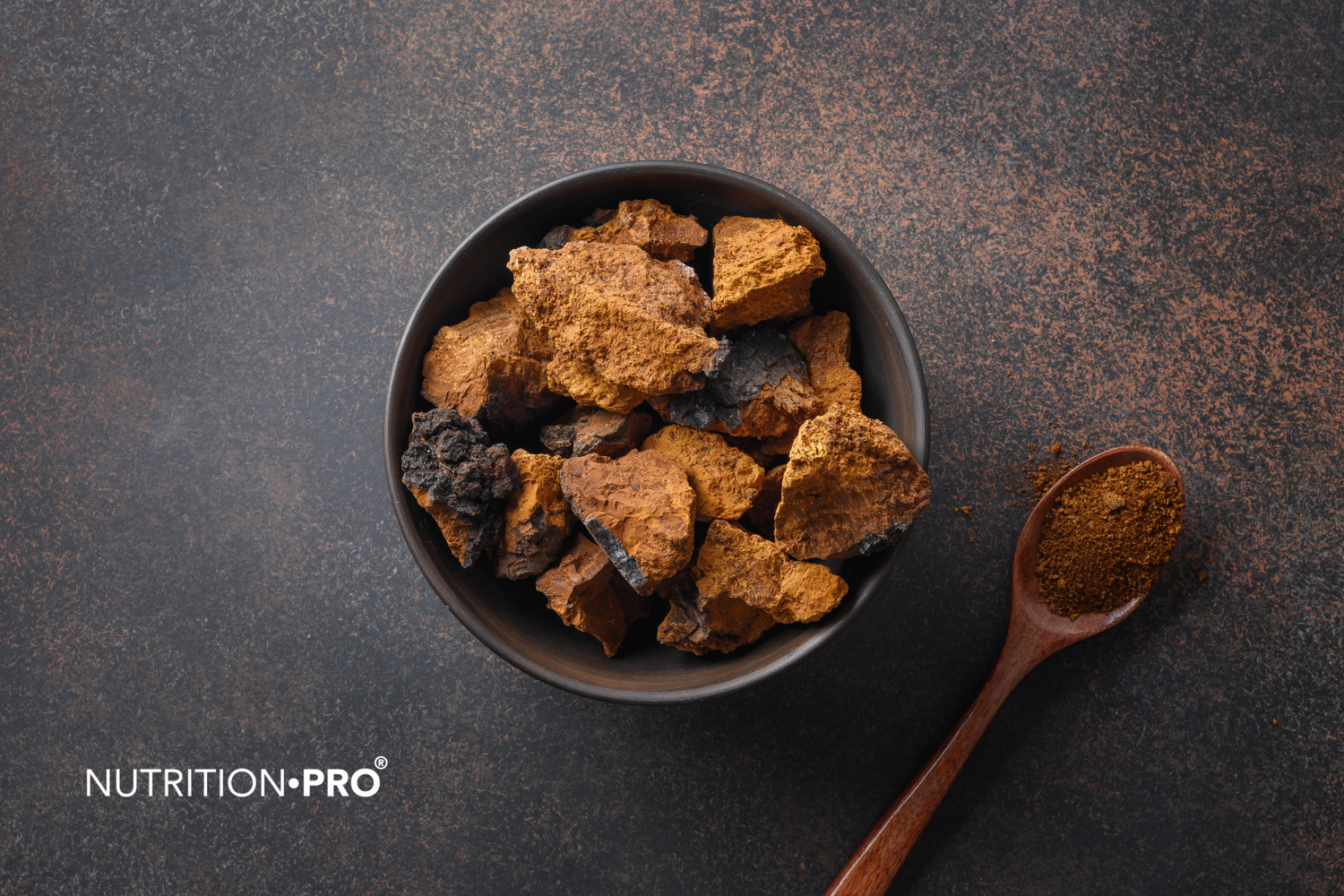
Chaga has a particularity that the four other functional mushrooms do not share: it is rich in oxalates. And this particularity has produced documented consequences. Three published clinical cases report kidney damage linked to its consumption, including one case of end-stage renal failure.
This is not a reason to panic, and it is a reason to be informed. This article explains what precisely these cases say: at what doses, over what duration, in which profiles. It details the combination that aggravates the risk and that no one mentions, the drug interactions to know about, and the profiles that should abstain. We sell chaga, and that is exactly why this article exists.

The documented risk. Chaga is rich in oxalates. When intake exceeds elimination capacity, calcium oxalate crystals can deposit in the renal tubules. Three published clinical cases document this: an oxalate nephropathy described in Japan in 2014, end-stage renal failure reported in Korea in 2020, and a case in 2022 in a 69-year-old man who consumed 10 to 15 g of powder per day for three months, with confirmation by biopsy.
The essential nuance. These cases involve very high doses, prolonged over months, unrelated to a normally dosed supplement. The combination to avoid: high-dose vitamin C, partly metabolized into oxalate, present precisely in the 2022 case. Should abstain: kidney disease, history of oxalate stones, anticoagulant, antidiabetic or immunosuppressant treatment, pregnancy and breastfeeding, children, planned surgery, birch allergy.
Why chaga raises a kidney concern
<<<25>>> Oxalates oxalates are compounds found naturally in many plant-based foods, such as spinach and sorrel. In normal amounts, the body eliminates them through the kidneys without difficulty.
The problem appears when intake exceeds the body's elimination capacity. Oxalates can then bind to calcium and form calcium oxalate crystals that deposit in the kidney tubules. These deposits can cause damage to tubular cells and then, if exposure continues, fibrosis of kidney tissue. This is exactly what the biopsies reported in the published cases revealed.
Chaga is distinguished by a high oxalate content, and this is a characteristic it does not share with other common functional mushrooms. The reishi, the cordyceps, the shiitake and the lion's mane do not have this profile. Reasoning about "functional mushrooms" as a block is therefore an error: each species has its own precautions.
What the published cases precisely say
| Publication | What is reported |
|---|---|
| Kikuchi et al., 2014 Clinical Nephrology |
First description of oxalate nephropathy attributed to chaga consumption |
| Lee et al., 2020 Journal of Korean Medical Science |
Development of end-stage renal failure following prolonged chaga ingestion |
| Kwon et al., 2022 Medicine |
69-year-old man, 10 to 15 g of chaga powder per day combined with 500 mg of vitamin C for three months. Acute kidney injury manifesting as nephrotic syndrome. Biopsy confirming deposits of calcium oxalate crystals in the tubules, with interstitial fibrosis and tubular atrophy |
Three elements must be read together, otherwise the interpretation will be wrong.
The dose. Ten to fifteen grams of raw powder per day is a considerable quantity, incomparable to the dose of a measured supplement. This is the order of magnitude of use as a "traditional remedy" by the spoonful, not that of a regulated intake.
The duration. Three months of daily consumption in the 2022 case, even longer in the Korean case. The damage results from accumulation, not from a single dose.
The patient profile and drug combinations. A 69-year-old patient, and simultaneous vitamin C intake, which we will see is not harmless in this context.
What must not be concluded : that chaga intake at the usual supplement doses exposes one to kidney failure. Nothing in these publications shows this. What must be concluded : that chaga has a mechanism of kidney toxicity real and documented by biopsy, that this mechanism is dose-dependent and cumulative, and that there therefore exist profiles for which one must not take the risk, as well as rules of use to observe. This is a fundamental difference from an ingredient for which no toxicity mechanism would be known.
Vitamin C, the combination that aggravates
Reread the 69-year-old patient's protocol: chaga powder and 500 mg of vitamin C per day. This second element is not a contextual detail, it is an aggravating factor.
A portion of ingested vitamin C is metabolized into oxalate by the body. High-dose supplementation therefore increases the oxalate load that the kidneys must eliminate. Combined with an already oxalate-rich source like chaga, it adds two intakes working in the same direction.
If you consume chaga, do not add high-dose vitamin C supplementation during the same period. This precaution does not concern vitamin C from food sources, but rather highly dosed supplements. It also applies to any other significant source of oxalates in your diet if you have fragile kidney function. This is the kind of precaution that appears on no label, because no regulation requires it.
Drug interactions
| Treatment | Why caution is needed | Recommendation |
|---|---|---|
| Anticoagulants and antiplatelet agents | Chaga is described as potentially having antiplatelet activity, which could increase bleeding risk | Medical advice essential before any use |
| Antidiabetic agents | A potentiation of blood glucose lowering is possible | Medical advice, and enhanced monitoring if use is approved |
| Immunosuppressants | Fungi act on immune pathways, which may interfere with treatment aimed at suppressing them | Medical advice, caution in case of autoimmune disease or transplant |
| Scheduled surgery | Potential antiplatelet effect, perioperative bleeding risk | Discontinue several days before, informing the medical team |
| Cancer treatment | Possible interactions with certain protocols | Must discuss with the medical team before any use |
The point about scheduled surgery deserves emphasis because no one thinks about it. During a preoperative consultation, you will be asked about your medications; remember to also mention your supplements, including those that seem harmless to you. A fungus is not neutral in this regard.
Who should abstain
Abstention in case of kidney disease,history of calcium oxalate kidney stones, orhyperoxaluria known. These are the profiles in which the mechanism described in published cases is most likely to occur, and there is no reason to take this risk.
Medical advice required in case of treatment anticoagulant or antiplatelet, antidiabetic, immunosuppressant or anticancer, as well as before any scheduled surgery.
Not recommended in pregnant or nursing women and inchildren and adolescents, due to lack of safety data. Caution also in case ofbirch allergy, as chaga grows on this tree and concentrates certain of its compounds.
Signs that require immediate medical consultation
- A decrease in urine volume.
- Swelling , particularly of the legs or face.Pain
- , particularly in the lower back Unusual.
- fatigue or confusion These signs correspond to those described in published cases of kidney damage. Consult and mention the use of chaga, its dose and duration: this information guides the diagnosis. An adverse effect that may be linked to a dietary supplement can also be reported as part of the national.
nutrivigilance system.
How to use it safely
What the law allows to be said
Chaga is legally marketed as a dietary supplement in France. What is regulated is not its sale, it is the claims.
Health claims concerning plants and fungi are pending evaluation at the European level. Concretely, this creates an area where many formulations circulate without having been validated, and where no effect can be reliably claimed.
You will regularly come across the idea that chaga treats or prevents cancer. This is false and it is prohibited: attributing to a food or supplement the property of treating a disease is prohibited by European regulations. People undergoing oncology treatment must moreover imperatively report any supplement to their healthcare team.
You will also see promises of antioxidant or immune effects presented as established. Again, these formulations are not based on any authorized claim for chaga. A brand using them tells you above all about its relationship with regulations.
Chaga is neither a poison nor an inconsequential product. It has a genuine specificity among functional mushrooms, its oxalate content, and this specificity has produced documented kidney damage confirmed by biopsy, at high doses and over several months. The reasonable response comes down to three points: identify the profiles that should abstain, respect the indicated dose, and limit the duration. Everything else amounts to either panic or denial, and neither serves any purpose.
Frequently Asked Questions
The Kidney Risk
Is chaga dangerous for the kidneys?
There is a documented risk that should be taken seriously without being dramatized. Several published clinical cases report oxalate nephropathies linked to chaga consumption, including one case of end-stage renal failure. These cases share two characteristics: very high doses of raw powder, on the order of ten to fifteen grams per day, continued for months. This does not correspond to the use of a normally dosed supplement, but does require real precautions.
Why does chaga pose a kidney problem?
Because it is rich in oxalates. When intake exceeds what the body can eliminate, these can bind to calcium and form calcium oxalate crystals that deposit in the renal tubules. The biopsies reported in published cases show precisely this mechanism. This is a characteristic specific to chaga among common functional mushrooms.
What exactly do the published cases say?
Three publications are reference points. A Japanese case described in 2014 in Clinical Nephrology of chaga-induced oxalate nephropathy. A Korean case published in 2020 in the Journal of Korean Medical Science reporting end-stage renal failure after prolonged ingestion. Finally, a case published in 2022 in Medicine describing a 69-year-old man who consumed ten to fifteen grams of powder per day with 500 mg of vitamin C for three months, with biopsy confirming calcium oxalate deposits.
What signs should raise concern?
A decrease in urine volume, swelling especially of the legs or face, lower back pain, unusual fatigue, or confusion should lead to medical consultation without delay, mentioning chaga intake. These signs correspond to those described in published cases. An adverse effect linked to a supplement can also be reported under nutrivigilance.
Doses and Combinations
What dose of chaga is risky?
No agency has set a maximum dose, which is itself informative: there is insufficient long-term data. What we know is that the severe cases published concern raw powder intakes of ten to fifteen grams per day for several months, quantities far exceeding those of a normally dosed supplement. The prudent rule is to never exceed the dose indicated on the label.
Should chaga and vitamin C be avoided together?
This is a logical precaution and often overlooked. Part of vitamin C is metabolized into oxalate: high-dose intake therefore adds to the burden from chaga. It is not insignificant that the case published in 2022 concerns precisely a patient who combined chaga powder and vitamin C daily. Avoid stacking the two over the same period.
Can chaga be taken daily long-term?
This is precisely the pattern found in problematic cases: daily intake prolonged over months. In the absence of long-term safety data and a maximum dose defined by agencies, the reasonable approach is to favor defined periods rather than indefinite continuous consumption, and to regularly reassess the benefit of continuing.
Does the product form change the risk?
It does play a role, although precise data is lacking. Published cases concern raw powders consumed in large quantities. A dosed preparation, with a quantity per serving clearly indicated, mechanically exposes one to more controlled intake than powder taken by the spoonful. The determining factor remains the quantity actually ingested each day and its duration.
Is wild chaga more risky?
Wild harvesting adds two uncertainties: species identification and the actual composition of the sample, as mushrooms concentrate what their environment contains. For regular consumption, a traceable and analyzed raw material, particularly for heavy metals, is preferable. This does not eliminate the question of oxalates, which is intrinsic to the species.
Contraindications and Interactions
Who should not take chaga?
People with kidney disease or a history of calcium oxalate stones, or known hyperoxaluria, should abstain. In addition, unless advised otherwise by a physician, those taking anticoagulants or antiplatelet agents, antidiabetics, immunosuppressants, pregnant or breastfeeding women, children and adolescents, as well as anyone scheduled for surgery. Caution also in case of birch allergy.
Does chaga interact with medications?
Three drug families warrant particular attention. Anticoagulants and antiplatelet agents, due to a potential antiplatelet effect of chaga. Antidiabetics, as potentiation of blood sugar lowering is possible. And immunosuppressants, as mushrooms act on immune pathways. In these three situations, medical or pharmacist advice is required.
Should chaga be stopped before surgery?
Yes, and few people anticipate this. Due to the potential antiplatelet effect, scheduled surgery justifies interrupting intake several days before, after informing the medical team. This rule applies more broadly to many supplements: always report what you are taking at the preoperative consultation.
Can chaga be taken during pregnancy?
No, not without medical advice. Safety data are lacking in pregnant and breastfeeding women, which is sufficient to justify abstention. This is especially true for a species whose oxalate profile already raises questions in adults.
Do other functional mushrooms present the same risk?
No, the oxalate risk is specific to chaga among common species. Reishi, however, shares the precaution regarding anticoagulants, and mushrooms in general warrant caution in case of immunosuppressive treatment or autoimmune disease. Each species has its own profile: it is better to research species by species rather than reason in bulk.
Legal Framework and Conclusion
Is chaga authorized for sale in France?
Chaga is marketed as a dietary supplement in France. What is regulated is the claims: claims concerning plants and mushrooms are pending evaluation at the European level, which means that no health claim can be reliably asserted. A brand that promises an immune, antioxidant, or anticancer effect for chaga exceeds the regulatory framework.
Does chaga cure cancer?
No, and this is an assertion to firmly reject. No claim of this type is authorized, and attributing to a food or supplement the property of treating a disease is prohibited by European regulations. People undergoing oncology treatment must absolutely discuss any supplement with their care team, as certain interactions are possible.
What should be done in case of adverse effect?
Stop taking it and consult, reporting the product consumed, its dose, and duration of use. In case of signs suggestive of kidney damage, swelling, decreased urine output, or lower back pain, do not wait. An adverse effect potentially linked to a supplement can also be reported under the nutrivigilance framework.
Should you completely give up chaga?
For at-risk profiles, yes, without hesitation: kidney disease, history of oxalate stones, relevant treatments, pregnancy. For a healthy person with no risk factors, the question is one of dose and duration. The severe cases published involve very high and prolonged consumption. Respecting the dose, limiting the duration, and not stacking sources of oxalates brings the risk down to a very different level.
What should you know about chaga and safety?
That chaga has a real specificity among functional mushrooms, its oxalate content, and that this specificity has produced documented cases of kidney damage, sometimes severe. That these cases involve very high doses over months. And that the reasonable response is neither panic nor denial, but the identification of profiles that should abstain, respect for doses, and limitation of duration.
Glossary
- Chaga (Inonotus obliquus)
- Fungus growing on birch trees in boreal forests, rich in oxalates.
- Oxalates
- Compounds naturally present in many plants, which can bind to calcium to form crystals.
- Oxalate nephropathy
- Kidney damage linked to the deposit of calcium oxalate crystals in the tubules.
- Renal tubules
- Kidney structures responsible for reabsorption and secretion, site of deposits described in published cases.
- Nephrotic syndrome
- Set of signs indicating significant loss of proteins in urine, with edema.
- Antiplatelet agent
- Substance limiting platelet aggregation, therefore clot formation, with increased bleeding risk.
- Hyperoxaluria
- Excessive urinary excretion of oxalate, a risk factor for stones and kidney damage.
- Nutrivigilance
- National system allowing reporting of an adverse effect potentially linked to a dietary supplement.
Sources
- Kwon O, et al. Chaga-induced oxalate nephropathy presenting clinically as nephrotic syndrome: case report. Medicine (Baltimore), 2022;101(10):e28997.
- Lee S, et al. Development of end-stage renal failure following prolonged chaga ingestion. Journal of Korean Medical Science, 2020.
- Kikuchi Y, et al. Chaga-induced oxalate nephropathy. Clinical Nephrology, 2014.
- European Parliament and Council. Regulation (EC) 1924/2006 on nutrition and health claims made on foods. eur-lex.europa.eu
- National Food, Environmental and Occupational Health Safety Agency. Nutrivigilance system. anses.fr


