

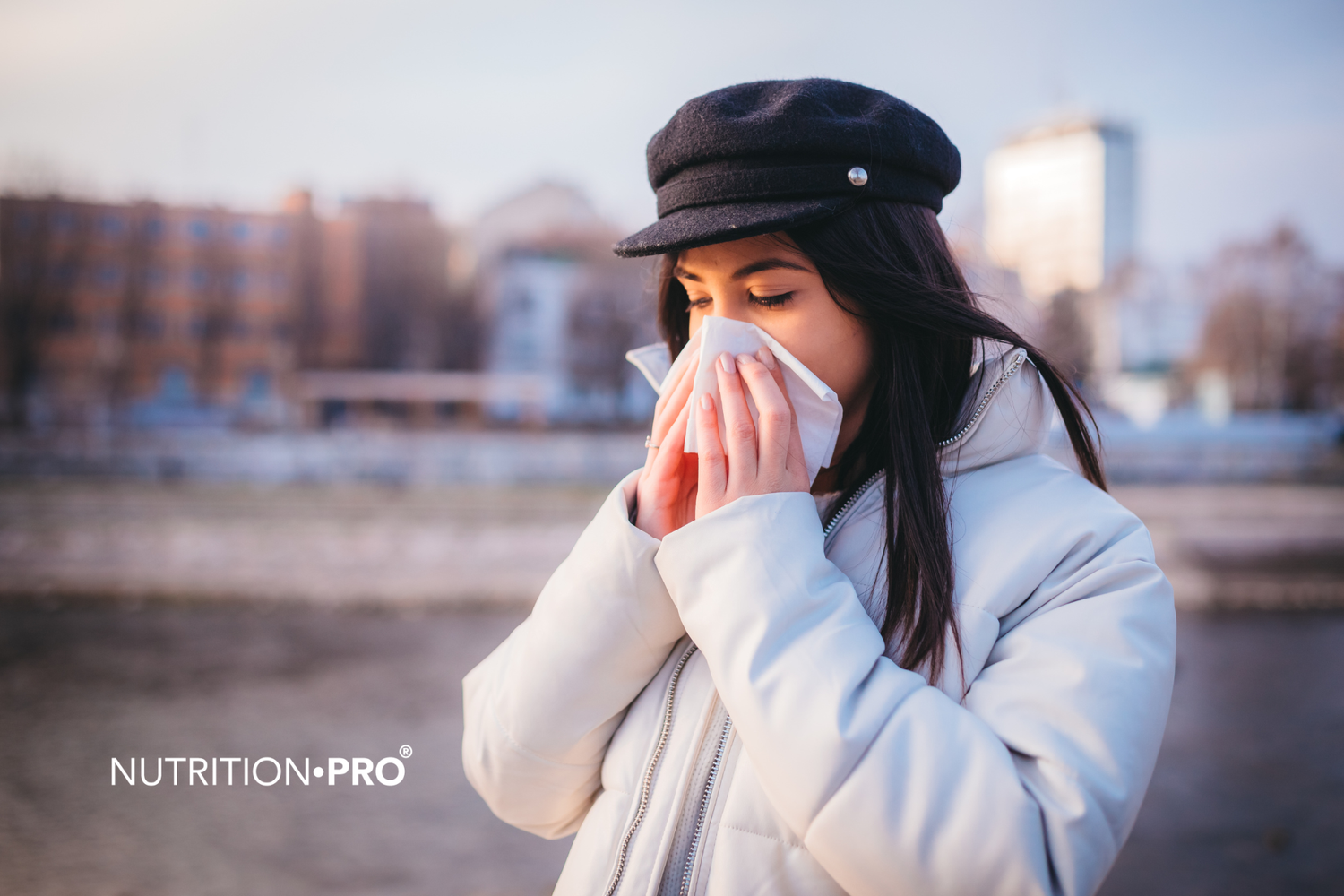
The common cold is the most ordinary illness there is, and probably the one about which the most unfounded advice circulates. The problem is not a lack of studies: there are hundreds of them. It's that they are almost always misread.
Here is the key to understanding that changes everything, and which virtually all articles on the subject ignore: preventing a cold and shortening an already-developed cold are not based on the same evidence. The same substance can do one without doing the other. This is the case with zinc, vitamin C, and probiotics. This article therefore sorts approaches according to this criterion, starting from the situation that brings you here: you have a cold now, what should you do?

Nothing cures a cold. It is an acute viral infection that resolves on its own. What trials measure is the duration and the comfort, and on this basis a few approaches stand up.
What was measured in treatment. The zinc : the 2024 Cochrane review, across 34 trials and 8,526 participants, confirms a reduction in average duration of 2.37 days, with a level of certainty low and more non-serious adverse effects. The nasal rinse with hypertonic salt water: in a pilot trial, 1.9 days fewer days of illness and a 35% reduction in transmission within the household. The honey : improvement in cough frequency and severity across 14 studies.
The misconception to avoid. The vitamin C slightly shortens colds when taken regularly, of 8% in adults. Started at the time of symptoms, no consistent effect was found. Fall under prevention, not treatment: probiotics, vitamin D. Promising but insufficient: echinacea, elderberry.
- What a cold is, and what treating it can mean
- The distinction everyone misses
- Zinc, the only one that reduced duration as a treatment
- Vitamin C, and the misconception about how to use it
- Nasal irrigation, the most underestimated practice
- Honey, effective where you wouldn't expect it
- Echinacea, elderberry, probiotics, vitamin D: their proper place
- Frequently asked questions
What a cold is, and what treating it can mean
Systematic reviews describe the common cold as an acute viral respiratory illness that resolves spontaneously, characterized by nasal congestion and runny nose, sneezing, sore throat, cough, and general malaise. Two words matter in this definition.
Viral : this means antibiotics have no place here. They act on bacteria, not viruses. The authors of the meta-analysis on honey make this their starting point, presenting their work as a response to excessive antibiotic prescribing in upper respiratory infections and the antibiotic resistance that results.
Spontaneously resolves : the common cold stops on its own. There is therefore no cure to achieve, which completely shifts the question. The right question is not "how do I make it go away," but "can I shorten it a bit, and make it more bearable".
A disease that heals itself imposes a particular requirement on what we use against it. If an intervention has side effects, even mild ones, they are compared to a benefit measured in hours or days gained, not in cure. This is exactly what the authors of the meta-analysis in the CMAJ on zinc remind us: a good safety profile is essential when treating a generally mild illness.
This is also what makes the common cold so profitable for marketing. Since everyone recovers, anything taken just before seems to have worked. Only placebo-controlled trials can settle this, and this article relies exclusively on them.
The distinction everyone misses
This is the central point of this article. Studies on the common cold fall into two families that have almost nothing in common.
Prevention trials give the product to healthy people for weeks or months, then count how many become ill. Treatment trials give the product to people who have just become ill, and measure how long their cold lasts. A product can succeed at one and fail at the other.
| Approach | For prevention | For treatment |
|---|---|---|
| Zinc | Little or no effect on the risk of catching a cold | Duration reduction noted, weak certainty |
| Vitamin C | No risk reduction in the general population, but duration shortened by 8% | No consistent effect found |
| Saline nasal rinse | Not evaluated as such in the cited trial | Duration reduced by 1.9 days in a pilot trial |
| Honey | Not applicable | Less frequent and less severe cough |
| Probiotics | Fewer episodes, average duration reduced by approximately 1.22 days | Not studied in this context |
| Vitamin D | Slight reduction in respiratory infection risk | Not studied in this context |
| Echinacea | Non-significant trends, uncertain effect | No demonstrated benefit |
Zinc, the only one to have reduced duration when used as a treatment
This is the most comprehensive file, and it has just been re-evaluated. A Cochrane review published in 2024 compiled 34 randomized trials totaling 8,526 participants, including 15 prevention trials and 19 treatment trials, in both adults and children.
What the review concludes
| Question asked | Result | Certainty level |
|---|---|---|
| Does zinc prevent catching a cold? | Little or no effect | Low |
| In prevention, does it shorten colds that occur anyway? | Probably little or no difference | Moderate |
| In treatment, does it shorten the cold? | Reduction of 2.37 days on average | Low |
| Does it reduce overall symptom severity? | Uncertain, inconclusive results | Very low |
| Does it cause adverse effects? | Increase of non-serious adverse effects during treatment | Moderate |
An earlier meta-analysis published in the CMAJ, covering 17 trials and 2,121 participants, pointed in the same direction with a reduction of 1.65 days. It provided useful clarification: the effect was clear in adults, with a reduction of 2.63 days, but absent in children.
Look at the details of the protocols and everything becomes clear. The 2024 Cochrane review notes zinc gluconate lozenges given between 45 and 276 mg per day, for 4.5 to 21 days. Meanwhile, other trials used syrups, tablets, dissolvable powders, capsules, or intranasal administration. Chemical forms also varied: acetate, gluconate, orotate.
As a result, statistical heterogeneity between trials is enormous, and it does not disappear in any subgroup analysis. An average figure of 2.37 days thus aggregates studies that do not measure quite the same intervention. The review authors state it themselves: the great variability of interventions and outcomes must be taken into account before drawing any conclusions about zinc efficacy.
The drawbacks, which are part of the record
There is probably an increased risk of non-serious adverse effects when zinc is used as a treatment, with a moderate level of certainty, meaning a stronger conclusion than the one on benefits. The CMAJ meta-analysis specified the nature of these side effects: unpleasant taste and nausea more frequent than with placebo.
This finding does not negate the value of zinc, but it puts it in perspective. For a disease that heals on its own in a few days, gaining perhaps one or two days at the cost of an unpleasant taste and possible nausea is a personaltrade-off, not a clear-cut answer. Some will find it highly favorable, others will not.
Vitamin C, and the misconception about how to use it
The reflex is universal: at the first sneeze, people reach for vitamin C. Yet this is precisely the usage pattern that the data do not support, and the reference Cochrane review on this subject is very clear on this point.
Three results, not to be confused
- Preventing colds in the general population: no. Among 10,708 participants, regular supplementation did not reduce the risk of catching a cold. The authors conclude that systematic supplementation is not justified for this purpose.
- Shortening colds with regular intake: somewhat. Out of 31 comparisons and 9,745 episodes, the duration was reduced by 8% in adults and by 14% in children. In children, 1 to 2 g per day shortened colds by 18%. Severity was also reduced.
- Treating a cold that has already started: no. Seven comparisons involving 3,249 episodes tested vitamin C started at symptom onset. No consistent effect was observed, either on duration or severity.
One subgroup stands out clearly from the rest. In marathon runners, skiers, and soldiers exercising in subarctic conditions, five trials totaling 598 participants found a reduction in cold risk of more than half. This is one of the truly clear signals in the entire cold literature.
The reasonable interpretation is that this result concerns situations ofbrief and intense physical effort, possibly in a cold environment, and not everyday life. If you're preparing for a marathon or a winter trail race, this information concerns you. Otherwise, it doesn't.
The authors add an honest qualification that we reproduce as-is: given the consistent effect observed in regular supplementation trials, the low cost and safety of vitamin C, it may be worthwhile for a person with a cold to test individually whether they derive benefit from it. This is an invitation to personal experimentation, not collective proof, and the difference matters.
Nasal rinsing, the most underestimated practice
Here is the most interesting result in this review, and it comes from no supplement.
A pilot randomized trial conducted in adults enrolled within 48 hours of symptom onset compared a protocol of nasal rinsing and hypertonic saline gargles to usual care. Participants prepared their own saline solution and kept a symptom diary, with successive samples taken to measure viral shedding.
| Measured criterion | Result in the nasal rinsing group |
|---|---|
| Duration of illness | Reduced by 1.9 days |
| Use of over-the-counter medications | Reduced by 36% |
| Transmission to household contacts | Reduced by 35% |
| Viral shedding | At least 0.5 log lower per day |
| Acceptability | 87% of participants found the procedure acceptable |
The criterion of household transmission deserves our attention, because no other approach to this issue measures it. Reducing by a third the risk of infecting your spouse or children is far from trivial when you live with others.
This trial is a pilotstudy, conducted openly without blinding, in 61 followed participants. Its primary objective was to assess recruitment feasibility, not to demonstrate efficacy. The authors themselves conclude that a larger-scale trial is necessary to confirm these results. This is therefore not established proof.
But weigh this against: the procedure is virtually free, its drawbacks are limited to temporary discomfort, and it poses no risks comparable to zinc's nausea. Faced with an intervention whose cost and risk approach zero, even an imperfect signal is sufficient to justify the trial. This is a very different calculation from the one applied to a paid product with adverse effects.
In children, a recent systematic review of randomized trials concludes that nasal saline irrigation can reduce symptom severity during upper respiratory infections, with still modest level of evidence and a call for more robust studies. The direction is the same, but certainty remains limited.
Honey, solid where you wouldn't expect it
A systematic review with meta-analysis gathered 14 studies on honey in upper respiratory infections, from 1,345 initial references. The overall risk of bias is rated as moderate by the authors.
Compared to usual care, honey improves three things:
- the combined symptom score, across three studies;
- the frequency of cough, across eight studies;
- the severity of cough, across five studies.
The authors present honey as an alternative widely available and inexpensive to antibiotics, likely to help slow antibiotic resistance.
Never before one year of age. Honey must not be given to an infant under twelve months old, due to the risk of infant botulism. This rule admits no exceptions.
Comparison matters. The clearest results appear when compared to standard care, not against placebo. The two trials against placebo show much less clear and highly heterogeneous results. The authors explicitly call for better quality placebo-controlled trials. Honey therefore has a justified place, not an exaggerated one.
Echinacea, elderberry, probiotics, vitamin D: their proper place
Echinacea, the most sold and least convincing
The Cochrane review on echinacea included 24 double-blind trials and 4,631 participants, representing 33 comparisons against placebo. The verdict is clear for treatment: of seven trials reporting cold duration, only one shows a significant effect. For prevention, none of the twelve comparisons found a significant difference, even though all leaned in the same direction, and a post-hoc pooling suggests a risk reduction of 10 to 20%, with clinical relevance that the authors consider debatable.
The authors emphasize a point rarely mentioned on shelves: products sold under the name echinacea differ considerably from one another, depending on the species, plant part used, extraction method, and any additives. Two boxes bearing the same name do not contain the same product.
Black elderberry, a signal from a tiny sample
A meta-analysis of randomized trials reports that black elderberry supplementation substantially reduces upper respiratory symptoms, with a large effect size. This is an encouraging result.
The caveat is, however, decisive: the analysis covers 180 participants in total. This is far too few to establish anything, and the very magnitude of the effect reported in such a small sample calls for caution rather than enthusiasm. We do not market elderberry, which makes this caveat easier to state.
Probiotics, a foundational strategy
The 2022 Cochrane review brings together 23 usable trials and approximately 6,950 participants, children, adults, and older adults. It identifies several converging results:
- fewer participants experiencing at least one upper respiratory infection episode, low certainty;
- fewer participants experiencing at least three episodes, moderate certainty;
- mean duration of an episode reduced by approximately 1.22 days, low certainty;
- fewer antibiotic treatments, moderate certainty ;
- no increase in adverse effects, which remain minor and digestive.
The detail that matters to you: in most trials, probiotics were given for more than three months. This is not a remedy to start the day your nose runs, it's a strategy implemented upstream, over time.
Vitamin D, a real but weak effect
The reference meta-analysis brought together 46 randomized trials and more than 75,000 participants. It found a reduction in the risk of having at least one acute respiratory infection, statistically significant, but which the authors themselves describe as weak. The protection was associated with dailyintake, at doses of 400 to 1,000 IU per day, for durations under twelve months, and in participants aged 1 to 16 years at baseline. No additional serious adverse effects were observed.
Again, this is about prevention. The topic is covered in detail in our article on winter intake for immunity, which covers seasonal logic rather than acute episodes.
What to do in practice
High fever or prolonged fever, shortness of breath, chest pain, deterioration in general condition, worsening occurring after a phase of improvement, or symptoms lasting abnormally long: these situations require medical advice and not a supplement adjustment. The threshold should be even lower for infants, elderly persons, pregnant women, and any fragile person, immunocompromised or on long-term treatment. If in doubt, your pharmacist is the most accessible contact.
Frequently asked questions
The fundamental question
Can you really cure a cold naturally?
Not in the sense of curing it: a cold is a viral infection that resolves on its own, and no intervention makes the virus disappear. What trials measure is something else and it's already quite substantial: shortening the duration from a few days to a few hours, and making symptoms more bearable. It's on this ground, that of duration and comfort, that a few approaches hold up.
What is the distinction to understand before anything else?
The distinction between prevention and treatment. The same substance can reduce the risk of catching a cold without changing anything once you have it, and the reverse also exists. The Cochrane review on zinc illustrates this perfectly: in prevention, there is probably little or no effect on the duration of colds that occur anyway, whereas in treatment a reduction in duration is supported. Confusing the two leads to taking the right product at the wrong time.
How long does a normal cold last?
Reviews describe it as an acute viral illness that resolves spontaneously, associated with nasal congestion and discharge, sneezing, sore throat, cough and general malaise. The usual duration is measured in days rather than weeks. What should alert you is not so much the raw duration as the progression: worsening after a phase of improvement, or symptoms that don't improve at all.
Do you need antibiotics for a cold?
No. A cold is a viral infection, and antibiotics only work against bacteria. Their prescription in this context provides no benefit and contributes to antibiotic resistance, a point explicitly highlighted by the authors of the meta-analysis on honey. If your doctor prescribes them, it's because he suspects something other than a cold.
Zinc
Does zinc really shorten a cold?
It's the best-documented nutritional approach on this point, with significant caveats. The 2024 Cochrane review, which compiled 34 trials and 8,526 participants, found that as a treatment zinc may reduce the average duration of a cold by 2.37 days. But the level of certainty is low and heterogeneity between trials is enormous. An earlier meta-analysis published in the CMAJ found a reduction of 1.65 days, with the same difficulty.
Why do results on zinc vary so much?
Because the trials don't test the same thing. The forms differ, the doses do too, as do the protocols. The 2024 Cochrane review notes gluconate lozenges given between 45 and 276 mg per day, for 4.5 to 21 days, and other trials using syrups, tablets, powders or intranasal administration. This dispersion explains very high statistical heterogeneity, and that's why the level of evidence remains low despite an apparently substantial average effect.
Does zinc prevent colds?
The data do not support it. The 2024 Cochrane review concludes that in prevention zinc may have little or no effect on the risk of developing a cold. This is an important point to know so you don't take it all year hoping never to catch a cold again.
Does zinc have drawbacks?
Yes, and they are documented. The 2024 Cochrane review found that in treatment there is probably an increase in the risk of non-serious adverse effects, with a moderate level of certainty. The CMAJ meta-analysis pointed to unpleasant taste and nausea more frequent than under placebo. These are minor inconveniences, but they count in the balance when treating an illness that heals on its own.
Vitamin C
Does vitamin C cure a cold?
This is the most widespread misunderstanding on the subject. The Cochrane review distinguishes two situations. With regular supplementation, cold duration is reduced by 8% in adults and 14% in children, which remains modest. When taken therapeutically, starting when symptoms appear, no consistent effect has been found on duration or severity. In other words, rushing to vitamin C the day you start sneezing is precisely the mode of use that trials do not support.
Does vitamin C prevent colds?
Not in the general population. Among 10,708 participants, regular intake did not reduce the risk of catching a cold. There is one striking exception: among marathoners, skiers and soldiers exercising in subarctic conditions, five trials totaling 598 participants found a reduction in risk of nearly half. This is a situation of intense and brief physical exertion, not everyday life.
Gestures that cost nothing
Does nasal irrigation work?
This is probably the most underestimated gesture in the discussion. A pilot randomized trial conducted in adults within 48 hours of symptom onset compared nasal irrigation and hypertonic saline gargles to usual care: disease duration reduced by 1.9 days, over-the-counter medication use reduced by 36%, transmission to household contacts reduced by 35%, and lower viral shedding. It is a small, non-blinded pilot trial, so confirmation is needed, but the cost and risk are near zero.
How is nasal irrigation performed?
With saline solution, using a pipette, spray, or rinse device, several times a day as long as symptoms persist. Use clean water appropriate for this purpose, a cleaned device, and stop if the procedure causes pain. In children, a recent systematic review concludes that nasal irrigation can reduce symptom severity during upper respiratory infections, though the level of evidence remains limited. Ask your pharmacist for advice on materials and solutions appropriate for your situation.
Is honey useful against cold cough?
This is one of the most solid results in the discussion, and the least expensive. A systematic review with meta-analysis covering 14 studies finds, compared to usual care, an improvement in combined symptom scores, cough frequency, and cough severity. The authors present it as a widely available and inexpensive alternative to antibiotics, which have no place in a viral cold.
Are there limits to honey?
Two, one of which is absolute. Honey should never be given to infants under one year of age, due to the risk of infant botulism. Furthermore, the most favorable comparison in the meta-analysis is against usual care rather than placebo: the two trials against placebo yield much less clear results. The authors in fact call for better-quality placebo-controlled trials.
Plants and long-term strategies
Is echinacea effective?
The Cochrane review on this topic, covering 24 double-blind trials and 4,631 participants, finds no benefit for treating a cold: of seven trials reporting duration, only one shows an effect. For prevention, individual trials all point in the same direction without reaching significance, and a post-hoc pooling suggests a risk reduction of 10 to 20%, of questionable clinical relevance. The authors also highlight that products sold under this name differ substantially from one another.
What about black elderberry?
A meta-analysis of randomized trials reports a substantial reduction in upper respiratory symptoms with elderberry, with a large effect size. The caveat is substantial: the analysis covers only 180 participants in total. This is an interesting signal that warrants larger studies, not a demonstration. We do not market elderberry, which makes this caution easier to maintain.
Do probiotics have a role?
For prevention, yes, with caveats. The 2022 Cochrane review, which brings together 23 trials and approximately 6,950 participants, concludes that probiotics can reduce the number of people having at least one upper respiratory infection episode, can reduce their average duration by approximately 1.22 days, and probably reduce antibiotic use. Certainty levels range from low to moderate depending on the criterion. This is a long-term strategy, over several months, not a remedy to start the day your nose runs.
What about vitamin D?
It also falls under prevention rather than treatment. A meta-analysis of 46 randomized trials and over 75,000 participants finds a reduced risk of acute respiratory infection, but the authors themselves characterize this reduction as modest. Protection was associated with daily doses of 400 to 1,000 IU per day, and durations of less than twelve months.
Deciding and knowing when to consult
When should you consult a doctor?
In the case of high or prolonged fever, shortness of breath, chest pain, general deterioration, worsening after initial improvement, or symptoms lasting abnormally long. This applies earlier and more broadly to infants, the elderly, pregnant women, and any fragile person or those on immunosuppressive treatment. A dietary supplement never replaces this evaluation.
What should you remember to act concretely?
That nothing cures a cold, but that a few gestures shorten its duration or ease its course. Nasal irrigation is the cheapest and most immediate. Zinc is the only nutritional supplement with a documented reduction in duration as a treatment, with weak evidence and real side effects. Honey holds up against cough. Vitamin C, echinacea, probiotics, and vitamin D fall under different logics, essentially preventive. And sleep, hydration, and rest remain the foundation that nothing can replace.
Glossary
- Self-limiting
- Describes a disease that heals on its own without specific treatment, which is the case with the common cold.
- Upper respiratory infection
- Infection limited to the upper airways—nose, sinuses, throat—as opposed to bronchial or pulmonary involvement.
- Double-blind trial
- A trial in which neither the participant nor the evaluator knows who receives the active product, which greatly limits bias.
- Pilot trial
- A small-scale trial designed to test the feasibility of a protocol before a larger trial.
- Heterogeneity
- A measure of the dispersion of results between trials in a meta-analysis; when high, it weakens confidence in the average obtained.
- GRADE
- A method for grading the certainty of evidence, from very low to high, used notably by Cochrane reviews.
- Hypertonic solution
- Saline solution more concentrated than body fluids, used in certain nasal irrigation protocols.
- Viral shedding
- Quantity of virus emitted by an infected person, related to the risk of transmitting it to those around them.
- Infant botulism
- Severe poisoning in infants linked to ingestion of spores, which is why honey is prohibited before twelve months of age.
Sources
The studies cited below were identified via PubMed.
- Nault D, et al. Zinc for the prevention and treatment of the common cold. Cochrane Database of Systematic Reviews, 2024;5(5):CD014914. DOI
- Science M, et al. Zinc in the treatment of the common cold: systematic review and meta-analysis of randomized controlled trials. CMAJ, 2012;184(10):E551-561. DOI
- Hemilä H, Chalker E. Vitamin C for the prevention and treatment of the common cold. Cochrane Database of Systematic Reviews, 2013;2013(1):CD000980. DOI
- Ramalingam S, et al. Open-label randomized controlled pilot trial of nasal saline irrigation and hypertonic saline gargles for the common cold. Scientific Reports, 2019;9(1):1015. DOI
- Abuelgasim H, Albury C, Lee J. Efficacy of honey for symptomatic relief of upper respiratory tract infections: systematic review and meta-analysis. BMJ Evidence-Based Medicine, 2021;26(2):57-64. DOI
- Karsch-Völk M, et al. Echinacea for the prevention and treatment of the common cold. Cochrane Database of Systematic Reviews, 2014;2014(2):CD000530. DOI
- Zhao Y, Dong BR, Hao Q. Probiotics for the prevention of acute upper respiratory tract infections. Cochrane Database of Systematic Reviews, 2022;8(8):CD006895. DOI
- Jolliffe DA, et al. Vitamin D supplementation to prevent acute respiratory infections: systematic review and meta-analysis of aggregate data from randomized trials. The Lancet Diabetes & Endocrinology, 2021;9(5):276-292. DOI
- Hawkins J, et al. Black elder (Sambucus nigra) supplementation effectively treats upper respiratory symptoms: meta-analysis of randomized controlled clinical trials. Complementary Therapies in Medicine, 2019;42:361-365. DOI
- Cruz M, et al. Saline nasal irrigation in acute upper respiratory infections in children: a systematic review. Cureus, 2024;16(12):e75464. DOI


