

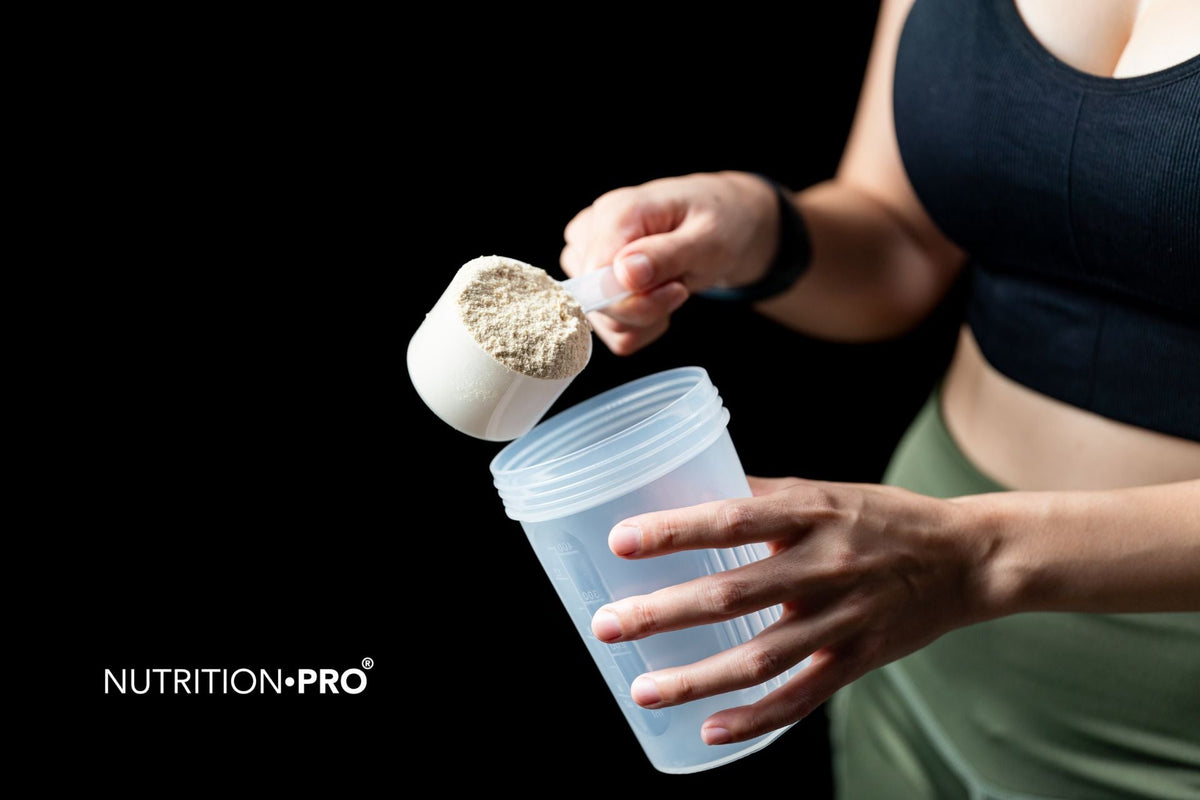
Creatine carries the reputation of a masculine locker room powder, and it's probably the biggest misunderstanding in sports nutrition: the data says exactly the opposite. Women have creatine reserves 70 to 80% lower than men, generally lower dietary intakes, and a hormonal physiology that creates windows where supplementation makes particular sense, from the menstrual cycle to menopause. In other words: if one of the two sexes has a physiological reason to prioritize it, it's them.
This article covers what science shows in women—strength, physique, energy, mood, cognition—and dismantles one by one the fears that hold people back (weight gain, bloating, kidneys, hair), and provides the simple protocol. For the general basics of the molecule: our ultimate guide to creatine.
Creatine is one of the most well-studied supplements in the world, and women are wrongly left out of the conversation: with endogenous reserves 70 to 80% lower than men, they have physiologically more to gain. Literature documents benefits in women for strength and performance, muscle size and function (especially with resistance training, including after menopause where added favorable effects on bone occur), and positive effects on mood and cognition through brain energy. The fear that blocks everything, "it makes you gain weight and bloat," doesn't hold up: the water attracted by creatine goes into muscle, not under the skin, the scientific consensus is clear on the absence of fat gain, and any kilogram in the first few weeks is muscle water, a sign that it's working. Protocol: 3 to 5 g of monohydrate daily, every day, without loading or cycling, assessment at 8-12 weeks. Exercise not required for energy and brain; muscle strengthening highly recommended for strength and physique. Pregnancy and breastfeeding: medical advice, as always.
1. Why creatine concerns women first
Creatine characteristics differ between men and women, the latter presenting endogenous reserves 70 to 80% lower; due to hormonal variations in creatine kinetics, supplementation can be particularly relevant during menstruation, pregnancy, postpartum, and around menopause. In non-menopausal women, it improves strength and performance; after menopause, higher doses improve skeletal muscle size and function, with favorable effects on bone when combined with resistance training, and preclinical and clinical data indicate positive effects on mood and cognition, possibly by restoring brain energy levels.
Smith-Ryan AE, et al. Nutrients 2021;13(3):877. DOI: 10.3390/nu13030877
Creatine is not a performance-enhancing drug or an exotic powder: it's a compound your body makes and stores, mainly in muscles and the brain, to regenerate immediate energy (ATP) during short and intense efforts, physical or cognitive. The stock is topped up through diet, with meat and fish leading the way, which explains the starting point: with lower reserves and often lower meat intakes, many women operate far from saturation, right where supplementation makes the difference. It's the paradox that research eventually formulated: the supplement stereotyped as "male" is the one women have physiologically the most to gain from. the women have physiologically the most to expect.
2. What it changes: strength, physique, energy, mood
Creatine supplementation in women shows positive effects on muscle strength, performance, and body composition, particularly when combined with resistance training; it can also improve mood and cognitive function, possibly attenuating depressive symptoms, with emerging data on its benefits during pregnancy and after menopause, though data on perimenopause remain limited.
Smith-Ryan AE, et al. J Int Soc Sports Nutr 2025;22(1):2502094. DOI: 10.1080/15502783.2025.2502094
Concretely, in practice: sessions where you chain movements better (creatine recharges energy between repetitions and sprints), faster strength progression, and over weeks, body composition that evolves in the right direction, more muscle at the same weight, the definition of firmness. The leverage is multiplied by strength training, even two sessions per week: creatine provides the fuel, strength training places the order.
The axis that changes the conversation, especially for women who don't train, is the brain : an energy-intensive organ, it has its own creatine reserves, and reviews report positive effects on mood and cognition, with emerging signals on depressive symptoms, possibly amplified in women whose baseline reserves are lower. We dedicated a full article to this data: creatine and brain.
3. The #1 fear debunked: "it makes you gain weight"
Reviewing the most frequently asked questions about creatine, including water retention, fat gain, kidney health, hair loss, or the idea that it only works in men, an international team of experts concludes that supplementation is well tolerated at recommended doses of 3 to 5 g per day (or 0.1 g per kilogram), that the initial increase in body water is intracellular and muscle-related, and that concerns about fat gain, kidney damage in healthy subjects, or baldness are not supported by the data.
Antonio J, et al. J Int Soc Sports Nutr 2021;18(1):13. DOI: 10.1186/s12970-021-00412-w
Let's break down the fear, because it conflates three things. "I'm going to gain weight" : possibly about a kilogram in the first few weeks, but this weight is water stored in muscle cells with creatine and glycogen reserves; it's a sign that saturation is occurring, not a diet failure. "I'm going to swell up" : the feared swelling (face, diffuse retention) corresponds to subcutaneous water, but creatine pulls water toward the opposite compartment; a better hydrated muscle looks firm and defined, the opposite effect of puffiness. "I'm going to gain fat" : that's question 7 of the consensus, and the answer from trials is unambiguous, no. The only real advice: don't judge creatine by the scale, judge it by the mirror, strength, and energy.
4. Other misconceptions, one by one
| The misconception | What the data says |
|---|---|
| "It's a doping product, a steroid" | No: natural compound from food, allowed in all sports, unrelated to anabolic steroids. |
| "It's bad for the kidneys" | Debunked in healthy subjects at recommended doses, including long-term use; blood creatinine rises mechanically (mention intake before blood work). Kidney disease: seek medical advice. |
| "It causes hair loss" | Unsupported: only one small 2009 study, never replicated, that didn't even measure hair loss. Classified as a misconception by the consensus. |
| "It's only for athletes" | Energy and brain effects don't depend on training; strength training maximizes strength and physique effects, it doesn't condition the rest. |
| "You need a loading phase" | Optional: 3-5 g per day saturates reserves in 3-4 weeks, without the digestive discomfort of high doses. |
| "You have to take it right before your workout" | Timing is secondary: it's saturation of reserves that matters, so daily consistency. Details in our article on when to take creatine. |
5. The female protocol, in practice
6. Life windows: cycle, pregnancy, menopause
The cycle. Estrogen fluctuations alter creatine synthesis and utilization throughout the month; some women report energy dips around menstruation, a period that landmark reviews identify as a relevant window. No need to cycle intake: constant daily dosing covers all phases, that's its strength.
Menopause. This is the best-documented window: estrogen decline accelerates muscle loss and weakens bone, and the literature shows that after menopause, creatine improves muscle size and function, with favorable effects on bone when combined with resistance training. Paired with protein and strength work, it forms the most robust trio for preserving muscle and bone capital; our complete menopause guide places this lever within the broader strategy.
Pregnancy and lactation. A fascinating research field (the placenta and fetal brain are heavy energy consumers, and teams are exploring creatine in obstetrics), but data in pregnant women remain insufficient for public recommendation: medical advice is mandatory, with no exceptions for self-decision.
Pregnancy or lactation : emerging research, insufficient data, medical validation required.
Known kidney disease : supplementation should be discussed with your nephrologist, never on your own.
Under 18 years old : outside structured sports and parental supervision.
And before a blood test, mention creatine: it raises creatinine without reflecting kidney damage.
Creatine monohydrate labeled Creapure®, the German standard for purity, in convenient capsules: the molecule behind 500+ studies, with no taste or preparation needed. 40-day course, rated 4.7/5 by 70 customers. Subscription at -25%.
See Creapure® Creatine →Not recommended for pregnant or nursing women and those under 18 years old. Kidney disease: medical advice required.
The same molecule in neutral powder form, 300 g: 3 to 5 g in a glass of water, juice or smoothie, simple dissolution, free dosing. The format for breakfast routines. Subscription at -25%.
See Creatine Powder →Not recommended for pregnant or nursing women and those under 18 years old.
Choose the situation that fits you: the answer appears just below.
You're the profile that gains fastest: 3-5 g per day, every day, and your sessions will do the rest. Reread section 3 once and for all: water goes into the muscle, not under the skin, and the consensus rules out fat gain. Give yourself 8 to 12 weeks and judge by strength, energy and firmness; any kilogram in the first weeks is your reservoir filling up.
Energy, mood and cognition effects don't require sports sessions, and your baseline reserves, probably low (especially if you eat little meat and fish), maximize the potential. Same protocol: 3-5 g daily, subjective verdict on energy and clarity at one month. And if the urge for two strength sessions per week comes along the way, it's the best possible bonus for your muscles and bones.
After menopause, the winning trio is backed by science: daily creatine, sufficient protein at each meal, strength training 2-3 times per week, with effects on muscle and favorable signals for bone. Start with all three together rather than the capsule alone: it's the combination that produces study results. Our menopause guide completes the strategy.
Pregnancy and nursing: research is promising but insufficient, creatine will await the green light from your healthcare provider. Kidney disease: same rule, with your nephrologist. In both cases, the fundamentals remain yours: protein, adapted activity, sleep. Creatine will still be there in a few months; the precautionary principle, however, cannot be made up for.
This test provides guidance, it does not replace professional medical advice.
Frequently asked questions about creatine for women
Is creatine useful for women?
It concerns them even as a priority: women have endogenous creatine reserves 70 to 80% lower than men's, and generally lower dietary intake. The literature documents benefits in them for strength and performance, muscle size and function (especially with strength training), and positive effects on mood and cognition, with creatine supporting brain energy. Far from a men's locker room product, it's one of the best-studied supplements there is, in women too.
Does creatine cause weight gain or bloating?
No, and it's the fear that wrongly holds back most women. Creatine draws water inside the muscle (intracellular water), not under the skin: the scale may show about one kilogram more in the first weeks, but that's muscle water and glycogen, not fat or diffuse bloating. The scientific consensus is explicit: creatine does not increase fat mass. Visually, a better-hydrated muscle appears firmer, not bigger.
What dose of creatine for a woman?
The same as the general reference: 3 to 5 g of creatine monohydrate per day, every day, including days without activity. No need for a loading phase (it saturates reserves faster but isn't necessary), no need to adjust for weight for most women, and no menstrual cycle cycling required. The only decisive variable is consistency: reserves fill up in 3 to 4 weeks at constant daily dosing.
Do you need to exercise for creatine to be useful?
No for all its effects, yes to get the most out of it. Benefits for cellular energy, mood and cognition don't depend on training. On the other hand, for strength, body composition and bone, creatine is an amplifier: it's when combined with strength training, even two sessions per week, that it produces its clearest results. The honest formula: useful alone, transformed by strength training.
Does creatine help women's brain and mood?
This is one of the most interesting axes of recent research: creatine participates in energy storage and rapid energy release in the brain, and journals report positive effects on mood and cognition, with emerging data on depressive symptoms. Women, whose baseline reserves are lower, could benefit from it more. Our dedicated article on creatine and brain details the studies.
Is creatine beneficial during menopause?
This is one of the windows where it makes the most sense: the drop in estrogen accelerates muscle loss and weakens bone, and the literature shows that after menopause, creatine improves muscle size and function, with favorable effects on bone when combined with resistance training. During this period, the trio of adequate protein, muscle strengthening, and creatine constitutes one of the best-documented strategies for preserving muscle and bone capital.
Does creatine damage the kidneys?
In healthy individuals, no: this is one of the most studied and clearly debunked misconceptions, at the recommended doses of 3 to 5 g per day, including prolonged use. Creatine naturally raises blood creatinine (its breakdown product), which can skew the interpretation of a blood test without reflecting kidney damage: mention your supplementation before a health check. However, in case of existing kidney disease, medical consultation is mandatory before any use.
Does creatine cause hair loss?
Nothing demonstrates this: this fear is based on a single small 2009 study in rugby players, which measured an increase in a testosterone derivative (DHT) without measuring hair loss itself, and which was never replicated. The scientific consensus classifies this fear among unsupported misconceptions. In women, no particular signals exist in the literature.
Can you take creatine during pregnancy?
Not on your own: research on creatine during pregnancy is an emerging and promising field (the placenta and fetus are heavy energy consumers), but data in pregnant women remain insufficient to recommend supplementation outside of medical advice. The simplicity rule applies: pregnancy and breastfeeding, nothing without validation from the healthcare professional following you.
Capsules or powder: which form to choose?
The molecule that matters is the same: creatine monohydrate, the most studied form in the world, ideally labeled Creapure® for purity. After that, it's a matter of practicality: capsules slip into a bag and eliminate the taste question; powder can be freely dosed and dissolves in a beverage. The best format is the one you'll actually take every day.
How long before feeling the effects of creatine?
Allow 3 to 4 weeks of daily intake to saturate muscle reserves; that's the timeframe before judging. Effects on strength and ability to chain efforts are evaluated over 8 to 12 weeks of regular training; the dimensions of energy and mental clarity are more subjective and vary by person, notably depending on the level of baseline reserves, often lower in women.
- Creatine monohydrate
- The reference form, that of 500+ studies; Creapure® is the German purity label for it.
- ATP
- The immediate energy currency of cells; creatine serves to regenerate it during short and intense efforts, muscular or cerebral.
- Intracellular water
- Water stored inside muscle cells; the water that creatine attracts, as opposed to subcutaneous retention.
- Saturation
- The complete filling of muscle creatine reserves, achieved in 3 to 4 weeks at 3-5 g per day.
- Creatinine
- Natural breakdown product of creatine, measured in blood tests; it rises with supplementation without signifying kidney damage.
- Smith-Ryan AE, Cabre HE, Eckerson JM, Candow DG. Creatine Supplementation in Women's Health: A Lifespan Perspective. Nutrients. 2021;13(3):877. doi:10.3390/nu13030877
- Smith-Ryan AE, DelBiondo GM, Brown AF, et al. Creatine in women's health: bridging the gap from menstruation through pregnancy to menopause. J Int Soc Sports Nutr. 2025;22(1):2502094. doi:10.1080/15502783.2025.2502094
- Antonio J, Candow DG, Forbes SC, et al. Common questions and misconceptions about creatine supplementation: what does the scientific evidence really show? J Int Soc Sports Nutr. 2021;18(1):13. doi:10.1186/s12970-021-00412-w


