

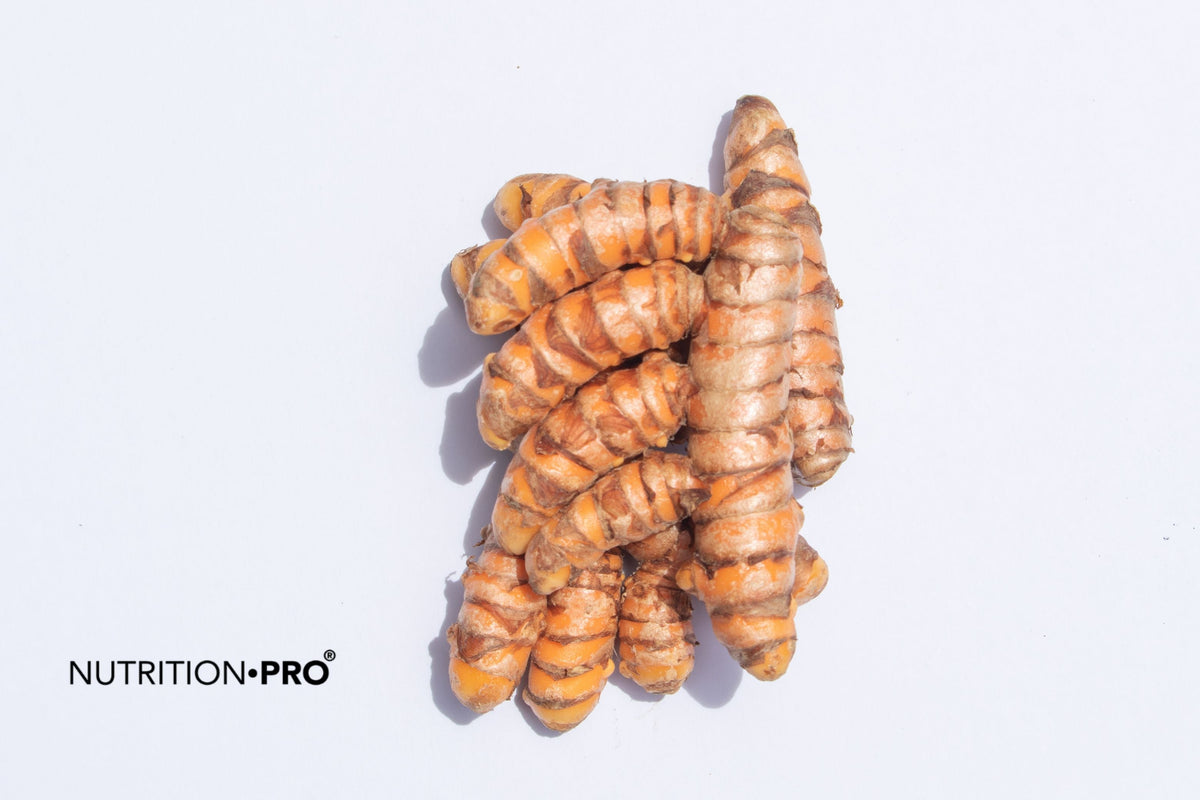
It's increasingly found in the fresh produce section: a small knobbly rhizome, bright orange under beige skin, resembling ginger and staining everything it touches. Fresh turmeric has its devotees, its recipes, and a few misconceptions: that it would be "more effective" than powder, that it must be peeled, that it doesn't keep.
This article explains how to choose it, prepare it, store it for weeks or months, use it raw, cooked or as an infusion, convert between fresh and powder, and in which cases powder remains the best choice. The full information on turmeric (what is proven, the dosage, the dangers of extracts) is in our guide turmeric: proven benefits, dosage, dangers.
Fresh turmeric is the whole rhizome, 80% water: at equal weight, it is three to four times less concentrated in curcuminoids than powder. One tablespoon of fresh grated (8 g) equals one teaspoon of powder (3 g). It scrapes like ginger, grates fine, can be sautéed in fat with pepper, or steeped for 10 minutes without a rolling boil. It keeps 2 to 3 weeks in the refrigerator in paper, 6 months in the freezer (and can be grated while frozen), months in vinegar. What it has more of: more intact essential oils, a bright, citrusy flavor. What it has less of: concentration, stability, dosing precision. No study shows it is more effective than powder; both are equally poorly absorbed without fat or pepper. Same precautions at food dosage: biliary disease, distance from iron.
1. Choosing fresh turmeric
Fresh turmeric (Curcuma longa) is a rhizome, an underground stem, from the same family as ginger, with which it is often confused at the market. The difference is visible when broken: intense orange flesh, almost fluorescent, and an earthy, peppery, slightly citrusy aroma. The rhizomes are thinner than ginger's, in "fingers" of 3 to 8 cm.
Signs of freshness: firmness (it should not bend), taut skin, absence of mold at the ends, weight. A wrinkled, soft, or grayish rhizome has lost its water and some of its essential oils. It is found mainly from October to March, the harvest period in India and Southeast Asia, but imports make it available year-round.
2. Preparing it: wash, scrape, grate
3. Storing it: refrigerator, freezer, jar
| Method | Duration | How | Best for |
|---|---|---|---|
| Refrigerator, paper | 2 to 3 weeks | Unwashed, in a kraft sachet or box with paper towel, in the vegetable drawer. No sealed plastic bag (condensation, mold). | Daily consumption |
| Freezer, whole | 6 months | Washed, dried, in 3 cm sections in a bag. Grates directly when frozen, even finer than fresh. | The best method: no waste, easy portioning |
| Freezer, grated in portions | 3 to 4 months | Grated, packed in an ice cube tray with a drizzle of oil, unmolded into a bag. One cube = one teaspoon fresh. | Curries, soups, express golden lattes |
| Jar, vinegar or alcohol | Several months refrigerated | Peeled sections covered in apple cider vinegar or vodka. The liquid becomes colored and is used in vinaigrettes. | Pickles, vinaigrettes, occasional use |
| Home drying | 1 year away from light | Thin slices, dehydrator or oven at 50°C for several hours, then ground. Time-consuming, uneven, and the resulting grind is coarse. | A curiosity; organic powder is simpler |
4. Using it: raw, cooked, infused
The absorption rules are the same as for powder: curcumin is fat-soluble and has very low bioavailability on its own; the piperine from black pepper multiplies its uptake by 20 (Shoba, Planta Med, 1998); gentle heat solubilizes it in fat; beyond prolonged temperatures of 90°C, it begins to degrade (Ali, Spectrochim Acta, 2019). In practice:
Curries, dals, soups, rice, roasted vegetables
Sauté 1 to 2 tablespoons of fresh grated turmeric with onion, garlic and ginger in oil or ghee, pepper, then add liquid (coconut milk, broth, tomatoes). For roasted vegetables, mix the fresh grated turmeric with olive oil before coating. Fresh turmeric provides a brighter, more citrusy flavor than powder.
Vinaigrettes, juices, smoothies
One teaspoon of fresh grated turmeric in an oil-lemon-pepper vinaigrette, or in a smoothie with avocado or full-fat yogurt (for the fat) and a pinch of pepper. In an orange-carrot juice made with a juicer, then add a teaspoon of coconut oil: without fat, the juice is mainly just pretty.
Turmeric, ginger, lemon
2 to 3 cm of turmeric and ginger sliced, 300 mL of water, 10 minutes at a gentle simmer covered, then lemon juice, pinch of pepper and a teaspoon of coconut oil or a splash of whole milk. Soothing, aromatic, good for colds; for a more substantial intake, the golden latte with milk is more appropriate.
Fresh marinated turmeric
Sticks of turmeric and ginger, lemon juice, salt, a little green chili, in a jar in the refrigerator for 2 days. Classic Indian condiment (haldi ka achar), a spoonful with a dal or rice. The fat comes from the dish.
5. Fresh and powder equivalencies
| Fresh turmeric | Powder | Approximate curcuminoids |
|---|---|---|
| 1 cm of rhizome, approximately 3 g | ½ level teaspoon (1 g) | 20 to 50 mg |
| 2.5 cm, approximately 8 g, or 1 tbsp grated | 1 level teaspoon (3 g) | 60 to 150 mg |
| 5 cm, approximately 15 g | 2 teaspoons (6 g) | 120 to 300 mg |
Orders of magnitude: fresh rhizome contains approximately 80% water and 0.5 to 1.5% curcuminoids, powder 2 to 5%. Content varies greatly depending on variety and origin; a fluorescence study even found a commercial brand of powder almost devoid of curcumin, a sign of adulteration (Ali 2019), hence the value of organic powder with controlled origin. The acceptable daily intake of curcumin (EFSA) is 3 mg per kilogram, or 180 mg for 60 kg: the culinary quantities in the table remain below this.
6. Fresh or powder: what each brings
| Criterion | Fresh turmeric | Turmeric powder |
|---|---|---|
| Curcuminoids at equal weight | 0.5 to 1.5% | 2 to 5% |
| Essential oils (turmerones) | More intact; bright, lemony flavor | Partially lost during drying; earthier flavor |
| Absorption | Poor without fat and pepper; turmerones might help, not demonstrated in humans | Poor without fat and pepper |
| Storage | 2 to 3 weeks refrigerated, 6 months frozen | 1 year away from light |
| Dosage | Approximate (size, moisture content, variety) | Precise by the spoonful |
| Traditional use and studies | Condiments, pickles, local medicinal use | Curry spice, haldi doodh, form of daily uses and intakes studied in epidemiology |
| Price and availability | Variable, not everywhere | Stable, everywhere |
On the question "which is most effective," the honest answer is we don't know, and the difference is probably marginal compared to the two real levers: fat and pepper. Reviews on curcumin (Hewlings 2017) do not distinguish fresh from dried; clinical trials use extracts. What is certain: fresh turmeric grated into a curry cooked in oil with pepper, and a spoonful of powder in the same curry, do roughly the same work; the first will taste better, the second is easier to dose consistently each day.
Organic Curcuma longa rhizome, finely ground, intense color and aroma, with no additives. One teaspoon is equivalent to one tablespoon of fresh grated turmeric, and keeps for one year in its container.
Discover Organic Turmeric →Excessive consumption may cause laxative effects. Store away from light.
7. Precautions and staining
Biliary tract disease, gallstones : turmeric stimulates bile; ANSES advises against it in this case, including with regular food consumption.
Iron supplement : maintain 2 hours distance, curcumin chelates iron (see when to take iron).
Anticoagulants, chemotherapy, narrow-margin treatments : turmeric in cuisine at normal doses is not a concern; concentrated supplements are, see turmeric: dangers and contraindications.
Pregnancy : normal food consumption is possible; no concentrated extracts.
Skin : handled with bare hands, fresh turmeric can cause contact dermatitis in sensitive individuals; it stains nails for several days.
Stains : rinse immediately with cold water (heat sets it), baking soda paste then sun exposure for fabrics, lemon or vinegar for cutting boards and fingers. White plastic is a lost cause.
Choose the situation that fits you: the answer appears just below.
Buy 200 g, wash, cut into chunks, freeze. Grate while frozen directly into hot oil with garlic and ginger, pepper. More vibrant flavor than powder, zero waste. Keep a jar of powder for off days.
Precise dosing, keeps for a year, one teaspoon per day. This is the form of golden latte and traditional daily use. Fresh is a cooking pleasure, not an obligation.
While still firm, wash, dry, cut into chunks, freeze. Or grate it entirely, pack into an ice cube tray with a drizzle of oil, freeze: one cube per dish. If already soft or moldy, discard.
Fresh or powder matters little; fat and pepper change everything, and regularity even more. If you're aiming for an effect on osteoarthritis, read what the studies actually say in the turmeric guide and, before any concentrated extract, the contraindications.
This test provides guidance; it does not replace professional medical advice.
Frequently asked questions about fresh turmeric
How do I use fresh turmeric?
Scrape or peel the thin skin, then grate (fine grater like Microplane), chop or slice. Sauté it in fat with pepper at the start of cooking (curries, soups, vegetables, rice), or steep it for 10 minutes in simmering water with ginger and lemon. One 2 to 3 cm piece grated per dish or cup.
How do I store fresh turmeric?
In the refrigerator, in a paper bag or container with a paper towel, unwashed: 2 to 3 weeks. In the freezer, whole or in pieces: 6 months, and it grates very well frozen, without thawing. In a jar covered with vinegar or alcohol in the refrigerator: several months.
What is the equivalence between fresh and powdered turmeric?
One tablespoon of grated fresh turmeric (about 8 g) equals one teaspoon of powder (3 g). Fresh turmeric contains about 80% water; at equal weight, powder is three to four times more concentrated in curcuminoids. A 2.5 cm piece corresponds roughly to one teaspoon of powder.
Do I need to peel fresh turmeric?
It's not necessary if the rhizome is organic and well-washed: the skin is thin and edible. Scraping with the back of a spoon, as with ginger, is enough. Peel if the skin is thick, dry, or if the turmeric is not organic.
Fresh or powdered turmeric: which is better?
Neither one in absolute terms. Fresh delivers volatile essential oils (turmerones) more intact, a more vibrant citrusy flavor, but keeps poorly and is hard to dose. Powder is more concentrated, stable, convenient, and is the form used in traditional practices and most studies on the spice. Best to have both.
Is fresh turmeric more effective than powder?
No clinical study compares the two. Curcumin, the main active compound, is present in both and equally poorly absorbed without fat and pepper. Fresh better preserves turmerones, aromatic compounds that might improve curcumin absorption, but the effect remains to be demonstrated in humans.
Can I eat fresh turmeric raw?
Yes: grated in a salad, vinaigrette, juice, or smoothie. The flavor is more bitter and peppery than when cooked. Always add fat (oil, avocado, yogurt) and pepper, otherwise curcumin stays in the intestine. Raw or cooked, fresh turmeric stains just as much.
How to make a fresh turmeric infusion?
2 to 3 cm of turmeric and the same amount of ginger grated or sliced, 300 mL of water, 10 minutes at a simmer without boiling vigorously, then a squeeze of lemon juice, a pinch of pepper and, for the fat content, a teaspoon of coconut oil or a splash of whole milk. Without fat and without pepper, the infusion is primarily an aromatic beverage.
Where to buy fresh turmeric?
Asian and Indian grocery stores, health food shops, exotic produce sections of supermarkets, farmers markets. Choose firm rhizomes, smooth, without soft spots or mold, with a bright orange color when broken.
Does fresh turmeric have any contraindications?
The same as the powder, at food doses: not recommended in cases of biliary tract disease or gallstones (it stimulates bile), and at a distance from an iron supplement capsule. No documented hepatic risk at culinary doses, unlike concentrated extracts. When pregnant, normal food consumption is possible.
- Rhizome
- Fleshy underground stem; this is the part of turmeric and ginger that is consumed.
- Curcuminoids
- Active pigments of turmeric, 0.5 to 1.5% of fresh rhizome, 2 to 5% of the powder.
- Turmerones
- Aromatic compounds in turmeric essential oil, more abundant in the fresh form.
- Piperine
- Alkaloid from black pepper that multiplies the absorption of curcumin.
- Ali Z, Saleem M, Atta BM, Khan SS, Hammad G. Determination of curcuminoid content in turmeric using fluorescence spectroscopy. Spectrochim Acta A Mol Biomol Spectrosc. 2019;213:192-198. doi:10.1016/j.saa.2019.01.028
- Shoba G, Joy D, Joseph T, Majeed M, Rajendran R, Srinivas PS. Influence of piperine on the pharmacokinetics of curcumin in animals and human volunteers. Planta Med. 1998;64(4):353-356. doi:10.1055/s-2006-957450
- Hewlings SJ, Kalman DS. Curcumin: a review of its effects on human health. Foods. 2017;6(10):92. doi:10.3390/foods6100092
- Anses. Turmeric or curcumin in dietary supplements: cases of hepatic adverse effects. Vigil'Anses n°17, June 2022. vigilanses.anses.fr


