

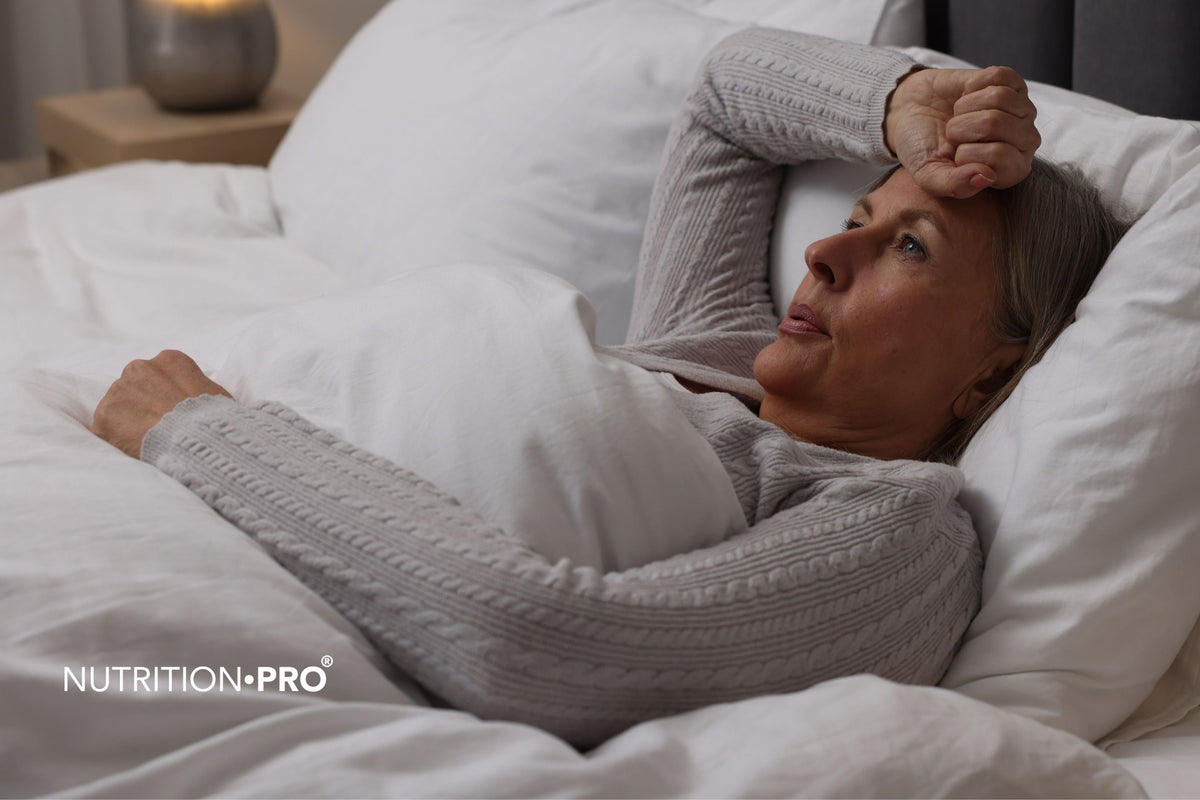
The wave rises from the chest toward the face, the heat becomes unbearable, sweat beads on the skin, and three minutes later it's all over—until the next one. Hot flashes are the number one symptom of menopausal transition, but they're not simply "it's hormonal, it will pass": they have a precise mechanism, identifiable triggers, immediate remedies, and approaches documented by clinical trials.
This guide covers the entire topic: why they occur (including outside menopause, a case worth attention), how to reduce them daily, what plants are worth, and when the right answer is a medical consultation. It complements our general guide menopause: symptoms, duration and natural solutions.
A hot flash is a glitch in your internal thermostat: deprived of estrogen, the hypothalamus sees its thermal comfort zone shrink and triggers abrupt vasodilation lasting 1 to 5 minutes. The plan that works has four levels: identify your personal triggers with two weeks of journaling (alcohol, coffee, spices, heat, stress at the top), equip yourself for episodes (layered clothing, slow breathing at 6 cycles per minute, cool water), test a plant-based approach documented over 8 to 12 weeks (sage -64% in open trial, hops significant versus placebo, overall effect of phytoestrogens around -1.3 flashes/day according to JAMA), and consult if quality of life is affected, as effective treatments exist, both hormonal and non-hormonal. Special case: hot flashes outside menopause context (young woman, man, associated signs) warrant medical advice, as the thermostat can be disrupted by thyroid issues, medications, or hypoglycemia.
1. What happens in your body
The body's thermostat is located in the hypothalamus. It maintains core temperature within a comfort range, the thermoneutral zone, outside of which it triggers either shivering or vasodilation with sweating. Estrogen plays a role in calibrating this thermostat: when it drops, the comfort zone shrinks dramatically. A minimal variation in internal temperature, a hot coffee, an emotion, a room at 72°F, is enough to make the brain think the body is overheating.
The response is disproportionate and stereotyped: abrupt dilation of blood vessels in the skin (the heat rising from chest to neck and face, the flushing), sometimes profuse sweating, possible heart acceleration, all over 1 to 5 minutes, often followed by chills when the sweat evaporates. It's neither psychological nor dangerous in itself: it's a thermoregulatory reflex triggered at the wrong time. Understanding this mechanism helps already, because it explains why effective solutions work on three fronts: avoid what pushes temperature toward the threshold (triggers), help the body evacuate heat quickly (immediate steps), and partially recalibrate the system (plants, treatments).
2. Hot flashes without menopause: other causes
| Cause | Typical indicators | Behavior |
|---|---|---|
| Perimenopause | 45 years and older, irregular cycles, other transition symptoms | The scope of this article; see also the menopause guide |
| Hyperthyroidism | Permanent heat intolerance, weight loss, palpitations, nervousness | Medical consultation and assessment (TSH) |
| Medications | Antidepressants, tamoxifen, corticosteroids, certain antihypertensives; onset related to treatment | Discuss with your prescriber, do not stop anything on your own |
| Alcohol | Flushing during or after consumption, night sweats after an alcoholic dinner | Simple test: two weeks without alcohol in the evening |
| Hypoglycemia | Sweating with hunger, trembling, discomfort, far from meals | Consultation if recurrent, especially under antidiabetic treatment |
| Anxiety, panic attack | Emotional context, chest tightness, associated feeling of fear | Stress management approaches; consultation if disabling |
| In men | Anti-hormonal treatment (prostate) most often; possible testosterone deficiency | Medical advice, specific management |
Warning signs that require immediate consultation: hot flushes with unexplained weight loss, palpitations at rest, fever, drenching night sweats in a young person, or any episode in a man without hormonal treatment.
3. Triggers and the diary method
Since the thermoneutral zone is narrowed, anything that raises internal temperature or triggers vasodilation becomes a potential trigger. The repeat offenders:alcohol (direct vasodilator, particularly evening wine), coffee, spicy dishes and very hot beverages, overheated environments (office, car in the sun, overly hot bath), tight or synthetic clothing that traps heat, acute stress (adrenaline uses the same pathways) and tobacco, associated with more frequent and earlier hot flashes.
4. Immediate actions when the wave hits
Once vasodilation is triggered, it will run its course in a few minutes. Helpful actions work on two levels: accelerate heat evacuation and cut off the anxiety amplification. The most documented reflex is slow, abdominal breathing, approximately 6 cycles per minute (5-second inhalation, 5-second exhalation): it calms the adrenaline response and noticeably reduces discomfort, even when it doesn't change the physiology of the episode. Complete with the practical trio: remove one layer of clothing (hence the permanent strategy of layered dressing, cardigan or open shirt rather than sweater), cool water to drink, and if a sink is accessible, wrists and inner forearms under cold water, the area where blood circulates close to the skin.
The last action is mental: knowing that the episode lasts 1 to 5 minutes and is harmless changes how you experience it. Many women describe that half the discomfort came from the struggle and anticipated social embarrassment; an inner "this passes in three minutes" defuses a good portion of it.
5. Plants documented by clinical trials
In 67 postmenopausal women, a hops extract standardized to 8-prenylnaringenin (100 µg) significantly reduced hot flash scores at 6 weeks compared to placebo, with good tolerability.
Heyerick A, et al. Maturitas 2006;54(2):164-175. DOI: 10.1016/j.maturitas.2005.10.005
The hops owes this result to 8-prenylnaringenin, one of the most powerful phytoestrogens in the plant kingdom. A second trial, in crossover versus placebo, suggests the superiority of the extract on overall menopause scores in the second period (Erkkola, Phytomedicine, 2010). The sage displays the most striking figure, a score of reduced hot flashes by 50% in 4 weeks and 64% in 8 weeks in 69 women (Bommer, Advances in Therapy, 2011), with the honesty that is required: open trial, without placebo, so exact effect to be confirmed. And the overall picture remains that of the JAMA meta-analysis on 62 trials: approximately -1.3 hot flash per day with phytoestrogens, a modest but real effect, achieved with excellent tolerability (Franco, JAMA, 2016).
This is exactly the niche of our Menopause Bio : hops and sage, the two documented plants, supplemented by lemon balm (calming, sleep), blackcurrant and maca (vitality), in organic form and manufactured in France. Honest instructions: 3 capsules per day, and an assessment over 8 to 12 weeks with the frequency log, the duration of positive trials. The complete overview of approaches, including HRT, is in our menopause guide. Non-negotiable reminder: after hormone-dependent cancer, no phytoestrogens without your oncologist's approval.
6. The case of night sweats
Night sweats are nocturnal hot flashes aggravated by context: the duvet traps the heat that vasodilation is trying to release, the bedroom is often too warm, and dinner alcohol triggers episodes in the second half of the night. The result is drenched sheets and fragmented sleep, often making it the most troublesome symptom of the transition.
The effective strategy starts with physics before pharmacy: bedroom at 17-18°C, bedding and nightwear in breathable fibers (cotton, linen, bamboo), light duvet or separate from your partner, glass of water and change of clothes within reach to shorten wake times, and evening alcohol eliminated, the test with the fastest results. On plants, transparency is essential: the JAMA meta-analysis, while validating an effect on daytime hot flashes, found no demonstrated effect on night sweats (Franco, JAMA, 2016). Lemon balm can help you fall back asleep after waking; if nights remain disrupted despite everything, it's a reason for consultation in its own right, not an inevitability.
7. When to consult, and for which options
Three entry points to consultation. The first: impact on life. Destroyed sleep, sabotaged days, affected mood: HRT remains the most effective treatment for severe forms, and non-hormonal options also exist (certain nervous system treatments have documented efficacy on hot flashes), especially when HRT is contraindicated. This is an individual medical discussion, detailed in our menopause guide. The second: unusual context, young woman, man, associated signs (weight loss, palpitations, fever), where the question is no longer menopause but the cause. The third: hormone-dependent history, where all management, including plants, goes through the medical team.
Hops (8-prenylnaringenin, tested against placebo) and sage (the traditional plant for hot flashes), supplemented with organic lemon balm, blackcurrant and maca. 3 capsules per day, to be assessed over 8 to 12 weeks with your frequency log. Manufactured in France, subscription at -25%.
Discover Menopause Bio →Rated 4.4/5 by our customers. Prior medical opinion required in case of hormone-dependent history or ongoing treatment.
Choose the situation that matches yours: the answer displays just below.
Two weeks of tracking to identify your triggers, neutralizing them one by one, layering clothing and slow breathing for episodes, then a documented plant regimen (sage, hops) evaluated over 8 to 12 weeks with frequency noted before/after. You have the profile where this strategy works best.
Room at 17-18 °C, breathable bedding and pajamas, lightweight comforter, evening alcohol eliminated (the most cost-effective test, results in one week), change of clothes within reach. Phytoestrogens haven't proven effective for this specific symptom: focus on environment, lemon balm for falling back asleep, and consult if nights remain disrupted.
Keep the foundations (triggers, immediate gestures), but your situation warrants medical discussion: HRT is the most effective treatment for severe forms and non-hormonal options exist. Seeking it isn't giving up on natural approaches, it's supplementing what's no longer enough. Note your frequencies: this diary will also help your doctor.
Outside the context of menopausal transition, hot flushes have other possible explanations: thyroid, medications, alcohol, hypoglycemia, anxiety, hormonal treatment in men. The right approach is medical advice with assessment, not a supplement. Bring your medication list and the context of episodes: this is what guides diagnosis.
This test provides guidance; it does not replace professional medical advice.
Frequently asked questions about hot flushes
What causes hot flushes?
At menopause, the drop in estrogen narrows the comfort zone of the internal thermostat (the hypothalamus): even slight variations trigger sudden vasodilation, with heat, flushing and sweating for 1 to 5 minutes. Outside menopause, other causes exist: thyroid disorders, certain medications, alcohol, hypoglycemia, anxiety, or hormonal treatments in men.
Can you have hot flushes without being menopausal?
Yes. Perimenopause causes them years before periods stop, but also: hyperthyroidism, certain medications (antidepressants, tamoxifen, corticosteroids), alcohol, hypoglycemia, anxiety attacks, fever. Unusual flushes in a young woman, a man, or accompanied by other signs (weight loss, palpitations) warrant a consultation.
What should you do immediately when a hot flush arrives?
Don't fight it but go with it: breathe slowly and deeply (6 breaths per minute), remove a layer of clothing, drink cool water, run your wrists under cold water if possible, and let the wave pass, which rarely lasts more than 5 minutes. Anticipation worsens perception: breathing techniques reduce the discomfort felt.
What are the triggers for hot flushes?
The most common: alcohol (especially wine in the evening), coffee, spicy dishes, very hot beverages, overheated rooms, tight or synthetic clothing, acute stress, tobacco. They vary from woman to woman: two weeks of tracking (time, context, intensity) generally suffice to identify yours and neutralize some of them.
What is the best natural remedy for hot flushes?
No plant eliminates them, but two have clinical trials: sage (flush score -64% in 8 weeks in an open trial) and hops (significant reduction versus placebo at 6 weeks thanks to 8-prenylnaringenin). The JAMA meta-analysis quantifies the overall effect of phytoestrogens at approximately -1.3 flushes per day: modest but real, to be evaluated over 8 to 12 weeks.
How long does a hot flush last?
The episode itself typically lasts 1 to 5 minutes: heat rising from the chest to the face, flushing, sweating, sometimes palpitations, then chills as the sweat cools. The phenomenon in a woman's life, however, lasts years: 7 years on average, over 10 for some.
Why are hot flushes worse at night?
Night combines multiple factors: comforter and bedding that retain heat, room often too warm, and dinner alcohol triggering sweats in the second part of the night. Night sweats respond first to environmental measures (17-18 °C, breathable bedding, evening alcohol eliminated); the JAMA meta-analysis finds no demonstrated effect of phytoestrogens on this specific symptom.
Can men have hot flushes?
Yes, mainly under anti-hormonal treatment (prostate cancer), where they are frequent, and sometimes with marked testosterone deficiency. The thermoregulatory mechanism is the same. In a man without treatment, repeated flushes warrant medical advice.
When should you consult for hot flushes?
Three situations: when they significantly degrade quality of life (sleep, work, mood), as effective treatments exist, including HRT and non-hormonal options; when they occur outside the context of menopause (age, male) or with associated signs (weight loss, palpitations, fever); and after hormone-dependent cancer, where management is specific.
Can stress trigger hot flushes?
Yes, in two ways: acute stress can trigger a flush in a woman in menopausal transition (adrenaline acts on the same circuits), and anxiety amplifies the perception and discomfort of each episode. This is why slow breathing and stress management approaches reduce reported discomfort, even when they don't change the number of episodes.
- Thermoneutral zone
- Range of internal body temperature at which the body needs neither to sweat nor to shiver; narrowed by the drop in estrogen.
- Vasodilation
- Sudden widening of skin blood vessels to release heat; the mechanism behind hot flushes.
- 8-prenylnaringenin
- Phytoestrogen from hops, active ingredient in studies showing positive results against placebo.
- Vasomotor symptoms
- Medical term encompassing hot flushes and night sweats.
- HRT
- Hormone replacement therapy, the most effective option for severe forms, by prescription.
- Franco OH, Chowdhury R, Troup J, et al. Use of plant-based therapies and menopausal symptoms: a systematic review and meta-analysis. JAMA. 2016;315(23):2554-2563. doi:10.1001/jama.2016.8012
- Heyerick A, Vervarcke S, Depypere H, et al. A first prospective, randomized, double-blind, placebo-controlled study on the use of a standardized hop extract to alleviate menopausal discomforts. Maturitas. 2006;54(2):164-175. doi:10.1016/j.maturitas.2005.10.005
- Erkkola R, Vervarcke S, Vansteelandt S, et al. A randomized, double-blind, placebo-controlled, cross-over pilot study on the use of a standardized hop extract to alleviate menopausal discomforts. Phytomedicine. 2010;17(6):389-396. doi:10.1016/j.phymed.2010.01.007
- Bommer S, Klein P, Suter A. First time proof of sage's tolerability and efficacy in menopausal women with hot flushes. Adv Ther. 2011;28(6):490-500. doi:10.1007/s12325-011-0027-z


