

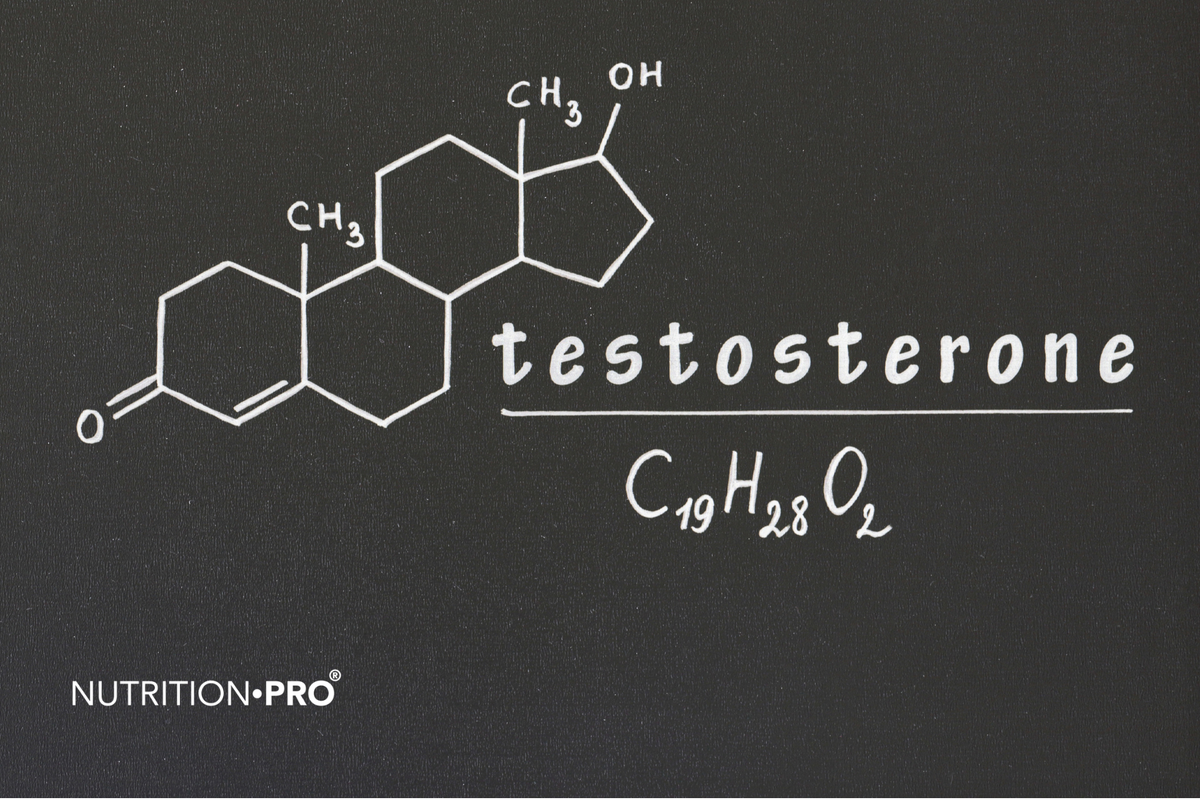
Tired, less desire, belly fat, low mood: on the internet, all of this is called "low testosterone" and is fixed with a booster. A European study did the work seriously: survey 3,369 men aged 40 to 79, measure their testosterone, and determine which symptoms were actually truly linked to it. The answer is narrower than the internet list, and far more useful.
This guide states which symptoms matter and which mislead, which thresholds define low testosterone, how to get tested so the result actually means something, what the doctor looks for next, and what the two largest treatment trials showed. Our testosterone guide covers what lowers it and the supplements.

The symptoms that matter. Among 3,369 men, only three symptoms proved specifically linked to low testosterone: weak morning erections, decreased desire, erectile dysfunction. Fatigue and mood are linked to it, but they have too many other causes to guide diagnosis alone. The threshold. Late-onset hypogonadism: at least three sexual symptoms and total testosterone below 11 nmol/L, or 3.2 ng/mL.
The test. In the morning, fasting, and repeated to confirm, according to the Endocrine Society; free testosterone if the result is near the threshold. The treatment. In the NEJMtrials, it improves sexual symptoms, not fatigue; it is non-inferior to placebo for cardiovascular outcomes in 5,246 men, with more atrial fibrillation and thromboembolism. A medical decision, with follow-up. Supplements do not treat hypogonadism.
Symptoms that matter, and those that mislead
A random sample of 3,369 men aged 40 to 79 was interviewed at eight European centers about their general, sexual, physical, and psychological health, and their total testosterone was measured in the morning by mass spectrometry. Symptoms of weak morning erection, decreased desire, erectile dysfunction, inability to vigorous effort, depression, and fatigue were significantly linked to testosterone levels. However, only the three sexual symptoms had a syndromic association with low testosterone. An inverse relationship between the increasing number of sexual symptoms and declining testosterone was observed and independently confirmed in the validation sample.
Wu FC, Tajar A, Beynon JM, et al. N Engl J Med 2010;363(2):123-135. DOI: 10.1056/NEJMoa0911101
The key word is syndromic. Six symptoms are statistically linked to testosterone, but only three form a pattern that characterizes it: morning erections that are less frequent or less firm, a decrease in desire, and erectile dysfunction. And the more these three cluster together, the lower the testosterone. Fatigue, low mood, and loss of vigor are linked too, but they accompany so many other situations—sleep, stress, depression, excess weight, thyroid issues—that by themselves they are not indicative. Our article on adrenal fatigue details what a doctor looks for behind fatigue.
A man who is tired with abdominal weight and low mood, but whose desire and morning erections are intact, is unlikely to have low testosterone by study standards, and very likely has a sleep or weight problem. A man whose three sexual symptoms have appeared together and persist has good reason to ask for testing. This is the distinction that the internet list erases.
The thresholds
The EMAS study definedlate-onset hypogonadism by the presence ofat least three sexual symptoms associated with total testosterone below 11 nmol/L, or 3.2 ng/mL or 320 ng/dL, and free testosterone below 220 pmol/L. The probability of symptoms increased in the 8 to 13 nmol/L range: there is no sharp threshold, but a slope.
| Unit | EMAS Threshold | What it means |
|---|---|---|
| nmol/L | 11 | The unit used by French laboratories and European studies |
| ng/mL | 3.2 | Common unit on French results; multiply by 3.47 to obtain nmol/L |
| ng/dL | ≈ 320 | The American unit; trials in the NEJM included men below 275 or 300 ng/dL |
| Free Testosterone | 220 pmol/L | Calculated or measured when total is close to the threshold or when SHBG is altered |
These thresholds are population reference points. A man at 12 nmol/L with three symptoms and a man at 10 with none are not in the same situation, and the Endocrine Society's recommendation explicitly states this: diagnosis is only made when symptoms and an unequivocally low and consistent level are present. It is the physician who interprets, not the number.
The assay: the method that gives a true result
We recommend diagnosis of hypogonadism only in men presenting with symptoms and signs compatible with testosterone deficiency and unequivocally low and consistently low serum testosterone concentrations. We recommend measuring total morning fasting testosterone with a precise and reliable assay as the initial diagnostic test, and confirming the diagnosis by repeating the morning fasting total testosterone measurement. In men whose total testosterone is close to the lower limit of normal, or who have a condition that modifies SHBG, we recommend obtaining free testosterone. In men in whom a deficiency is established, we recommend additional diagnostic evaluation to determine its cause.
Bhasin S, Brito JP, Cunningham GR, et al. J Clin Endocrinol Metab 2018;103(5):1715-1744. DOI: 10.1210/jc.2018-00229
What the doctor looks for next
The recommendation asks, once the deficiency is established, for an evaluation to find its cause, because low testosterone is often the consequence of something else. Common causes are overweight, which lowers total testosterone as shown in the Baltimore study cited in our testosterone guide; sleepapnea ; type 2 diabetes ; certain medications, particularly opioids and long-term corticosteroids;alcohol ; and chronic sleep deprivation. More rarely, testicular or pituitary dysfunction, which the doctor investigates through measuring command hormones, LH and FSH, and sometimes prolactin.
This step is as important as the test: treating overweight or apnea can raise testosterone without hormone therapy, and pituitary-related causes are not treated the same way as age-related decline.
The treatment: what the trials show
790 men aged 65 and older, with testosterone below 275 ng/dL and suggestive symptoms, received testosterone gel or placebo for one year. Treatment raised testosterone to the average level of men aged 19 to 40. This increase was accompanied by a significant increase in sexual activity, desire, and erectile function. The percentage of men who improved their six-minute walk distance did not differ in the dedicated trial, but did differ in the overall participants. Testosterone had no significant benefit on vitality, measured by a fatigue scale, but treated men reported slightly better mood and less severe depressive symptoms. The number of participants was too low to draw conclusions on risks.
Snyder PJ, Bhasin S, Cunningham GR, et al. N Engl J Med 2016;374(7):611-624. DOI: 10.1056/NEJMoa1506119
This result aligns exactly with the EMAS study: the treatment acts on what was specifically linked to testosterone, sexual symptoms, and not on what was not, fatigue. A man who expects hormone therapy to resolve his exhaustion will be disappointed; one who expects an effect on desire and erections has data to support him.
In a multicenter, randomized, double-blind, placebo-controlled trial, 5,246 men aged 45 to 80 years with cardiovascular disease or high risk, symptoms of hypogonadism, and two fasting testosterone levels below 300 ng/dL received testosterone gel or placebo. Treatment lasted an average of 21.7 months, with follow-up of 33 months. A major cardiovascular event occurred in 182 patients, 7.0 percent, in the testosterone group and 190, 7.3 percent, under placebo, hazard ratio 0.96, which established non-inferiority. A higher incidence of atrial fibrillation, acute kidney injury, and pulmonary embolism was observed in the testosterone group. The trial was funded by AbbVie.
Lincoff AM, Bhasin S, Flevaris P, et al. N Engl J Med 2023;389(2):107-117. DOI: 10.1056/NEJMoa2215025
On the outcome of greatest concern—heart attack, stroke, and cardiovascular mortality—treatment performed no worse than placebo in high-risk men, and that is a reassuring result. But it caused more atrial fibrillation,acute kidney injury andpulmonary embolism, and the trial was funded by the manufacturer. The Endocrine Society's recommendation furthermore lists situations where treatment should not be started, including plans for fatherhood in the near term, prostate or breast cancer, elevated PSA, elevated hematocrit, untreated severe sleep apnea, recent heart attack or stroke. And it requires monitoring: symptoms, testosterone, hematocrit, prostate, in the first year. It is a prescription with a framework, not a simple pill.
What about supplements?
The rule: no supplement treats hypogonadism. Our testosterone guide details why most boosters do nothing according to two systematic reviews, and what each plant has actually demonstrated.
The two exceptions. Zinc : its deficiency measurably lowers testosterone and correcting it raises it, which can be verified by testing; at nutritional dose, it corrects a deficiency, it has no effect in men who are not deficient.Ashwagandha : a modest positive effect in healthy men, documented by two reviews, which has nothing to do with treating a confirmed deficiency. In both cases, after testing, not instead of it.
14 mg elemental zinc per day in gluconate form, the form from the reference study in elderly men with deficiency, with 2 mg of vitamin B6. Two capsules with meals, 60 days. To correct an objective deficiency, not to replace a testosterone test or medical consultation.
View the ZincNo effect on testosterone in the absence of deficiency. Do not exceed the recommended dose: excess zinc interferes with copper absorption.
Choose what best describes you: the answer displays just below.
Fatigue, belly fat, and mood are linked to testosterone in the EMAS study, but they are not specific, and without the three sexual symptoms they first point toward sleep, weight, stress, or thyroid. A general workup with ferritin, TSH, and vitamin D, and questions about sleep, before testosterone testing. The doctor will decide whether to add testosterone testing.
The three sexual symptoms together are precisely those that have a syndromic association with low testosterone. Request a total testosterone test in the morning while fasting, repeated if it is low, and consult with the results. The doctor will look for a cause: weight, sleep, medications, or more rarely pituitary issues.
An afternoon test may come out artificially low, and a low level without symptoms does not make a diagnosis according to the Endocrine Society. Repeat it in the morning while fasting, twice, and discuss it with your doctor with the context. Don't take anything in the meantime: a poorly done result cannot be corrected with a supplement.
What do you expect from treatment? Trials show an effect on desire and erections, not on fatigue. What are your risk factors: heart, prostate, hematocrit, sleep apnea, plans for fatherhood? What follow-up is planned in the first year? And has the cause been investigated? Excess weight or sleep apnea treated can change things without hormone therapy. These are the questions the guideline asks the doctor to discuss with you.
This test provides guidance; it does not replace professional medical advice.
Frequently asked questions
The symptoms and thresholds
What are the symptoms of low testosterone?
The European EMAS study, published in the New England Journal of Medicine, surveyed 3,369 men aged 40 to 79 years at eight centers and tested their testosterone. Six symptoms were linked to the level: weak morning erections, decreased desire, erectile dysfunction, inability to perform vigorous exercise, depression, and fatigue. But only the three sexual symptoms had a syndromic association, that is, specific to low testosterone. Fatigue and mood are linked to it, but they have so many other causes that they are not enough to guide diagnosis. The more sexual symptoms accumulate, the lower the testosterone.
At what level do we speak of low testosterone?
The EMAS study defines late-onset hypogonadism by the presence of at least three sexual symptoms associated with total testosterone below 11 nmol/L, or 3.2 ng/mL, and free testosterone below 220 pmol/L. The probabilities of symptoms increased in the range of 8 to 13 nmol/L. These thresholds are population benchmarks: a man at 12 nmol/L with three symptoms and a man at 10 with none are not in the same situation, and it is the doctor who interprets, with free testosterone or SHBG if the level is near the cutoff.
Does andropause exist?
Not in the sense of a hormonal shutdown comparable to menopause. Testosterone declines gradually with age, by just under 1% per year, without a clear break. The EMAS study specifically looked for whether such a syndrome existed and found one only in a minority of men: those who have three sexual symptoms and a low level, what endocrinologists call late-onset hypogonadism rather than andropause. In most men, age-related decline does not produce this picture.
The test
How to get testosterone tested correctly?
The Endocrine Society recommendation is precise: total testosterone measured in the morning, fasting, with a reliable assay, then repeated a second time to confirm, because the level varies from day to day. If the result is near the low threshold, or if a condition modifies SHBG—obesity, age, liver—free testosterone is calculated or measured. The diagnosis is made only if symptoms and a low level, unequivocal and consistent, are present. An isolated afternoon test, or a saliva test bought online, does not meet these criteria.
Why test in the morning?
Because testosterone follows a circadian rhythm with a peak at the end of the night and upon waking, then a decline during the day. Study thresholds and recommendations are based on morning blood samples, between 7 and 10 a.m.; an afternoon sample can give an artificially low level and lead to a false diagnosis. Fasting is required because a meal temporarily lowers testosterone.
What are the causes of low testosterone?
The recommendation of the Endocrine Society asks, once the deficit is confirmed, for an evaluation to find its cause. The most frequent are obesity, which lowers total testosterone, sleep apnea, type 2 diabetes, certain medications including opioids and long-term corticosteroids, alcohol, and more rarely damage to the testicles or pituitary gland, which is investigated by measuring control hormones. Chronic sleep deprivation also lowers testosterone measurably, as detailed in our testosterone guide.
Treatment
Is testosterone treatment effective?
The Testosterone Trials, published in the New England Journal of Medicine, treated 790 men aged 65 and older with low testosterone and symptoms with testosterone gel or placebo for one year. Treatment significantly increased sexual activity, desire and erectile function, modestly improved walking and slightly improved mood. It had no effect on vitality, that is, fatigue. In other words, it acts on what was specifically linked to testosterone in the EMAS study, sexual symptoms, and not on what was not.
Is testosterone treatment dangerous for the heart?
The TRAVERSE trial, published in 2023 in the New England Journal of Medicine, was designed to answer this question: 5,246 men aged 45 to 80 at high cardiovascular risk, with symptoms and two measurements below 300 ng/dL, treated with gel or placebo for an average of 22 months. Major cardiovascular events occurred in 7.0% of those treated and 7.3% under placebo, establishing non-inferiority. Conversely, atrial fibrillation, acute kidney failure and pulmonary embolism were more frequent with testosterone. The trial was funded by the manufacturer. Treatment is therefore a medical decision, with monitoring.
Can a dietary supplement treat low testosterone?
No. Hypogonadism is a disease that is diagnosed by repeated blood tests and treated medically. No plant replaces it, and our testosterone guide details why most boosters do nothing. Two exceptions: zinc deficiency lowers testosterone and can be corrected, which is verified by a blood test; and ashwagandha has a modest positive effect in healthy men, which has nothing to do with treating an established deficit. In both cases, after the evaluation, not instead of it.
What should you remember about low testosterone?
That three symptoms matter, weak morning erections, decreased desire, erectile dysfunction, and that fatigue alone does not point to it. That the reference threshold is 11 nmol/L of total testosterone, with these symptoms. That the blood test is done in the morning on an empty stomach and is repeated. That a doctor looks for a cause, often weight, sleep or a medication. That treatment acts on sexual symptoms, not on fatigue, and that it is safe for the heart in the large trial but with adverse effects to monitor. And that no supplement replaces it.
Glossary
- Late-onset hypogonadism
- Testosterone deficiency appearing with age, defined by the EMAS study by three sexual symptoms and total testosterone below 11 nmol/L.
- Syndromic association
- Link between a group of symptoms and a biological abnormality strong enough to define a syndrome; only the three sexual symptoms had this in EMAS.
- Total and free testosterone
- The total includes the protein-bound fraction; the free is the active fraction, calculated or measured when the total is close to the limit.
- SHBG
- Protein that binds testosterone; modified by age, obesity and liver function, hence the use of free testosterone in these cases.
- Non-inferiority
- Type of trial that verifies that a treatment does not perform worse than a comparator beyond a fixed margin; the format of TRAVERSE.
- Hematocrit
- Proportion of red blood cells in the blood; testosterone treatment can raise it, hence its monitoring.
Sources
The studies cited below were identified via PubMed.
- Wu FC, Tajar A, Beynon JM, et al. Identification of late-onset hypogonadism in middle-aged and older men. New England Journal of Medicine, 2010;363(2):123-135. DOI
- Bhasin S, Brito JP, Cunningham GR, et al. Testosterone treatment in hypogonadal men: clinical practice recommendation from the Endocrine Society. Journal of Clinical Endocrinology and Metabolism, 2018;103(5):1715-1744. DOI
- Snyder PJ, Bhasin S, Cunningham GR, et al. Effects of testosterone treatment in older men. New England Journal of Medicine, 2016;374(7):611-624. DOI
- Lincoff AM, Bhasin S, Flevaris P, et al. Cardiovascular safety of testosterone replacement therapy. New England Journal of Medicine, 2023;389(2):107-117. DOI
- Harman SM, Metter EJ, Tobin JD, Pearson J, Blackman MR. Longitudinal effects of aging on total and free testosterone in healthy men: the Baltimore Longitudinal Study. Journal of Clinical Endocrinology and Metabolism, 2001;86(2):724-731. DOI


