

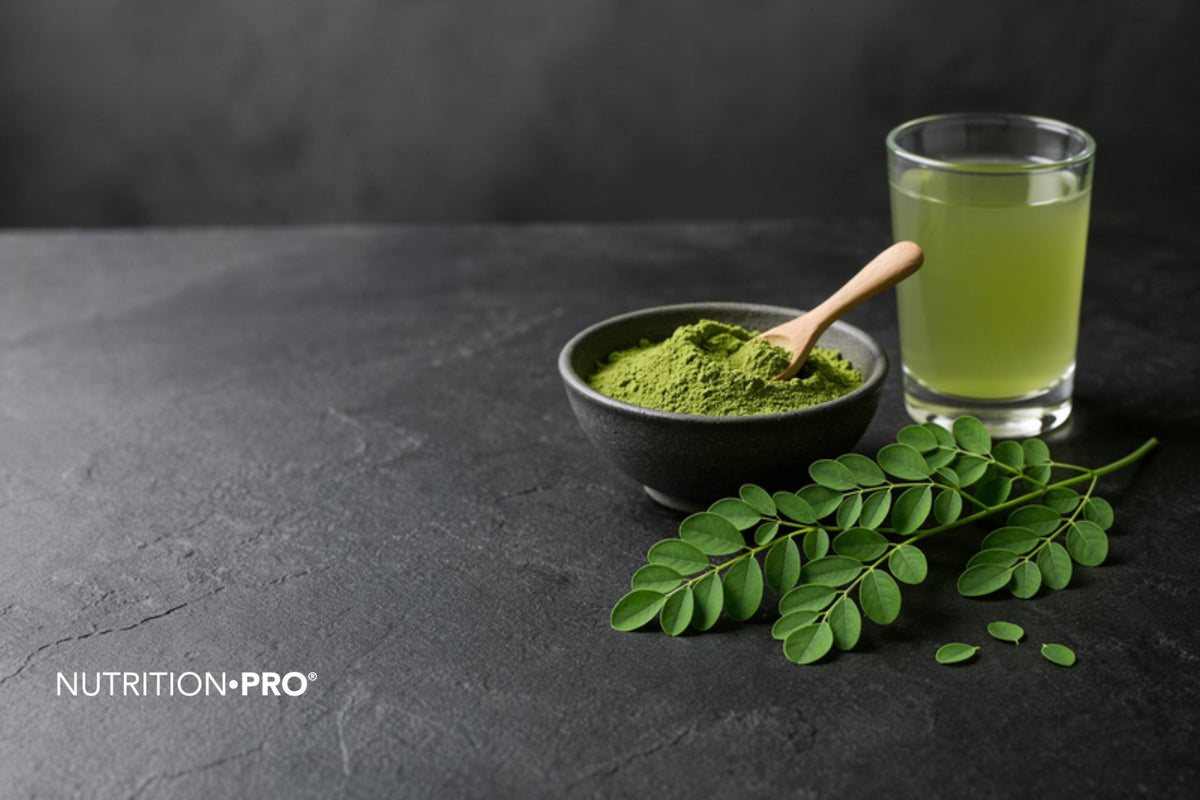
Moringa is often presented as a weight loss ally. Human trials provide a more nuanced answer. In the most recent meta-analysis dedicated to weight, which brings together eight randomized trials, people taking moringa did not lose more weight than others: the average difference was 0.06 kg. A second meta-analysis of nine trials reaches the same conclusion and judges the level of evidence very weak.
This guide compiles studies identified via PubMed: trials of moringa alone, trials of formulas combining moringa with other plants, including null results, effects on blood sugar and appetite, doses studied and precautions. It complements our article on the benefits of organic moringa, without repeating it.

What the trials show : in meta-analyses, moringa did not produce greater weight loss than in control groups (average difference of 0.06 kg across four moringa-only trials; non-significant body mass index difference across seven trials, including one combination formula trial). A recent leaf extract trial found a more marked decrease in body mass index at the second month, which was no longer significant at the third. Formulas combining moringa with turmeric and curry leaves resulted in 3 to 4.5 kg more weight loss than placebo, but it is impossible to attribute this effect to moringa.
What is best documented : small effects on blood sugar in people with prediabetes, a decrease in hunger after an enriched meal and leads on blood pressure. Moringa is a highly nutritious food; it does not replace a caloric deficit or physical activity.
- Moringa, what are we talking about?
- Leads from animal studies
- Meta-analyses in humans
- Trials of moringa alone
- Formulas combining moringa with other plants
- Blood sugar, insulin and appetite
- Blood pressure and cholesterol
- Doses studied
- Tolerance and precautions
- How to incorporate moringa into a weight loss approach
- Frequently asked questions
Moringa, what are we talking about?
The Moringa oleifera is a tree from tropical regions whose leaves are mainly consumed, dried and then ground into powder. Clinical trials tested three very different forms: the leaf powder in capsules or mixed into meals, more leaf extracts concentrated in polyphenols, and combined formulas where moringa is just one ingredient among others. These three forms are not interchangeable, and this is one reason why results vary from one study to another.
The leaves contain polyphenols, notably quercetin and chlorogenic acid, as well as glucosinolates and their derivatives, isothiocyanates. It is these compounds that researchers link to effects observed in animals. They are also rich in protein: the information sheet for our organic moringa powder indicates 27 g of protein and 280 kcal per 100 g. At a dose of 900 mg, this represents approximately 2.5 kcal (editorial calculation): moringa is not an energy source that significantly impacts your daily caloric balance.
A leaf extract concentrates certain compounds, while a powder provides the whole leaf: a result obtained with one form does not automatically transfer to another.
Clues from animal studies
The idea of moringa as a "weight loss" aid comes mainly from animal studies. In rats made obese by a high-fat diet, a leaf extract given at 400 mg per kilogram of body weight for one month reduced weight gain, adiposity index, blood glucose, and insulin, with decreased leptin and increased adiponectin, two hormones produced by adipose tissue.
In rats on the same diet, a formula combining moringa extracts, curry leaf extracts, and turmeric increased resting energy expenditure measured by calorimetry, with increased UCP-1 protein, involved in heat production by fat cells, and decreased fat mass. A 2020 systematic review identifies 33 animal studies on blood glucose, most showing positive results, versus only 8 human studies with highly variable protocols.
In obese rats, the leaf extract at 400 mg/kg reduced final weight and adiposity. In 15 women aged 45 to 55 years who were overweight or obese, 400 mg capsules taken for 8 weeks were followed by a decrease in body mass index compared to baseline, with no control group.
Ezzat SM, El Bishbishy MH, Aborehab NM, et al., 2020. DOI: 10.1016/j.jep.2020.112541
These results describe plausible mechanisms. Animal doses often far exceed what people consume, and the absence of a control group in the series of 15 women makes it impossible to separate moringa's effect from a change in habits. Only controlled human trials can provide the answer.
Meta-analyses in humans
Two meta-analyses of randomized trials were published in 2025 and 2026. They do not include quite the same trials, but reach the same conclusion.
In 588 participants, moringa did not change weight (mean difference of −0.06 kg, 95% confidence interval −1.60 to 1.48 kg, four trials) or body mass index (0.36 kg/m², 95% CI −0.55 to 1.28, four trials). It was however associated with a decrease in systolic blood pressure of 6.00 mmHg and diastolic pressure of 7.32 mmHg.
Samarin MM, Sheikhhossein F, Khalilkhaneh AH, et al., 2026. DOI: 10.1002/fsn3.71899
Included trials involved healthy adults, those with prediabetes, diabetics, people living with HIV, or those with high cholesterol. No subgroup, whether by dose, duration, or baseline weight status, showed an effect on weight.
In 341 participants taking moringa and 308 controls, including one combined formula trial, weight reductions (five trials), body mass index reductions (seven trials), and waist circumference reductions (four trials) were not statistically significant, with very high heterogeneity between studies. The level of evidence was judged very low for all outcomes.
Crișan D, Gavrilaș L, Păltinean R, et al., 2025. DOI : 10.3390/nu17223501
In this second synthesis, doses ranged from 900 mg of extract to 60 g of leaves per day, and durations from two weeks to six months. The authors emphasize that a positive trial conducted with 1 g of leaf powder per day in overweight people with excess cholesterol was accompanied by a decrease in calorie and fat intake and an increase in fiber: the improvement could come from dietary changes rather than from moringa. Their conclusion is clear: current data do not show consistent cardiometabolic benefit from moringa in adults.
A null result does not prove the absence of any effect: with few, short, and highly varied trials, no effect on weight is distinguishable from chance, and a small effect, in one direction or another, cannot be ruled out.
Trials of moringa alone
The first randomized double-blind trial specifically designed for weight loss with moringa alone that we identified was published in 2026. It involved obese adults who all received dietary and lifestyle advice.
In obese adults (body mass index of at least 28), two sachets per day containing a total of 4 g of leaf extract (editorial calculation) reduced body mass index more at the second month than placebo (−2.16 versus −1.5 kg/m²), with better preservation of muscle mass at the first month and a decrease in glycated hemoglobin (−0.31 point versus −0.1 point).
Zhou X, He D, Xiong J, et al., 2026. DOI : 10.1002/fsn3.72292
Of 63 participants initially allocated, only 35 completed the entire protocol, and measurement at the second month involved only 33 of them. The authors indicate themselves that the difference in weight loss was no longer significant at the third month, partly because some participants took the extract irregularly, and the advantage on lean mass observed at the first month did not persist. Both groups lost weight, which recalls the importance of dietary advice in this type of study.
The other trials of moringa alone measured weight as a secondary outcome, and they were null:
In adults aged 40 to 70 years with prediabetes, six capsules per day of leaf powder (2.4 g) did not change weight, body mass index, waist circumference, or measured appetite hormones (GLP-1, ghrelin, peptide YY). The capsules were supplied by a supplement manufacturer.
Gómez-Martínez S, Díaz-Prieto LE, Vicente Castro I, et al., 2022. DOI : 10.3390/nu14010057
In a 4-week trial in 32 people with untreated type 2 diabetes, 4 g per day of leaf powder in capsules (eight 500 mg capsules) performed no better than placebo: both groups lost approximately 1 kg, with no significant difference. In 200 adults living with HIV, six months of leaf powder in a double-blind design did not change weight or body mass index compared to placebo (177 participants followed to completion). In an open three-month trial in diabetic women, 10 g of leaf powder per day also did not change body mass index, according to the 2025 meta-analysis.
A trial conducted in the Democratic Republic of the Congo provides opposite insights: in 60 adults living with HIV, in a context where malnutrition is frequent, six months of leaf powder increased body mass index and albumin more than simple nutritional advice. In a context of food shortage, moringa behaves primarily as a nutritious food, which is contrary to a weight-loss effect.
Formulas combining moringa with other plants
The most positive trials on weight tested the same formula combining, in a ratio of 6 to 3 to 1, a moringa leaf extract, a curry leaf extract (Murraya koenigii), and a turmeric extract standardized to curcuminoids, at a rate of 900 mg per day. In both trials, all participants followed a calorie-restricted dietary instruction, with meals provided in the first and advice in the second, and walked 30 minutes five days per week.
In 50 obese adults initially allocated (41 analyzed), the formula resulted in 4.76 kg weight loss versus 1.79 kg under placebo, a difference of 2.97 kg (editorial calculation). The decrease in waist circumference, however, was not different between groups (12.52 cm versus 11.24 cm).
Sengupta K, Mishra AT, Rao MK, et al., 2012. DOI : 10.1186/1476-511X-11-122
In 140 overweight adults (body mass index of 27 to 29.9), the same formula resulted in 5.36 kg weight loss versus 0.87 kg under placebo, a difference of 4.49 kg (editorial calculation), with a more marked decrease in waist and hip circumference and an improvement in the LDL to HDL ratio.
Dixit K, Kamath DV, Alluri KV, et al., 2018. DOI : 10.1111/dom.13443
Three elements limit the relevance of these results for moringa. First, turmeric and curry leaves themselves have studied effects on metabolism, and the formula was never compared to moringa alone. Next, the first trial was funded by the formula manufacturer, three of whose authors were employees, and two of the four authors of the second were affiliated with ingredient sector companies. Finally, trials of moringa alone do not find comparable effects. None of these trials tested our moringa.
Other combinations were studied with more fragile protocols. A 60-day pilot trial in 30 adults tested a tablet combining extracts of banaba, green coffee bean, moringa leaves, and vitamin D3: fat mass decreased and lean mass increased, but the comparison was made with a placebo group from a previous study, not with a placebo randomized at the same time. A 45-day trial in 60 people with excess cholesterol, all treated with a statin, compared 2 g of moringa, 2 g of garlic, their combination, or placebo: the authors report an improvement in body mass index and lipids, in groups of 15 people, but the 2026 meta-analysis, which reviewed this data, found no effect on body mass index.
| Trial | Product tested | Duration | Effect on weight |
|---|---|---|---|
| Obesity, 2026 | 4 g of leaf extract per day | 3 months | Lower BMI at month 2, non-significant difference at month 3 |
| Prediabetes, 2022 | 2.4 g of leaf powder | 12 weeks | None |
| Type 2 diabetes, 2017 | 4 g of leaf powder | 4 weeks | None |
| HIV, 2022 | Leaf powder | 6 months | None |
| Obesity, 2012 | Moringa formula, curry, turmeric, 900 mg | 8 weeks | −2.97 kg compared to placebo |
| Overweight, 2018 | Same formula, 900 mg | 16 weeks | −4.49 kg compared to placebo |
If you're interested in the combination of moringa and berberine, our article on moringa berberine patch details what the skin actually allows to pass through.
Blood sugar, insulin, and appetite
While moringa does not significantly change weight, it could act on another aspect of metabolism: blood sugar management. In the 12-week Spanish trial of 65 people with prediabetes, fasting blood glucose and glycated hemoglobin evolved in opposite directions, decreasing with moringa and increasing with placebo. The effect remained modest: 58% of participants taking moringa improved their glycated hemoglobin compared to 38% on placebo, and the proportion of people returning to normal blood glucose was the same in both groups, around 20%.
In people with metabolic diseases, moringa was associated with a decrease in fasting blood glucose (standardized mean difference of −0.70) and glycated hemoglobin (−0.62 point), as well as a decrease in blood pressure. The authors consider these results preliminary due to the heterogeneity and quality of the studies.
Mokgalaboni K, Ahmed SR, Phoswa WN, et al., 2026. DOI: 10.1016/j.metop.2026.100451
This meta-analysis, described as exploratory by its authors, focuses only on people with disease and finds more effects than the 2025 meta-analysis, limited to randomized trials in adults, where neither fasting blood glucose nor glycated hemoglobin decreased significantly. In the 4-week trial of people with diabetes, blood glucose also did not change differently with moringa and placebo.
On appetite, data is limited to single-meal tests. In 20 healthy adults, cookies containing 5% leaf powder reduced hunger sensation and blood glucose 30 and 45 minutes after breakfast, compared to ordinary cookies. In 17 people with diabetes, a traditional meal enriched with 20 g of leaf powder reduced the post-meal blood glucose rise, with no difference in 10 non-diabetic people, and this meal was judged to have poor taste. In the 12-week trial, satiety hormones did not change differently with moringa and placebo.
Better-controlled blood glucose is a health objective in itself, especially in prediabetes. It does not automatically translate into weight loss: in the 12-week trial, blood glucose improved while weight and waist circumference remained unchanged.
To learn more about daily energy, our article moringa and energy addresses fatigue.
Blood pressure and cholesterol
Blood pressure is the criterion on which syntheses most often find a signal. The 2026 meta-analysis reports a decrease of 6.00 mmHg in systolic blood pressure and 7.32 mmHg in diastolic pressure, more pronounced between 5 and 10 g per day and beyond four weeks. The 2025 meta-analysis, which also evaluates the level of evidence, found only a decrease in diastolic pressure, which disappeared as soon as one of the trials was removed from the analysis. A 2025 review dedicated to this subject considers it premature to conclude, due to lack of sufficient randomized trials.
Regarding cholesterol and triglycerides, the 2025 meta-analysis found no significant effect. In the 12-week prediabetes trial, lipids, blood pressure, and inflammation markers did not change differently under moringa and under placebo; only an exploratory analysis suggested that the baseline TNF alpha level could predict the response of glycated hemoglobin. The cholesterol improvements reported in trials of combined formulas cannot be attributed to moringa, since turmeric and curry leaves are part of the mixture.
100% organic Moringa oleifera leaf powder, in vegetable capsules, with no additives or preservatives. Three capsules per day with a large glass of water, providing 900 mg of leaf powder, in a 40-day course per bottle. Also available as powder, at a rate of 1 to 2 teaspoons per day.
View Organic MoringaOur guide how to use moringa details the timing of intake, duration, and practical tips.
The doses studied
There is no established dose of moringa whose effect on weight has been demonstrated. The trials used very different quantities and forms, which partly explains the heterogeneity of results.
| Form | Daily dose studied | Population |
|---|---|---|
| Leaf powder in capsules | 1 g to 4 g | Prediabetes, type 2 diabetes |
| Leaves in powder form or steamed | 1 g to 60 g depending on the trial | Overweight, diabetes, HIV |
| Leaf extract | 4 g | Obesity |
| Three-plant formula | 900 mg | Overweight and obesity |
| Powder in a test meal | 20 g in a single dose | Type 2 diabetes |
In the 2025 meta-analysis, the effects on triglycerides and blood pressure appeared more favorable below 10 g per day and over durations of at least 12 weeks, but these subgroup analyses remain exploratory. Our organic moringa in capsules provides 900 mg of leaf powder for three capsules, a different form from the 900 mg of extracts in the three-plant formula, and our powder is dosed at 1 to 2 teaspoons per day. Do not exceed the daily dose indicated on the product.
Tolerance and precautions
In clinical trials, moringa was generally well tolerated. The 12-week prediabetes trial found no changes in liver or kidney markers. In the 4-week trial in people with diabetes, 4 out of 16 participants taking moringa, or 25%, experienced temporary diarrhea that resolved in a few days, without hypoglycemia. In the three-plant formula trial, minor side effects (gastric irritation, abdominal pain) were equally distributed between groups.
A 2015 review, whose two authors worked for a supplement company, concludes that animal studies show good safety of aqueous leaf extracts and that no adverse effects were reported in the human studies then available. However, a 2022 systematic review notes that moringa can be toxic at certain doses and that excessive use can lead to genotoxicity, that is, DNA damage. A case of pulmonary embolism was also described in a 63-year-old woman who had been taking a leaf extract for five months; the authors probably attribute it to the extract, but a single case does not allow establishing the link, and they call for studies on coagulation.
Treatments : several trials have measured effects on blood sugar and blood pressure. If you are taking medication for diabetes, hypertension, or anticoagulants, consult your doctor before starting.
Pregnancy and breastfeeding : consult a healthcare professional before taking this product.
Digestion : in case of loose stools, reduce the quantity. Do not exceed the recommended daily dose and keep the product out of reach of young children.
Our dedicated article on moringa side effects details all the precautions.
How to incorporate moringa into a weight loss approach
The trials highlight a useful fact: in studies of the three-plant formula, placebo groups that followed a calorie-restricted diet and walked 30 minutes five days per week lost 0.87 to 1.79 kg, and in the 2026 trial, the placebo group receiving dietary advice saw their body mass index decrease by 1.5 kg/m² in two months. The main levers for weight loss remain diet, physical activity, and sleep.
For a complete action plan, our program for losing belly fat in 4 weeks details diet and physical activity. You can also read moringa user reviews, which mainly describe its daily use.
Frequently asked questions
Does moringa promote weight loss?
It did not produce more weight loss than control groups in the two available meta-analyses: the average difference is 0.06 kg across four moringa-only trials, and the level of evidence is considered very weak. A 2026 trial with a leaf extract found a more marked decrease in body mass index in the second month, which was no longer significant in the third.
Why do some studies show weight loss with moringa?
The clearest results come from formulas combining moringa with turmeric and curry leaves, with 3 to 4.5 kg lost in addition to placebo, among participants who also followed a calorie-restricted diet and walked. These formulas have never been compared to moringa alone, and trials of moringa alone do not find comparable effects.
Does moringa suppress appetite?
The data are limited. Biscuits enriched with 5% leaf powder reduced hunger after breakfast in 20 adults, but in a 12-week trial, satiety hormones did not change differently under moringa and placebo.
Does moringa affect blood sugar levels?
It's its best-documented effect, but it remains modest. In people with prediabetes, 2.4 g of leaf powder per day for 12 weeks resulted in favorable changes in fasting blood sugar and glycated hemoglobin compared to placebo. A 4-week trial in people with diabetes showed no effect.
Does moringa lower blood pressure?
A 2026 meta-analysis reported a 6 mmHg decrease in systolic pressure, but another meta-analysis, which also evaluates the level of evidence, found only a decrease in diastolic pressure, which is weak. The data are still insufficient to draw conclusions. If you are being treated for high blood pressure, discuss it with your doctor.
What dose of moringa has been studied?
The quantities studied vary greatly depending on the form: 1 to 4 g of leaf powder in capsules, 10 to 60 g of leaves incorporated into food, 4 g of leaf extract, or 900 mg of a formula containing extracts of three plants. These forms cannot be compared gram for gram. For moringa alone, no quantity has shown lasting effects on weight. Our moringa in capsules is taken at three capsules per day, or 900 mg of leaf powder.
How long should you take moringa?
Trials lasted from 4 weeks to 6 months. Effects on blood sugar levels were measured after 12 weeks. One bottle of our moringa in capsules corresponds to a 40-day course at three capsules per day.
Is it better to take moringa as a powder or in capsules?
Both forms provide the whole leaf. Capsules facilitate regular dosing, while powder can be incorporated into meals, at a rate of 1 to 2 teaspoons per day for our powder. Studies on blood sugar levels primarily used capsules of leaf powder.
Does moringa have side effects?
It was well tolerated in the trials. Temporary diarrhea was reported by 4 participants out of 16 taking 4 g per day for 4 weeks. One isolated case of pulmonary embolism was described after five months of extract; the authors likely attribute it to the extract, but a single case does not establish a causal link. Do not exceed the recommended dose.
Can moringa be taken with diabetes medication?
First consult your doctor. Several trials measured effects of moringa on blood sugar levels, and its combination with treatment that lowers blood sugar was not evaluated in the trials reviewed here.
Can moringa replace a diet?
No. In trials where participants lost weight, those in the placebo group, who followed dietary guidelines and walked, also lost weight. Moringa can enrich a balanced diet, but it does not replace caloric deficit or physical activity.
Sources
The studies cited below were identified via PubMed.
- Samarin MM, Sheikhhossein F, Khalilkhaneh AH, et al. Effect of Moringa oleifera on weight and blood pressure: systematic review and meta-analysis of randomized controlled trials. Food Science and Nutrition, 2026;14(5):e71899. DOI
- Crișan D, Gavrilaș L, Păltinean R, et al. Effects of Moringa oleifera supplementation on cardiometabolic parameters: meta-analysis of randomized trials with assessment of evidence level. Nutrients, 2025;17(22):3501. DOI
- Ezzat SM, El Bishbishy MH, Aborehab NM, et al. The anti-obesity activity of Moringa oleifera in high-fat fed rats is mediated by increased MC4R and PPAR alpha expression. Journal of Ethnopharmacology, 2020;251:112541. DOI
- Kundimi S, Kavungala KC, Sinha S, et al. Combined extracts of Moringa oleifera leaves and Murraya koenigii and Curcuma longa rhizome increase energy expenditure and limit obesity in high-fat fed rats. Lipids in Health and Disease, 2020;19(1):198. DOI
- Nova E, Redondo-Useros N, Martínez-García RM, et al. Potential of Moringa oleifera to improve glycemic control in diabetes prevention: systematic review of animal and human studies. Nutrients, 2020;12(7):2050. DOI
- Zhou X, He D, Xiong J, et al. Effects of Moringa oleifera leaf extract on weight loss, metabolomic profile, and gut microbiota in individuals with simple obesity. Food Science and Nutrition, 2026;14(9):e72292. DOI
- Gómez-Martínez S, Díaz-Prieto LE, Vicente Castro I, et al. Moringa oleifera leaf supplementation as a glycemic control strategy in prediabetic individuals. Nutrients, 2022;14(1):57. DOI
- Taweerutchana R, Lumlerdkij N, Vannasaeng S, et al. Effect of Moringa oleifera leaf capsules on glycemic control in untreated type 2 diabetic patients: a randomized placebo-controlled trial. Evidence-Based Complementary and Alternative Medicine, 2017;2017:6581390. DOI
- Gambo A, Gqaleni N. Does Moringa oleifera leaf supplementation modify weight and body mass index in people living with HIV on antiretroviral treatment? A double-blind randomized trial. Journal of Public Health in Africa, 2022;13(3):2126. DOI
- Tshingani K, Donnen P, Mukumbi H, et al. Moringa oleifera leaf powder or nutritional counseling: effects on body mass index and immune response in HIV-positive patients on antiretroviral treatment, a single-blind randomized trial. BMC Complementary and Alternative Medicine, 2017;17(1):420. DOI
- Sengupta K, Mishra AT, Rao MK, et al. Efficacy and tolerability of a novel herbal formula for weight management in obese individuals: a double-blind randomized placebo-controlled trial. Lipids in Health and Disease, 2012;11:122. DOI
- Dixit K, Kamath DV, Alluri KV, Davis BA. Efficacy of a novel herbal formula on weight loss: a 16-week double-blind randomized placebo-controlled trial in overweight adults. Diabetes, Obesity and Metabolism, 2018;20(11):2633-2641. DOI
- Stohs SJ, Kaats GR, Preuss HG. Safety and efficacy of an extended-release weight management supplement combining banaba extract, Moringa oleifera, green coffee bean extract, and vitamin D3. Phytotherapy Research, 2016;30(4):681-688. DOI
- Sarfraz A, Hussain MI, Ibtisam R, et al. Synergistic effect of Moringa oleifera and garlic on body mass index and lipid profile: a randomized controlled trial. Pakistan Journal of Pharmaceutical Sciences, 2023;36(5):1591-1595. PubMed
- Mokgalaboni K, Ahmed SR, Phoswa WN, et al. Moringa oleifera, hyperglycemia, and hypertension in metabolic diseases: systematic review, exploratory meta-analysis, and meta-regression. Metabolism Open, 2026;29:100451. DOI
- Ahmad J, Khan I, Johnson SK, et al. Effect of adding stevia and moringa to biscuits on postprandial blood glucose, appetite, taste, and digestive comfort. Journal of the American College of Nutrition, 2018;37(2):133-139. DOI
- Leone A, Bertoli S, Di Lello S, et al. Effect of Moringa oleifera leaf powder on postprandial blood glucose: a study in Sahrawis living in refugee camps. Nutrients, 2018;10(10):1494. DOI
- Díaz-Prieto LE, Gómez-Martínez S, Vicente-Castro I, et al. Effects of Moringa oleifera supplementation on inflammatory and cardiometabolic markers in prediabetic individuals. Nutrients, 2022;14(9):1937. DOI
- Menichetti F, Berteotti C, Schirinzi V, et al. Moringa oleifera and blood pressure: available evidence and possible mechanisms. Nutrients, 2025;17(7):1258. DOI
- Stohs SJ, Hartman MJ. Review of the safety and efficacy of Moringa oleifera. Phytotherapy Research, 2015;29(6):796-804. DOI
- Liu R, Liu J, Huang Q, et al. Moringa oleifera: a systematic review of its botany, traditional uses, phytochemistry, pharmacology, and toxicity. The Journal of Pharmacy and Pharmacology, 2022;74(3):296-320. DOI
- Ebhohon E, Miller D. Pulmonary embolism induced by Moringa oleifera leaf extract: a case report. International Journal of Emergency Medicine, 2022;15(1):16. DOI


