

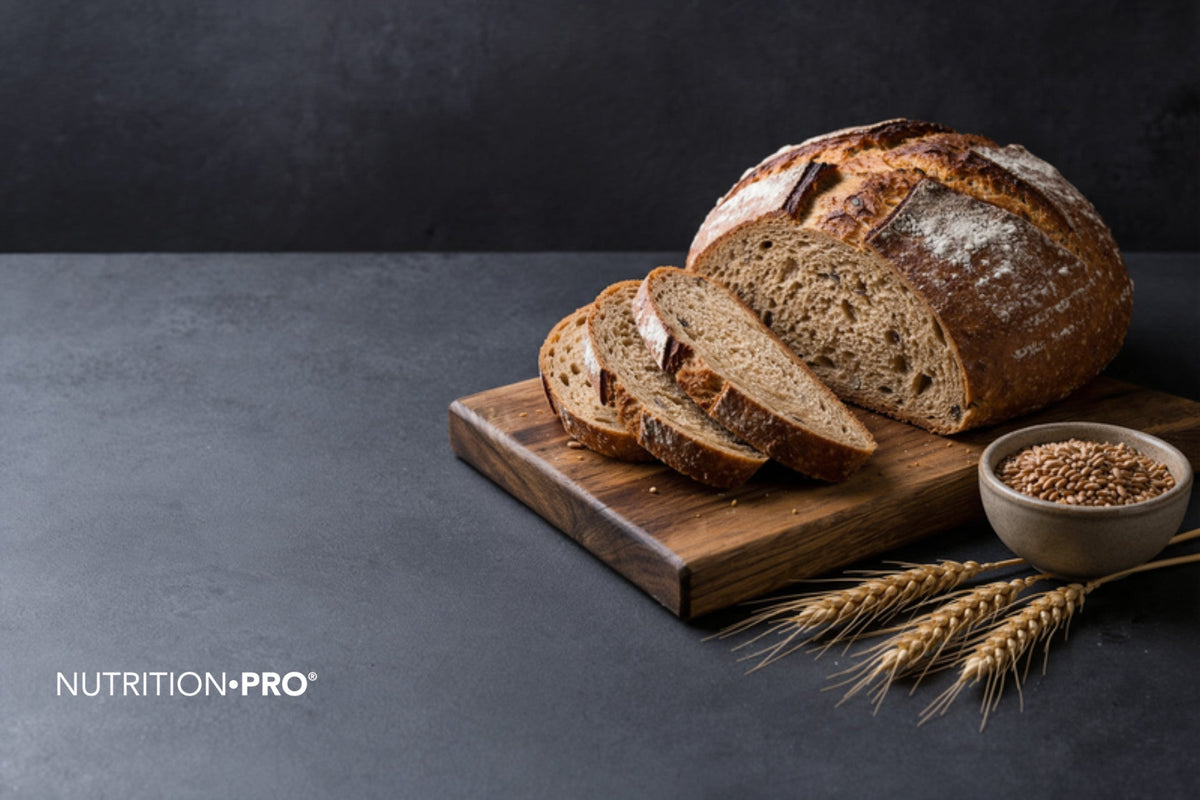
Bread is often the first food removed from the plate when trying to lose weight. Studies paint a more nuanced picture. In a Spanish cohort of 9,267 adults followed for approximately 5 years, neither white bread nor whole grain bread was associated with stronger annual weight gain, but two or more servings of white bread per day were associated with a higher risk of becoming overweight or obese (odds ratio of 1.40). In controlled trials, replacing refined grains with whole grains changes weight by almost nothing on average, with a few notable exceptions.
This guide brings together cohorts, trials, and meta-analyses identified via PubMed on whole grain bread and white bread, glycemic index, sourdough, satiety, and how to prepare bread, including null results. It complements our synthesis of meta-analyses on weight loss diets.

What the studies show : in cohorts, a lot of white bread is associated with slightly stronger waist circumference gain and a higher risk of becoming overweight or obese (odds ratio of 1.40), but not whole grain bread. In trials, switching to whole grains changes weight by almost nothing on average (0.06 kg difference across 2,060 participants), but a 12-week trial with high-fiber rye found 1.08 kg of additional weight loss.
What matters most : the quantity, type of bread, and what accompanies it. Sourdough, freezing, and toasting reduce the rise in blood sugar, with no demonstrated effect on weight.
- Where does the idea that bread makes you gain weight come from
- What large cohorts show
- Whole grain bread versus white bread: controlled trials
- Does whole grain bread provide greater satiety?
- Glycemic index: what it says, and what it doesn't
- Sourdough: a lower glycemic peak, without miracles
- Freezing, toasting: how preparation changes things
- Should carbohydrates be reduced to lose weight?
- Common truths and myths
- Keeping bread in a balanced diet
- Fiber supplements: what the trials say
- Frequently Asked Questions
Where does the idea that bread causes weight gain come from
Rich in starch, a carbohydrate converted to glucose, bread is consumed at almost every meal, often with butter or processed meats. It is therefore quickly blamed for weight gain.
A 2012 review compiled 38 epidemiological studies published over thirty years examining eating habits that included bread: 22 cross-sectional studies, 11 prospective cohorts, and 5 intervention studies. The authors concluded that eating habits including whole grain bread do not promote weight gain and might even be favorable for weight. For refined bread, most cross-sectional studies found favorable associations, whereas most well-conducted cohorts suggested a possible link with excess abdominal fat.
A cross-sectional study measures diet and weight at the same time: anyone who has already reduced their bread intake to lose weight makes bread appear protective. A cohort study limits this bias without proving causation.
A second synthesis by the same authors in 2015 summarizes the same trend and notes that the definition of "whole grain bread" varies from study to study, which complicates comparisons.
What large cohort studies show
In a cohort of 9,267 Spanish university graduates followed for an average of 5 years, neither white bread nor whole grain bread were associated with greater annual weight gain. The glycemic index and glycemic load of the diet were also not associated with weight changes. However, white bread consumption was associated with a higher risk of becoming overweight or obese.
People consuming at least two servings of white bread per day had a higher risk of becoming overweight or obese than those who ate at most one serving per week (one serving = 60 g, or 3 slices) (odds ratio of 1.40, 95% confidence interval 1.08 to 1.81). No significant association was found with whole grain bread.
de la Fuente-Arrillaga C, Martinez-Gonzalez MA, Zazpe I, et al. 2014. DOI: 10.1186/1471-2458-14-1091
A large Spanish Mediterranean diet trial followed the eating habits of 2,213 participants at high cardiovascular risk for 4 years. The quarter of participants whose white bread consumption increased the most gained 0.76 kg and 1.28 cm more in waist circumference than the quarter whose consumption increased the least or decreased the most. They also had 33% lower odds of losing more than 2 kg and 36% lower odds of losing more than 2 cm in waist circumference. No such relationship was found for whole grain bread.
Three American cohorts combining 120,877 women and men, followed for up to twenty years, linked dietary changes to weight changes over 4-year periods. Participants gained an average of 3.35 pounds, or approximately 1.52 kg (editorial calculation), per period. Each additional daily serving of whole grains was associated with 0.37 pound less, or approximately 0.17 kg (editorial calculation), while potatoes (0.58 kg, editorial calculation) and chips (0.77 kg, editorial calculation) were among the foods most strongly associated with weight gain.
A meta-analysis of 45 cohorts and 21 trials also found less weight gain over 8 to 13 years with 48 to 80 g of whole grains per day: 1.27 kg versus 1.64 kg in people who never or rarely consumed them.
Finally, in a cross-sectional study of 2,834 adults who underwent abdominal CT scans, whole grain consumption was associated with lower visceral fat volume (1,563 versus 1,883 cm³ between the highest and lowest consumers), and refined grain consumption was associated with higher volume (1,928 versus 1,727 cm³). This association measured at a single point in time does not prove causation.
| Study | White bread or refined grains | Whole grain bread or whole grains |
|---|---|---|
| 9,267 adults, 5 years | Odds ratio of 1.40 for overweight at 2 servings per day or more | No association |
| 2,213 adults, 4 years | +0.76 kg and +1.28 cm waist circumference | No dose-response relationship |
| 120,877 adults, 4-year period | Not isolated for bread; potatoes and chips among those most associated with weight gain | −0.17 kg per daily serving (editorial calculation) |
| 2,834 adults, scan | More visceral fat | Less visceral fat |
The authors adjust their calculations for physical activity, smoking, and the rest of the diet, without being able to measure everything: these cohorts show associations, not a demonstrated effect of bread.
Whole grain bread versus white bread: controlled trials
Randomized trials directly compare whole grain cereals to their refined equivalents. Three meta-analyses have compiled them, with consistent conclusions on weight.
In 2,060 participants, whole grains did not change weight compared to the control group (difference of 0.06 kg, 95% confidence interval −0.09 to 0.20 kg), but slightly reduced fat mass percentage (−0.48%, −0.95 to −0.01%). The trials lasted at most 16 weeks.
Pol K, Christensen R, Bartels EM, et al. 2013. DOI: 10.3945/ajcn.113.064659
A 2020 update covering 21 trials and 1,798 adults found no significant effect of whole grains on weight, body mass index, fat mass percentage, fat mass, or waist circumference. A 2019 meta-analysis, with one author working for a cereal manufacturer, reached the same conclusion for 9 trials (973 participants), whereas the 12 observational studies analyzed in the same work, involving 136,834 people, did associate higher whole grain consumption with a lower body mass index.
In 79 overweight postmenopausal women, subjected to a moderately hypocaloric diet for 12 weeks, weight decreased in both groups (−2.7 kg with refined wheat, −3.6 kg with whole wheat), with no significant difference between them. The decrease in fat mass percentage was however greater with whole wheat (−3.0% versus −2.1%).
In 60 Danish adults at risk of metabolic syndrome, of whom 50 completed the trial, two 8-week periods were compared, one rich in whole grains (179 g per day on average), the other in refined cereals (13 g per day). Weight changed little during the whole grain period (−0.2 kg) while it increased during the refined period (+0.9 kg), a significant difference correlated with the difference in caloric intake between periods. Interleukin 6 and C-reactive protein, two inflammation markers, decreased. Insulin sensitivity and microbiota did not change notably.
Within the framework of a hypocaloric diet, the group consuming high-fiber rye products lost 1.08 kg more (0.36 to 1.80 kg) and 0.54 more points of fat mass than the group consuming refined wheat. C-reactive protein was 28% lower. No clear difference in appetite was found between the groups.
Iversen KN, Carlsson F, Andersson A, et al. 2021. DOI: 10.1016/j.clnesp.2021.07.007
Does whole grain bread satisfy hunger better?
A 2021 meta-analysis compiled 32 trials comparing whole grain cereal-based foods to their refined equivalents, measuring appetite in the hours following consumption. Two of the five authors worked for a cereal manufacturer. With whole grains, perceived hunger was lower (effect size −0.34), feeling of fullness was stronger (0.49), satiety was stronger (0.33), and desire to eat was lower (−0.33). The reduction in calories consumed at the next meal remained small and non-significant.
A review of 107 fiber-based treatments tested over at most 24 hours recalls the limits of these effects: 39% reduced perceived appetite and only 22% reduced the quantity eaten. The satiating effect of whole rye, rye bran, and beta-glucans was found in more than one publication.
In a trial of 24 adults, whole rye sourdough crisp bread reduced hunger and desire to eat compared to refined wheat bread. In 12 healthy adults, whole rye breads produced a lower insulin response than white wheat bread. These results support the idea that rye satisfies somewhat more, without a trial having shown that this appetite gain alone translates into weight loss. If hunger returns quickly after meals, our article on hunger after eating details other possible causes.
Glycemic index: what it tells, and what it doesn't
Theglycemic index measures the rise in blood sugar in the two hours following consumption of a quantity of food providing a fixed dose of carbohydrates, relative to that of pure glucose. An index of 55 or less is considered low. Glycemic load additionally accounts for the amount of carbohydrates actually consumed.
The 2021 international tables, which list more than 4,000 foods, report that cereal products, including whole grain versions, have highly variable indexes depending on manufacturing processes. Breads exist in high, medium, and low index versions. The "whole grain" label therefore does not guarantee a low index.
A 2007 systematic review (6 trials, 202 overweight people, 5 weeks to 6 months) found with a low glycemic index or load diet 1.1 kg of weight loss (from −2.0 to −0.2 kg) and 1.1 kg of fat mass lost additionally.
A European trial conducted in eight countries followed 773 adults who had recently lost an average of 11.0 kg with a very low-calorie diet. During the following 26 weeks, the low glycemic index groups regained 0.95 kg less (from 0.33 to 1.57 kg) than the high glycemic index groups. Only the diet combining low protein and high glycemic index led to significant weight regain in participants who completed the trial (1.67 kg).
In people with diabetes or prediabetes, a meta-analysis of 54 trials found that low glycemic index diets reduced glycated hemoglobin, fasting blood glucose, and body mass index, with no effect on fasting insulin.
The measured effects on weight are modest, around one kilogram. In the Spanish cohort of 9,267 adults, dietary glycemic index was not associated with weight change. To reduce simple sugars daily, our guide to reducing sugar proposes a gradual approach, and our article on elevated blood glucose reviews the nutrients studied.
Sourdough: a lower glycemic peak, but no miracle
Sourdough fermentation involves lactic acid bacteria and wild yeasts. It acidifies the dough, which can slow starch digestion. A systematic review of 18 trials published in 2024 found slightly lower blood glucose 60 minutes (mean difference of −0.29) and 120 minutes (−0.21) after sourdough bread than after industrial bread or glucose solution, especially when the bread was made from whole grain flour. Sourdough did not reduce fasting insulin and did not change PYY, a satiety hormone. The certainty level of the evidence was judged to be low to very low.
One week of whole grain sourdough bread made traditionally, compared to one week of industrial white bread, resulted in no significant difference on numerous clinical parameters. The glycemic response to each bread varied greatly from person to person, and the bread best tolerated by each person could be predicted from their microbiota.
Korem T, Zeevi D, Zmora N, et al. 2017. DOI: 10.1016/j.cmet.2017.05.002
In 12 healthy adults, breads prepared with the same flour, leavened either with yeast or sourdough, produced blood glucose and insulin responses with no significant difference.
In 11 overweight or obese men, a commercial sourdough bread resulted, at equal weight, in greater increases in blood glucose and insulin than three whole grain or sprouted grain breads, whereas at equal carbohydrate content, its effect on insulin was lower than that of two of them.
In 28 adults, six weeks of whole grain sourdough bread, compared to six weeks of white bread, did not change body measurements or fasting blood glucose. In participants whose blood glucose was elevated at baseline, the increase in blood glucose during a glucose tolerance test was 19% lower after the sourdough bread period.
In the trial of 24 adults on whole rye, the non-fermented version even resulted in a lower insulin response than the sourdough version.
Sourdough remains a pleasant option, especially with whole grain flour or rye, but no identified trial shows that it causes weight loss.
Freezing, toasting: what preparation changes
When bread cools or is frozen, part of the starch reorganizes into a form more difficult to digest, called resistant starch. A trial conducted in 10 healthy adults measured the glycemic response of two white breads, one homemade and one commercial, according to their preparation.
| White bread preparation | Homemade bread | Commercial bread |
|---|---|---|
| Fresh | Reference | Reference |
| Frozen then thawed | −31% (editorial calculation) | No significant decrease reported in the summary |
| Toasted | −25% (editorial calculation) | −28% (editorial calculation) |
| Frozen, thawed then toasted | −39% (editorial calculation) | −26% (editorial calculation) |
The percentages are calculated by the editorial team based on published areas under the curve (for example 157 versus 259 mmol·min/L for homemade bread frozen then toasted). This is a single trial of 10 people, which measures blood sugar levels and not weight.
Should carbohydrates be reduced to lose weight?
Eliminating bread often amounts to following a low-carbohydrate diet. A 12-month American trial compared a healthy low-fat diet (48% of calories from carbohydrates) and a healthy low-carbohydrate diet (30%) in 609 overweight adults.
Weight decreased by 5.3 kg with the low-fat diet and by 6.0 kg with the low-carbohydrate diet, a difference of 0.7 kg that was not significant (from −0.2 to 1.6 kg). Neither genetic profile nor baseline insulin secretion could predict which diet would work best for each person.
Gardner CD, Trepanowski JF, Del Gobbo LC, et al. 2018. DOI: 10.1001/jama.2018.0245
In this trial, strongly reducing carbohydrates therefore did not provide a net advantage on weight compared to reducing fats.
True and false misconceptions
| Misconception | What studies say | Verdict |
|---|---|---|
| "Bread makes you fat" | Whole wheat bread is not associated with weight gain; white bread in large quantities is associated with a higher risk of becoming overweight or obese (odds ratio of 1.40) | False as stated, needs nuance |
| "Whole wheat bread makes you lose weight" | No average effect on weight in meta-analyses of trials; possible small effect on fat mass | Exaggerated |
| "Whole wheat bread has a low glycemic index" | Whole wheat bread indexes vary greatly depending on production | Not always |
| "Sourdough is better for blood sugar" | Slightly lower blood sugar after meals in a review of 18 trials, with low certainty evidence and null trials | Rather true, modest effect |
| "Toasted bread is less sugary" | Lower glycemic response after toasting or freezing in a trial of 10 people | True for blood sugar, nothing on weight |
| "Carbohydrates must be eliminated to lose weight" | Similar weight loss at 12 months between low-carbohydrate and low-fat diets | False |
| "Rye satisfies more" | Less hunger in several short-term trials; 1.08 kg additional loss in 12 weeks in one trial | Rather true |
These verdicts, editorial assessment, summarize average trends.
Keeping bread in a balanced diet
Favor whole grain bread, whole cereals or rye bread. It is not associated with weight gain in cohort studies and provides slightly more satiety in clinical trials.
Monitor the quantity of white bread. The association with overweight appears starting from two portions per day in the Spanish cohort.
Look at what accompanies the bread. Butter, cured meats and spreads often weigh more than the slice itself; vegetables, eggs, fish or legumes make it a more complete meal.
Freeze, toast, choose sourdough if you wish: these habits reduce the rise in blood sugar after meals in several trials, with no demonstrated effect on weight.
Increase fiber intake across your entire diet : vegetables, legumes, fruits, nuts and whole grains. For those who struggle to consume enough, fibers such as blonde psyllium can supplement the diet, provided you drink enough water. Our method for losing weight without dieting details other daily strategies.
Fiber supplements: what the studies say
Blonde psyllium is the husk of Plantago ovata seeds, whose soluble fibers form a viscous gel when in contact with water. Three meta-analyses have examined its effect on weight.
The largest, published in 2020, combined 22 randomized trials in adults. It found no significant effect of psyllium on weight (−0.28 kg, confidence interval −0.78 to 0.21 kg), on body mass index or on waist circumference (−1.2 cm, not significant), with high heterogeneity depending on dose, duration and form of administration.
A second, published in 2023, whose lead author worked for a psyllium supplement manufacturer, included only 6 trials of at least 2 months in 354 overweight or obese individuals. With an average of 10.8 g per day taken just before meals for 4.8 months, weight decreased by 2.1 kg (from −2.6 to −1.6 kg) and waist circumference by 2.2 cm compared to control groups.
The second study excludes trials lasting only a few weeks and those where weight was supposed to remain stable, which partly explains the difference from the first, but it is based on only 6 trials. A third meta-analysis, published in 2020 and involving 8 trials in 395 diabetic individuals, found no significant effect on weight. No trial has tested our Organic blonde psyllium. Our article on the benefits of blonde psyllium details other studied effects, on transit and cholesterol.
Medications : psyllium can interfere with the absorption of most medications; take it at least 2 hours apart from any treatment. Hydration : drink a large glass of water with each dose and consume the mixture quickly, before it gels. Dose : do not exceed one tablespoon, or 5 to 10 g per day. Children : not recommended before age 12. Celiac disease or diagnosed intolerance : the choice of bread should be discussed with your doctor or dietitian. Treated diabetes : any significant change in diet should be discussed with your doctor.
100% organic blonde psyllium powder from organic farming (Plantago ovata), with no additives and a very neutral taste. One tablespoon, or 5 to 10 g, in a large glass of water, juice or a smoothie, to be mixed and drunk immediately, at least 2 hours away from medications.
View organic blonde psylliumOur ranking of natural appetite suppressants compares fibers and other approaches studied against hunger.
Frequently asked questions
Does bread make you gain weight?
Not by itself: it counts in your caloric balance like any food. In cohort studies, whole grain bread is not associated with weight gain, while two servings of white bread per day or more are associated with a higher risk of becoming overweight or obese (odds ratio of 1.40). These are associations, not proof of cause.
Does whole grain bread make you lose weight?
Not on average: in a meta-analysis of 26 trials in 2,060 participants, whole grains did not change weight compared to refined grains, but slightly reduced body fat percentage (−0.48%). They remain associated with less weight gain in cohort studies.
Should you stop eating bread to lose weight?
Studies do not support this. In a 12-month trial in 609 adults, a low-carbohydrate diet and a low-fat diet produced similar weight losses (6.0 kg and 5.3 kg). Reducing white bread and favoring whole grain bread is the best-supported approach.
Is sourdough bread better for your waistline?
Sourdough leads to a slightly lower rise in blood sugar after meals in a review of 18 trials, with low-certainty evidence. Several trials were null, and none showed an effect of sourdough on weight.
Does whole grain bread have a low glycemic index?
Not always. The 2021 international tables report that cereal products, including whole grain, have highly variable indexes depending on how they are made. Breads with whole grains, rye or sourdough more often have a moderate index.
Is rye bread interesting for weight management?
Rye is the cereal richest in fiber. In a 12-week trial in 242 overweight adults following a calorie-restricted diet, high-fiber rye products resulted in 1.08 kg of additional weight loss compared to refined wheat.
Does toasted bread raise blood sugar less?
In a trial of 10 people, toasting white bread, or freezing then toasting it, reduced the glycemic response by 25 to 39% depending on the bread (editorial calculation). This trial did not measure weight.
What bread should you choose when watching your weight?
A whole grain, multigrain or rye bread, in reasonable quantity, accompanied by vegetables, eggs, fish or legumes rather than processed meats or large amounts of butter.
Should white bread be banned?
Nothing requires it. Unfavorable associations appear mainly in large quantities, starting from two servings per day in a Spanish cohort, or in people who most increased their consumption in a Mediterranean trial. Partially replacing it with whole grain or rye bread is a simple option.
Do fiber supplements help with weight loss?
The data diverge. A meta-analysis of 6 trials in overweight people, taking it before meals, found a 2.1 kg decrease; two others, of 22 trials in adults and 8 trials in diabetic people, found no significant effect of psyllium on weight. No trial has tested our product.
How to take blonde psyllium?
Mix one tablespoon, or 5 to 10 g, in a large glass of water, juice or a smoothie, and drink immediately, before the mixture thickens. Take it at least 2 hours away from any medication. It is not recommended before age 12.
Learn more
Sources
The studies cited below were identified via PubMed.
- Bautista-Castaño I, Serra-Majem L. Relationship between bread consumption, weight, and abdominal fat distribution: data from epidemiological studies. Nutrition Reviews, 2012;70(4):218-33. DOI
- Serra-Majem L, Bautista-Castaño I. Relationship between bread and obesity. British Journal of Nutrition, 2015;113 Suppl 2:S29-35. DOI
- de la Fuente-Arrillaga C, Martinez-Gonzalez MA, Zazpe I, et al. Glycemic load, glycemic index, bread, and incidence of overweight and obesity in a Mediterranean cohort: the SUN project. BMC Public Health, 2014;14:1091. DOI
- Bautista-Castaño I, Sánchez-Villegas A, Estruch R, et al. Changes in bread consumption and adiposity evolution over 4 years in Spaniards at high cardiovascular risk. British Journal of Nutrition, 2013;110(2):337-46. DOI
- Mozaffarian D, Hao T, Rimm EB, et al. Changes in diet and lifestyle and long-term weight gain in women and men. New England Journal of Medicine, 2011;364(25):2392-404. DOI
- Ye EQ, Chacko SA, Chou EL, et al. Higher whole grain cereal consumption is associated with lower risk of type 2 diabetes, cardiovascular disease, and weight gain. Journal of Nutrition, 2012;142(7):1304-13. DOI
- McKeown NM, Troy LM, Jacques PF, et al. Whole and refined grains are differentially associated with visceral and subcutaneous abdominal fat in healthy adults: the Framingham Heart Study. American Journal of Clinical Nutrition, 2010;92(5):1165-71. DOI
- Pol K, Christensen R, Bartels EM, et al. Whole grains and weight change in apparently healthy adults: a systematic review and meta-analysis of randomized controlled studies. American Journal of Clinical Nutrition, 2013;98(4):872-84. DOI
- Sadeghi O, Sadeghian M, Rahmani S, et al. Whole grain consumption does not modify obesity measures: an updated systematic review and meta-analysis of randomized clinical trials. Advances in Nutrition, 2020;11(2):280-292. DOI
- Maki KC, Palacios OM, Koecher K, et al. Relationship between whole grain consumption and weight: meta-analyses of observational studies and randomized controlled trials. Nutrients, 2019;11(6):1245. DOI
- Kristensen M, Toubro S, Jensen MG, et al. Whole wheat, compared to refined wheat, reduces fat mass percentage after 12 weeks of hypocaloric diet in postmenopausal women. Journal of Nutrition, 2012;142(4):710-6. DOI
- Roager HM, Vogt JK, Kristensen M, et al. A diet rich in whole grains reduces weight and low-grade chronic inflammation without substantially modifying the gut microbiota: a randomized crossover trial. Gut, 2019;68(1):83-93. DOI
- Iversen KN, Carlsson F, Andersson A, et al. A hypocaloric diet rich in high-fiber rye products reduces weight and fat mass more than a diet rich in refined wheat: a randomized controlled trial in overweight or obese adults. Clinical Nutrition ESPEN, 2021;45:155-169. DOI
- Sanders LM, Zhu Y, Wilcox ML, et al. Effects of whole grains, compared to refined grains, on appetite and energy intake: a systematic review and meta-analysis. Advances in Nutrition, 2021;12(4):1177-1195. DOI
- Clark MJ, Slavin JL. Effect of fiber on satiety and food intake: a systematic review. Journal of the American College of Nutrition, 2013;32(3):200-11. DOI
- Zamaratskaia G, Johansson DP, Junqueira MA, et al. Effect of sourdough fermentation on appetite and postprandial metabolic responses: a randomized crossover trial with whole grain rye crisp bread. British Journal of Nutrition, 2017;118(9):686-697. DOI
- Rosén LA, Silva LO, Andersson UK, et al. White and whole grain rye breads are characterized by low postprandial insulin response and favorable glycemic profile. Nutrition Journal, 2009;8:42. DOI
- Atkinson FS, Brand-Miller JC, Foster-Powell K, et al. International tables of glycemic index and glycemic load 2021: a systematic review. American Journal of Clinical Nutrition, 2021;114(5):1625-1632. DOI
- Thomas DE, Elliott EJ, Baur L. Low glycemic index or low glycemic load diets for overweight and obesity. Cochrane Database of Systematic Reviews, 2007;(3):CD005105. DOI
- Larsen TM, Dalskov SM, van Baak M, et al. High or low protein diet and high or low glycemic index diet for weight loss maintenance. New England Journal of Medicine, 2010;363(22):2102-13. DOI
- Zafar MI, Mills KE, Zheng J, et al. Low glycemic index diets in diabetes: a systematic review and meta-analysis. American Journal of Clinical Nutrition, 2019;110(4):891-902. DOI
- Rolim ME, Fortes MI, Von Frankenberg A, et al. Consumption of sourdough bread, glycemic control and satiety: a systematic review. Critical Reviews in Food Science and Nutrition, 2024;64(3):801-816. DOI
- Korem T, Zeevi D, Zmora N, et al. Bread modifies clinical parameters and induces personalized glycemic responses linked to the gut microbiota. Cell Metabolism, 2017;25(6):1243-1253.e5. DOI
- Dall'Asta M, Dodi R, Pede GD, et al. Blood glucose and insulin after breads formulated with different evolutionary wheat populations: a randomized controlled trial in healthy subjects. Nutrition, 2022;94:111533. DOI
- Mofidi A, Ferraro ZM, Stewart KA, et al. Acute effect of sourdough and whole grain breads on blood glucose, insulin and incretin responses in overweight or obese men. Journal of Nutrition and Metabolism, 2012;2012:184710. DOI
- MacKay KA, Tucker AJ, Duncan AM, et al. Sourdough whole wheat bread does not modify plasminogen activator inhibitor 1 in adults with normal or impaired carbohydrate metabolism. Nutrition, Metabolism and Cardiovascular Diseases, 2012;22(9):704-11. DOI
- Burton P, Lightowler HJ. Effect of freezing and toasting on the glycemic response of white bread. European Journal of Clinical Nutrition, 2008;62(5):594-9. DOI
- Gardner CD, Trepanowski JF, Del Gobbo LC, et al. Effect of a low-fat or low-carbohydrate diet on weight loss at 12 months in overweight adults, and association with genetic profile or insulin secretion: the DIETFITS randomized trial. JAMA, 2018;319(7):667-679. DOI
- Darooghegi Mofrad M, Mozaffari H, Mousavi SM, et al. Effects of psyllium supplementation on weight, body mass index, and waist circumference in adults: systematic review and dose-response meta-analysis of randomized controlled trials. Critical Reviews in Food Science and Nutrition, 2020;60(5):859-872. DOI
- Xiao Z, Chen H, Zhang Y, et al. Effect of psyllium on weight, body mass index, lipid profile, and glucose metabolism in people with diabetes: systematic review and dose-response meta-analysis of randomized controlled trials. Phytotherapy Research, 2020;34(6):1237-1247. DOI
- Gibb RD, Sloan KJ, McRorie JW. Psyllium, a natural non-fermented gel-forming fiber, is effective for weight loss: comprehensive review and meta-analysis. Journal of the American Association of Nurse Practitioners, 2023;35(8):468-476. DOI


