

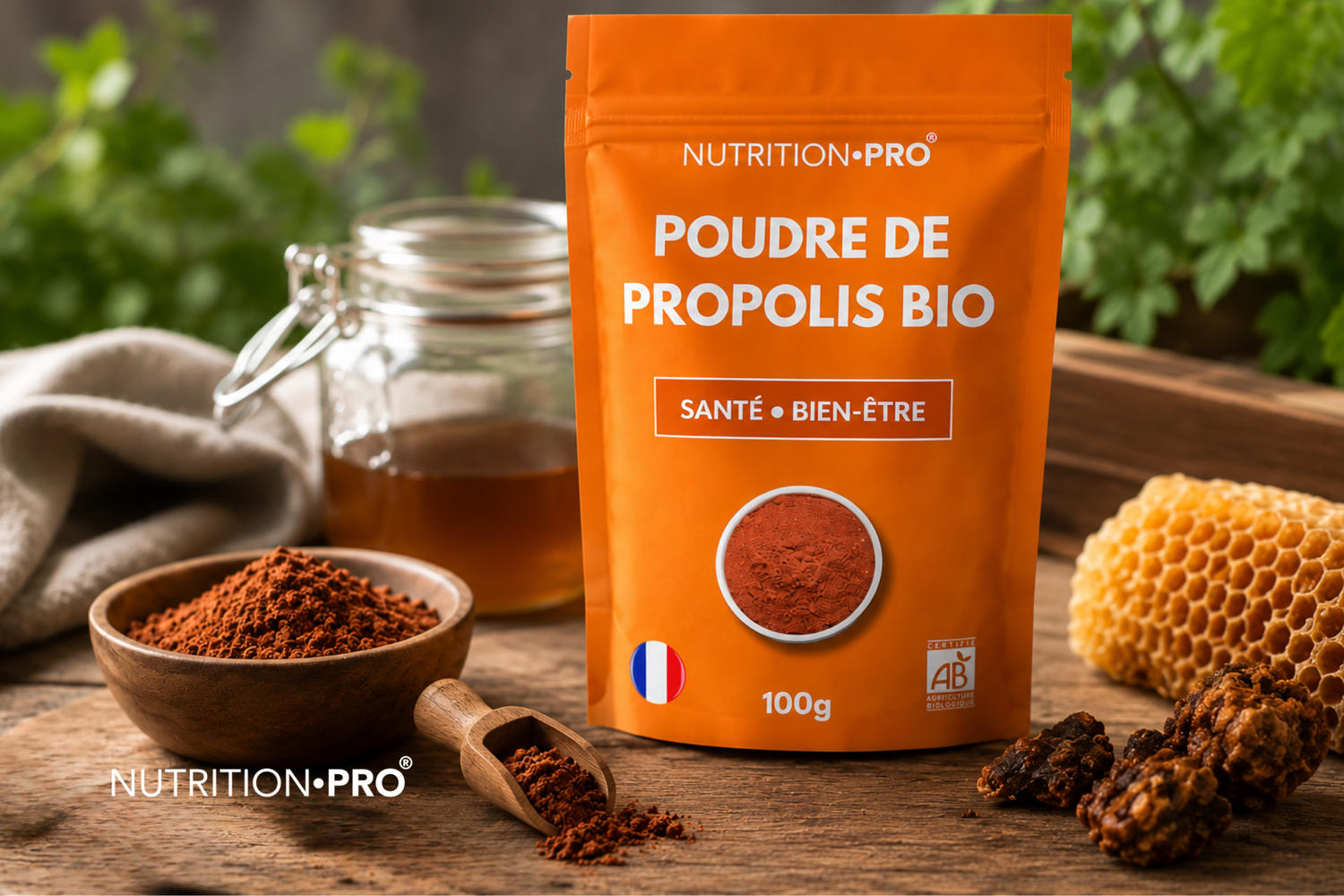
Propolis propolis is one of the oldest documented natural remedies in human history. Used sinceAncient Egypt for mummification and wound healing, by Greeks and Romans to treat infected wounds, it is making a strong comeback today thanks to dozens of modern clinical studies validating its ancestral uses. According to Esposito et al. 2020 in Phytomedicine (RCT 122 patients), a propolis spray resolves upper respiratory infection symptoms in 3 days vs 5 days under placebo (-2 days recovery). According to Soleimani et al. 2021 in Food Science & Nutrition, 900 mg/day for 4 weeks reduce IL-6 and oxidative stress and increase glutathione. Here is the complete 2026 guide to a true treasure of the hive.


In brief: Propolis is a resinous substance produced by bees from plant resins, rich in flavonoids (galangin, pinocembrin, chrysin) and in CAPE (Caffeic Acid Phenethyl Ester), flagship anti-inflammatory molecule. According to Esposito et al. 2020 in Phytomedicine (RCT 122 patients): resolution of ENT symptoms in 3 days vs 5 days under placebo (-2 days). According to Soleimani et al. 2021 in Food Science & Nutrition (RCT 54 military personnel, 900 mg/day 4 weeks): −IL-6, −oxidative stress, +glutathione after intense exercise. According to Braakhuis 2019 in Nutrients : promising for cardiometabolic health and immunity.
Practical action: Standard dosage: 500 to 900 mg/day of organic propolis in micronized powder or capsule form, during a meal (lipophilic compounds), course of 4 to 6 weeks at seasonal changes (September-October, January-February), renewable 2-3 times per year. The Organic Propolis Nutrition•pro is purified and micronized for optimal bioavailability, non-GMO, gluten-free, nanoparticle-free. Available in 2 formats : 100 g powder (flagship adjustable dose) and 120 capsules (practical on-the-go format).
- What is propolis? Origin, manufacturing and composition
- Flavonoids and CAPE: the flagship molecules of propolis
- Scientifically documented benefits (immunity, ENT, antioxidant)
- Propolis and immune defenses: biological mechanisms
- Why choose a purified and micronized organic propolis
- How to recognize quality propolis in 2026: 5 criteria
- Dosage, intake, optimal cure duration
- Responder profiles: who benefits most from propolis
- Myths and misconceptions (natural antibiotic, winter miracle)
- Choosing your format: powder or capsules?
1. What is propolis? Origin, production and composition
The "glue of the gods": a biological cement from the hive with 300+ bioactive compounds
COMPOUNDS
IDENTIFIED TO DATE Propolis (from the Greekpro , "before," andpolis , "city") is etymologically the "substance found before the city" — that is, the biological cement that bees use toprotect the hive entrance
, seal cracks, and mummify intruders too large to be removed (rodents, insects). This age-old sanitary function is the first key to its bioactive richness.
How bees produce propolis Forager bees collect plant resins from the buds and bark of certain trees: poplars (in Europe and North America), birches, conifers, in temperate zones; eucalyptus, mango trees, in tropical zones. These resins are brought back to the hive, mixed with beeswax andenzymatic salivary secretions
, to form the final propolis. This enzymatic transformation partially modifies plant compounds and gives them unique stability and biological activity.
| Detailed composition of poplar-type propolis | Component | Typical proportion |
|---|---|---|
| Role | Plant resins and balsams | 50% |
| Source of flavonoids, CAPE, phenolic acids | Beeswax | 30% |
| Lipid matrix, removed by modern purification | Aromatic essential oils | 10% |
| Aromatic compounds, antimicrobial action | Pollen | Amino acids, vitamins, minerals |
| Other compounds | 5% | Enzymes, trace elements, B vitamins |
Major botanical variability
The exact composition of propolis depends heavily on the local flora where bees forage. The main types are: (1) Poplar-type propolis (Europe, North America, temperate Asia): the most scientifically studied, rich in flavonoids (galangin, pinocembrin) and CAPE. (2) Brazilian green propolis (from Baccharis dracunculifolia): rich in artepillin C, a compound with anti-cancer properties in vitro. (3) Brazilian red propolis : rich in isoflavones, interesting hormonal profile. (4) Mediterranean propolis : mixed profile with sunflower-derived compounds. European organic propolis (particularly poplar-type) remains the most relevant for classical immune support and anti-inflammatory uses.
A documented millennia-old use
Propolis is one of the oldest documented natural remedies. Ancient Egypt : used in mummification procedures (antibacterial effect). Ancient Greece : Aristotle describes it as a "remedy for serious wounds" in his Historia Animalium. Roman Empire : used by military surgeons to treat war wounds. Middle Ages : dermatological and ENT applications throughout Europe. Traditional Russian medicine : "miracle cure" against winter ailments (19th century). 20th century : systematic modern scientific research, validation of traditional uses.
2. Flavonoids and CAPE: the flagship molecules of propolis
Three bioactive families explaining 80% of documented effects
OF QUALITY PROPOLIS
Although propolis contains more than 300 bioactive compounds, the vast majority of its clinically documented effects can be attributed to three main molecular families: flavonoids, CAPE and phenolic acids. Understanding these molecules helps you choose quality propolis.
Flavonoids: the antioxidant heart of propolis
<<<19>>> Flavonoids flavonoïdes are a family of plant polyphenols widely present in propolis. Quality propolis must contain between 2 and 8% total flavonoids on dry matter — this is the most frequently referenced marker of bioactive richness. The main flavonoids in propolis are:
| Flavonoid | Documented Properties | Typical Presence |
|---|---|---|
| Galangin | Anti-inflammatory, antimicrobial, antifungal | Major in poplar propolis |
| Pinocembrin | Antioxidant, neuroprotective, antimicrobial | Major in poplar propolis |
| Chrysin | Anti-inflammatory, hormonal potential | Variable presence |
| Quercetin | Powerful antioxidant, anti-allergic | Universal presence |
| Kaempferol | Antioxidant, anti-cancer in vitro | Variable presence |
| Apigenin | Anti-inflammatory, mild anxiolytic | Modest presence |
CAPE: The star molecule of modern propolis
The CAPE (Caffeic Acid Phenethyl Ester) is probably the most studied compound in propolis over the past 30 years. More than 1500 scientific publications are dedicated to it in PubMed. Specificity: it is found almost exclusively in poplar-type propolis (Europe, North America). Documented bioactive properties:
- Powerful anti-inflammatory : inhibition of the transcription factor NF-κB, central regulator of inflammatory cascades.
- Major antioxidant : neutralization of free radicals, increase of endogenous antioxidant defenses (glutathione, superoxide dismutase).
- Antimicrobial : action against Staphylococcus aureus, Streptococcus pyogenes, Candida albicans.
- Immunomodulator : balanced regulation of immune response (neither excessive stimulation nor suppression).
- Antiviral : documented effects against several enveloped viruses.
- Neuroprotective : protection against cerebral oxidative stress (preclinical models).
Phenolic acids: the active complement
Third major family: phenolic acids, namelycaffeic acid (CAPE precursor),ferulic acid,p-coumaric acid. These molecules contribute to the overall antioxidant effect, antimicrobial action and anti-inflammatory profile of propolis. They work synergistically with flavonoids and CAPE, which explains why whole propolis (complete matrix) often has superior efficacy to that of an isolated compound.
A quality organic propolis contains: total flavonoids between 2 and 8% on dry matter (ideally > 4%), presence of CAPE (marker of European poplar-type propolis), complete phenolic acid profile. This molecular signature is what distinguishes active propolis from diluted or poor-quality raw material. The Organic Propolis Nutrition•pro comes from clean foraging zones (organic certification), purified and micronized to preserve this bioactive signature.
3. Scientifically documented benefits (immunity, ENT, antioxidant)
Three areas with randomized clinical trials published on PubMed
Beyond millennia-old traditional uses, propolis is the subject of increasingly robust modern clinical studies. Here are the most striking scientific findings to date.
Upper respiratory infections: accelerated recovery by 2 days
Inflammation and oxidative stress after intense physical effort
Cardiometabolic and antioxidant health
According to Braakhuis 2019 in Nutrients (narrative review of 63 publications), propolis shows promising effects on cardiometabolic health (blood pressure modulation, lipid profile), strong generalized antioxidant and anti-inflammatory potential, and particular interest in stroke prevention. Human studies remain less numerous than animal and cellular studies, but the data converge.
Antimicrobial and antiviral action
According to Sales-Peres et al. 2023 in Brazilian Oral Research (meta-analysis), propolis flavonoids inhibit viral replication of multiple DNA and RNA viruses, including coronaviruses. Propolis compounds have aminopeptidase-inhibiting activity and can inhibit the main proteases of SARS viruses as well as spike proteins. Antibacterial activity is exerted through direct action on microorganisms and stimulation of natural immune defenses.
4. Propolis and immune defenses: biological mechanisms
Four complementary pathways of action on the immune system
ACTION ON IMMUNITY
The action of propolis on the immune system is not a simple "energy boost" as one might think — it is a multiple and nuanced action that works at four complementary levels. This complexity explains why it is effective both in prevention and in supporting immune-related conditions.
Pathway 1: Direct antimicrobial action
The active compounds of propolis (flavonoids, CAPE, phenolic acids, essential oils) have direct bactericidal and bacteriostatic effects on many strains: Staphylococcus aureus (including MRSA in part), Streptococcus pyogenes (responsible for sore throats), Escherichia coli, Helicobacter pylori (gastric ulcer). Antifungal action on Candida albicans, Aspergillus. Documented antiviral action against herpes, certain coronaviruses, and influenza virus. This direct action is dose-dependent and enables propolis to reduce microbial load at the local level (throat, mouth) or systemic level (at high doses).
Pathway 2: Modulation of the Inflammatory Response
Inflammation is the central mechanism of immune defense... but when it is excessive or chronic, it becomes pathological. Propolis acts as an intelligent inflammatory regulator : it reduces excessive acute inflammation (according to Soleimani 2021, measured IL-6 decrease), inhibits the transcription factor NF-κB via CAPE, modulates the Th1/Th2 balance (cellular vs. humoral immunity), and preserves physiological inflammatory capacity (does not suppress immunity). This is very different from a corticosteroid that abruptly suppresses inflammation.
Pathway 3: Endogenous Antioxidant Enhancement
<<<15>>> Oxidative stress stress oxydatif is one of the primary enemies of immunity: it weakens immune cells, reduces their effectiveness, and accelerates aging. According to Soleimani 2021, propolis: increases glutathione (+48 µmol/L), a major endogenous antioxidant, increases total antioxidant capacity (+164 µmol/L), reduces lipid peroxidation (-0.52 µmol/L of malondialdehyde), and reduces overall oxidative stress index. This antioxidant action indirectly protects immune cells and allows them to function optimally.
Pathway 4: Stimulation of Natural Defenses
Propolis activates several components of innate and adaptive immunity: activation of macrophages (cells that "engulf" pathogens), stimulation of NK lymphocytes (Natural Killer cells, specialized killer cells targeting infected and cancerous cells), increased phagocytosis, modulation ofcytokineproduction. This stimulation is balanced, meaning it does not exhaust the immune system over time — which allows for treatment courses of 4 to 6 weeks without risk.
Synergy with Other Hive Actives
The immune effectiveness of propolis is enhanced in synergy with other hive products: Royal jelly GRF® (general vitality, B vitamins, MRJP), French honey (complex sugars, enzymes), pollen (amino acids, vitamins). This treasures of the hive association is traditional and remains relevant today for a comprehensive immune approach.
5. Why choose purified and micronized organic propolis
Three modern industrial processes that transform raw material into optimal supplement
Raw propolis, harvested directly from the hive, is not optimal for a dietary supplement. Three stages of modern industrial transformation make it both purer, more bioavailable and more convenient: the organic certification, the purification, and the micronization.
Why organic certification
The organic certification (European Organic Agriculture AB, Ecocert, Nature & Progrès) is essential for propolis for one specific reason: bees forage within a radius of 3 to 5 km around the hive. If this area contains conventional crops treated with pesticides, these molecules can end up concentrated in propolis (bees do not eliminate residues). Organic guarantees: (1) foraging zones free of pesticides within a defined radius, (2) beekeeping practices without antibiotics, (3) regular inspections by an independent certification body, (4) complete traceability from hive to jar.
Purification: removing waxes and debris
Raw propolis contains a significant proportion of beeswax (up to 30%) and plant debris. While these components are not toxic, they dilute the active compounds and can hinder absorption. Modern purification consists of: (1) Crushing raw propolis into fine fragments, (2) Solubilizing active compounds in a solvent (water, alcohol or supercritical CO2 depending on the process), (3) Filtering to remove waxes and residues, (4) Evaporating the solvent to recover purified propolis concentrated in bioactive compounds. Modern purified propolis can contain 2 to 3 times more flavonoids per gram than raw propolis.
Micronization: the key to bioavailability
The flavonoids and CAPE, major active compounds of propolis, are lipophilic compounds with low water solubility. Consequence: standard propolis (coarse particles) releases few active compounds in the digestive tract, and many pass through without being absorbed. Micronization consists of reducing particle size to 5-50 micrometers (vs 100-500 µm for standard propolis), which drastically increases the digestive exchange surface and therefore absorption. Micronized propolis releases 2 to 4 times more bioavailable active compounds than non-micronized propolis at an equivalent dose.
Without nanoparticles: an important precaution
Modern micronization deliberately stops at a minimum of 5 micrometers, well above the threshold of nanoparticles (< 100 nm). This precision is important because nanoparticles can cross biological barriers (intestinal, blood-brain) in an uncontrolled manner, with discussed toxicological risks. A quality organic propolis like that of Nutrition•pro is explicitly nanoparticle-free, which constitutes an additional safety argument.
6. How to recognize quality propolis in 2026: 5 criteria
The framework for distinguishing premium propolis from a diluted product
FOR PREMIUM PROPOLIS
Criterion 1: Organic certification
Mandatory mention on the label: Organic Farming (AB) logo European, Ecocert, or equivalent. Without this certification, it is impossible to guarantee the absence of pesticide residues in the raw material. Beware of vague mentions like "from natural crops" or "untreated" which have no regulatory value.
Criterion 2: Traceable origin, ideally European
Favor propolis fromEuropean origin (France, Italy, Spain, Portugal, Romania, Poland) that comply with strict European beekeeping standards. European poplar propolis is the most scientifically studied and richest in CAPE. Beware of opaque or vague origins like "EU and non-EU". Quality French beekeepers generally display the production region.
Criterion 3: "Purified" AND "micronized" mention
These two modern processes significantly increase the bioavailability and actual effectiveness of propolis. Propolis that is simply raw or in coarse powder will be less active at an equal dose than purified and micronized propolis. Check these mentions on the label or the manufacturer's website.
Criterion 4: Without nanoparticles, without GMOs, without gluten, without additives
Four important cumulative guarantees: (1) Without nanoparticles for the toxicological reasons mentioned above. (2) Without GMOs guaranteed by organic certification. (3) Without gluten for sensitive individuals. (4) Without additives (excipients, fillers, colorants) that would dilute the active ingredient without benefit. Pure propolis does not require additives.
Criterion 5: Manufacturer transparency
A reputable manufacturer provides on its website: (1) Quality analyses per batch or at least certificates of compliance, (2) Detailed composition (total flavonoid content ideally > 2%), (3) Batch number and production date on the jar, (4) Production Methods clearly explained, (5) Customer Service capable of answering technical questions. If none of this information is accessible, be cautious.
7. Dosage, administration, optimal course duration
The usage protocol that maximizes absorption and efficacy
mg/day
PREVENTIVE COURSE
Reference dosage
| Objective | Dosage | Duration |
|---|---|---|
| Seasonal immune maintenance | 500 mg/day | 4 weeks × 2-3 courses/year |
| Winter preventive course | 700-900 mg/day | 6 weeks in September-October |
| Athlete anti-inflammatory (Soleimani 2021) | 900 mg/day in 2 doses | 4 weeks |
| Acute ENT course (sore throat, cold onset) | 1000 mg/day | 5 to 7 days |
| Post-illness convalescence | 700 mg/day | 4 to 6 weeks |
Take during a meal: crucial for lipophilic compounds
As explained previously, flavonoids and CAPE are lipophilic compounds with poor water solubility. Their intestinal absorption is significantly improved in the presence of dietary lipids (which stimulate the secretion of bile and pancreatic lipase). In practice: take propolis during a meal, ideally with a source of lipids (yogurt, olive oil, fish, cheese, nuts). On an empty stomach, absorption is reduced by 2-3 times.
How to take the powder in practice
Micronized organic propolis powder can be consumed in several ways: (1) Diluted in plain yogurt or fromage blanc (the fat content improves absorption). (2) Mixed with a little French honey, traditional and synergistic. (3) Diluted in a lukewarm infusion (not too hot to preserve sensitive active compounds). (4) Incorporated into a smoothie. (5) Swallowed directly on a spoon, followed by a glass of water. The characteristic resinous and bitter taste is normal — it's even a sign of authenticity (propolis without taste has probably been diluted or had its flavor removed).
When to do the treatments
The ideal periods for a propolis treatment are synchronized with seasonal infectious risks : September-October (back to school, first microbial exposure after summer), January-February (winter epidemic peak in France), March-April (exit from winter, depleted and weakened system), June (transition to summer for seasonal allergy sufferers). In case of overwork, travel abroad, prolonged contact with the public (teachers, healthcare workers, parents of young children), a one-time treatment may be justified at any time.
Duration and renewal of treatments
Standard duration of a treatment: 4 to 6 weeks continuously. This is the time needed to observe measurable immune and antioxidant stimulation according to clinical studies. After the treatment, take a break of 2 to 3 months before a new cycle. For sustained effects, do 2 to 3 treatments per year during at-risk periods. No documented habituation effect, but breaks allow for reassessment of need and preservation of sensitivity to active ingredients.
Responder profiles: who benefits most from propolis?
5 profiles where propolis produces its best results
Profile 1: Adult 25-50 years old in winter immune prevention
Most typical and responsive profile. Characteristics: 25-50 years old, regular exposure to collective environments (open office, public transport, school), repeated colds each winter (3-6 episodes per year), no chronic pathology. Recommendations: 500-700 mg/day of organic propolis powder or capsules in a 4-6 week course in September-October, then repeat in January-February. Combine if possible with vitamin D3 (2000 IU/day), vitamin C (organic acerola), regular sleep. Expected effects: reduction in frequency and duration of winter infectious episodes, faster recovery in case of viral infection.
Profile 2: Intensive athlete with chronic post-exercise inflammation
Profile with direct clinical evidence (Soleimani 2021). Characteristics: 20-50 years old, training 5-10 hours/week, persistent muscle soreness, difficult recovery between sessions, chronic fatigue during overload periods. Recommendations: 900 mg/day of organic propolis in 2 doses (morning + evening) in a 4-week course during intensive periods or pre-competition. Expected effect according to Soleimani 2021: reduction of IL-6 (inflammatory marker), increase in glutathione (major antioxidant), better recovery. Combine with EPA omega 3, magnesium bisglycinate, 8 hours sleep.
Profile 3: Teacher, healthcare worker, parent of young children — high microbial exposure
Highly responsive profile. Characteristics: daily exposure to virus-carrying public (children in daycare/school, patients in medical office, waiting rooms, etc.), recurring colds, feeling of "getting sick whenever a virus goes around". Recommendations: 700 mg/day of organic propolis in a 6-week course, to be repeated every 2 months during at-risk season (October to April). Synergy with fresh French royal jelly GRF® for complete vitality + immunity support.
Profile 4: Convalescence post-viral infection (flu, COVID, mononucleosis)
Traditional but highly relevant profile. Characteristics: recent post-viral infection with persistent fatigue, weakened immunity, compromised health status. Recommendations: 700-900 mg/day of organic propolis in a 4-6 week course, to begin during the convalescence phase (not during acute phase with fever). Synergy: organic acerola (natural vitamin C), royal jelly, regular sleep, antioxidant-rich diet. Expected effects: faster recovery, prevention of relapses, progressive restoration of immune status.
Profile 5: Person with fragile ENT health (sinusitis, chronic pharyngitis)
Profile with direct evidence (Esposito 2020). Characteristics: tendency to recurrent pharyngitis, chronic sinusitis, voice that becomes hoarse easily, speakers, singers, teachers. Recommendations: spray or chewing gum for local application as needed + preventive courses 700 mg/day internally. Documented effect: accelerated recovery of 2 days on mild ENT infections (3 days vs 5 under placebo, Esposito 2020). Combine with gargling propolis diluted in warm water + French honey.
Profile: Woman, 38 years old, preschool teacher, 2 young children (4 and 6 years old). Recurrent symptoms: 4 to 6 colds/year, 2 sore throats/year, beginning chronic sinusitis, persistent fatigue each winter for 5 years despite correct diet. Blood work: normal, ferritin 38 µg/L (low limit), vitamin D 22 ng/mL (winter insufficiency).
Proposed approach: Course of organic propolis powder 700 mg/day diluted in plain yogurt at breakfast, started mid-September for 6 weeks, then renewed mid-January for 6 weeks. Combined with vitamin D3 (2000 IU/day year-round), iron supplementation for 3 months, strict hand hygiene, minimum 7.5 hours of sleep.
Results at 6 months: 2 short colds (vs 5 the previous winter), 0 sore throats, fatigue significantly reduced, sinusitis stabilized. At 12 months: sustained results, restored energy, immunity judged "as before the children." Strategy renewed for the following winter season.
Myths and misconceptions about propolis
5 false beliefs that circulate and lead to unrealistic expectations
Myth 1: "Propolis is a natural antibiotic that can replace medical treatments"
FALSE and dangerous. Propolis has documented antimicrobial and antiviral activity, but it does NOT substitute for antibiotic treatment prescribed for confirmed bacterial infection. Streptococcal sore throat, pneumonia, complicated urinary tract infection require medical treatment. Using only propolis in these cases can lead to serious complications. Its benefit lies in prevention, in supporting mild infections (viral rhinopharyngitis), and in complementing convalescence. Any persistent fever, intense pain, or symptoms lasting > 5 days should lead to medical consultation.
Myth 2: "Propolis is only useful in winter"
FALSE. While propolis is traditionally associated with winter prevention (with good reason for its immune action), it also has year-round benefits: effects anti-inflammatory in intensive athletes (Soleimani 2021), action antioxidant in cases of chronic stress, emerging cardiometabolic support (Braakhuis 2019), post-infection support. Seasonality concerns rather the standard preventive courses (October-April), not global therapeutic use.
Myth 3: "All propolis are equivalent"
ABSOLUTELY FALSE. Propolis composition varies enormously depending on: (1) Botanical origin (poplar, eucalyptus, Brazilian Baccharis have very different profiles). (2) Geographic origin (Europe, Brazil, Asia). (3) Beekeeping practices (organic or not, pesticides, residual antibiotics). (4) Processing (raw, purified, micronized, extract). (5) Flavonoid content (can range from 1% to 8% depending on quality). A purified and micronized European organic propolis has nothing to do with raw Chinese propolis in coarse powder sold for €5 per 100g.
Myth 4: "Miracle propolis cures cancer / multiple sclerosis / serious diseases"
FALSE and misleading. In vitro and animal studies show promising effects of CAPE and flavonoids on certain cancer cell lines or autoimmune models. But these results do not directly translate to human medicine. No serious clinical trial shows that propolis alone can treat cancer, multiple sclerosis, or any other serious disease. Sellers who promise miracles misrepresent the legitimate and reasonable use of the product, and can dangerously delay medical care.
Myth 5: "Propolis cannot cause allergies because it's natural"
FALSE and important. Propolis is one of the most allergenic natural products: people allergic to hive products (honey, royal jelly, propolis, pollen), to bee venom, or certain plants (poplar, birch from which propolis is derived) can experience serious allergic reactions, up to anaphylactic shock. This is an absolute contraindication. Always start with a minimal dose (1/4 of the dose) on first use to test tolerance. If hives, swelling, or breathing difficulty occurs after intake, stop immediately and consult a healthcare provider.
Choosing your format: powder or capsules?
Two Nutrition•pro formats, two complementary uses
| Criteria | Powder 100g (€34.99) | Capsules 120 units (€29.99) |
|---|---|---|
| Format | Micronized powder to dilute | Dosed capsules to swallow |
| Dosage | Adjustable (500 to 1000 mg/day depending on objective) | Standardized (based on number of capsules) |
| Taste | Resinous/bitter characteristic (sign of authenticity) | None (tasteless and odorless) |
| Convenient intake | To be diluted in yogurt, honey, herbal tea | To be swallowed directly with a glass of water |
| Adaptation to long-term treatments | Excellent (best €/g value, adjustable dosage) | Good (daily convenience) |
| Adaptation to portable format (office, travel) | Average (preparation required) | Excellent (nothing to prepare) |
| Ideal for | Long-term intensive dose treatments, natural product users | Treatment initiation, travel, taste-sensitive individuals |
Combine both formats intelligently
A smart approach to benefit from both advantages: powder at home (in the morning with yogurt, adjustable dosage based on needs) + capsules for travel (weekend, travel, business trip). This combination allows you to maintain treatment regularity without logistical constraints, while optimizing overall effectiveness/price ratio. For a tighter budget, choose a single format: the powder remains the most economical per gram of active ingredient.
Allergy to bee products : absolute contraindication. This includes allergy to honey, royal jelly, propolis itself, pollen, or bee venom. Allergic reactions to propolis can range from simple urticaria to potentially severe anaphylactic shock. First use : always perform a test with a minimal dose (1/4 of the normal dose) the first time to verify the absence of reaction (urticaria, lip/eyelid swelling, breathing discomfort). Uncontrolled allergic asthma : avoid or seek medical advice. History of Quincke's edema or anaphylactic shock : avoid completely. Pregnancy and breastfeeding : limited specific data, medical advice recommended as a precaution. Children under 3 years old : avoid (immune system still immature, increased allergic risk). Drug interactions : not significantly documented, but inform your doctor if taking chronic medication. Propolis should never replace an antibiotic treatment prescribed for a confirmed bacterial infection.
Frequently asked questions about propolis
What is propolis and what is it composed of?
Propolis is a resinous substance manufactured by honeybees from plant resins collected from tree buds, bark, and exudates (poplar, birch, conifers), mixed with their wax and salivary secretions. Typical composition: 50% plant resins and balsams, 30% waxes, 10% aromatic essential oils, 5% pollen, 5% other compounds. Its richness comes from phenolic compounds: more than 300 identified compounds, including flavonoids (galangin, pinocembrin, chrysin), phenolic acids (caffeic acid, ferulic acid) and CAPE (Caffeic Acid Phenethyl Ester), a flagship anti-inflammatory molecule.
What are the scientifically proven benefits of propolis?
Several clinical effects are documented by randomized trials. According to Esposito et al. 2020 in Phytomedicine (RCT 122 patients), a propolis oral spray resolves upper respiratory infection symptoms in 3 days vs 5 days under placebo (-2 days recovery). According to Soleimani et al. 2021 in Food Science & Nutrition (RCT 54 military personnel, 900 mg/day for 4 weeks), propolis reduces IL-6, oxidative stress and increases glutathione after intense exercise. According to Braakhuis 2019 in Nutrients (narrative review), propolis demonstrates antioxidant, anti-inflammatory effects and promising benefits for cardiometabolic health.
What is CAPE in propolis?
<<<22>>> CAPE CAPE (Caffeic Acid Phenethyl Ester) is one of the most studied bioactive compounds in propolis. It is a flagship molecule with anti-inflammatory, antioxidant, antimicrobial and immunomodulatory properties that are well documented. CAPE inhibits the transcription factor NF-κB, which is central to inflammatory cascades. Its concentration varies depending on the geographic origin of propolis: poplar-type propolis (Europe, North America) is particularly rich in it. The presence of CAPE is one of the scientific quality markers of authentic poplar-type propolis.
What are the flavonoids in propolis?
Flavonoids constitute one of the major families of bioactive compounds in propolis. The main ones are: galangin (anti-inflammatory, antimicrobial), pinocembrin (antioxidant, neuroprotective), chrysin (anti-inflammatory), quercetin (powerful antioxidant, anti-allergic), kaempferol andapigenin. Quality propolis typically contains 2 to 8% total flavonoids on dry matter, an essential marker of bioactive richness. Modern micronization makes it possible to optimize the bioavailability of these compounds that are poorly soluble in water.
Does propolis really strengthen immunity?
Yes, several documented mechanisms. Propolis acts on immunity via: (1) Direct antimicrobial action on bacteria, viruses and fungi. (2) Modulation of the inflammatory response (reduction of IL-6 according to Soleimani 2021, NF-κB inhibition by CAPE). (3) Antioxidant reinforcement (increased glutathione, total antioxidant capacity). (4) Stimulation of natural defenses (activation of macrophages, NK lymphocytes). Particularly relevant for winter prevention and during seasonal changes.
What propolis dosage should I take per day?
The dosage depends on the objective. Immune prevention course (winter, seasonal change): 500 to 900 mg/day of organic propolis in micronized powder or capsules for 4 to 6 weeks. Intensive antioxidant and anti-inflammatory support course (athlete, overexertion): according to Soleimani 2021, 900 mg/day in 2 doses (450 mg morning + 450 mg evening) for 4 weeks. Acute ENT course (sore throat, cold onset): 1000 mg/day for 5 to 7 days, or local spray. Always take with a meal to optimize the absorption of lipophilic compounds.
What is the difference between raw propolis, micronized, purified and extract?
Four distinct forms with different bioavailabilities. Raw propolis : harvested directly from the hive, rich in waxes and impurities, impractical. Purified propolis : stripped of waxes and plant debris by filtration, more concentrated in active compounds. Micronized propolis : pulverized into very fine particles (5-50 micrometers) to increase the exchange surface and therefore the absorption of poorly soluble flavonoids and CAPE. Propolis extract : liquid concentrate obtained by extraction (alcoholic or aqueous) that isolates the active compounds. The Organic Propolis Nutrition•pro is purified and micronized for optimal bioavailability while remaining a whole food substance.
Can propolis replace an antibiotic?
No, never. Propolis has documented antibacterial, antifungal and antiviral activity, but it does NOT substitute for a prescribed antibiotic treatment for a confirmed bacterial infection (strep throat, pneumonia, complicated urinary tract infection). Its benefit lies in immune prevention, as a complement to common and benign ENT infection (rhinopharyngitis, throat irritation), or as support during convalescence. Any persistent fever, intense pain, or lasting symptoms (> 5 days) should prompt a medical consultation.
When and how long should you take a propolis course?
The ideal times for a propolis course are seasonal changes and periods at risk of infection: September-October (back-to-school, return of seasonal viruses), January-February (winter epidemic peak), March-April (end of winter). Standard duration: 4 to 6 weeks continuously. Repeat 2 to 3 times per year with breaks of 2-3 months. Acute ENT courses (in case of sore throat, cold onset): 5 to 7 intensive days. No habituation effect, but breaks allow reassessing the need.
How to take organic propolis powder?
Micronized organic propolis powder should be taken diluted in a liquid. Mix 1/2 to 1 teaspoon (approximately 500 to 1000 mg) into : plain yogurt, a drizzle of French honey, fruit puree, a warm smoothie, an infusion (not too hot). Take during meals to optimize absorption of lipophilic compounds (flavonoids, CAPE poorly soluble in water). Characteristic taste slightly resinous and bitter (sign of authenticity). For children or people sensitive to taste, prefer capsule format (tasteless).
Does propolis have side effects?
Propolis is generally well tolerated. Rare but possible adverse effects: allergic reactions (cutaneous, respiratory) in people allergic to hive products, pollen, or bees. Very rare cases of oral irritations with intensive topical use. Important precautions: absolute contraindication in case of known allergy to hive products (royal jelly, honey, propolis, pollen, bee venom) — potential anaphylactic risk. Caution in case of allergic asthma. First use: always start with a minimal dose (1/4 of the normal dose).
How to recognize quality organic propolis?
Five criteria to check. (1) Organic certification (AB, Ecocert, Nature & Progrès): guarantees absence of pesticides. (2) Traceable origin, ideally European or French. (3) Mention 'purified' AND 'micronized' for optimal bioavailability. (4) GMO-free, gluten-free, nanoparticle-free, additive-free. (5) Flavonoid content mentioned when possible (ideally > 2% on dry matter). Be cautious of products without organic certification, unclear traceability, or very low prices (< €10 per 100g).
Can propolis and royal jelly be combined?
Yes, it's a classic and synergistic combination in hive phytotherapy. Propolis provides powerful antimicrobial, antiviral and immunomodulatory action; royal jelly provides overall vitality, essential nutrients (complete B vitamins, amino acids, MRJP) and mild hormonal support. Particularly interesting synergy in autumn/winter, during convalescence after illness, or in chronic fatigue with weakened condition. Nutrition•pro offers both: Organic Propolis Powder and Royal Jelly GRF® fresh French.
Is propolis suitable for children?
With caution and adaptation. Children under 3 years old : avoid (immature immune system, increased allergy risk). Children 3 to 6 years old : possible at very low dose (100-200 mg/day) on short course of 2-3 weeks, after pediatrician's advice. Children 6 to 12 years old : 200-500 mg/day, course of maximum 3-4 weeks. Adolescents : adult dosage applicable progressively. Always start with a minimal dose (1/4 of dose) to test for absence of allergic reaction. Very useful in preventing school winter illnesses.
Glossary
- Propolis
- Resinous substance produced by honeybees from plant resins collected on buds and tree bark, mixed with beeswax and salivary secretions. Used by bees to protect the hive entrance, seal cracks, and mummify intruders.
- CAPE (Caffeic Acid Phenethyl Ester)
- Phenethyl ester of caffeic acid, a flagship molecule in poplar-type propolis. Inhibitor of transcription factor NF-κB (regulator of inflammatory cascades). Anti-inflammatory, antioxidant, antimicrobial and immunomodulatory properties documented in over 1500 publications.
- Flavonoids
- Family of plant polyphenols present in significant proportion (2 to 8% on dry matter) in propolis. Main ones: galangin, pinocembrin, chrysin, quercetin, kaempferol, apigenin. Antioxidant, anti-inflammatory, antimicrobial action.
- Galangin
- Major flavonoid in European poplar-type propolis. Anti-inflammatory and antimicrobial properties documented. Quality marker of European propolis.
- Pinocembrin
- Major flavonoid in propolis. Antioxidant, neuroprotective and antimicrobial properties documented in preclinical studies.
- NF-κB
- Nuclear factor kappa B, central regulatory transcription factor of inflammatory cascades. Its modulation by CAPE partly explains the anti-inflammatory effect of propolis.
- Poplar-type propolis
- Variety of propolis whose plant raw material is primarily derived from poplar buds. The most scientifically studied, rich in CAPE and flavonoids (galangin, pinocembrin). Typical of Europe and North America.
- Purification
- Industrial process that removes waxes (up to 30% of raw propolis) and plant debris, to concentrate active compounds. Modern purified propolis can contain 2 to 3 times more flavonoids per gram than raw propolis.
- Micronization
- Reduction of particle size to 5-50 micrometers (vs 100-500 µm for standard propolis). Increases digestive exchange surface and therefore the assimilation of flavonoids and poorly water-soluble CAPE. Micronized propolis releases 2 to 4 times more active compounds.
- NK Lymphocytes (Natural Killer)
- Type of immune cells specialized in destroying cells infected by viruses and tumor cells. Their activity is stimulated by propolis according to several studies.
Scientific sources
- Esposito C, Garzarella EU, Bocchino B, et al. A standardized polyphenol mixture extracted from poplar-type propolis for remission of symptoms of uncomplicated upper respiratory tract infection (URTI): A monocentric, randomized, double-blind, placebo-controlled clinical trial. Phytomedicine 2020;80:153368. DOI : 10.1016/j.phymed.2020.153368
- Soleimani D, Miryan M, Hadi V, et al. Effect of propolis supplementation on athletic performance, body composition, inflammation, and oxidative stress following intense exercise: A triple-blind randomized clinical trial. Food Sci Nutr 2021;9(7):3631-3640. DOI : 10.1002/fsn3.2319
- Sales-Peres SHC, Azevedo-Silva LJ, Castilho AVSS, et al. Propolis effects in periodontal disease seem to affect coronavirus disease: a meta-analysis. Braz Oral Res 2023;37:e031. DOI : 10.1590/1807-3107bor-2023.vol37.0031
- Braakhuis A. Evidence on the Health Benefits of Supplemental Propolis. Nutrients 2019;11(11):2705. DOI : 10.3390/nu11112705
- Josa E, Barril G, Ruperto M. Potential Effects of Bioactive Compounds of Plant-Based Foods and Medicinal Plants in Chronic Kidney Disease and Dialysis: A Systematic Review. Nutrients 2024;16(24):4321. DOI : 10.3390/nu16244321


