

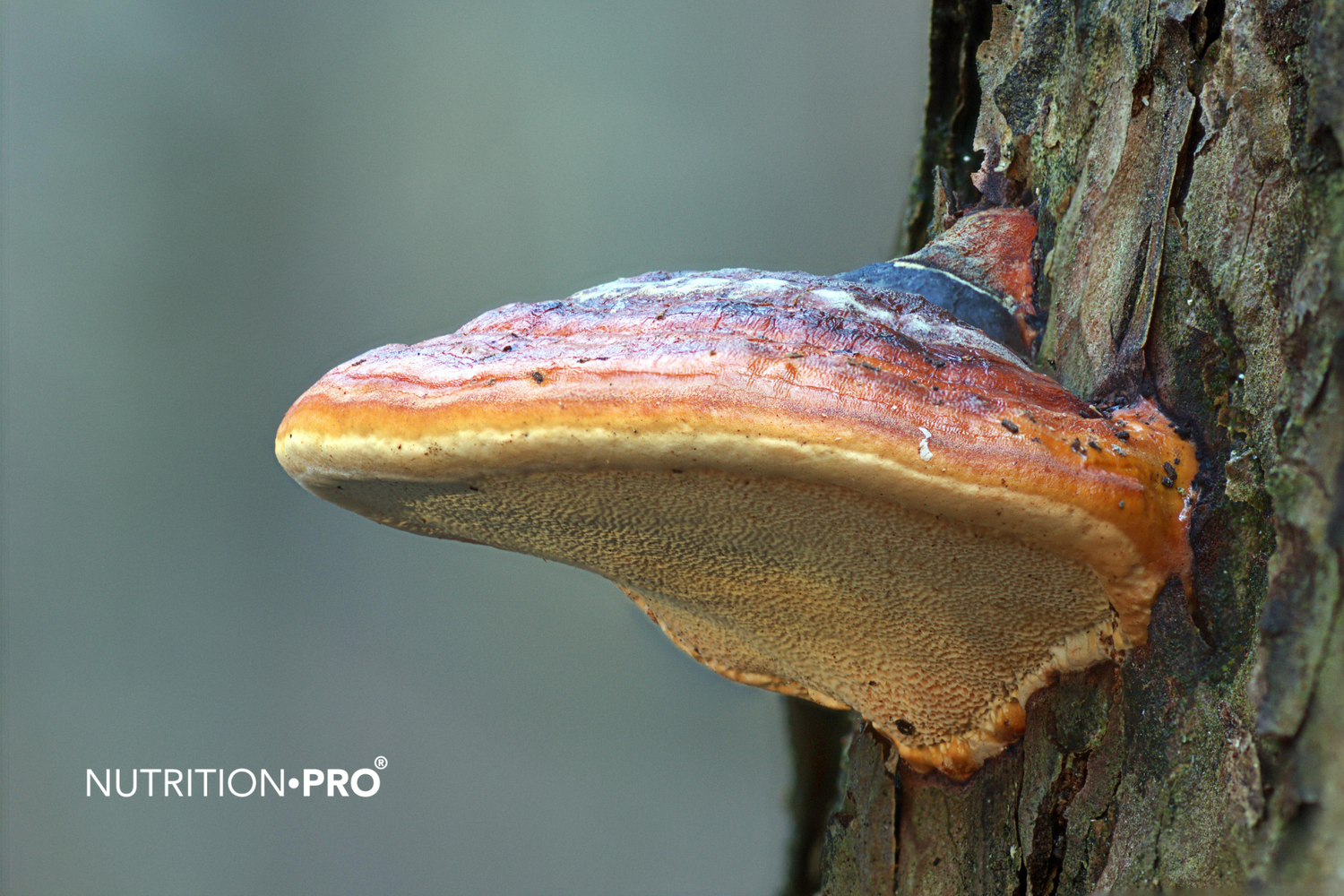
Reishi raises a very different safety question than chaga. Where chaga carries an intrinsic risk intrinsic, linked to its oxalate composition, reishi is rather well tolerated in itself. Its issue lies elsewhere: in what you take alongside it.
The main precaution concerns anticoagulants and scheduled surgery, and it is sufficiently established to appear in reference databases on supplements. This article details the adverse effects actually reported, the five families of treatments that require medical advice, the profiles that should abstain, and what the law permits to say about a species surrounded by many claims.

The reported effects are mild and reversible: dry mouth, throat or nose, itching, digestive disorders, and nosebleeds. This last point is not trivial; it points to the real issue.
The main precaution. Reishi is not recommended for people taking anticoagulants or antiplatelet agents, and for those undergoing surgical procedures, due to a potential effect on platelet aggregation. Four additional families warrant monitoring: antihypertensives, antidiabetics, immunosuppressants, and medications whose hepatic metabolism may be modified. Should not be taken without medical advice: pregnant and nursing women, children, people allergic to mushrooms, people with autoimmune disease or undergoing cancer treatment.
Adverse effects actually reported
| Effect | Frequency and context |
|---|---|
| Dry mouth, throat, or nose | Reported, especially at the start of use or at high doses |
| Itching | Reported, to be distinguished from a true allergic reaction |
| Digestive disorders | Bloating, mild nausea, diarrhea, generally dose-dependent |
| Nosebleeds | Reported, and consistent with the potential effect on platelet aggregation |
| Allergic reaction | Rare, increased risk in people already allergic to other mushrooms |
These effects are generally mild and reversible : they regress upon discontinuation or after dose reduction. Nothing in this picture resembles organ toxicity comparable to what is described for chaga and its oxalates.
One element nonetheless deserves attention: nosebleeds. This is not a typical digestive effect; it is a signal. It points to the mechanism that is the entire focus of this species, and which is developed in the following section.
The central precaution: anticoagulants and surgery
Reishi is described as having a potential effect onplatelet aggregation, that is, on the ability of blood platelets to aggregate to form a clot. This effect is modest in itself, and it becomes a problem in two specific situations.
If you are taking an anticoagulant or antiplatelet agent, the effects can add up and increase the risk of bleeding. Reishi is not recommended in this situation: do not take it without explicit advice from your doctor.
If you need to undergo surgical intervention, including dental extraction or a procedure considered minor, discontinue use several days before and report it at the preoperative consultation. This is information that the medical team must have, just like a medication.
This precaution is all the more important because it is invisible : it manifests no symptoms as long as the at-risk situation is not present. A healthy person taking reishi without treatment will feel nothing in particular. The same person, operated on three months later without reporting it, finds themselves in an avoidable situation.
Other drug interactions
| Treatment | Why vigilance is needed | Approach |
|---|---|---|
| Antihypertensives | An effect on blood pressure is mentioned; effects could add up | Medical advice, blood pressure monitoring if use is approved |
| Antidiabetic agents | Possible potentiation of blood sugar reduction | Medical advice, enhanced glycemic monitoring |
| Immunosuppressants | Mushrooms act on immune pathways, which can interfere with treatment aimed at slowing them down | Medical advice mandatory, including after transplant |
| Medications with hepatic metabolism | Reishi could modify the activity of certain liver enzymes involved in drug breakdown | Particular vigilance for treatments with narrow therapeutic margins |
| Oncological treatment | Possible interactions with certain protocols, and the question of immune effect | Must be reported to the care team |
The line on hepatic metabolism deserves an explanation, because it is often misunderstood. Many medications are broken down by liver enzymes. If a substance alters the activity of these enzymes, the concentration of the drug in the blood can increase or decrease. For a treatment with a narrow efficacy window, such a shift is not trivial. It is an additional reason to report any supplement to your pharmacist when following chronic treatment.
Who should abstain
Not recommended for people taking anticoagulants or antiplatelet agents and for those about to undergo surgery.
Medical advice required in case of antihypertensive, antidiabetic, immunosuppressant or anticancertreatment, as well as in case of autoimmune disease or after a transplant.
Not recommended for pregnant or breastfeeding women and forchildren and adolescents, due to lack of safety data. Contraindicated in case ofknown allergy to mushrooms.
Signs that should lead to discontinuation
- Unusual bleeding, particularly from the nose or gums.
- Bruising that appears easily or without cause. A
- Une Respiratory discomfort or hives, which suggest an allergic reaction and require emergency medical attention.
- Digestive disorders that persist despite dose reduction.
Stop taking it and consult a healthcare provider, reporting the product, its dose, and duration of use. An adverse effect potentially linked to a dietary supplement can also be reported through the national nutrivigilance.
What the law allows to be said
Reishi is legally marketed as a dietary supplement in France. What is regulated is the claims made, and it is regulated strictly.
Health claims concerning plants and mushrooms are pending evaluation at the European level. In practical terms, no health claim can be reliably asserted for reishi, whether regarding immunity, stress, sleep, or anything else.
In 2012, European authorities ruled against the claim of immune defense stimulation for supplements containing shiitake or maitake, due to lack of convincing evidence. This precedent concerns related species and sets the tone: in this area, the required level of proof has not been met. A brand that today displays an immune-boosting, anti-stress, or sleep-promoting effect for its reishi tells you mainly about its approach to regulation.
Our position is straightforward: we provide you with the composition, source, and precautions, and we let you consult the literature. This is also what we do in our article on what studies show concerning reishi, which is the companion piece to this one.
How to use it safely
Reishi is not an intrinsically risky product: it is a product whose risk depends on your context. The question to ask yourself before taking it is therefore not "am I in good health," but "what else am I already taking, and do I have a procedure planned." When posed this way, it can be answered in two minutes at your pharmacist's.
Frequently asked questions
The core question
Is reishi dangerous?
At usual doses, reported adverse effects are rare and generally mild. The main issue is not inherent toxicity but a set of drug interactions, the most documented concerning anticoagulants and antiplatelet agents. In other words, reishi is rarely problematic in itself and can become so depending on what else you are taking.
What are the side effects of reishi?
Reported effects are essentially mild: dry mouth, throat or nose, itching, digestive disturbances such as bloating, mild nausea or diarrhea. Nosebleeds have also been described. These effects occur mainly at the start of use or at high doses, and generally subside upon discontinuation or after dose reduction.
Does reishi present the same kidney risk as chaga?
No. The risk linked to oxalates and documented by cases of nephropathy is specific to chaga among common species. Reishi has a different safety profile, focused on drug interactions and bleeding risk. This is a good illustration of the fact that one should not reason about functional mushrooms as a group.
What to remember about reishi safety?
That reishi is generally well tolerated at usual doses, with mild and reversible effects, and that its safety concern lies elsewhere: in interactions. Anticoagulants and scheduled surgery constitute the central precaution, followed by antihypertensives, antidiabetics and immunosuppressants. The question to ask is not "am I in good health," but "what else am I already taking."
Anticoagulants and surgery
Is reishi contraindicated with anticoagulants?
This is the central precaution for this species. Reishi is not recommended for people taking anticoagulants or antiplatelet agents, due to a potential effect on platelet aggregation that could increase bleeding risk. Nosebleeds are among the reported adverse effects. Do not take reishi without your doctor's advice in this situation.
Should reishi be stopped before an operation?
Yes. Reishi is not recommended for people undergoing surgical intervention, for the same reason: the risk of perioperative bleeding. Stop taking it several days before and mention it at your preoperative consultation. This rule applies more broadly to many supplements.
What signs should lead to stopping?
Unusual bleeding, particularly from the nose or gums, bruises that appear easily, breathing difficulty, hives, or digestive disturbances that persist despite dose reduction. Stop taking it and consult while reporting the product, its dose and duration. An adverse effect can be reported under nutrivigilance.
Other interactions
Does reishi interact with other medications?
Several categories require caution. Anticoagulants and antiplatelet agents first and foremost. Antihypertensives, as reishi may enhance a drop in blood pressure. Antidiabetics, with possible potentiation of blood sugar lowering. Immunosuppressants, as mushrooms act on immune pathways. And medications metabolized by certain liver enzymes.
Does reishi lower blood pressure?
An effect on blood pressure is suggested, which mainly raises questions in people already on antihypertensive treatment, in whom effects could add up. This is not a demonstrated effect in the sense of an authorized health claim, but a possible interaction to report to your doctor.
Is reishi not recommended in case of autoimmune disease?
Caution is warranted. Mushrooms contain polysaccharides that act on immune pathways, which can theoretically interfere with immunosuppressive treatment or interact with an autoimmune disease. Medical advice is necessary before any use in these situations, including after organ transplantation.
Can reishi be taken with cancer treatment?
Not without the agreement of your healthcare team. Interactions with certain protocols are possible, and the question of the effect on immune pathways is particularly relevant in this context. Always report any supplement to your oncologist: this information is part of your medical record just like any medication.
Can reishi be combined with other mushrooms?
Combinations are common, but they accumulate precautions rather than dilute them. If you combine reishi and chaga for example, you accumulate the first one's anticoagulant precaution and the second one's oxalate concerns. The higher the stack, the less you know what produces what.
Populations and use
Can reishi be taken during pregnancy?
No, not without medical advice. Safety data is lacking in pregnant and breastfeeding women, which is sufficient to justify abstention. The same applies to children and adolescents, for whom no data supports routine use.
Can reishi cause an allergic reaction?
It is rare but possible, and the risk is higher in people already allergic to other mushrooms. A reaction may manifest as itching, hives, digestive problems, or, more rarely, respiratory discomfort. If you are allergic to mushrooms, do not take reishi. In case of respiratory discomfort after taking it, seek emergency care.
Can reishi be taken daily over the long term?
Safety data on very prolonged use is limited, which calls for caution. The reasonable approach is to favor defined periods rather than indefinite continuous intake, and to regularly reassess whether it is worthwhile to continue.
Does the product form make a difference?
The determining question for safety remains the actual quantity ingested and the duration. That said, a dosed preparation with a clearly indicated quantity per dose provides more controlled intake than a powder consumed without reference. The distinction between fruiting body and mycelium on substrate, as well as beta-glucan content, relate to a different topic than safety.
What to do in case of an adverse effect?
Stop taking it and consult your doctor, reporting the product consumed, its dose, and duration. In case of unusual bleeding or respiratory discomfort, do not wait. An adverse effect potentially linked to a dietary supplement can also be reported as part of the national nutrivigilance system.
Legal framework
Is reishi authorized for sale in France?
Yes, reishi is marketed as a dietary supplement in France. What is regulated is the claims: health claims concerning plants and mushrooms are pending evaluation at the European level, which means that no health claims can be made with certainty, including those about immunity, stress, or sleep.
Can it be said that reishi strengthens immunity?
Not on a label or in marketing communications. No such claims are authorized, and European authorities have ruled against the claim of stimulating immune defenses for other mushrooms in the same category, due to lack of convincing evidence. A brand displaying this goes outside the regulatory framework.
Glossary
- Reishi (Ganoderma lucidum)
- A mushroom long used in Asia, marketed as a dietary supplement in France.
- Platelet aggregation
- The ability of blood platelets to aggregate to form a clot. An effect on this mechanism can increase the risk of bleeding.
- Antiplatelet agent
- A medication that limits this aggregation, whose effects can add to those of other substances.
- Narrow therapeutic margin
- Said of a medication where the gap between an effective dose and a problematic dose is small, making any interaction significant.
- Immunosuppressant
- A treatment aimed at slowing immune system activity, particularly after transplant or in autoimmune disease.
- Nutrivigilance
- National system allowing reporting of an adverse effect potentially linked to a dietary supplement.
- Pending evaluation claim
- Status of claims concerning plants and mushrooms that have not yet been evaluated at the European level.
Sources
- Reference databases on mushroom-based dietary supplements, documenting reishi precautions regarding anticoagulants and surgery, as well as reported adverse effects: dry mouth and nasal passages, itching, digestive problems, nosebleeds.
- Position of European authorities in 2012 against the claim of stimulating immune defenses for supplements containing shiitake or maitake, due to lack of convincing evidence.
- European Parliament and Council. Regulation (EC) 1924/2006 on nutrition and health claims made on foods. eur-lex.europa.eu
- National Food, Environment and Occupational Health and Safety Agency. Nutrivigilance system. anses.fr


