

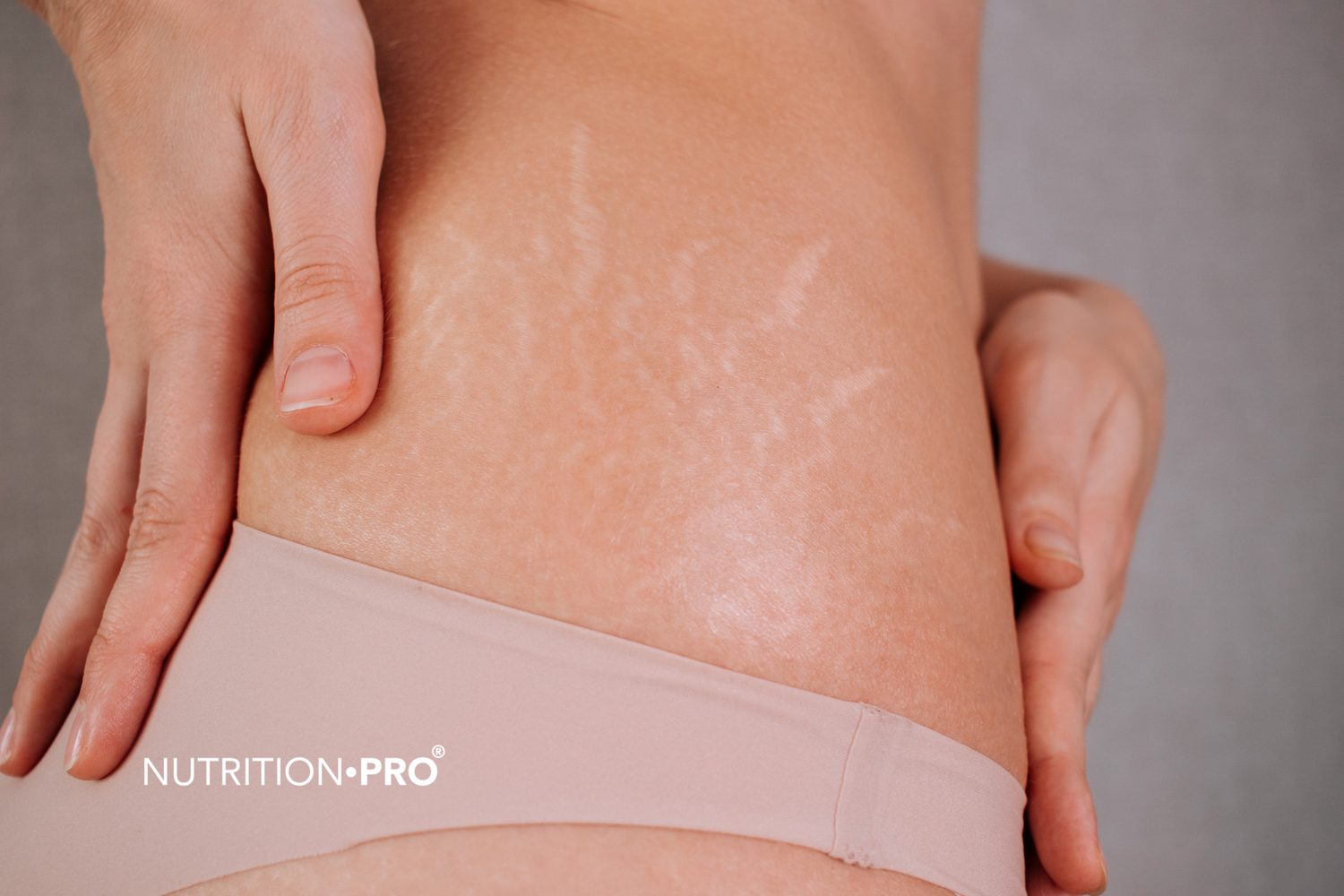
The question deserves a numerical answer rather than circumlocution, and that figure exists. The largest systematic review available on stretch mark treatment compiled 151 studies and 4,806 treatment outcomes. The best rate of complete response achieved on white stretch marks is 4%, with CO2 laser.
There's the bad news, and it deserved to be stated upfront. But stopping there would be another form of dishonesty, because real, measurable, and reproducible improvements do exist. A network meta-analysis covering 14 randomized trials and 651 participants compared treatments against each other and identifies one that clearly stands out, with a probability of 95.7% of being the most satisfactory for patients. This article tells you which one, what it delivers, what it costs in terms of constraints, and what alternatives exist depending on your situation, including surgical options.

The answer to the question in the title. No, you cannot make a white stretch mark disappear. Of 151 studies and 4,806 treatment outcomes compiled, the best rate of complete response is 4%. You need to know this before investing time and money.
And here's what actually works. A network meta-analysis of 14 randomized trials and 651 participants ranks treatments against each other. Leading the way: bipolar radiofrequency combined with topical tretinoin, with 84.5% probability of being the most clinically effective and 95.7% of being the most satisfactory. Followed by bipolar radiofrequency alone, then fractional CO2 laser. A dedicated trial confirms the combination, with increased neocollagen and elastic fibers. Counterintuitive point: tretinoin alone is the worst option tretinoin alone is the worst option in the ranking. Other documented approaches: superficial dermabrasion on recent stretch marks, as effective as tretinoin with fewer adverse effects. And measured reductions of 9 to 13% of the width of white stretch marks under topical treatment.
- Erase or improve: two different questions
- Why white stretch marks resist
- What works best, according to the network meta-analysis
- Laser or radiofrequency: two comparative trials
- The adverse effect that's rarely discussed
- Accessible options, and surgery
- Approaching a consultation without being sold the impossible
- Frequently asked questions
Erase or improve: two different questions
A systematic review published in 2024 in Dermatologic Surgery did something no one had done at this scale: compile all the literature on stretch mark treatment, without date or language restrictions. Result: 151 studies retained, 4,806 treatment outcomes described.
The breakdown of the approaches studied is instructive. Energy-based devices dominate by far, accounting for 56% of reported outcomes, followed by topical treatments at 19% and combinations at 12%.
And here is the figure that answers the question posed by this article's title. The highest complete response rates were:
| Type of stretch mark | Best approach | Complete response rate |
|---|---|---|
| White stretch marks | CO2 laser | 4% (12 cases out of 341) |
| Red stretch marks | Platelet-rich plasma injections | 31% (4 cases out of 13, very small sample) |
| All stretch marks | Injection devices | 7% (12 cases out of 172) |
A complete response rate of 4% means that, in the best published scenario, 96% of treated white stretch marks did not disappear. The review authors state this quite bluntly: the diversity of treatment options likely reflects the absence of truly effective treatment. Also note the case of red stretch marks: a rate of 31% may seem high, but it is based on 4 cases out of 13, a sample size far too small to draw any conclusions.
Be careful not to confuse two notions that marketing readily mixes: complete response, that is, disappearance, and theimprovement, which is a different objective and far better achieved.
Why white stretch marks resist treatment
The difference between a red stretch mark and a white stretch mark isn't a shade of color, it's a difference in nature.
| Red stretch mark (striae rubra) | White stretch mark (striae alba) | |
|---|---|---|
| Tissue condition | Recent lesion, inflammatory and vascular component still active | Established and stabilized scar, thinned dermis |
| What can be addressed | A process still underway | Tissue already permanently reorganized |
| Realistic objective | Reduce severity and final appearance | Improve appearance and texture, without erasure |
This explains why treatments that show an effect all work on the same principle: restart remodeling in tissue that no longer does it naturally. Laser, radiofrequency, and microneedling create controlled injury to the dermis to stimulate fibroblasts and new collagen production. We don't repair the scar, we try to make it reorganize itself.
What works best, according to the network meta-analysis
A network meta-analysis answers exactly the question someone faces when presented with a quote: which treatment should I choose among all those available? It compares options against each other, including those that have never been directly tested against one another, and ranks them by probability of being the best.
The one dedicated to stretch marks included 14 randomized trials totaling 651 participants. Here is its ranking.
| Treatment | Probability of being the most clinically effective | Probability of being the most satisfying for the patient |
|---|---|---|
| Topical tretinoin + bipolar radiofrequency | 84.5% | 95.7% |
| Bipolar radiofrequency alone | 75.3% | 84.3% |
| Fractional CO2 laser | 72.0% | 58.1% |
| Topical tretinoin alone | 5.4% | 5.1% |
The authors' recommendation is explicit: treat stretch marks with bipolar radiofrequency combined with topical tretinoin, with fractional CO2 laser being considered as an alternative. They call, as always, for larger-scale trials to refine these estimates.
First takeaway: combination outperforms each isolated technique. This is not anecdotal—it is the central finding. A protocol combining mechanical action on the dermis with a topical active performs better than either one alone. If a practitioner proposes a single technique to you, the question "why not in combination?" is legitimate.
Second takeaway, counterintuitive: tretinoin alone comes last, with 5.4% and 5.1%, far behind everything else. The same active therefore goes from the worst option to the best depending on whether it is used alone or in combination. This is a perfect illustration of the fact that in aesthetic dermatology, the protocol matters as much as the molecule.
A dedicated trial confirms the combination
This ranking is not merely a statistical construct. A randomized trial tested the combination in a particularly elegant way: in eighteen women, the abdominal area was divided into four sites receiving respectively nothing, tretinoin alone, fractional radiofrequency alone, and both together. Radiofrequency was applied three times, at three-month intervals.
- The site receiving the combination showed significant improvement, both on subjective assessment and on skin thickness measured by high-frequency ultrasound.
- The density of neocollagen and elastic fibers was notably increased.
- Adverse effects were limited to moderate pain and erythema, edema, and fine transient crusts transitoires.
In other words, the combination does more than just improve appearance: it modifies the structure of the dermis, which is objectified through histology. This is the strongest level of evidence in this entire report.
Which is confirmed by reviews on energy-based devices
A systematic review dedicated to energy-based devices, covering 41 articles, points in the same direction: the best results on white stretch marks are obtained with a combination of radiofrequency, platelet-rich plasma, and ultrasound, rated as excellent or very good in 71.9% of cases, followed by intense pulsed light alone, rated as very good in 40% of cases. The authors note that no treatment offers complete and consistent resolution, while describing these devices as safe and potentially effective.
Laser or radiofrequency: two comparative trials
These trials have particular methodological quality: each participant received one technique on each side of the body, which neutralizes individual differences. This is the best possible format for comparing two aesthetic treatments.
Trial 1: microneedle radiofrequency versus non-ablative fractional laser
Fourteen women with white pregnancy stretch marks, abdomen divided into two zones, three sessions at six-week intervals. The results:
- Microneedle radiofrequency was significantly more effective on clinical assessment.
- Both techniques showed effective improvement, with no significant difference in patient satisfaction.
- On histology, radiofrequency increased neocollagen and elastic fibers more.
- But radiofrequency caused significantly greater pain, with non-ablative laser being described as more moderate.
Trial 2: microneedle radiofrequency versus fractional CO2 laser
Seventeen patients, same side-by-side comparison principle. The results:
- Both techniques were effective and statistically equivalent, with a slight non-significant advantage for radiofrequency.
- On the other hand,post-inflammatory hyperpigmentation was significantly more frequent with CO2 laser.
Honest caveat about these two trials: the sample sizes are small, fourteen and seventeen participants. They provide direction, but don't definitively settle the matter.
The side effect rarely discussed
Post-inflammatoryhyperpigmentation is the appearance of darker areas on the treated skin, following the inflammation caused by the treatment. This is not a theoretical detail: it is a documented adverse effect, and it was found significantly more often with fractional CO2 laser than with microneedle radiofrequency in the available comparative trial.
The scenario to avoid is simple to state: leaving a protocol with a stretch mark still present, since the complete response rate is 4%, and new pigmentation in the treated area. This risk is not the same for everyone: it depends notably on skin type, with darker skin classically being more exposed to it. This is a question to ask explicitly during consultation, before choosing the technique, and a responsible practitioner will address it proactively.
Accessible options, and surgery
Superficial microdermabrasion, on recent stretch marks
A randomized trial in 32 women compared sixteen weekly sessions of localized superficial microdermabrasion with daily application of 0.05% tretinoin on recent stretch marks. Both treatments proved effective, with significant improvement from baseline, and with no significant difference between them. However, microdermabrasion presented a lower frequency of adverse effects and better adherence of participants, with histological improvement of the epidermal and dermal layers.
Yes, even white stretch marks improve with topical treatment
This is the most encouraging result for those without access to any instrumental technique. A trial in 48 adolescents presenting with stretch marks white on the thighs compared over sixteen weeks a cream based on plant extract and a tretinoin cream at 0.1%. Both produced measurable :
| Measured parameter | Tretinoin 0.1% | Plant extract |
|---|---|---|
| Stretch mark width | Reduced by 9.01% | Reduced by 13.09% |
| Length | Reduced by 9.54% | Reduced by 8.73% |
| Surface roughness | Reduced by 13.70% | Reduced by 17.24% |
| Irritant contact dermatitis | 72.73% of participants | 4.55% |
Histological analyses showed an increase in collagen and elastin in both groups, with no significant difference between them. The authors' conclusion is useful: the plant extract is as effective as tretinoin at 0.1%, and represents a better alternative given the irritation caused by tretinoin.
Concentration matters enormously. A double-blind placebo-controlled trial using tretinoin at 0.025% applied for seven months showed no improvement. Trials that achieve results use 0.05% or 0.1%. If you have tried a retinoid-based product without effect, the concentration question is the first to ask. Important reminder: these concentrations require prescription, and retinoids are formally contraindicated during pregnancy and breastfeeding.
Recent leads
Microneedling is positioned by a systematic review as an option safe and effective for scars, including stretch marks, with results comparable to other treatments but a preference linked to its minimal side effects and its shorter recovery time. The authors report methodological limitations and call for further research.
Autologous micro-grafts. A 2025 pilot study in fourteen patients combined microneedling with injection of micro-grafts harvested from the patient, with reported aesthetic improvements and overexpression of extracellular matrix genes, including those for collagen and elastin. Fourteen participants with no control group: this justifies continuing research, not drawing conclusions.
What about surgery?
It must be said, because it is the only approach that physically removes stretch marks: an abdominoplasty removes a portion of skin from the lower abdomen. Stretch marks located on the removed section disappear with it, not because they have been treated, but because the skin bearing them is no longer there.
Three clarifications are necessary, and they are important. It is a major surgery, performed under general anesthesia, with its operative risks and a permanent scar. It is indicated for excess skin, typically after significant weight loss or pregnancies, and not for isolated stretch marks : no reputable surgeon operates on a normal abdomen for this reason. Finally, it concerns only the removed area : stretch marks located above the navel, on the hips, thighs, or chest are not addressed.
We also note that, unlike the techniques described above, we have not identified dedicated trials evaluating abdominoplasty on the criterion of stretch marks: it is a well-known consequence of surgery, not a treatment studied as such. If your situation involves excess skin, the question deserves to be raised with a plastic surgeon, who will evaluate it for what it is: an abdominal wall procedure, of which stretch marks are merely a welcome side effect.
Approaching a consultation without being sold the impossible
Four percent complete disappearance, and a combination that achieves 95.7% probability of being the most satisfactory. These two figures do not contradict each other: they answer two different questions. You do not make a white stretch mark disappear, and you can make it noticeably less visible, with identified, classified and measured protocols down to histology. If you leave this article with only one idea, let it be this one: there is something that can be done, provided you aim for the right objective and choose a combination rather than an isolated technique.
Frequently asked questions
The fundamental question
Can a white stretch mark be made to disappear?
No, not in the sense of complete removal. The largest available systematic review, covering 151 studies and 4,806 treatment results, places the best complete response rate for white stretch marks at 4% with CO2 laser, or 12 cases out of 341. In other words, in more than 95% of cases, the best available option does not erase the stretch mark. What treatments can aim for is an improvement in appearance and texture, and this is truly documented.
Why does the white stretch mark resist so much?
Because it is no longer an active lesion, but an established scar. At the red stage, there remains an active inflammatory component and vascularization, which an intervention can act upon. At the white stage, the tissue is stabilized: the dermis is thinned, the collagen and elastin network permanently reorganized. Treating a white stretch mark amounts to remodeling an old scar.
What can you realistically expect?
A real and measurable improvement in appearance and texture. Trials report width reductions of 9 to 13%, roughness reduction up to 17%, objectively documented increases in collagen and elastic fibers on histology, and up to 71.9% of results judged good to excellent with combined protocols. What the data do not support is a return to skin identical to before. Aiming for marked attenuation rather than complete removal is both more honest and more satisfying.
What should you know about white stretch marks?
That their disappearance is not an achievable objective, with 4% complete response for the best published option. But that their marked attenuation is, and that the ranking exists: bipolar radiofrequency combined with topical tretinoin at the top, then radiofrequency alone, then fractional CO2 laser. That tretinoin alone is the worst option in the ranking. And that treating early, at the red stage, remains the best lever of all.
The techniques
What is the most effective treatment?
The available network meta-analysis, covering 14 randomized trials and 651 participants, ranks bipolar radiofrequency combined with topical tretinoin at the top, with 84.5% probability of being clinically most effective and 95.7% of being most satisfactory. Next come bipolar radiofrequency alone, then fractional CO2 laser. The authors explicitly recommend the radiofrequency and tretinoin combination, with CO2 laser remaining an alternative.
Laser or radiofrequency, which to choose?
Two comparative trials clarify the question. In a trial where each side of the abdomen received a different treatment, microneedle radiofrequency proved more effective than non-ablative fractional laser on clinical evaluation, with more marked increases in neocollagen and elastic fibers, but it was significantly more painful. In a second trial comparing radiofrequency and fractional CO2 laser, both were equivalent in efficacy, but post-inflammatory hyperpigmentation was significantly more frequent with CO2 laser.
Does microneedling work on stretch marks?
A systematic review dedicated to microneedling positions it as a safe and effective option for scars and wrinkles, including stretch marks, with results comparable to other treatments but preferred for its minimal side effects and shorter recovery time. The same review notes methodological limitations in the existing literature and calls for further research.
Is superficial dermabrasion an option?
Yes, for recent stretch marks. A randomized trial in 32 women compared sixteen weekly sessions of superficial dermabrasion to 0.05% tretinoin applied daily: both proved effective, with no significant difference between them, but dermabrasion presented fewer side effects and better participant adherence, with histological improvement in the epidermal and dermal layers.
Can commercial creams affect white stretch marks?
Two things need to be distinguished. Classic cosmetics, cocoa butter and olive oil leading the way, are explicitly described as ineffective. In contrast, active prescribed topicals have shown measured results on white stretch marks: in a trial of 48 adolescents, width was reduced by 9.01% with 0.1% tretinoin and by 13.09% with a plant extract, with increased collagen and elastin on histology. The difference between a cosmetic and a dosed active ingredient is therefore real.
Risks, pain, and practice
What is post-inflammatory hyperpigmentation?
It is the appearance of darker spots on the treated area, after the inflammation caused by the treatment. It is a documented side effect of ablative techniques, and a real risk: you can leave a session with an unresolved stretch mark and new pigmentation. In the available comparative trial, this complication was significantly more frequent with fractional CO2 laser than with microneedle radiofrequency.
Is the treatment painful?
It depends heavily on the technique. In the comparative trial between non-ablative fractional laser and microneedle radiofrequency, the latter, although more effective, caused significantly greater pain. Non-ablative laser was described as more moderate. This is a trade-off to discuss explicitly during the consultation, just as much as efficacy.
How many sessions should be planned?
Published protocols generally involve multiple sessions spaced several weeks apart: in the trial comparing fractional laser and radiofrequency, three sessions were performed at six-week intervals. A protocol therefore spans several months. Always ask for the number of planned sessions and total cost, not the price of a single session.
How to spot an abusive promise?
Three signals. The promise to make disappear or erase, when the best published complete response rate is 4%. The absence of mention of the number of sessions and total cost. And the absence of discussion of side effects, particularly the risk of post-inflammatory hyperpigmentation. A serious practitioner announces an improvement in appearance, a quantified protocol, and risks.
Timing and decision
Should you wait or treat early?
Treat early, if you wish to take action. The red stage retains an inflammatory and vascular component that interventions respond to better. Once the stretch mark is white, possibilities are significantly reduced, as shown by the 4% complete response rate. This is probably the most useful information in this article for someone whose stretch marks are recent.
Can stretch marks be treated during pregnancy?
No, these treatments are not considered during pregnancy, and certain topical treatments such as retinoids are formally contraindicated. The period of pregnancy and breastfeeding is not the time for cosmetic treatment: the question arises afterwards, with a professional, and ideally while the stretch marks are still red.
Does collagen supplementation help?
Nothing demonstrates it. A white stretch mark is a constituted dermal scar: interventions that show an effect work through mechanical or thermal stimulation of the dermis, not through the supply of raw material orally. We sell collagen and we assign it no role here.
Can surgery remove stretch marks?
Indirectly, yes. An abdominoplasty removes part of the skin from the lower abdomen: the stretch marks carried by this section disappear with it. Three major reservations: it is major surgery under general anesthesia with a permanent scar, it is indicated for skin excess and not for isolated stretch marks, and it only concerns the removed area. We have not identified trials evaluating this procedure on the criterion of stretch marks: it is a known consequence of surgery, not a treatment studied as such.
Does the concentration of the retinoid make a difference?
Enormously, and this explains many disappointments. A double-blind, placebo-controlled trial of 0.025% tretinoin applied for seven months showed no improvement. Trials that obtain results use 0.05% or 0.1%. These concentrations require a prescription, and retinoids are formally contraindicated during pregnancy and breastfeeding. Also worth noting: in one trial, 0.1% tretinoin caused irritant contact dermatitis in 72.73% of participants.
Should you treat your white stretch marks?
It is a personal decision, and it is in no way mandatory. Stretch marks are benign lesions, extremely common, which present no health risk. If their appearance genuinely bothers you, know that documented options exist and are ranked among themselves: a dermatological consultation allows you to assess what is realistic in your case. If not, doing nothing remains a perfectly legitimate option.
Glossary
- Striae alba
- White-stage stretch mark, constituted and stabilized dermal scar.
- Complete response
- Disappearance of the lesion, to be distinguished from partial improvement in its appearance.
- Energy device
- Equipment delivering light, heat, or radiofrequency to stimulate dermal remodeling.
- Fractional laser
- Laser treating skin by spaced micro-zones, which limits side effects compared to full-field treatment.
- Ablative and non-ablative
- An ablative laser vaporizes tissue on the surface, a non-ablative one heats the dermis without damaging the epidermis.
- Microneedle radiofrequency
- Technique combining micro-perforations and deep radiofrequency delivery.
- Post-inflammatory hyperpigmentation
- Appearance of darker spots after inflammation caused by a treatment.
- Skin phototype
- Classification of skin based on its reaction to sun exposure, decisive for pigmentation risk.
Sources
The studies cited below were identified via PubMed.
- Zhu CK, et al. Systematic review of stretch mark treatment outcomes. Dermatologic Surgery, 2024;50(6):546-552. DOI
- Kravvas G, Veitch D, Al-Niaimi F. Use of energy-based devices in stretch mark treatment: a systematic literature review. Journal of Dermatological Treatment, 2019;30(3):294-302. DOI
- Al-Himdani S, et al. Stretch marks: comprehensive review and evidence-based assessment of prophylaxis and treatment. British Journal of Dermatology, 2014;170(3):527-547. DOI
- Tang Z, et al. Comparative study of white-stage pregnancy stretch mark treatment: non-ablative fractional 1565 nm laser versus fractional microneedle radiofrequency. Lasers in Medical Science, 2021;36(9):1823-1830. DOI
- Sobhi RM, et al. Comparative study of the efficacy of fractional microneedle radiofrequency and fractional CO2 laser in stretch mark treatment. Lasers in Medical Science, 2019;34(7):1295-1304. DOI
- Ramaut L, et al. Microneedling: where do we stand? Systematic literature review. Journal of Plastic, Reconstructive & Aesthetic Surgery, 2018;71(1):1-14. DOI
- Garelli A, et al. Efficacy of autologous micrograft technology in stretch mark treatment. Journal of Cosmetic Dermatology, 2025;24(7):e70321. DOI
- Lu H, et al. Comparative efficacy of different therapies in stretch mark treatment: systematic review and network meta-analysis. Medicine (Baltimore), 2020;99(39):e22256. DOI
- Tian T, et al. Efficacy and safety of a bipolar fractional radiofrequency sublative system combined with topical tretinoin in the treatment of pregnancy stretch marks: a randomized pilot trial. Dermatologic Surgery, 2019;45(10):1245-1252. DOI
- Hexsel D, et al. Superficial dermabrasion versus topical tretinoin for early stretch marks: a randomized pilot study. Dermatologic Surgery, 2014;40(5):537-544. DOI
- Asawaworarit P, et al. Comparative study of topical treatment of white stretch marks with a plant extract cream and 0.1% tretinoin cream in adolescents. Journal of the Medical Association of Thailand, 2017;100(1):93-99.
- Pribanich S, et al. Low-dose tretinoin does not improve stretch marks: a double-blind placebo-controlled study. Cutis, 1994;54(2):121-124.


