

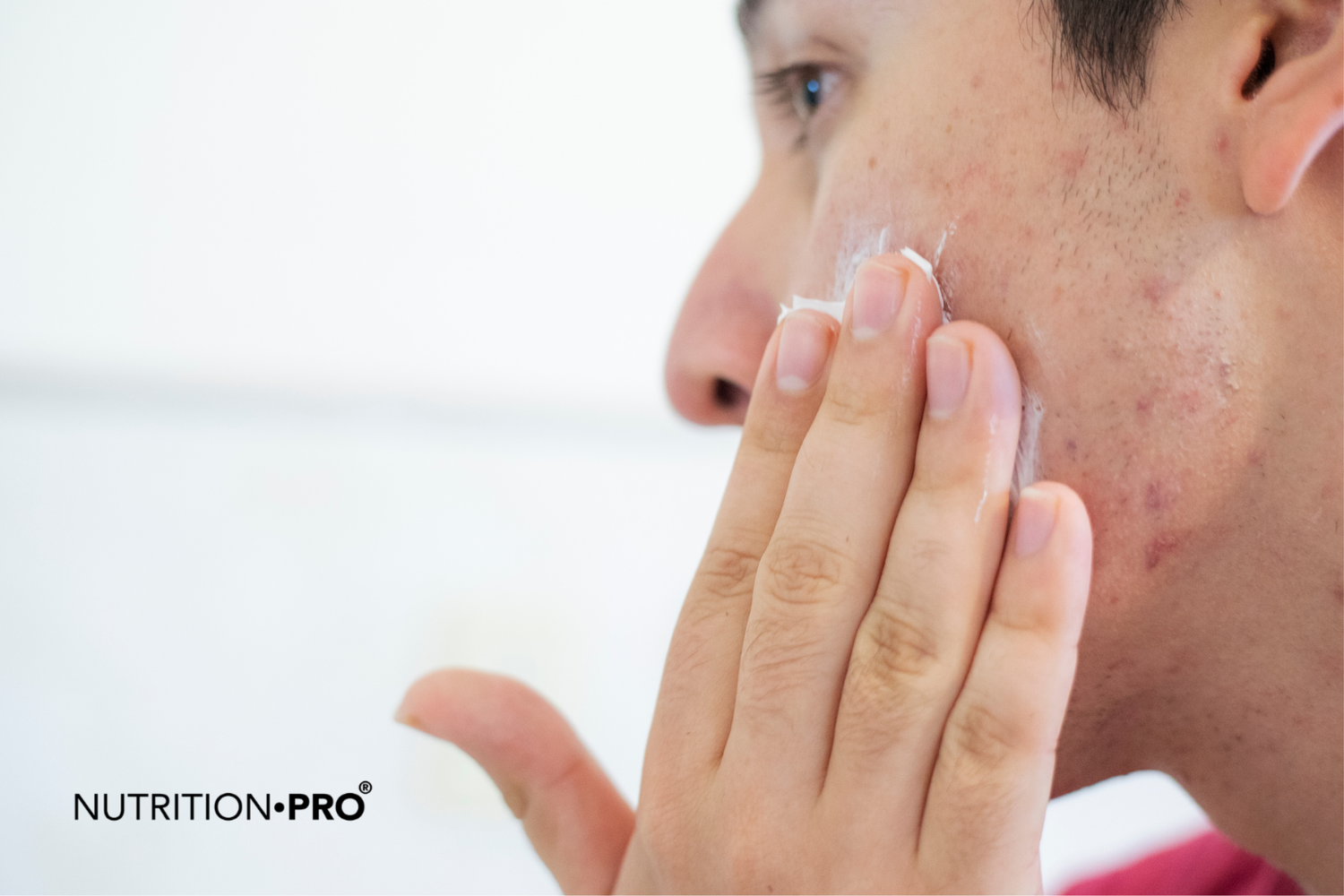
Among all supplements proposed against acne, only one has a meta-analysis entirely devoted to it: zinc. It answers two distinct questions, the first of which is rarely asked. Do acne-prone individuals have less zinc in their blood than others? Yes, significantly. And does orally taken zinc reduce lesions? Yes, inflammatory papules in particular.
This guide starts there and goes further: a study published at Harvard in 2024 explains why acne-prone skin lacks zinc locally, even when blood zinc levels are normal. It also details a reason to take interest in it that we rarely hear: zinc is among the alternatives that make it possible to reduce antibiotic dependence. Then it answers practical questions, dosage, form, duration, interactions, and explains what zinc does not do.

The meta-analysis. Significantly lower blood zinc in acne-prone individuals than in controls; significant reduction of inflammatory papules with oral zinc, as monotherapy or as adjuvant; no more side effects than comparators. The mechanism. A Harvard study shows that acne-prone skin overexpresses proteins that bind zinc, which would create local deficiency sustaining inflammation, even at normal blood levels.
The antibiotic argument. Oral zinc is among the non-antibiotic options that help prevent resistance and reduce antibiotic dependence. In practice. Gluconate, with meals, three months before assessing. Studies used therapeutic doses higher than recommended references; 14 mg is a nutritional dose. What zinc does not do. Not a first-line treatment, little effect on comedones, and nothing against nodules and cysts.
Why skin needs zinc
Zinc is not an incidental ingredient for skin. A review published in Frontiers in Medicine recalls that skin contains the third largest amount of zinc in the body, after muscles and bones, and that this mineral participates in skin and mucous membrane integrity, in hundreds of enzymatic reactions and antioxidant defense. A deficiency results in a range of skin diseases, and supplementation is used in a large number of dermatological indications, both infectious and inflammatory, including acne.
The most telling detail comes from a review on zinc transporters in skin: the first manifestations of zinc deficiency are cutaneous. Dermatitis, alopecia, acne, eczema, dry and scaly skin appear before other signs. Skin is therefore both a major consumer of zinc and the first organ to show signs when intake falls short. This is what makes it logical to examine the zinc status of a person with acne, and this is precisely what the meta-analysis did.
What the meta-analysis measured
Oral and topical zinc is used in acne treatment, but definitive evidence of its efficacy was lacking. A systematic review and meta-analysis in accordance with PRISMA recommendations was conducted to determine whether mean serum zinc differs between acne sufferers and controls, and whether zinc preparations are effective in acne treatment. Acne subjects had significantly lower serum zinc than controls. Patients treated with zinc showed significant improvement in average number of inflammatory papules compared to those not treated. There was no significant difference in the incidence of adverse effects between zinc supplementation and comparators. The authors conclude that zinc is effective for acne treatment, particularly for reducing the number of inflammatory papules, as monotherapy or as adjunctive treatment.
Yee BE, Richards P, Sui JY, Marsch AF. Dermatol Ther 2020;33(6):e14252. DOI: 10.1111/dth.14252
The two results do not say the same thing and do not call for the same response.
The first is a field observation : on average, acne sufferers have less zinc in their blood. This alone justifies checking intake levels, independent of any therapeutic effect, and this follows a nutritional correction logic: bringing insufficient intake back to normal.
The second is an intervention result : supplementation reduces papules. This result comes from trials that mostly used doses higher than reference intakes, following therapeutic logic. And it concerns inflammatory papules, the red bumps, not on comedones. Zinc is antioxidant and immunomodulatory; it acts on inflammation, not on follicle keratinization which produces blackheads.
The systematic review in JAMA Dermatology on all oral supplements for acne, 42 trials and 3,346 participants, evaluated zinc among others and notes a specific point: digestive side effects reported for zinc, whereas adverse effects were rare for most other interventions. This is the main practical limitation, and the dosage section revisits this. Our comprehensive guide to acne and supplements places zinc in relation to the five other families selected.
The mechanism discovered in 2024
Acne vulgaris, rosacea, and hidradenitis suppurativa are chronic inflammatory skin conditions with similar clinical presentations. A comparative analysis of transcriptomic data from these three diseases identified differentially expressed genes and enriched pathways, unique to each or shared among them. Several zinc-binding proteins, SERPINA1, S100A7, S100A8, S100A9, and KRT16, were found to be strongly and consistently overexpressed in all three diseases. The authors' hypothesis is that these proteins could bind and sequester zinc, leading to local zinc deficiency and increased inflammation. They identify high dietary zinc intake as a promising therapeutic approach and confirm its efficacy in a murine model of acne.
Li L, Hajam I, McGee JS, et al. Exp Dermatol 2024;33(7):e15145. DOI: 10.1111/exd.15145
This work, conducted in George Church's genetics laboratory at Harvard, provides the missing piece of the meta-analysis. It noted lower blood zinc and an effect of supplementation, without explaining why. Here is a coherent explanation: in inflamed skin, zinc-binding proteins are massively produced, in particular S100 proteins, known as markers of skin inflammation. They sequester zinc locally, which creates a deficiency in the lesion itself, and this deficiency maintains inflammation.
Two practical consequences. First, this explains why zinc supplementation can help even in someone with normal blood levels: the problem is local, not systemic. Second, this clarifies the logic behind therapeutic doses in trials: sufficient intake is needed to saturate the proteins that sequester and make zinc available in the skin. This is a mechanistic hypothesis validated in animals, not yet a human trial designed on this reasoning, and it should be read as such.
Zinc and antibiotics: the resistance argument
Antibiotics remain a cornerstone of inflammatory acne treatment, and they pose a known problem: resistance. A review published in Expert Review of Anti-infective Therapy describes the resistance of Cutibacterium acnes as a global problem, high for macrolides and clindamycin, lower for tetracyclines, and potentially leading to slow responses and relapses. Among strategies to contain it, the authors classify oral zinc alongside benzoyl peroxide, azelaic acid, and retinoids, and conclude that the use of non-antibiotics such as zinc can prevent resistance and reduce dependence on antibiotics.
A literature review dedicated to zinc in acne points in the same direction and frames it from the patient's perspective: standard topical and systemic treatments induce a wide range of adverse effects, and zinc represents a promising alternative due to its low cost, effectiveness, and absence of systemic side effects. These are three arguments that a several-month course of antibiotic treatment cannot claim.
It means the question deserves to be raised with your dermatologist: can zinc accompany the treatment, reduce its duration, or take over for maintenance. The data above justify the question.
It does not mean stopping a prescribed antibiotic to replace it with zinc on your own initiative. And there is a concrete interaction to be aware of: zinc reduces the absorption of tetracyclines and quinolones, which are precisely the antibiotics used for acne. If taken simultaneously, they must be spaced at least two hours apart, and this should be reported to the prescriber.
Dose, form, duration: the honest answers
The dose
This is the point where precision is essential, because two logics overlap. The clinical trials on acne generally used doses higher than the reference nutritional intakes, in a supervised therapeutic approach. A supplement providing 14 mg of zinc per day, or approximately 140% of reference values, follows a different, nutritional logic: it corrects the relative deficiency highlighted by the meta-analysis, without reaching the doses used in trials. This is a dose that can be taken without special monitoring. High therapeutic doses over the long term require medical advice for a specific reason: zinc competes with copper for absorption, and prolonged excess can lead to copper deficiency with anemia and neurological disorders.
The form
A review published in Dermatologic Therapy compared the efficacy and adverse effect profile of different zinc formulations used for acne, including gluconate, sulfate, acetate, and oxide. The gluconate is one of the most studied forms by oral route for this indication. Sulfate is historically most associated with digestive troubles. What matters on a label is the amount of elemental zinc, not the weight of the salt: 104 mg of zinc gluconate provides approximately 14 mg of zinc. Our complete zinc guide details the comparative absorption of different forms.
The duration
Three months is the realistic benchmark. Trials on supplements for acne generally last eight to twelve weeks, and the renewal cycle of an inflammatory lesion is measured in weeks. Nothing should be judged before six weeks. A photo at the start, with the same lighting and angle, allows you to see a progressive decrease in the number of papules that daily mirror checks don't show.
| Question | What the data says | In practice |
|---|---|---|
| What dose? | Trials at therapeutic doses higher than reference values; relative deficiency measured in acne patients | 14 mg per day following nutritional logic; higher doses on medical advice |
| What form? | Gluconate among the most studied by oral route; sulfate the most irritating | Gluconate, by reading the elemental zinc amount |
| How long? | Trials of 8 to 12 weeks | Three months, monthly photo |
| When? | Digestive effects reported, especially on an empty stomach | With meals, away from whole grains, iron, and calcium |
| What not to combine it with? | Reduced absorption of tetracyclines and quinolones | Space out by two hours, inform the prescriber |
What zinc does not do
It is not a first-line treatment. A review from Dermatologic Clinics states it unambiguously: aside from systemic deficiency states, there is little evidence demonstrating convincingly the efficacy of zinc as a reliable first-line treatment for most skin conditions, but it can be considered as adjunctive treatment. A more recent review in the Journal of Dermatological Treatment confirms the benefit of zinc in inflammatory conditions and recommends supplementation for anyone deficient, while calling for large trials on zinc as monotherapy.
It has little effect on comedones. The meta-analysis measures a decrease in inflammatory papules, not blackheads. Comedones result from follicular keratinization, on which zinc has no documented action. For this type of lesion, a keratolytic topical treatment remains the primary tool.
It does nothing against nodules and cysts. Deep, painful lesions that leave scars require a dermatologist and treatments whose efficacy is established at a completely different level. Every month of waiting is a month of potential scarring.
The reasonable protocol
120 capsules providing daily 14 mg of elemental zinc in gluconate form, i.e., 104 mg of zinc gluconate, with 2 mg of vitamin B6. The amount of elemental zinc is clearly stated, which is the first criterion for reading a label. Two capsules during a meal, 60-day course, also available as a subscription.
See ZincTake with meals. Space two hours apart from antibiotics. Do not exceed the recommended dose without medical advice.
Choose what resonates most with you: the answer appears just below.
The first signs of zinc deficiency are cutaneous, and your symptoms show several of them. A blood test will confirm, but nutritional supplementation with meals is justified now, over three months. If the test comes back low, discuss a higher dose with your doctor.
Zinc is among non-antibiotic approaches that reduce antibiotic dependence according to resistance literature reviews. Bring this evidence to your dermatologist to discuss switching or shortening treatment. In the meantime, if you start zinc, space it two hours from your antibiotic and inform your prescriber.
The meta-analysis measures a decrease in inflammatory papules, not comedones, which result from follicle keratinization. For blackheads, a local keratolytic treatment remains the first approach, and the probiotic trial in our gut-skin axis article showed the most clear effect on this type of lesions.
Nodules, cysts and scars are not addressed by zinc, which dermatologists themselves consider adjunctive treatment. Dermatological treatments have proven efficacy at a different level, and every month counts for scars. Zinc can support treatment, not replace it.
This test provides guidance; it does not replace professional medical advice.
Frequently asked questions
Efficacy
Is zinc effective against acne?
It is the most well-documented supplement for this indication. A meta-analysis published in Dermatologic Therapy showed that people with acne have significantly lower blood zinc levels than controls, and those treated with zinc achieve a significant reduction in the number of inflammatory papules, both as monotherapy and as an adjunct to treatment. Adverse effects were no more frequent than with comparators. The systematic review in JAMA Dermatology covering 42 trials ranks it among the supplements studied, noting digestive discomfort.
Why do people with acne lack zinc?
A study published in 2024 by a Harvard team proposes an explanation. By comparing genes expressed in acne, rosacea, and hidradenitis, researchers found in all three diseases a strong overexpression of proteins that bind zinc, such as S100A7, A8, and A9. Their hypothesis is that these proteins sequester zinc in inflamed skin, creating a local deficiency that perpetuates inflammation, even when blood levels are normal. They subsequently confirmed the effect of high zinc intake on an animal model of acne.
Does zinc work on blackheads?
Less clearly than on red pimples. The meta-analysis precisely measures a decrease in inflammatory papules, that is, red lesions. Zinc is antioxidant and immunomodulatory, which explains an action on the inflammatory component rather than on comedones, which are more related to follicular keratinization. For blackheads, a local keratolytic treatment remains the primary approach.
Is zinc sufficient to treat acne?
No, and a review in Dermatologic Clinics makes this clear: outside of true deficiencies, there is little evidence that zinc is a reliable first-line treatment for skin conditions, but it can be considered as adjunctive therapy. This is the right framework. In mild acne, as a complement to local care or alongside treatment, with special consideration for people whose blood zinc is low.
Dose and form
What dose of zinc for acne?
Two approaches must be distinguished. Clinical trials generally used doses exceeding reference intakes, in a structured therapeutic approach. A supplement providing 14 mg of zinc per day, roughly 140% of reference values, follows a nutritional logic: it corrects the relative deficit measured in people with acne without reaching trial doses. High doses over the long term require medical advice, as zinc interferes with copper absorption.
Which form of zinc to choose?
Gluconate is one of the most studied forms orally for acne and appears in a review comparing formulations used, alongside sulfate, acetate, and oxide. Sulfate is historically most associated with digestive problems. What matters on the label is the amount of elemental zinc, not the salt weight: 104 mg of zinc gluconate provides approximately 14 mg of zinc.
Should zinc levels be tested before supplementing?
It's not essential at nutritional doses, but it is useful if acne is resistant or if other signs of deficiency develop: fragile nails, hair loss, slow healing, recurrent infections. A review on zinc transporters recalls that the first manifestations of deficiency are cutaneous: dermatitis, alopecia, acne, eczema, dry skin. Blood testing is simple and inexpensive, even if it imperfectly reflects reserves.
In practice
How long does it take to see an effect on acne from zinc?
Three months is the realistic benchmark. Trials of supplements for acne generally last 8 to 12 weeks, and the renewal cycle of an inflammatory lesion is measured in weeks. Nothing can be judged before six weeks. A photo at the start, same lighting and angle, allows you to see a gradual decrease in the number of papules that daily mirror viewing doesn't show.
When to take zinc, at what time of day?
During a meal, to limit digestive discomfort which is the main reported adverse effect. The ideal meal contains few whole grains and legumes, whose phytates reduce zinc absorption, and no iron or calcium supplement taken at the same time. Evening at dinner is often the simplest time.
What should not be taken with zinc?
With antibiotics from the tetracycline and quinolone families, whose absorption it reduces: space at least two hours apart, and discuss with the prescriber since these antibiotics are precisely those used for acne. With an iron or calcium supplement taken at the same time. And with a meal very high in phytates. Zinc and vitamin B6, on the other hand, are commonly combined.
What are the side effects of zinc?
Essentially digestive: nausea, gastric discomfort, metallic taste, especially on an empty stomach and at high doses. Taking it with meals limits these. At high doses over the long term, zinc reduces copper absorption, which can lead to copper deficiency with anemia and neurological disorders: this is why doses should not exceed recommendations without medical supervision. The meta-analysis finds no difference in adverse effects between zinc and comparators at trial doses.
Antibiotics
Can zinc replace antibiotics for acne?
Not on your own initiative, but the question is legitimate and documented. A review on antibiotic resistance in acne classifies oral zinc among non-antibiotics that can prevent resistance and reduce antibiotic dependence. A literature review on zinc in acne emphasizes its low cost, efficacy, and absence of systemic adverse effects, in contrast to standard treatments. This is an argument to bring to your dermatologist, not a reason to stop a prescribed treatment.
What to remember about zinc and acne?
That it is the only anti-acne supplement with a dedicated meta-analysis, which measures lower blood zinc in people with acne and a decrease in inflammatory papules with supplementation. That 2024 research explains local deficiency through sequestration in inflamed skin. That zinc reduces antibiotic dependence according to reviews on resistance. That nutritional dose corrects the underlying condition without reproducing trial results. And that it is used as adjunctive therapy, never replacing a dermatologist when skin is struggling.
Glossary
- Inflammatory papule
- Red pimple, with no visible pus; the type of lesion on which the meta-analysis measured zinc's effect.
- Comedone
- Blackhead or whitehead, non-inflammatory lesion related to follicle keratinization; poorly responsive to zinc.
- Elemental zinc
- Amount of actual zinc contained in a zinc salt; 104 mg of gluconate provides approximately 14 mg of elemental zinc.
- Zinc gluconate
- Zinc salt among the most studied orally for acne, generally better tolerated than sulfate.
- S100 proteins
- Proteins of skin inflammation that bind zinc; their overexpression in acne suggests local zinc sequestration.
- Sequestration
- Binding of a mineral by proteins that render it locally unavailable, even if blood levels are normal.
- Phytates
- Compounds found in whole grains and legumes that reduce zinc absorption when taken in the same meal.
- Tetracyclines
- Reference family of antibiotics for acne, whose absorption is reduced by zinc taken simultaneously.
- Adjunctive treatment
- Intervention that accompanies a primary treatment without replacing it; the framework dermatologists provide for zinc.
Sources
The studies cited below were identified via PubMed.
- Yee BE, Richards P, Sui JY, Marsch AF. Serum zinc levels and efficacy of zinc treatment in acne vulgaris: systematic review and meta-analysis. Dermatologic Therapy, 2020;33(6):e14252. DOI
- Li L, Hajam I, McGee JS, et al. Comparative transcriptomic analysis of acne, rosacea and hidradenitis suppurativa supporting high-dose dietary zinc as a therapeutic agent. Experimental Dermatology, 2024;33(7):e15145. DOI
- Cervantes J, Eber AE, Perper M, Nascimento VM, Nouri K, Keri JE. The role of zinc in acne treatment: literature review. Dermatologic Therapy, 2018;31(1):e12576. DOI
- Zou P, Du Y, Yang C, Cao Y. The trace element zinc and skin conditions. Frontiers in Medicine, 2023;9:1093868. DOI
- Bin BH, Hojyo S, Seo J, et al. The role of the Slc39a family of zinc transporters in cutaneous zinc homeostasis. Nutrients, 2018;10(2):219. DOI
- Sardana K, Gupta T, Garg VK, Ghunawat S. Antibiotic resistance of Propionibacterium acnes : global situation, diagnosis and management. Expert Review of Anti-infective Therapy, 2015;13(7):883-896. DOI
- Searle T, Ali FR, Al-Niaimi F. Zinc in dermatology. Journal of Dermatological Treatment, 2022;33(5):2455-2458. DOI
- Bae YS, Hill ND, Bibi Y, Dreiher J, Cohen AD. Innovative uses of zinc in dermatology. Dermatologic Clinics, 2010;28(3):587-597. DOI
- Shields A, Ly S, Wafae B, et al. Safety and efficacy of oral nutraceuticals in acne treatment: a systematic review. JAMA Dermatology, 2023;159(12):1373-1382. DOI


