

Zinc is one of those trace minerals that gets talked about a lot without always knowing what it actually does. Yet it plays a role in more than 300 enzymatic reactions and affects almost everything: immune defenses, skin quality, hair, fertility, hormonal balance, and cellular protection. Since the body est l'un de ces oligo-éléments dont on parle beaucoup sans toujours savoir ce qu'il fait réellement. Pourtant, il intervient dans plus de 300 réactions enzymatiques et touche presque tout : défenses immunitaires, qualité de la peau, cheveux, fertilité, équilibre hormonal et protection cellulaire. Comme le corps stores virtually none of it, regular intake is essential, and deficiency is more common than we imagine.
This guide reviews, backed by scientific evidence, what zinc truly delivers, ranking its benefits by level of proof (meta-analyses and reviews 1996-2025). You'll learn how to spot a deficiency, choose the right form, calibrate the dosage, run a proper course, and avoid the mistakes that make supplementation pointless or even counterproductive.

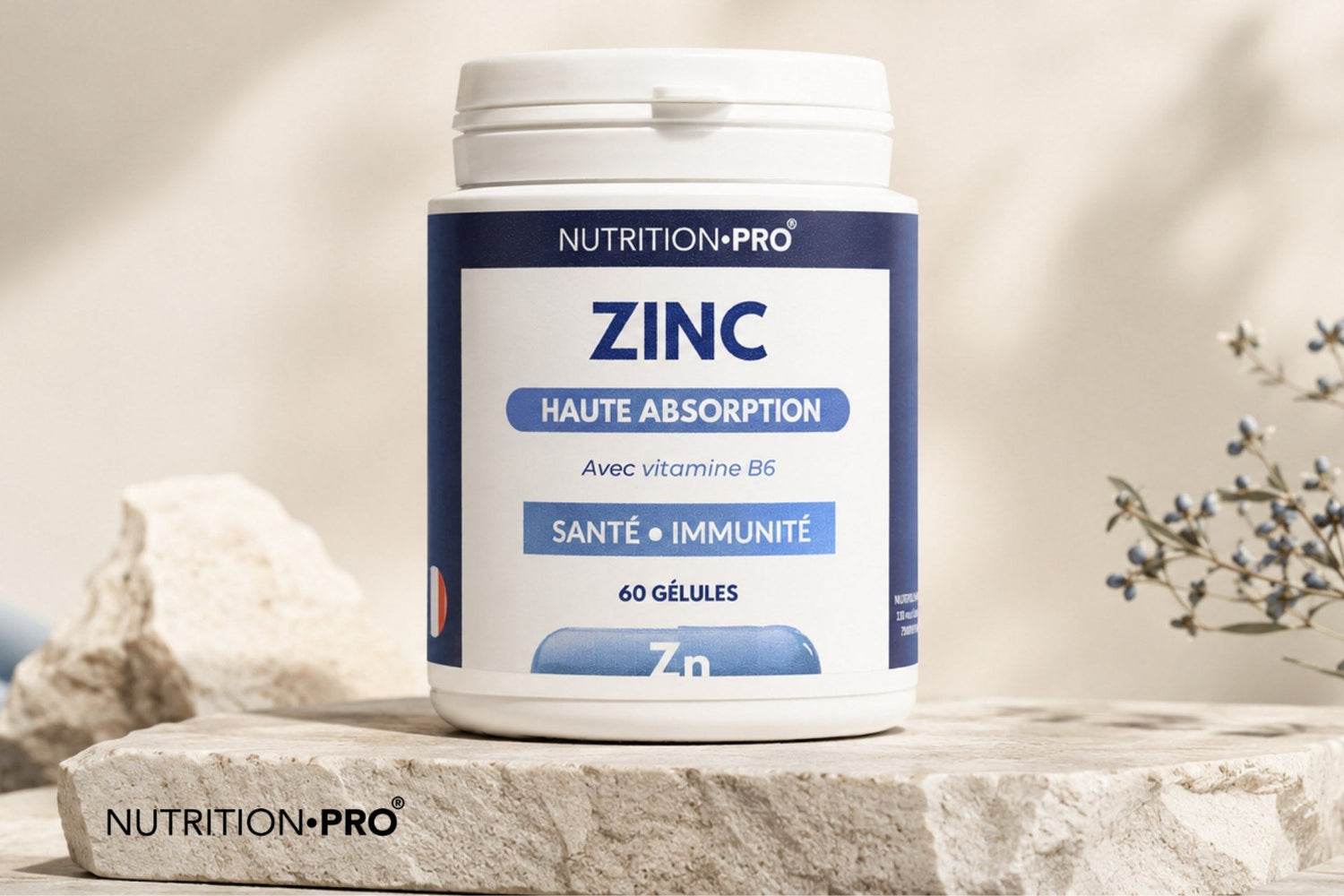
Zinc gluconate, a form absorbed just as well as citrate, combined with vitamin B6. One capsule per day.
The scientific essentials in 5 points. (1) Zinc participates in more than 300 enzymatic reactions and is not stored by the body (Stiles, Clin Exp Med, 2024). (2) It is a key regulator ofimmunity (Wessels, Nutrients, 2017): taken early, it shortens a cold by about 2.7 days (Hemilä, 2016). (3) High level of evidence also for skin and acne (Yee, 2020) and testosterone (Prasad, 1996). (4) In the form of gluconate, it is absorbed at 60.9%, the same as citrate (Wegmüller, J Nutr, 2014). (5) Reference dose: 15 mg/day, not to be exceeded sustainably to preserve balance with copper.
- What is zinc? Physiological role
- Zinc deficiency: signs and at-risk populations
- Benefits of zinc classified by level of evidence
- Zinc and immunity: what studies show
- Zinc, skin, hair and nails
- Zinc, testosterone and fertility
- Zinc in diet
- Which form of zinc to choose?
- Dosage: how much, when, how
- Precautions, overdose and zinc/copper balance
- Common mistakes with zinc
- Protocol: succeeding with your zinc cure
- Self-assessment: your risk of deficiency
- Adaptations based on your profile
1. What is zinc? Physiological role
Zinc is present in trace amounts throughout the body: approximately 2.5 grams total, distributed mainly in muscles and bones, but also in skin, liver, pancreas and retina. It's a small amount, yet this discreet mineral conducts a considerable part of our biochemistry.
According to a review published in Clinical and Experimental Medicine in 2024 (Stiles et al.), zinc acts as a cofactor for numerous metalloenzymes necessary for cell membrane repair, cell proliferation and growth, and immune system function. It also plays a role in protein synthesis and DNA replication, two fundamental steps of the cell cycle.
A mineral the body cannot store
Unlike iron, for example, zinc has no significant body reserves. It is eliminated continuously through feces (main route), urine, perspiration, skin renewal and, in men, semen. This lack of storage explains why regular daily intake is necessary and why deficiency can appear fairly quickly in case of insufficient intake or increased losses.
Absorption occurs in the small intestine, via specific transporters (ZIP and ZnT families described by Stiles, 2024). Once in circulation, approximately 70% of zinc is bound to albumin. This fine mechanism also explains why certain dietary factors (phytates, calcium) or certain medications can disrupt zinc status.
Zinc is not a performance enhancer : it corrects deficiencies and supports normal functions, but does not improve an already optimal body. It is also not a mineral to take in megadoses "to do more": beyond a certain threshold, excess becomes counterproductive by disrupting the balance with copper. Finally, it is not an isolated miracle solution: it works in synergy with other nutrients (vitamin A, vitamin D, copper, vitamin B6).
2. Zinc deficiency: signs and at-risk populations
Zinc deficiency is more common than one might think, and often underdiagnosed because its manifestations resemble many other conditions. Here are the most frequently reported signs, by major category.
| System affected | Possible signs of a deficiency |
|---|---|
| Immunity | Recurrent infections, frequent colds, slow wound healing |
| Skin | Rashes, acne, dry or fragile skin, skin lesions |
| Hair and nails | Hair loss, brittle nails or nails streaked with white |
| Energy | Persistent fatigue, loss of vitality |
| Senses | Diminished taste and smell |
| Hormonal system | Decreased libido, fertility issues |
Most at-risk profiles
Certain situations significantly increase the risk of deficiency:
- Vegetarians and vegans : plant-based zinc is less well absorbed due to phytates.
- Seniors : less efficient absorption and often reduced intake.
- Athletes : increased losses through perspiration and increased needs.
- Pregnant or breastfeeding women : increased needs.
- Digestive disorders (inflammatory diseases, malabsorption): reduced assimilation.
- Taking certain medications : Stiles' review (2024) notably cites diuretics, which promote zinc loss.
How do you know if you're affected? The only reliable way to confirm a deficiency is blood testing, to be interpreted with a healthcare professional, as the circulating level does not always perfectly reflect reserves. In the meantime, a cluster of indicators matters: if several signs accumulate and your diet is poor in animal sources, a zinc supplementation properly dosed is a reasonable approach, while restoring adequate status.
Seek medical advice and consider testing if you have: unexplained recurrent infections, significant and persistent hair loss, skin lesions that heal poorly, marked loss of taste or smell without obvious cause, or chronic fatigue resistant to lifestyle measures. These signs are not specific to zinc: testing helps rule out other causes (iron, vitamin D, thyroid) before long-term supplementation.
Zinc is among the minerals to consider in cases of unexplained fatigue, alongside iron or magnesium. Explore our selection of anti-fatigue and vitamins & minerals for a comprehensive approach.
3. Zinc's benefits ranked by level of evidence
Immunity
Wessels 2017 (Nutrients), Gombart 2020 (Nutrients), Hemilä 2016
Zinc regulates immune cell signaling and has anti-inflammatory and antioxidant properties. One review classes zinc, along with vitamins C and D, among the three micronutrients with the strongest evidence for immunity. Taken early, it shortens the duration of a cold by approximately 2.7 days.
Skin and acne
Yee 2020 (Dermatologic Therapy), meta-analysis
People with acne have lower zinc levels on average, and supplementation significantly reduces inflammatory papules, alone or in addition to treatment. Zinc acts on sebum regulation and skin inflammation.
Wound healing
Lin 2017 (Nutrients), mechanistic review
Zinc is involved at every stage of tissue repair: coagulation, inflammation, new tissue formation and matrix remodeling. A deficiency often results in skin lesions and delayed wound healing.
Testosterone
Prasad 1996 (Nutrition), landmark study
Zinc restriction causes testosterone to drop from 39.9 to 10.6 nmol/L in young men; supplementation in deficient older men raises it from 8.3 to 16.0 nmol/L. Zinc is essential for maintaining normal levels, though it won't boost testosterone in men who are already healthy.
Male fertility
Zečević 2025 (Antioxidants), recent review
Zinc is essential for testicular development, sperm production, and their protection against degradation. Excessively low levels in seminal plasma are associated with impaired fertility.
Hair and nails
Role in keratin synthesis
Zinc participates in the production of keratin, the structural protein of hair and nails. Deficiency manifests as hair loss and brittle nails. While it won't transform already healthy hair, adequate zinc status is one of the basic foundations.
Vision, taste and smell
Retinal concentration and sensory enzymes
Zinc is necessary for enzymes involved in smell and taste, and is concentrated in the retina where it contributes to normal vision. Loss of taste or smell acuity is among the warning signs of deficiency.
Antioxidant action
Cellular protection against oxidative stress
Zinc participates in the function of antioxidant enzymes and limits the production of pro-inflammatory molecules, helping protect cells against oxidative stress.
Metabolism and blood sugar
Role in insulin secretion and action
Zinc is involved in energy metabolism and plays a role in insulin secretion and action, thus in blood sugar regulation. Good zinc status is part of the foundation for balanced metabolism.
4. Zinc and immunity: what the research says
A landmark review published in Nutrients in 2017 (Wessels, Maywald and Rink) describes zinc as a true guardian of immune function: it regulates signaling within immune cells, possesses anti-inflammatory and antioxidant properties, and its deficiency promotes a pro-inflammatory state. Concretely, a deficit weakens both innate immunity (natural killer cells, phagocytes) and adaptive immunity (T lymphocytes), which explains why deficient individuals are more susceptible to infections.
This subject has long been debated. An earlier meta-analysis published in Archives of Internal Medicine in 1997 (Jackson et al.) concluded there was a lack of solid evidence, due to highly heterogeneous protocols (variable doses, forms, and timing of administration). The reasonable consensus today: zinc helps especially when taken early, at an appropriate dose, and its benefit is more pronounced when starting from an insufficient status.
In practice, for the cold season, zinc's benefit is twofold: baseline intake to maintain good status, and earlier use at the first signs. All while staying within reasonable doses and not neglecting other pillars (sleep, vitamin D, nutrition). To complement this approach, see our article on moringa and immunity.
5. Zinc, skin, hair and nails
A broader review published in JAMA Dermatology in 2023 (Shields et al.) confirms the interest of several nutrients in acne, while noting that zinc can cause digestive disturbances, hence the importance of proper dosing. Zinc acts notably on sebum regulation and the inflammatory component of acne. For the skin, it is often associated with vitamin A: see our article on retinol.
Wound Healing
Hair and Nails
Hair loss in patches, brittle nails or white-spotted nails: these signs are among the classic manifestations of zinc deficiency, as the mineral participates in keratinsynthesis. Adequate zinc status is one of the basic conditions for good hair and nail health. For a targeted approach to the beauty of your integumentary system, zinc is part of our hair & nailsuniverse, and you can explore the topic further with our article on keratin-rich foods.
6. Zinc, Testosterone and Fertility
The message is important to avoid unrealistic expectations: zinc is not a magical hormonal booster. It is necessary for proper functioning of the hormonal axis, and its deficiency causes testosterone to drop; correcting it restores normal values. In a man already at his peak, adding zinc will not push testosterone beyond normal.
Zinc is therefore a key mineral in the hormonal system, in both men and women, where its needs increase during pregnancy and the menstrual cycle. It naturally fits into our range libido & fertility. To dive deeper into the nutritional angle, also see 7 foods that boost testosterone.
7. Zinc in diet
Before considering a supplement, food remains the primary source of zinc. The richest and most bioavailable foods are of animal origin:
- Oysters : by far the most concentrated source.
- Meats (beef, lamb, poultry) and organ meats.
- Seafood and certain fish.
- Seeds (pumpkin, sesame), legumes, nuts and seeds and whole grains, knowing that their phytates reduce absorption.
- Dairy products and eggs, to a lesser extent.
According to Stiles' 2024 review, amino acids from protein digestion and citrate promote zinc absorption, while phytates (grains and legumes), casein (dairy products) and calcium reduceit. It is precisely because plant-based sources are less bioavailable that vegetarians and vegans are among the populations to monitor.
Soaking, sprouting and fermenting legumes and grains reduce their phytate content and improve zinc absorption. Pairing a zinc source with proteins (amino acids) also optimizes its absorption. Despite these adjustments, supplementation remains a practical option to ensure adequate intake in a 100% plant-based diet.
8. Which form of zinc should you choose?
| Form | Bioavailability | Key Takeaway |
|---|---|---|
| Gluconate | High (≈ 61%) | Well-tolerated, form used in many reference clinical trials |
| Citrate | High (≈ 61%) | Absorption comparable to gluconate, without marked taste |
| Bisglycinate | High | Chelated form, well-absorbed, often appreciated for digestive comfort |
| Oxide | Lower (≈ 50%) | Cheapest form but least well-absorbed, sometimes very poor in some individuals |
These figures come from a randomized double-blind trial with isotopic tracers, the reference method for measuring absorption. A review published in Nutrients in 2024 (Devarshi et al.) classifies gluconate and glycinate among the best-absorbed forms.
Pragmatic conclusion: the zinc gluconate, which we selected for our formula, offers top-tier bioavailability while being well-tolerated, and it is the form used in some major clinical studies (common cold, testosterone). We combine it with vitamin B6, another cofactor involved, like zinc, in immune function and protein metabolism. If you compare forms, the key is to choose a well-absorbed organic form and avoid oxide alone. The same reasoning applies to other minerals: we detailed this for iron in our comparison bisglycinate iron vs other forms.
9. Dosage: how much, when, how
Average needs are approximately 11 to 12 mg per day for men and 8 to 10 mg for women, slightly more during pregnancy. A dose of 15 mg of elemental zinc per day amply covers these needs as part of supplementation. A few principles to optimize a course:
- When to take it: ideally away from meals rich in iron, calcium or phytates, which reduce absorption. If the stomach is sensitive, taking it with a light meal limits the risk of nausea.
- What to space it from: do not take at the same time as a supplemental dose of iron, calcium or copper. Stiles' 2024 review also notes that zinc can reduce the absorption of certain antibiotics (ciprofloxacin, doxycycline): space doses by 2 hours.
- Duration: a course lasting from a few weeks to a few months depending on the objective. In case of confirmed deficiency, biological monitoring is useful, and breaks are recommended during long-term courses.
Zinc competes with iron, copper and calcium at the level of absorption. If you take multiple minerals, space out your doses throughout the day. Similarly, space zinc away from certain antibiotics (ciprofloxacin, doxycycline) and medications such as risedronate. In case of treatment, ask your pharmacist for advice.
10. Precautions, overdose and zinc/copper balance
Here is the key element of responsible supplementation: the balance between zinc and copper. These two trace elements share the same intestinal absorption pathways and compete with each other. High zinc intake, maintained over time, can therefore gradually lower copper, with a resulting risk of anemia and, in extreme cases, neurological problems. This is why well-conducted supplementation prioritizes a measured dose rather than megadoses, and remains vigilant during long-term courses.
Excessive and prolonged intake can manifest through: nausea and digestive disorders, metallic taste, and over the longer term signs of copper deficiency (fatigue, anemia, neurological disorders). In case of a long-term course at high dose, monitor these signs and, ideally, the zinc/copper balance with a healthcare professional. Taken at the recommended dose, zinc does not pose this problem: it is the excess that is the issue.
In practice: respect the recommended dose, avoid combining multiple supplements containing zinc, take breaks during prolonged courses, and in case of medical treatment, pregnancy or breastfeeding, seek advice from a healthcare professional. A dietary supplement does not replace a varied diet and a healthy lifestyle.
11. Common Mistakes with Zinc
Oxide is the cheapest form but the least well absorbed (≈ 50%, sometimes much less in certain individuals). For a foundational supplement, prefer an organic form (gluconate, citrate, bisglycinate).
Mistake 2: aiming for megadoses
More is not better. Beyond the useful dose, the surplus is not utilized any better and prolonged excess disrupts copper balance. A measured and consistent dose is better than an occasional megadose.
Mistake 3: taking it at the wrong time
Taken with coffee rich in chelating compounds, a meal very high in calcium (dairy products), or an iron supplement, zinc is less well absorbed. Space out these intakes.
Mistake 4: continuous supplementation without breaks or copper
Continuous supplementation at sustained doses, without monitoring, can lead to copper deficiency. Take breaks and remain attentive to mineral balance during long-term courses.
Mistake 5: relying entirely on plant-based foods without adjustment
Counting on grains and legumes without reducing phytates (soaking, fermentation) can allow a deficiency to develop in vegetarians and vegans. Adapt your preparations or supplement.
Mistake 6: stopping too early
Some effects (skin, hair) require several weeks, the time needed for cellular renewal. A course that is too short does not allow time for benefits to appear.
12. Protocol: A Successful Zinc Course
KEY TAKEAWAYS
13. Self-assessment: your zinc deficiency risk
Select the situation that best describes you: your recommendation will display immediately. This is a reference point, not a diagnosis.
Your intake is probably sufficient. Stay attentive to a varied plate rich in zinc sources. A targeted course may be justified during cold season, without daily necessity.
Strengthen your food sources and consider a course of zinc properly dosed, especially if several signs are combined. Also consider exploring iron and vitamin D on the side Vitamins & Minerals.
Speak with a healthcare professional and consider a blood test. Zinc supplementation zinc is often relevant: follow the treatment protocol and monitor zinc/copper balance during extended courses.
14. Adaptations Based on Your Profile
short course during cold season
supplementation often relevant
at the first signs
dermatological advice if severe
dedicated formulas as complement
course of at least 2 to 3 months
regular intake recommended
supplementation on medical advice
regular intake and targeted diet
take breaks
Frequently Asked Questions
What are the proven benefits of zinc?
Level of evidence high on immunity (Wessels 2017), skin and acne (Yee 2020), wound healing (Lin 2017), testosterone (Prasad 1996) and male fertility (Zečević 2025). Effect moderate but real on hair, nails, vision, taste, smell and antioxidant protection.
What are the signs of zinc deficiency?
Persistent fatigue, recurrent infections, weakened skin and slow wound healing, hair loss, brittle nails, altered taste and smell. Nearly 17 to 20% of the global population is at risk (Devarshi 2024). Blood testing confirms diagnosis.
Which form of zinc is best absorbed?
<<<12>>> gluconate and citrate gluconate et le citrate (≈ 61%), equally, well ahead of oxide (≈ 50%). According to Wegmüller 2014, gluconate and citrate are equivalent. Bisglycinate is also well absorbed. Oxide alone should be avoided.
Is zinc gluconate a good form?
Yes. Its absorption equals that of citrate and exceeds that of oxide (Wegmüller 2014). It is also the form used in several major clinical trials (cold, testosterone), so a form with efficacy validated by clinical trials.
What is the recommended daily dose of zinc?
Approximately 15 mg per day for an adult, from all sources combined. Average needs: 11-12 mg for men, 8-10 mg for women, slightly more during pregnancy. Do not exceed sustainably to preserve copper.
When to take zinc, morning or evening?
The timing matters little: priority to consistency and spacing from iron, calcium and certain medications. Away from meals rich in phytates, or during a light meal if the stomach is sensitive.
Is zinc effective against the common cold?
Taken early, it may shorten a cold by about 2.7 days (Hemilä 2016). The effect is more pronounced when zinc status is insufficient. The debate remains nuanced because study protocols are heterogeneous.
Does zinc increase testosterone?
It maintains normal levels but does not enhance a man already in good health. According to Prasad 1996, deficiency causes testosterone to drop, and correcting it restores it. It is a correction of deficiency, not enhancement.
Is zinc effective against acne?
Yes. According to Yee 2020, people with acne have lower zinc levels, and supplementation reduces inflammatory papules, alone or as a complement. Zinc acts on sebum and inflammation.
Can zinc be dangerous at high doses?
At usual doses, no. But prolonged excess can cause copper to drop and lead to anemia (Stiles 2024), and cause nausea and digestive issues. Respect the dose and monitor zinc/copper balance during long-term courses.
How long should one take zinc?
A course of 1 to 3 months depending on the objective. Since the body does not store zinc, consistency is key. Take breaks during long courses and monitor mineral balance.
Do vegetarians lack zinc more often?
Yes. Plant-based zinc is less well absorbed due to phytates. Soaking and fermentation help, but supplementation may be relevant to ensure adequate intake.
Should zinc be taken with vitamin B6?
Both are complementary cofactors for immunity and protein metabolism. The combination is relevant, but it is not demonstrated that B6 significantly increases zinc absorption: it is a formulation synergy.
Which foods are richest in zinc?
<<<13>>> Oysters huîtres top the list, followed by meat, organ meats, shellfish and fish. On the plant side: pumpkin and sesame seeds, legumes, nuts and seeds, whole grains (but phytates are limiting). Animal zinc is better absorbed.
Does zinc help hair and nails?
It participates in the synthesis of keratin. A deficiency manifests as hair loss and brittle nails. While not miraculous for healthy hair, good zinc status is a basic foundation for the health of hair and nails.
Does zinc play a role in fertility?
Yes, especially in men. According to Zečević 2025, it is essential for sperm production and their protection. Low levels in seminal plasma are linked to impaired fertility. In women, requirements are increased during pregnancy.
Glossary
- Trace element
- A mineral present in very small amounts in the body but essential to its functioning, such as zinc, iron or copper.
- Bioavailability
- The proportion of a nutrient that is actually absorbed and usable by the body. For zinc, it varies greatly depending on the form (gluconate and citrate are high, oxide is lower).
- Cofactor
- A molecule necessary for the activity of an enzyme. Zinc is a cofactor for over 300 enzymes.
- Phytates
- Compounds present in grains and legumes that reduce the absorption of certain minerals, including zinc.
- Oxidative stress
- An imbalance between free radicals and antioxidant defenses that damages cells. Zinc participates in antioxidant defenses.
- Spermatogenesis
- The process of sperm production, in which zinc plays an essential role.
- Keratin
- A fibrous protein that makes up hair, nails and the superficial layer of skin.
- Zinc/copper balance
- Competition between these two minerals for absorption. Prolonged excess zinc can lower copper levels.
- Zinc gluconate
- Well-tolerated organic zinc salt with high bioavailability, used in numerous clinical trials.
- Recommended Dietary Allowances
- Quantities of nutrients recommended to meet the needs of the population. Around 15 mg/day of zinc in France for an adult.
Scientific Sources
- Wessels I, Maywald M, Rink L. Zinc as a Gatekeeper of Immune Function. Nutrients 2017;9(12):1286. DOI : 10.3390/nu9121286
- Gombart AF, Pierre A, Maggini S. A Review of Micronutrients and the Immune System - Working in Harmony to Reduce the Risk of Infection. Nutrients 2020;12(1):236. DOI : 10.3390/nu12010236
- Hemilä H, Petrus EJ, Fitzgerald JT, Prasad A. Zinc acetate lozenges for treating the common cold: an individual patient data meta-analysis. Br J Clin Pharmacol 2016;82(5):1393-1398. DOI : 10.1111/bcp.13057
- Jackson JL, Peterson C, Lesho E. A meta-analysis of zinc salts lozenges and the common cold. Arch Intern Med 1997;157(20):2373-2376.
- Prasad AS, Mantzoros CS, Beck FW, Hess JW, Brewer GJ. Zinc status and serum testosterone levels of healthy adults. Nutrition 1996;12(5):344-348. DOI : 10.1016/s0899-9007(96)80058-x
- Zečević N, Veselinović A, Perović M, Stojsavljević A. Association Between Zinc Levels and the Impact of Its Deficiency on Idiopathic Male Infertility: An Up-to-Date Review. Antioxidants 2025;14(2):165. DOI : 10.3390/antiox14020165
- Yee BE, Richards P, Sui JY, Marsch AF. Serum zinc levels and efficacy of zinc treatment in acne vulgaris: A systematic review and meta-analysis. Dermatol Ther 2020;33(6):e14252. DOI : 10.1111/dth.14252
- Shields A, Ly S, Wafae B, et al. Safety and Effectiveness of Oral Nutraceuticals for Treating Acne: A Systematic Review. JAMA Dermatol 2023;159(12):1373-1382. DOI : 10.1001/jamadermatol.2023.3949
- Zinc absorption by young adults from supplemental zinc citrate is comparable with that from zinc gluconate and higher than from zinc oxide. J Nutr 2014;144(2):132-136. DOI : 10.3945/jn.113.181487
- Devarshi PP, Mao Q, Grant RW, Hazels Mitmesser S. Comparative Absorption and Bioavailability of Various Chemical Forms of Zinc in Humans: A Narrative Review. Nutrients 2024;16(24):4269. DOI : 10.3390/nu16244269
- Stiles LI, Ferrao K, Mehta KJ. Role of zinc in health and disease. Clin Exp Med 2024;24(1):38. DOI : 10.1007/s10238-024-01302-6
- Lin PH, Sermersheim M, Li H, Lee PHU, Steinberg SM, Ma J. Zinc in Wound Healing Modulation. Nutrients 2017;10(1):16. DOI : 10.3390/nu10010016


