

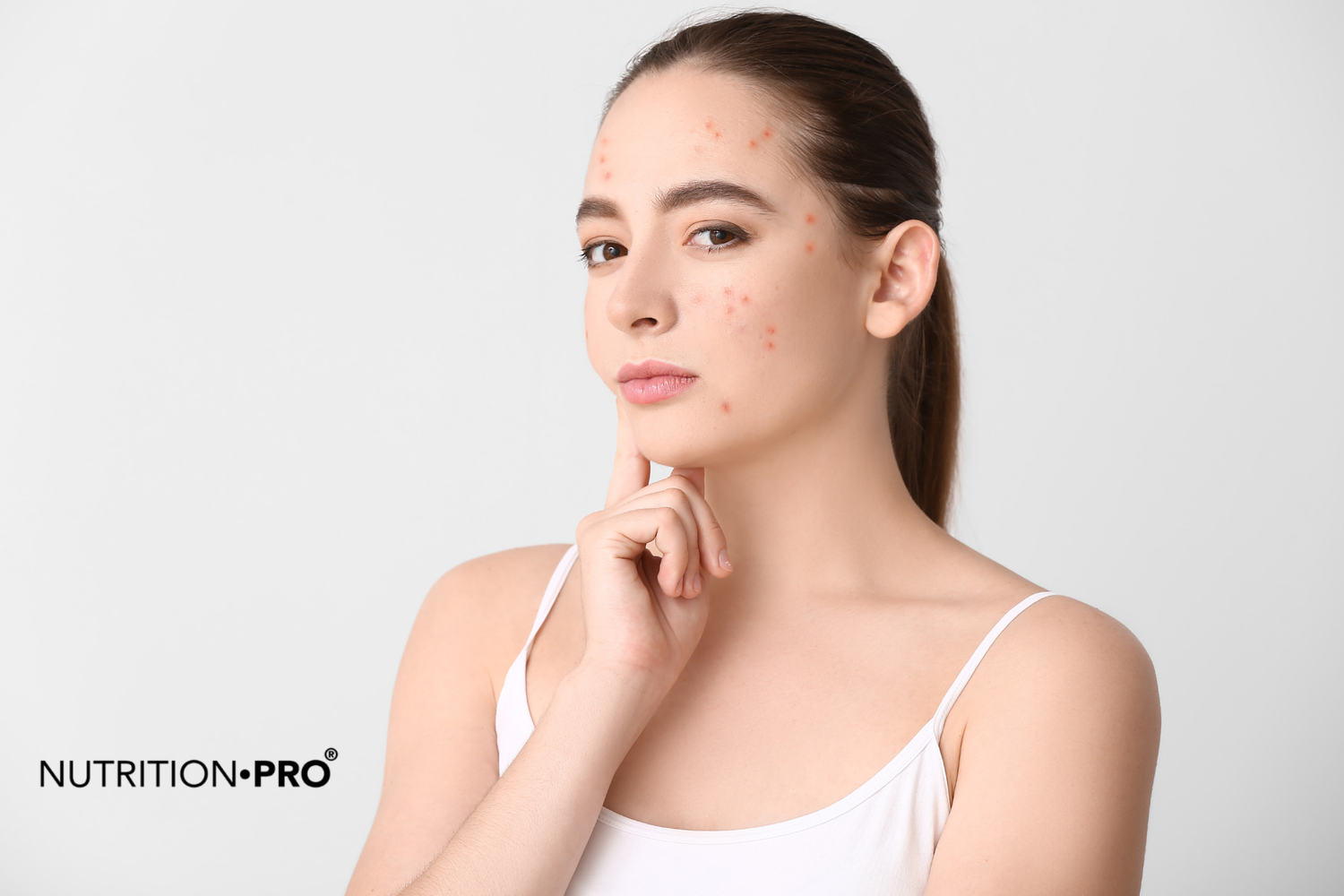
Acne is fertile ground for advice: cut out chocolate, stop dairy, take zinc, drink green tea, do a detox. Some are grounded, others aren't, and the problem is they all come at you with the same tone. In December 2023, a dermatology team from Boston sorted through JAMA Dermatology : 42 randomized trials, 3,346 participants, all oral supplements tested in acne, ranked by methodological quality.
This article builds on that work and expands it with available meta-analyses on each avenue. It creates a hierarchy: what has a meta-analysis, what has a good trial, what only has a signal. It provides doses, durations, and what diet actually changes, dairy included. And it clearly states when acne is no longer a capsule matter but a dermatologist matter.

The framework. The systematic review in JAMA Dermatology identifies six families with potential benefit in studies of fair to good quality: zinc, probiotics, omega-3, vitamin D, vitamin B5, and green tea extract, measured primarily by lesion count. Adverse effects are rare, except digestive effects for zinc. The authors emphasize the small trial sizes and describe a possible role, not a treatment.
The best documented. Zinc, with its own meta-analysis: lower blood zinc in acne sufferers, and significant reduction in inflammatory papules with supplementation. The gut-skin axis. A probiotic combined with spirulina improved 50% of patients versus 29% under placebo in 12 weeks; omega-3 modified the microbiota and improved the severity score. Diet. Glycemic load has a modest but confirmed pro-acne effect in randomized trials; milk is associated with risk, not yogurt or cheese. The limit. Nodules, cysts, scars: see a dermatologist.
How acne pimples form
Acne is born in the pilosebaceous follicle, the structure formed by a hair and its sebaceous gland. Four phenomena occur in sequence. The gland produces excess sebum. The cells lining the canal multiply and accumulate instead of shedding, which clogs the opening. In this closed, oily environment, a bacterium normally present, Cutibacterium acnes, proliferates. And the immune system responds with inflammation, which creates the red papule then the pustule.
What links these stages to diet and supplements is a pair of hormones: insulin andinsulin andIGF-1. Both stimulate sebum production and proliferation of follicle cells. This is the pathway through which glycemic load and milk work, and it explains why part of the answer lies on your plate.
A systematic review of 26 studies published in the JEADV identifies Cutibacterium acnes, Staphylococcus aureus and Staphylococcus epidermidis as key players, through overproliferation or imbalance. An interesting detail: among existing treatments, only benzoyl peroxide significantly modifies the diversity of this microbiome. This is a reminder that acne is as much a matter of ecosystem as of a single bacterium, and this sheds light on the section on probiotics.
The reference review, and what it says exactly
The PubMed, Embase, Cochrane, and Web of Science databases were searched through January 2023 to identify randomized trials evaluating oral nutraceuticals, vitamins, minerals, plant extracts, prebiotics, and probiotics in people with acne. Of 2,582 abstracts, 42 trials were selected, totaling 3,346 participants. Studies of fair to good quality show potential benefits of vitamins B5 and D, plant extracts including green tea, probiotics, and omega-3 fatty acids in the treatment of acne. These interventions were most often associated with a decrease in lesion count or improvement in overall investigator assessment. Adverse effects were rare for most therapies, but digestive effects were reported for zinc. The authors conclude that nutraceutical supplements may play a role, note that many studies are small in size, and call for larger randomized trials.
Shields A, Ly S, Wafae B, et al. JAMA Dermatol 2023;159(12):1373-1382. DOI: 10.1001/jamadermatol.2023.3949
Three remarks for reading this result correctly. First, the authors speak of potential benefit and possible role. This vocabulary is deliberate: it reflects positive but small-sized trials, not definitive proof. Next, the criteria are clinical and measurable: lesion count, overall assessment by a physician. These are not satisfaction questionnaires. Finally, the review is published in the dermatology journal of the American Medical Association, by hospital dermatologists: it is neither a nutrition journal nor a publication linked to an industry.
| Family | What was measured | Level of evidence |
|---|---|---|
| Zinc | Decrease in inflammatory papules; lower blood zinc in people with acne | Dedicated meta-analysis in addition to JAMA review |
| Probiotics | Improvement in overall score and non-inflammatory lesions | Double-blind randomized trial 2024, JAMA review |
| Omega-3 | Improvement in GAGS score, modification of intestinal flora | Randomized trial 2024, JAMA review |
| Vitamin D | Decrease in lesions in studies of fair to good quality | JAMA review |
| Vitamin B5 | Decrease in lesions in studies of fair to good quality | JAMA review, modest sample sizes |
| Green tea | Decrease in lesions in studies of fair to good quality | JAMA review, modest sample sizes |
Zinc: the best documented
A systematic review and meta-analysis compliant with PRISMA recommendations examined two questions: does serum zinc level differ between people with acne and controls, and are zinc preparations effective in acne. People with acne had significantly lower serum zinc than controls. Patients treated with zinc achieved a significant improvement in average number of inflammatory papules compared to those not treated. There was no significant difference in the incidence of adverse effects between zinc and comparators. The authors conclude that zinc is effective in treating acne, particularly for reducing the number of inflammatory papules, both as monotherapy and as adjunctive treatment.
Yee BE, Richards P, Sui JY, Marsch AF. Dermatol Ther 2020;33(6):e14252. DOI: 10.1111/dth.14252
Two distinct results are hidden in this meta-analysis, and they do not say the same thing. The first is a Field observation : acne-prone individuals have, on average, lower blood zinc levels. This alone justifies checking one's intake, regardless of any therapeutic effect. The second is an intervention result : supplementation reduces inflammatory papules. Zinc is antioxidant and immunomodulatory, which explains an action on the inflammatory component rather than on comedones.
A review published in the Journal of Dermatological Treatment places this result within the broader context of dermatology: zinc has evidence in infectious conditions, inflammatory conditions, and hair loss, and the authors recommend oral supplementation in anyone with a deficiency, while calling for large trials of zinc as monotherapy.
Clinical trials on acne have generally used doses higher than the reference dietary intakes, following a therapeutic logic. A supplementation of 14 mg per day, or approximately 140% of reference values, follows a nutritional logic: it corrects the relative deficiency highlighted by the meta-analysis, without reaching the doses used in trials. High doses over the long term require medical advice, as zinc interferes with copper absorption. The gluconate form is the most commonly used in studies. Our complete zinc guide details forms and absorption.
Probiotics and omega-3s: the gut-skin axis
A 12-week trial was conducted in patients aged 12 to 30 years with acne. The tested product was a capsule combining the probiotic Lacticaseibacillus rhamnosus CECT 30031 and the cyanobacterium Arthrospira platensis, spirulina. An improvement in the global severity scale was observed in 20 out of 40 patients in the probiotic group, or 50%, compared to 10 out of 34, or 29%, in the placebo group. The reduction in non-inflammatory lesions was significantly greater with the probiotic. The number of adverse events was similar in both groups. The authors conclude that the probiotic was effective, well tolerated, and should be considered in acne patients.
Eguren C, Navarro-Blasco A, Corral-Forteza M, et al. Acta Derm Venereol 2024;104:adv33206. DOI: 10.2340/actadv.v104.33206
Two details of this trial matter. First the methodology : randomized, double-blind, placebo-controlled, over twelve weeks, with a clinical endpoint evaluated by a physician. This is the most rigorous protocol one can ask of a supplement. Then the composition : the tested product combined a specific strain of Lactobacillus rhamnosus with spirulina, which means the result cannot be attributed to the probiotic alone, and that the measured effect is that of the combination.
Untreated acne patients were randomly assigned to either omega-3 supplementation for 12 weeks or no supplementation, alongside experiments in rats including intestinal microbiota transfer. Omega-3s increased intestinal microbiota diversity and positively regulated its structure, in both patients and animals, increased the abundance of butyrate-producing bacteria, and improved the GAGS severity score in patients. The authors conclude that omega-3 supplementation could attenuate acne inflammation by enriching butyrate-producing bacteria.
Huang Y, Liu F, Lai J, et al. J Dermatolog Treat 2024;35(1):2299107. DOI: 10.1080/09546634.2023.2299107
What makes these two trials interesting taken together is that they converge on a mechanism without having coordinated: oral probiotics and oral omega-3s improve acne by modifying intestinal flora, while neither acts directly on the skin. This is what is called the gut-skin axis. The hypothesis is that inflammation of digestive origin alters the skin terrain, and that correcting the flora corrects part of the inflammation. This is a solid lead, not yet an entirely proven mechanism in humans. Our microbiota guide explore this mechanism, and our article on probiotics explains why the strain matters.
Vitamin D, B5, green tea: the other signals
JAMA review ranks it among interventions with potential benefit in studies of adequate to good quality. The reasoning is based on correcting a deficiency: vitamin D plays a role in immune regulation and keratinocyte differentiation, and deficiency is common, especially from October to March. It is not an acne treatment, but rather a constitutional factor that can be verified through testing. Our article on vitamin D details the thresholds.
Pantothenic acid is involved in lipid metabolism, including sebum, which explains the hypothesis. JAMA review lists it among interventions with potential benefit, but sample sizes remain modest and it should be considered as a signal requiring confirmation. Our article on vitamin B5 provides more details.
The interest lies in EGCG, an anti-inflammatory catechin known to have a modulating effect on sebum production. JAMA review classifies it among plant extracts with potential benefit. Matcha, which consumes the whole leaf, is the most concentrated dietary source, but the trials focused on extracts, not the beverage.
Diet: glycemic load and milk
A search without date restrictions identified 410 articles, of which 34 met inclusion criteria. The literature on the association between dairy products and acne is mixed and may depend on sex, ethnicity, and cultural dietary habits. High glycemic index and increased daily glycemic load are positively associated with acne onset and severity, an observation supported by randomized controlled trials. The authors conclude that high glycemic index, glycemic load, and carbohydrate intake have a modest but significant pro-acne effect, and that dairy products may have an effect in certain populations where Western diet predominates.
Meixiong J, Ricco C, Vasavda C, Ho BK. JAAD Int 2022;7:95-112. DOI: 10.1016/j.jdin.2022.02.012
The most important point of this review is the level of evidence: on glycemic load, there are randomized trials, which is rare in nutrition. The mechanism is the one described in the first section: peaks in insulin and IGF-1 stimulate sebum and proliferation of follicle cells. The effect is described as modest, but it is consistent and costs nothing. Our guide to reducing sugar provides concrete solutions.
The highest consuming category compared to the lowest consuming category was significantly associated with acne presence for dairy products overall, with an odds ratio of 2.61, for total milk at 1.48, for low-fat milk at 1.25, and for skim milk at 1.82. Dose-response analysis revealed a significant linear relationship between dairy products, whole milk, skim milk, and risk of acne. In contrast, no significant association was observed between yogurt or cheese and acne development.
Aghasi M, Golzarand M, Shab-Bidar S, et al. Clin Nutr 2019;38(3):1067-1075. DOI: 10.1016/j.clnu.2018.04.015
Two nuances that change the usual advice. The first: skim milk is more associated with risk than whole milk, which goes against intuition and suggests that the problem is not fat but milk hormones and growth factors, concentrated when fat is removed. The second: yogurt and cheese are not affected, probably because fermentation transforms these components. Eliminating all dairy products is therefore not what the data suggests.
And these are observational studies: they show associations, not causes. A literature review from 2009 to 2020 also lists fatty foods and chocolate among contributing factors, noting that the share of sugar and milk in chocolate's effect cannot be separated from that of cocoa. Conversely, fatty acids, fruits and vegetables emerge as protective.
What no supplement can replace
Nodules or cysts, that is, deep, hard, painful lesions that do not drain. Scars that are beginning to form, depressed marks or lasting pigmented marks. Acne that spreads to the back, chest, shoulders. Acne that resists for several months despite proper skincare. An impact on mood, social life or self-esteem.
In these situations, dermatological treatments have established efficacy at a level of evidence incomparably higher than that of supplements, and each month of delay is a month of potential scarring.
The JAMA journal speaks of a possible andsupportiverole, and that is the right framework. Supplements have their place in mild acne, as an accompaniment to local or systemic treatment, or to correct a deficiency in zinc or vitamin D. They are not an alternative to a consultation when the skin shows signs.
A word about plants called detoxifying, burdock and wild pansy foremost, present in most "clear skin" formulas in France, including ours. Their traditional use in skin problems is long-established and documented as such. But our research on PubMed reveals no clinical trials in humans on acne for these plants: available studies are preclinical. They therefore fall under traditional use, not among the six families retained by the JAMA journal, and we prefer to be clear about this.
The reasonable protocol
120 capsules providing each day 14 mg of zinc in gluconate form, the form most commonly used in acne studies, combined with 2 mg of vitamin B6. A nutritional dose to correct the relative deficiency measured in acne-prone individuals. Two capsules during a meal, 60-day course, also available as a subscription.
View ZincTake with meals to minimize digestive discomfort. Do not exceed the recommended dose without medical advice.
Choose what fits you best: the answer appears just below.
The meta-analysis precisely measures a decrease in inflammatory papules. It's the first avenue, taken with meals, over three months. If pimples concentrate on the lower face in an adult woman, medical advice can be useful to rule out a hormonal cause.
It's on non-inflammatory lesions, comedones, that the probiotic trial measured the most clear decrease. Strain and duration matter: twelve weeks. A local keratolytic treatment remains the primary tool for this type of lesion, and our article on probiotics explains how to choose.
Nodules, cysts and scars are not addressed by supplements, and the JAMA journal itself speaks of an adjunctive role. Dermatological treatments have established efficacy at another level of evidence, and every month counts for scars. Supplements can support treatment, not precede it.
Glycemic load has randomized trials, which is rare. Reduce added sugars and refined products, and replace milk with yogurt or cheese, which are not associated with the risk. Our guide to reducing sugar provides the method. Zinc can come next.
This test provides guidance; it does not replace professional medical advice.
Frequently asked questions
The framework
Can dietary supplements really work against acne?
Yes, to a documented extent. A systematic review published in JAMA Dermatology evaluated 42 randomized trials totaling 3,346 participants. Studies of fair to good quality show potential benefit for zinc, vitamins B5 and D, green tea extract, probiotics, and omega-3s, most often measured by a reduction in the number of lesions or an improvement in overall assessment. The authors note that many studies are small in size and that larger trials remain necessary. The message is a possible supporting role, not a replacement treatment.
Do supplements replace dermatological treatment?
No. The JAMA review speaks of a possible and supporting role. Moderate to severe acne, with nodules, cysts, or risk of scarring, requires a dermatologist and treatments whose efficacy is established at a completely different level of evidence. Supplements have their place in mild acne, as an accompaniment to treatment, or to correct underlying factors, never instead of a consultation when the skin is affected.
How long does it take to see an effect?
Trials on probiotics and omega-3s lasted 12 weeks, and this is a realistic benchmark: the renewal cycle of an acne lesion and that of the epidermis are measured in weeks. Nothing should be judged before six weeks, and three months is the honest timeframe. A photo at the start, in the same lighting, helps to see progressive improvement that daily mirror checking obscures.
Zinc
What is the best-documented supplement against acne?
Zinc. A meta-analysis published in Dermatologic Therapy demonstrated two things: people with acne have significantly lower blood zinc levels than controls, and those treated with zinc achieve a significant reduction in the number of inflammatory papules compared to those not treated, both as monotherapy and as a supplement to treatment. The adverse effect profile was not different from that of comparators, except for digestive discomfort.
What dose of zinc for acne?
Clinical trials generally used doses higher than reference nutritional intakes, in a therapeutic approach. A supplement providing 14 mg of zinc per day, approximately 140% of reference values, falls within a nutritional approach: it corrects the relative deficit demonstrated in people with acne, without reaching the doses used in trials. High doses require medical advice, as long-term zinc can interfere with copper absorption. Gluconate is the form most commonly used in studies.
What are the possible side effects?
The JAMA review describes them as rare for most interventions, with one exception: digestive effects reported for zinc, nausea and gastric discomfort, which are limited when capsules are taken with meals. At high and prolonged doses, zinc can also interfere with copper absorption, which is a reason not to exceed recommended doses without medical advice.
The gut
Do probiotics work against acne?
A randomized, double-blind, placebo-controlled trial published in 2024 followed 74 patients aged 12 to 30 years for 12 weeks. The product combined Lactobacillus rhamnosus and spirulina. An improvement in the global severity scale was observed in 50% of patients on probiotics versus 29% on placebo, and the number of non-inflammatory lesions decreased significantly more. Tolerability was identical in both groups. The JAMA review classifies probiotics among interventions with potential benefit.
And omega-3s?
A randomized 12-week trial in untreated acne patients showed that omega-3s increase intestinal microbiota diversity, enrich butyrate-producing bacteria, and improve the GAGS severity score. The proposed mechanism operates through the gut: omega-3s modify the flora, which modifies skin inflammation. The JAMA review also classifies them among interventions with potential benefit. A dietary literature review furthermore identifies fatty acids among protective factors.
Why do we speak of a gut-skin axis?
Because two independent findings converge: oral probiotics and oral omega-3s improve acne by modifying intestinal flora, even though they do not act directly on the skin. A systematic review of the skin microbiome recalls on its side that acne involves an imbalance between Cutibacterium acnes, Staphylococcus aureus and Staphylococcus epidermidis on the skin surface. The hypothesis is that inflammation of intestinal origin alters the skin terrain. It's a solid lead, but not yet an entirely demonstrated mechanism.
Other avenues
Does vitamin D have an effect on acne?
The review JAMA Dermatology ranks it among interventions with potential benefit in studies of fair to good quality. The reasoning is based on correcting a deficiency: vitamin D plays a role in immune regulation and keratinocyte differentiation, and deficiency is common. It's not an acne treatment per se, but a terrain factor worth verifying through testing, especially in winter.
Vitamin B5 and green tea, really?
These are the two most surprising findings from the JAMA review, and the authors report them alongside the others. Vitamin B5, pantothenic acid, plays a role in lipid metabolism, including sebum. Green tea extract owes its interest to EGCG, a catechin with anti-inflammatory properties and sebum production-modulating effects. Sample sizes remain modest, and these two leads should be considered as signals to be confirmed rather than established facts.
Diet
Does sugar cause acne?
Not sugar itself, but glycemic load. A systematic review of 34 studies concludes that a high glycemic index and high daily glycemic load are positively associated with the onset and severity of acne, an observation supported by randomized controlled trials. The effect is described as modest but significant. The mechanism works through insulin and IGF-1, which stimulate sebum production and proliferation of follicle cells.
Does milk cause acne?
A meta-analysis of observational studies finds an association between milk consumption and acne: odds ratio of 1.48 for total milk, 1.25 for low-fat milk, and 1.82 for skim milk, with the category consuming the most dairy products having an odds ratio of 2.61. The interesting point is that neither yogurt nor cheese were associated with risk. A more recent review qualifies this by noting that the link depends on sex, ethnicity, and dietary habits. These are associations, not proof of causality.
Does chocolate cause acne?
A literature review from 2009 to 2020 ranks chocolate among factors favoring acne, alongside high glycemic index foods, dairy products, and fatty foods. But it also specifies that the role of specific components remains unresolved: cocoa, dark chocolate, or milk chocolate are not equivalent, and the respective contributions of sugar and milk versus cocoa in the observed effect cannot be separated. Dark chocolate with high cocoa content is the least affected by this reasoning.
What to take away about acne and supplements?
That six families have adequate data according to the reference review: zinc, probiotics, omega-3, vitamin D, B5, and green tea, with zinc leading the way with its own meta-analysis. That diet matters, through glycemic load and milk, but not yogurt or cheese. That effects should be judged at three months. And that acne that leaves marks or persists should be seen by a dermatologist, with supplements playing a supporting role.
Glossary
- Pilosebaceous follicle
- Unit formed of a hair and its sebaceous gland; this is where each acne lesion develops.
- Papule
- Red, inflammatory bump without visible pus; this is the type of lesion on which zinc was measured.
- Comedone
- Non-inflammatory lesion, blackhead or closed whitehead; this is the type on which the probiotic trial showed the most marked reduction.
- IGF-1
- Growth factor whose production is partly dependent on insulin; stimulates sebum and proliferation of follicle cells.
- Glycemic load
- A measure combining a food's glycemic index and the quantity consumed; the best-documented dietary factor in acne.
- Cutibacterium acnes
- Bacterium normally present on the skin, whose proliferation in a clogged follicle triggers inflammation.
- Gut-skin axis
- Hypothesis that the state of intestinal flora influences skin inflammation; supported by trials on probiotics and omega-3.
- GAGS Score
- Global Acne Grading System, severity scale used in trials that weighs lesions by facial and trunk zone.
- Odds ratio
- Measure of association in observational studies; 1.48 means an increased probability of 48%, without demonstrating causality.
Sources
The studies cited below were identified via PubMed.
- Shields A, Ly S, Wafae B, et al. Safety and efficacy of oral nutraceuticals in acne treatment: a systematic review. JAMA Dermatology, 2023;159(12):1373-1382. DOI
- Yee BE, Richards P, Sui JY, Marsch AF. Serum zinc levels and zinc treatment efficacy in acne vulgaris: a systematic review and meta-analysis. Dermatologic Therapy, 2020;33(6):e14252. DOI
- Searle T, Ali FR, Al-Niaimi F. Zinc in dermatology. Journal of Dermatological Treatment, 2022;33(5):2455-2458. DOI
- Eguren C, Navarro-Blasco A, Corral-Forteza M, et al. Randomized clinical trial evaluating the efficacy of an oral probiotic in acne vulgaris. Acta Dermato-Venereologica, 2024;104:adv33206. DOI
- Huang Y, Liu F, Lai J, et al. The adjuvant role of omega-3 fatty acids through upregulation of the gut microbiota in acne vulgaris. Journal of Dermatological Treatment, 2024;35(1):2299107. DOI
- Podwojniak A, Tan IJ, Sauer J, et al. Acne and skin microbiome: a systematic review of mechanisms and therapeutic implications. Journal of the European Academy of Dermatology and Venereology, 2025;39(4):793-805. DOI
- Meixiong J, Ricco C, Vasavda C, Ho BK. Diet and acne: a systematic review. JAAD International, 2022;7:95-112. DOI
- Aghasi M, Golzarand M, Shab-Bidar S, et al. Dairy product consumption and acne development: a meta-analysis of observational studies. Clinical Nutrition, 2019;38(3):1067-1075. DOI
- Dall'Oglio F, Nasca MR, Fiorentini F, Micali G. Diet and acne: a review of the evidence from 2009 to 2020. International Journal of Dermatology, 2021;60(6):672-685. DOI


