

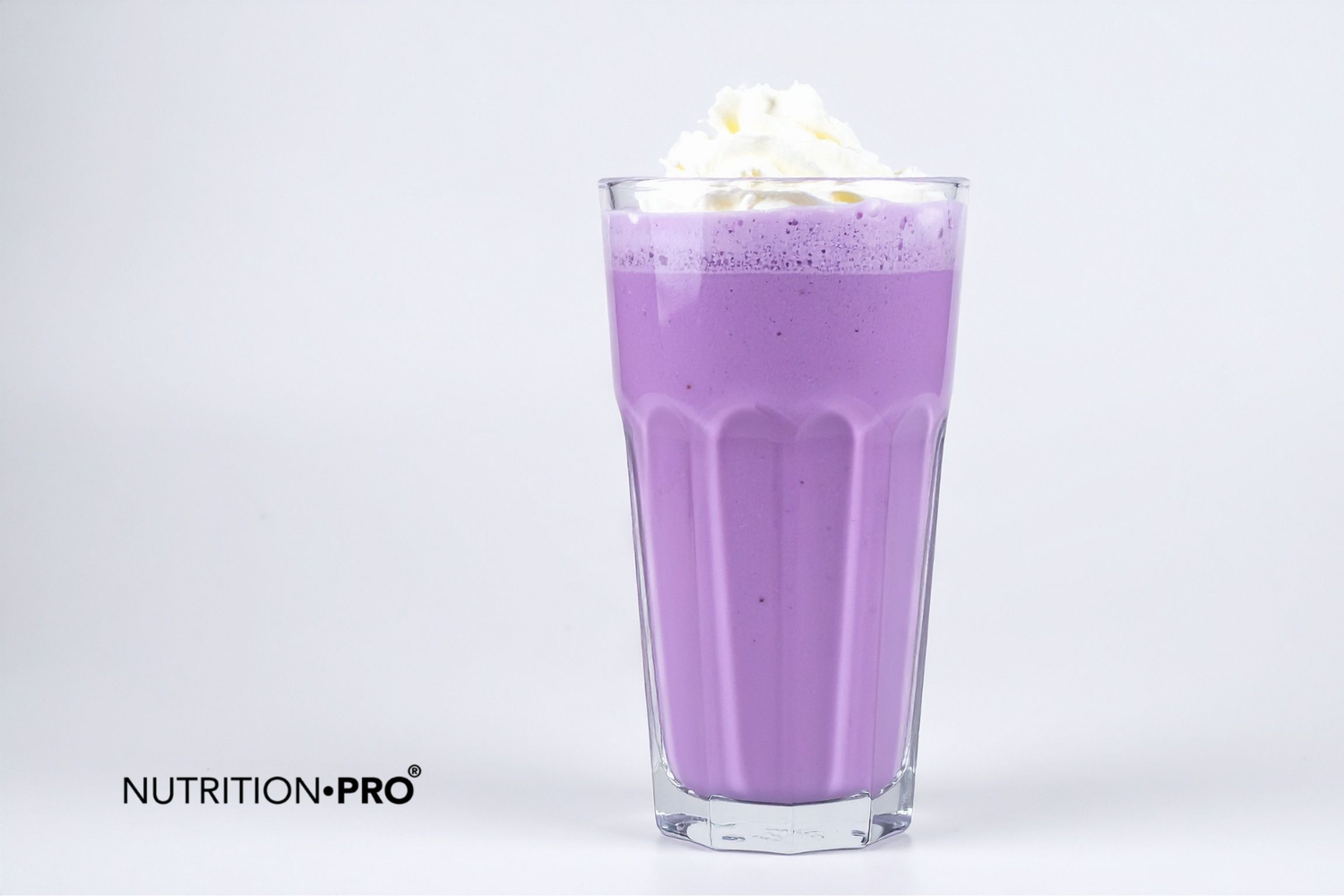
What if you added a touch of color and natural sweetness to your everyday cooking? Ube, also known as purple yam, is much more than a root with a spectacular hue. With its mild, slightly vanilla-like flavor and creamy texture, it lends itself to all kinds of dishes, from the simplest to the most indulgent.
The good news: you don't need to be a chef. Whether you start with ube purée, powder or the fresh tuber, you can make dishes that are nutritious, visually striking and easy to prepare. Here are 5 approachable recipes for cooking with ube day to day: a latte, a jam (ube halaya), pancakes, a smoothie bowl and a moist cake. Each recipe lists the ingredients and the steps.

The simplest way to cook with ube in France: one spoonful of powder is all it takes to color and flavor lattes, pancakes, smoothies and cakes. Organic, sourced from the Philippines, additive-free.
Ube (purple yam) works in both sweet and savory dishes, but it really shines in desserts and drinks thanks to its mild, vanilla-like flavor and natural purple color. On the menu in this article: ube latte, ube halaya (the traditional Filipino jam), pancakes, a smoothie bowl and a moist cake. Every recipe works with rehydrated ube powder, the most convenient format. Choose a purée or powder that is 100% ube, with no added sugar or coloring.
1. Why cook with ube?
Ube is more than a feast for the eyes. Its purple color comes from pigments called anthocyanins, which occur naturally in certain purple plants (red cabbage, blueberries, black grapes). These compounds are antioxidants: according to PubMed, their antioxidant activity has been confirmed in ube itself (Moriya 2015). In the kitchen, they give you an intense color without any artificial coloring.
When it comes to taste, ube stands out for its mild, slightly vanilla-like flavor, close to chestnut or sweet potato. This natural sweetness lets you cut back on added sugar in desserts. Finally, it is a starchy food that provides fiber, which supports digestive comfort and satiety (Barber 2020). Let's be clear from the outset: ube is a good ingredient, not a miracle health product. To learn all about its profile, see our complete guide to the benefits of ube.
2. Choosing and preparing your ube
Ube is increasingly easy to find in France, in several forms: fresh (Asian grocery stores; rough skin and deep purple flesh), frozen (already peeled and cut), as a ready-to-use purée (convenient, but check the label: some commercial purées contain colorings and refined sugar), and as a powder, ideal for flavoring drinks, smoothies and cake batters.
If you are working with fresh or frozen ube: peel the root, cut it into cubes, steam or boil it for about 20 minutes until tender, then blend it into a purée. To preserve its beautiful purple color, opt for steaming and avoid cooking it for too long over high heat.
Ube powder is the format we recommend for its simplicity: just mix it with a little hot water to get a creamy base you can use in all the recipes that follow. Our organic ube powder is 100% purple yam, with no additives.
3. Recipe 1: Ube latte
Few things are as simple and comforting as a good ube latte, whether at breakfast or as a little treat during a break. Colorful, naturally sweet and caffeine-free, this drink is as gentle on the palate as it is pleasing to the eye.
Ube latte (hot or iced)
A purple drink that is naturally sweet and caffeine-free.
Ingredients
- 2 tbsp ube purée (or 1 tsp ube powder dissolved in a little hot water)
- 200 ml plant-based milk (almond, coconut or oat)
- 1 tsp maple syrup (or honey)
- 1 pinch of ground vanilla (optional)
- Toppings: coconut cream, coconut flakes, black sesame seeds (optional)
Method
- In a small saucepan, mix the ube purée, maple syrup and vanilla.
- Add the plant-based milk and heat gently, whisking until smooth.
- Pour into a mug and add the toppings. For the iced version, pour the base over ice cubes, then top up with cold milk.
This latte is a good caffeine-free alternative for starting the day or for a soothing break, with ube's color as a bonus.
4. Recipe 2: Ube halaya (purple jam)
Ube halaya is a thick, creamy jam typical of the Philippines, served as a dessert or used as a base for other sweet creations. This version relies on unrefined ingredients while keeping the traditional creamy texture.
Homemade ube halaya
The Filipino purple jam, made with unrefined ingredients.
Ingredients
- 250 g plain ube purée
- 200 ml coconut milk (or a creamy plant-based milk)
- 1 to 2 tbsp coconut or maple syrup
- 1 tbsp arrowroot starch (or cornstarch)
- ½ tsp vanilla extract
- 1 pinch of unrefined salt
Method
- In a saucepan, mix the ube purée, coconut milk and syrup.
- Heat over medium heat, stirring constantly so it doesn't stick to the bottom of the pan.
- Add the starch, dissolved in a little cold water, then the vanilla and salt.
- Keep cooking over low heat for 10 to 15 minutes, until the mixture is smooth and glossy and pulls away from the sides of the pan.
- Pour into a sterilized glass jar and let it cool before sealing.
Spread it on bread, spoon it over pancakes or plant-based yogurt, or use it as the base for a mousse or a cheesecake. Traditionally, ube halaya also tops halo-halo, the famous Filipino iced dessert.
5. Recipe 3: Ube pancakes
Fluffy, colorful and easy to make gluten-free or plant-based, these pancakes pair the mild flavor of purple yam with the mellow richness of coconut milk. Perfect for brunch or an afternoon snack.
Ube and coconut milk pancakes
Fluffy and colorful, easy to make gluten-free and vegan.
Ingredients
- 100 g oat flour (or rice flour, gluten-free)
- 1 tsp baking powder
- 1 pinch of unrefined salt
- 1 egg (or 1 tbsp ground chia seeds + 3 tbsp water)
- 120 ml thin coconut milk
- 80 g ube purée
- 1 tbsp maple syrup
- A little coconut oil for cooking
Method
- Mix the flour, baking powder and salt.
- In a separate bowl, whisk the egg (or the substitute) with the ube purée, coconut milk and syrup.
- Fold the dry ingredients into the wet ones without overworking the batter.
- Heat a lightly oiled frying pan and pour in small rounds of batter.
- Cook for 1 to 2 minutes on each side, until bubbles form. Set aside and repeat.
Serve with berries, plant-based yogurt, chopped walnuts and a drizzle of syrup. For a gentler glycemic index, use whole-grain flour and pair with healthy fats (nuts, seeds).
6. Recipe 4: Ube smoothie bowl
A creamy, colorful, fiber-rich breakfast, ready in 5 minutes. Endlessly customizable depending on your toppings.
Ube smoothie bowl
Creamy, purple and high in fiber, ready in 5 minutes.
Ingredients
- 1 very ripe banana (ideally frozen)
- 100 g plain ube purée
- 100 ml plant-based milk (almond, coconut or oat)
- 1 handful of frozen berries (blueberries, raspberries)
- 1 tsp ground chia or flax seeds
- A few ice cubes (optional)
Method
- Place all the ingredients in a high-powered blender.
- Blend until smooth and thick.
- Pour into a bowl, smooth the surface with a spatula and add your toppings.
Toppings of your choice: fresh fruit (kiwi, mango, fig), seeds, cacao nibs, shredded coconut, almond butter, homemade granola. For an ombré effect, blend some of the berries separately and pour them in a swirl on top.
7. Recipe 5: Moist ube cake
An indulgent alternative to classic baked goods: a soft, moist crumb, a hint of vanilla and a purple hue. Butter-free and easy to adapt into a plant-based version.
Moist ube cake
Moist, colorful, butter-free and easy to make vegan.
Ingredients
- 200 g plain ube purée
- 180 g T80 wheat flour (or light whole wheat flour)
- 80 g ground almonds
- 60 ml melted coconut oil (or a neutral oil)
- 2 eggs (or 2 tbsp ground flaxseed + 6 tbsp water)
- 100 ml plant-based milk
- 80 g coconut or maple syrup
- 1 tsp baking soda + 1 tbsp lemon juice
- 1 tsp vanilla extract, 1 pinch of salt
Method
- Preheat the oven to 170°C (convection).
- Whisk the eggs (or the flaxseed mixture) with the ube purée, oil, milk, syrup and vanilla.
- In a separate bowl, combine the dry ingredients: flour, ground almonds, baking soda and salt.
- Fold the dry ingredients into the wet ones, adding the lemon juice last.
- Pour into a lined pan and bake for 30 to 35 minutes (the tip of a knife should come out clean). Let the cake cool until just warm before turning it out.
Serve with vanilla plant-based yogurt, whipped coconut cream or a berry compote. Sprinkle with shredded coconut for the finishing touch.
8. Making ube part of your everyday cooking
Ube isn't just for cakes and lattes. A few quick ideas: a spoonful of purée in oat porridge, a slice of toast spread with ube purée and sprinkled with black sesame seeds, energy balls (dates, ground almonds, ube purée, rolled oats), a quick pudding (ube purée + silken tofu + coconut syrup, blended together), or a purple smoothie (banana, ube, plant-based milk, blueberries).
Savory uses are less common: as a purple mash, sweet potato-style, to go with roasted vegetables, or in a creamy coconut milk soup. Time-saving tip: make plain ube purée ahead of time, freeze it in small cubes and use it whenever the mood strikes, as you would red kuri squash purée. Want to dig deeper into the ingredient? Read our in-depth guide to ube and its Filipino history.
Frequently asked questions
Can ube powder be used in all the recipes?
Yes, as long as you rehydrate it properly. Mix one measure of powder with a little hot water until you get a smooth purée. This works very well for drinks, smoothies and creams. For baked goods that need volume, a ready-hydrated purée is sometimes more convenient, but powder works too.
Is ube the same vegetable as taro or purple sweet potato?
No. Ube (Dioscorea alata) is a purple yam, distinct from taro (white flesh, neutral flavor) and from purple sweet potato (Ipomoea batatas, a different species). They are similar in color but differ in taste, texture and nutritional profile.
Are these recipes suitable for children?
Yes. Ube has a mild, naturally sweet flavor with no spiciness, which makes it a good ingredient for children's meals and desserts. Just be sure to keep added sugars in check according to their age.
How should homemade ube purée be stored?
Ube purée keeps for 3 to 4 days in the refrigerator in an airtight jar. To store it for longer, divide it into portions and freeze it in ice cube trays or flat freezer bags. It thaws quickly.
Is ube suitable for a vegan diet?
Yes. Ube is a 100% plant-based tuber. If you choose versions without eggs or dairy milk (chia seeds, plant-based milks), it fits perfectly into a vegan diet.
Information drawn from PubMed, cited for informational purposes on ube and its components.
- Moriya C, Hosoya T, Agawa S, et al. New acylated anthocyanins from purple yam and their antioxidant activity. Biosci Biotechnol Biochem 2015;79(9):1484-92. DOI: 10.1080/09168451.2015.1027652
- Tamaroh S, Sudrajat A. Antioxidative characteristics and sensory acceptability of bread substituted with purple yam. Int J Food Sci 2021;2021:5586316. DOI: 10.1155/2021/5586316
- Barber TM, Kabisch S, Pfeiffer AFH, Weickert MO. The Health Benefits of Dietary Fibre. Nutrients 2020;12(10):3209. DOI: 10.3390/nu12103209


