

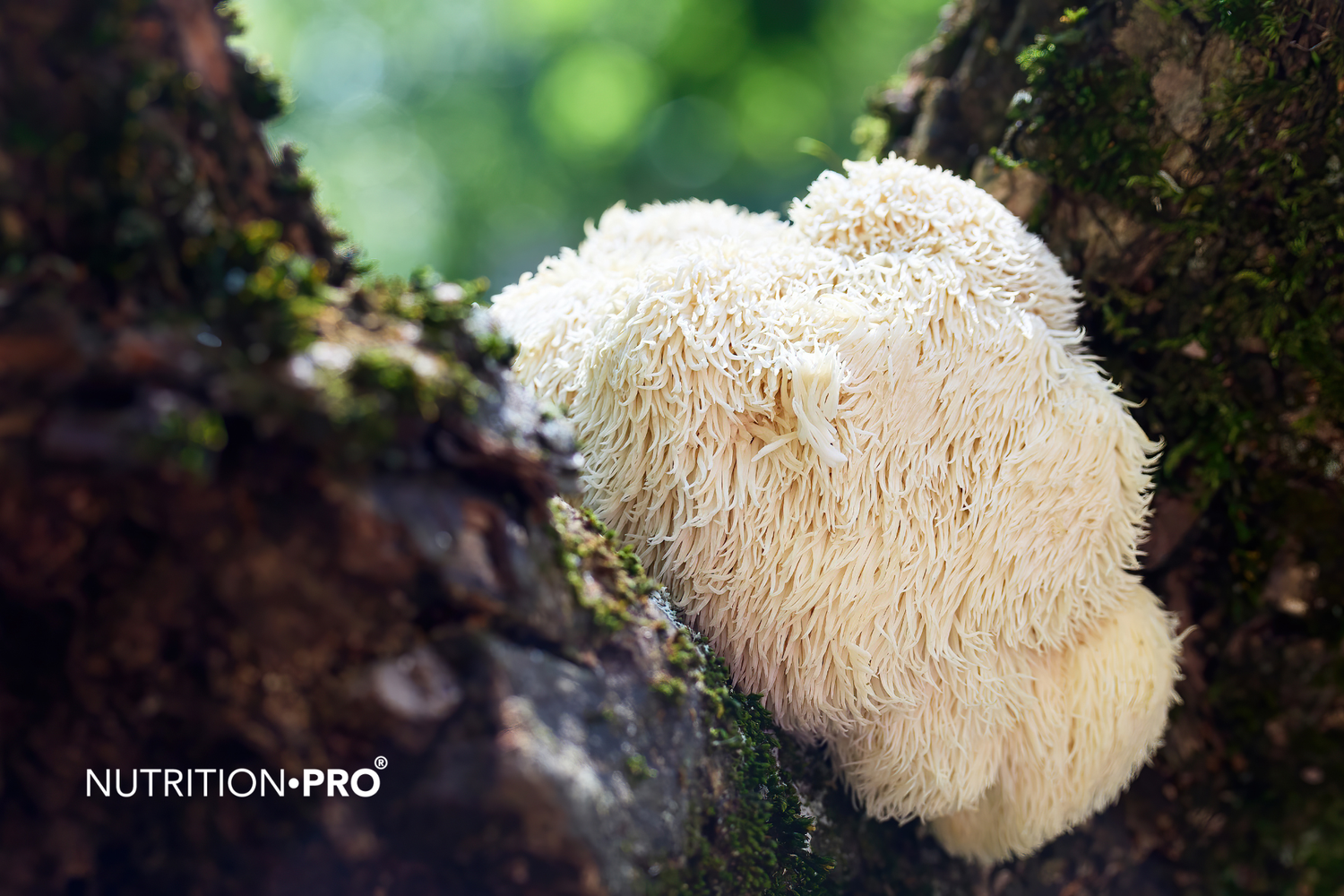
Lion's mane is the best tolerated of common functional mushrooms. It has neither the kidney risk of chaga, nor the hemorrhagic interaction profile of reishi, nor the characteristic dermatitis of poorly cooked shiitake. From a safety standpoint, it has the lightest dossier in the series.
This does not make the article pointless, because the focus lies elsewhere. Two questions really dominate research on this species: the side effects mentioned online, anxiety, agitation, tingling, which appear nowhere in clinical literature. And the fundamental question, often confused with safety: what research has actually shown, and in whom.

What is reported. Rare, mild and reversible effects: digestive discomfort, especially at the start of use or at high doses, and allergicmanifestations, from itching to respiratory involvement. Mushroom allergy is the main precaution for this species.
What circulates without being documented. Anxiety, agitation, tingling, sleep disturbances: these effects are mentioned online but do not appear in clinical literature. Neither to believe nor to dismiss, they do not constitute safety data. Drug precautions: anticoagulants and antiplatelet agents, antidiabetics, immunosuppressants, scheduled surgery. The key clarification: the reputation of this species rests largely on in vitro and animal studies, and no health claims are permitted.
studies.
| A light dossier, and that in itself is informative. | Effect |
|---|---|
| Frequency and context | Digestive discomfort |
| Bloating, mild nausea, especially at the beginning of use or at high doses | Itching, skin rashes |
| Reported, generally relating to an allergic reaction | Respiratory allergic reaction |
| Rarer, but documented. Requires immediate cessation and emergency consultation | Oxalate-type kidney risk |
| Not applicable, unlike chaga | Flagellate dermatitis |
Not applicable, this reaction being specific to raw or undercooked shiitake digestive and allergic. This is minimal, and it is consistent with the status of this species, consumed as food in several Asian cuisines.
A clarification that applies to the entire category: some of the digestive discomfort attributed to the mushroom actually comes from excipients in the powder or capsule. Before concluding that lion's mane is not right for you, check the ingredient list of the product you took.
Effects mentioned online, and what they're worth
If you searched for "lion's mane danger," you came across testimonials mentioning anxiety, agitation, tingling, sleep disturbances after taking it. These accounts are numerous, often detailed, and sometimes worried.
Here is the honest answer, which is neither a denial nor a validation: these effects are not documented in the available clinical literature.
What an individual testimonial lacks: the person often takes several products at the same time, the period may coincide with stress or a change in routine, there is neither a control group nor verification of what the consumed product actually contained. Therefore, no causal link can be established, nor can frequency be estimated.
What a testimonial brings anyway: a signal. Many adverse effects recognized today began with isolated reports. This is precisely the purpose of the nutrivigilancesystem, which allows scattered accounts to be transformed into usable information. If you experience an unusual effect, stop, speak with a healthcare professional, and report it: that is far more useful than a message on a forum.
Our position: we will not state that these effects are established, because they are not. And we will not state either that they are imaginary, because nothing allows us to assert that.
Medical precautions
| Treatment | Why caution | Management |
|---|---|---|
| Anticoagulants and antiplatelet agents | An effect on platelet aggregation is mentioned for several functional mushrooms | Medical advice before any use |
| Antidiabetics | An action on blood glucose was reported in experimental studies | Medical advice, blood glucose monitoring if use is validated |
| Immunosuppressants | Polysaccharides from mushrooms act on immune pathways | Medical advice imperative, including after transplant |
| Planned surgery | Potential effect on platelet aggregation | Discontinue several days before, informing the medical team |
These precautions are less documented for lion's mane than for reishi, where the effect on platelet aggregation is explicitly mentioned in reference databases. They are here more a matter of category-wide caution than a signal specific to the species. This does not make them any less relevant: in the presence of a treatment, a pharmacist's advice takes two minutes.
Who should abstain
Contraindicated in case ofknown allergy to mushrooms. This is the main precaution for this species, as reported reactions are predominantly allergic in nature.
Medical advice required in case of treatment with anticoagulant or antiplatelet, antidiabetic or immunosuppressant, in case of autoimmune disease or after a transplant, and before any scheduled surgery.
Not recommended in pregnant or nursing women and inchildren and adolescents, due to lack of safety data. In a young person, any question about memory or concentration requires medical advice, not a supplement purchased online.
Signs that should prompt you to stop
- A breathing difficulty, an extensive rash or swelling : stop immediately and seek emergency consultation.
- A skin eruption appearing after starting the supplement.
- <<<36>>> digestive troubles that persist troubles digestifs qui persistent despite dose reduction.
- Any unusual effect that you associate with taking it, even if it does not appear in the lists.
Stop, consult by reporting the product, its dose and duration, and think about the nutrivigilance system : on a species still poorly documented, each report truly matters.
The real question: in vitro, animal, or human?
With lion's mane, the safety question is minor. The question that deserves your attention is elsewhere: that of thegap between its reputation and what the data establish.
This species owes its notoriety to studies focusing on the stimulation of nerve growth factors. These studies exist, they are rigorous, and they were conducted essentially in vitro and in animals.
| Level of evidence | What this allows us to say |
|---|---|
| In vitro | A mechanism is plausible on cultured cells. No conclusion about an entire organism |
| In animals | An effect is observed in a model. The transition to humans is never automatic |
| In humans | The only level allowing us to speak of an effect in a person, and even then, depending on the size and quality of the trial |
| Authorized claim | Level required to state it commercially. No mushroom has achieved this to date |
A stimulation of nerve growth factors observed on cells becomes, in three communication steps, a "neuronal regeneration" promised to the consumer. Each step seems small, but together they constitute a considerable extrapolation. This is exactly the issue we documented with NMN and with the glycine-collagen relationship : a real starting fact, a chain of inferences, a promise at the end. The word "medicinal", very widespread for this species, stems from the same problem: it suggests a therapeutic property, which a dietary supplement cannot claim.
What this means for you: lion's mane is an interesting research avenue, on which human data remains limited. This is not a reason to dismiss it, but rather a reason not to expect from it what no study has demonstrated.
What the law allows us to say
Lion's mane is legally marketed as a dietary supplement in France. Since claims regarding plants and mushrooms are pending evaluation at the European level, no health claim can be asserted with certainty, whether it comes to memory, concentration, or the nervous system.
"Medicinal mushroom" : the term suggests a therapeutic property. Attributing to a supplement the ability to treat or prevent a disease is prohibited.
"Neuronal regeneration" : extrapolation of preclinical studies, and assertion of an effect not established in humans.
"Improves memory and concentration" : health claim not authorized for this species.
These three formulations are extremely widespread on the French market. Their presence on a product sheet is the simplest marker of non-compliant communication, and a good indicator of a seller's credibility.
With lion's mane, the risk is not the molecule, it's the expectation. A well-tolerated species, with rare and mild adverse effects, whose reputation rests largely on studies conducted on cells and animals. The right way to approach it: without particular fear, without excessive expectations, and by avoiding sellers whose vocabulary falls outside the framework.
Frequently asked questions
The fundamental question
Is lion's mane dangerous?
It is the best tolerated of common functional mushrooms. It has neither the renal risk associated with oxalates described for chaga, nor the documented hemorrhagic interaction profile of reishi, nor the characteristic dermatitis of poorly cooked shiitake. The reported effects are essentially digestive and allergic, rare and reversible. This does not mean an absence of precautions: long-term data are limited.
What are the side effects of lion's mane?
Mainly mild digestive discomfort, such as bloating or nausea, especially at the start of use or at high doses. Next come allergic manifestations: itching, skin rashes, and more rarely respiratory reactions. These effects generally regress upon discontinuation. Part of the digestive discomfort may also stem from the product's excipients.
Does lion's mane present the same risk as chaga?
No. The renal risk associated with oxalates, documented by clinical cases of nephropathy, is specific to chaga among common species. Lion's mane has a different profile, centered on allergic reactions and common medication precautions for mushrooms. This is further illustration of the fact that functional mushrooms should never be reasoned about as a group.
What should you know about lion's mane safety?
That it is the best tolerated of common functional mushrooms, with rare, mild and reversible effects. That its main precaution is mushroom allergy, followed by usual medication-related situations. And that the real question about this species is not its safety but its efficacy: its reputation rests largely on preclinical work, and no health claims are authorized.
Effects mentioned online
Does lion's mane cause anxiety?
Online testimonies mention anxiety, agitation, tingling or sleep disturbances after use. It is important to be precise: these effects are not documented in available clinical literature. This does not mean these people are making things up, but that nothing allows establishing a causal link or estimating its frequency. If you experience an unusual effect, stop and report it.
Should you believe the side effects mentioned on forums?
Neither believe them nor dismiss them. An individual testimonial does not establish causality: the person often takes multiple products, the timing may coincide with something else, and there is neither a control group nor verification of product composition. These reports have value in drawing attention to a lead, but they do not constitute safety data. The nutrivigilance system exists precisely for this purpose.
What should you do in case of an adverse effect?
Stop taking it and consult a healthcare provider, reporting the product consumed, its dose and duration. In case of breathing difficulty, extensive hives or swelling, do not wait. An adverse effect potentially linked to a supplement can also be reported through the national nutrivigilance system, which helps improve knowledge about species that are still poorly documented.
Allergies and precautions
Can you be allergic to lion's mane?
Yes, and it is the main adverse effect to know about for this species. Allergic reactions have been described, ranging from skin manifestations to respiratory involvement. The risk is higher in people already allergic to other mushrooms. In case of breathing difficulty, extensive hives or swelling after use, seek emergency care and stop immediately.
Does lion's mane interact with medications?
Caution applies to three families. Anticoagulants and antiplatelet agents, as an effect on aggregation has been suggested for several mushrooms. Antidiabetic agents, as action on blood sugar has been reported in experimental studies. And immunosuppressants, as mushroom polysaccharides act on immune pathways. In these three situations, medical advice is required.
Should you stop before surgery?
As a precaution, yes. Since a potential effect on platelet aggregation has been suggested for several functional mushrooms, discontinue use several days before a scheduled procedure and mention it during your preoperative consultation. The useful habit: systematically mention your supplements when asked about your medications.
Can you take lion's mane during pregnancy?
No, not without medical advice. Safety data are lacking in pregnant and nursing women, which is sufficient to justify abstaining. The same applies to children and adolescents, for whom any question about concentration or memory requires medical advice, not a supplement.
Is lion's mane inadvisable in case of autoimmune disease?
Caution is warranted, as with all functional mushrooms. Their polysaccharides act on immune pathways, which can theoretically interfere with autoimmune disease or contradict immunosuppressive treatment. Medical advice is necessary before any use in these situations, including after organ transplant.
Can you combine lion's mane with other mushrooms?
Combinations are common, but they accumulate precautions rather than dilute them. Combining lion's mane and reishi amounts to accumulating the second's anticoagulant precaution; combining lion's mane and chaga adds the oxalate question. The higher the stack, the less you know what produces what.
Can you take it daily in the long term?
Safety data for very prolonged use are limited, which calls for moderation even with a well-tolerated species. The reasonable approach is to favor defined periods rather than indefinite continuous use, and to regularly reassess the benefit of continuing.
Is lion's mane a problem for a tested athlete?
Lion's mane is not a prohibited substance. The risk for a competitor does not come from the molecule but from the product, through cross-contamination in production, with strict liability placing the consequence on the athlete. The safeguard is the same as for any supplement: favor products analyzed batch by batch by an independent laboratory.
Does product quality change the risk?
It matters more than generally thought. Part of the digestive discomfort attributed to the mushroom actually comes from the excipients in the powder or capsule. Moreover, mushrooms concentrate what their substrate contains, making analytical controls, particularly for heavy metals, a real safety criterion. Insist on batch-by-batch analyses with an accessible certificate.
Efficacy and legal framework
Does lion's mane really regenerate neurons?
This is the most widespread claim about this species, and it requires clarification. The work that made its reputation concerns the stimulation of nerve growth factors, and it has been conducted essentially in vitro and in animals. Moving from these results to neuronal regeneration in humans is an extrapolation, not a conclusion. No health claims are authorized in this sense.
Can you write that lion's mane is a medicinal mushroom?
No, not on a label or in commercial communication. The term medicinal suggests a therapeutic property, and attributing to a food supplement the capacity to treat or prevent disease is prohibited by European regulations. This is a widespread term in this sector, yet it is one of the simplest markers of non-compliant communication.
Is lion's mane authorized for sale in France?
Yes, it is marketed as a food supplement in France. What is regulated is the messaging: claims concerning plants and mushrooms are awaiting evaluation at the European level, which means no health claims can be asserted with certainty, including those about memory, concentration or the nervous system.
Glossary
- Lion's mane (Hericium erinaceus)
- A mushroom also called lion's mane, consumed as a food and sold as a dietary supplement.
- In vitro
- Refers to studies conducted on cultured cells, outside a living organism.
- Preclinical study
- Research conducted in the laboratory or in animals, before any human trials.
- Extrapolation
- Transfer of a result observed in one context to a conclusion in another, not validated by the data.
- Nerve growth factor
- Protein involved in the survival and growth of neurons, the target of research that made this species famous.
- Causality
- An established cause-and-effect relationship, to be distinguished from a simple temporal coincidence reported in a testimonial.
- Nutrivigilance
- National system for reporting an adverse effect potentially linked to a dietary supplement.
- Strict liability
- Anti-doping principle under which an athlete is responsible for the presence of a banned substance in their body.
Sources
- Reference data on mushroom-based supplements, listing for lion's mane adverse effects that are essentially digestive and allergic in nature, and precautions common to the category regarding anticoagulants, antidiabetic agents, and immunosuppressants.
- Literature on the stimulation of nerve growth factors by Hericium erinaceus, conducted predominantly in vitro and on animal models, whose extrapolation to humans has not been established.
- European Parliament and Council. Regulation (EC) 1924/2006 on nutrition and health claims made on foods. eur-lex.europa.eu
- National Food, Environment and Occupational Health and Safety Agency. Nutrivigilance system. anses.fr


