

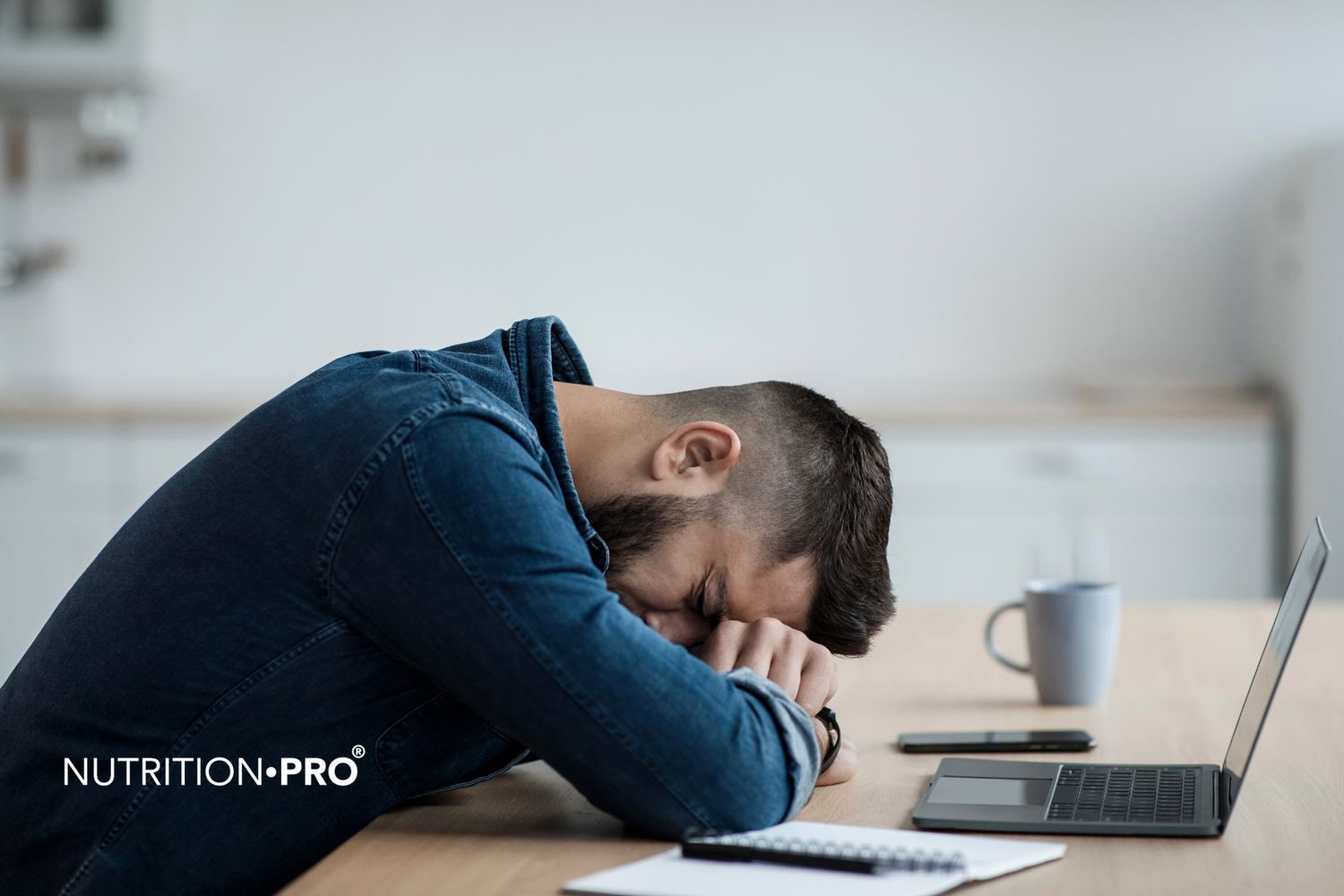
The concentration that slips away mid-afternoon. Simple decisions that become laborious. The brain fog at the end of the day when your body hasn't done anything exhausting. This is mental fatigue, and it's distinct from physical fatigue or seasonal slumps.
It's a state that research defines precisely: the one that follows demanding and prolonged cognitive activity. It can be measured, it has demonstrated effects even on the body, and most importantly, some countermeasures are documented while others are not. We'll review what has actually been tested: sleep, breaks, exposure to nature, and what trials show about nutrients and caffeine.

Mental fatigue is a measurable phenomenon, not just a perception. A systematic review shows that it even degrades endurance physical performance by increasing perceived effort while heart rate, lactate, and oxygen consumption remain normal. The brake is in perception, not in the muscle.
Countermeasures don't all carry the same weight. Sleep is the dominant lever: cognitive performance declines with hours awake and accumulated short nights. Micro-breaks restore felt energy, with a small but significant effect, without restoring performance on heavy tasks, which require longer breaks.Exposure to nature improves working memory and cognitive flexibility, with weak to moderate effects.
Mental Fatigue Is Real, Down to the Body
Let's start with what establishes that mental fatigue is not just a figment of the imagination. A systematic review published in Sports Medicine compiled eleven studies asking a simple question: what happens to physical performance when the brain is first exhausted by a prolonged cognitive task?
| Parameter | Effect of Mental Fatigue |
|---|---|
| Endurance | Degraded : time to exhaustion reduced, chosen power lower, completion time lengthened |
| Perceived Effort | Increased : the same effort feels harder. This is the central factor identified by the authors |
| Heart, Lactate, Oxygen | Unchanged : the physiological system functions normally |
| Maximum Strength, Power | Unaffected : the muscle responds, it's the duration that suffers |
Where it comes from
Research defines mental fatigue as the state that follows demanding and prolonged cognitive activity. Three characteristics of contemporary work amplify it.
| Factor | Why it matters |
|---|---|
| Duration without real interruption | It's the variable of the definition itself: it's the time of continuous cognitive engagement that creates the state |
| The cost of task switching | Constantly shifting from one subject to another requires reloading context with each switch, which consumes precisely the attentional resource |
| Decision-making load | Making decisions is more costly than executing. A day of micro-decisions causes fatigue without producing a sensation of effort |
Mental fatigue is restored by sleep and recovery. If fatigue is persistent, present from morning, unresponsive to rest, or accompanied by other signs, it's no longer the same issue: it may point to a deficiency, sleep disorder, or medical cause. This case requires a consultation and, often, a blood test, not a schedule reorganization.
Our article on chronic fatigue covers that aspect, and the one on back-to-school fatigue covers the seasonal slump.
Sleep, the dominant lever
A meta-analysis published in Human Factors examined what sleep disruption does to complex cognitive tasks, those of real intellectual work, not just laboratory vigilance tests.
| Finding | Detail |
|---|---|
| Prolonged wakefulness degrades | Performance on complex tasks declines with accumulated hours of continuous wakefulness |
| Short nights accumulate | The decline also progresses with consecutive days of restricted sleep: we don't adapt, we go into deficit |
| The severe threshold | The degradation is significantly more pronounced when time in bed drops to four hours or less |
| Timing matters | Performance is lower at circadian trough, typically in the middle of the night and early morning, than at the peak of the day |
The authors highlight an unexpected point: complex tasks appear to be less degraded by sleep deprivation than simple and monotonous tasks, probably because they mobilize greater engagement. It's a nuance, not good news: baseline vigilance collapses first, and it's what catches errors.
The practical conclusion remains unchanged: mental fatigue that sets in despite full nights is addressed through the levers that follow. The fatigue that sets in with short nights is addressed first in bed.
Breaks: what they do, and don't do
A meta-analysis published in PLoS One aggregated 22 experimental samples, or 2,335 participants, to measure the effect of micro-breaks, these short interruptions of a few minutes between two tasks.
| Criterion | Result | Interpretation |
|---|---|---|
| Felt energy, vigor | d = 0.36, significant | Real effect, small size |
| Felt fatigue | d = 0.35, significant | Real effect, small size |
| Overall performance | d = 0.16, non-significant | No demonstrated effect |
| According to task type | Effect on performance only for tasks low-demand | Heavy tasks require more |
| Based on duration | The longer the break, the greater the effect on performance; beyond ten minutes to recover from a very demanding task | The micro-break is not enough for everything |
Nature, restorer of attention
It is an entire field of research, the theory of attention restoration. A systematic review with meta-analyses aggregated 42 studies and 49 measurements comparing exposure to natural environments to control situations, with objective cognitive measures.
| Cognitive function | Effect of nature exposure |
|---|---|
| Working memory | Improved, with small to moderate effect sizes |
| Cognitive flexibility | Improved, in the same ranges |
| Attentional control | Improved, but in a less reliable manner from one study to another |
| Real versus screen | Exposure to a real environment seems to produce a superior effect compared to virtual exposure |
Nutrients and caffeine: what the trials say
On cognitive fatigue, the trial literature is thinner than on sleep or breaks, but it exists. Here is what was actually measured, with meta-analyses leading the way, effect sizes included.
| Substance | What the trials show |
|---|---|
| Creatine | Meta-analysis of 16 randomized trials, 492 participants: improvement in memory (standardized effect 0.31), attention span and processing speed, but nothing on overall cognition or executive functions. Certainty judged moderate for memory, low for the rest |
| Creatine, the age nuance | In healthy subjects, a second meta-analysis finds a clear effect in 66-76 year-olds (0.88) and nearly null in 11-31 year-olds (0.03, not significant). The signal concerns mainly aging brains or those already under strain |
| B Vitamins | Meta-analysis of 16 trials, 2,015 participants, B-complex supplements of at least three B vitamins over at least four weeks: significant benefit on perceived stress (0.23), no demonstrated effect on depressive mood or anxiety. Benefit more likely when nutritional status is compromised |
| Omega-3 | The best-selling of "brain nutrients," and the verdict is mixed: the Cochrane review, 3,536 cognitively healthy participants aged 60 and over, finds no cognitive benefit over 6 to 40 months of trials. A meta-analysis, however, finds a benefit on episodic memory in cases of mild memory complaint, a signal to be read knowing that its first author is affiliated with a DHA manufacturer |
| Caffeine | At low to moderate doses, approximately 40 to 300 mg: improvement in alertness, attention and reaction time, less consistent effects on memory and executive functions. In sleep restriction, it maintains the capacities, it does not restore them |
| Magnesium | Studies directly measuring cognitive fatigue are rare : its value lies in its physiological role and the frequency of insufficient intake, not in a trial record comparable to the previous ones. We say this even though it's our featured product at the top of the article |
All these effect sizes are small, between 0.2 and 0.35 for the most part, whereas sleep restriction degrades performance day after day in a cumulative manner. No supplement plays in the category of a full night, and already sufficient intake does not improve by adding more.
And caffeine borrows from the next night. It masks fatigue signals without replenishing the resource, and taken late, it degrades sleep—that is, the dominant lever of chapter 3. Using it to get by is robbing tomorrow.
In practice
We sell magnesium and vitamins, and this article places sleep, work organization, and outdoor walking above any supplement. This is the hierarchy that the data draws, and a reader who applies it will get more results than with any capsule taken on nights of five hours of sleep.
Supplements have their place, the one that trials outline: real effects, modest ones, and a background role when intake is lacking. That's already useful. It's not fuel.
Frequently asked questions
Understanding
What exactly is mental fatigue?
It's the state that follows demanding and prolonged cognitive activity: degraded concentration, costlier decisions, sensation of brain fog. Research defines it precisely and measures it. It is distinct from physical fatigue, seasonal slump, and chronic fatigue, which follow other patterns.
Does mental fatigue have effects on the body?
Yes, and it's the most counterintuitive result in this review. A systematic review of eleven studies shows that it degrades endurance performance, reduces time to exhaustion, and lowers chosen pace, while increasing perceived effort, whereas heart rate, lactate, and oxygen consumption remain normal. The brake is perceptual, not muscular.
Why am I exhausted when I haven't done anything physical?
Because prolonged cognitive engagement is enough to establish the state, without any physical effort. Incessant context switching and decision load amplify the phenomenon: each change of context consumes attentional resources, and deciding costs more than executing.
When should you consult a doctor?
When fatigue is persistent, present from the morning, unresponsive to rest, or accompanied by other signs. Mental fatigue from workload is restored by sleep and recovery; what doesn't respond to it may point to a deficiency, sleep disorder, or another medical cause, which can be diagnosed and treated.
Sleep
What does lack of sleep do to mental performance?
A meta-analysis of complex cognitive tasks shows that performance declines with hours of continuous wakefulness and with consecutive days of restricted sleep. Degradation is markedly more pronounced at four hours in bed or less, and performance is lower at the circadian trough than at the peak of the day.
Can you adapt to short nights?
The data says the opposite: decline progresses with consecutive days of restriction, which describes a debt that accumulates rather than adaptation. The sensation of having adapted mostly reflects a loss of reference point about one's own level.
Do complex tasks resist decline better than simple ones?
This is the nuance noted by the authors: complex tasks appear less degraded than simple and monotonous tasks, probably because they mobilize more engagement. This isn't good news either, because baseline vigilance, the kind that catches errors, collapses first.
Breaks and recovery
Are micro-breaks effective?
Partially. The reference meta-analysis, 22 samples and 2,335 participants, finds a significant but small effect on energy and perceived fatigue, around 0.35, and no significant effect on overall performance. The effect on performance only appears for low-demand tasks.
How long should a real break last?
To recover from a very demanding task, the authors conclude you need more than ten minutes, with meta-regression showing that the effect on performance increases with break duration. Micro-breaks retain their usefulness for how you feel between light tasks.
What should you do during a break?
The best documented is exposure to a natural environment: 42 studies converge on an improvement in working memory and cognitive flexibility, with weak to moderate effects. The detail that matters: real environment seems to surpass virtual exposure. Walking outdoors beats a forest video.
Does checking your phone count as a break?
Nothing in these studies supports it. The phone maintains cognitive engagement and context switching, which is precisely what consumes the resource. What restores, in the data, is a sufficiently long break and natural environment, not another screen.
Nutrients
Which supplements have trial data on this topic?
Creatine has the most robust evidence: a meta-analysis of 16 trials finds an effect on memory, attention, and processing speed, with an important age nuance, the effect being clear after age 65 and nearly zero in healthy young adults. B vitamins show a benefit on perceived stress in a meta-analysis of 2,015 participants. Omega-3 disappoints on this front: no cognitive benefit in the Cochrane review in healthy seniors, a signal limited to episodic memory in case of mild memory complaint. Caffeine improves alertness and reaction time in the short term. For magnesium, trials directly measuring cognitive fatigue remain rare.
Can a supplement replace sleep?
No. No trial shows this, and the effect sizes measured for supplements, around 0.2 to 0.35, don't play in the category of a full night. The hierarchy of data places sleep, work organization, and recovery above any nutritional intake.
Is caffeine a solution?
In the short term, it supports alertness, and it's the most widely used countermeasure in the world. But it masks fatigue signals without restoring the resource, and taken late, it degrades sleep, which is the main lever. Using it to get by amounts to borrowing from the next night.
Should you get a blood test?
It's the rational approach when fatigue persists despite full nights and a reasonable schedule. A blood test prescribed by your doctor can establish your iron, vitamin D, or B12 status, and point toward what's actually lacking, if anything is lacking, rather than piling on products at random.
In practice
What is the most effective measure in a single day?
If nights are short, no daytime measure can compete with getting proper sleep. With adequate sleep, the best-supported combination is organizing work in continuous blocks rather than constant task-switching, plus a genuine break of more than ten minutes outdoors after demanding blocks.
Does exercise help or make it worse?
Mental fatigue makes endurance effort subjectively harder—this is the finding from the cited review—but it does not impair strength or physiology. Moderate physical activity remains compatible with a cognitively demanding day, and it actually supports sleep quality. The right approach is to adjust intensity based on how you feel that day rather than canceling exercise altogether.
What are the key takeaways from this article?
That mental fatigue is a measurable state that degrades even physical endurance through perceived effort. That sleep is the dominant lever, that genuine breaks of more than ten minutes and exposure to nature have documented effects, and that on the supplementation side, trials show modest signals—memory for creatine, perceived stress for B vitamins—as support tools and never as substitutes.
Glossary
- Mental fatigue
- A psychobiological state that follows prolonged and demanding cognitive activity.
- Perceived effort
- The subjective intensity of an effort, measured by scale; it is this measure that increases under mental fatigue.
- Working memory
- The capacity to maintain and manipulate information in the short term, highly sensitive to fatigue and recovery.
- Episodic memory
- Memory of experienced events and their context; this is what emerges in omega-3 trials in people with memory complaints.
- Cognitive flexibility
- The ability to switch between different rules or tasks.
- Attention restoration
- Theory proposing that natural environments restore directed attention, a limited resource.
- Micro-break
- A break of a few minutes inserted between two tasks.
- Circadian trough
- A window in the biological cycle, during late night and early morning, where performance is structurally at its lowest.
- Effect size
- A standardized measure of the magnitude of an effect; around 0.2 it is small, around 0.5 it is medium.
Sources
The studies cited below were identified via PubMed.
- Van Cutsem J, et al. The effects of mental fatigue on physical performance: a systematic review. Sports Medicine, 2017;47(8):1569-1588. DOI
- Wickens CD, et al. The impact of sleep disruption on complex cognitive tasks: a meta-analysis. Human Factors, 2015;57(6):930-946. DOI
- Albulescu P, et al. "Give me a break!" Systematic review and meta-analysis of the effectiveness of micro-breaks for well-being and performance. PLoS One, 2022;17(8):e0272460. DOI
- Stevenson MP, et al. Attention Restoration Theory II: A systematic review of attentional processes affected by exposure to natural environments. Journal of Toxicology and Environmental Health, Part B, 2018;21(4):227-268. DOI
- Xu C, et al. Effects of creatine supplementation on cognitive function in adults: A systematic review and meta-analysis. Frontiers in Nutrition, 2024;11:1424972. DOI
- Prokopidis K, et al. Effects of creatine supplementation on memory in healthy individuals: A systematic review and meta-analysis of randomized trials. Nutrition Reviews, 2023;81(4):416-427. DOI
- Young LM, et al. Systematic review and meta-analysis of B vitamin supplementation on depressive symptoms, anxiety, and stress. Nutrients, 2019;11(9):2232. DOI
- Sydenham E, et al. Omega-3 fatty acids for the prevention of cognitive decline and dementia. Cochrane Database of Systematic Reviews, 2012;(6):CD005379. DOI
- Yurko-Mauro K, et al. Docosahexaenoic acid and adult memory: A systematic review and meta-analysis. PLoS One, 2015;10(3):e0120391. DOI
- McLellan TM, et al. Review of the effects of caffeine on cognitive, physical, and occupational performance. Neuroscience and Biobehavioral Reviews, 2016;71:294-312. DOI


